
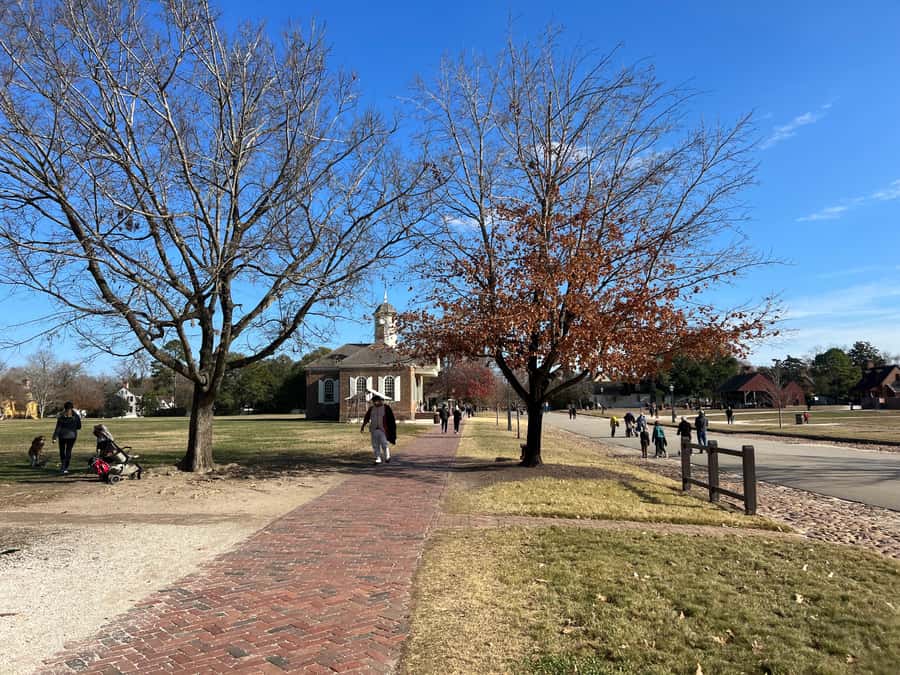
REVIEW · USA
Colonial Williamsburg: Colonial History Guided Walking Tour
Colonial Williamsburg is at its best when the streets feel like a stage for real people, not just a collection of old buildings. This 105-minute walk brings out redcoats, revolutionaries, political arguments, and lesser-known colonial figures while linking the town’s famous sites to the lives of George Washington and Thomas Jefferson.
I like the tour’s human stories, especially the tales of people and events that schoolbooks often skip. I also like the careful period clothing and the way the guide connects colonial sayings, government, and daily life to the world you know today.
The main drawback is that this is a walking tour in an outdoor historic district. Summer sun can be hard on the group, and you should not assume you will go inside most buildings. Parking and the meeting point can also take a little patience.
Key points to know before you book
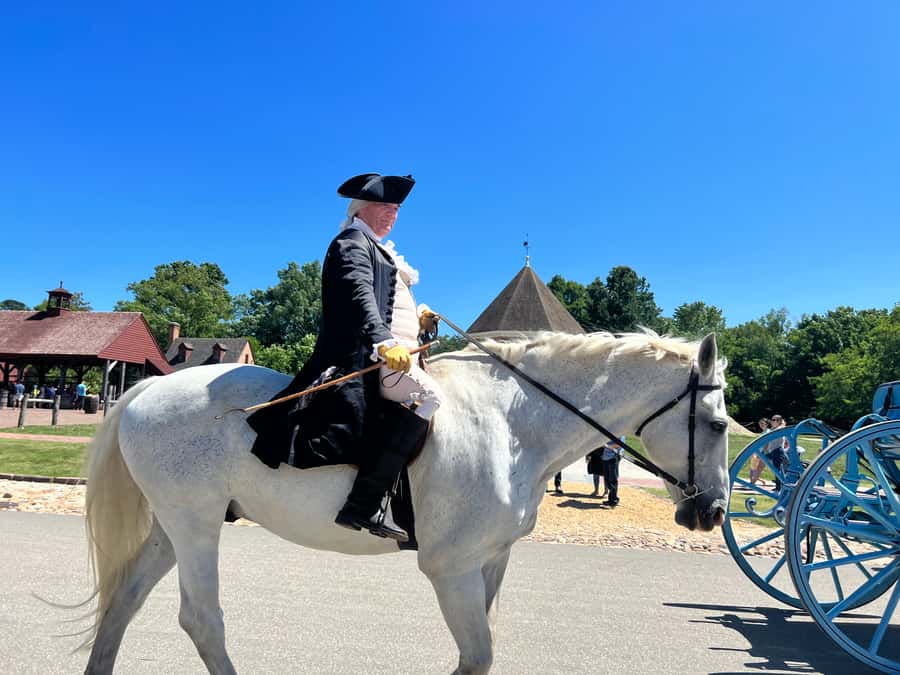
- Hear more than the usual Founding Fathers story: The tour includes political change, overlooked colonial figures, and the shift from royal rule to elected government.
- Start beside the Capitol Building: Meet your guide on the road in front of the Capitol, near the end of the blacktop circle.
- See major sites on foot: The route includes landmarks such as Raleigh Tavern, the Governor’s Palace area, the Capitol, and possibly sites such as the Gaol and Bruton Parish.
- Expect strong guide-led storytelling: Elizabeth is especially associated with this walk, while Tom Williams and Lexi have also led tours.
- Plan for the weather: Wear comfortable shoes and sunscreen, and be ready for limited shade.
- Pay $25 for 105 minutes: That is a fair price if you want context and direction in Williamsburg, though it does not replace admission to every historic building.
Why this walking tour works in Colonial Williamsburg
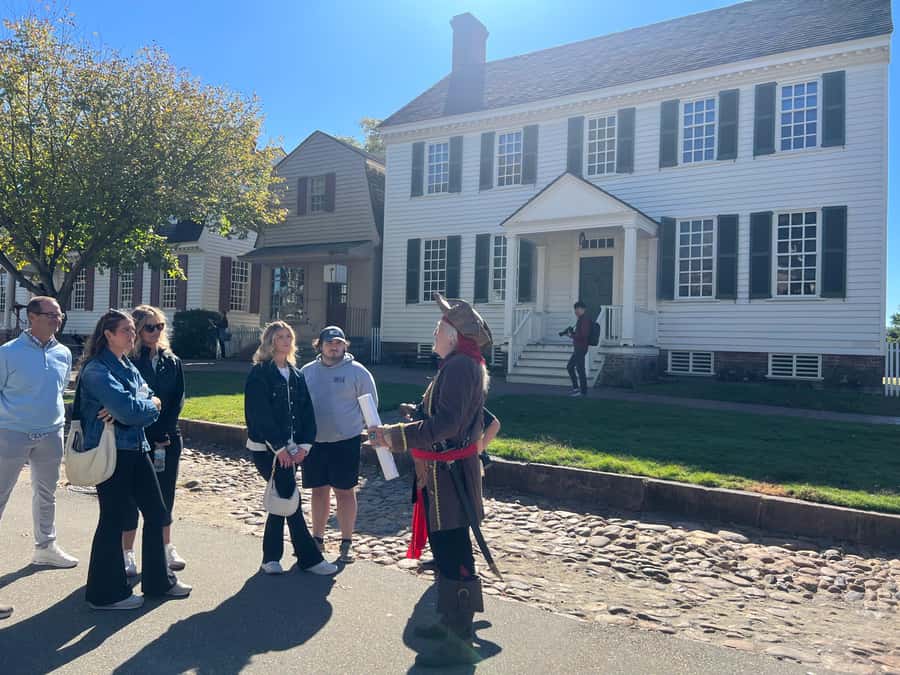
Colonial Williamsburg can seem easy to understand at first. You see tidy streets, restored buildings, costumed interpreters, and flags from the colonial period. But without context, it is possible to walk past the Capitol or Raleigh Tavern and see only attractive scenery.
A live guide gives those places a plot. You learn why a building mattered, who used it, and how arguments over royal power, taxation, independence, and local government affected ordinary lives. That makes the historic district easier to read.
The tour is led in English and lasts 105 minutes, long enough to cover the central story without taking up your entire day. You return to East Duke of Gloucester Street, so you can continue exploring, eat nearby, or use the walk as an introduction before spending more time inside selected buildings.
I especially like the focus on people beyond Washington and Jefferson. Those two names appear for good reason, but colonial Williamsburg becomes more interesting when you hear about the officials, shopkeepers, political voices, and residents who helped shape the town without becoming national icons.
More Guided Tours in the USA:
- History and Hauntings of Salem Guided Walking Tour
★ 5.0 · 14,564 reviews - Historic Charleston Guided Sightseeing Walking Tour
★ 5.0 · 6,216 reviews - Cambridge: Harvard University Student-Guided Walking Tour
★ 4.6 · 3,931 reviews
Meeting the guide at the Capitol Building
The official meeting point is in front of the Capitol Building. Parking is available at 460 Francis Street East, and parking costs $5 if you arrive before 5:00 PM.
This is the part of the visit where you should allow extra time. The directions can be confusing, and a map app may send you toward the courthouse instead of the correct meeting area. The instructions advise using 430 East Duke of Gloucester Street for walking directions to the Palmer House, then looking toward the end of the blacktop circle.
Your guide should be standing on the road in front of the Capitol Building. Do not rely only on a sign or a passing staff member to identify the group. A previous participant had trouble finding the right place and was eventually helped by a phone call from Elizabeth. I would arrive early, check the exact location, and keep your phone available.
The Capitol is a fitting place to begin because the tour later returns to the question of who held power. You start near the center of colonial government, then follow the story through public buildings, taverns, shops, and streets where political and social life overlapped.
Raleigh Tavern and the public life of the colony
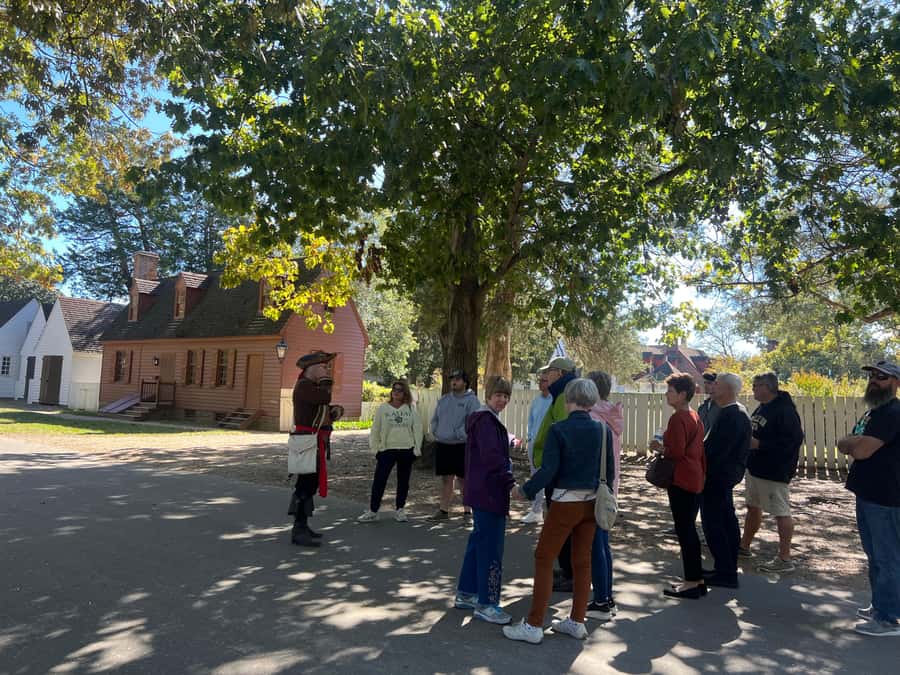
Raleigh Tavern is one of the most appealing stops because it helps you picture how news and political opinion moved through colonial society. Taverns were not simply places to eat and drink. They were meeting points where officials, merchants, visitors, and political supporters could exchange information.
The guide uses sites like Raleigh Tavern to make the period feel social rather than purely ceremonial. You hear about the people who gathered, argued, negotiated, and made decisions in rooms that now look quiet.
The tour may also point out the Tarpley and Thompson store. A shop like this gives you a different view from the grand government buildings. It brings attention to trade, buying habits, work, and the practical side of colonial life.
You should expect to hear the guide explain sites from the street rather than receive a full interior tour of every building. That is important when comparing this walk with a full admission ticket to Colonial Williamsburg. The walk supplies a broad framework, while separate building visits give you more time inside individual sites.
From royal government to elected officials
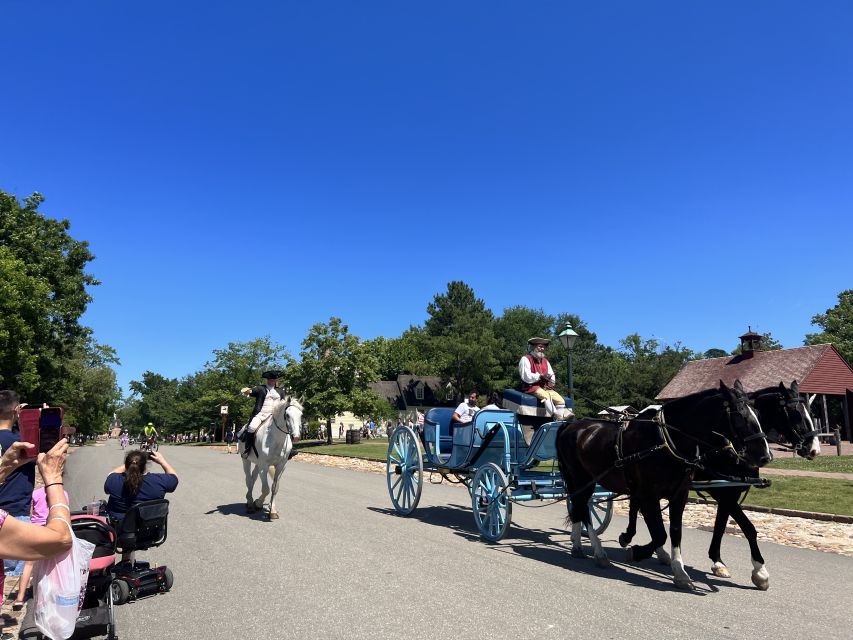
One of the strongest parts of the route is the political story around the Governor’s Palace. Colonial Virginia did not begin as a modern democracy. Royal authority shaped government, and local leaders had to deal with officials who represented the Crown.
The guide explains the change from royal government to elected officials and places that shift in the streets and buildings around you. This is more useful than memorizing dates because you can see how government occupied physical space and how public power was presented.
The story also helps explain why independence was such a serious break. The change did not happen in a single burst of patriotic agreement. It involved disputes over authority, loyalty, representation, and the future of the colony.
I like this part because it avoids treating the Revolution as a simple march toward an obvious result. The tour shows a society in transition, with competing views and uncertain outcomes. You hear about the people who supported the old system as well as those who pushed for independence.
A few more walking tours around the USA worth a look
- New Orleans Premier Ghost, Voodoo and Vampire Walking Tour
★ 4.5 · 12,856 reviews - Little Havana Food and Walking Tour in Miami
★ 5.0 · 8,882 reviews - Chicago: Gangsters and Ghosts Walking Tour
★ 5.0 · 7,155 reviews - Boston: Freedom Trail History Small Group Walking Tour
★ 5.0 · 6,450 reviews
The Capitol and the decision for independence
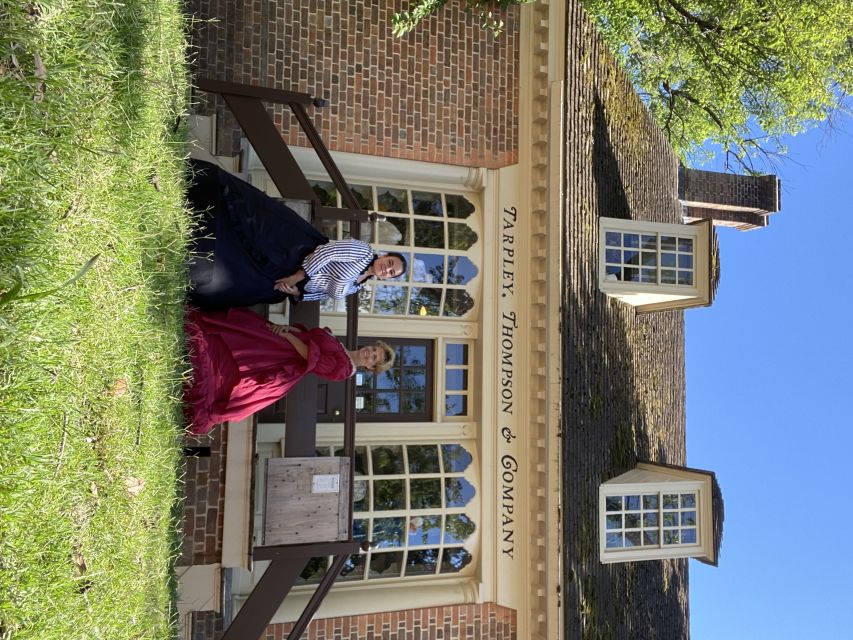
The Capitol Building provides both the starting point and the final piece of the walk. It was a place where Virginia’s government conducted business, so it is a natural setting for stories about law, political power, and the colony’s changing relationship with Britain.
As you walk back toward the Capitol, the declaration of independence becomes more than a famous phrase. The guide connects it to the local debates and the people who had to decide how far they were willing to go.
This closing section gives the tour a clear shape. You begin with colonial government, move through public and commercial places, hear about the pressure for change, and return to the building that represents political authority.
Do not expect a full lecture delivered without interruption. The best part of the experience is the guide’s interaction with the group. Elizabeth, in particular, has been praised for asking participants to take part, answering questions, and keeping children interested. That style helps the walk feel conversational rather than like a school lesson.
Period clothing and the recreation of daily life
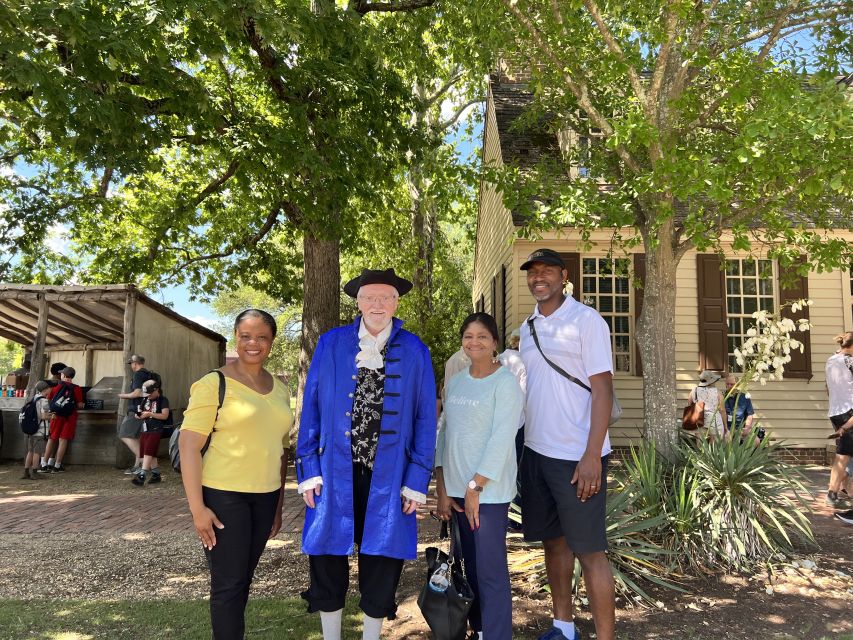
The costumes matter here. Redcoats, American revolutionaries, and other staff members dressed in period clothing help you read the streets as an eighteenth-century setting.
The clothing is not the whole experience, but it adds useful detail. You can see how carefully Colonial Williamsburg recreates the public appearance of the period, from military dress to civilian clothing. Combined with the restored buildings and streets, it gives the tour a strong sense of place.
The guide also uses small cultural details to bring daily life closer. One recurring strength is the explanation of the origins of American sayings. That may sound minor, but it gives you a memorable link between colonial speech and modern English.
I would pay attention when the guide moves away from famous names and formal events. A story about an expression, a local personality, or a lesser-known dispute can make the period easier to remember than another list of dates.
Possible stops beyond Raleigh Tavern
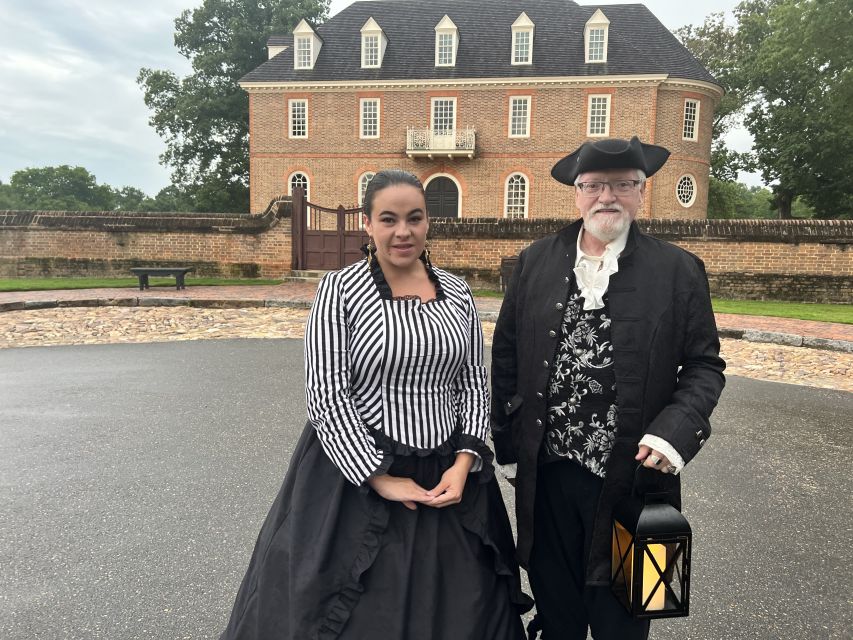
The route is centered on the main historic area, and the exact presentation can vary with the guide and the flow of the day. Along with Raleigh Tavern, the supplied tour information highlights the Tarpley and Thompson store, the Governor’s Palace area, and the Capitol.
One account of the walk also included the Gaol and Bruton Parish. These places add useful variety. The Gaol brings in the legal and punitive side of colonial government, while Bruton Parish points toward the religious life of the community.
You may not enter most shops or houses during this particular walk. That is not necessarily a weakness. A street-based tour can cover more ground and give you a clearer map of the town before you decide which interiors deserve extra time.
If entering historic buildings is your main goal, pair this experience with the appropriate Colonial Williamsburg admission or building access. Think of the guided walk as the story that helps you choose what to explore next.
The guides: Elizabeth, Tom Williams, and Lexi
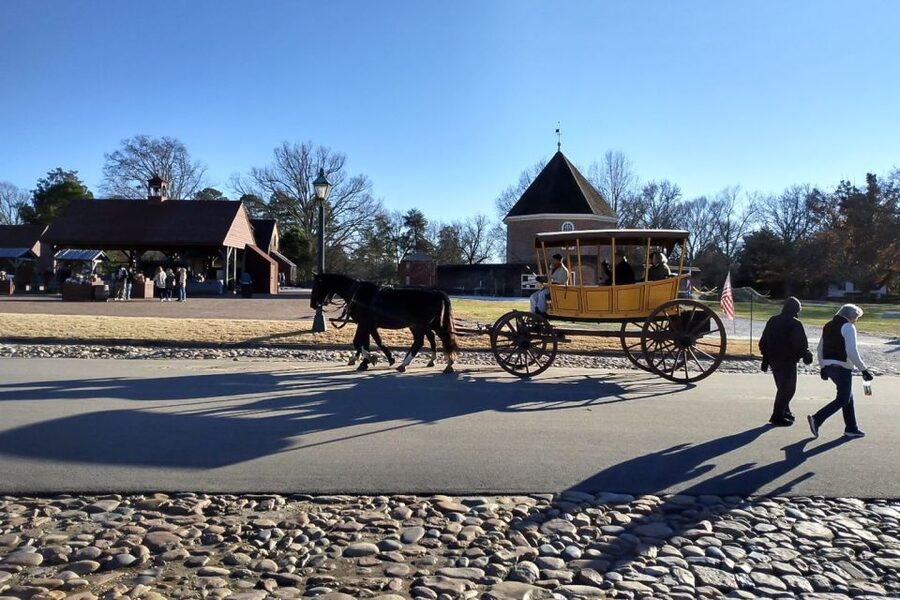
Guide quality matters more here than fancy equipment. This tour depends on voice, timing, memory, and the ability to make a large subject understandable while people are standing outdoors.
Elizabeth receives the strongest praise in the supplied material. She is described as enthusiastic, funny, interactive, and able to answer detailed questions. She has also adjusted the pace for people who needed help walking, adding sitting breaks when necessary.
Tom Williams has led an insightful version of the tour, with a strong grasp of the grounds and the ability to handle questions. Lexi has also guided the walk, including in rainy conditions.
You may not be assigned a particular guide, so book this for the format and subject rather than for a guaranteed personality. Still, the repeated emphasis on lively explanations, audience participation, and useful answers suggests that the guiding style is a major part of the value.
Heat, rain, walking, and accessibility
The route takes 105 minutes and includes scenic views along the way. Comfortable shoes are essential, even though this is not presented as a strenuous hike.
Bring sunscreen. The route has outdoor stretches and may include long periods in direct sun. One participant specifically wished for more pauses in the shade during a hot day. That is a fair warning, especially in summer.
Rain is another possibility. A guide has led the walk through wet conditions, but the experience will be more pleasant with suitable weather protection. Check the forecast and dress for an outdoor activity rather than an indoor museum visit.
The tour is listed as wheelchair accessible. If someone in your group has trouble walking, mention it when booking or contact the operator ahead of time. The guide has accommodated slower walkers and added sitting breaks, but the practical ease of the route can still depend on weather, pavement, and the group’s pace.
Is $25 a fair price?
At $25 per person, this is a reasonable buy if you want a clear introduction to Colonial Williamsburg. You are paying for 105 minutes with a personal guide, not simply access to streets that you could walk on your own.
The value comes from interpretation. Without a guide, you may recognize the Capitol and Raleigh Tavern but miss how they fit into the political story. A good guide also saves you from piecing together disconnected facts while trying to navigate the historic district.
The price is less compelling if you already know Williamsburg well or plan to spend most of your time inside buildings with official interpreters. In that case, the walk may repeat some basic material, though its focus on overlooked people and political connections can still add something new.
Free cancellation up to 24 hours before the start gives you useful flexibility, and you can reserve now and pay later. Those terms help if your schedule is still changing.
Who should book this Colonial Williamsburg tour?
I would recommend it to first-time visitors who want the town to make sense before exploring on their own. It is also a good fit for families, since the storytelling and questions can hold a child’s attention better than reading signs at every building.
History fans who already know the usual Founding Fathers will appreciate the effort to cover less familiar figures and the transition from royal rule to elected government. Couples and small groups looking for a focused overview can finish the walk with a better plan for the rest of the day.
I would think twice if you dislike outdoor walking, hot weather, or tours that explain buildings from the street. Also be cautious if your schedule is tight, since parking and the meeting point require some planning.
Final verdict: a smart first walk through Williamsburg
Book this tour if you want Colonial Williamsburg to feel like a lived-in political town rather than a row of preserved facades. The strongest reasons are the guide-led stories, the attention to overlooked colonial figures, and the way the route ties the Governor’s Palace, Raleigh Tavern, the Capitol, and other sites into one narrative.
Bring comfortable shoes, sunscreen, and a little extra time to find the Capitol meeting point. If possible, take the walk early or at a cooler time of day, then return to the buildings that caught your interest. For $25, it is a practical way to get your bearings and add human detail before exploring Williamsburg at your own pace.
FAQ
How long is the Colonial Williamsburg guided walking tour?
The tour lasts 105 minutes, or about one hour and 45 minutes.
Where do I meet the guide?
Meet the guide in front of the Capitol Building, on the road near the end of the blacktop circle. The meeting area is on East Duke of Gloucester Street.
How much does the tour cost?
The listed price is $25 per person. Parking at the meeting point costs $5 if you arrive before 5:00 PM.
Is the tour offered in English?
Yes. The live tour guide leads the experience in English.
Is the walking tour wheelchair accessible?
Yes, the activity is listed as wheelchair accessible. The guide has also accommodated people who needed to walk more slowly and take sitting breaks.
Can I cancel the tour if my plans change?
Yes. You can cancel up to 24 hours in advance for a full refund. You can also reserve now and pay later.
Just added around the USA
- Fan Tribute: Taylor Swift in New York Walking Tour★ 4.9 · 147 reviews
- Explore Must-See Spots: Las Vegas Strip Walking Tour★ 4.8 · 77 reviews
- East Nashville Walking Food Tour with 5+ Tastings★ 4.7 · 178 reviews
- Las Vegas: Fremont Street Walking Tour★ 4.9 · 153 reviews
- NYC: Guided Bus and Walking Tour with Staten Island Ferry★ 4.6 · 209 reviews
- DC: Smithsonian Highlights Walking Tour with Air and Space★ 4.8 · 97 reviews
- DC: Lincoln Assassination Tour with Ford’s Theatre Entry★ 4.6 · 72 reviews
- Deep Dive into Denver: Small-Group Walking Tour★ 4.8 · 119 reviews
Walking Tours, compared.

Magical London: Harry Potter Guided Walking Tour
Read our review →
Reykjavik Food Walk – Local Foodie Adventure in Iceland
Read our review →
History and Hauntings of Salem Guided Walking Tour
Read our review →
New Orleans Premier Ghost, Voodoo and Vampire Walking Tour
Read our review →
Amsterdam Anne Frank: Small-Group Walking Tour & Local Guide
Read our review →

Edinburgh Castle: Guided Walking Tour with Entry Ticket
Read our review →
Anne Frank’s Story – Guided Walking Tour through Amsterdam
Read our review →Browse the lists this tour appears in