
REVIEW · SOUTH AFRICA
Cape Town: Bo-Kapp Walking Tour and Malay Cooking Class
Bo-Kaap is at its best when you look beyond the famous painted houses. This four-hour experience pairs a walk through the old Muslim quarter with a hands-on Cape Malay cooking class in a local home. Guides including Faldela, Gadija, and Ilyas bring the streets, faith, food, and community to life.
I like the local connection and the fact that you actually make samosas and roti instead of watching a polished demonstration. I also like the spice stop, where you learn how different seasonings are used and hear about their traditional health benefits. The main drawback is the small cooking area, which can mean only one or two people work at the counter at once.
Key points at a glance
- Bo-Kaap beyond the photo stop: Walk cobbled streets, see old buildings, and learn how the community developed.
- A local-home cooking class: Prepare samosas, chicken curry, roti, salsa salad, and koesisters with an experienced host.
- The spice-shop visit: Get practical advice about Cape Malay spices, their uses, and their place in everyday cooking.
- A social meal at the end: Sit down with your host and fellow participants to eat what you prepared.
- Recipes to take home: You receive the recipes so you can try the dishes again after Cape Town.
- A four-hour cultural outing: The walking portion helps you understand Bo-Kaap before the cooking begins.
Why this Bo-Kaap experience feels different
Many people come to Bo-Kaap, photograph the colourful houses, and leave with only a surface impression. I prefer this format because it gives you reasons to slow down. You walk the neighbourhood with someone connected to it, then spend time in a home preparing food that is part of Cape Malay family life.
The experience is led by local guides and cooking hosts. Faldela receives especially strong praise for her humour, warmth, spice knowledge, and ability to involve the whole group. Other sessions have been led by Gadija or Ilyas, so the exact guide may vary. That matters: this is not a fixed museum script delivered by someone passing through town.
The walking tour is not long enough to become tiring, but it gives you useful context before lunch. You learn about the community, older buildings, Islamic traditions, the first mosque in South Africa, and the cultural museum. The route also includes local shops, art spaces, souvenir stores, and a spice shop.
More Cooking Classes in the world:
- Budapest: Hungarian Cooking Class and Market Walk
★ 5.0 · 91 reviews
Walking through Bo-Kaap with a local guide
Begin at the meeting point, described as a purple house with flower pots on top. From there, the guide leads you through the streets of Bo-Kaap and explains the area’s past and present.
The painted houses are the obvious attraction, but the walk is more useful when the guide explains what you are looking at. You see old architecture, hear about the people who live in the area, and learn how Islam shapes local customs and community life. One particularly interesting subject is how the houses came to have their bold colours, a detail that is easy to miss when you are simply taking photographs.
The area has a close community feel. Local people may greet the guide as you pass, and that gives the walk a more personal tone than a standard city sightseeing route. Your guide may also introduce you to local artists or shopkeepers. These short encounters help you see Bo-Kaap as a lived-in neighbourhood rather than a decorative backdrop.
The cultural museum and the first mosque are important stops in the story of the area. The museum entrance fee is included, though one participant found that the museum visit did not take place. I would treat the walking tour as the dependable core and ask at the start how much time is planned for the museum.
Wear comfortable shoes. Bo-Kaap has cobbled streets and the experience combines walking with standing in a kitchen. The walk is described as a good length for working up an appetite, not as a demanding hike.
The spice shop and the flavour of Cape Malay food
The spice-shop visit is one of the most useful parts for anyone who cooks at home. You learn about the seasonings used in Cape Malay food and hear how they can be combined in curries and other dishes.
Faldela is particularly good at explaining spices in an entertaining way. If she begins discussing several seasonings at once, have your phone ready for a short video, provided filming is welcome. Her explanations cover not only flavour but also traditional uses and claimed health benefits. Take the health information as cultural food knowledge rather than medical advice.
This stop gives the cooking class a stronger foundation. When you later add spices to the curry, you understand more about why they are there. It also makes the recipes easier to recreate because you have heard how the ingredients work, rather than simply copying a list.
Cooking samosas, curry, and flaky roti
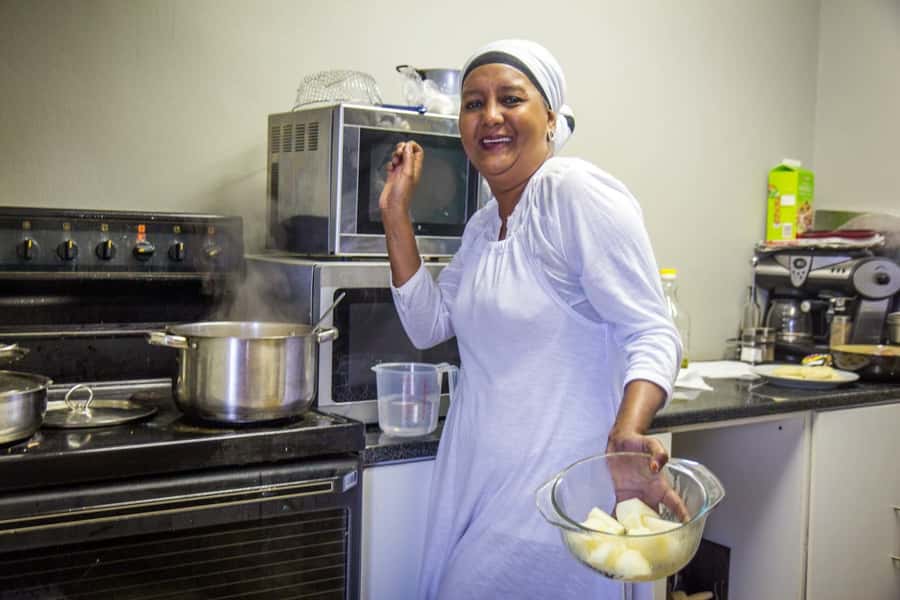
After the walk, you return to the host’s home and begin cooking. The menu can include samosas, chilli bites, chicken curry, roti, and salsa salad, followed by koesisters and cardamom tea. The exact dishes may vary slightly, but the central meal is a Cape Malay spread built around curry and flatbread.
The samosa preparation is hands-on. You help fold the pastry, which is a small but satisfying skill to take home. Chilli bites may also be prepared and fried. The class is designed for participation, and the host works to include everyone, but the kitchen is small. If your group is large, you may spend some time watching while one or two people work at the counter.
That is worth knowing before you book. This is an intimate home cooking class, not a purpose-built school with several workstations. The trade-off is that you get a more personal setting, but not every person can chop, fold, or stir at the same time.
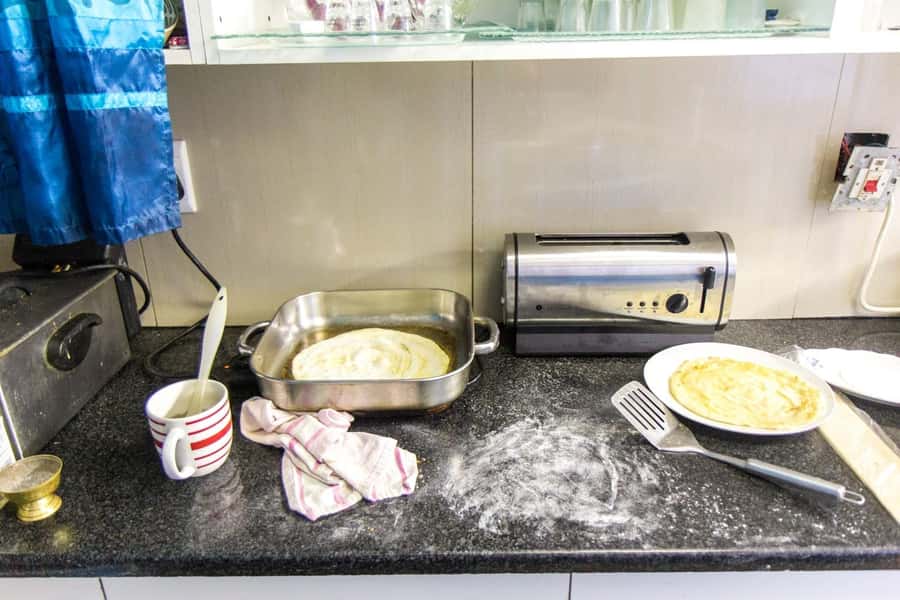
The roti lesson is a highlight. You learn to make the flatbread from scratch, including techniques for producing a flaky result. Roti can look simple until you try to shape and cook it, so having the host show you the method is far more useful than reading a recipe.
The chicken curry brings the lesson together. You prepare the main dish with the spice knowledge from the earlier stop, then make sambal, described here as a fresh salsa salad, to add a bright contrast to the meal. The recipes are sent by email, which means you can practise them at home instead of relying on memory.
You do not need to be an experienced cook. The teaching is relaxed, and the host does enough preparation and guidance to keep the final meal on track. If you are not keen on cooking, you can still enjoy the stories, the smells, and the shared meal, though you should expect to take part rather than sit back for the entire session.
More Hands-On Workshops in the world:
- Brussels Chocolate Walking Tour and Workshop
★ 4.5 · 885 reviews - Brussels: Chocolate Workshop and Guided Walking Tour
★ 4.6 · 263 reviews
Sitting down to a Cape Malay meal
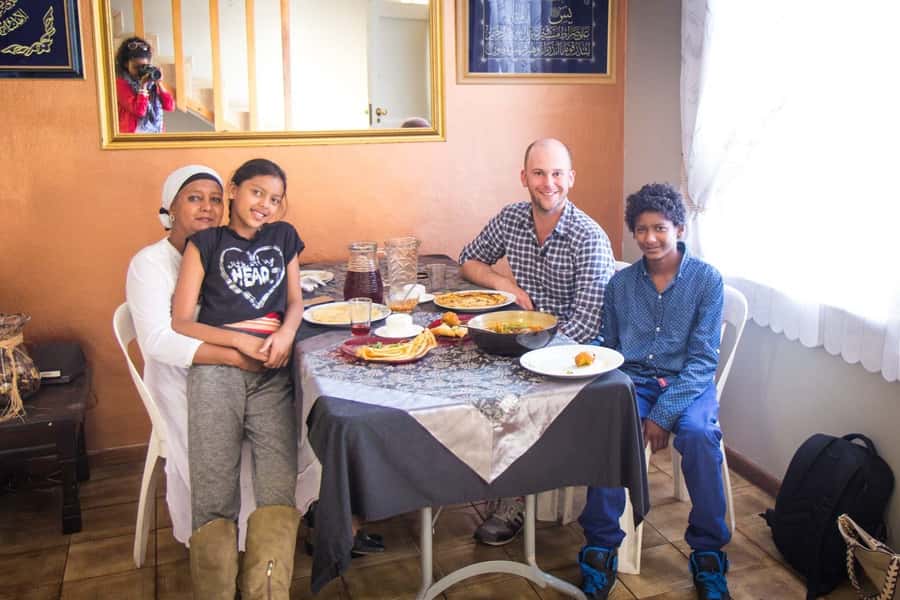
The meal is the payoff, but it is also part of the cultural exchange. You sit with your host and the other people in the group, eat the food you helped prepare, and talk over the table.
The menu is substantial. Expect curry, roti, samosas or other starters, salsa salad, and a sweet finish. Koesisters are spiced doughnuts served with cardamom tea. They are a fitting end to the class because they show another side of Cape Malay cooking, where warm spices are used in sweets as well as savoury dishes.
The setting matters here. Eating in a local home creates room for conversation that you rarely get during a quick restaurant meal. Several guides are described as funny and welcoming, and the social side is a major reason to choose this activity over a short photo walk.
One practical point needs clarification. The activity information says food and drinks are not included, yet the cooking class clearly includes preparing and eating the listed dishes. Since the meal is central to the outing, confirm the current food arrangements and any extra costs when booking. Alcohol is not included.
The guides make the tone
The people leading this activity shape it more than the route does. Faldela is described as a lively teacher with a strong connection to Bo-Kaap. She has a reputation for making sure people join in, explaining techniques clearly, and keeping the room cheerful.
Gadija has also led the walk and cooking session, combining a history walk with lessons in curry, samosas, chilli bites, and roti. Ilyas has guided the walking portion, offering a local perspective before the cooking begins. The names matter because you may see different hosts listed for different dates.
The tone is informal. You can ask questions about houses, religion, food, and daily life. At the same time, one participant felt that discussion of current political issues became too forceful for a cooking class. I would not expect a completely neutral or scripted presentation. The guides speak from their community and their own views, which can be valuable, but the conversation may occasionally move beyond the planned food and history topics.
Is $68 good value?
At $68 per person, this is not the cheapest way to see Bo-Kaap. It becomes better value when you count the four-hour duration, local guiding, museum entry, spice-shop visit, cooking instruction, full meal, and recipes.
You are paying for access and time, not just for a plate of food. The walk explains the neighbourhood, the class teaches several recipes, and the meal gives you time with a local host. A short guided walk followed by lunch would cost less, but it would not give you the same practical cooking lesson.
The value is strongest for people who want a cultural activity with a personal element. It is weaker if you only want to photograph the houses or if you dislike group cooking. The small kitchen also means that a larger group may involve more watching than doing.
The listing includes water and museum entry. Cancellation is flexible up to 24 hours before the activity for a full refund, and you can reserve now and pay later. Starting times vary, so check the available slot against your Cape Town plans.
Who should book this activity?
I would choose this for first-time visitors who want more context for Bo-Kaap, food lovers, solo visitors who enjoy meeting people, and couples or families looking for a relaxed half-day activity.
It also suits people who like to bring travel skills home. Learning to fold samosas and make roti gives you something concrete to remember the afternoon by. The emailed recipes make that benefit last beyond Cape Town.
You should think twice if you need a spacious, highly structured cooking school or if you want a long museum visit. The class takes place in a home, and the pace depends partly on the group and the host. It is also worth confirming dietary needs in advance. One session handled dietary requirements carefully, but the supplied information does not list every available adaptation.
My verdict on the Bo-Kaap cooking class
I would book this if you want to understand Bo-Kaap through both its streets and its food. The strongest parts are the local guides, the spice lesson, the hands-on roti and samosa work, and the chance to eat with your host afterward.
Go in expecting a home kitchen rather than a professional cooking studio. You may not have a turn at every step, and the museum portion should be confirmed. Still, for $68, the combination of neighbourhood history, local conversation, practical recipes, and a hearty meal offers good value. Start with the walking tour, bring comfortable shoes, and arrive ready to participate.
FAQ
How long does the Bo-Kaap walking tour and cooking class last?
The activity lasts four hours. It combines the neighbourhood walk, cultural stops, spice-shop visit, cooking class, and shared meal.
Where does the activity meet?
You meet your host at a purple house with flower pots on top.
What language is the tour conducted in?
The live tour guide and cooking instruction are in English.
Who may lead the experience?
The guides and hosts can vary. Names connected with the activity include Faldela, Gadija, and Ilyas.
What food will I prepare?
The planned meal includes samosas, chicken curry, roti, salsa salad, and koesisters with cardamom tea. Some sessions also include chilli bites.
Do I eat the food I prepare?
Yes. After cooking, you sit down to enjoy the meal with your host and the group.
Are recipes provided?
Yes. The recipes for the dishes prepared during the class are sent by email.
Is the museum entrance included?
Yes, the museum entrance fee is included in the activity information. Confirm the planned museum stop when you arrive, as the amount of time there can vary.
What should I bring?
Bring comfortable shoes for the walk and cobbled streets.
Can I cancel the booking?
You can cancel up to 24 hours in advance for a full refund. The reserve-now, pay-later option is also available.
Just added around the world
- Fira: Guided Foodie Walking Tour with Tastings★ 4.9 · 474 reviews
- Fez: Guided Walking Tour of the Historic Medina★ 5.0 · 359 reviews
- Fez: Walking Tour in the Ancient City of Fez★ 4.8 · 73 reviews
- Faro: Old Town Guided Walking Food Tour★ 4.9 · 94 reviews
- Feel like a local – Walking Tour in Mykonos Town 2hours★ 4.4 · 77 reviews
- Fes: A Guided Walking Tour Through the Historic Medina★ 4.4 · 97 reviews
- Fez: Half-Day City Private Walking Tour with a Guide★ 4.6 · 114 reviews
- Fanal / Assobiadores – Levada Walk★ 4.6 · 93 reviews
Walking Tours, compared.
Magical London: Harry Potter Guided Walking Tour
Read our review →
Reykjavik Food Walk – Local Foodie Adventure in Iceland
Read our review →
History and Hauntings of Salem Guided Walking Tour
Read our review →
New Orleans Premier Ghost, Voodoo and Vampire Walking Tour
Read our review →
Amsterdam Anne Frank: Small-Group Walking Tour & Local Guide
Read our review →

Edinburgh Castle: Guided Walking Tour with Entry Ticket
Read our review →
Anne Frank’s Story – Guided Walking Tour through Amsterdam
Read our review →Browse the lists this tour appears in