
REVIEW · BUDAPEST
Budapest: Street Art and Underground Movements Walking Tour
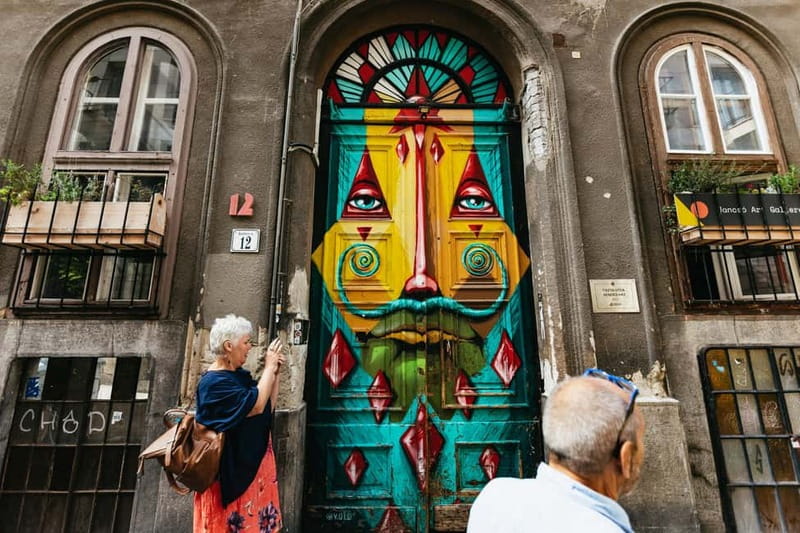
Budapest’s street art is easy to miss if you only look at the big murals. This two-hour walk trains you to notice stickers, paste-ups, lettering, small sculptures, and works tucked beside ordinary doorways. ET and Suzie connect each piece to the city’s social, political, and underground culture.
I like the small group of eight, which keeps questions easy and gives the guide room to adjust the route. I also like the useful follow-up: you may receive artist names, social media links, and a map of Kolodko mini sculptures after the walk. The main consideration is that street art changes constantly, so the exact works and stops can vary.
Key points at a glance
- Start at Telep-Art Galéria: Meet inside a distinctive bar covered with stickers and street art.
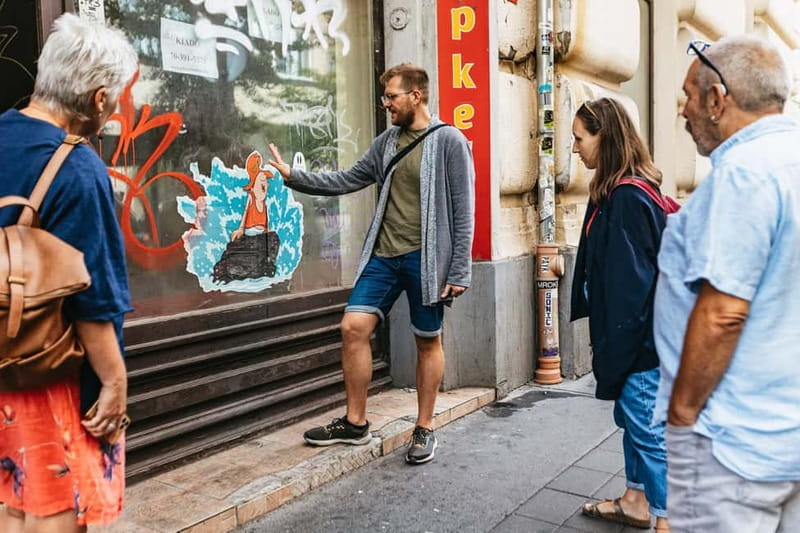
- Look beyond murals: The tour includes stickers, paste-ups, graffiti, public art, lettering, and small sculptures.
- Hear the messages behind the art: ET explains the social, political, cultural, and personal ideas tied to the work.
- Walk through Budapest’s Jewish and party quarter: Much of the route explores Erzsébetváros and nearby streets in central Pest.
- Keep the group personal: A maximum of eight people makes discussion and questions part of the experience.
- Finish near Központ: The route ends in a useful central area, with the option of continuing into Budapest’s nightlife district.
Why Budapest’s small street art matters
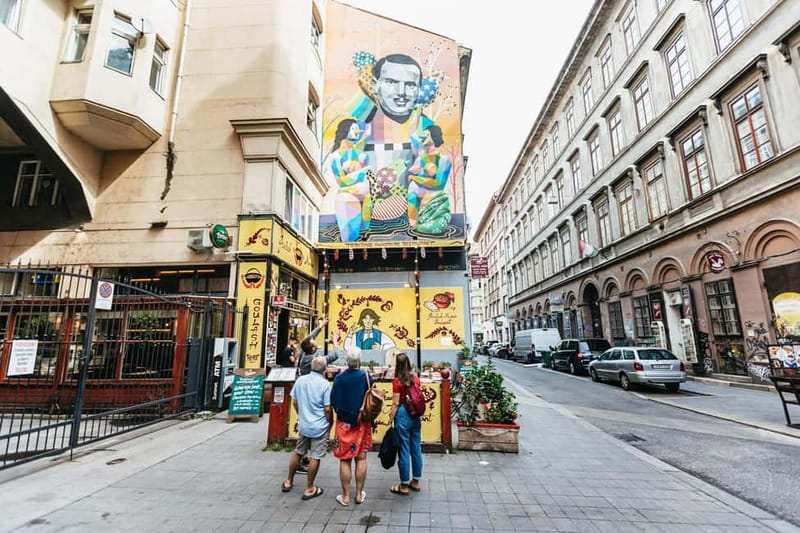
Budapest can seem like a city of grand boulevards, thermal baths, grand cafés, and handsome nineteenth-century buildings. This walk points your attention lower and closer. A tiny sticker on a drainpipe, a paste-up beside a doorway, or a strange sculpture on a public corner can say just as much about modern Budapest as a major monument.
The tour treats street art as more than decoration. You learn how artists use public space to raise questions about politics, identity, social change, urban life, and the way people share a city. Some pieces may be playful. Others may be pointed or openly critical. The pleasure is in learning how to read them.
I especially like the way this changes your sightseeing for the rest of your stay. Once ET or Suzie has shown you how artists identify their work, you can begin spotting related pieces on your own. A routine walk to dinner can become a small art hunt.
This is also a useful choice if you have already seen Budapest’s famous sights. You will not spend two hours repeating the usual story of the Parliament, Buda Castle, or the Chain Bridge. Instead, you get a look at contemporary city life and at the local people who use walls, signs, stickers, and public corners to communicate.
More Street Art Walks in Budapest:
- London: Street Art and Graffiti Guided Walking Tour
★ 4.9 · 1,354 reviews - Berlin: City Street Art Guided Walking Tour
★ 4.8 · 1,051 reviews - Naples Spanish Quarters Walking Tour Street Art, Folklore & Sweet
★ 5.0 · 797 reviews
Meeting at Telep-Art Galéria
The meeting point is Telep-Art Galéria, a bar with a distinctive, sticker-covered interior. It is a fitting place to begin because the setting introduces the informal, handmade side of the culture before you even start walking.
The location also helps set expectations. This is not a formal museum tour with display labels and a fixed indoor route. It begins in a social, creative space and then moves into the streets. If you arrive early, allow enough time to find the bar and look for the sticker-covered walls.
The walk is conducted in English. ET is the main guide described for the experience, while Suzie also leads some departures. Both are presented as active participants in Budapest’s art scene, and ET brings academic study of street art movements into his explanations. That gives the conversation more substance than simply pointing at a mural and naming its artist.
Through Erzsébetváros and the old Jewish Quarter
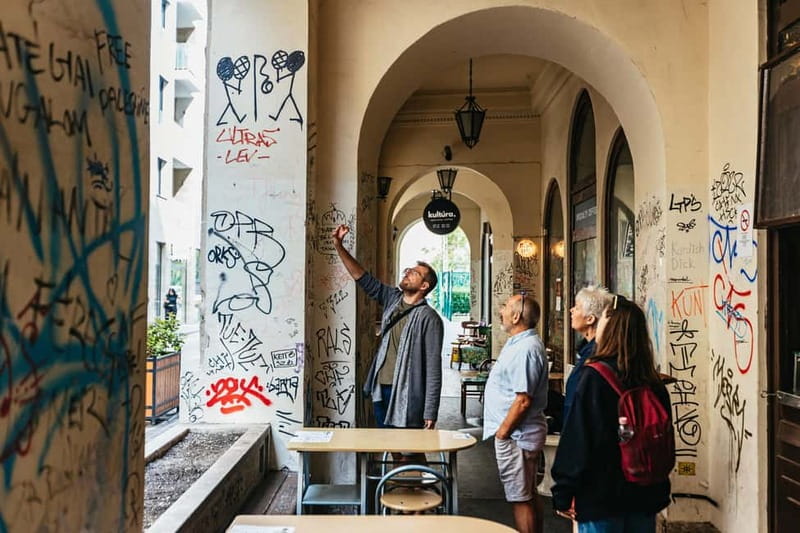
The route focuses largely on central Pest, especially Erzsébetváros and the old Jewish Quarter. This part of Budapest is a natural setting for the tour. Its streets combine old buildings, nightlife venues, independent businesses, residential spaces, and a high concentration of visual material.
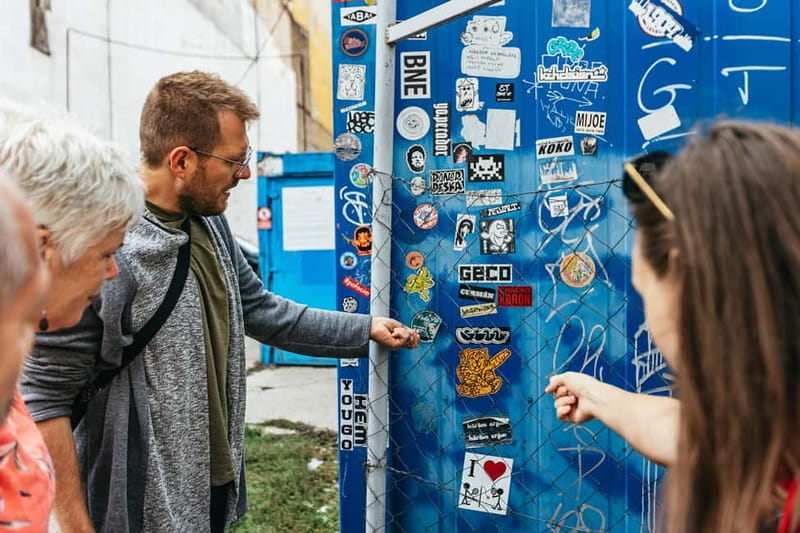
You may pass works that are obvious from across the street, followed by pieces so small that you would likely walk past them alone. The guide may point out the difference between a large commissioned mural and a sticker placed by an artist without official approval. You may also see paste-ups, graffiti, public art, and bronze mini sculptures.
That range is important. Many people arrive thinking street art means large painted walls. The tour widens the definition. A tiny image repeated across the city can create its own network. A small sculpture can turn a familiar corner into a playful encounter. A piece of lettering can carry an artist’s style even when the message is hard to read.
The route is not only about identifying artists. It also gives you a way to understand the neighborhood. The art reflects the area’s nightlife, changing identity, political concerns, and mix of local and international influences. You get context for the streets themselves, not just a gallery of disconnected works.
The secret stop and changing route
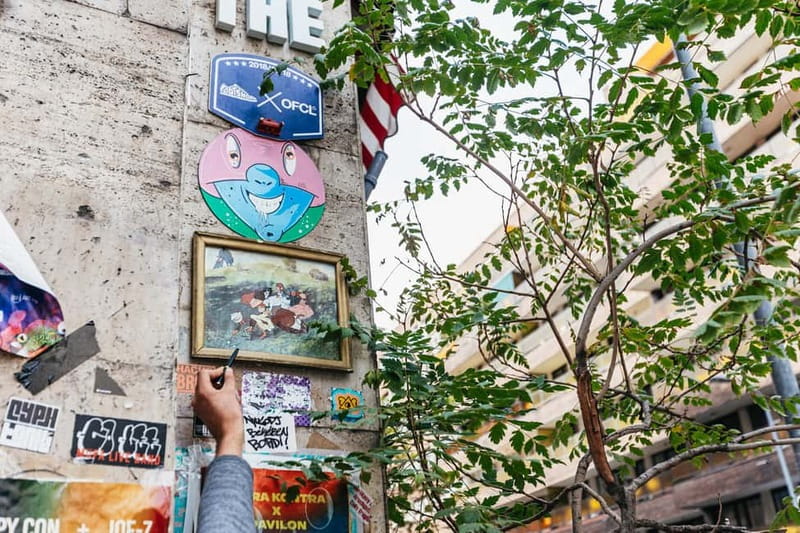
The itinerary includes a secret stop, so you should expect some element of surprise rather than a fully published list of locations. That works well for this subject. Street art is temporary, and a fixed promise would quickly become outdated when a wall is painted over or a sticker disappears.
Several departures have included a quick stop at a local bookshop, a café, or the Szimpla Kert ruin bar. Access to Szimpla Kert during the day can be especially useful. Instead of seeing it only as a crowded nightlife venue, you may have time to study the objects, decorations, and art covering its interior.
These additions are not the main reason to book the tour, and they may not appear in exactly the same form every time. Think of them as part of the guide’s local knowledge and route planning. The core experience remains the street art walk.
The lack of a rigid sightseeing script is both a strength and a small limitation. You get a route that can respond to the city and the group. At the same time, anyone hoping for a fixed checklist of famous murals should choose a different kind of tour.
A few more walking tours around Budapest worth a look
- Budapest: Buda Castle Walk with Saint Stephen’s Hall
★ 4.5 · 3,012 reviews - Big Bus Budapest Hop-On Hop-Off Bus and Walking Tour
★ 3.5 · 2,206 reviews - Budapest: Buda Castle District Walking Tour
★ 4.6 · 2,108 reviews - Budapest City Landmarks Walking Tour in 2 Hours
★ 5.0 · 2,048 reviews
ET and Suzie’s guiding style
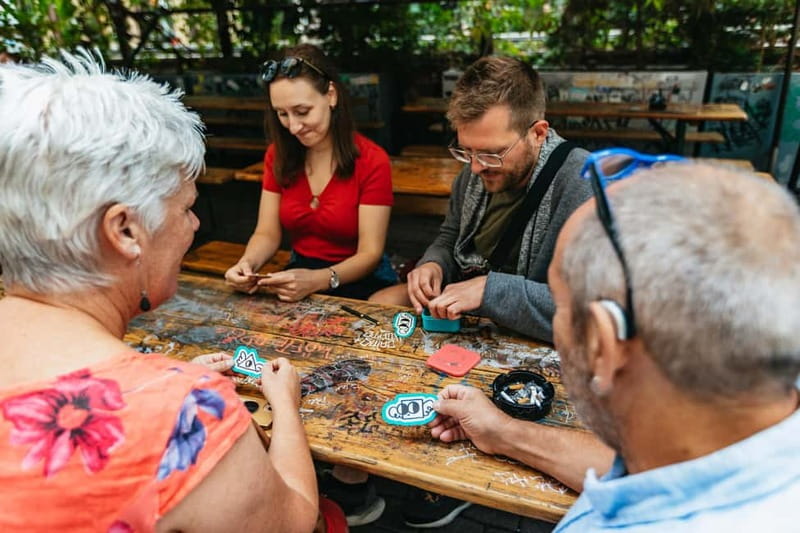
The strongest part of the experience is the guide’s role. ET is described as funny, approachable, and able to keep a group involved without turning the walk into a lecture. He asks about the people on the tour, welcomes questions, and encourages discussion between participants from different countries.
That matters on a subject that can become dry if presented as a string of dates and artist names. ET explains techniques, symbols, artist relationships, and the background of the local movement, then leaves space for conversation. The result should feel more like a walk with a well-informed local than a formal classroom.
Suzie brings the same basic focus to departures she leads. She has been praised for making the subject accessible to people who know little about street art. You do not need to arrive with an art background, and you should not feel out of place if you cannot tell graffiti from a paste-up.
The guides also add personal touches. Some groups have received a small surprise or gift, and ET has been known to complete a Rubik’s Cube during the route. These details are not the central attraction, but they help create the friendly atmosphere that makes a small-group walk work.
What you learn beyond the pictures
A useful street art tour should answer more than the question of who painted what. This one looks at why a work exists in a particular place and what it says about Budapest.
You may discuss:
- How local artists use stickers and paste-ups to spread images quickly
- The difference between official public art and unauthorized work
- The cultural and political messages attached to particular pieces
- How artists create recognizable styles and repeat visual signs
- The role of the Jewish Quarter and party district in Budapest’s creative life
- How street art changes as buildings, businesses, and neighborhoods change
The walk also gives you a more current view of Budapest. Much standard sightseeing focuses on royal power, war, architecture, and famous institutions. Those subjects matter, but this tour shifts attention to current voices and informal forms of expression.
I find that especially valuable for return visits. If you have already taken a basic city tour, you may want something that shows how Budapest is being interpreted by its artists today. This experience fits that need without requiring a full day or a specialist’s background.
A two-hour pace with plenty of walking
Two hours is a good length for this subject. It gives the guide time to explain a reasonable number of pieces without turning the walk into an exhausting art survey. Several people have found that the time passes quickly, which is usually a sign that the conversation keeps moving.
You should still wear comfortable shoes. The exact walking distance is not specified, and the route changes, but this is a walking tour through city streets rather than a seated presentation. You may stop often to examine small works, look up at murals, or discuss details beside a wall.
The pace can suit families because the tour is interactive and includes visual material at different scales. Children may respond well to stickers, unusual sculptures, and the hunt for details. Adults who want a serious discussion of protest art and underground movements will also find material to engage with.
A practical point: street art is outdoors, so weather affects the experience. The group has stayed engaged even in cold conditions, but you should dress for the forecast. There is no food or drink included, though a café or bar stop may be part of the route.
What the $28 price buys you
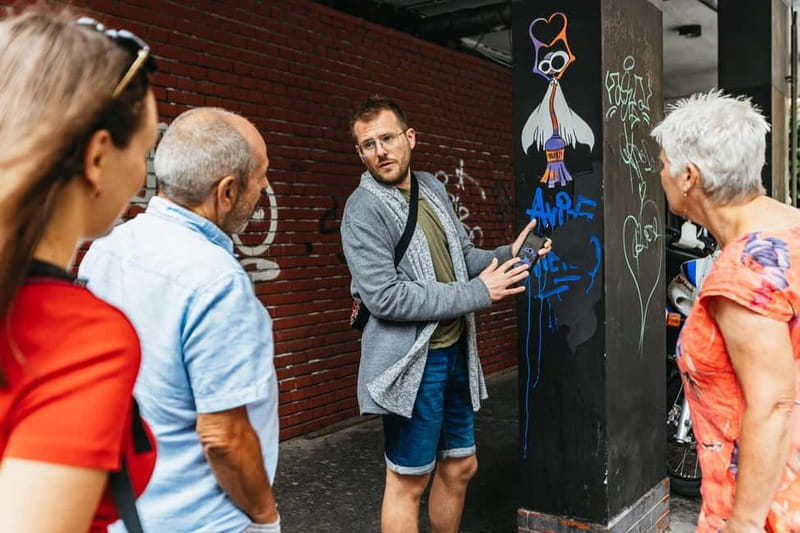
At $28 per person, this is fairly priced for a two-hour guided walk with a maximum of eight people. The value comes less from the number of locations than from the explanations. Without a guide, you might see a mural or sticker but miss the artist, technique, local reference, or political point behind it.
The small group improves that value. You can ask about a specific piece, hear answers clearly, and keep the discussion personal. A large group would make it harder to stop for tiny works and would reduce the chance of a genuine exchange.
The follow-up material adds practical value. ET may send a summary with artist names and social media details, along with an interactive map showing the locations of Kolodko mini sculptures. That gives you something to explore after the formal walk ends.
The price is less attractive if your main goal is simply to photograph large murals. You can find some wall art independently, and the tour does not promise a set collection of famous pieces. You are paying for interpretation, access to a local perspective, and the skill of noticing what most people miss.
Who should book this walk
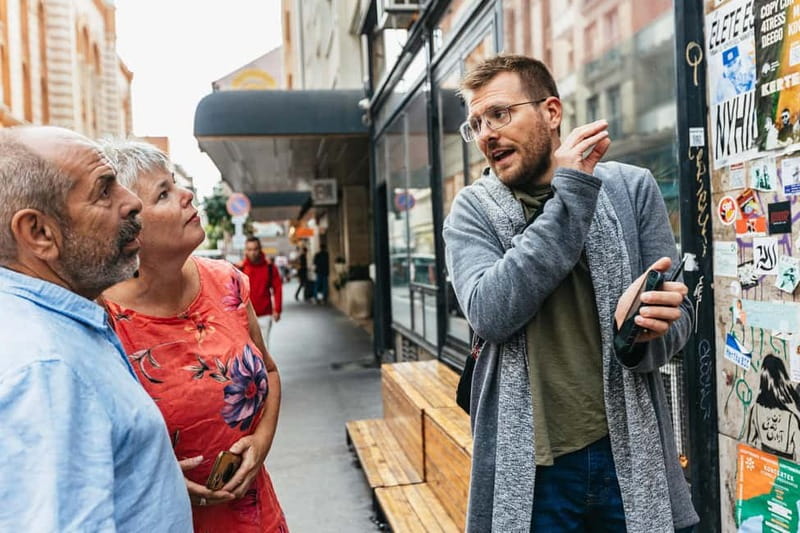
I would recommend it to first-time visitors who want a strong orientation to Budapest’s creative side. It works especially well early in your stay because the guide may suggest places to eat, drink, or continue exploring, and you can use your new street-art awareness for the rest of the trip.
It also suits repeat visitors, contemporary art fans, photographers, students, families, and anyone tired of standard sightseeing. You do not need to know much about graffiti. Curiosity is enough.
This is less suitable if you want a major museum collection, a formal art lecture, or a guaranteed list of specific murals. It is also not the best choice for someone who dislikes walking, outdoor stops, or discussion about political and social subjects.
The private option may suit families or friends who want more control over the pace. The shared version is a better value for solo visitors and couples who enjoy meeting other people. With only eight places, the group remains small without the cost of a fully private guide.
A few practical details before you go
The tour lasts two hours and is offered in English. It begins at Telep-Art Galéria and finishes near Központ, so you can continue into central Budapest afterward.
The experience is wheelchair accessible. Because the route involves public streets and changing works, you may want to confirm the details of a particular departure if you have specific mobility needs.
You can cancel up to 24 hours before the start for a full refund, and the reserve-now, pay-later option lets you keep your plans flexible. Starting times vary, so check availability for the date you want.
Bring comfortable shoes, a phone or camera if you like recording details, and an open mind about what counts as art. Most of all, allow time after the walk to notice the city differently.
Should you book Budapest’s street art walk?
Book it if you want to understand the small signs, stickers, sculptures, and murals that give central Budapest another layer. ET and Suzie make the subject friendly without stripping away its political and cultural meaning, and the eight-person limit keeps the walk personal.
Skip it if you want only landmark architecture or a fixed list of famous walls. For $28, the tour earns its value through interpretation and local insight, not through a high number of stops. If that sounds like your kind of sightseeing, take it near the beginning of your Budapest stay and use the rest of your visit to keep looking down side streets and beside doorways.
FAQ
How long does the Budapest street art tour last?
The walking tour lasts two hours.
Where does the tour begin?
The meeting point is Telep-Art Galéria, a distinctive bar with many stickers on its walls.
Where does the tour finish?
The walk finishes at Központ.
Is the tour offered in English?
Yes. The live guide conducts the tour in English.
How many people can join the shared tour?
The group is limited to eight participants.
Is the tour wheelchair accessible?
Yes, the activity is listed as wheelchair accessible.
Just added around Budapest
- Small-Group Culinary Walking Tour in Budapest★ 5.0 · 148 reviews
- Walking Tour Budapest incl. the Shoes on the Danube Bank★ 5.0 · 387 reviews
- Walking tour in the Buda Castle incl. Fisherman’s Bastion★ 5.0 · 467 reviews
- Virtual Reality Walking Tour★ 5.0 · 434 reviews
- Budapest Ruin Bars Evening Walking Tour with Drinks & Street Food★ 5.0 · 104 reviews
- Budapest walking tour: Parliament and Shoes Memorial★ 5.0 · 387 reviews
- Essential Walking Tour★ 5.0 · 101 reviews
- Budapest Private Full Day City Sightseeing Tour Walking or by Car★ 5.0 · 299 reviews
Street Art Walking Tours, compared.

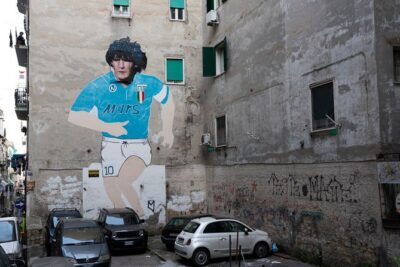
Naples Spanish Quarters Walking Tour Street Art, Folklore & Sweet
Read our review →

NYC: Brooklyn Graffiti & Street Art Walking Tour in Bushwick
Read our review →
Browse the lists this tour appears in