
REVIEW · BUDAPEST
Budapest Castle District Walking Tour
Budapest’s Castle District is best understood on foot, where grand palaces sit beside scarred walls, small courtyards, odd public statues, and reminders of war. This tour connects the big sights with the less obvious corners, from the medieval Jewish Prayer House to the National Archives and the underground world beneath Castle Hill.
I like the local guide format, with guides such as Dora, Rita, Gary, Sophia, and Andy bringing their own mix of history and humor. I also like the low upfront price, which lets you get a two-hour introduction to Buda for only $3.62, though you should plan on leaving a tip because guides depend on donations.
The main catch is the climb. You’ll face an uphill walk, stairs, and plenty of standing, and the stop at Buda Castle can feel brief if you want lots of time for photos. Fisherman’s Bastion may also be crowded, especially when the light and views are at their best.
Key points to know before you go
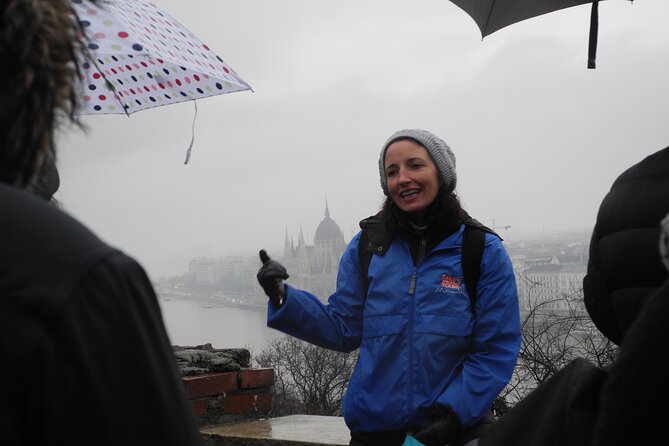
- A history walk with local guides: Guides are Budapest natives or long-time local specialists, including Dora, Rita, Gary, Sophia, Andy, and others.
- The route covers more than the palace: You’ll see Matthias Church, Fisherman’s Bastion, the medieval Jewish Prayer House, the National Archives, wartime sites, and public art.
- The best views arrive near the end: The terrace by Prince Eugene of Savoy’s equestrian statue looks across the Danube toward Pest.
- Expect a real uphill walk: The tour asks for moderate fitness and includes a 10-minute uphill stretch plus flights of stairs.
- The price is unusually low: The $3.62 booking fee covers administration, while the guide’s income comes from your donation.
- It is an introduction, not a museum visit: You see the Hospital in the Rock Nuclear Bunker Museum from outside and do not enter Matthias Church.
Why this walk helps you understand Buda Castle
Many visitors come to Buda Castle, take a few photos, and leave with the impression that it is simply a grand palace on a hill. This walk gives you the missing context. Castle Hill is not one building. It is a whole historic district with churches, homes, government offices, fortifications, monuments, tunnels, and viewpoints.
The route also treats the district as a place where people lived, not only as a backdrop for royal ceremonies. You hear about German, Jewish, and Hungarian communities, the Ottoman period, World War II, and the rebuilding that followed. That broader view is one of the tour’s strongest features.
The English-speaking guides use different styles. Dora is described as warm and full of facts, Rita mixes wit with history, Gary keeps the presentation lively, and Sophia is patient and clear. Andy has a more measured delivery, which suits some people better than others. The guide you receive will shape the experience, but the subject matter gives every guide plenty to work with.
More Castle and Palace Walks in Budapest:
- Budapest: Buda Castle Walk with Saint Stephen’s Hall
★ 4.5 · 3,012 reviews - Budapest: Buda Castle District Walking Tour
★ 4.6 · 2,108 reviews - Budapest: 3-Hour Grand City Tour and Castle Walk
★ 4.3 · 1,437 reviews
Meeting at Batthyány Square and climbing toward the hill
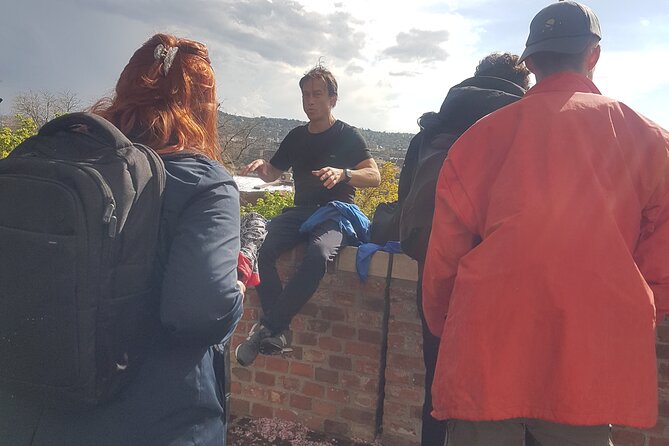
The meeting point is at Batthyány tér, by the metro exit in the park. Pay attention to the exact location. Batthyány Square is a busy transport area, and the tour does not meet at the castle itself.
Starting here gives you a useful view of the Buda side before you climb. The walk toward Castle Hill helps you see how high the district sits above the Danube and why it was such a useful defensive position for centuries. Your guide introduces the route and explains what you will see during the next two hours.
This opening section takes about 10 minutes and has no admission charge. The uphill portion is not extreme for a fit walker, but it is enough to notice, especially in hot weather, cold wind, or after a full day of sightseeing. Guides often pause to let the group catch its breath, continue talking during rest stops, and look for shade when the sun is strong.
Bring water and wear shoes with a good grip. You do not need technical hiking gear, but this is not a flat city stroll. If your mobility is limited, consider the route carefully. It is not wheelchair accessible, and the walk includes stairs and uneven uphill sections.
Matthias Church and eight centuries of change
Matthias Church is one of the district’s key landmarks. The tour stops outside, so the church entrance is not included. That limitation matters if you want to study the interior, but it also keeps the walk moving and allows the guide to focus on the wider story of the hill.
The discussion here covers roughly 800 years of conflict, occupation, and rebuilding. You learn how German, Jewish, and Hungarian residents lived in the area, and how power shifts changed daily life. This is where the tour moves beyond dates and royal names. The district becomes a record of different communities sharing the same hill across very different periods.
Because the church is a major attraction, this section can feel busy. Stay close enough to hear the guide, especially when other groups gather nearby. A clear voice helps, and several guides are praised for speaking loudly and explaining complicated events in a simple way.
Fisherman’s Bastion and the famous free view
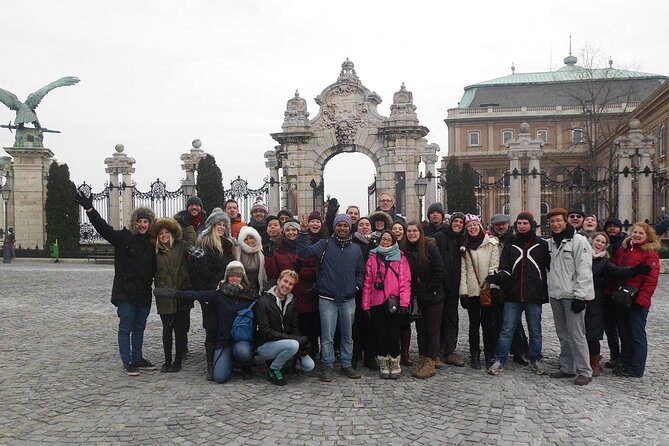
Fisherman’s Bastion supplies the postcard moment. Its terraces look over the Danube toward Pest, with the city spreading out below. The tour explains the connection between the bastion and Walt Disney, along with details about Hungarian symbols and the meaning of crosses with one, two, or three bars.
The practical tip here is useful: your guide points out how to enjoy a free view from Castle Hill. Some parts of the bastion may require a fee at certain times, but the tour focuses on viewpoints that do not add to your costs.
Crowds are the main problem. Fisherman’s Bastion is one of Budapest’s most popular photo stops, and packed terraces can make it hard to hear or pause for pictures. If you want quiet photographs, arrive early or return later on your own. During the tour, listen first, then take photos when the group moves to a less crowded terrace.
Allow yourself a little flexibility. The route is designed to cover many subjects, so the guide may not linger as long as you would on a private photo stop. One useful criticism of the experience is that the castle section can feel rushed because so much is included.
A few more walking tours around Budapest worth a look
- Big Bus Budapest Hop-On Hop-Off Bus and Walking Tour
★ 3.5 · 2,206 reviews - Budapest City Landmarks Walking Tour in 2 Hours
★ 5.0 · 2,048 reviews - 3-Hour Orientation Walking Tour of Buda and Pest
★ 4.8 · 1,834 reviews - Budapest Historical Sightseeing – Free Walking Tour
★ 5.0 · 1,302 reviews
A medieval Jewish prayer house and baroque homes
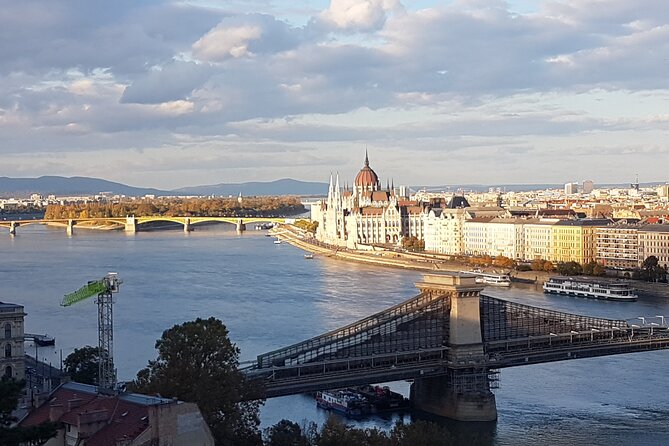
The Medieval Jewish Prayer House is one of the more unusual stops. It does not have the instant fame of Matthias Church or Fisherman’s Bastion, but it helps explain the district’s Jewish past and its changing population.
Around it, the guide points out baroque residential buildings. These homes make the hill feel like a lived-in neighborhood rather than a collection of monuments. Look up at the façades and consider how much of the district’s character comes from ordinary residential architecture.
This stop lasts about 10 minutes. It is a short pause, but it adds balance to a tour that could otherwise focus only on kings, battles, and grand government buildings.
The National Archives and the scars of World War II
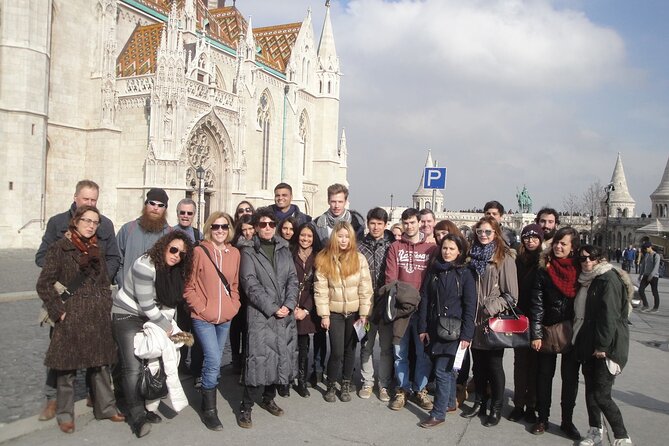
The National Archives of Hungary provides a chance to discuss the destruction of World War II. Castle Hill suffered severe damage, and the route shows where the devastation was most visible and where the Nazi stronghold was located.
This section gives you a sharper sense of the district’s modern past. The palace and church can look timeless, but much of what you see has been repaired or rebuilt after war. The guide also points out where wealthy Hungarians lived and explains the location connected with Gül Baba, the Ottoman Turkish monk and soldier.
The route does not present Buda as a frozen medieval quarter. It shows a place repeatedly altered by war, occupation, politics, and restoration. That is a useful idea to carry with you when you explore the district later on your own.
The underground world near the Hospital in the Rock
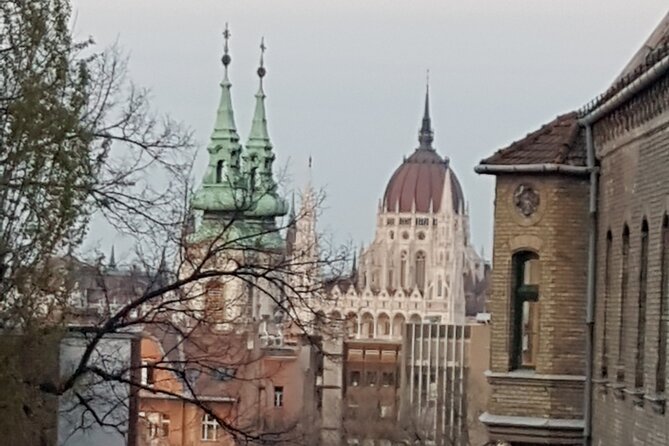
Near the Hospital in the Rock Nuclear Bunker Museum, the guide explains the underground side of Castle Hill. The area contains caves and labyrinths that played a role in defense over the centuries. You are introduced to this history from outside. Museum admission is not part of the walk.
If the bunker museum interests you, you can treat this stop as a preview and decide later if you want a separate visit. The walking tour does not provide the full museum experience, but it explains why the underground spaces matter.
This part also brings in some lighter details. You hear about the huszar, the light cavalry fighters associated with Hungary, and see some of Budapest’s playful public statues. That mix of military history and humor keeps the middle of the route from becoming a long chain of battles and dates.
Buda Castle and the Hungarian royal connection
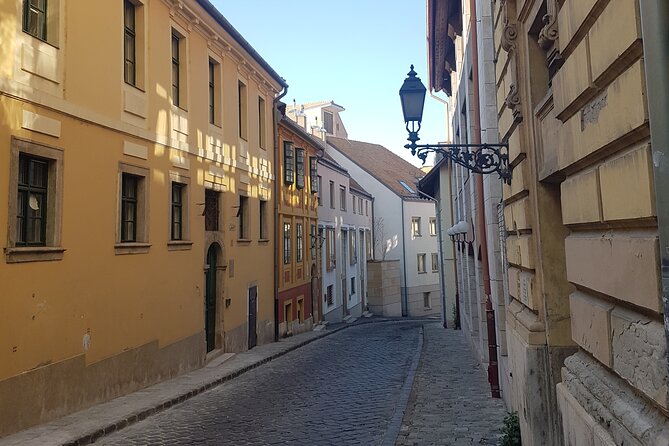
Buda Castle is the largest stop, with about 20 minutes devoted to the palace area. The building you see today reflects repeated rebuilding after wartime destruction. It once served as a residence for Hungarian kings, and it remains one of the main symbols of Buda.
The guide explains the royal connection, the location of offices used by Hungary’s president and prime ministers, and the mythical bird associated with the Hungarian people. These details give you several ways to read the palace: as a royal residence, a government site, a wartime ruin, and a national symbol.
Twenty minutes is enough for orientation but not for a full visit. You will not have time to explore every courtyard, museum, or interior room during the walking tour. If the palace is your main reason for coming to Castle Hill, use this walk to get the story, then return on your own with more time.
That arrangement works well for a first visit. You get the setting and the key facts without paying for a longer private tour. It is less satisfying if you want extended photo time or a detailed architectural study.
The final panorama by Prince Eugene’s statue
The tour finishes at the equestrian statue of Prince Eugene of Savoy. From the terrace, you look over the Danube toward Pest. This is one of the best places to pause and connect the separate parts of the walk: the river, the bridges, the parliament area, and the hill beneath your feet.
The guide may test your memory with questions about Castle Hill landmarks and Hungarian life. It is a light way to close the tour, and it gives you a chance to ask about anything that came up along the route.
The end point is about a 30-minute walk from the starting point. That is useful to know when planning your next activity. You finish near the upper castle area, not back at Batthyány Square, so do not schedule something that requires an immediate return to the original meeting point.
Price, tips, group size, and timing
At $3.62 per person, this is excellent value for a first orientation to Buda. The amount is a booking and administration fee, not the guide’s pay. Guides depend entirely on donations at the end, so include a tip in your budget if the walk is useful to you.
The group can include up to 30 people. That is not a tiny private walk, and a large group can make it harder to hear in crowded areas. Still, the experience can feel smaller when the guide manages the pace well or when attendance is light.
The advertised duration is about two hours. The schedule is tightly packed, with short stops of 10 to 20 minutes. You get a wide range of subjects rather than a long stay at one site. That makes the tour useful early in your Budapest visit, when you want to decide which places deserve a return visit.
It is commonly booked around 16 days ahead, so do not assume you can always wait until the last minute. Confirmation arrives when you book, and the experience is offered in English.
Weather, fitness, and the best kind of participant
Weather matters here because the tour is outdoors and requires climbing. Poor weather can lead to cancellation, with a different date or full refund offered. On a sunny day, the exposed terraces can feel hot. On a cold, windy day, the hill can feel much harsher than the temperature suggests.
Wear comfortable shoes, bring water, and dress for the forecast. There are bathrooms at Buda Castle, and you can refill water bottles there. These are small details, but they make a difference on a two-hour uphill walk.
I would choose this tour for a first day in Budapest, especially if you want the Buda side explained before exploring alone. It also suits families with older children and teenagers who enjoy stories, monuments, unusual symbols, and a little humor. The mix of history, politics, street art, public statues, and Hungarian words can keep younger minds interested.
I would think twice if you dislike group walks, need step-free access, or want long stretches for photography. The tour is also less appealing if you have already spent substantial time in Castle Hill and want a specialist visit instead.
Should you book the Budapest Castle District Walking Tour?
Book it if you want a low-cost, lively introduction to Buda Castle District and can handle uphill walking. The best reasons are the range of stops, the local English-speaking guides, the final Danube view, and the useful context about war, occupation, Jewish life, royal power, and modern Hungary.
Go in with realistic expectations. This is not an interior tour of Matthias Church, a museum visit, or a private photo walk. It is a fast-moving outdoor history lesson with stairs and crowds.
For $3.62, the value is strong, provided you remember that the guide works for donations. Take water, allow time for the climb, and plan to stay after the final stop if you want more photographs. If you want a clear first look at the Buda side of Budapest, this is an easy tour to recommend.
FAQ
Where does the Budapest Castle District Walking Tour begin?
The tour begins at Batthyány tér 1 in Budapest, at the Batthyány tér metro exit in the park.
Where does the tour finish?
It finishes at the Statue of Prince Eugene of Savoy in the upper Castle District. The conclusion point is about a 30-minute walk from the starting location.
How long does the tour last?
The tour lasts approximately two hours.
Is admission to Matthias Church included?
No. The group views Matthias Church from outside and does not enter.
Does the tour include entry to the Hospital in the Rock Nuclear Bunker Museum?
No. The guide introduces the underground history and the museum area, but museum admission is not included.
How much uphill walking is involved?
You should be able to complete a 10-minute uphill walk and manage flights of stairs. The tour requires a moderate level of physical fitness.
What happens if bad weather cancels the tour?
You will be offered a different date or a full refund if the experience is canceled because of poor weather.
Just added around Budapest
- Budapest 3-Hour Walking Tour in Italian★ 4.6 · 217 reviews
- Budapest: Castle District Walking Tour★ 4.8 · 223 reviews
- Budapest: Jewish History Guided Walking Tour with Historian★ 4.8 · 205 reviews
- Budapest Guided Food Walking Tour with Drinks Included★ 4.8 · 472 reviews
- Budapest: Walking Tour to the Shoes Memorial and Parliament★ 4.7 · 151 reviews
- Budapest: Walking Tour in the Buda Castle District★ 4.9 · 113 reviews
- Budapest: Walking Tour and Photoshoot with Digital Photos★ 4.7 · 82 reviews
- Budapest: Hungarian Cooking Class and Market Walk★ 5.0 · 91 reviews
Castle and Palace Walking Tours, compared.

Edinburgh Castle: Guided Walking Tour with Entry Ticket
Read our review →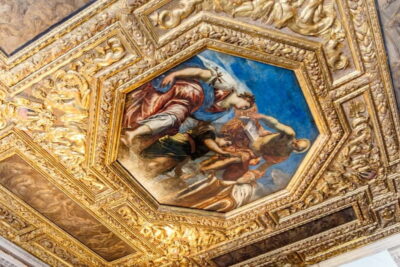
Doge’s Palace and St Mark’s Basilica Walking Tour
Read our review →
3-Hour Walking Tour of Old Town & Prague Castle
Read our review →Edinburgh Castle: Guided Walking Tour with Entry Ticket
Read our review →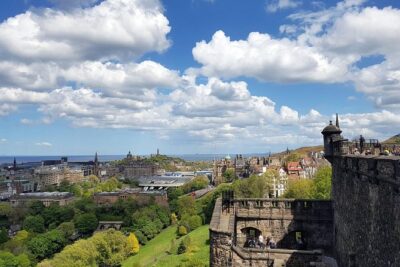
Edinburgh Castle Guided Walking Tour in English
Read our review →

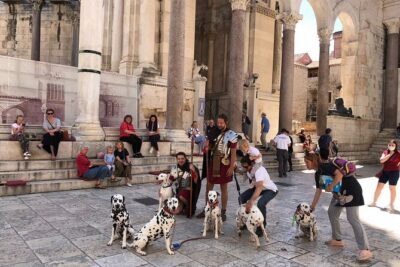
Walking Tour of Split and Diocletian’s Palace
Read our review →Browse the lists this tour appears in