
REVIEW · WALKING TOURS
Aqua Safari Introductory Helmet Dive (Underwater Walk)
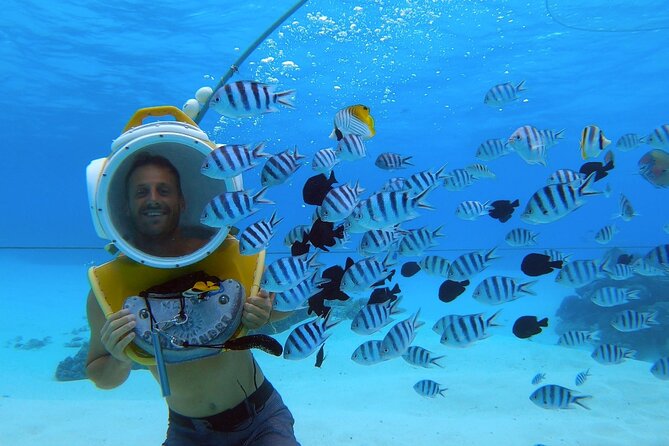
The big appeal here is simple: you can walk on the floor of Bora Bora’s lagoon while breathing normally inside a special helmet. No swimming or snorkeling skills are needed, and you stay only about 10 feet below the surface, close to coral, parrot fish, butterfly fish, clownfish, moray eels, stingrays, and other lagoon life. I especially like the calm, careful instruction and the chance for a non-swimmer or glasses wearer to see the reef up close. I also like that the guide takes photos during the underwater walk.
The main consideration is price. At $158.76 per person, this is not a cheap boat outing, and the underwater portion lasts about 30 minutes, even though the full activity takes roughly two to two and a half hours. Weather can also cancel the trip, and one poorly communicated cancellation caused serious frustration for a booked couple.
Key points to know before you book
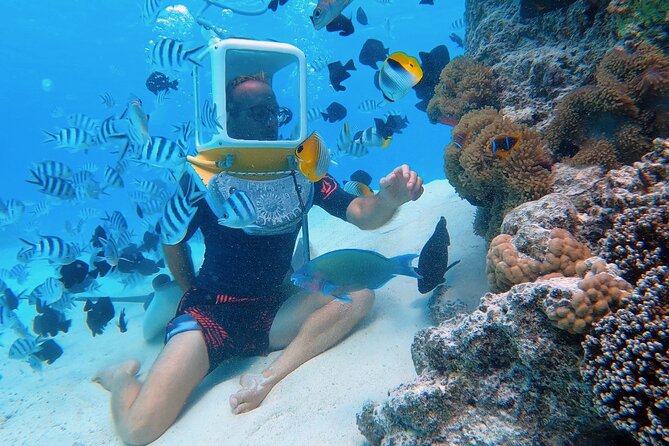
- Walk at roughly 10 feet: You stand on sandy lagoon floor inside a roped-off coral garden.
- No swimming ability required: The helmet supplies air, while instructors guide you in and out of the water.
- A friendly stingray may appear: The crew has a resident ray that sometimes comes close during the walk.
- Small groups help: The maximum is 12 people, with instructors helping participants descend, move around, and return to the boat.
- Photos are part of the experience: Your guide uses a high-definition camera, with images offered after the activity.
- Plan around the weather: Poor sea conditions can lead to a different date or a full refund.
What the Aqua Safari experience really is
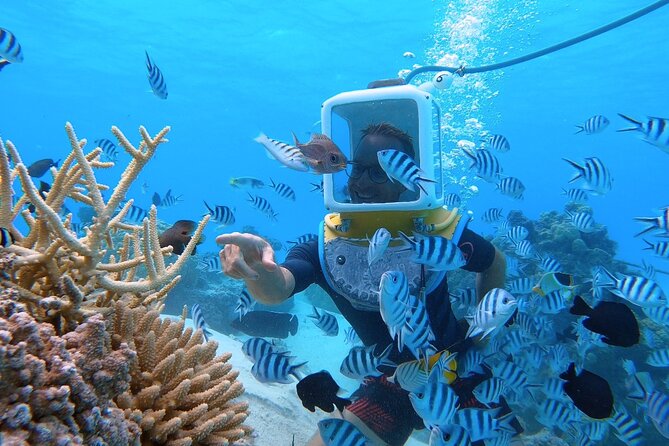
This is not scuba diving, and it is not quite snorkeling. You wear a large helmet that sits over your head and shoulders, with air supplied so your face stays dry. The result is a slow underwater walk rather than a swim.
That makes the activity useful for people who feel uneasy in open water, cannot swim, wear glasses, or simply do not want to learn scuba equipment during a short island stay. Your feet remain on the bottom, and a guide stays nearby to help you get oriented.
The setting is Bora Bora’s lagoon, in water about three meters deep. The underwater site is enclosed with a rope, so you are not wandering into open water. That boundary also limits how far you can go, but it gives the outing a controlled, reassuring feel.
The tour is offered as a shared trip with a maximum of 12 people. That is small enough to keep the group manageable, though the exact sense of space depends on the number booked that day. With eight people, one account described enough room for individual attention, with one instructor helping people descend and another handling photographs.
A few more walking tours around the world worth a look
- Düsseldorf: Altbier-Safari Beer Walking Tour
★ 4.4 · 1,150 reviews - Madeira: Santana Jeep Safari and Referta Levada Walk
★ 4.8 · 239 reviews - Walking Street Food Evening Safari with 20 tastings
★ 5.0 · 88 reviews
From the meeting point to the lagoon site
The listed starting point is Ferry And Boat Point, identified as F6VX+53X in Bora Bora. Pickup is offered, and the crew has also collected people from resort docks. Since pickup details can vary, read the company’s message carefully and confirm the exact time rather than relying only on the general time shown when booking.
The boat transfer is part of the experience. In some arrangements, a hotel pickup leads to a boat taxi, followed by a transfer to the boat used at the underwater site. In others, the meeting begins directly at the ferry and boat point. The ride gives you a look at Bora Bora from the water before the main activity begins.
Allow more time than the 30-minute underwater walk suggests. The full outing is described as about two and a half hours, while the headline duration is approximately two hours. That difference may reflect transfer time, loading, instruction, and the number of people in your group.
One practical warning: pickup has not always run perfectly. A reported delay of about 40 minutes still worked for one person, but it could be stressful if you have a cruise departure or a fixed flight connection. I would not schedule a tight onward transfer immediately afterward.
The safety briefing and helmet setup
Before entering the water, a professional scuba instructor explains the process and the safety rules. The briefing covers how to use the helmet, how the descent works, and what to do if you feel nervous or need help.
The descent can be the most intimidating part. You are not simply stepping off a beach. The crew helps you go down gradually, settles you on the bottom, and checks that you are comfortable before leading you toward the coral garden. Some people feel anxious at first, especially if they are already nervous about open water.
That first moment matters. The helmet keeps your head dry and lets you breathe normally, but it has limited peripheral vision. One participant found it easy to become disoriented until adjusting to looking through the front of the helmet. Move slowly, listen to the instructor, and give yourself time to get your bearings.
You may also feel pressure in your ears as you descend. One useful tip is to bring gum and chew as you go down, or follow the equalizing advice given during the briefing. If you have a history of ear trouble, this is worth taking seriously before booking.
Thirty minutes among fish and coral
Once settled on the sandy bottom, you walk through a coral garden at approximately 10 feet. The shallow depth helps explain why this activity works for people without scuba training. You are close enough to see details, yet the instructor remains within easy reach.
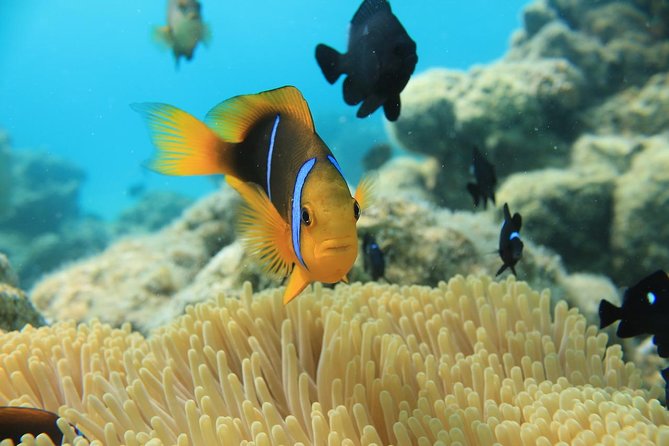
The lagoon can be full of movement. Expect parrot fish, butterfly fish, clownfish, moray eels, starfish, and other tropical fish around the coral. Fish may gather near you, especially when food is involved. Some outings use small bags of bread to attract them, and that option can make the fish encounter more active.
If you are uneasy about fish brushing against you, skip the food. One person found the bread useful, while another suggested leaving it aside if close contact sounds spooky. The choice gives you some control over how intense the encounter feels.
The coral garden is not a wild, open-ended expedition. The area is roped off, which keeps the group within a defined zone and protects the structure of the activity. You will not cover a large section of the lagoon. The reward is close viewing, not distance.
The crew may point out particular animals and features as you walk. Séverine was praised for showing anemones and a stingray, while other guides have helped participants notice fish and reef details they might miss alone. This guidance gives the experience more shape than simply standing underwater with a helmet.
Same streets, a different route:
- Magical London: Harry Potter Guided Walking Tour
★ 4.7 · 22,044 reviews - Reykjavik Food Walk – Local Foodie Adventure in Iceland
★ 5.0 · 18,952 reviews - History and Hauntings of Salem Guided Walking Tour
★ 5.0 · 14,564 reviews - New Orleans Premier Ghost, Voodoo and Vampire Walking Tour
★ 4.5 · 12,856 reviews
The stingray encounter
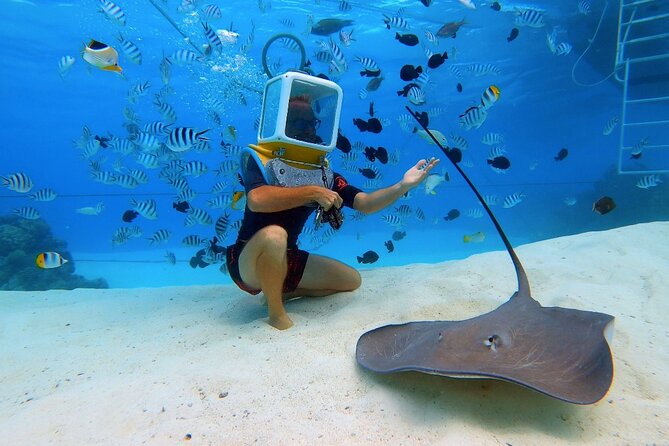
The stingray is one of the most memorable parts of the outing. A resident ray has been familiar with the crew for many years and may swim close to the group. Some people have described it as calm and friendly, even responding to commands.
Wildlife is never guaranteed on a precise schedule, so you should not book this expecting a staged performance. Still, the ray appears often enough to be a recurring feature of the experience. It may glide around your feet or pass within touching distance.
That closeness is thrilling, but use good judgment. Follow the instructor’s direction rather than reaching suddenly or crowding the animal. The guide knows the site and can help you appreciate the encounter without turning it into a chase.
The guides make the difference
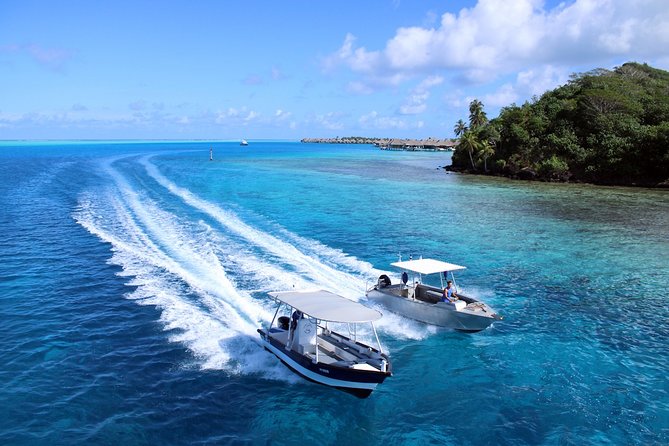
The best part of this activity is not only the helmet. It is the crew’s ability to make a strange new setting feel manageable. Guides named Tama, Rémi, JP, Frédéric, Séverine, and others have been singled out for patience, clear explanations, humor, and attention to safety.
The work is hands-on. One instructor may help people descend and return to the boat while another takes photos. On a windy day or when there is a slight current, the crew may direct you to hold a rope to avoid being pushed around.
That does not mean the lagoon is always perfectly still. Conditions can make the walk less effortless, especially for people who are not strong swimmers. The shallow depth and the rope help, but you should still expect some movement in the water.
I like that the guides do not assume everyone arrives confident. Several people have described feeling nervous before going down, then relaxing once the helmet was in place. That transition is a real measure of the operation. You are trying an unusual activity, and patient instruction matters more than flashy equipment.
Photos, cameras, and what you take home
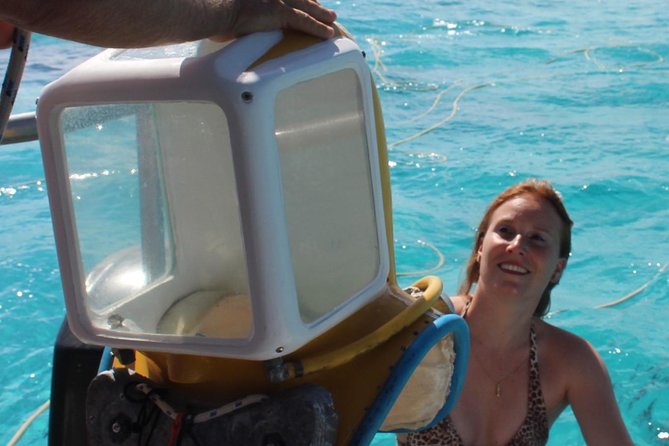
The instructor photographs you during the underwater walk with a high-definition camera. The images are offered for purchase at the end, and several people felt the photo package was worth the extra cost.
Bring your own waterproof camera or GoPro if you have one. A camera gives you a way to capture close views of the reef and fish, though it may be awkward with the helmet and limited visibility. You should still listen to the guide rather than focusing on filming.
The crew’s photos have a practical advantage: you can concentrate on walking, looking around, and staying comfortable. You also get pictures showing the helmet itself, which helps document an experience that is hard to reproduce elsewhere.
Photo availability is a bonus, not the core reason to book. At this price, you should decide in advance if you are comfortable paying extra for images. If you are, the pictures can add real value, particularly for families and couples.
Is $158.76 a fair price?
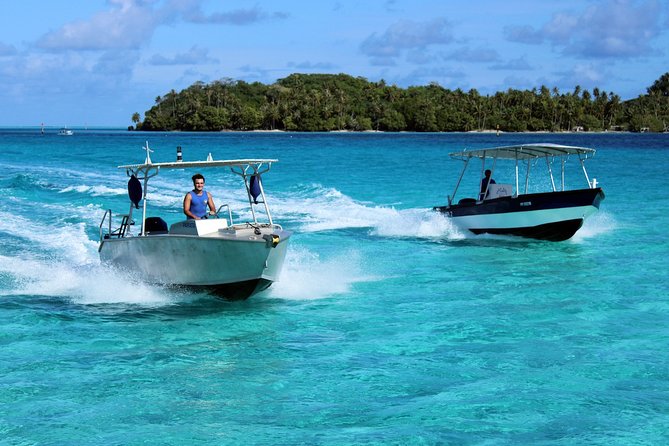
At $158.76 per person, this is a premium activity. You are paying for boat transfers, equipment, an instructor-led underwater session, a small group setting, and an experience designed for people who cannot or do not want to snorkel or scuba dive.
The value is strongest if the helmet removes a barrier. For a confident snorkeler, the short underwater walk may feel expensive compared with simply entering the lagoon. For a non-swimmer, a person who cannot use a mask comfortably, or someone who has always wanted to see coral without scuba training, the price makes more sense.
The underwater portion is about 30 minutes, though some descriptions and accounts place it closer to 40 minutes. The total outing takes roughly two to two and a half hours. I would judge the price by the complete boat-and-instruction experience, not only by the time on the lagoon floor.
This is also one of Bora Bora’s more unusual activities. You are not just repeating a standard snorkeling stop. If your holiday budget allows one distinctive excursion, the helmet walk offers something different. If you are comparing it with several full-day boat tours, however, you may prefer a longer outing with more stops.
Who should book, and who should think twice?
This experience suits families, couples, older adults, and solo visitors who want close lagoon views without swimming. It has also worked well for people who wear glasses, since your head stays dry inside the helmet.
Children can take part, and the operator describes the activity as suitable from age six to 99, though the supplied information does not give a separate child policy or specific physical requirements. Confirm those details if you are booking for a young child.
I would be more cautious if you have serious ear problems, dislike confined headgear, or become disoriented easily. The helmet has restricted side vision, and the descent can create ear pressure. You should also consider the weather forecast and leave room in your schedule in case sea conditions change.
The activity requires good weather. If conditions are poor, the operator offers another date or a full refund. That safety rule is sensible, but communication has not always been ideal, so confirm the trip close to departure if your plans depend on it.
Free cancellation is available up to 24 hours before the start time. Changes or cancellations inside that window are not refunded, except when the operator cancels because of weather or sea conditions.
Should you book the Aqua Safari helmet walk?
I would book it if you want to see Bora Bora’s underwater life but cannot swim, dislike snorkeling masks, or have never felt ready for scuba equipment. The shallow coral garden, patient instructors, close fish encounters, possible stingray visit, and included equipment create a strong first underwater experience.
I would skip it if you are already a confident snorkeler seeking a long, spacious reef session or if the price feels high for 30 minutes underwater. For everyone else, especially families and nervous beginners, this is a practical way to meet the lagoon on gentle terms.
Book with a little schedule flexibility, read the pickup message carefully, bring gum for ear pressure, and pack a waterproof camera if you have one. With those details handled, the helmet walk offers a memorable look at Bora Bora that does not require you to swim a single stroke.
FAQ
Do I need to know how to swim?
No. The activity states that you do not need to swim, snorkel, or scuba dive. The helmet supplies air, and instructors guide you through the underwater walk.
How deep does the underwater walk go?
You go to about three meters, or roughly 10 feet. Some descriptions from participants place the depth at about 15 feet, but the advertised depth is approximately 10 feet.
How long do I spend underwater?
The underwater portion lasts about 30 minutes. Some accounts describe closer to 40 minutes, while the total activity takes approximately two to two and a half hours.
Where does the activity start?
The listed meeting point is Ferry And Boat Point, F6VX+53X, Bora Bora, French Polynesia. Pickup is offered, including pickup from some resort docks.
Is equipment provided?
Yes. The necessary helmet and other equipment are provided, along with a safety briefing before you enter the water.
Are photos included?
Your instructor takes photos with a high-definition camera during the underwater walk. The images are offered after the activity, and you may purchase them.
What happens if the weather is poor?
The activity requires good weather. If the operator cancels because of poor weather or unsafe sea conditions, you are offered a different date or a full refund.
Just added around the world
- Vatnajökull Glacier Walk from Hali★ 5.0 · 479 reviews
- Old Hobart Pub Walking Tour★ 4.5 · 91 reviews
- Ice Cave and Glacier Walk into Blue Glacier Canyon★ 5.0 · 224 reviews
- Southwest Tasmania Wilderness Experience: Fly Cruise and Walk Including Lunch★ 5.0 · 233 reviews
- Saigon’s Hidden Flavors – Private Street Food Walk with Local Students★ 5.0 · 301 reviews
- Hobart History, People & Places – 2 hour city walk★ 5.0 · 224 reviews
- Vegan Walk Not Just Vegan Food★ 5.0 · 266 reviews
- Ho Chi Minh City: Highlights & Hidden Gems – Free Walking Tour★ 5.0 · 194 reviews
Walking Tours, compared.

Magical London: Harry Potter Guided Walking Tour
Read our review →
Reykjavik Food Walk – Local Foodie Adventure in Iceland
Read our review →
History and Hauntings of Salem Guided Walking Tour
Read our review →
New Orleans Premier Ghost, Voodoo and Vampire Walking Tour
Read our review →
Amsterdam Anne Frank: Small-Group Walking Tour & Local Guide
Read our review →

Edinburgh Castle: Guided Walking Tour with Entry Ticket
Read our review →