
REVIEW · UK
Derry City: The Troubles Bogside Walking Tour.
The most powerful part of Derry’s Troubles Bogside Walking Tour is the first-person account. Guides such as Noel and John lived through the conflict, and some have direct family links to Bloody Sunday. You are not only hearing dates and political events. You are standing where they happened, listening to someone explain what life was like at the time.
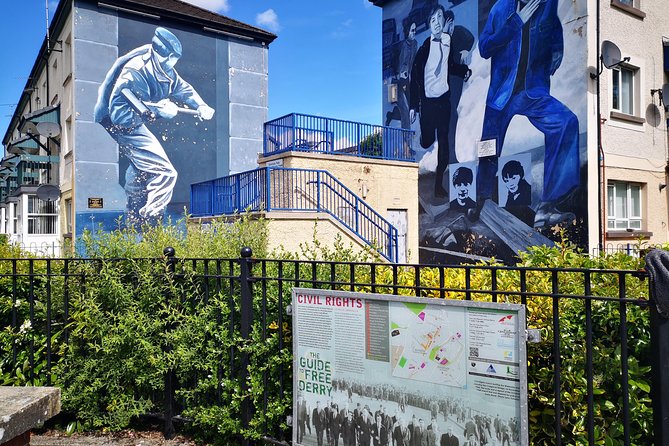
I like the way the tour uses the Bogside itself as its classroom, especially the life-size murals and the site of Bloody Sunday. I also like that the guides explain the road from the start of the Troubles through the Battle of the Bogside, the hunger strikes, and the 1998 peace process. The main consideration is emotional weight: this is a serious, sometimes painful walk, not a light city sightseeing outing.
Key points at a glance
- Bloody Sunday site: Stand where the 1972 massacre took place and hear how the event affected local families.
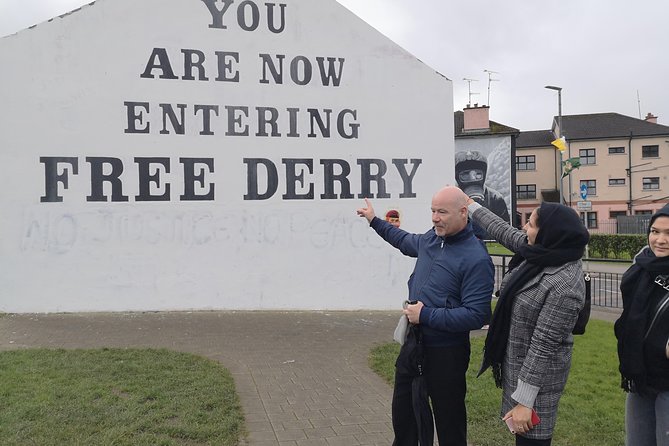
- Free Derry Wall: Get a photograph at one of Derry’s most recognised political landmarks.
- Bogside murals: Learn the story behind the large murals rather than simply passing them for photographs.
- Personal testimony: Guides including Noel, John, Mick Kinsella, and Dave bring lived experience and family connections to the story.
- Short, accessible route: The walk lasts about 1.5 hours, does not cover a great distance, and is wheelchair accessible.
- Useful pairing: The Museum of Free Derry begins and ends the experience, making it a natural place to visit before or after the walk.
Why the Bogside is the right place to learn Derry’s story
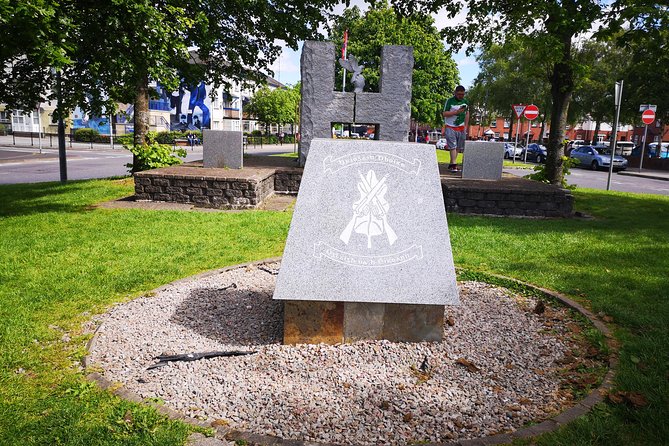
Derry’s Bogside is not a distant historic quarter where the past has been separated from daily life. It is a working part of the city, and the streets, walls, murals, and open spaces all help explain the conflict.
This matters because the Troubles can be hard to grasp from a short timeline. The tour connects the political story with the physical places where people marched, fought, mourned, and demanded civil rights. You get a sense of scale. A street can look ordinary until a guide explains what happened there.
The walk focuses on the civil rights movement, the beginning of the Troubles, the Battle of the Bogside, Bloody Sunday, the Irish hunger strikes, and the peace process that brought the 35-year conflict to an end. It is a lot to cover in 90 minutes, but the local setting keeps the story from becoming a rushed lecture.
I would not choose this tour if you want only postcard views and cheerful local legends. I would choose it if you want to understand why Derry matters and how recent the conflict remains in family memory.
A few more walking tours around the UK worth a look
- Magical London: Harry Potter Guided Walking Tour
★ 4.7 · 22,044 reviews - Edinburgh: Harry Potter Magical Guided Walking Tour
★ 4.8 · 11,944 reviews - Edinburgh Castle: Guided Walking Tour with Entry Ticket
★ 4.7 · 11,699 reviews
Starting outside the Museum of Free Derry
The meeting point is outside the Museum of Free Derry, in the Bogside. The same location also serves as the finishing point, which makes planning easy if you are already visiting the museum.
The museum is a useful companion to the walk. It deals directly with the civil rights campaign, Bloody Sunday, and the local experience of the Troubles. The tour gives you spoken explanation and place-based detail, while the museum can add displays and material evidence. I would allow extra time for the museum rather than trying to squeeze it into the 1.5-hour walk.
Starting at the museum also gives the tour a clear frame. You begin with the story of Free Derry and the wider struggle, then move out into the streets where the events unfolded. At the end, you can return to the museum with a better sense of what you have heard.
Following the civil rights story into the Troubles
The tour does not treat Bloody Sunday as an isolated event. Your guide explains the conditions and protests that led up to it, then shows how the conflict developed afterward.
That wider explanation is one of the tour’s best features. If you only visit a memorial or read a plaque, you can miss the causes and consequences. Here, the story includes the Battle of the Bogside, the hunger strikes, and the later peace process. You are encouraged to see the connection between civil rights, local resistance, military presence, political division, and the long search for justice.
The guides also leave room for questions. This is valuable in Derry, where simple labels can quickly become misleading. A good question may reveal why different communities remembered the same event in different ways, or why a peace agreement did not erase every grievance.
The tone is serious but not stiff. The guides have been described as clear, unhurried, and able to use humour without making light of the subject. That balance helps during a difficult walk. You can listen closely without feeling that every moment is delivered as a formal speech.
Standing at the Bloody Sunday site
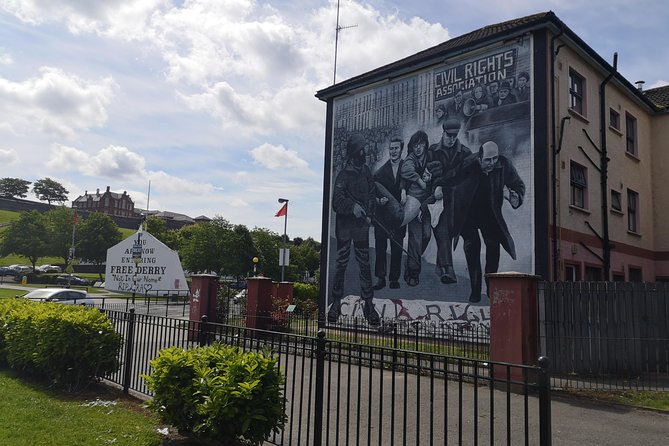
The Bloody Sunday stop is the emotional centre of the experience. You stand in the area where the massacre took place and hear about the events of that day, along with the long campaign by families seeking acknowledgement and justice.
This is where the personal background of the guide can make a major difference. Noel is described as an eyewitness who grew up in the Bogside. John has spoken about losing his brother William on Bloody Sunday. Those connections do not replace historical evidence, but they show what the event meant to a family and a neighbourhood.
You should expect this section to be upsetting. The tour deals with real deaths, loss, and the consequences of violence. It is handled as a serious local account, not as entertainment. If you prefer to approach the subject gently, tell yourself that the value is in listening carefully rather than trying to collect dramatic details.
The stop also explains why Bloody Sunday remains important beyond Derry. The event affected public trust, political attitudes, and the demand for an official response. Hearing the story in the place where it happened can make the passage of time feel surprisingly short.
Same streets, a different route:
- Underground Vaults Walking Tour in Edinburgh Old Town
★ 4.5 · 8,506 reviews - London: The Original Jack the Ripper Walking Tour
★ 4.7 · 7,833 reviews - Oxford University Walking Tour With University Alumni Guide
★ 5.0 · 6,905 reviews - Edinburgh Castle: Guided Walking Tour with Entry Ticket
★ 5.0 · 5,540 reviews
Reading the Bogside murals
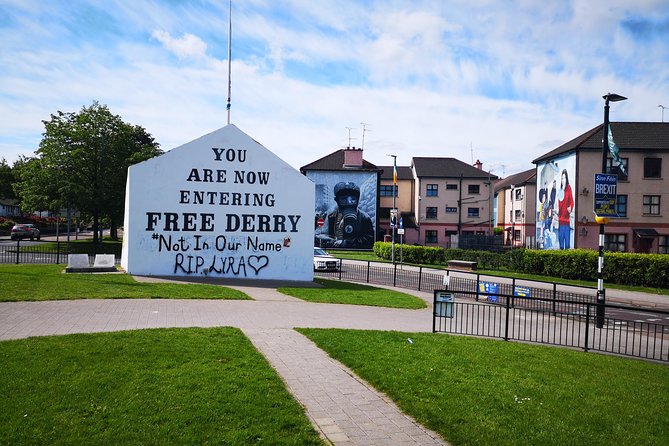
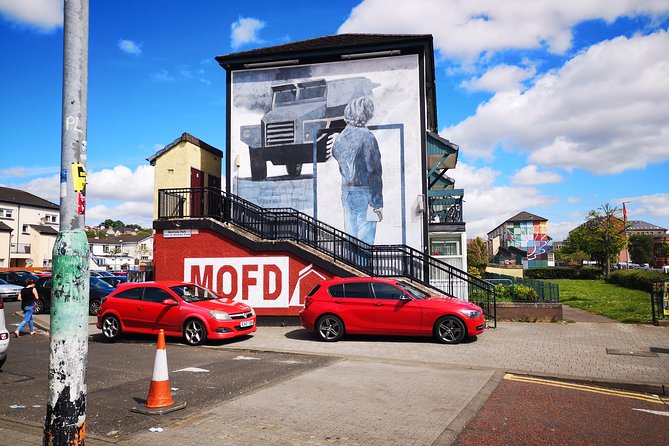
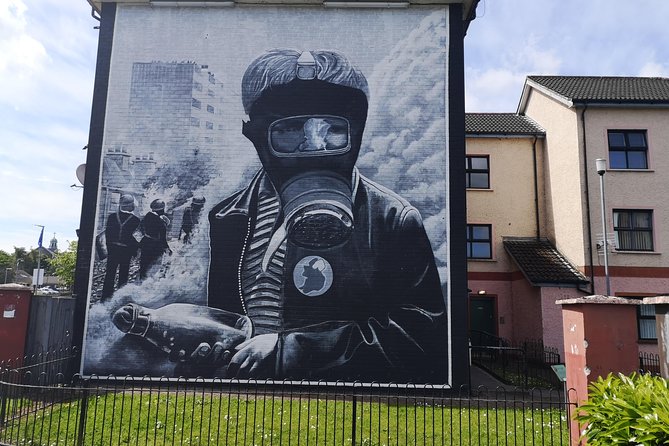
The Bogside murals are the most visual part of the walk. These large, life-size paintings tell the Troubles story through images of civil rights, conflict, mourning, resistance, and remembrance.
The benefit of a guided visit is that you learn what each mural represents. Without explanation, it is easy to see the walls as striking political art and move on. With a guide, you can connect the images to specific events and understand why the murals remain important to local identity.
This is also the most photograph-friendly part of the tour, though the subject matter is often sombre. You can take in the scale and detail of the paintings, then listen to the story behind them. The contrast between the vivid artwork and the painful history it records is part of what makes the Bogside memorable.
The murals should not be treated as a complete account of every viewpoint. They reflect the experience and political memory of the community that created them. The guides help place them within the larger story rather than presenting them as neutral decoration.
Free Derry Wall and the meaning of a photograph
Free Derry Wall is a brief but essential stop. It is one of the city’s best-known symbols, and the tour gives you time to understand why the words became so closely linked with the Bogside.
You can have your photograph taken there, but the place deserves more than a quick picture. It represents the idea of Free Derry and the local challenge to outside authority during the conflict. The wall helps explain how a neighbourhood could become a political symbol known far beyond Northern Ireland.
This stop works well after the mural visits because you have already heard about the events that shaped the area. The photograph then becomes a reminder of a larger story, rather than just another travel image.
Guides who speak from lived experience
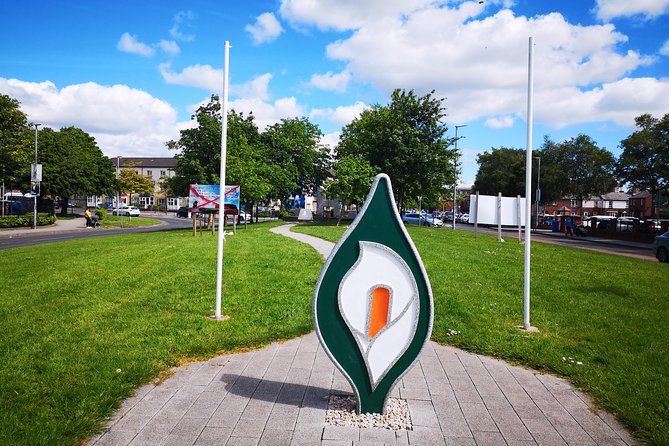
The guides are central to the value of this walk. Names that appear in the experience include Noel, John, Mick Kinsella, and Dave, and the exact guide you receive may vary.
The most praised quality is their ability to combine personal memory with a broader account of Derry’s history. Noel is known for explaining what it was like to grow up during the Troubles, while John has discussed his family’s direct loss on Bloody Sunday. Mick Kinsella has been praised for his account of the Battle of the Bogside, and Dave has been described as sharing his own story with compassion.
You should also expect some variation in delivery. A personal guide may focus more on family memory, while another may spend more time on political context or the battle itself. That is not necessarily a weakness. It means the walk is shaped by the person telling it, rather than delivered as a fixed audio script.
The strongest guides seem to make space for questions and speak in a measured way. That matters when the group includes people from different countries and with very different levels of knowledge. You do not need to arrive as an expert. The tour is designed to explain the basics while adding detail for people who already know the broad timeline.
The 1.5-hour pace and physical effort
The tour lasts about 90 minutes. It is a walking tour, but the route does not cover a great distance. One useful detail for anyone with mobility concerns is that the experience is listed as wheelchair accessible, and the walk has been described as manageable even for people who cannot walk far.
The short route is both a strength and a limit. You get focused time in the Bogside without spending half a day on your feet. On the other hand, the tour cannot explore every part of Derry or provide a full course on Northern Irish history in 90 minutes.
Wear shoes suitable for an ordinary city walk and bring protection from the weather. The experience is outdoors, and the value comes from moving between real locations rather than sitting in a heated room. Check the starting time when booking, since available times can change.
The tour is in English, with a live guide. If English is difficult for you, the emotional detail and fast changes between places may be harder to follow.
Is $30 good value?
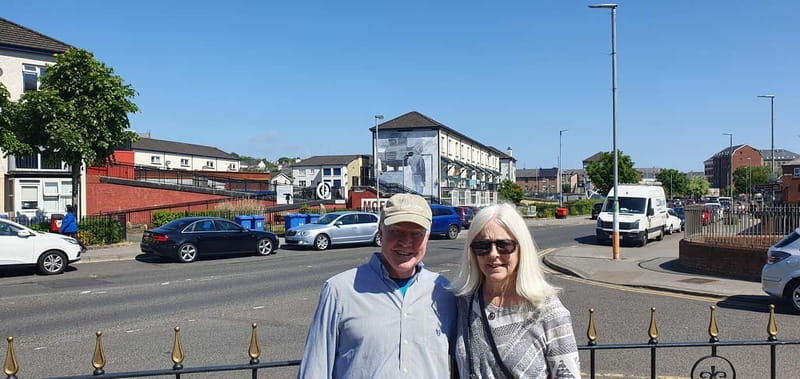
At $30 per person, this is not the cheapest way to spend 90 minutes in Derry, especially since you can see the Free Derry Wall and murals without joining a paid walk.
The value comes from the explanation. A free stroll can show you the artwork and the wall, but it will not necessarily explain the sequence of events, the local meaning of the sites, or the family cost of Bloody Sunday. You are paying for access to a local voice and for the chance to ask questions while standing in the places being discussed.
There is one practical point to clear up before you start. Free walking tours may also be advertised outside the museum, and one booking experience raised confusion about tickets and payment. Confirm that you are joining the paid Troubles Bogside Walking Tour and check the meeting details when you arrive. That small step can prevent an awkward start.
For me, the price makes sense if you plan to visit Derry for its modern political history. It is less compelling if you only have time for a quick photograph at the wall and a short look at the murals.
Who should book this Derry walking tour?
I would recommend it to anyone who wants the human story behind the Troubles, particularly first-time visitors who need a clear introduction to Derry.
It suits:
- People interested in civil rights and modern Irish history
- Visitors who want local testimony rather than a self-guided route
- Anyone planning to visit the Museum of Free Derry
- People who prefer a short walk with frequent stops
- Travellers who want to ask questions about the peace process and its aftermath
Families should consider the age and temperament of children before booking. The tour discusses death, violence, injustice, and grief. It is educational, but it is not a casual family attraction.
It also suits people who already know the basic history. Hearing the story from someone connected to the Bogside can add detail that books and documentaries cannot provide. You may come away with fewer neat answers, but a clearer sense of why the past remains present.
Practical verdict: should you book?
Book this tour if you want Derry explained by someone who understands the Bogside from personal experience. The murals, Bloody Sunday site, and Free Derry Wall are worth seeing, but the guide is what turns them into a connected story.
The best reason to go is the combination of place and testimony. The walk is short, the route is manageable, and the $30 price is reasonable when you treat it as a history lesson in the streets where the events happened. Just prepare for serious subject matter and confirm the paid tour details outside the museum.
If you have only a little time in Derry, I would put this near the top of your list, then visit the Museum of Free Derry afterward. If you want a light sightseeing walk, choose something else. This experience asks you to listen, think, and remember.
FAQ
Where does the Troubles Bogside Walking Tour begin?
The tour begins outside the Museum of Free Derry in the Bogside.
Where does the tour finish?
The walking tour begins and ends outside the Museum of Free Derry.
How long does the tour last?
The tour lasts 1.5 hours.
What language is the tour in?
The tour is conducted in English with a live English-speaking guide.
Is the walking tour wheelchair accessible?
Yes. The activity is listed as wheelchair accessible.
Can I cancel the booking for a refund?
Yes. You can cancel up to 24 hours in advance for a full refund. You can also reserve now and pay later.
Just added around the UK
- Falmouth: Vibrant Historical Walking Tour (award-winning)★ 4.9 · 75 reviews
- The Must-Sees of Edinburgh: Small Group Walking Tour in French★ 4.9 · 88 reviews
- Edinburgh: Old Town History Walking Tour★ 4.9 · 528 reviews
- Edinburgh: Old Town Stories – Guided Walking Tour★ 4.9 · 86 reviews
- Ghosts, Ghouls & Gallows :The Original Bristol Ghost Walk★ 4.6 · 76 reviews
- Edinburgh: Private Walking Tour with a Local★ 4.4 · 78 reviews
- Edinburgh: Private Walking Tour in French with Clémentine★ 5.0 · 73 reviews
- Edinburgh: Multi-Sensory Old Town Historical Walking Tour★ 4.6 · 290 reviews
Walking Tours, compared.

Magical London: Harry Potter Guided Walking Tour
Read our review →
Reykjavik Food Walk – Local Foodie Adventure in Iceland
Read our review →
History and Hauntings of Salem Guided Walking Tour
Read our review →
New Orleans Premier Ghost, Voodoo and Vampire Walking Tour
Read our review →
Amsterdam Anne Frank: Small-Group Walking Tour & Local Guide
Read our review →
Edinburgh Castle: Guided Walking Tour with Entry Ticket
Read our review →
Anne Frank’s Story – Guided Walking Tour through Amsterdam
Read our review →Browse the lists this tour appears in