
REVIEW · STOCKHOLM
Walking Tour of Stockholm Old Town
Stockholm’s Old Town is compact, handsome, and packed with stories. This 2.5-hour walk takes you from Parliament and the Royal Opera into Gamla Stan’s medieval lanes, passing royal buildings, churches, statues, and the square linked to the Stockholm Bloodbath.
I like two things right away: the route gives you a useful first look at central Stockholm, and guides such as Gaia, Sophie, Aggie, and Dante bring humor and local detail rather than simply reciting dates. The tour also fits neatly into a busy morning.
The main drawback is that this is an active walk over Old Town streets, so expect plenty of standing and walking. The tour is best on a dry day, and the itinerary offers outside looks at several buildings rather than admission to their interiors.
Key points to know before you book
- A practical first morning in Stockholm: The route gives you an overview of Gamla Stan, royal Stockholm, Swedish politics, and local culture before you explore alone.
- Strong guide-led storytelling: Gaia, Sophie, Aggie, Katherine, Kyra, Lova, Tale, Zoe, Rose, Olivia, and others are praised for clear explanations, humor, and an easy conversational style.
- The route covers major Old Town sights: You see Stortorget, Storkyrkan, the Royal Palace, the German Church, Riddarholmen, Järnpojke, and Mårten Trotzigs gränd.
- A small group with a firm limit: The maximum group size is 20, with one group of 11 specifically noted as comfortable and easy to follow.
- Good value for a city orientation: At $24.07 per person, the tour costs less than many longer sightseeing outings and leaves most of your day free.
- Useful practical tips included: Guides may point you toward places to eat and explain when and where to see the changing of the guard.
Why this walk works as an introduction to Stockholm
Gamla Stan means Old Town, and it is the part of Stockholm most first-time visitors picture: narrow lanes, colorful facades, old churches, royal buildings, and small squares opening suddenly between the stone streets. This tour helps you make sense of it instead of simply wandering past attractive buildings.
The story begins at Gustav Adolfs torg at 10:00 a.m., beside the city’s political and ceremonial center. From there, the route takes in Parliament, the Royal Swedish Opera, and the island districts around Gamla Stan. You finish at Stortorget, the Old Town’s main square, which is a useful place to continue sightseeing or stop for a meal.
I like this structure because it connects modern Sweden with older Stockholm. You get politics, monarchy, religion, literature, commerce, and local legends in one morning. The walk does not treat Old Town as a collection of pretty facades. It explains why the city grew where it did and how Gamla Stan became the center of Stockholm.
The tour has a 4.9 rating from 1,175 reviews, with 98 percent of participants recommending it. Those figures suggest a consistently strong experience, especially for people who want a guide who can keep a group moving while making the past easy to follow.
More Old Town Walking Tours in the world:
- Underground Vaults Walking Tour in Edinburgh Old Town
★ 4.5 · 8,506 reviews - Prague: 3-Hour Walking Tour of Old Town & Prague Castle
★ 4.7 · 5,696 reviews - Dubrovnik: Old Town Walking Tour
★ 4.8 · 5,174 reviews
Parliament and the Royal Opera set the tone
The first stop is Parliament, or Riksdagshuset, built from 1895 to 1904. You spend about five minutes here, with no admission included. That short stop is enough to place Swedish politics on the map and give you a sense of the grand public buildings surrounding central Stockholm.
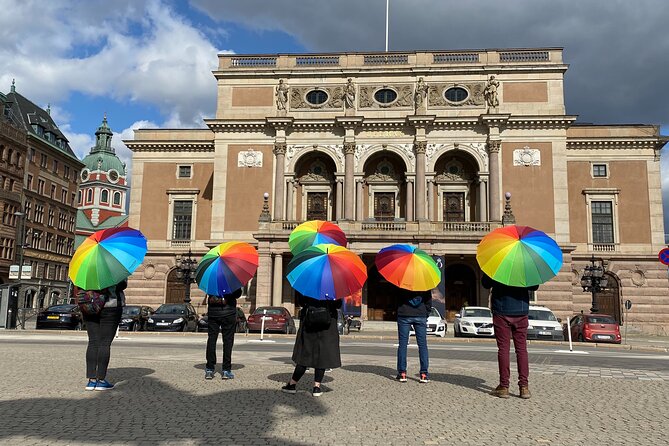
The Royal Swedish Opera receives a longer look, around 10 minutes. This is another exterior stop, so do not book the walk expecting a performance or backstage visit. Instead, the guide uses the opera house as part of the wider story of Stockholm’s civic and royal center.
This opening stretch is useful because it gives you more than the usual Old Town postcard. You start with institutions that still shape Sweden today, then move toward the older streets of Gamla Stan. The contrast helps the city feel connected rather than frozen in the past.
Riddarholmen explains how Stockholm grew
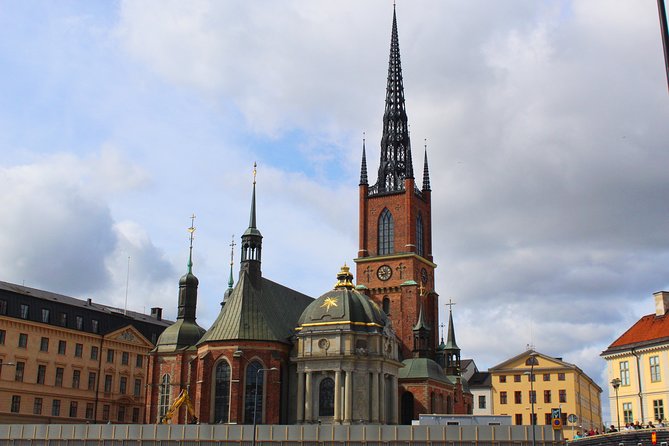
Riddarholmen, or the Knights Islet, is one of the tour’s most historical stops. You have about 10 minutes to look at the island, its church, and its association with the foundation of Gamla Stan. The stop also includes the first palace in Stockholm, according to the tour description.
Riddarholmen is important because Stockholm’s story is tied to islands and water. The setting helps explain why the Old Town developed as a strategic center and why Stockholm is spread across several connected districts.
The stop is mainly about context, not entering a building. Admission is not included, so you should treat it as an outdoor explanation and photo opportunity. The guide’s role matters here. Without background, the church, palace, and island can blur into a quick sightseeing stop. With a clear explanation, they become part of the city’s beginnings.
German Church and Storkyrkan show Old Town’s religious past
The German Church, called Tyska kyrkan in Swedish, has served Stockholm’s German community for centuries. The tour gives it about five minutes and describes its neoclassical style. Admission is not included.
This is a small stop, but it adds an important layer to Gamla Stan. Stockholm was a trading city, and the presence of a long-established German church points to the international connections that shaped Old Town. You get a glimpse of how merchants and communities from outside Sweden became part of the city.
Storkyrkan, Stockholm Cathedral, receives another five-minute stop. It is Gamla Stan’s main church and houses the famous Saint George and the Dragon sculpture. Again, there is no included admission, so the focus is the building’s role and the sculpture’s story rather than a full interior visit.
These brief church stops suit a walking overview. You learn what makes each building significant, then keep moving. If you want detailed architectural study or quiet time inside, you will need to return on your own.
A few more walking tours around the world worth a look
- Magical London: Harry Potter Guided Walking Tour
★ 4.7 · 22,044 reviews - Reykjavik Food Walk – Local Foodie Adventure in Iceland
★ 5.0 · 18,952 reviews - History and Hauntings of Salem Guided Walking Tour
★ 5.0 · 14,564 reviews - New Orleans Premier Ghost, Voodoo and Vampire Walking Tour
★ 4.5 · 12,856 reviews
Järnpojke adds a small, human detail
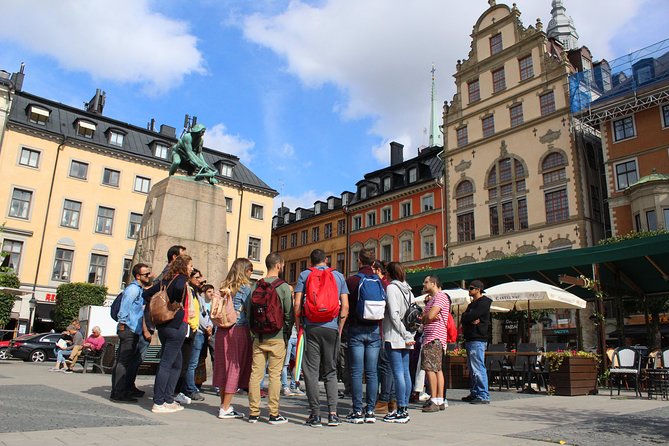
One of the tour’s more unusual stops is Järnpojke, a tiny iron statue built in 1950. It is also called the boy looking at the moon and is described as Stockholm’s smallest statue.
This stop gives the walk a welcome change of scale. After Parliament, churches, palaces, and grand public buildings, you pause for a little figure that is easy to miss without local direction. The statue is included in the tour, and the guide explains why it has become such a well-known stop.
I especially like this kind of detail on a first city walk. Big landmarks tell you what Stockholm wants you to notice. A small statue tucked into Old Town tells you how people actually experience the city day to day. It gives you something to look for when you return to Gamla Stan by yourself.
Stortorget connects beauty with difficult history
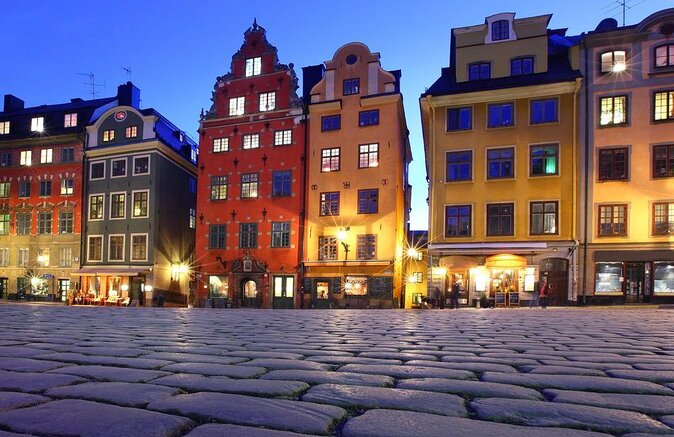
Stortorget is the main square of Gamla Stan and one of the most recognizable places in Stockholm. Its colorful buildings make it a natural photo stop, but the square also carries a darker story: the Stockholm Bloodbath, one of the important events tied to Sweden’s past.
The tour spends about 10 minutes here, and admission is included because this is a public square. This is likely one of the strongest storytelling points of the morning. The square is attractive, but the guide adds the political and historical context that a quick photograph cannot provide.
You also finish at Stortorget, making it a practical place to continue your day. From here, you can use the guide’s suggestions for food or explore more of Gamla Stan independently. Several guides are specifically praised for giving eating recommendations and advice about the changing of the guard, which can save you time later.
Mårten Trotzigs gränd brings you into the lanes

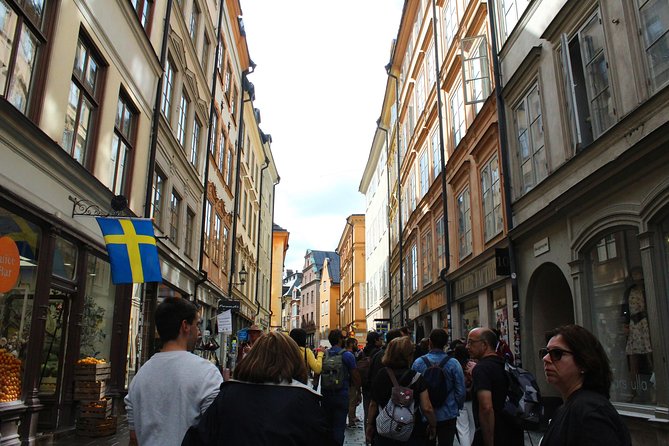
Mårten Trotzigs gränd is known as the narrowest street in Stockholm. The passage is named after a major businessman from the city’s past, and the tour allows about five minutes for the stop.
This is the kind of place that makes a walking tour worthwhile. A map can show you the street, but a guide helps you understand why it has a name and how it fits the old commercial quarter. The lane also gives you a feel for the tight, irregular layout of Gamla Stan.
The stop is short, and it may be busy or difficult for a larger group to pause in comfortably. The maximum group size of 20 helps, but you should still expect to keep moving rather than linger in one spot for a long time.
The Royal Palace and St. George bring the stories together
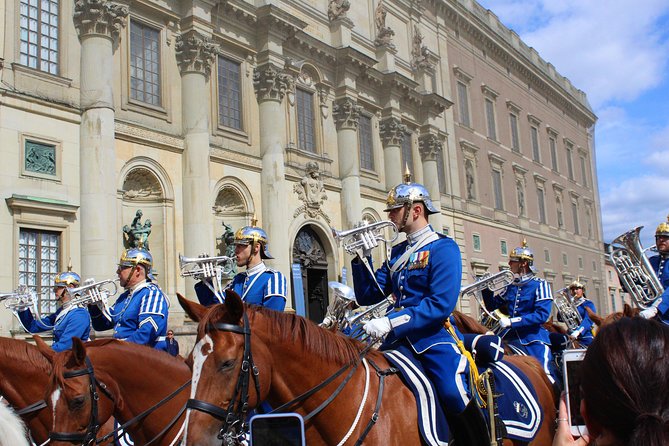
The Royal Palace is allotted about 10 minutes. Stockholm’s palace contains four museums, but admission is not included in this walking tour. You get an introduction to the palace and its place in Sweden’s monarchy, not a full palace visit.
That distinction matters when you plan your day. If the palace is high on your list, you can return later with a separate ticket and more time. The walking tour gives you the setting and background first, which can make a later visit more meaningful.
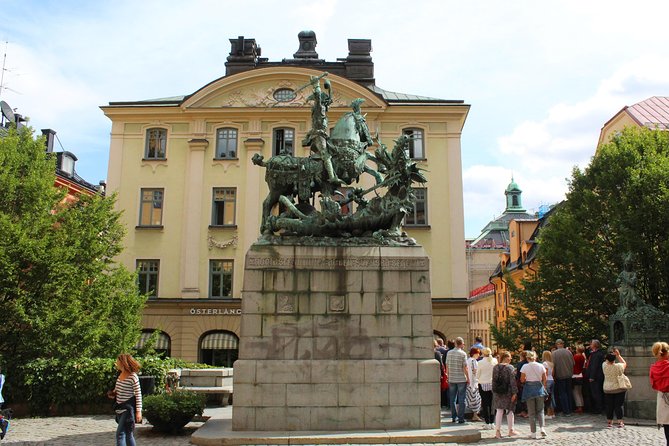
The St. George and the Dragon statue represents the Battle of Brunkeberg in 1471, when Sten Sture defeated the forces of Christian I of Denmark. The tour gives this stop five minutes and includes admission, meaning the statue is part of the outdoor route rather than a ticketed attraction.
The sculpture works well near the end of the walk because it brings together legend, politics, and national memory. Guides can explain the figures and the battle without turning the stop into a long lecture. The best guides on this tour appear to use stories, jokes, and questions to keep the group involved.
What the guide quality means for your experience
The strongest theme in the guide feedback is not one particular scripted presentation. It is the range of guides and their shared ability to make the walk personal. Gaia is repeatedly praised for warmth, humor, and clear historical and political explanations. Sophie is noted for digestible history and a friendly style. Aggie is described as energetic and engaging, while Dante is praised for being funny and easy to follow.
Other named guides include Olivia, Katherine, Kyra, Lova, Tale, Zoe, Rose, and Gya. The descriptions point to guides who remember names, answer questions, add Swedish cultural observations, and adjust explanations to the interests of the group.
That matters because a two-and-a-half-hour history walk can become tiring if it is only a list of dates. Here, you can expect the best version of the experience to feel like a conversation while walking. The guide may connect political events to Swedish attitudes, explain local customs, and add small observations that you would probably miss alone.
The group maximum is 20 people. That is not a private tour, but it is small enough for questions and easier movement through narrow lanes. One group of 11 was described as an ideal size, and the walk was considered well paced even with 20 people.
Price, timing, and who should book
At $24.07 per person, I consider this good value for a first visit. You receive about 150 minutes of guided sightseeing and cover a broad section of central Stockholm. The price is especially sensible if you use the walk to plan the rest of your stay, then return to the Royal Palace, Storkyrkan, or the Nobel Prize Museum on your own.
The Nobel Prize Museum and Swedish Academy are included as an exterior stop of about 10 minutes, with no admission included. The tour explains the museum’s connection to the Nobel Prize and the Swedish Academy, where the literature prize is decided. If you want to visit inside, plan a separate museum visit.
The tour suits active visitors who want a clear overview and can keep walking for two and a half hours. Most people can participate, and service animals are allowed. Still, Old Town streets can be uneven, and the walk includes frequent stops, standing, and movement through narrow passages.
You can cancel for a full refund up to 24 hours before the start time. The experience requires good weather and a minimum number of participants. If poor weather or low enrollment cancels the tour, you are offered another date or a full refund.
Should you book the Stockholm Old Town walk?
Book it if this is your first morning in Stockholm and you want the city to make sense quickly. You will see the major Old Town sights, learn the basic political and royal story, and collect useful suggestions for food and the changing of the guard.
Skip it if you want extended interior visits, a private guide, or a slow architectural study. This is an efficient outdoor overview, not a museum tour.
For most first-time visitors, the combination of price, route, group size, and lively guides makes it a sensible start. Arrive ready to walk, dress for the weather, and save time afterward for the sights you want to explore in greater depth.
FAQ
Where does the walking tour start?
The tour starts at Gustav Adolfs torg, 111 52 Stockholm, Sweden.
Where does the tour finish?
The tour finishes at Stortorget, 111 29 Stockholm, Sweden.
What time does the tour start?
The stated start time is 10:00 a.m.
How long does the tour last?
The tour lasts approximately 2 hours and 30 minutes.
How much does the tour cost?
The listed price is $24.07 per person.
What language is the tour offered in?
The tour is offered in English.
Is admission to the Royal Palace included?
No. Admission to the Royal Palace is not included.
Is the tour suitable for most people?
Most people can participate, but the experience is a walking tour and is best suited to active participants.
What is the cancellation policy?
You can cancel up to 24 hours before the start time for a full refund. Changes or cancellations made less than 24 hours in advance are not accepted for a refund.
Just added around the world
- Fira: Guided Foodie Walking Tour with Tastings★ 4.9 · 474 reviews
- Fez: Guided Walking Tour of the Historic Medina★ 5.0 · 359 reviews
- Fez: Walking Tour in the Ancient City of Fez★ 4.8 · 73 reviews
- Faro: Old Town Guided Walking Food Tour★ 4.9 · 94 reviews
- Feel like a local – Walking Tour in Mykonos Town 2hours★ 4.4 · 77 reviews
- Fes: A Guided Walking Tour Through the Historic Medina★ 4.4 · 97 reviews
- Fez: Half-Day City Private Walking Tour with a Guide★ 4.6 · 114 reviews
- Fanal / Assobiadores – Levada Walk★ 4.6 · 93 reviews
Old Town Walking Tours, compared.
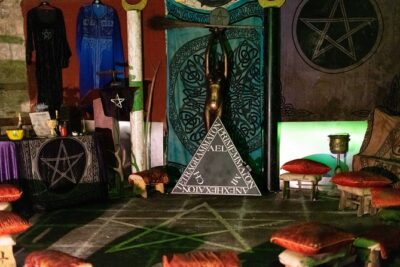
Underground Vaults Walking Tour in Edinburgh Old Town
Read our review →
3-Hour Walking Tour of Old Town & Prague Castle
Read our review →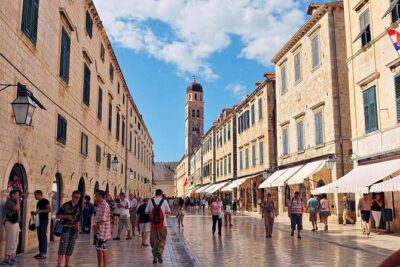
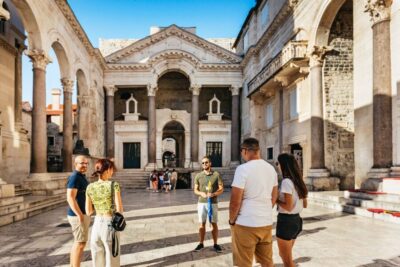
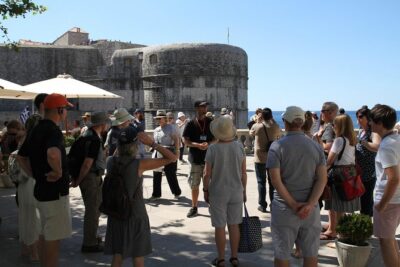

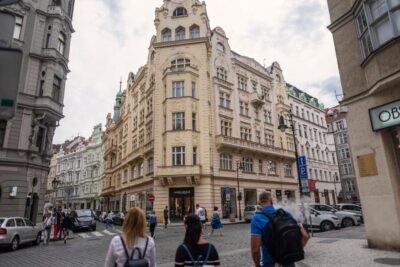
Old Town and Jewish Quarter Guided Walking Tour
Read our review →
Marrakech: Ben Youssef, Secret Garden, & Souks Walking Tour
Read our review →Browse the lists this tour appears in