
REVIEW · STOCKHOLM
The Nordic Food Walk Stockholm
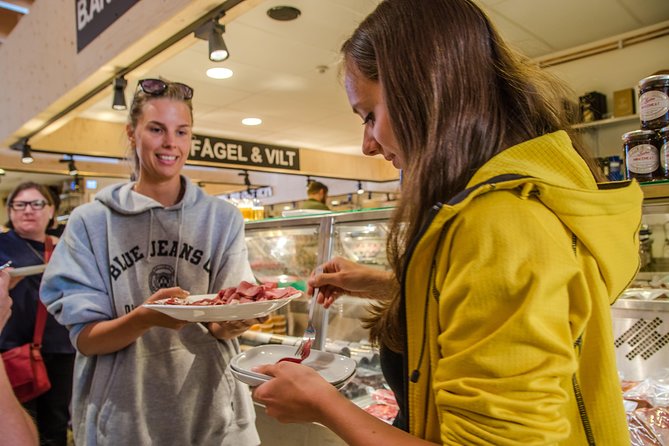
Stockholm’s food story comes alive one bite at a time on this four-hour walk from Östermalm to Gamla Stan. You’ll move from an old market hall to modern food counters, sampling meatballs, seafood, game meats, cheese, candy, and fika along the way. The range is the main attraction.
I like the way the tour pairs food with neighborhoods most first-time visitors rush past, especially Stureplan, Kungsgatan, and the Kings Garden. I also like the local detail supplied by guides such as Cotton, Teresa, Sarah, and Caoimhe, who explain not only what you’re eating, but how Swedish food fits into daily life.
The main caution is simple: this is a walking tour with food stops, not four hours of sitting down to full meals. Most people find the walking manageable, but a few guests found the pace quick, and one group found a party of 20 too large for easy tasting service.
Key points at a glance
- Two historic food halls: Östermalms Saluhall and Hötorget’s Hötorgshallen show both polished market culture and everyday Swedish food shopping.
- A broad Swedish tasting menu: Expect modern meatballs, seafood, game meats, cheese, cured meats, fruit, candy, beer, wine, hot chocolate, and cinnamon bun with coffee.
- A local guide makes the difference: Cotton, Teresa, Sarah, and Caoimhe have been especially praised for combining food facts with Stockholm history and everyday culture.
- A real walk across central Stockholm: The route links Östermalm, Stureplan, Kungsgatan, the Kings Garden, and Gamla Stan.
- Come hungry, but wear good shoes: The tastings add up, while the route includes cobblestones and several hours on foot.
- Useful for solo visitors: The small-group setting can make it easy to talk with the guide and other people, though the maximum group size is 20.
Why this Stockholm food walk works
Many city food tours offer one market, one pastry, and a quick explanation of local dishes. This one tries to give you a wider picture of Swedish eating, from high-end market counters to urban food halls and a traditional café break.
I like that the route does not stay in one tourist pocket. It begins in Östermalm, moves through central Stockholm, and finishes in the medieval lanes of Gamla Stan. You get food, neighborhood context, and a useful orientation to the city in one outing.
The tour is offered in English, lasts about four hours, and has morning or afternoon departures. That makes it easy to place near the beginning of a Stockholm visit. Book it early if your dates are fixed, since it is often reserved well ahead of time.
The price is about $122.32 per person. That is not cheap for a walking tour, but the value depends on how you use it. You receive many tastings, a glass of wine, water, a guide, and an introduction to several places you may want to return to on your own. If you treat it as both lunch and a city orientation, the cost is easier to justify.
A few more walking tours around the world worth a look
- Magical London: Harry Potter Guided Walking Tour
★ 4.7 · 22,044 reviews - Reykjavik Food Walk – Local Foodie Adventure in Iceland
★ 5.0 · 18,952 reviews - History and Hauntings of Salem Guided Walking Tour
★ 5.0 · 14,564 reviews
Starting at Östermalms Saluhall
The meeting point is Beirut Café on Nybrogatan 29, close to Östermalms Saluhall. This is a practical starting area, with public transportation nearby and an immediate sense of Stockholm’s polished Östermalm district.
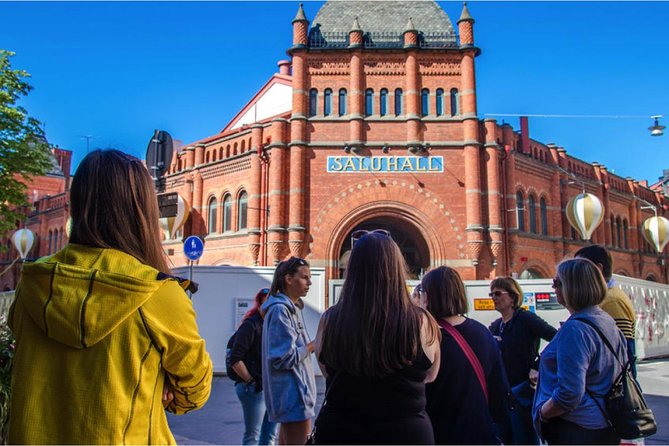
Östermalms Saluhall is the oldest food market in Stockholm. Its wooden interior, including the carved walls and eaves, gives the first stop a strong sense of place. Many businesses have passed from one family generation to the next, so this is more than a collection of counters selling lunch.
Your guide uses the market to introduce Swedish food traditions. The tastings can include cheeses, game meats, beer, and other local specialties. The phrase Gold of the North refers to northern beer, and you may get a taste of that tradition here or later in the walk.
This opening stop is especially useful if you are new to Swedish food. A market hall lets you see what is sold, how it is presented, and how different Swedish eating habits can be from the meatballs-and-herring shorthand found in many guidebooks.
Meatballs with more than a side of potatoes
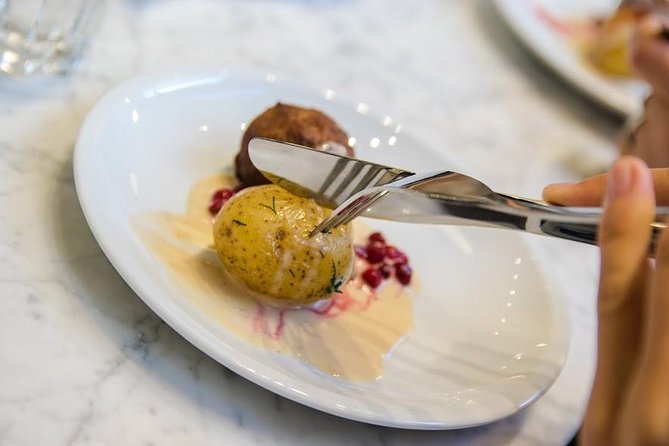
The Swedish meatball is treated as a subject worth studying, not just a quick sample. You’ll learn about the potatoes served with it, the jams traditionally paired with it, and the place the dish holds in Swedish cooking.
The version served here is described as a modern Swedish meatball, with some changes that make it lighter than the traditional style. It remains familiar and comforting, but the explanation helps you understand why the dish matters rather than treating it as a novelty.
The tour also presents a traditional Swedish lunch-style tasting as it heads toward the city center. Do not expect a single large restaurant meal. Instead, the food arrives in stages, which is helpful because you can try more kinds of food without committing to one plate.
Several people have found the variety impressive, including old recipes with roots reaching back to the 1600s. That makes the guide’s explanations important. Without context, a small bite of cured meat or a spoonful of jam is just a sample. With context, it becomes part of a longer Swedish food tradition.
Stureplan, Kungsgatan, and K25
After Östermalm, the walk continues through Stureplan, an area associated with Stockholm’s wealthy and fashionable side. It is also an area many sightseeing routes skip, so the change of scenery helps keep the tour from feeling like a parade of standard landmarks.
At Kungsgatan, K25 provides a more modern contrast. This urban food court is popular with young Stockholm residents and gives you a look at the city’s current eating habits. Here you can try local seafood and have a glass of white wine while watching people come and go.
That stop adds welcome variety. Östermalms Saluhall presents food in a traditional market setting. K25 shows how Stockholm eats in a faster, more casual, city-center environment.
The seating and food service here can also give your feet a short break. One particularly useful detail is that the tour includes a sit-down seafood tasting, which breaks up the walking and makes the four-hour route feel less relentless.
Same streets, a different route:
- New Orleans Premier Ghost, Voodoo and Vampire Walking Tour
★ 4.5 · 12,856 reviews - Amsterdam Anne Frank: Small-Group Walking Tour & Local Guide
★ 4.8 · 12,789 reviews - Edinburgh: Harry Potter Magical Guided Walking Tour
★ 4.8 · 11,944 reviews - Edinburgh Castle: Guided Walking Tour with Entry Ticket
★ 4.7 · 11,699 reviews
Hot chocolate and the flavors of Hötorgshallen
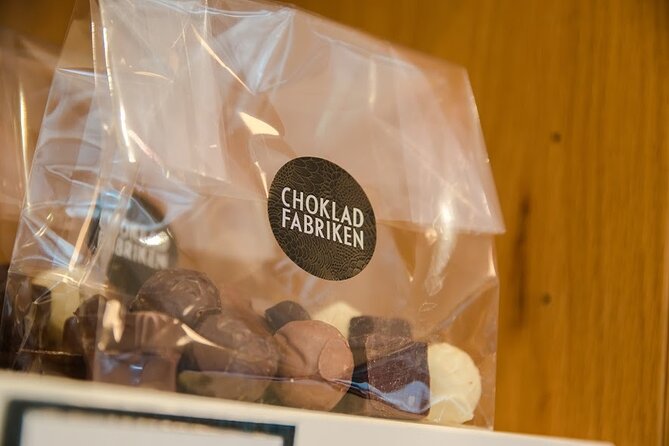
Chokoladfabriken is the next sweet stop. Its hot chocolate is made with 65 percent cocoa and cardamom, giving it a darker, more aromatic flavor than a standard sugary café drink.
This is a smart pause in a city where the weather can be chilly. It also shows that Swedish food culture is not only about preserved meats and seafood. Cardamom appears in familiar Swedish baking, and it gives the drink a clear Nordic character.
The route then reaches Hötorgshallen, another major food market. Here you can look through stalls filled with Swedish delicacies and fresh produce. The atmosphere differs from Östermalms Saluhall, and seeing both markets helps you compare two important food-shopping settings in Stockholm.
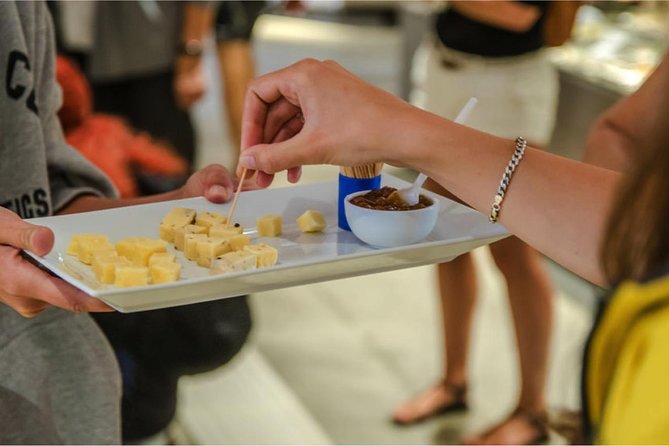
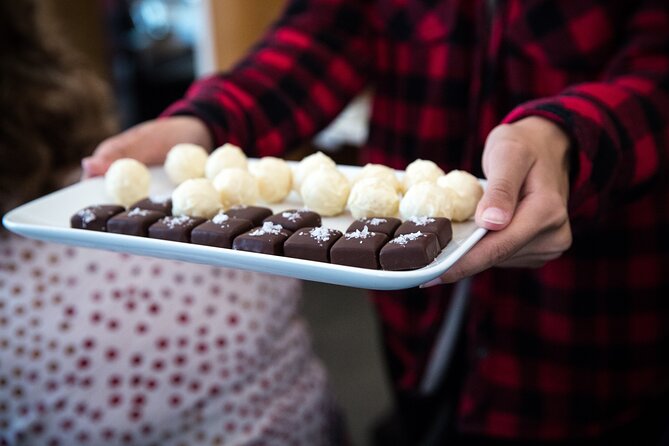
At P&B Delikatesser, the tastings can include homemade truffles, Swedish licorice, and cloudberry jam. Cloudberries are a particularly interesting northern ingredient, while licorice is the tour’s great test of courage. The salty style may be startling if you grew up with sweet candy. Some people love it. Others decide one sample is enough.
Cheese, cured meats, and northern flavors
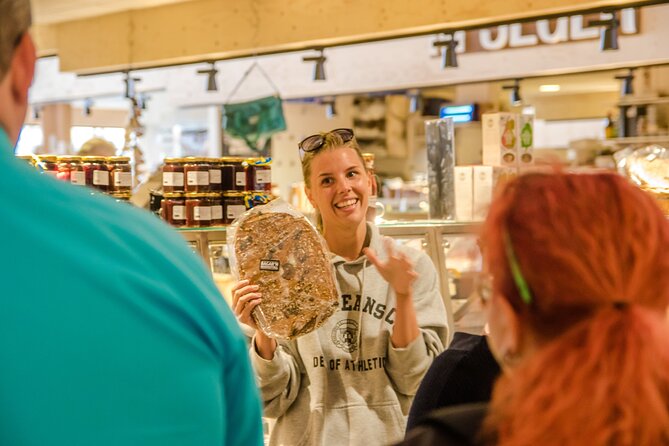
Husmans Deli brings artisan cheese into the mix. This is a good point in the tour for noticing how much Swedish food depends on careful preservation and strong, clean flavors rather than heavy seasoning.
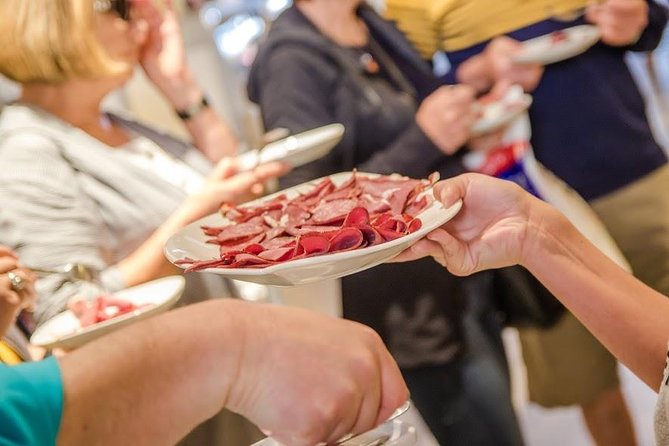
At Fågel & Vilt, the emphasis shifts to cured meats. Smoked reindeer and elk salami give you a chance to try game associated with northern Sweden. These are not everyday foods for many visitors, and the tasting is one of the tour’s more distinctive parts.
You may then wash down the savory food with Norrlands Guld beer and follow it with fresh fruit from Lisbeth Janson Frukt & Grönt. The sequence moves from intense flavors to something crisp and simple.
This section is where the tour earns much of its value for adventurous eaters. You are not limited to the best-known Swedish dishes. You get a sampling of ingredients tied to geography, climate, preservation, and seasonal produce.
Still, tasting portions are not guaranteed to feel like full servings. One person found some samples modest, and larger groups may need patience while everyone receives a taste. If your idea of value means several full plates, this may feel light. If you want breadth, it works better.
Walking through the Kings Garden to Gamla Stan
The walk itself is part of the meal. You pass through the Kings Garden and central neighborhoods before entering Gamla Stan, Stockholm’s Old Town.
The route connects modern city life with an area dating to the 13th century. Gamla Stan’s narrow medieval lanes and cobblestones provide a fitting finish, since traditional food often makes more sense when you see it alongside the older parts of the city.
This is also where the guide’s wider knowledge matters. Cotton has been especially praised for explaining buildings, neighborhoods, food preparation, and Swedish life in the same conversation. Teresa has also been appreciated for making the experience comfortable for solo visitors.
You should keep your pace in mind. Several people have called the walking manageable, but others found the guide moved too quickly, especially for older members of their group. Wear supportive shoes, leave room in your schedule, and tell the guide early if you need a slower pace.
Candy, fika, and the final stop
Before the tour ends, you pause at a candy shop in Gamla Stan. This offers one last look at Swedish sweets before the final tasting, the country’s famous fika break.
Fika is not simply coffee and cake. It is a regular pause for conversation, rest, and something sweet. Here, the classic pairing is a kanelbullar, or cinnamon bun, with strong coffee.
The café stop is valuable because it gives the tour a calmer ending. After several market counters and walking segments, you can sit, talk, and think about which foods you want to seek out again.
The final pastry may be the least consistent part of the experience. Many people enjoy the fika stop, but one person found the cinnamon bun dry. That is worth keeping in mind if you are booking mainly for pastry quality. The idea of the stop is excellent, though the exact bun may vary.
The tour ends at Kindstugatan 1 in Gamla Stan, leaving you in a useful area for an evening stroll or dinner. Hotel pickup and drop-off are not included, so you make your own way to the meeting point and continue from the Old Town afterward.
Guide quality and group size
The guide can shape this experience more than any single tasting. Cotton has been praised for clear explanations of food history, preparation, Stockholm, and Swedish culture. Teresa and Theresa have been appreciated for friendly, personal guiding, especially with solo visitors. Sarah and Caoimhe have also been noted for warmth, good food explanations, and attention to dietary needs.
The tour can run with a very small group. One person ended up as the only participant and still received the full experience rather than having it canceled. In winter, groups may be smaller.
The stated maximum is 20 people. That is reasonable for a popular city tour, but it is not the same as a private or intimate tasting. A group of 20 can make it harder to hear a soft-spoken guide and can slow service at busy counters.
Dietary needs must be given when booking. Vegetarian and allergy requests cannot be changed once the tour has begun. One account describes gluten-free and vegetarian accommodations, but you should still provide clear details in advance rather than assume every tasting can be replaced.
Who should book this tour?
I would choose this walk if you want a fast, food-focused introduction to Stockholm and enjoy trying ingredients you might not order alone. It suits first-time visitors, solo visitors, couples, and families with enough stamina for several hours on foot.
It is also a strong first-day activity. You’ll learn where the food halls are, pick up ideas for later meals, and see several central districts without spending a separate day on orientation.
You may want to skip it if you need a slow pace, dislike group tours, or want large restaurant portions. The experience includes additional food and drinks only at your own expense, so the included tastings are the full foundation of the tour.
The tour is conducted in English and requires a moderate level of physical fitness. Free cancellation is available up to 24 hours before the start time. After that, refunds and late changes are not accepted.
Should you book The Nordic Food Walk Stockholm?
Book it if you want variety, local context, and a useful walk through central Stockholm. The strongest parts are the two food halls, the game meats, the seafood stop, the salty licorice challenge, and the chance to learn from guides such as Cotton or Teresa.
Think of it as a substantial tasting walk, not a four-hour feast. Come hungry, wear good walking shoes, and mention allergies or vegetarian needs at booking. If that sounds like your kind of afternoon, the tour gives you a broad and flavorful introduction to Swedish food without making you plan every stop yourself.
FAQ
How long does The Nordic Food Walk Stockholm last?
The tour lasts approximately four hours.
What food and drinks are included?
Included items are food tastings, free samples, water, and one glass of wine. The experience may include Swedish meatballs, seafood, cheeses, cured meats, game meats, candy, hot chocolate, beer, fruit, and fika.
Where does the tour start?
It starts near Östermalms Saluhall at Beirut Café, Nybrogatan 29, 114 39 Stockholm, Sweden.
Where does the tour end?
The tour ends at Kindstugatan 1 in Gamla Stan.
Is hotel pickup included?
No. Hotel pickup and drop-off are not included.
Can I request vegetarian or allergy-friendly tastings?
Yes, but you must provide the information while booking. Tastings cannot be changed after the tour has started.
How large is the group?
The maximum group size is 20 people. The actual group may be smaller, particularly during winter.
Just added around the world
- Fira: Guided Foodie Walking Tour with Tastings★ 4.9 · 474 reviews
- Fez: Guided Walking Tour of the Historic Medina★ 5.0 · 359 reviews
- Fez: Walking Tour in the Ancient City of Fez★ 4.8 · 73 reviews
- Faro: Old Town Guided Walking Food Tour★ 4.9 · 94 reviews
- Feel like a local – Walking Tour in Mykonos Town 2hours★ 4.4 · 77 reviews
- Fanal / Assobiadores – Levada Walk★ 4.6 · 93 reviews
- Fes: A Guided Walking Tour Through the Historic Medina★ 4.4 · 97 reviews
- Fez: Half-Day City Private Walking Tour with a Guide★ 4.6 · 114 reviews
Walking Tours, compared.

Magical London: Harry Potter Guided Walking Tour
Read our review →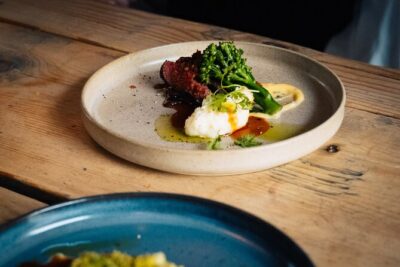
Reykjavik Food Walk – Local Foodie Adventure in Iceland
Read our review →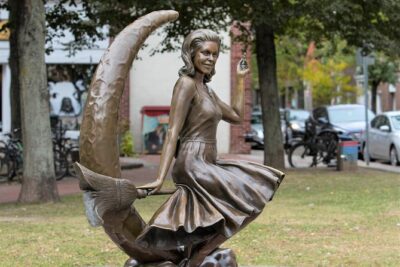
History and Hauntings of Salem Guided Walking Tour
Read our review →
New Orleans Premier Ghost, Voodoo and Vampire Walking Tour
Read our review →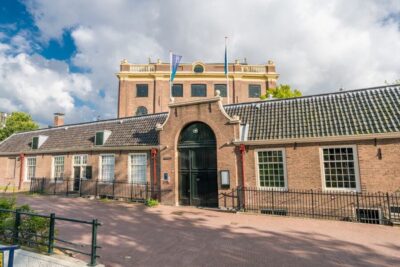
Amsterdam Anne Frank: Small-Group Walking Tour & Local Guide
Read our review →

Edinburgh Castle: Guided Walking Tour with Entry Ticket
Read our review →
Anne Frank’s Story – Guided Walking Tour through Amsterdam
Read our review →Browse the lists this tour appears in