
REVIEW · REYKJAVIK
Reykjavik Walking Tour – Walk with a Viking
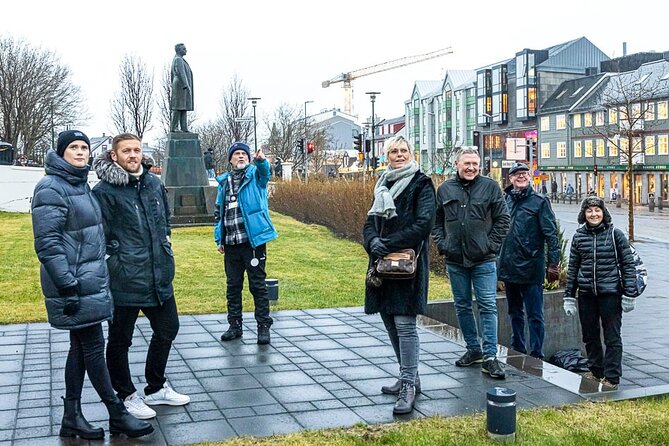
Reykjavik is compact enough to cross on foot, but its best stories are easy to miss. This walk links the city’s Viking beginnings with Parliament, a duck-filled pond, the harbor, Harpa Concert Hall, and Hallgrimskirkja. The guide supplies the thread that ties those places together, often adding folklore, local politics, food advice, and stories about daily life in Iceland.
I like the small maximum of 12 people, which gives you room to ask questions and makes it easier to hear a guide without headphones. I also like the useful ending at Hallgrimskirkja, since you finish near one of Reykjavik’s major landmarks and can continue exploring on your own. The main drawback is weather: the tour runs outdoors in Icelandic conditions, and one stretch includes a small hill, so good shoes and proper clothing matter.
Key points to know before booking
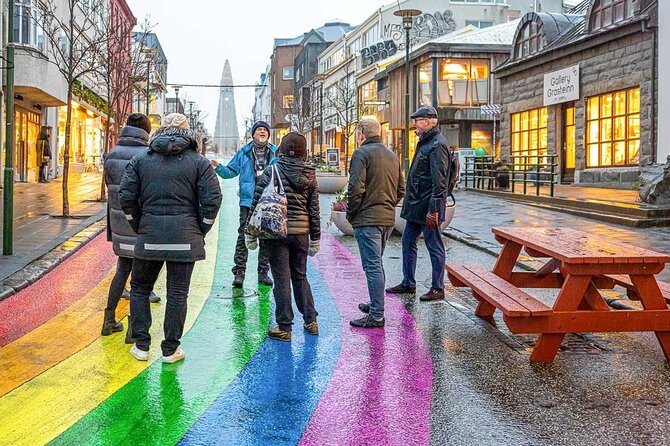
- A compact city introduction: You cover central Reykjavik landmarks in about two hours, with stops at the Old Harbour, Harpa, Parliament, Tjörnin, and Hallgrimskirkja.
- A true small-group format: The maximum is 12 people, allowing more questions and a more personal pace than a large coach-style walk.
- More than Viking stories: Expect Icelandic settlement history, hidden people and folklore, modern civic life, volcanoes, food, schools, and current local issues.
- Useful first-day timing: This works especially well at the start of your Iceland visit, when you want to learn the city layout and collect ideas for later.
- Practical local tips: Guides point out places to eat and shop, and may suggest stops you can return to after the walk.
- Simple point-to-point route: Meet at Ingólfstorg and finish by Hallgrimskirkja or the nearby Einar Jónsson sculpture garden.
What this Reykjavik walk is really about
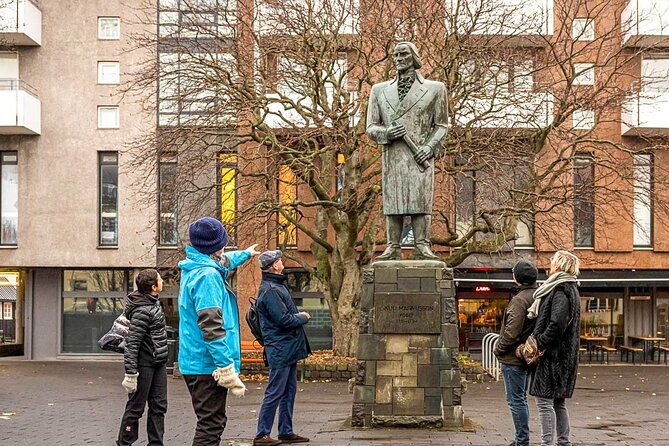
The title suggests a Viking history lesson, but the experience is broader. The Viking period gives the walk its starting point, yet the guide also connects that past to modern Icelandic identity, politics, religion, art, food, and city life.
That mix is the tour’s main strength. A guide such as Dúi may bring a local background to the city’s past. Bo has been praised for combining history with political humor and legends. Einar has added backstories and even singing, while Ester has been especially good at combining clear explanations with a light touch.
Guides change, so you should not book expecting one particular person. Still, the pattern is clear: this is designed as an entertaining city orientation, not a formal lecture.
The walk is also a sensible way to begin your Iceland trip. You get a map in your head before spending time on day trips, and you can ask for suggestions about restaurants, shops, museums, and places worth returning to. The local advice is one reason the $55.63 price can make sense, especially if you use the tour to shape the rest of your stay.
A few more walking tours around the world worth a look
- Magical London: Harry Potter Guided Walking Tour
★ 4.7 · 22,044 reviews - Reykjavik Food Walk – Local Foodie Adventure in Iceland
★ 5.0 · 18,952 reviews - History and Hauntings of Salem Guided Walking Tour
★ 5.0 · 14,564 reviews
Starting at Ingólfstorg and Reykjavik’s oldest streets
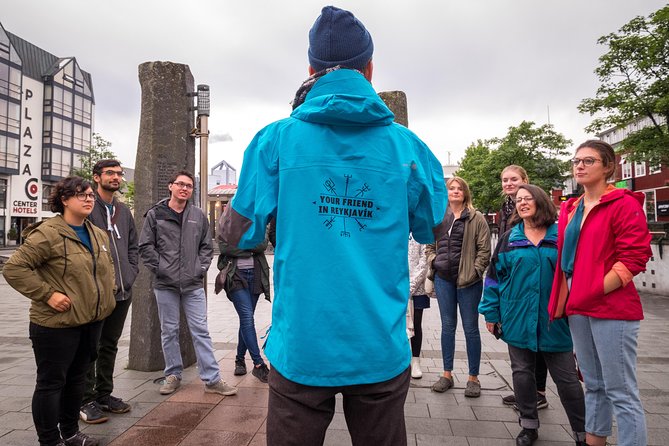
The meeting point is Ingólfstorg, near the two stone pillars that rise more than three meters high. The square is in front of Center Hotels Plaza at Aðalstræti 6, near the start of Austurstræti.
Allow extra time to find it. One practical warning is worth taking seriously: Reykjavik has more than one square with stone columns, and map apps can send you to the wrong place. Arrive at least five minutes early and look for a guide in a light blue jacket marked Your Friend in Reykjavik.
From Ingólfstorg, the walk moves into Aðalstræti, one of the city’s oldest streets. The old house here offers a direct link to earlier Reykjavik, with traditional architecture set among newer buildings. You do not need a long museum visit to appreciate it. The value comes from seeing how the older city survives within the modern center.
The next stop is the Settlement Exhibition. Beneath the city streets, the museum preserves remains of a Viking longhouse. The group pauses outside or near the site while the guide explains the settlement period and the way archaeologists have uncovered Reykjavik’s early foundations.
Admission to the exhibition is not included, and the planned stop is short. If you want to tour the museum properly, set aside separate time on another day.
Squares, government, and the everyday city
Austurvöllur gives the walk a change of pace. Surrounded by cafes and historic buildings, it is a place to watch everyday Reykjavik rather than simply check off a landmark. The guide can explain how the square fits into civic life, and you may want to note it as a pleasant place for a coffee break later.
The route then passes Reykjavik City Hall. The building offers a look at local government and civic design in the center of town. The stop is brief, so do not expect a full guided visit through every room or a long architectural tour. Instead, you get context about how the city is run and how modern Reykjavik presents itself.
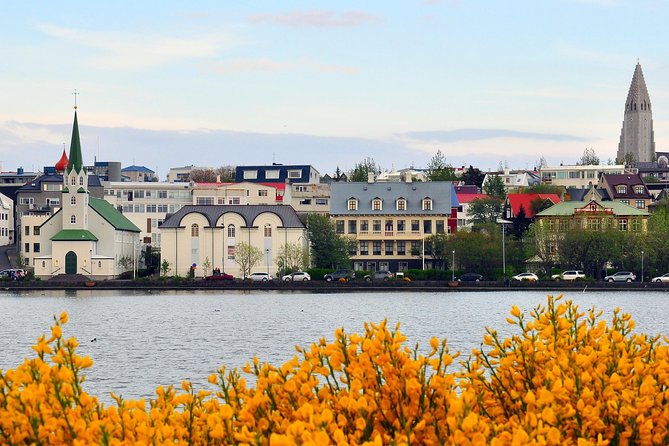
Lake Tjörnin is one of the calmer portions of the walk. It is a small urban lake surrounded by pathways, benches, bridges, plants, and waterfowl. The stop gives your feet a break and shows the city’s softer side. Reflections of nearby buildings and the presence of ducks and gulls make it a good photo point.
This is also one of the few stops where you can simply pause. The tour is not a race between buildings. Guides generally keep an easy pace, with frequent stops, though you will still be outdoors for most of the two hours.
Alþingi and Iceland’s political story
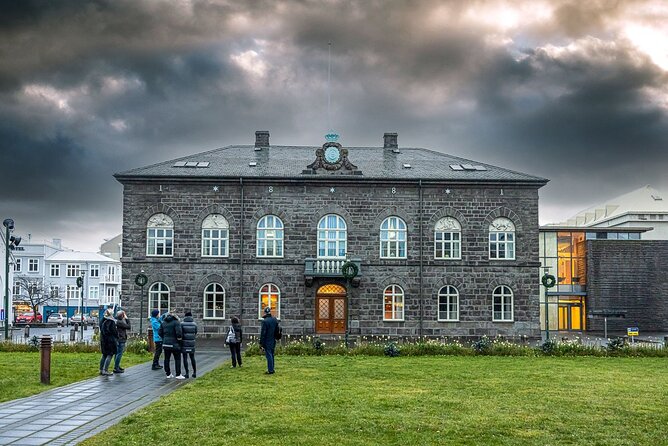
Parliament House, or Alþingishúsið, brings the Viking theme into the present. Iceland’s parliamentary tradition reaches back to Alþingi, founded in 930, making it one of the world’s oldest parliamentary institutions.
The building in Reykjavik represents the modern working center of that tradition. The guide explains the role of Parliament and the importance of debate, lawmaking, and national identity. The visit is mainly an exterior stop, and access to working chambers is not promised, so think of this as a history and civic-life lesson rather than a formal building tour.
This part can be especially rewarding if you enjoy seeing how a small country handles public life. Guides have also discussed diversity, social change, rights, and current issues, giving the walk more range than a simple account of Viking settlement.
Same streets, a different route:
- New Orleans Premier Ghost, Voodoo and Vampire Walking Tour
★ 4.5 · 12,856 reviews - Amsterdam Anne Frank: Small-Group Walking Tour & Local Guide
★ 4.8 · 12,789 reviews - Edinburgh: Harry Potter Magical Guided Walking Tour
★ 4.8 · 11,944 reviews - Edinburgh Castle: Guided Walking Tour with Entry Ticket
★ 4.7 · 11,699 reviews
The oldest graveyard and Reykjavik’s quieter side
Kirkjugarðurinn Suðurgötu, described as Iceland’s oldest graveyard, is a more reflective stop. Weathered stones and a quiet setting provide another way to approach the country’s past. Instead of focusing on grand monuments, the guide can connect national history with the ordinary people who lived and died here.
The stop will not appeal equally to everyone. If you prefer only major sights, ten minutes in a cemetery may feel slow. I find it useful because it breaks up the city-center route and gives you a sense of Reykjavik beyond cafes, shops, and postcard buildings.
The Old Harbour and Harpa’s changing light
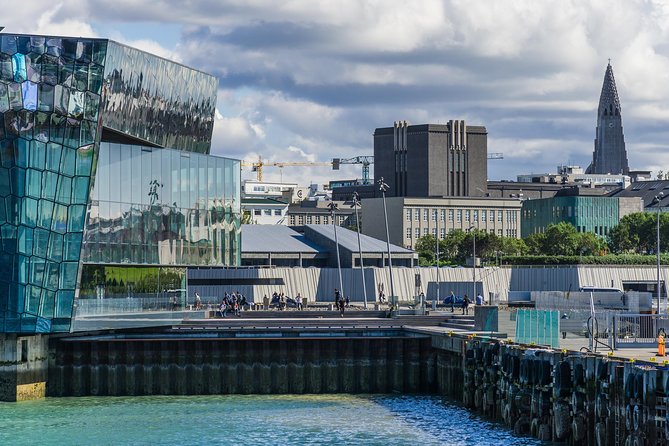
The Old Harbour is one of the route’s most atmospheric sections. You walk by boats, colorful buildings, waterfront restaurants, and shops, with the sea close by. This is a good place to ask for seafood suggestions or note where you might return for a meal.
The harbor also shows Reykjavik’s working identity. It is not only a scenic waterfront. Its history is tied to fishing and seafaring, while current businesses give it a more leisure-focused feel. The guide helps you read both sides of the area.
Harpa Concert Hall provides a sharp contrast. Its glass facade has a crystalline pattern, and the building changes character as light moves across the geometric panels. The stop is normally brief, but the exterior gives you plenty to look at and photograph.
If your guide takes the group inside, the modern design becomes even more apparent, but a full concert or event is not part of this tour. Some guides add a personal touch here. One guide was praised for singing at the music hall, though that should be treated as a pleasant possibility rather than a promised feature.
Laugavegur and the best use of the local advice
Laugavegur is Reykjavik’s main shopping and cafe street. It is lined with boutiques, restaurants, coffee shops, and bars, making it a useful place to hear practical advice. The guide can point out areas for eating and shopping, but recommendations will vary by guide and by your interests.
This is where the tour’s local character can pay off. You can ask where to find a casual meal, what part of town suits an evening walk, or which places deserve a return visit. Guides have also discussed Icelandic food, schools, volcanoes, and ordinary life, so do not hesitate to ask questions beyond the formal route.
The walk then reaches Arnarhóll, a hill with views over downtown. From here, you can see colorful rooftops, Hallgrimskirkja, and distant mountains. The hill is not a major physical challenge, but it is the one part of the route specifically described as a small climb. If you have limited mobility, ask the guide about the exact route on the day.
Finishing at Hallgrimskirkja

Hallgrimskirkja is the natural finish. Its tall concrete form rises above Reykjavik and is one of the easiest landmarks to use for orientation. The building’s shape is often linked to Iceland’s volcanic surroundings and distinctive natural forms, though your guide will supply the local explanation.
The stop is designed to be fun as well as informative. You may hear stories about the church, its scale, and its place in the city. Some guides add humor or encourage photos that play with the building’s imposing height.
The tour generally ends at Hallgrimskirkja or in the adjacent sculpture garden of Einar Jónsson. That is useful because you can continue sightseeing without returning to the starting point. You might visit the church area, explore the sculpture collection next door, or walk back toward Laugavegur.
The listed stop itself is free, but the tour does not promise admission to every interior attraction along the route. Ask your guide what is open and what requires a separate ticket if you want to go inside.
Pace, weather, and what to wear
The walk lasts about two hours and covers roughly a dozen short stops. The schedule adds up to many brief pauses, with the rest of the time used for walking and stories. You should expect a relaxed pace rather than a strenuous hike.
The route is mainly flat, with one small hill. Several people have found the pace easy to follow, and the frequent stops reduce the need to stand in one place for a long time. Still, this is a walking tour, not a sightseeing bus. Wear shoes that handle wet pavement and bring layers.
The experience is offered in English. Guides have generally been praised for clear speaking and friendly conversation, but one person found a guide difficult to hear. If the group is spread out or the wind picks up, move closer to the guide and ask for repetition when needed.
The operator says the walk runs in all weather, while the cancellation terms also allow a change of date or full refund if poor weather leads to cancellation. That means you should prepare for rain, wind, snow, and cold rather than assume the tour will move indoors.
Is $55.63 a fair price?
At $55.63 per person, this is not the cheapest way to see Reykjavik. You can walk through the center on your own for free, and most exterior stops do not charge admission.
The price pays for the guide, the small group, and the stories that turn separate sights into a connected introduction. I think the value is strongest if you are new to Reykjavik, want to ask questions, and plan to use local suggestions later. It is less compelling if you already know the center well or prefer to explore without a set pace.
The maximum of 12 matters. A small group lets you hear the guide, ask about food and daily life, and avoid the impersonal feel of a large crowd. The tour also includes no food, drinks, hotel pickup, or drop-off, so budget and plan for those separately.
Who should book this walking tour?
I would choose this tour for a first day in Reykjavik, especially if you want a quick grounding in the city before heading out to waterfalls, volcano areas, or the coast. It suits couples, families with older children, solo visitors, and anyone who enjoys history delivered with humor rather than a formal lecture.
Children must be accompanied by an adult. Most people can take part, and service animals are allowed, but anyone concerned about walking distance, weather, or the small hill should check the route before booking.
The tour is also a good fit for people who like their history mixed with modern life. You may hear about Vikings, hidden people, volcanoes, Parliament, food, schools, art, and local politics in one outing. That variety is more useful than a narrow focus on one period.
Should you book Walk with a Viking?
Book it if you want a friendly, story-led introduction to Reykjavik and like having a local guide point out places worth revisiting. The strongest reasons are the small group, easy pace, central route, and practical advice about eating and shopping.
Skip it if you want extensive interior visits, a museum tour, or a fully sheltered activity. The route is outdoors, admissions are not generally part of the experience, and the quality of the day depends partly on the guide assigned.
For most first-time visitors, I would schedule it near the beginning of the stay. Arrive early at the correct Ingólfstorg, dress for Icelandic weather, keep an open ear for local suggestions, and leave the tour with enough time to explore Hallgrimskirkja and the surrounding streets on your own.
FAQ
How long does the Reykjavik Walking Tour last?
The tour lasts approximately two hours.
Where does the tour begin?
The meeting point is Ingólfstorg in central Reykjavik, by the two stone pillars. The location is in front of Center Hotels Plaza at Aðalstræti 6.
Where does the tour finish?
The tour usually finishes at Hallgrimskirkja Church or at the nearby sculpture garden of Einar Jónsson.
How many people are in the group?
The tour has a maximum of 12 travelers.
Is the tour offered in English?
Yes. The experience is offered in English.
Is hotel pickup included?
No. Hotel pickup and drop-off are not included.
What happens if the weather is poor?
The tour operates in all weather conditions, so you should dress appropriately. If the experience is canceled because of poor weather, you can receive a different date or a full refund.
Just added around the world
- Fez: Guided Walking Tour of the Historic Medina★ 5.0 · 359 reviews
- Fez: Walking Tour in the Ancient City of Fez★ 4.8 · 73 reviews
- Fira: Guided Foodie Walking Tour with Tastings★ 4.9 · 474 reviews
- Faro: Old Town Guided Walking Food Tour★ 4.9 · 94 reviews
- Feel like a local – Walking Tour in Mykonos Town 2hours★ 4.4 · 77 reviews
- Fes: A Guided Walking Tour Through the Historic Medina★ 4.4 · 97 reviews
- Fez: Half-Day City Private Walking Tour with a Guide★ 4.6 · 114 reviews
- Fanal / Assobiadores – Levada Walk★ 4.6 · 93 reviews
Walking Tours, compared.

Magical London: Harry Potter Guided Walking Tour
Read our review →
Reykjavik Food Walk – Local Foodie Adventure in Iceland
Read our review →
History and Hauntings of Salem Guided Walking Tour
Read our review →
New Orleans Premier Ghost, Voodoo and Vampire Walking Tour
Read our review →
Amsterdam Anne Frank: Small-Group Walking Tour & Local Guide
Read our review →

Edinburgh Castle: Guided Walking Tour with Entry Ticket
Read our review →
Anne Frank’s Story – Guided Walking Tour through Amsterdam
Read our review →Browse the lists this tour appears in