
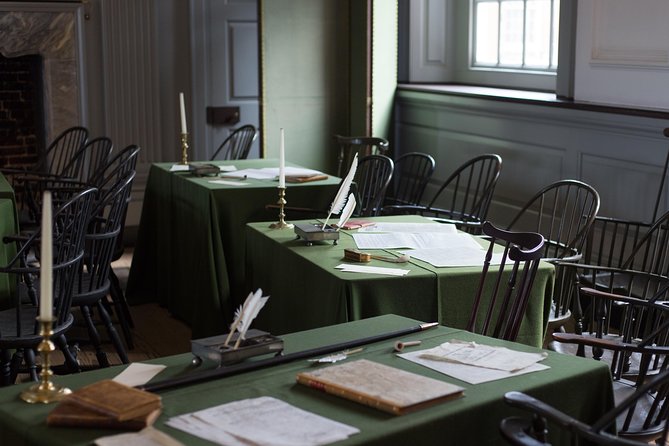
REVIEW · PHILADELPHIA
The Constitutional Walking Tour of Philadelphia
Philadelphia’s founding story unfolds in a compact area, and this 75-minute walking tour gives you a brisk introduction to it. You’ll pass Independence Hall, the Liberty Bell Center, Franklin Court, and more than 20 other historic places without spending time on long transfers between them.
I like the efficient route and the chance to hear the political, financial, religious, and personal stories behind the buildings. Guides such as PJ, Connor, Will, and Avi have been praised for clear storytelling and friendly answers. The key drawback is important: you do not go inside the sites, so treat this as an orientation, then return to the places you want to explore.
Key points to know before you book
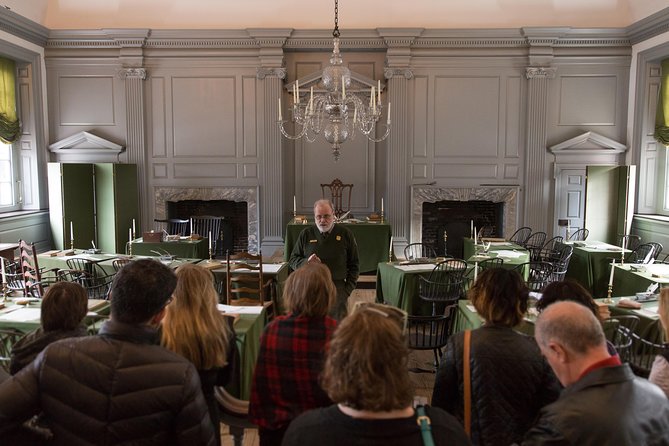
- A 1.25-mile route through America’s founding district: You cover a lot of ground without needing transportation.
- More than 20 historic stops: The route includes Independence Hall, the Liberty Bell Center, Franklin Court, Carpenters’ Hall, and Christ Church Burial Ground.
- An outdoor overview, not an interior tour: The guide points out the sites and explains their importance from the street or nearby public spaces.
- A brisk 75-minute pace: You’ll stop often, but the tour is designed to keep moving.
- Good value at $30: The price works best if you want context before choosing which museums and buildings to visit on your own.
- Rain or shine: Wear walking shoes and dress for the forecast. Bring water in warm weather.
Why this short Philadelphia walk works
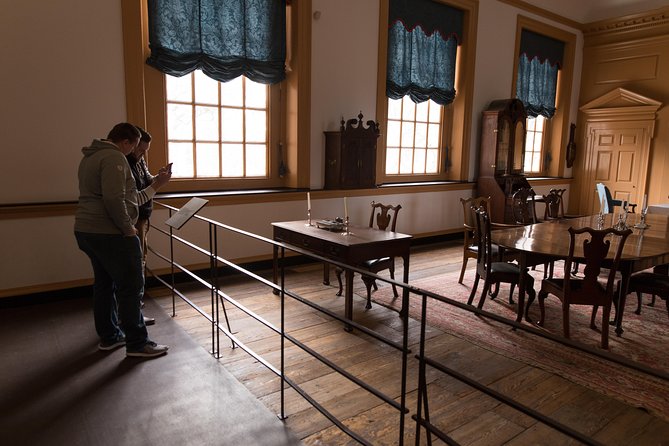
Philadelphia’s historic core is unusually easy to cover on foot. In about 1.25 miles, this tour connects the places where the Declaration of Independence and the Constitution took shape with the homes, churches, banks, and meeting halls that supported the new country.
That range is the main appeal. You are not just looking at one famous building. You are seeing how government, commerce, religion, printing, military affairs, and ordinary city life all crowded into the same few blocks.
The guide provides the thread tying it together. A good guide can turn a plain brick wall into the site of a constitutional argument, or explain why a former courthouse became the meeting place of Congress. Guides such as Connor have been praised for keeping politics out of personal commentary while still explaining the political conflicts of the era.
The tour is also useful at the beginning of a Philadelphia visit. Instead of wandering through Independence National Historical Park without a plan, you quickly learn what each site is and where it sits. Afterward, you can spend your limited museum time at the places that caught your interest.
Do not confuse the phrase visit the Liberty Bell or Independence Hall with an interior admission. The route stops at these landmarks and explains them from outside. Security lines, timed entry, and the 75-minute schedule make interior visits impractical during this walk.
A few more walking tours around the USA worth a look
- History and Hauntings of Salem Guided Walking Tour
★ 5.0 · 14,564 reviews - New Orleans Premier Ghost, Voodoo and Vampire Walking Tour
★ 4.5 · 12,856 reviews - Little Havana Food and Walking Tour in Miami
★ 5.0 · 8,882 reviews
Starting outside the National Constitution Center
Meet outside the main entrance of the National Constitution Center at 525 Arch Street. The meeting point is by three large stone benches, not inside the building. Check in 15 minutes early so you are not searching for the group as it prepares to leave.
The opening stop is brief. You’ll get an introduction to the route and the historic district, then head toward the first public memorials and early American sites.
This location is convenient for starting a day in the area. If you plan to visit the Constitution Center itself, you can do so separately, but admission is not part of the walking tour. The same applies to all of the historic sites along the route.
Presidential power at the President’s House and Declaration House
The open-air President’s House site marks the place where George Washington and John Adams lived while Philadelphia served as the national capital from 1790 to 1800. It helps correct a common impression that the early federal government operated from one permanent center. The capital moved, and Philadelphia briefly held the role.
Next comes Declaration House, also called the Graff House. Thomas Jefferson lived here while writing the Declaration of Independence. The stop is short, so you will not receive a full study of Jefferson’s writing process, but you will understand the physical setting connected with one of the country’s most important documents.
These early stops work best as context. They show that the founding story took place in homes and city streets, not only in grand public buildings.
The Liberty Bell and Independence Hall from the outside
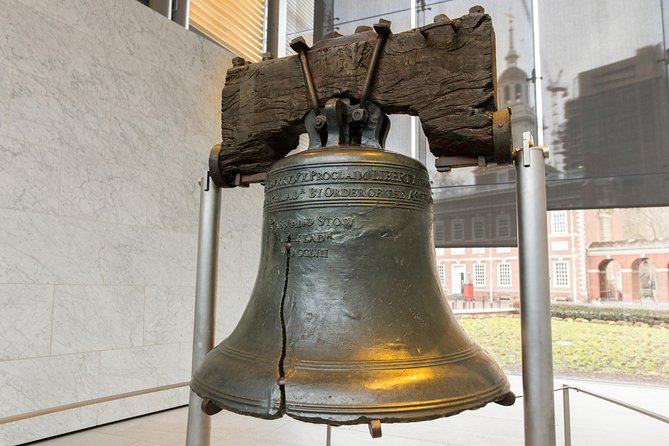
The Liberty Bell Center is one of the most recognizable stops on the route. The guide explains the bell’s place in American memory, while you see the building that houses it. You should not expect a private viewing or a chance to bypass the security process.
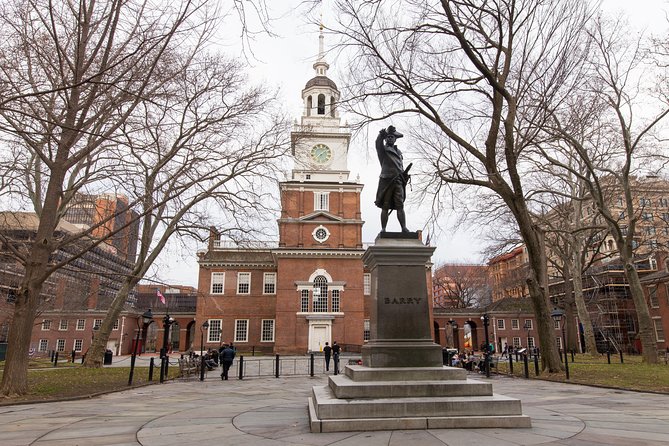
Independence Hall is the emotional center of the walk. Built in 1732 as the Pennsylvania State House, it later became the setting for the Declaration of Independence and the United States Constitution. From the outside, the building can feel like a quick stop, but the guide supplies the basic political setting that makes the structure matter.
If you want to enter Independence Hall, plan that separately and arrange the required timed admission in advance. This tour is better understood as your introduction to the building, not your complete Independence Hall visit.
Same streets, a different route:
- Chicago: Gangsters and Ghosts Walking Tour
★ 5.0 · 7,155 reviews - Boston: Freedom Trail History Small Group Walking Tour
★ 5.0 · 6,450 reviews - Historic Charleston Guided Sightseeing Walking Tour
★ 5.0 · 6,216 reviews - New Orleans Food Walking Tour of the French Quarter with Small-Group Option
★ 5.0 · 6,118 reviews
Congress Hall, Old City Hall, and the machinery of government
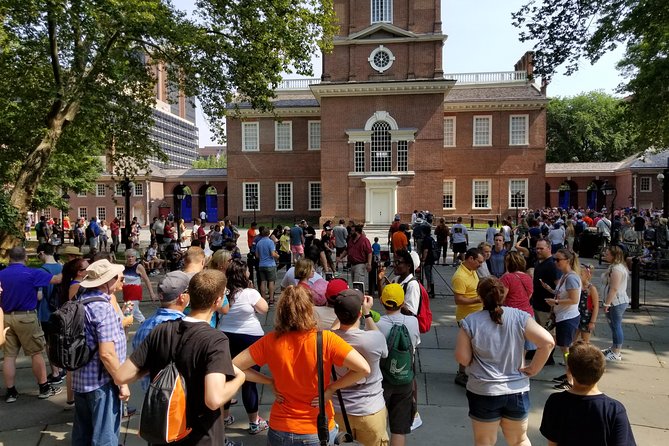
Congress Hall served as the United States Capitol from 1790 to 1800, when Philadelphia was the national capital. It was built between 1787 and 1789 as the Philadelphia County Courthouse, a useful reminder that early American buildings often changed roles as the government grew.
Old City Hall adds another layer. It was once home to the United States Supreme Court, placing judicial power close to the legislative buildings. The stops are short, but together they let you picture an early federal center concentrated in a small urban district.
You will also see The Signer, a statue inspired by George Clymer. It is a smaller point of interest compared with Independence Hall, yet it gives the walk a human scale. The founding era was shaped by named individuals, not just anonymous institutions.
Ideas, libraries, and the business of a new republic
The American Philosophical Society Museum represents the country’s oldest scholarly society. Its presence shows that the new republic was also interested in science, learning, and the exchange of ideas.
Library Hall marks the nation’s first public library and the former Library of Congress. This is a good stop for understanding how books and shared knowledge supported a young political system. The tour does not provide time for a full museum visit, but it points you toward another part of Philadelphia’s story beyond battles and speeches.
The Second Bank of the United States shifts the focus to finance. It was one of the most influential financial institutions in the world and now serves as a portrait gallery. You’ll learn why banking caused major constitutional arguments, especially over how much power the federal government should hold.
The First Bank of the United States continues that story. Its creation sparked the first major constitutional debate, making the building more than an attractive old façade. These two bank stops help explain why the early republic argued so fiercely about money, debt, and federal authority.
Carpenters’ Hall and New Hall Military Museum
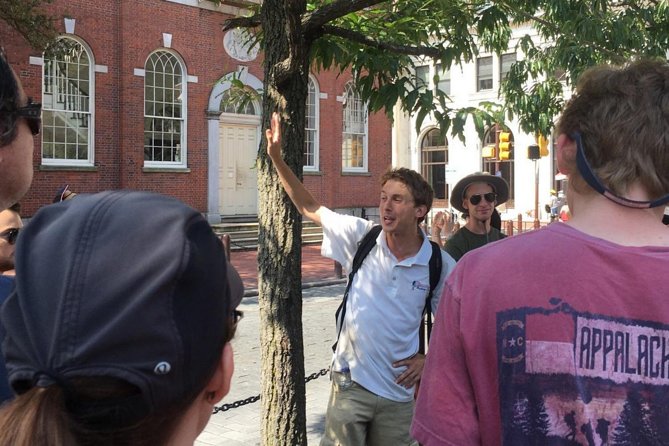
Carpenters’ Hall is linked with the development of an American identity and hosted the First Continental Congress in 1774. It is one of the places where colonial grievances began moving toward coordinated political action.
New Hall Military Museum offers a look at the role of the military in early United States history. On a tour packed with political buildings, this stop adds useful balance. The new country needed institutions for defense as well as institutions for debate.
You will hear about these places while standing outside. If one catches your attention, note it and return later. The short format gives you a map of the district, but not the time for detailed interior interpretation.
Franklin Court and the working city behind the famous names
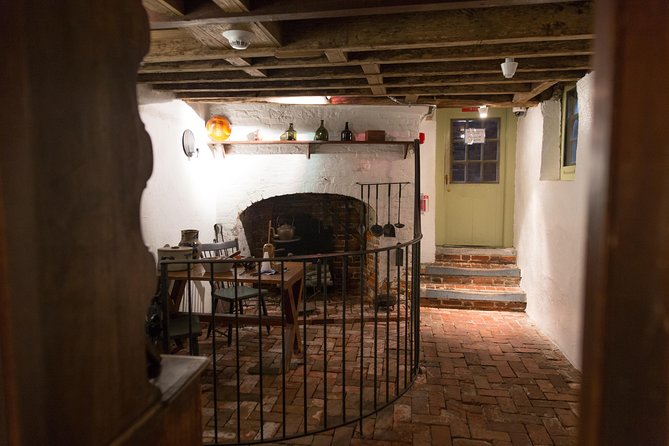
Franklin Court is devoted to Benjamin Franklin’s Philadelphia home. Franklin’s house is no longer standing, but the site interprets the property and includes the only Colonial-themed post office.
This stop receives a little more time than most, which makes sense. Franklin was a printer, scientist, diplomat, inventor, and civic organizer, and his connection to Philadelphia reaches far beyond the familiar image on currency.
Franklin Court also helps you remember that the founding generation lived and worked in a real city. Printing, postal services, homes, shops, and meeting places were part of the same daily world as constitutional debates.
Christ Church, Betsy Ross House, and Quaker Philadelphia
Christ Church has served as an active parish since 1695 and is often called the Nation’s Church. It connects Philadelphia’s religious life with the people who shaped the early country.
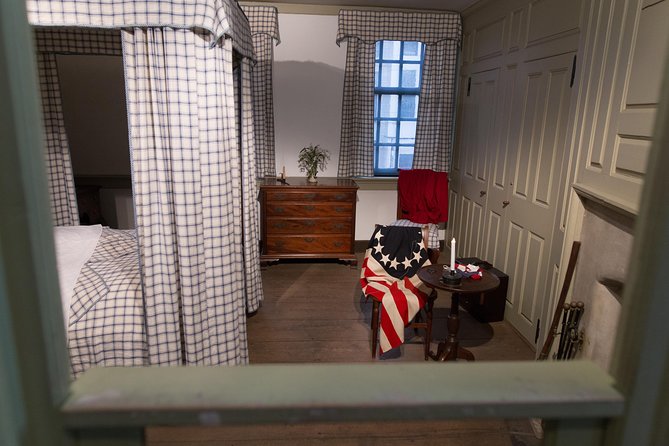
The Betsy Ross House is another famous name on the route. The traditional story links Ross with sewing the first Stars and Stripes. The guide can introduce the site, but the tour does not include an interior visit or a detailed examination of the story’s evidence.
Arch Street Meeting House represents the Society of Friends, commonly known as Quakers. This is an important reminder that Philadelphia’s early identity was strongly shaped by religious communities and principles of civic life.
These three stops broaden the tour beyond the founders usually featured in schoolbooks. You see the city’s churches, meeting houses, craftspeople, and community institutions alongside its political landmarks.
Christ Church Burial Ground and Benjamin Franklin’s grave
The final stop is Christ Church Burial Ground, where Benjamin Franklin is buried. The cemetery also contains the graves of other important early American figures.
This is a fitting ending because it brings the story down from national institutions to individual lives. You have spent the walk hearing about constitutions, banks, courts, and Congress. At the burial ground, those grand ideas connect again with the people who argued for them, built them, and eventually died.
The route returns to the National Constitution Center meeting point. That makes it simple to continue with your own visits in the same district.
What the 75-minute pace feels like
The walking distance is modest, but the schedule is active. Most stops last only two or three minutes, with Franklin Court receiving about five minutes. You will walk, pause for an explanation, move on, and repeat the pattern.
That pace is a strength if you want a quick introduction. It lets you see a large number of places without giving half a day to one guided program. It can feel rushed if you want architectural details, long questions, or time inside each building.
The route is generally manageable for most people, but there are few places to sit and rest. Wear comfortable tennis shoes, bring water, and consider a hat and light clothing on a sunny day. In cold or wet weather, the tour still operates, so use layers and rain protection.
Traffic, wind, and city noise can affect how well you hear the guide. A smaller group is easier to follow, while the maximum group size is 40 people. Stay near the guide and ask for clarification if you miss a sentence.
The guide matters more than the script
The strongest part of this experience is the live guide. The best guides make a fast route feel connected rather than mechanical.
PJ has been praised for being friendly, answering questions, and handling cold or rainy conditions with energy. John has been described as clear and well informed about the buildings along the route. Connor is particularly effective for people who want solid historical explanation without personal political commentary.
Will brings an enthusiastic approach and is good at helping you understand the wider meaning of the sites. Avi has been noted for combining stories with historical facts and welcoming questions. Individual guide style can vary, so you may find one guide more theatrical and another more subdued.
That variation matters. One weak experience can feel like a basic school presentation, especially when the tour covers so much ground. The route itself is useful, but the guide determines how much context you take away.
Is $30 a fair price?
At $30 per person, the tour offers reasonable value if you want a guided orientation to Philadelphia’s historic core. You are paying for the route, the explanations, and the chance to connect more than 20 sites in just over an hour.
The value drops if you expect museum entry or a close look inside Independence Hall and the Liberty Bell Center. Admission fees are separate, and the tour does not include food, drinks, or interior access.
I would book it early in a Philadelphia visit, then use the rest of the day to revisit the places that interest you. The experience is especially useful for first-time visitors, families, school-age children, and anyone with only a short stay.
Free cancellation is available if you cancel at least 24 hours before the start time. The activity is offered in English and uses mobile tickets.
Who should book this walk?
Book it if you want a clear first look at the historic district, prefer learning from a guide, and can accept an outdoor overview. It is also a good fit for families because the route changes sights often and does not require sitting through a long lecture.
You should choose another format if your main goal is entering Independence Hall, viewing the Liberty Bell up close, or examining one building in detail. In that case, arrange separate admissions and consider a longer or private tour.
For most people, the best plan is simple: take this walk early, listen for the places you want to explore, then return on your own with more time.
FAQ
How long is the Constitutional Walking Tour of Philadelphia?
The tour lasts approximately 1 hour and 15 minutes.
How far do you walk?
The route covers about 1.25 miles through Philadelphia’s historic district.
Does the tour go inside Independence Hall?
No. The tour is an outdoor walking overview, so Independence Hall is viewed from outside. Interior admission must be arranged separately.
Can I go inside the Liberty Bell Center during the tour?
No. The tour stops at the Liberty Bell Center but does not include entry. Admission and security procedures are separate.
Where does the tour meet?
Meet outside the National Constitution Center at 525 Arch Street in Philadelphia, by the three large stone benches near the main entrance.
Where does the tour end?
The walk ends back at the National Constitution Center meeting point.
Does the tour operate in bad weather?
Yes. The tour operates rain or shine, so dress for the weather.
What is included in the $30 price?
The price includes the 75-minute guided walking tour. Food, drinks, and admission to historic sites are not included.
Should you book it?
Book this tour if you want a fast, useful introduction to Philadelphia’s founding district rather than a series of interior visits. For $30, you get a connected route through more than 20 important places and a chance to decide what deserves your time afterward.
Just arrive expecting an outdoor overview, not a museum tour. Wear good shoes, stay close enough to hear the guide, and save time later for Independence Hall, the Liberty Bell, or Franklin Court if you want a closer look.
Just added around the USA
- Fan Tribute: Taylor Swift in New York Walking Tour★ 4.9 · 147 reviews
- Explore Must-See Spots: Las Vegas Strip Walking Tour★ 4.8 · 77 reviews
- East Nashville Walking Food Tour with 5+ Tastings★ 4.7 · 178 reviews
- Las Vegas: Fremont Street Walking Tour★ 4.9 · 153 reviews
- NYC: Guided Bus and Walking Tour with Staten Island Ferry★ 4.6 · 209 reviews
- DC: Smithsonian Highlights Walking Tour with Air and Space★ 4.8 · 97 reviews
- DC: Lincoln Assassination Tour with Ford’s Theatre Entry★ 4.6 · 72 reviews
- Deep Dive into Denver: Small-Group Walking Tour★ 4.8 · 119 reviews
Walking Tours, compared.

Magical London: Harry Potter Guided Walking Tour
Read our review →
Reykjavik Food Walk – Local Foodie Adventure in Iceland
Read our review →
History and Hauntings of Salem Guided Walking Tour
Read our review →
New Orleans Premier Ghost, Voodoo and Vampire Walking Tour
Read our review →
Amsterdam Anne Frank: Small-Group Walking Tour & Local Guide
Read our review →

Edinburgh Castle: Guided Walking Tour with Entry Ticket
Read our review →
Anne Frank’s Story – Guided Walking Tour through Amsterdam
Read our review →Browse the lists this tour appears in