
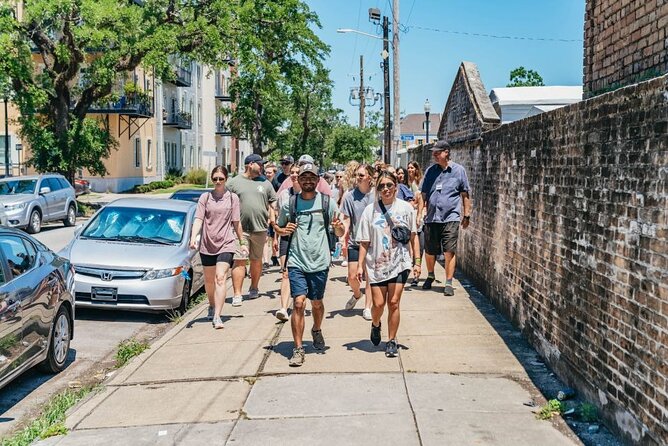
REVIEW · NEW ORLEANS
New Orleans French Quarter, Voodoo and Culture Walking Tour
New Orleans voodoo is not just a spooky story told after dark. On this two-hour walk, you connect the subject to slavery, African traditions, jazz, architecture, and daily life in the French Quarter. I like the stop at Congo Square, where the guide explains why music, dance, trade, and spiritual practice mattered so much. I also like the visit to Voodoo Authentica, where herbs, oils, amulets, and ritual objects give the subject a physical setting.
The pace is gentle, the route covers only about one mile, and guides such as William, Logan, Jimmy, James, and Bill have been praised for their storytelling and local insight. The main caution is expectation: this is a history and culture walk, not a theatrical scare tour. Some people may find it too calm or may want more direct voodoo content.
Key Points to Know Before You Book
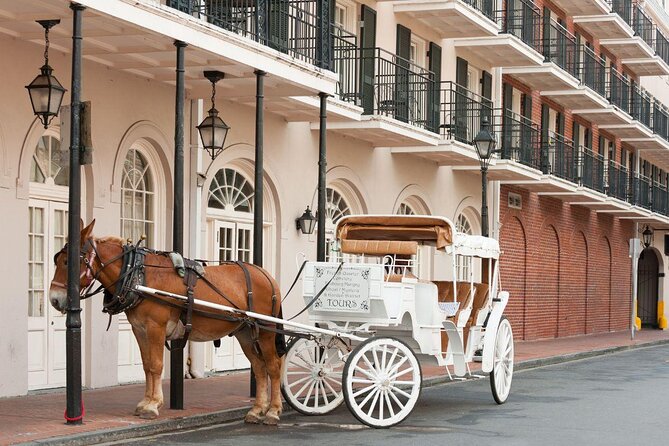
- Congo Square puts voodoo in historical context: Learn about the Sunday gatherings of enslaved and free people, including music, dancing, trade, and spiritual practice.
- The route covers about one mile: You walk at a leisurely pace through the French Quarter and nearby areas for roughly two hours.
- Architecture is a major part of the tour: Look for Creole townhouses, French and Spanish influences, shotgun homes, entresol houses, and enclosed courtyards.
- It is informative rather than frightening: The tour suits curious adults, families, and first-time visitors who want atmosphere without a horror show.
- The group can include up to 28 people: Smaller departures may feel more personal, but the maximum group is not especially intimate.
- You finish at Jackson Square: This makes it easy to continue exploring the cathedral, riverfront, galleries, restaurants, and the rest of the French Quarter.
What This New Orleans Walk Is Really About
This experience uses voodoo as a doorway into New Orleans culture. You will hear about Marie Laveau, the city’s best-known Voodoo Queen, but the focus is broader than one famous name. The guide explains how African religious traditions survived slavery, blended with local customs, and continued to influence the city.
That matters because popular culture often reduces voodoo to dolls, curses, and haunted tales. The tour gives you a more grounded picture, including spiritual practices, deities, offerings, herbs, oils, and amulets. It also links voodoo to music and community life, especially through Congo Square and the development of jazz.
I would choose this walk early in your New Orleans stay. It gives you useful background for the streets you will keep seeing, from the French Quarter’s courtyards to the city’s distinctive burial customs. It also helps you understand why New Orleans feels unlike other American cities.
The tour runs in the morning or afternoon, depending on the departure you select. It is offered in English and includes a licensed guide. A mobile ticket keeps things simple, but you still need to arrive early because check-in begins 30 minutes before departure and the group leaves on time.
More Cultural Walking Tours in New Orleans:
- Savannah First Squares Culinary & Cultural Walking Food Tour
★ 5.0 · 3,229 reviews - Tokyo Tsukiji Fish Market Food and Culture Walking Tour
★ 5.0 · 3,184 reviews - Southernmost Food & Cultural Walking Tour by Key West Food Tours
★ 5.0 · 1,730 reviews
Starting at Witches Brew Gallery
The meeting point is Witches Brew Gallery and Haunted Sanctuary at 311 Exchange Place, directly across from the Pelican Club Restaurant. This is a centrally placed starting point near the French Quarter, and it is close to public transportation.
The departure location fits the mood, but do not treat it as the main attraction. The real value begins once the guide leads you into the streets and explains what you are seeing. Arrive with enough time to check in, locate the guide, and avoid a rushed start.
Late arrivals are not accepted and are not refunded. That rule is worth taking seriously in New Orleans, where a short walk can take longer than expected because of crowds, street activity, heat, or an unfamiliar block layout.
French Quarter Architecture With a Cultural Story
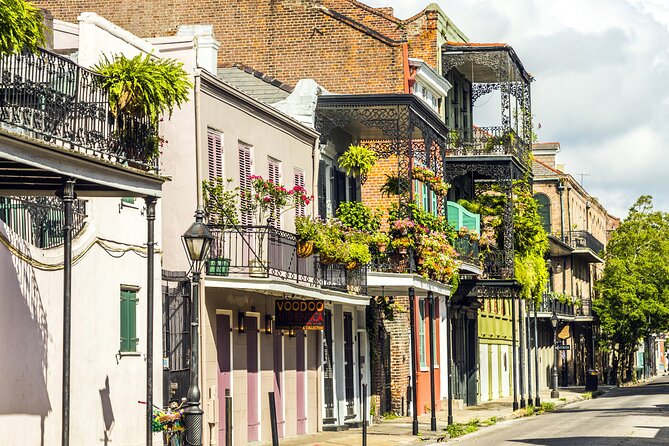
The first hour focuses mainly on the French Quarter. You pass buildings shaped by French and Spanish influence, along with Creole townhouses and other forms that give the neighborhood its unmistakable appearance.
The architecture lesson is more useful than simply pointing out pretty balconies. You learn how local building styles responded to climate, space, social life, and the city’s changing population. Creole townhouses, entresol houses, and shotgun homes each tell a different part of that story.
The route may also include a glimpse into a cloistered courtyard. These enclosed spaces were practical, not just decorative. They offered shade, privacy, and a way to make dense urban buildings more comfortable.
Shotgun homes are another worthwhile detail. They became one of the most common Southern house styles in the 1800s, and seeing them alongside larger French Quarter buildings shows that New Orleans culture was never limited to grand facades.
The guide also brings in stories of Marie Laveau and other figures connected with New Orleans voodoo. Here, the best approach is to listen for distinctions between documented history, religious tradition, and local legend. The subject is full of all three.
Jackson Square and St. Louis Cathedral
Jackson Square is a natural point for understanding the city’s first settlements. The guide discusses the early development of New Orleans and points out the area’s important buildings, including St. Louis Cathedral and early apartment buildings.
The stop is fairly brief, so do not expect a full architectural tour or a long interior visit. Instead, you get a compact explanation of how this central square became one of the city’s defining public spaces.
St. Louis Cathedral adds another layer. You hear about the fire that destroyed much of New Orleans and how that disaster affected the city. This is one of the moments when the tour moves beyond voodoo and shows how fire, rebuilding, religion, and urban design shaped the French Quarter.
The cathedral is visually impressive, but the schedule allows only about 10 minutes at this stop. If you want a detailed look inside, plan a separate visit after the tour.
A few more walking tours around New Orleans worth a look
- New Orleans Premier Ghost, Voodoo and Vampire Walking Tour
★ 4.5 · 12,856 reviews - New Orleans Food Walking Tour of the French Quarter with Small-Group Option
★ 5.0 · 6,118 reviews - St. Louis Cemetery No. 1 Official Walking Tour
★ 4.5 · 3,941 reviews - New Orleans Garden District History Walking Tour
★ 5.0 · 2,879 reviews
Voodoo Authentica and the Material Side of the Religion
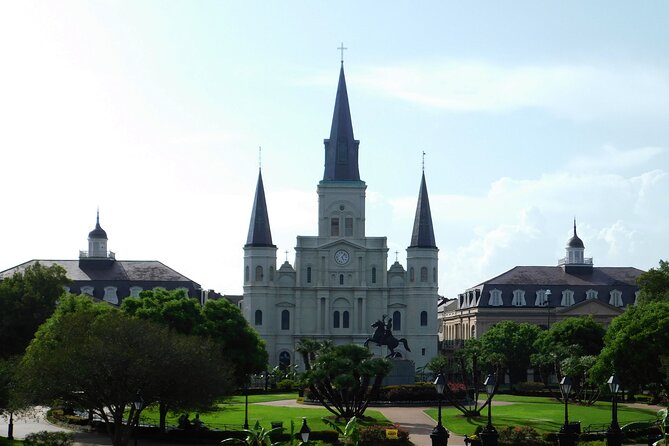
A short visit to Voodoo Authentica helps make the discussion more concrete. The shop specializes in items used in voodoo rituals, including herbs, oils, and amulets.
You are not simply hearing abstract terms on a sidewalk. You can see the kinds of objects associated with spiritual practice and ask questions about their role. The guide also discusses the traditions connected with Marie Laveau and explains how New Orleans voodoo differs from its movie version.
This part may be especially useful if you are unsure what the tour means by voodoo. It is not presented only as a source of ghost stories. You learn about belief, ritual, protection, offerings, and the way African traditions developed in New Orleans.
The stop is short, about 10 minutes, so it does not replace a museum visit or an in-depth religious study. It works best as one piece of the larger walk.
Congo Square and Louis Armstrong Park
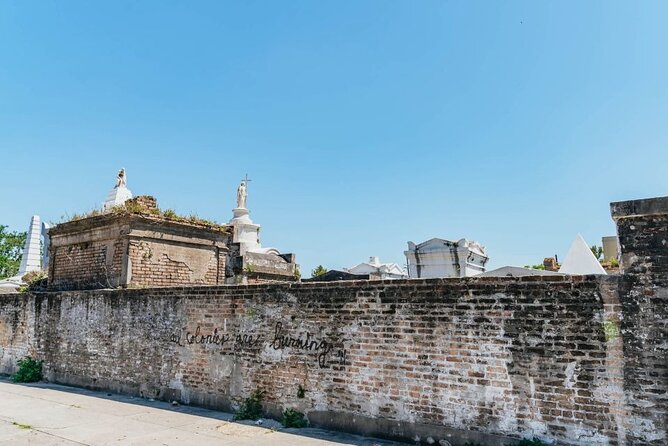
Louis Armstrong Park provides the tour’s strongest historical setting. In the 1800s, Congo Square was a place where enslaved and free people gathered on Sundays to trade, socialize, play music, dance, and practice spiritual traditions.
This is where the connections among slavery, African culture, voodoo, and jazz become clearest. The guide explains how people maintained music and communal practices despite severe restrictions and forced displacement. You begin to see New Orleans culture not as a collection of colorful customs, but as something shaped by survival and adaptation.
The park also gives the guide room to discuss African gods and goddesses. Some departures may include books or visual material to help explain these figures. That added context can be useful because names and ideas from African religious traditions are difficult to absorb from a quick spoken explanation alone.
You might also hear about offerings and the importance of particular trees or gathering places. Listen carefully here, since this is the point where the tour moves from general city history toward the spiritual side of voodoo.
The park stop lasts about 15 minutes. It is not a long museum-style presentation, but it is one of the most meaningful parts of the route.
Storyville and the Edge of the French Quarter
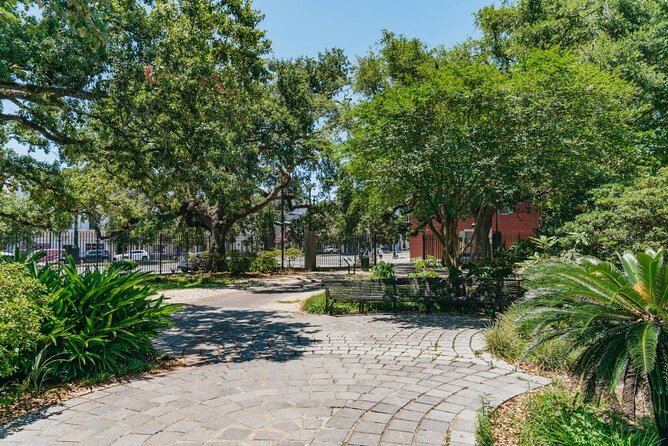
The final stop takes you toward the former Storyville district, the old red-light district just outside the French Quarter. This adds another side of New Orleans life, showing how entertainment, vice, music, and urban growth overlapped.
The stop is brief, roughly 10 minutes. You will not receive a full history of Storyville, but the location helps you understand how close different worlds were in old New Orleans. The district’s connection with music also fits the tour’s wider discussion of jazz and cultural exchange.
The tour ends at Jackson Square rather than returning to the original meeting point. That is convenient if you want to continue sightseeing on foot. You can visit the cathedral, explore the square, walk toward the river, or find lunch in the French Quarter.
How the Guides Shape the Experience
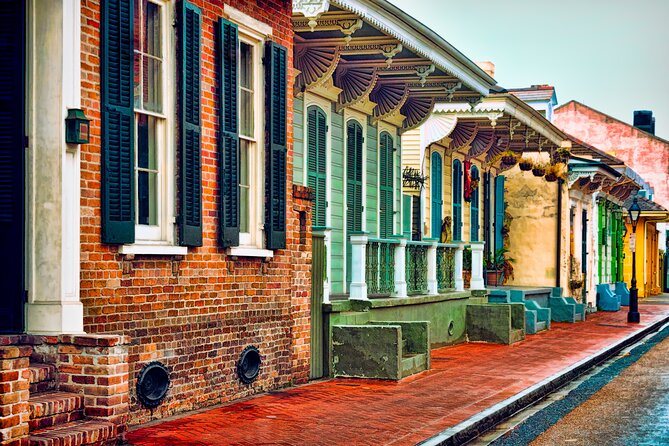
The guide matters a great deal here because the subject depends on explanation and storytelling. Past departures have featured guides named William, Logan, Jimmy, James, and Bill.
William is especially associated with clear stories about the French Quarter, cemeteries, voodoo, slavery, and jazz. Jimmy has been praised for sharing local insight in a small-group setting, while Logan has been described as energetic and informative for families. The guide you receive will depend on the date, so do not book expecting one particular person unless the company confirms it.
The strongest guides invite questions and connect one stop to the next. They explain not just what happened, but why the detail matters. Some people have found a guide’s speech too fast or unclear, so stand near the front of the group if hearing every word is important to you.
The maximum group size is 28. That is manageable for a walking tour, though it is not the same as a private experience. If your departure is smaller, you will have more room to ask questions and may get a more personal exchange.
Is $27.99 a Fair Price?
At $27.99 per person, the tour is reasonably priced for a two-hour guided walk in central New Orleans. You are paying for a licensed guide, local interpretation, and a route that combines several subjects rather than covering only one building or one legend.
The value depends on how much context you want. If you simply want ghost stories and dramatic encounters, this may feel too restrained. If you want to understand how voodoo relates to slavery, music, architecture, and New Orleans identity, the price is easier to justify.
The tour also saves you from trying to piece together the French Quarter on your own. You see several architectural styles, Jackson Square, St. Louis Cathedral, Voodoo Authentica, Louis Armstrong Park, Congo Square, and Storyville in one outing.
There are limits. Food and drinks are not included, and the walk does not enter cemeteries. The route may pass near places associated with burial stories, but you should not book this expecting an underground or cemetery tour.
Walking Conditions, Weather, and Family Fit
The route covers about one mile at a leisurely pace, but the historic French Quarter has uneven surfaces and can be difficult for some people with mobility issues. The operator tries to accommodate mobility needs, yet you should book carefully if you use a wheelchair, walker, or have trouble with uneven pavement.
Wear comfortable shoes and bring water. Summer heat can be intense, and the need for hydration is not a minor detail. A morning departure may be easier in hot weather, while an afternoon walk may suit your schedule better.
The tour operates in most weather, including rain, cold, snow, and sleet. It is canceled only for serious conditions such as flooding, tropical storms, hurricanes, fires, or cloud-to-ground lightning in the French Quarter. Dress for the forecast and bring rain protection when needed.
Families can take part, and children under five are free. The tone is more educational than frightening, which makes it a better choice for families who want history and atmosphere rather than a hard-edged haunted attraction. One past family assessment found it less exciting than expected, so manage younger children’s expectations.
Who Will Get the Most From This Tour?
You should consider booking if you want:
- A first look at New Orleans culture with a local guide
- An explanation of voodoo beyond movie stereotypes
- Architecture, city history, and spiritual traditions in one route
- A short walk that fits easily into a busy itinerary
- A tour that feels atmospheric without being too scary
- A practical orientation to the French Quarter
You may want something else if you expect a theatrical ghost show, a cemetery entry, a long visit inside St. Louis Cathedral, or a detailed academic study of voodoo. The experience gives you a broad introduction, not an exhaustive treatment of every subject.
I would especially recommend it to first-time visitors who want more than restaurants and nightlife. It gives you a better sense of why New Orleans culture developed as it did, and it leaves you in a useful location for the rest of your day.
Should You Book the French Quarter Voodoo and Culture Walk?
Book this tour if you are curious about the real cultural roots behind New Orleans voodoo and want those ideas tied to slavery, jazz, architecture, and public spaces. The stop at Congo Square is the key reason to go, while Voodoo Authentica adds a helpful visual element.
Skip it if you need constant scares or expect to enter cemeteries. For most people seeking a thoughtful, manageable introduction to New Orleans, $27.99 is a fair price for two hours of guided walking, especially when scheduled near the beginning of your visit.
Free cancellation is available up to 24 hours before departure. Cancellations within 24 hours are not refunded, and a tour canceled for severe weather or failure to meet the minimum group size can be moved to another date or refunded.
FAQ
Where does the tour begin?
The tour begins at Witches Brew Gallery and Haunted Sanctuary, 311 Exchange Place, New Orleans, Louisiana 70130. It is directly across from the Pelican Club Restaurant.
Where does the tour end?
The tour ends at Jackson Square in the heart of the French Quarter. It does not return to the original meeting point.
How long is the tour?
The walk lasts approximately two hours and covers about one mile at a leisurely pace.
What language is the tour offered in?
The tour is offered in English.
Does the tour enter a cemetery?
No. Cemetery entry is not included in this experience.
How early should I arrive?
Check-in begins 30 minutes before departure. The tour leaves on time, and late arrivals are not accepted or refunded.
Is the tour canceled when it rains?
Normally, no. The tour operates in rain, cold, snow, sleet, and other ordinary poor weather. It may be canceled for flooding, tropical storms, hurricanes, fires, or cloud-to-ground lightning in the French Quarter.
Can young children join?
Yes. Children under five are free of charge, and most people can participate. The French Quarter’s uneven terrain can create challenges for some people with mobility issues.
Just added around New Orleans
- New Orleans Cocktail History Walking Tour in the French Quarter★ 5.0 · 604 reviews
- One Hour Saint Louis Cemetery Number One Walking Tour★ 4.5 · 642 reviews
- New Orleans Vampire Walking Tour★ 4.5 · 664 reviews
- New Orleans Original Craft Cocktail Walking Tour★ 4.5 · 675 reviews
- New Orleans: French Quarter Food History Walking Tour★ 4.9 · 713 reviews
- New Orleans City and Cemetery Tour with Garden District Stroll★ 4.5 · 766 reviews
- French Quarter Walking Tour With Comp 1850 House Museum Admission★ 5.0 · 781 reviews
- New Orleans Cemetery Walking Tour★ 5.0 · 901 reviews
Cultural Walking Tours, compared.
Savannah First Squares Culinary & Cultural Walking Food Tour
Read our review →
Tokyo Tsukiji Fish Market Food and Culture Walking Tour
Read our review →
Southernmost Food & Cultural Walking Tour by Key West Food Tours
Read our review →
Valletta: Street Food and Culture Walking Tour
Read our review →
Lisbon Roots – Small group Food & Culture Walking Tour w/tastings
Read our review →

Nice Old Town and Castle Hill: Guided Cultural Walking Tour
Read our review →Browse the lists this tour appears in