
REVIEW · LIVERPOOL
A Walk Through Time: History of Liverpool Walking Tour
Liverpool’s story comes into focus on this walk because you move through the city’s past in a clear sequence, from a medieval church site to the docks that made Liverpool a world port. The route links the Three Graces, Old Dock, Castle Street, and Royal Albert Dock, so you see more than isolated sights.
I like the guide-led storytelling, especially with John, who brings a local’s passion and a sharp grasp of Liverpool’s complicated past. I also like the price: at $27.74, you get nearly two hours of history and a useful first look at the city. The main drawback is pace. The guide may cover a great deal in a short time, and one person found the fast delivery hard to follow. Cold wind off the Mersey can also make the walk less comfortable.
Key points to know before you book
- Liverpool’s port story drives the tour: Learn how cotton, docks, global commerce, and Atlantic trade shaped the city.
- The route covers major sights: Begin at the Royal Liver Building and pass the Old Dock, Liverpool ONE, Castle Street, and Royal Albert Dock.
- John is a major strength: He is praised for his local knowledge, clear narration, humor, and willingness to answer questions.
- The tour puts difficult history on the table: Liverpool’s role in the transatlantic slave trade is included rather than skipped.
- Expect a brisk history lesson: The walk lasts about 1 hour 50 minutes and may feel information-heavy.
- Dress for the waterfront: A warm coat and comfortable shoes are wise, especially on a cold or windy day.
Starting beside the Three Graces
The walk begins at the Liver Building on Pier Head, one of Liverpool’s most recognizable waterfront landmarks. This is a sensible meeting point because the Three Graces immediately show you the scale of the city’s maritime ambition.
The Royal Liver Building is joined by the Cunard Building and the Port of Liverpool Building. Together, these grand waterfront structures frame the city’s relationship with shipping, trade, insurance, and overseas commerce. Your guide begins with the Three Graces, then uses them as an opening chapter for Liverpool’s wider story.
The building visit is an exterior stop, and admission is not included. That is not a major issue for a walking tour, but you should not book this experience expecting an interior visit or a separate attraction ticket.
The guide makes a difference here. John is the name most often associated with the experience, and his style is energetic, detailed, and personal. Julio also leads the walk and is described as engaging and clear. Both guides give you context before you move inland, which helps the rest of the route make sense.
A few more walking tours around the UK worth a look
- Magical London: Harry Potter Guided Walking Tour
★ 4.7 · 22,044 reviews - Edinburgh: Harry Potter Magical Guided Walking Tour
★ 4.8 · 11,944 reviews - Edinburgh Castle: Guided Walking Tour with Entry Ticket
★ 4.7 · 11,699 reviews
Finding medieval Liverpool at St. Nicholas’ site
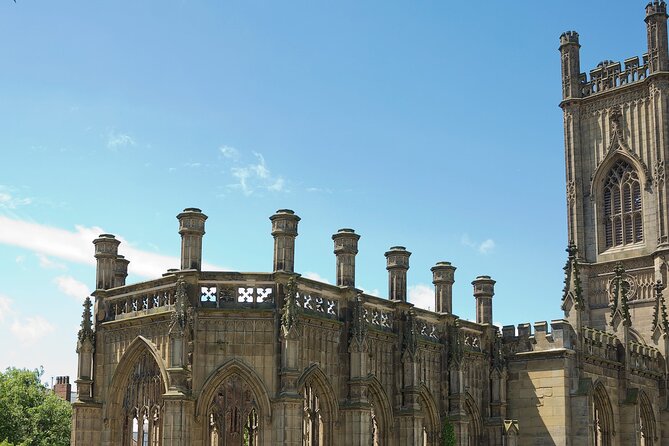
From the waterfront, you cross toward Liverpool Parish Church Gardens. This stop takes you back to the city’s medieval beginnings and the area once associated with St. Nicholas’ Church, named for the patron saint of the sea.
The setting helps explain Liverpool’s early connection to the water. The city’s later growth can seem sudden when you only look at its grand docks and warehouses. Here, the guide reaches further back, to Liverpool’s creation in the 13th century after the town’s charter in 1207.
What I like about this section is that it uses physical evidence rather than treating the past as a list of dates. The gardens and church site give you a real place to connect with the early settlement. You may find this part quieter and less immediately dramatic than the waterfront, but it gives the tour a useful foundation.
Admission is free at this stop. The walk is not only about famous buildings. It also points out older remains that you could easily pass without understanding.
Old Hall Street and Liverpool’s trading power
Old Hall Street brings the story forward. The street follows the line of Liverpool’s older town and leads toward buildings tied to the city’s commercial rise.
The guide discusses the former town hall site, the Cotton Exchange, and Liverpool’s growth as a major port. Cotton trade helped connect the city with markets across the world, and by the late 18th century Liverpool had overtaken London in this trade.
This is also where the tour addresses Liverpool’s role in the Atlantic trade and the transatlantic slave trade. That subject is essential to understanding the city’s wealth, and the walk does not present Liverpool’s past as a simple success story. You hear about commerce and port efficiency alongside the human cost behind parts of that prosperity.
I consider this one of the strongest sections for anyone who wants more than a pleasant stroll past old buildings. The guide links streets and trade to larger events, helping you understand why Liverpool grew so quickly. The amount of information can be heavy, though. Take your own pace with note-taking, and ask the guide to repeat anything that moves too quickly.
Liverpool Town Hall and Georgian ambition
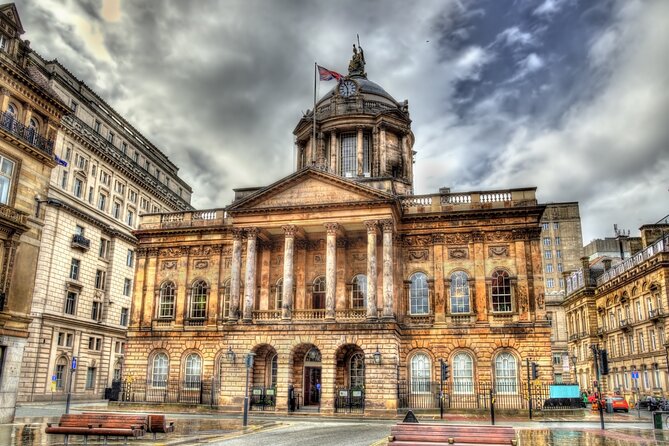
Liverpool Town Hall dates from 1749 and is presented as one of the finest surviving Georgian buildings in the country. The exterior gives you another clear sign of how much money and confidence Liverpool gained as a port.
The stop explores the town hall’s role in civic life and the city’s development into a center of commerce. After the medieval beginnings and the rise of Atlantic trade, this building represents a more established Liverpool, one with the wealth to create formal civic architecture.
Admission is not included, so the tour focuses on the building and its history from outside. That works well for a city orientation walk, but you should plan a separate visit if you want to see interiors.
The guide’s academic side is most evident here. John is praised for explaining a large amount of material in a way that remains accessible. He also adds Scouse humor, which keeps the stop from becoming a dry lecture.
Same streets, a different route:
- Underground Vaults Walking Tour in Edinburgh Old Town
★ 4.5 · 8,506 reviews - London: The Original Jack the Ripper Walking Tour
★ 4.7 · 7,833 reviews - Oxford University Walking Tour With University Alumni Guide
★ 5.0 · 6,905 reviews - Edinburgh Castle: Guided Walking Tour with Entry Ticket
★ 5.0 · 5,540 reviews
Castle Street and the memory of Liverpool Castle
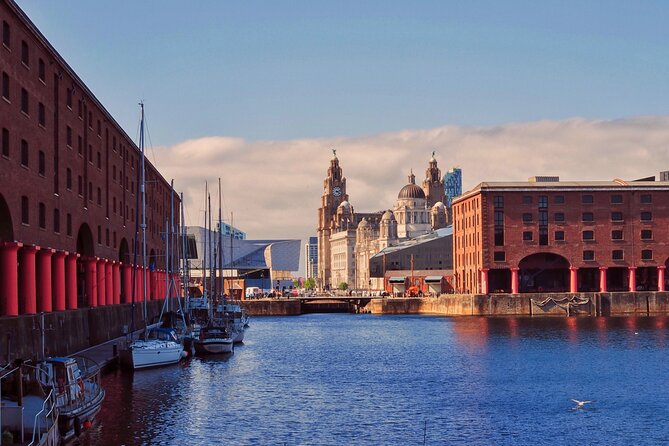
Walking down Castle Street feels like moving through several periods at once. The buildings show Liverpool’s changing fortunes and changing tastes, while the street’s name points back to the former Liverpool Castle.
The castle itself is no longer intact, so this part depends on the guide’s explanation. That can be more rewarding than a surviving structure because you learn to read the city through its street plan, monuments, and buildings. The walk explains why Castle Street mattered and how this part of town fit into Liverpool’s growth.
At the Queen Victoria Monument, the story returns to the city’s rise as a major global port. The monument is also listed as the tour’s end point at One Derby Square, although the itinerary continues to the Old Dock, Royal Albert Dock, and the Three Graces before naming the Royal Liver Building as the final destination. Because those details do not fully match, check the precise end point when you book or meet your guide.
That small point matters if you have a train, restaurant booking, or another timed activity. Both locations are central, but they are not the same place.
Liverpool ONE and the changing city center
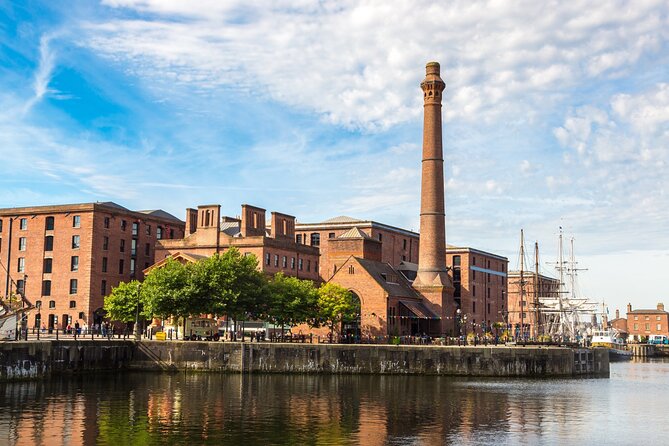
Liverpool ONE provides a sharp contrast with the older streets. This modern shopping and leisure district shows how the city center has been reshaped for present-day life.
The guide gives you an orientation to the shops and attractions rather than treating the area as a major historical monument. I like this change of subject because it makes the tour feel connected to the city you are actually visiting, not trapped in the past.
For some people, this may be the least compelling stop. Liverpool ONE is modern, commercial, and familiar in feel. Its value comes from contrast: after hearing about medieval lanes, Georgian civic power, and 18th-century trade, you see how the center has adapted again.
If you are mainly interested in old buildings, the time here may feel brief and less memorable. If you want a broad introduction to Liverpool today as well as Liverpool long ago, it rounds out the route.
The Old Dock and the making of a port
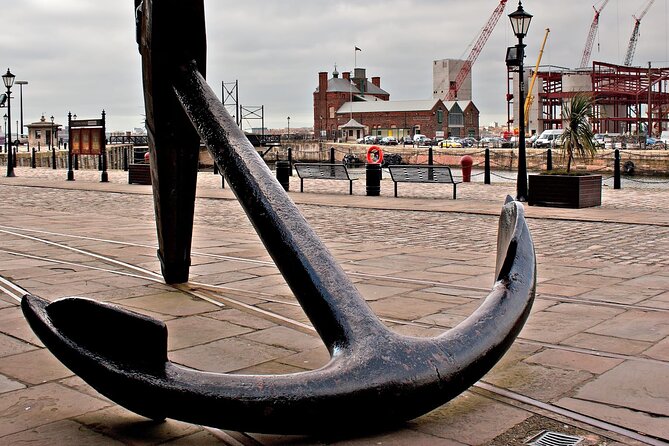
The Old Dock is one of the most important stops on the walk. Built in 1715, it was the first commercial wet dock of its kind and helped Liverpool handle ships and goods with greater efficiency.
The key idea is practical. A protected wet dock allowed ships to load and unload with more control than an open river frontage. That change helped Liverpool compete on a global scale and set the stage for the dock system that shaped the city.
The guide presents the Old Dock as a turning point. Without understanding this site, Liverpool’s later wealth can seem like an accident. Here, you see how planning, engineering, shipping, and trade worked together.
This stop is particularly useful for anyone interested in industrial history, architecture, or the mechanics of commerce. It also gives the Atlantic trade discussion a physical setting. You are not just hearing that goods moved through Liverpool. You are learning how the port was built to handle them.
Royal Albert Dock and the 19th-century waterfront
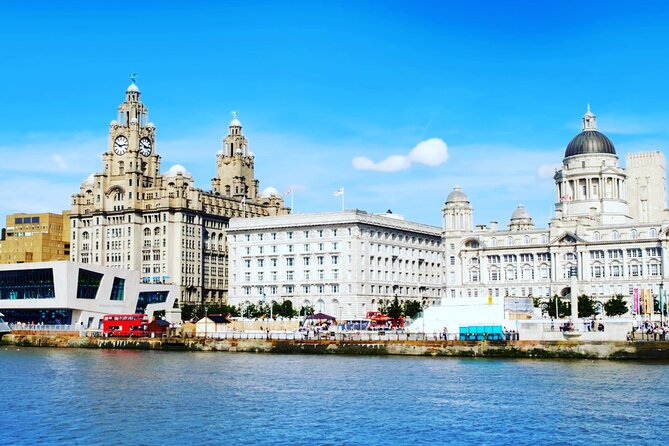
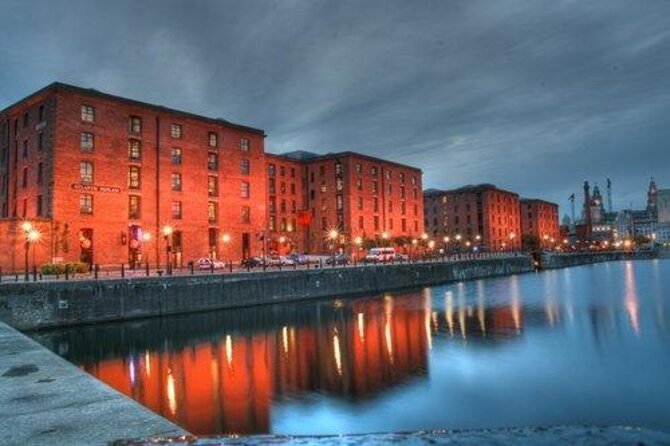
Royal Albert Dock shifts the story into the 1800s. Built in 1846, it became a major center of Liverpool’s commercial life and remains one of the city’s most popular areas.
The dock’s large brick and stone buildings give you a strong sense of the scale of 19th-century trade. The open water, warehouses, and waterfront paths also make this one of the most pleasant parts of the walk.
The guide connects the dock to Liverpool’s role in the First and Second World Wars. That broadens the route beyond trade and architecture. Liverpool’s waterfront was not only a place for cargo. It also mattered to Britain’s wartime supply lines and maritime position.
You will want comfortable shoes here. The route is not long by full-day walking-tour standards, but it includes repeated stops, street crossings, and outdoor listening. A warm coat is especially useful because river winds can make a mild day feel cold.
Returning to the Three Graces
The tour’s stated final historical focus is the Three Graces and Liverpool waterfront. Returning to the Royal Liver Building gives the walk a neat sense of structure. You begin with the symbols of Liverpool’s global identity, trace the forces that created that identity, then come back to the same waterfront with more understanding.
This return is useful because the buildings mean more after the Old Dock and Royal Albert Dock. At the start, they are impressive landmarks. By the end, they represent the long process of medieval settlement, commercial expansion, port engineering, overseas trade, civic wealth, and wartime importance.
The route is strongest when it links these pieces. You are not simply ticking off sights. You are following the city’s growth from a small medieval settlement to a major port.
What the $27.74 price gets you
At $27.74 per person, I see this as good value if you want a guided introduction rather than a short photo walk. The tour lasts about 1 hour 50 minutes and covers a wide range of subjects, including Liverpool’s medieval origins, Georgian architecture, the cotton trade, the Old Dock, modern redevelopment, and the world wars.
The price is especially fair if you are new to Liverpool and want a framework for the rest of your stay. Afterward, you can return to the places that interest you most, such as Royal Albert Dock, Liverpool Town Hall, or the waterfront.
The value depends on how you like to learn. If you prefer a quiet walk with only a few facts, this may feel too dense. The guide can cover a lot in a short time, and John’s fast speaking pace has been difficult for at least one participant to follow.
The experience is in English, uses a mobile ticket, and allows service animals. It is near public transportation, and most people can take part. The group can reach 40 people, so do not assume you will always have a tiny private-style walk. Smaller groups do occur, and Julio has been praised for creating a more personal feel when numbers are lower.
Weather, timing, and practical comfort
This is an outdoor walk, and weather matters. The experience requires good weather, and poor conditions can lead to a different date or a full refund. If you are booking around a tight schedule, leave some flexibility.
You should wear comfortable shoes and bring a warm jacket. The waterfront can be cold and windy, even when the city center feels manageable. The guide speaks outdoors near traffic and city noise, so staying close enough to hear clearly is sensible.
The walk is listed as approximately 1 hour 50 minutes. Allow a little extra time if questions run long or the group moves slowly. The guide welcomes questions, and that can improve the experience, but it also means the exact pace may vary.
Cancellation is free up to 24 hours before the start time for a full refund. Changes or cancellations inside that window are not accepted for a refund. There have been a few very late cancellations connected to guide emergencies, so I would avoid booking this as your only possible activity on a tightly timed day.
Who will get the most from this walk
I would choose this tour for a first visit to Liverpool, especially if you want the city’s port story explained in plain terms. It suits history fans, architecture lovers, and anyone curious about how trade shaped an entire city.
It is also a good choice for people who know Liverpool mainly through music and want to understand the city beyond the Beatles. The route shows why Liverpool mattered on a world scale long before modern popular culture gave it international fame.
Local residents can enjoy it too. John’s local perspective and the amount of detail have helped people who grew up in Liverpool see familiar streets differently. You may be surprised by how much history sits in places you have passed many times.
I would be more cautious if you have limited mobility, although the information says most people can participate and the tour is near public transportation. The walk includes outdoor movement through central streets, and the exact pace may not suit everyone. If you need a very slow route or frequent seated breaks, ask before booking.
Should you book A Walk Through Time?
Yes, if you want a broad, serious introduction to Liverpool for a modest price. The best parts are the Old Dock, the waterfront, Old Hall Street, and the guide’s explanation of Liverpool’s commercial rise and its involvement in the transatlantic slave trade.
Book it early if your schedule is fixed. It is often reserved about 19 days ahead, which suggests that popular dates can fill. Choose a warm day when possible, keep your ears open during the faster sections, and ask questions when you need a point repeated.
Skip it if you want a relaxed stroll with little talking, a Beatles-focused tour, or guaranteed access inside historic buildings. For everyone else, this walk gives you a useful map of Liverpool’s past and a better sense of why the waterfront looks the way it does.
FAQ
How long does A Walk Through Time: History of Liverpool Walking Tour last?
The tour lasts approximately 1 hour 50 minutes.
How much does the tour cost?
The listed price is $27.74 per person.
What language is the tour offered in?
The tour is offered in English.
Where does the tour begin?
It begins at the Liver Building, Pier Head, Liverpool L3 1HU, UK.
Where does the tour end?
The meeting information gives the Queen Victoria Monument at One Derby Square as the end point. The route details also describe the Royal Liver Building and the Three Graces as the final destination, so confirm the exact endpoint with the provider.
Does the price include admission to the Royal Liver Building or Liverpool Town Hall?
Admission tickets are not included for the Royal Liver Building or Liverpool Town Hall stops. The other listed stops have free admission.
Can service animals take part?
Yes, service animals are allowed.
What happens if the weather is poor?
The tour requires good weather. If it is canceled because of poor conditions, you will be offered a different date or a full refund.
Just added around the UK
- Falmouth: Vibrant Historical Walking Tour (award-winning)★ 4.9 · 75 reviews
- The Must-Sees of Edinburgh: Small Group Walking Tour in French★ 4.9 · 88 reviews
- Edinburgh: Old Town History Walking Tour★ 4.9 · 528 reviews
- Edinburgh: Old Town Stories – Guided Walking Tour★ 4.9 · 86 reviews
- Ghosts, Ghouls & Gallows :The Original Bristol Ghost Walk★ 4.6 · 76 reviews
- Edinburgh: Private Walking Tour with a Local★ 4.4 · 78 reviews
- Edinburgh: Private Walking Tour in French with Clémentine★ 5.0 · 73 reviews
- Edinburgh: Multi-Sensory Old Town Historical Walking Tour★ 4.6 · 290 reviews
Walking Tours, compared.

Magical London: Harry Potter Guided Walking Tour
Read our review →
Reykjavik Food Walk – Local Foodie Adventure in Iceland
Read our review →
History and Hauntings of Salem Guided Walking Tour
Read our review →
New Orleans Premier Ghost, Voodoo and Vampire Walking Tour
Read our review →
Amsterdam Anne Frank: Small-Group Walking Tour & Local Guide
Read our review →
Edinburgh Castle: Guided Walking Tour with Entry Ticket
Read our review →
Anne Frank’s Story – Guided Walking Tour through Amsterdam
Read our review →Browse the lists this tour appears in