
REVIEW · CHINA
Introduction to Hong Kong: Central Tip Based Walking Tour
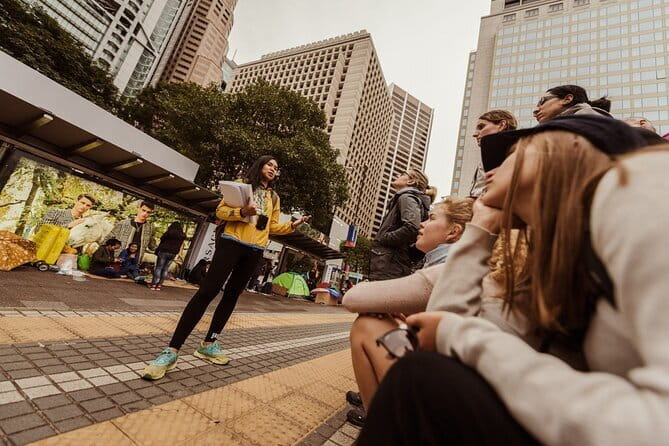
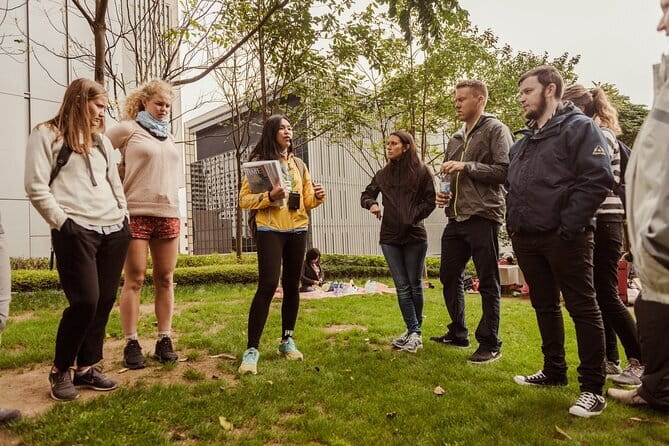
Hong Kong’s story comes into focus as you walk from the Court of Final Appeal to Man Mo Temple. In two hours, this tip-based tour links British law, Chinese sovereignty, global banking, cramped housing, street food, and temple customs without treating them as separate sights. Andy and Stephen are among the guides named in the tour details, and both bring a local point of view to the city’s political changes.
I like the clear route and the mix of big subjects with everyday life. The HSBC and Bank of China buildings explain power through architecture, while Wellington Street and the temple show how people eat, pray, and move through the city. The possible drawback is pace: eight stops in about two hours leave limited time at each place, and no food or drink is included.
Key points to know before you book
- A practical history lesson: Court of Final Appeal and St. John’s Cathedral frame Hong Kong’s British past and its 1997 handover.
- Architecture with a local twist: Statue Square and HSBC introduce the financial rivalry between British influence and Chinese sovereignty, including feng shui.
- A real urban solution: The Central-Mid-Levels Escalators show how Hong Kong connects steep neighborhoods and dense city blocks.
- Hands-on temple customs: At Man Mo Temple, you are guided through incense, the bell, and the drum.
- Useful local guidance: Wellington Street brings food traditions into the walk, with suggestions for wonton noodles, egg tarts, and other local dishes.
- Strong value for a short tour: The listed price is $2.63 per person, but remember that this is a tip-based experience and food is not included.
Starting at Central MTR with Hong Kong’s legal past
Meet at Central MTR Station, Exit K, at 11:00 am. The meeting point puts you right in the middle of Hong Kong’s commercial core, so the tour begins with city life already in motion rather than with a long transfer from a distant attraction.
The first stop is the Court of Final Appeal. This is not simply a photo stop. The guide explains how Hong Kong’s British Common Law tradition fits alongside the Chinese legal system, and how the principle of One Country, Two Systems is reflected in daily public life.
That subject can sound abstract in a textbook. Here, the court gives it a physical address. You are looking at an institution tied to the city’s colonial past while hearing how Hong Kong operates after the handover to China in 1997.
You get about 10 minutes at the court. That is enough for a focused explanation, but not enough for a long legal lecture. I see that as a benefit for most people. You receive the basic framework, then keep moving through places that show how the framework affects the city.
A few more walking tours around China worth a look
- Beijing Hutong Walking Food and Beer Tour at Hidden Restaurants
★ 5.0 · 1,132 reviews - Private Beijing Walking Tour of the Forbidden City with 7 Options
★ 5.0 · 675 reviews - Dark Side of Hong Kong – Kowloon Caged Homes Walking Tour
★ 5.0 · 418 reviews
Statue Square and the financial symbols of Central
Statue Square brings Hong Kong’s political and financial story into one compact space. The stop centers on the contrast between HSBC, associated with British colonial power, and the Bank of China, linked to Chinese sovereignty.
The guide also explains the feng shui rivalry between the two buildings. In Hong Kong, design is not only about height, glass, and engineering. Building position, shape, and symbolic force can carry meaning, especially in a city where finance and traditional beliefs sit side by side.
This is one of the tour’s most useful ideas because it gives you a way to read the skyline. Instead of seeing a group of impressive towers, you begin to notice who built them, what they represent, and how older beliefs remain part of modern business culture.
The stop lasts around 10 minutes and costs nothing beyond the tour tip. Bring your own interest in architecture and city politics. The guide is doing the interpreting, since you are not entering the financial buildings.
HSBC Main Building, money, and a changing shoreline
At the HSBC Main Building, the focus shifts to Hong Kong’s monetary stability. The building’s guardian lions become a starting point for explaining the bank’s role in the city’s financial system, including the currency peg.
The story also reaches back to 1842 and Hong Kong’s changing coastline. Reclamation has added land and helped shape the dense Central district you see today. That detail matters because Hong Kong can look as if its towers simply rose from the harbor. The city has repeatedly altered its edge to make room for commerce, transport, and people.
You spend another 10 minutes here. The short timing works if you want a broad orientation before exploring more on your own. It may feel brief if banking, monetary policy, or architecture is your main interest.
I like that this section connects a familiar landmark to something practical. You are not only hearing about a famous bank. You are learning why financial confidence matters in Hong Kong and how the physical city changed along with its economy.
St. John’s Cathedral and the handover story
St. John’s Cathedral adds a quieter stop to the route. Its story begins with British rule and follows Hong Kong from British possession in 1842 to the return to China in 1997.
The guide also shares a personal Hong Kong story. That detail is important. Political change can become a string of dates, but a local account can show how large events affect families and ordinary decisions. Andy and Stephen are specifically identified among the guides connected with this experience, and the tour places weight on personal stories rather than only official history.
Again, the planned time is about 10 minutes. You should expect an introduction, not a full cathedral tour or a long religious discussion. The main value is the connection between a physical building, British rule, and the city’s changing identity.
For me, this is where the tour’s central idea becomes clear: Hong Kong is not presented as old versus new. It is a place where old systems, new political realities, and daily routines continue to overlap.
Same streets, a different route:
- Beijing: Forbidden City Tour(Group/Private)-Tickets Included
★ 4.8 · 7,974 reviews - Beijing: Forbidden City and Tian’anmen Square Waking Tour
★ 4.9 · 1,002 reviews - Forbidden City Private Walking Tour with Optional Sights
★ 5.0 · 400 reviews - Beijing Private Hutong Food Walking Tour
★ 5.0 · 299 reviews
Queen’s Road Central and the cost of city living
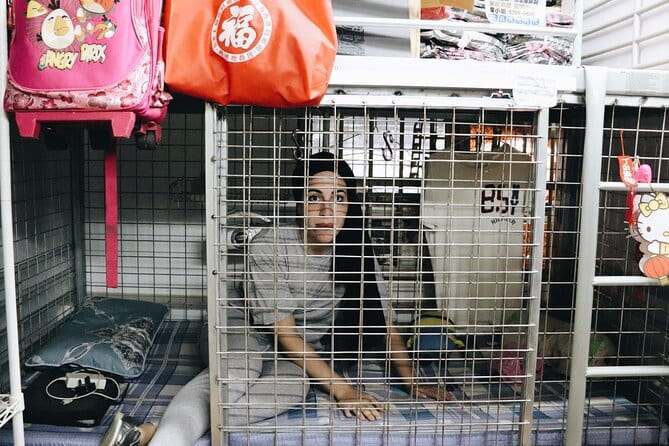
Queen’s Road Central moves the discussion away from institutions and toward housing. The guide explains how Hong Kong’s high rental economy helped shape the city’s urban form, including subdivided living units.
This is one of the most grounded parts of the walk. Skyscrapers can make Central look wealthy from every angle, but the housing story shows the pressure beneath the polished office towers. Space is limited, rents are high, and the way people live is closely tied to the city’s economic power.
The tour does not include a visit to a subdivided unit, and you should not expect one. Instead, the guide uses Queen’s Road as a place to explain the issue. The result is a useful reminder that a city’s skyline does not tell the whole story.
If you have already spent time in Hong Kong, this stop can help you make sense of the sharp contrast between office towers, narrow streets, and compact homes. If this is your first visit, it gives you social context before you continue uphill.
Riding the Central-Mid-Levels Escalators
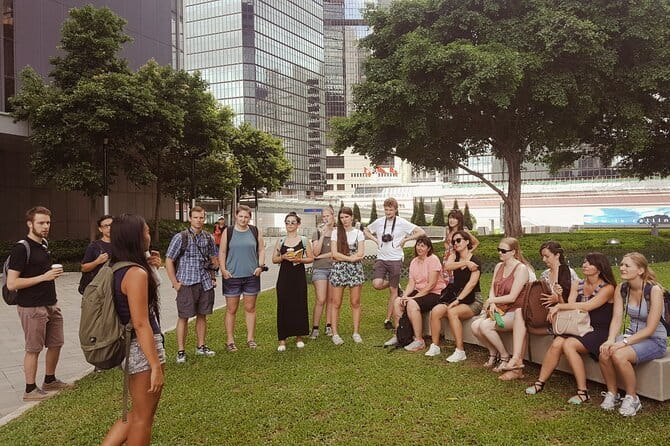
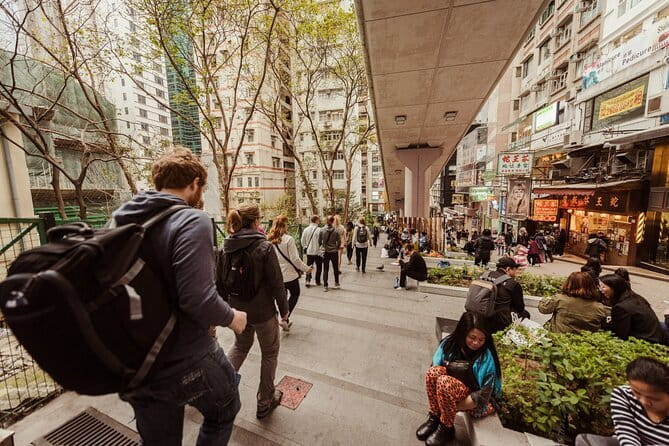
The Central-Mid-Levels Escalators are among the most practical sights on the route. The system connects Central with the steep hillside neighborhoods above it, and the guide explains why the government developed this unusual urban solution.
You will ride the world’s longest outdoor escalator system as part of the walk. That makes the experience more than a look at infrastructure. You are using the same city connection that helps people move between commercial streets and residential areas.
The stop also covers engineering challenges. Hong Kong’s steep slopes, dense construction, and limited ground space make ordinary street planning difficult. The escalators offer a clear example of the city adapting to its terrain rather than pretending the hills are not there.
Allow roughly 10 minutes for the explanation, plus the movement between stops. Since this is a walking tour, wear comfortable shoes and expect to stay on your feet. The route is near public transportation, but the supplied information does not promise a fully step-free route.
Wellington Street, local food, and what to eat later

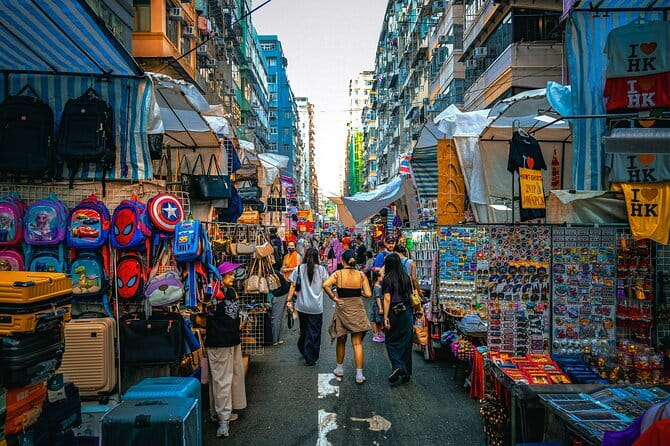
Wellington Street introduces Hong Kong through food. The guide discusses dishes such as wonton noodles and egg tarts, using them to explain local culinary identity.
No tasting is included, so you will not receive food or drinks during the tour. That is a limitation, but it also keeps the cost very low. The guide provides a list of food suggestions for the area, which can be more useful than one small sample if you plan to eat independently afterward.
I would save room for a meal after the walk and treat this part as a map for your next stop. A good guide can tell you what to look for, but the tour does not claim to provide a restaurant reservation or a tasting menu.
The 10-minute stop is enough for a short introduction. If food is your main reason for booking, this is not a food tour. If you want a few local ideas woven into a city walk, it adds a welcome everyday angle.
Man Mo Temple and the final incense ritual

The tour ends at Man Mo Temple, at 124 to 130 Hollywood Road in Sheung Wan. This is the most hands-on part of the experience.
The guide introduces the temple’s role as a neighborhood place associated with good luck and social life. You are guided through offering incense, ringing the bell, and striking the drum. These actions give you a direct way to take part in the setting rather than simply walk through it with a camera.
The temple is known for its smoky halls and incense coils, and the tour uses those details to explain how tradition remains part of ordinary Hong Kong life. The planned visit is about 15 minutes, a little longer than most earlier stops.
Be respectful and follow the guide’s instructions. The activity is designed as a guided practice, not as a private religious ceremony. Since the tour ends here, you can continue exploring Hollywood Road and Sheung Wan afterward, though the supplied details do not specify additional stops or a return transfer.
The $2.63 price and what you actually receive
At $2.63 per person, this is unusually inexpensive for a two-hour guided walk. The price gives you a local guide, personal stories, historical context, and a planned route through several important parts of Central and Sheung Wan.
The phrase tip-based matters. The listed amount is best understood as a low-cost way to reserve a place, not the full measure of what you may choose to give the guide. Budget for an appropriate tip if the experience provides the value you hoped for.
You are not paying for admission tickets because the stops are public or free to enter. You are also not paying for food, drinks, or a private group. The group can include up to 30 people, so the experience may feel less intimate than a small private walk.
The value is strongest if you want orientation early in your stay. In two hours, you get enough background to return later to the court, cathedral, escalators, food streets, or temple with a better sense of what you are seeing.
Timing, group size, and practical fit
The walk lasts about two hours and starts at 11:00 am. Eight stops are included, with most receiving 10 minutes and Man Mo Temple receiving 15 minutes. The remaining time is used for walking and transitions.
You receive a mobile ticket, and confirmation is provided at booking. The meeting point is Central MTR Station, Exit K, and the route ends at Man Mo Temple. Both ends are near public transportation, which makes this easy to fit into a day in Central.
Most people can participate, and service animals are allowed. The tour requires good weather, and it can be canceled if the minimum number of participants is not reached. In either case, you are offered another date or a full refund.
Free cancellation is available up to 24 hours before the start time. Changes or cancellations inside that 24-hour window are not accepted for a refund. Keep the local cut-off time in mind.
Who should book this Central walking tour?
I would choose this tour if you want a fast, useful introduction to Hong Kong’s Central district. It suits first-time visitors, history-minded people, architecture fans, and anyone who wants a local explanation before exploring alone.
It also fits a short Hong Kong stay. The route covers politics, banking, housing, transport, food, and religion without requiring a full day.
I would look elsewhere if you want a private guide, extensive time inside each building, included tastings, or a slow photography walk. The group may reach 30 people, and the schedule keeps moving.
Should you book it?
Book it if you want strong orientation at a very low listed price and you are happy with a tip-based format. The best parts are the links between grand subjects and daily life: feng shui beside finance, housing beside skyscrapers, and incense beside modern city routines.
Bring comfortable shoes, arrive at Central MTR Exit K before 11:00 am, and plan to eat after the walk. If Andy, Stephen, or another local guide gives you the personal, clear explanations promised by the experience, this can be an excellent first look at Hong Kong.
FAQ
How much does the tour cost?
The listed price is $2.63 per person. It is a tip-based walking tour, so you should also consider the tip you want to give the guide.
How long does the tour last?
The tour lasts approximately two hours.
Where does the tour start?
It starts at Central MTR Station, Exit K, on KUnnamed Road in Central, Hong Kong.
What time does the tour start?
The scheduled start time is 11:00 am.
Where does the tour end?
The tour ends at Man Mo Temple, 124 to 130 Hollywood Road, Sheung Wan, Hong Kong.
What sights are included?
Stops include the Court of Final Appeal, Statue Square, HSBC Main Building, St. John’s Cathedral, Queen’s Road Central, the Central-Mid-Levels Escalators, Wellington Street, and Man Mo Temple.
Is food included?
No. Food and drinks are not included, though the guide provides food suggestions for the area.
Is the tour suitable for most people?
Most people can participate. Service animals are allowed, and the tour is near public transportation.
How many people can join the tour?
The maximum group size is 30 people.
Can I cancel for a refund?
Yes. You can cancel up to 24 hours before the experience start time for a full refund. Cancellations or changes made less than 24 hours before the start time are not accepted for a refund.
What happens if the weather is poor?
The experience requires good weather. If it is canceled because of poor weather, you are offered another date or a full refund.
Just added around China
- Hong Kong: Kowloon Street Market & Food Culture Walking Tour★ 5.0 · 105 reviews
- Full-Day Private Customized Walking Tour of Hong Kong★ 5.0 · 106 reviews
- Dark Side of Hong Kong – Kowloon Caged Homes Walking Tour★ 5.0 · 418 reviews
- Organic Chinese Dumpling Class with Market Walk★ 5.0 · 88 reviews
- Beijing City Walk: Explore Hutongs Life and Old Beijing★ 5.0 · 146 reviews
- Forbidden City Private Walking Tour with Optional Sights★ 5.0 · 400 reviews
- Beijing Walking Food Tour with a Local Friend★ 5.0 · 73 reviews
- Beijing Private Hutong Food Walking Tour★ 5.0 · 299 reviews
Walking Tours, compared.

Magical London: Harry Potter Guided Walking Tour
Read our review →
Reykjavik Food Walk – Local Foodie Adventure in Iceland
Read our review →
History and Hauntings of Salem Guided Walking Tour
Read our review →
New Orleans Premier Ghost, Voodoo and Vampire Walking Tour
Read our review →
Amsterdam Anne Frank: Small-Group Walking Tour & Local Guide
Read our review →

Edinburgh Castle: Guided Walking Tour with Entry Ticket
Read our review →
Anne Frank’s Story – Guided Walking Tour through Amsterdam
Read our review →Browse the lists this tour appears in