
REVIEW · AUSTRALIA
Salamanca Walk – History Tour
Salamanca and Battery Point tell Hobart’s story in stone, gardens, old homes, reclaimed land, and tales of convicts, merchants, clergymen, craftsmen, and whalers. This gentle walk brings those layers together, using old photographs and drawings to show how the streets looked before modern Hobart took shape.
I like the small maximum of 15 people, which leaves room for questions, and I like the guide’s use of visual material rather than relying on names and dates alone. Peter Lutz is the main guide, with Lydija and Carmen also leading walks. The one caution is the length: two and a half hours on foot, with no scheduled sit-down, may feel long for some people.
Key points to know
- Historical photos and drawings: Compare present-day Salamanca and Battery Point with earlier views of the same streets and buildings.
- Two-and-a-half-hour route: The walk is gently paced and physically manageable, but it is still a fairly long time without a planned rest.
- Small-group format: Numbers are capped at 15, with occasional private or very small departures possible.
- Arthur Circus and St. David’s Park: These stops help explain Battery Point’s homes, gardens, public spaces, and early settlement.
- Convict-era Hobart: Learn how forced labor helped build roads, homes, quarries, and the foundations of the colony.
- Good first-day activity: Local food, pub, attraction, and neighborhood tips can help you plan the rest of your Hobart stay.
Seeing Hobart through its oldest streets

The best reason to take this walk is simple: Salamanca and Battery Point can look charming without being easy to understand. You may see handsome houses, stone buildings, parks, and harbor views, yet miss why the area developed as it did.
This tour connects the physical town to the people who built it. You hear about convicts and free settlers, but also about the trades and work that shaped early Hobart: quarrying stone, hunting whales, building homes, serving churches, and running businesses. The focus is not only on grand figures. It also reaches the ordinary people whose labor gave the town its form.
That makes the experience useful even if you already walked through Salamanca Place on your own. The route gives you a clearer sense of how the neighborhood changed, including the way land was reclaimed and later adapted for new uses.
I especially like the comparison between old and new views. A photograph or drawing held beside a current building can make a small architectural detail or altered street plan much easier to grasp. You are not simply told that Hobart has changed. You can see the difference.
A few more walking tours around Australia worth a look
- Sydney Opera House Official Guided Walking Tour
★ 4.5 · 3,770 reviews - From Sydney: Blue Mountains Tour with Waterfall Walk & Lunch
★ 4.8 · 2,400 reviews - Sydney The Rocks Guided Walking Tour
★ 5.0 · 1,546 reviews
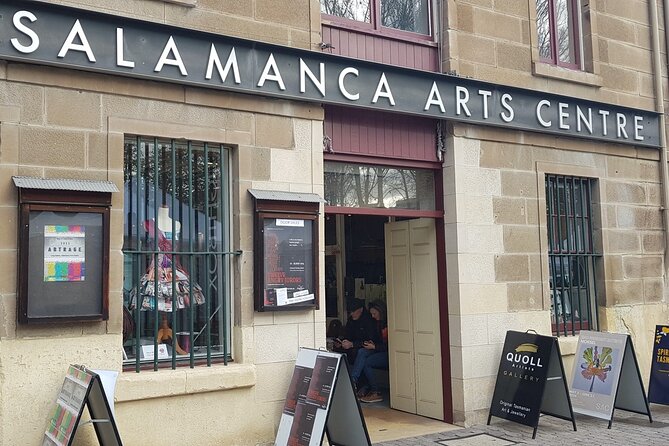
Starting at Salamanca Arts Centre
The walk begins at Salamanca Arts Centre, at 77 Salamanca Place in Battery Point. This is a practical meeting point near public transportation and close to one of Hobart’s best-known historic areas.
Salamanca Place is now associated with galleries, shops, restaurants, and the famous market area, but its earlier identity was tied to the waterfront, warehouses, industry, and the daily work of a growing port. The tour uses this setting to introduce the forces that shaped Hobart before the area became a popular cultural quarter.
You can expect the guide to establish the lay of the land at an easy pace. This is not a race from one sight to another. The walk pauses for explanations, questions, and views of buildings or public spaces.
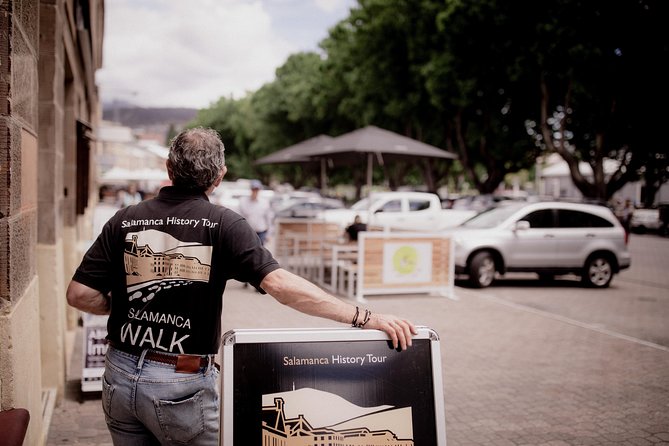
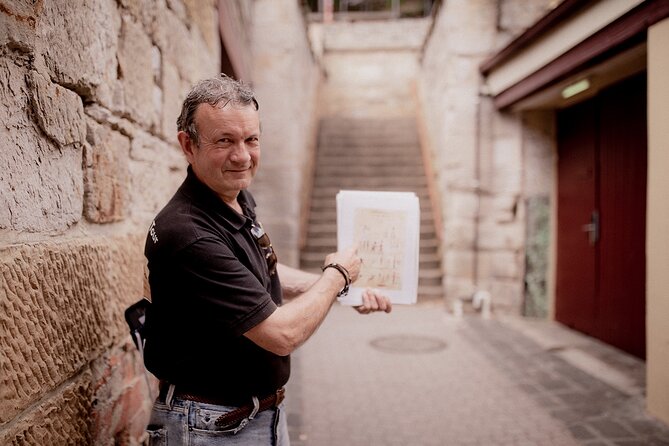
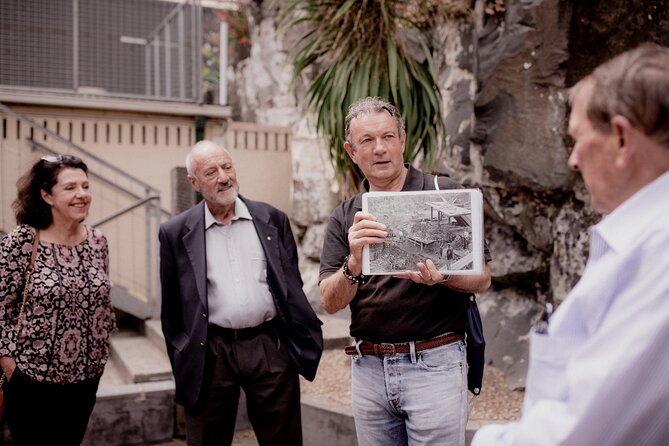
Peter Lutz is known for carrying a collection of old photographs and drawings. The material gives the talk a useful visual anchor, especially when the present-day streets do not immediately reveal their earlier purpose. Lydija and Carmen have also guided departures, so the exact personality and emphasis may vary, but the central focus remains Salamanca and Battery Point.
Arthur Circus and the character of Battery Point
Arthur Circus Park is one of the key stops. The circular green gives you a chance to see Battery Point as a residential district rather than just a collection of old façades.
The surrounding houses and gardens help explain how different groups lived in the early settlement. The tour considers craftsmen, merchants, clergymen, free settlers, and convicts, showing that the area was shaped by people with very different social positions and daily lives.
Arthur Circus also brings the discussion down to street level. Instead of treating Hobart’s past as a list of dates, the guide points out buildings, gardens, trees, and small details that can be easy to pass without notice. One example highlighted during the walk is a pine from America, a detail that adds a personal and unusual touch to the story of the park.
The area also offers views toward the Derwent River and a good look at Battery Point’s architectural character. The appeal is not only visual. You begin to understand why this location mattered and how its homes and public spaces fitted into the developing town.
If you enjoy architecture, you will get plenty from this part of the route. If your main interest is military history or major colonial landmarks, the experience may feel more intimate and local than grand or monumental. Its strength is the close look at ordinary streets and the people connected to them.
St. David’s Park and the changing town
St. David’s Park is another named stop. The park helps broaden the story beyond private homes and narrow streets, giving the walk room to explain how Hobart’s public spaces and institutions developed.
Here, the guide can connect early settlement to later changes in the city. The tour addresses what has been altered over time, including the reshaping and reclamation of land around Salamanca. That matters because the area you see today is not exactly the shoreline or town edge that earlier residents knew.
The walk also touches on memorials and local stories. A First Fleet memorial may be especially meaningful if you have family connections to early Australian settlement. The tour can place names and public markers in a larger local setting rather than leaving them as isolated objects.
St. David’s Park provides a different feel from Arthur Circus. Arthur Circus is closely tied to neighborhood homes and domestic life. St. David’s Park opens the discussion to civic memory, public space, and the way later generations chose to remember the colony.
There is no promise of a long break here, so you should not treat the park as a scheduled rest stop. It is primarily part of the guided route. Wear comfortable shoes and consider bringing water, particularly if you are sensitive to standing for long periods.
Same streets, a different route:
- Ultimate Melbourne Walking Tour: History, Laneways & Culture
★ 5.0 · 1,451 reviews - Sydney: The Rocks 90-Minute History Walking Tour
★ 4.7 · 1,092 reviews - Great Ocean Road Tour Plus Koalas, Forest Walk and Morning Tea
★ 4.5 · 1,068 reviews - Blue Mountains Small Group Tour with Waterfall Walk & Fresh Lunch
★ 5.0 · 628 reviews
Convicts, labor, and the making of Hobart
The tour’s central thread is Tasmania’s convict heritage. That subject is handled through the people and work behind the buildings rather than as a quick mention of transportation and punishment.
You hear how convict labor helped build the foundations of Hobart. The stories include quarrying stone, constructing buildings, and supporting the trades and services needed by the growing settlement. The route also places convicts alongside free settlers, merchants, religious figures, and craftsmen, giving you a more complete view of the colony.
This is one of the strongest reasons to choose a history walk instead of simply photographing old buildings. A stone wall looks different once you understand who quarried, moved, and shaped the material. A grander home raises questions about the workers, trades, and systems that made it possible.
The guide also brings in Tasmania’s links to whaling and port activity. These details help explain why Hobart developed as a working settlement and not only as a colonial administrative center.
The tone appears to be conversational rather than academic. Peter is described as humorous, friendly, and passionate, and the use of anecdotes keeps the information moving. That balance should suit you if you want substance without a lecture. The guide also leaves room for questions, although a very curious group may find the time passes quickly.
Why the old photographs matter
Historical images are more than decoration on this walk. They help you make a direct comparison between the past and present.
A building may have changed use, a street may have been altered, or a piece of land may have been reclaimed. Looking at the earlier image while standing in the same area makes those changes concrete. It also helps you notice details that would otherwise disappear into the general appearance of the neighborhood.
The photographs and drawings can be especially helpful if you are not familiar with colonial Australian architecture. You do not need to know the difference between building styles before you arrive. The guide uses the images to explain what you are looking at and why it matters.
This visual approach also makes the tour work well for families. Children under 16 receive free tickets, and the material can give younger participants something specific to look at while listening to stories about the people who lived in the area.
Still, the experience is built around spoken explanation. If you prefer a fast-moving tour with many interiors or formal attractions, this may feel slow. Most of the value comes from observing the streets, hearing context, and asking questions.
A relaxed pace, with one timing concern
The walk lasts about two and a half hours. It is described as gently paced and physically undemanding, and most people can participate. There are no steep physical demands highlighted, but you will remain on your feet for much of the experience.
That distinction matters. An easy walk can still feel tiring when it continues without a planned seated break. One useful way to plan is to take care of coffee, water, and other needs before the start. Comfortable footwear is sensible even though this is not a strenuous hike.
The long format has a benefit: the guide can cover both Salamanca and Battery Point without rushing through every stop. You get time for stories, old images, questions, and details that a one-hour orientation would leave out.
The drawback is that the tour may feel longer than necessary if you want only a quick introduction. Some people will appreciate the fuller context, while others may prefer a shorter city walk. If you have mobility or stamina concerns, consider the amount of standing as carefully as the walking distance.
Group size, guides, and the feel of the experience
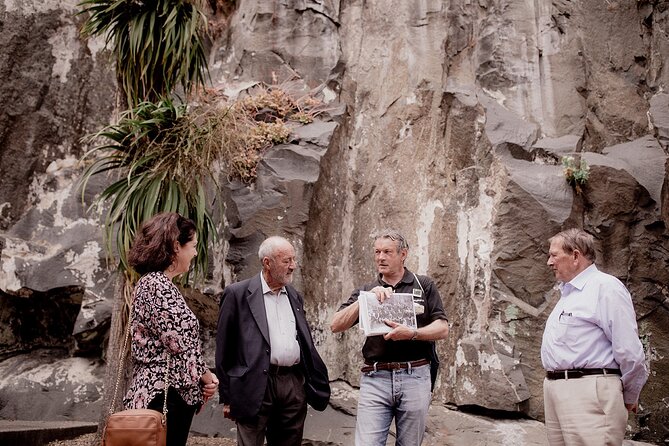
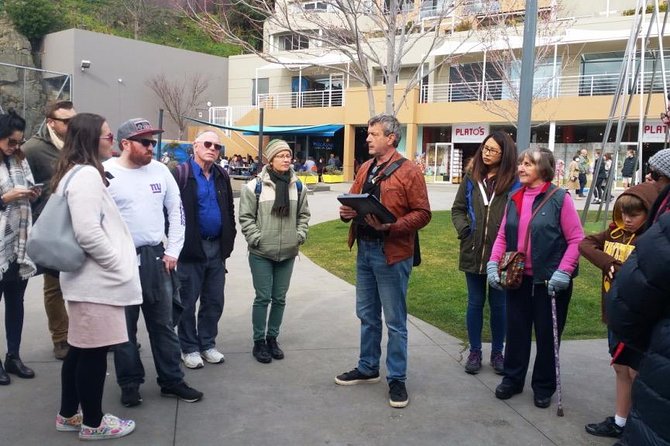
The group is limited to 15 people. That is a useful size for a history walk because you can usually hear the guide and ask questions without turning the experience into a private tour price.
Peter Lutz is the guide most closely associated with the experience. His approach combines local recommendations with historical explanation, so you may hear about places to eat, pubs, and nearby attractions as well as early Hobart.
Lydija and Carmen have also led walks. Carmen is described as particularly engaged with local and Australian history, while Lydija’s approach includes pointing out small details that can otherwise be missed. Because more than one guide may lead the experience, the delivery will not be identical every time.
Small departures can make the walk more personal. On at least one occasion, a very small group allowed the guide to adjust the material around the participants’ interests. That flexibility is valuable if you have family connections, have visited Hobart before, or want to ask detailed questions.
The tour is also suitable for a range of ages. Children under 16 can attend free, service animals are allowed, and the activity is near public transportation. Food and alcoholic drinks are not included, so plan those separately.
Is the $28.69 price good value?
At $28.69 per person, the tour is priced as an affordable introduction to central Hobart’s past. You are paying for roughly two and a half hours of guiding, a small group, and the visual material that helps explain the area.
The value is strongest if you want context. A self-guided stroll through Salamanca and Battery Point costs nothing, but you will need to research the buildings, understand the changes to the shoreline, and identify which details matter. This walk gathers that work into one route.
It is also good value early in your stay. The guide can help you get your bearings and point out places to return to later. A history walk at the start of a Hobart visit can make later visits to Salamanca’s shops, food spots, parks, and streets more meaningful.
The price is less compelling if you only want photographs or a rapid overview. It is also worth factoring in the length. You should choose it because you want stories and explanation, not simply because it covers a lot of ground.
Free cancellation is available when you cancel at least 24 hours before the start time. Changes or cancellations made inside that window are not refunded, and the tour requires a minimum number of participants. If the minimum is not met, you are offered another date or experience, or a full refund.
Who should book the Salamanca Walk?
I would choose this walk if you are interested in colonial history, architecture, family connections, public memorials, or the way a city changes over time. It is also a good fit if you have already wandered Salamanca and Battery Point but felt you were looking at attractive buildings without knowing their stories.
Families can consider it because children under 16 are free and the pace is gentle. The photographs and drawings give the younger members of your group something visual to follow, though the two-and-a-half-hour duration may test very young children.
You should think twice if you dislike standing, want frequent café breaks, or prefer a tour that enters many buildings. The route is mainly an outdoor neighborhood walk, and the history comes through the guide’s stories, images, and observations.
Should you book it?
Book the Salamanca Walk if you want Hobart’s old streets to make sense, not just look pretty. Peter Lutz, Lydija, and Carmen bring local stories to the route, while the photographs and drawings show how much Salamanca and Battery Point have changed.
The best timing is near the beginning of your Hobart stay, when local recommendations and a clear sense of the city’s layout will help with the days ahead. Allow the full two and a half hours, wear comfortable shoes, and arrive ready to listen.
Skip it only if you want a short, fast city orientation or a tour with a guaranteed seated break. For everyone else, the modest price and small group make this a useful, human-scale way to meet Hobart’s past.
FAQ
Where does the Salamanca Walk start?
The tour starts at Salamanca Arts Centre, 77 Salamanca Place, Battery Point, Tasmania 7004.
Where does the tour finish?
The activity ends back at the meeting point.
How long does the walk last?
The walk lasts approximately 2 hours and 30 minutes.
How many people can join the tour?
The tour has a maximum of 15 participants.
Is the walk physically difficult?
The experience is described as gently paced and not physically demanding. Most people can participate, although the full duration may feel tiring because there is no stated scheduled sit-down break.
Are children allowed to join?
Yes. The tour is suitable for families, and children under 16 can attend free.
What is included in the experience?
The tour includes the guided walk and historical pictures and drawings of Hobart, Salamanca, and Battery Point. Food, beverages, and alcoholic drinks are not included.
Just added around Australia
- Old Hobart Pub Walking Tour★ 4.5 · 91 reviews
- Southwest Tasmania Wilderness Experience: Fly Cruise and Walk Including Lunch★ 5.0 · 233 reviews
- Hobart History, People & Places – 2 hour city walk★ 5.0 · 224 reviews
- Walk with Wildlife: Guided Tour in Great Ocean Road★ 5.0 · 148 reviews
- Darwin Heritage Walk★ 4.5 · 101 reviews
- Freycinet Walking Tour★ 5.0 · 100 reviews
- Daintree Rainforest Night Walk in Cape Tribulation★ 4.5 · 141 reviews
- Night Walk in Cairns Botanic Gardens – Let’s Go Buggin★ 5.0 · 153 reviews
Walking Tours, compared.

Magical London: Harry Potter Guided Walking Tour
Read our review →
Reykjavik Food Walk – Local Foodie Adventure in Iceland
Read our review →
History and Hauntings of Salem Guided Walking Tour
Read our review →
New Orleans Premier Ghost, Voodoo and Vampire Walking Tour
Read our review →
Amsterdam Anne Frank: Small-Group Walking Tour & Local Guide
Read our review →

Edinburgh Castle: Guided Walking Tour with Entry Ticket
Read our review →
Anne Frank’s Story – Guided Walking Tour through Amsterdam
Read our review →Browse the lists this tour appears in