

REVIEW · USA
Boston: Official Freedom Trail® Walking Tour
Boston’s Freedom Trail is more than a red line on the pavement. It is a compact lesson in how protest, violence, argument, and courage helped shape the United States. This 90-minute walk takes you past 11 of the trail’s 16 official sites, linking famous names such as Paul Revere, Samuel Adams, Crispus Attucks, and John Adams to the streets beneath your feet.
I like two things right away: the $18 price makes a guided introduction easy to justify, and the costumed guides give the streets a human voice. Guides such as Jeremiah Poope, Nate, Danielle, and James O’Sullivan have been praised for mixing sharp facts with humor, clear storytelling, and time for questions and photographs.
The main drawback is scope. This is an introduction, not the entire Freedom Trail, and some stops are viewed from outside unless you pay separate admission. Large groups can also make it harder to hear every joke or gather close to the guide.
Key points to know before you walk
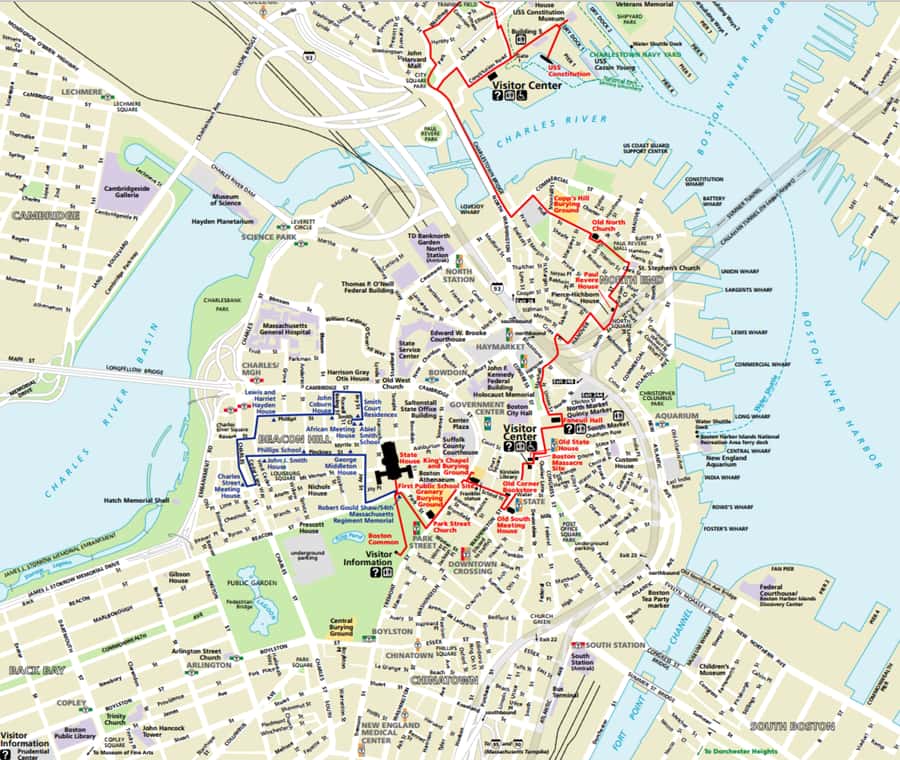
- Eleven official sites in about one mile: You get a solid overview without committing to a full-day history outing.
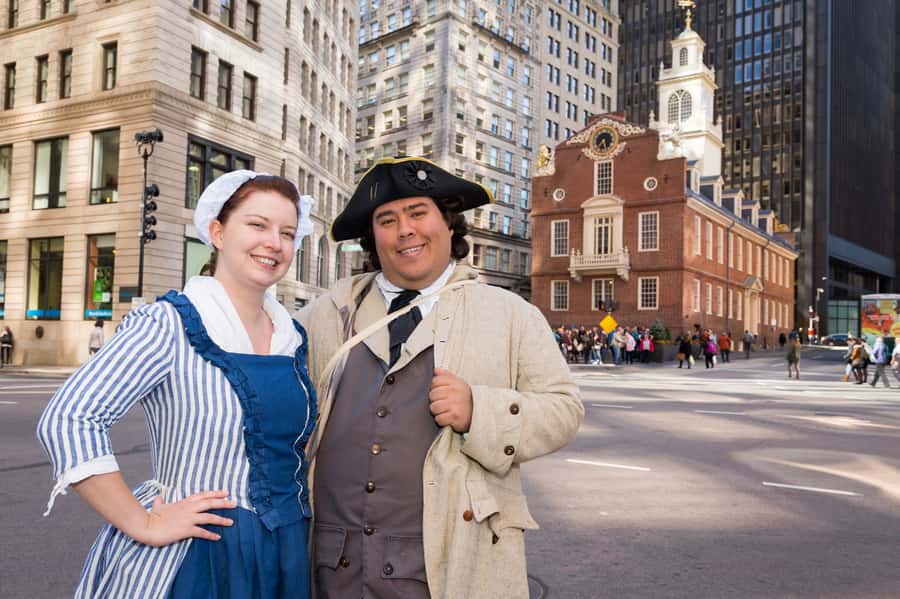
- Costumed guides bring the past forward: The best guides use character, humor, and vivid stories rather than reciting dates.
- Boston Common begins the story: You see America’s first public park before moving into the political heart of the city.
- The Boston Massacre site adds a serious note: The tour connects a small spot in the street with a major turning point.
- Granary Burying Ground rewards careful attention: Paul Revere, Samuel Adams, and other important figures are buried here.
- Admission fees are separate: Old South Meeting House, Old State House, Old North Church, and Paul Revere House require their own tickets.
Why this one-mile walk is a smart first look at Boston

I see this tour as a useful orientation for your first day in Boston. The route is short enough to fit into a morning or afternoon, yet it introduces the people and events that explain much of the city’s character.
The red line keeps the walk easy to follow. You do not need to study a map at every corner, and you can focus on the guide’s story rather than guessing which brick path leads to the next stop. The route covers about one mile, but city sidewalks, pauses, crowds, and questions make the 90-minute time span feel fuller than a simple stroll.
The tour runs in English and is led by an 18th-century costumed guide. That detail matters more than it may sound. A good guide can turn a familiar name into a person with a motive, a temper, and a problem to solve. The strongest guides on this walk, including Jeremiah Poope, have a lively stage presence and project their voices well in city traffic.
I would not book this expecting a quiet museum talk. The style is theatrical, friendly, and often funny. That works especially well for families and teenagers. One guide, described as a high school history teacher, made the walk both educational and easy to follow, while another kept a group engaged through steady rain. The quality can vary by guide, but the best performances make the past feel close at hand.
A few more walking tours around the USA worth a look
- History and Hauntings of Salem Guided Walking Tour
★ 5.0 · 14,564 reviews - New Orleans Premier Ghost, Voodoo and Vampire Walking Tour
★ 4.5 · 12,856 reviews - Little Havana Food and Walking Tour in Miami
★ 5.0 · 8,882 reviews
Boston Common: starting where public life began
The tour begins at Boston Common, America’s first public park. This green open space gives you room to breathe before the route moves into denser streets and tighter historic sites.
The setting helps place Boston’s revolutionary story in everyday life. The Common was not simply a pleasant lawn. It was a public gathering place, and public gatherings were central to how people shared news, argued about policy, and built support for resistance.
I like beginning here because it prevents the tour from becoming a string of old buildings. You first get a sense of Boston as a civic city, a place where ordinary people could gather and hear ideas. Your guide also has space to establish the wider setting before the group moves into the more crowded downtown streets.
This is a good point to listen for the guide’s approach. Some use humor and personal stories, while others lean more heavily into period character. Guides called Dr. Byles, Matt Prescott, and Hepzibah Swan have been singled out for making the opening material accessible and entertaining.
The old school site and the city’s everyday revolution

The walk continues toward the site of the oldest public school in the United States. It is easy to hurry past this stop because the school itself is not presented as a grand monument in the same way as a church or meeting hall.
That is exactly why I find it useful. The Revolution was not only planned by famous politicians. It grew in a city where children were educated, merchants argued, printers spread ideas, and residents gathered in public spaces. The school site helps widen the story beyond battles and heroic portraits.
Your guide provides the context, so stay close and listen rather than treating this as a quick photo stop. The tour is designed to show how the city’s institutions helped shape public debate. You will not get a full lesson in Boston’s education system, but you will see how a small urban location can carry national importance.
Faneuil Hall and the sound of political argument
Faneuil Hall is one of the most important stops for understanding how revolutionary ideas moved from private complaints into public action. The hall became a place for speeches, debate, and public persuasion, with figures such as Samuel Adams and James Otis arguing for liberty and resistance.
The guide’s storytelling is especially valuable here. A building can look respectable and quiet today, but the tour asks you to picture the noise of political meetings and the force of public oratory. This is where the walk makes clear that independence was not an instant decision. It had to be argued, repeated, challenged, and defended.
I like the way the route places Faneuil Hall near the other sites. You begin to see how close together Boston’s political and commercial life once was. The short distances make the events feel connected instead of scattered across a large city.
Faneuil Hall can be busy, so group size matters. If your party is large, position yourself near the guide and avoid drifting toward the back. Several people have found that big groups made jokes or details harder to catch, even when the guide was excellent.
Same streets, a different route:
- Chicago: Gangsters and Ghosts Walking Tour
★ 5.0 · 7,155 reviews - Boston: Freedom Trail History Small Group Walking Tour
★ 5.0 · 6,450 reviews - Historic Charleston Guided Sightseeing Walking Tour
★ 5.0 · 6,216 reviews - New Orleans Food Walking Tour of the French Quarter with Small-Group Option
★ 5.0 · 6,118 reviews
The Boston Massacre site and the human cost of protest
Near the Old State House, the tour pauses at the site of the Boston Massacre. This is one of the walk’s most serious moments. You hear about the night when British soldiers fired into a crowd, killing five people, including Crispus Attucks.
The location is easy to miss if you walk alone. That is one reason a guide adds real value. The red line leads you through the city, but the guide explains why this particular patch of pavement became a powerful symbol for colonial opposition.
The story also needs care. It is not just a simple tale of good patriots against bad soldiers. Tensions were high, crowds were angry, and the shooting became a political tool as well as a human tragedy. A strong guide allows room for that human frailty while explaining how the event was presented to the public.
I appreciate the change in tone here. The jokes and lively character work are useful earlier in the tour, but the massacre site brings the cost of political conflict into view. Listen closely, and give the group room to pause. This is not just another old landmark.
Granary Burying Ground and the names beneath the stones
Granary Burying Ground offers one of the most memorable parts of the walk. It is the final resting place of Paul Revere, Samuel Adams, and other important figures from the revolutionary period.
You get a chance to see the graves and take photographs, though the group may need to stay together and move at a steady pace. The burial ground is not simply a place to collect famous names. It reminds you that the people in the tour’s stories were real individuals who lived, worked, argued, and died in this city.
Paul Revere is often reduced to one famous ride, but seeing his grave helps broaden the picture. He was part of a larger network of tradespeople, activists, and organizers. Samuel Adams, too, becomes more than a name from a textbook when the guide connects him to the political meetings and public arguments along the route.
I like this stop because it slows the story down. After the noise of Faneuil Hall and the tension of the Boston Massacre site, a burial ground gives you a quiet place to consider the people behind the slogans. It is also one of the best spots for photographs on the tour.
The four sites you see from outside
The tour includes views of four sites that charge separate admission: Old South Meeting House, Old State House, Old North Church, and Paul Revere House. The walking tour does not include entry tickets, so budget extra if you want to explore their interiors.
This arrangement keeps the basic tour affordable. At $18, you can see the outside of many major landmarks and get the story that ties them together. You then choose which interiors deserve more of your time and money.
The tradeoff is clear. If you want a full visit to every building, this tour alone will not provide it. You may need to return later, pay at the door, and allow extra time. That can be a benefit for independent visitors, since you are not forced into a costly all-inclusive package. It can also disappoint you if you assume the $18 covers every historic site.
The Old State House is especially important because the Boston Massacre site is nearby, but the tour’s outdoor format means you should not expect a museum visit. Plan your day around the distinction between seeing a landmark and entering it.
Costumed storytelling, guide quality, and group size

The guide is the heart of the experience. Dates and names are easy to find in a book, but a strong guide explains why people acted as they did and how one event led to another.
The most praised guides use humor without making the subject trivial. Jeremiah Poope has been noted for his energy, clear voice, pop culture links, and ability to adapt to the street around him. Nate, Danielle, James O’Sullivan, and Dr. Byles have also been praised for making the material clear, funny, and engaging.
That does not mean every tour will feel identical. Guide personality changes the experience. One group may get a theatrical storyteller, while another gets a more direct history lesson. The common strength is the period costume and the live presentation, which give the walk a sense of occasion.
Group size is the main practical concern. A small group makes it easier to hear, ask questions, and see the guide’s gestures. A large group can still work, but stand near the front and keep an eye on the guide when crossing streets or gathering at a site. If you are traveling with children, staying close will help them follow the story.
Weather, footwear, and timing

You are outside for the full walking portion, so comfortable shoes are essential. Bring water, and dress for the forecast. A winter tour can be bitterly cold, while rain can make the sidewalks less pleasant even when the guide keeps the group interested.
The walk is not described as strenuous, but it is still a mile on city streets with repeated stops. I would avoid carrying a heavy day bag unless you need it. You should also leave a little breathing room before another booking, since some tours run slightly beyond 90 minutes when questions and photographs take extra time.
You can usually find departures in the morning and afternoon. Tours leave hourly from the Boston Common Visitor Information Center, and there are also departures from the ArtsBoston booth at Faneuil Hall every half hour. The meeting point depends on the option you book, and times can change with little notice, so check on the day.
A printed voucher is required. Video recording is not allowed, though the tour provides plenty of natural pauses for photographs.
Is $18 a good value?
For $18, I think this is a strong value if you want a guided introduction to Boston’s revolutionary sites. You get 90 minutes with a live guide, a clear route, period presentation, and access to the story behind 11 official sites.
The value is less clear if you have already spent several days studying Boston or plan to visit every interior. In that case, the basic walk may repeat material you know, and the separate admission fees can add up.
For most first-time visitors, the price works because it saves you from piecing together the city’s story alone. You can walk the red line independently for free, but you may miss why a modest-looking corner mattered or how the events connect. The tour gives you a framework, then leaves you free to return to the sites that interest you most.
Free cancellation up to 24 hours before the tour and reserve-now, pay-later booking also make it easier to fit into a changing schedule. Since no date or time needs to be specified for the ticket, you have some flexibility, but you still need to confirm the current departure details.
Who should book this Freedom Trail tour?
I would choose this tour for first-time Boston visitors, families with older children, and anyone who wants the main story without spending half a day indoors. It is also a good opening activity because it helps you understand the downtown layout before you explore on your own.
History fans should book it if they value storytelling and local context more than detailed museum access. If your priority is entering every building, look at the tour as a starting point, then plan separate admissions.
I would be cautious if you dislike group walks, outdoor sightseeing, or theatrical guides. The costumed format is part of the appeal, but it may feel too playful if you prefer a quiet academic lecture. Large groups can also reduce the ease of hearing every detail.
Should you book it?
Yes, if you want an affordable, lively introduction to Boston’s revolutionary landmarks. The route is short, the red line is easy to follow, and the best guides turn familiar names into people with motives and flaws.
Book it with realistic expectations. You will see 11 of 16 official sites, not the whole trail, and four important buildings require separate admission. Arrive ready to walk, stand near the guide, wear good shoes, and keep the rest of the day open for the places that catch your interest.
FAQ
How long is the Boston Freedom Trail walking tour?
The tour lasts about 1.5 hours and covers approximately one mile.
How many Freedom Trail sites are included?
The tour features 11 of the 16 official Freedom Trail historic sites.
What language is the tour conducted in?
The live tour is conducted in English.
Are entrance fees to the historic buildings included?
No. Admission to Old South Meeting House, Old State House, Old North Church, and Paul Revere House is not included. Tickets can be purchased at the door.
Where does the tour meet?
The meeting point depends on the option booked. Walks leave hourly from the Boston Common Visitor Information Center and every half hour from the ArtsBoston booth at Faneuil Hall.
What should I bring?
Bring comfortable shoes, water, and a printed voucher. You should also dress for the weather because the tour takes place outdoors.
Can I cancel the tour?
Yes. You can cancel up to 24 hours in advance for a full refund.
Just added around the USA
- Fan Tribute: Taylor Swift in New York Walking Tour★ 4.9 · 147 reviews
- Explore Must-See Spots: Las Vegas Strip Walking Tour★ 4.8 · 77 reviews
- East Nashville Walking Food Tour with 5+ Tastings★ 4.7 · 178 reviews
- Las Vegas: Fremont Street Walking Tour★ 4.9 · 153 reviews
- NYC: Guided Bus and Walking Tour with Staten Island Ferry★ 4.6 · 209 reviews
- DC: Smithsonian Highlights Walking Tour with Air and Space★ 4.8 · 97 reviews
- DC: Lincoln Assassination Tour with Ford’s Theatre Entry★ 4.6 · 72 reviews
- Deep Dive into Denver: Small-Group Walking Tour★ 4.8 · 119 reviews
Walking Tours, compared.

Magical London: Harry Potter Guided Walking Tour
Read our review →
Reykjavik Food Walk – Local Foodie Adventure in Iceland
Read our review →
History and Hauntings of Salem Guided Walking Tour
Read our review →
New Orleans Premier Ghost, Voodoo and Vampire Walking Tour
Read our review →
Amsterdam Anne Frank: Small-Group Walking Tour & Local Guide
Read our review →

Edinburgh Castle: Guided Walking Tour with Entry Ticket
Read our review →
Anne Frank’s Story – Guided Walking Tour through Amsterdam
Read our review →Browse the lists this tour appears in