
REVIEW · GRANADA
Albayzin and Sacromonte Guided Walking Tour in Granada
Granada’s most rewarding views come after a climb, and this walk takes you straight into the city’s two most atmospheric old quarters. You’ll move from the Moorish lanes of Albayzín to the cave homes and flamenco culture of Sacromonte, finishing near the famous San Nicolás viewpoint.
I like the late-afternoon start, which avoids the worst heat, and the way the route links architecture with everyday life. Guides such as Irene, Marco, Maria, and Francisco have been praised for making the past easy to follow. The catch is simple: this is a hilly walk with stairs, uneven cobbles, and little chance to sit down for long.
Key points
- Albayzín’s Moorish lanes: See whitewashed homes, flower-filled balconies, old gates, churches, fountains, and remnants of Granada’s medieval past.
- Sacromonte cave homes: Walk through the Roma quarter and see traditional rock-cut homes, small museums, flamenco venues, and craft traditions.
- Alhambra panoramas: Stop beside the Darro River, on the Sacromonte hillside, and at Plaza de San Nicolás for changing views of the palace.
- A useful 5 p.m. start: The timing usually makes the climb more manageable than a midday walk, especially in summer.
- Guide-led context: The best guides, including Irene, Marco, Juana, and Francisco, connect Granada’s past with modern neighborhood life.
- Good value at $16.93: You get a professional English-speaking guide for a modest fee, but food, drinks, and hotel pickup are not included.
Starting beside the Cathedral at Plaza Isabel la Católica
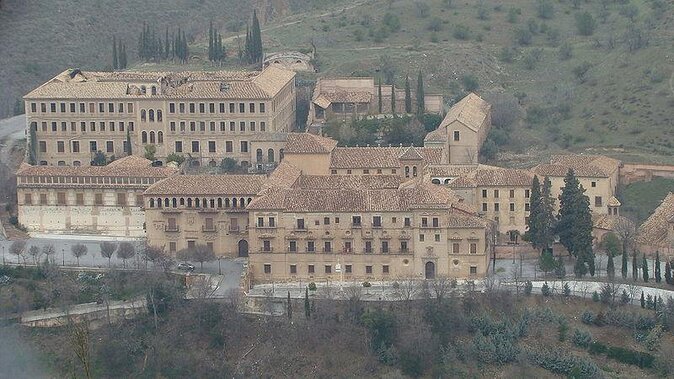
The walk begins at Plaza Isabel la Católica in central Granada, close to the Cathedral. It is a practical meeting point in the center, and the tour starts at 5 p.m., when the city is beginning to cool after the afternoon heat.
The square itself introduces one of Granada’s recurring themes: the meeting of Christian and Muslim history. From here, the guide sets the scene for the old quarters ahead, including Granada’s changing rulers, its architecture, and the way the city grew around the hills.
The route also takes in an important square connected with the Chancillería, the former High Court of Justice dating from the time of the Catholic Monarchs. This is not a museum visit, so you will not spend long at each landmark. The value is in seeing how the buildings fit together while someone explains what you might otherwise walk past.
That is one of the strongest reasons to book a guided walk here. Albayzín can look like a maze of pretty lanes, but the guide gives those lanes a story and a sequence. You start to understand why a church occupies one site, why an old gate survives nearby, and how Moorish and later Spanish buildings share the same hillside.
More Guided Tours in Granada:
- Granada: Albaicín and Sacromonte Guided Sunset Walking Tour
★ 4.9 · 2,962 reviews - Guided Walking Tour of the Alhambra in Granada
★ 4.0 · 863 reviews - Magical London: Harry Potter Guided Walking Tour
★ 4.7 · 22,044 reviews
Following the Darro River to Paseo de los Tristes
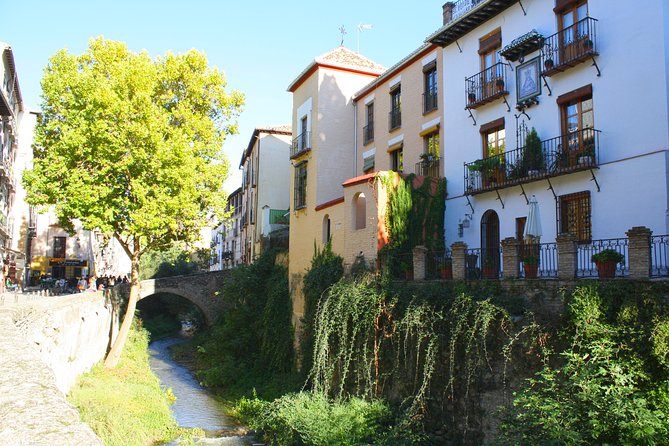
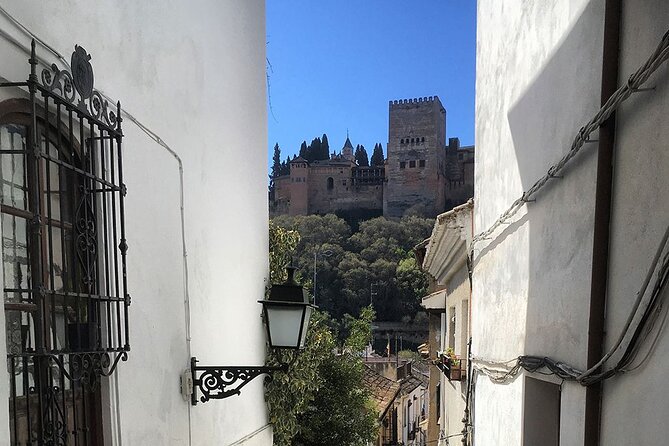
The next notable stop is Paseo de los Tristes, one of Granada’s most picturesque routes. It runs beside the Darro River, with the Alhambra rising across the valley and the old quarters climbing behind you.
This is a short stop, listed at about five minutes, but it sets up the rest of the walk. You get a strong first look at the Alhambra and begin walking toward the higher ground of Albayzín. The palace does not feel like a distant attraction here. It becomes part of the view at street level, framed by water, stone, and hillside buildings.
The climb from this point is where the physical nature of the tour becomes clear. You are not simply strolling on flat city streets. The route gains height through cobbled lanes and stairs, and the uneven surface can be tricky in places.
Wear shoes with a firm sole and good grip. Sandals that feel fine on a plaza may be less pleasant on old stone steps. You should also bring water, since food and drinks are not included and a restroom stop is not guaranteed during the walk.
Albayzín, Granada’s old Moorish quarter
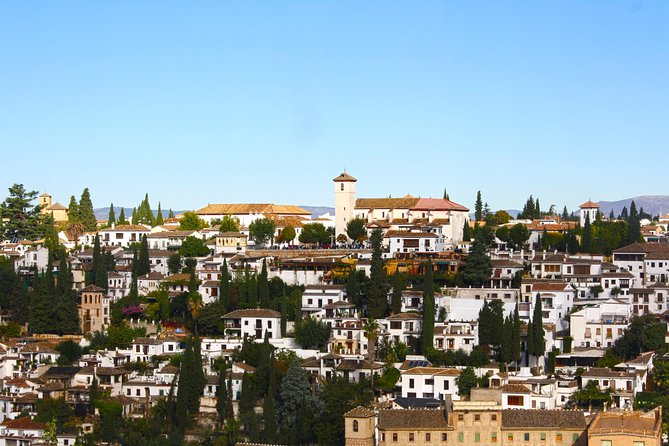
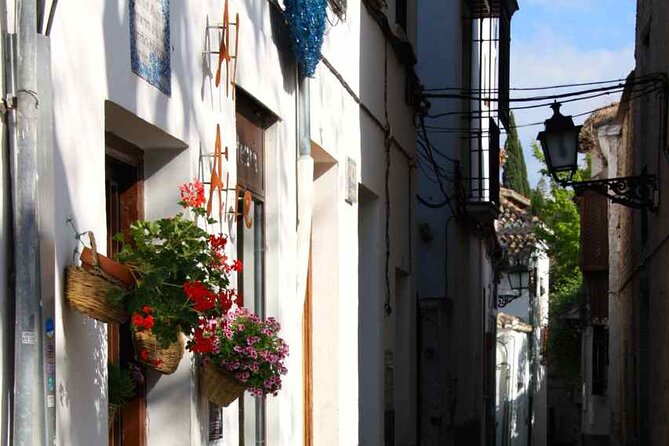
Albayzín occupies the hill facing the Alhambra and forms one of the clearest windows into Granada’s medieval past. Its streets twist rather than run in straight lines, and the neighborhood is made up of whitewashed houses, small squares, churches, fountains, and enclosed corners.
The charm is not only in the postcard views. Look for the details between the famous sights: balconies filled with plants, worn stone, old walls, and the way a narrow lane suddenly opens toward the valley. A good guide helps you notice the relationship between the buildings and the terrain.
The neighborhood’s roots reach back to the 11th century. That early date matters because Albayzín is not a modern recreation of a Moorish quarter. It is a living district that has changed over many centuries, with later Christian landmarks built into an older urban pattern.
The guide also points out old city gates and other Moorish remains. These may not be grand monuments with elaborate interiors, but they help explain how the quarter worked. The walk is strongest when the guide connects small details to larger events, including the arrival of Christian rule and the continued influence of Islamic design.
Several guides have earned especially warm praise for their style. Irene has been described as responsive to the group’s pace and willing to share personal experiences. Arina used humor to make the stories stick, while Juana connected Granada’s past with the history of Spain, empire, and the Roma community. Those differences matter because the route itself is fixed, but the quality of the experience depends heavily on the person leading it.
Climbing into Sacromonte’s cave neighborhood
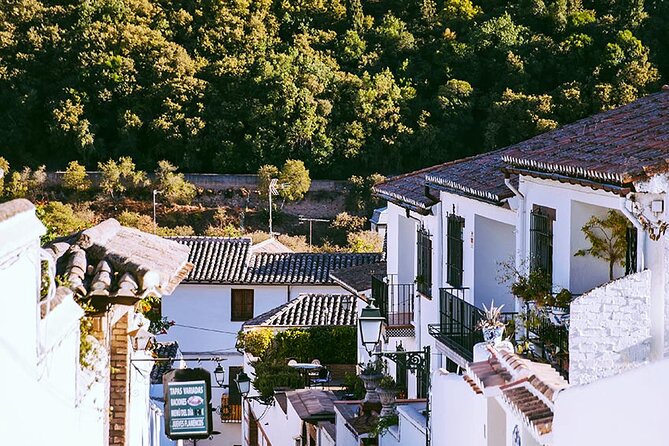
From Albayzín, the walk continues east into Sacromonte. This is Granada’s Roma quarter, known for homes cut into the hillside and for a culture closely linked with flamenco, music, craftwork, and neighborhood traditions.
The word cave can make the area sound like a tourist display, but the district is also a residential community. Some traditional homes are still lived in, while others have become flamenco venues, small museums, or places where local arts and crafts are presented.
The planned stop here lasts about 30 minutes. That gives you time to see the hillside setting and understand how the cave homes fit into the neighborhood. Some tours have included a look inside a cave house or a special entry to a flamenco cave venue, but those extras should not be assumed as part of every departure. The guaranteed inclusion is the professional guide.
Sacromonte is also where the walk becomes most useful for understanding Granada beyond the Alhambra. You hear about the people who have lived here, the traditions shaped by the hillside, and the connection between daily life and performance. Flamenco is not treated only as an evening show. It is part of the cultural identity of this quarter.
The hillside views are excellent, but the footing remains uneven. There are ups and downs, and the route can feel strenuous in summer. One guide was praised for giving frequent rests and checking how the group was managing. That is the sort of leadership you want here. A brisk pace may be fine for one group and too much for another.
A few more walking tours around Granada worth a look
- Granada: Albaicín and Sacromonte 2.5-Hour Walking Tour
★ 4.7 · 777 reviews - Granada: Albaicín and Sacromonte Walking Tour
★ 4.5 · 665 reviews - Granada’s Hidden Treasures: Albayzin and Sacromonte Walking Tour
★ 4.5 · 575 reviews - Granada: Walking Food Tour
★ 4.8 · 460 reviews
The reward at Plaza de San Nicolás
The tour finishes around Calle Mirador de San Nicolás, at Plaza de San Nicolás, the best-known balcony for views of the Alhambra. This is the photograph most people have in mind when they picture Granada: the palace across the valley, with the Sierra Nevada behind it when conditions allow.
The viewpoint is listed as a short stop of about ten minutes. That is enough for photographs and a final explanation, but it may feel brief if you want to linger, visit the nearby church or mosque, or simply sit and watch the light change.
The ending point is not the same as the starting point. That is important. You finish high in Albayzín rather than returning to Plaza Isabel la Católica, so ask the guide to confirm the exact endpoint before the walk begins. The published information also notes that the tour may finish at another nearby meeting point.
Finishing here has a practical advantage: you are already in one of Granada’s best areas for an evening view. It also means you should not schedule something immediately afterward on the assumption that you will be back in the city center at the starting square.
How hard is the 2 to 2.5-hour walk?
The timing needs a small clarification. The tour is described as approximately two hours in the booking details, while the route description refers to about two and a half hours. I would plan for the longer figure and allow extra time afterward.
The walk is not suitable for anyone who struggles with steep hills, stairs, or uneven paving. The route includes cobbles and regular climbs, and one person stopped after about half an hour because the hills were too demanding. That concern should be taken seriously.
At the same time, you do not need to be an athlete. The experience has worked well for older participants and for families with children aged 10 and 12, especially when the guide sets a sensible pace. The key is being comfortable with sustained walking and accepting that the route will not be flat.
I would avoid booking it immediately after a long day of sightseeing if your legs are already tired. Bring water, wear comfortable shoes, and dress for the weather. The walk operates in all conditions, and there is no promise of shelter from heat or rain.
Guide quality and group size
The tour allows up to 30 people, which is a fairly large group for narrow streets and noisy viewpoints. A group of six can feel personal and easy to manage, while a full departure may make it harder to hear the guide.
This is the main quality risk. One person found the guide clear and well informed but said the group was too large to hear comfortably. Headsets are not listed as part of the experience, so you may need to stay close to the guide, especially near traffic, crowds, or the river.
The strongest guide accounts are consistent on a few points: the best leaders explain the sites clearly, invite questions, keep an eye on the group’s energy, and add practical suggestions for the rest of your stay. Marco was praised for sharing his affection for the neighborhood and recommending other places to see. Francisco kept children engaged while answering questions about Granada and Spain.
There has also been one serious meeting-point complaint involving a last-minute change and missed contact. The operator later gave its account and said a refund was arranged. The practical lesson is to check your voucher on the day, confirm the meeting point, and use the phone numbers provided if you cannot find the guide. Do not rely only on an international phone call or a delayed email.
Is $16.93 good value?
At $16.93 per person, this is a low-cost way to get orientation in two of Granada’s most confusing and rewarding districts. You are paying for a professional guide, not for entry to a monument, a meal, a flamenco performance, or transport.
I think the value is strongest early in your stay. The guide can help you understand where Albayzín and Sacromonte are, how the hills connect, and which corners deserve a return visit. You may also get useful ideas about food, viewpoints, and places to explore on your own.
The price is less attractive if you mainly want a relaxed walk or a long time at San Nicolás. You can visit the viewpoint without a tour, and the walk itself is physically demanding. The fee makes sense because of the interpretation and route planning, not because it includes special admissions.
Confirmation arrives when you book, the ticket is mobile, and the tour is offered in English. Hotel pickup is not included. You can cancel for a full refund up to 24 hours before the start time, but changes or cancellations inside that window are not accepted. If the minimum number is not met and the operator cancels, you are offered another date or a full refund.
Who should book this Granada walk?
I would choose this tour if you want a clear introduction to Albayzín and Sacromonte but do not want to spend your first day trying to decode the hills alone. It suits curious walkers who care about architecture, local culture, and the human stories behind famous views.
It is also a good fit if you like a guide who talks about both the past and the present. The route goes beyond the Alhambra postcard, showing how people live, worship, work, and perform in the neighborhoods around it.
I would think twice if you need a flat route, regular restroom stops, or a quiet tour with a guaranteed small group. I would also avoid assuming that every guide will offer the same cave-house or flamenco access described by some participants.
Should you book it?
Yes, if you can handle hills and cobbles. For $16.93, you get a useful introduction to Albayzín and Sacromonte, strong Alhambra views, and a guide who can turn a maze of streets into a readable story.
Book it near the start of your Granada stay, wear sturdy shoes, bring water, and confirm the meeting point before 5 p.m. If you want a highly personal experience, ask about group size when possible. If you do those things, this is a practical, culture-focused way to see the old neighborhoods that many visitors miss.
FAQ
Where does the Albayzín and Sacromonte tour start?
It starts at Plaza Isabel la Católica in central Granada, near the Cathedral.
What time does the tour begin?
The scheduled start time is 5 p.m.
Where does the tour finish?
It is scheduled to finish on Calle Mirador de San Nicolás near Plaza de San Nicolás. The exact ending point can change, so ask the guide to confirm it at the start.
How long does the tour last?
The experience is described as approximately two hours in the summary and about two and a half hours in the route description. Plan for up to two and a half hours, plus time to return from the final viewpoint.
Is the tour offered in English?
Yes. The tour is offered in English and includes a professional guide.
What neighborhoods does the route cover?
It covers Albayzín, Granada’s old Moorish quarter, and Sacromonte, the hillside district known for cave homes, Roma culture, flamenco, arts, and crafts.
Is the walk physically difficult?
The route includes hills, stairs, cobbled streets, and uneven surfaces. Comfortable shoes and suitable clothing are important, and the walk may be strenuous in hot weather.
Are food, drinks, or hotel pickup included?
No. Food, drinks, and hotel pickup are not included.
Can I cancel for a full refund?
Yes, if you cancel at least 24 hours before the experience begins. Cancellations or changes made less than 24 hours before the start time are not accepted for a refund.
Just added around Granada
- Walking tour in Alhambra, Nasrid Palaces and Generalife★ 3.0 · 135 reviews
- Sunset Walking Tour in Albaicín & Sacromonte★ 5.0 · 95 reviews
- Granada’s Hidden Treasures: Albayzin and Sacromonte Walking Tour★ 4.5 · 575 reviews
- Albaicín & Sacromonte Walking Tour★ 4.5 · 87 reviews
- Granada: Historic Center and Lower Albaicin Walking Tour★ 4.7 · 136 reviews
- Granada: Albaicín, Sacromonte & Museum of Caves Walking Tour★ 4.9 · 244 reviews
- Granada: Albayzin and Sacromonte Walking Tour★ 4.6 · 231 reviews
- Granada: Walking Food Tour★ 4.8 · 460 reviews
Walking Tours, compared.

Magical London: Harry Potter Guided Walking Tour
Read our review →
Reykjavik Food Walk – Local Foodie Adventure in Iceland
Read our review →
History and Hauntings of Salem Guided Walking Tour
Read our review →
New Orleans Premier Ghost, Voodoo and Vampire Walking Tour
Read our review →
Amsterdam Anne Frank: Small-Group Walking Tour & Local Guide
Read our review →

Edinburgh Castle: Guided Walking Tour with Entry Ticket
Read our review →
Anne Frank’s Story – Guided Walking Tour through Amsterdam
Read our review →Browse the lists this tour appears in