
REVIEW · UK
Falmouth Uncovered Walking Tour (Award Winning)
Falmouth’s past is far stranger than a quick look at its shops and harbour suggests. This 90-minute walk brings out the pirates, smugglers, sailors, criminals, outsiders, and former slaves who shaped the town. I especially like the lively storytelling and the way guides such as Will and Bobby use music, costume, and humor to make old events easy to remember.
I also like that the tour covers places you could easily pass without noticing, from Smithick Hill to the older parts of Market Street. The main drawback is physical: steep sections and some stairs make this less suitable for anyone who finds uphill walking difficult, though the route can sometimes be adjusted for the group.
Key points to know before you book
- Pirates open the story: The Killigrew family gives the tour an entertaining and sometimes dark beginning.
- Music is part of the walk: Guides may use an accordion or melodeon and add sea shanties as you move through town.
- You see more than the shopping streets: The route includes Custom House Quay, Gyllyng Street, Smithick Hill, Market Street, and the harbour.
- The tour suits families: Children receive an activity sheet, and the storytelling keeps the past accessible.
- Allow for hills and stairs: Smithick Hill includes a short climb, and some parts may test your legs.
- Small-group scale: The maximum group size is 25 people, with microphones used to help everyone hear.
Why Falmouth’s history works so well on foot
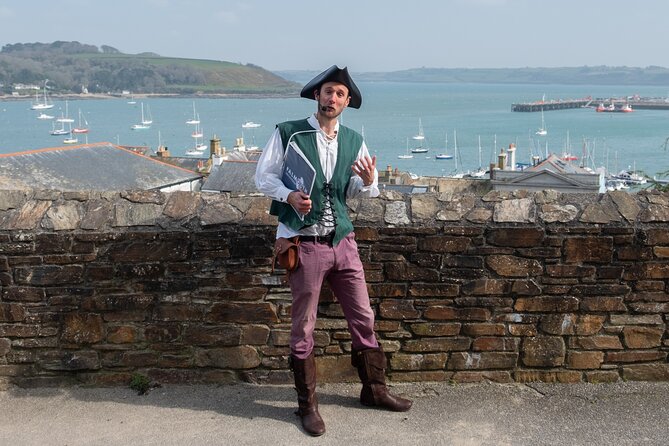
Falmouth is a town where the setting and the stories reinforce each other. Its harbour explains the town’s rise, its steep streets reveal how older Falmouth was built, and its central lanes provide the setting for tales of crime, trade, religion, and social change.
This is not a tour that treats history as a list of dates. You move from one place to another, and each stop supplies a new piece of the town’s character. At Custom House Quay, the harbour helps explain Falmouth’s rise as a maritime centre. On Gyllyng Street, a view across the town gives you a better sense of how the settlement fits together. In Smithick Hill, the narrow streets become a stage for stories of violence and bad behaviour.
I like this approach because you do not need much prior knowledge. The guide gives you enough context to understand what you are seeing, while the stories keep the pace moving.
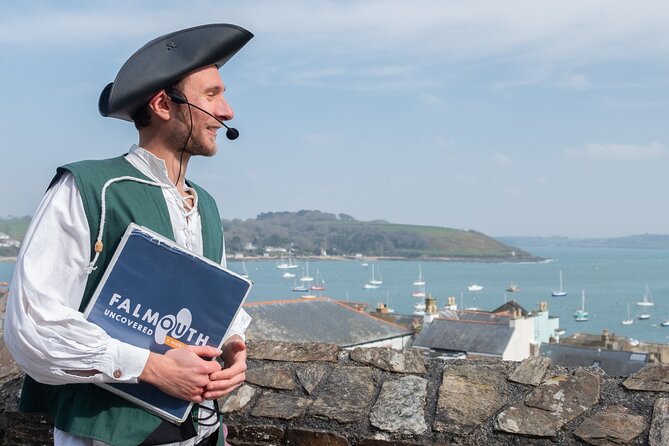
The style is theatrical without requiring you to dress up or take part in a performance. Will is known for using music, and Bobby has led the walk in period clothing, at times appearing as a pirate or as the town crier. The exact guide and style can vary, but you should expect more personality than you would get from a plain lecture.
A few more walking tours around the UK worth a look
- Magical London: Harry Potter Guided Walking Tour
★ 4.7 · 22,044 reviews - Edinburgh: Harry Potter Magical Guided Walking Tour
★ 4.8 · 11,944 reviews - Edinburgh Castle: Guided Walking Tour with Entry Ticket
★ 4.7 · 11,699 reviews
Starting at Grove Place and meeting the Killigrews
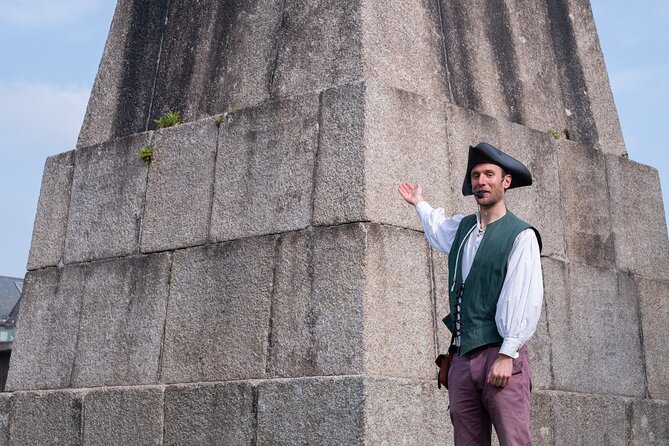
The tour begins at the Grove Place toilets, a practical meeting point in Falmouth. From there, the first stop is the Killigrew Monument, where you hear about the family credited with founding Falmouth.
The Killigrews are not presented as polite civic fathers. Their story involves piracy, force, and ambition. That gives the tour an immediate sense of drama and helps explain why Falmouth’s early development was tied to people who understood power, trade, and the sea.
I appreciate this opening because it sets the tone quickly. You are not eased into a dry account of municipal planning. Instead, the first quarter-hour introduces the town through a family whose story is morally complicated and highly theatrical.
The stop lasts about 15 minutes and has no separate admission charge. You remain outdoors, so sensible shoes and clothing suited to the day are useful.
Custom House Quay and the rise of a maritime town
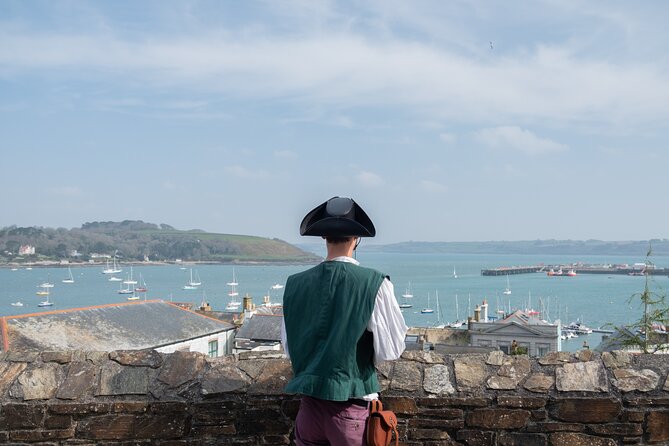
At Custom House Quay, the story shifts from one family to the wider growth of Falmouth. You learn how a place that began with little became a maritime boom town known far beyond Cornwall.
This is one of the more useful stops for first-time visitors because it connects Falmouth’s present-day harbour with its working past. The waterfront is not just a pretty place for photographs. It was the reason people, goods, ships, and money came together here.
The guide explains how the town’s position helped it grow during the age of sail. You get a clearer sense of why Falmouth mattered, rather than simply hearing that it was once important.
The 15-minute stop also helps break up the walking. You pause, listen, and look across the harbour while the story develops. If you arrive in Falmouth by cruise ship, the meeting point and route are easy to reach from the port area, although you should still allow enough time to get ashore and walk to Grove Place.
Gyllyng Street and a view across old Falmouth
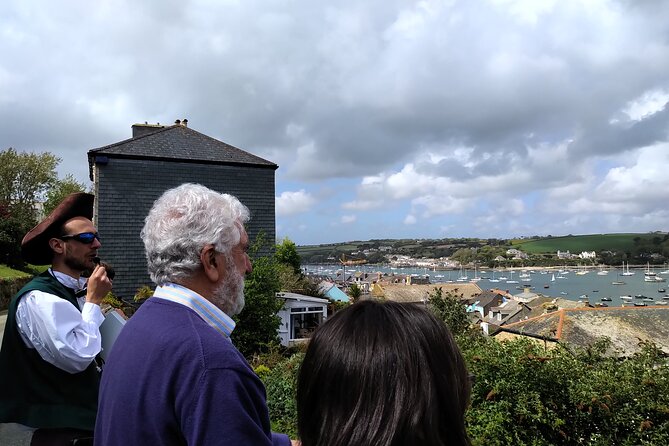
Gyllyng Street brings together social history and scenery. Here, the guide explains what Falmouth was like during the age of sail, when people of different nationalities and religious groups lived close together.
That theme is important. Ports attract people who would not necessarily meet elsewhere, and Falmouth became a town of outsiders, sailors, merchants, workers, and newcomers. The result was not always peaceful, but it made the town unusual and culturally mixed.
From this part of the route, you also look across Falmouth from above. The view gives you a chance to see the town as a whole rather than as a series of isolated streets. I find this kind of pause especially helpful early in a visit because it gives you a mental map for later wandering.
This stop lasts about 20 minutes. It is also where the physical side of the walk starts to matter more. You may be standing on uneven ground or walking uphill, and the route is not designed as a completely flat promenade. One person in their eighties managed the walk, but anyone with mobility limits should take the short climb to the older street seriously.
Same streets, a different route:
- Underground Vaults Walking Tour in Edinburgh Old Town
★ 4.5 · 8,506 reviews - London: The Original Jack the Ripper Walking Tour
★ 4.7 · 7,833 reviews - Oxford University Walking Tour With University Alumni Guide
★ 5.0 · 6,905 reviews - Edinburgh Castle: Guided Walking Tour with Entry Ticket
★ 5.0 · 5,540 reviews
Smithick Hill, crime, and the rougher side of town
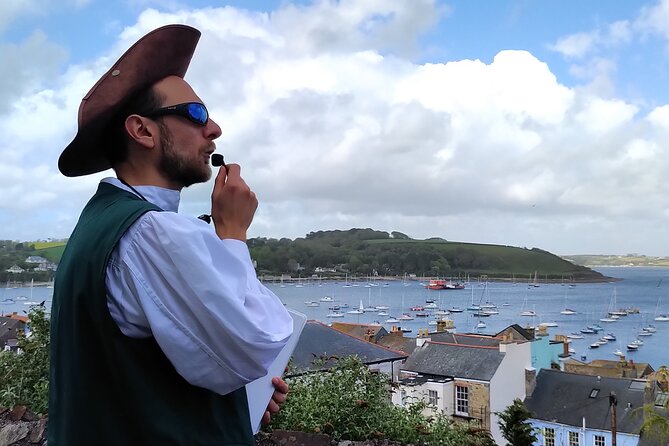
Smithick Hill is where Falmouth’s respectable image gives way to stories of murder, violence, and general bad behaviour. The guide uses the streets themselves as evidence of how crowded and unruly old port towns could be.
This section is one reason I would choose this tour over a basic orientation walk. You are not only shown attractive buildings or told where to shop. You hear about the people who made these streets dangerous, chaotic, and memorable.
The stop takes about 20 minutes, making it one of the longer sections. That gives the guide room to build several stories rather than rushing through a single anecdote. The humor keeps the material from becoming too grim, though some of the subject matter is darker than the family-friendly activity sheet might suggest.
The climb is short, but it can be demanding. Wear shoes with a good grip, and do not assume that a town walking tour means a flat route. Guides have adjusted the route for group ability in some cases, but you should not count on every steep section disappearing.
Market Street and the characters of old Falmouth
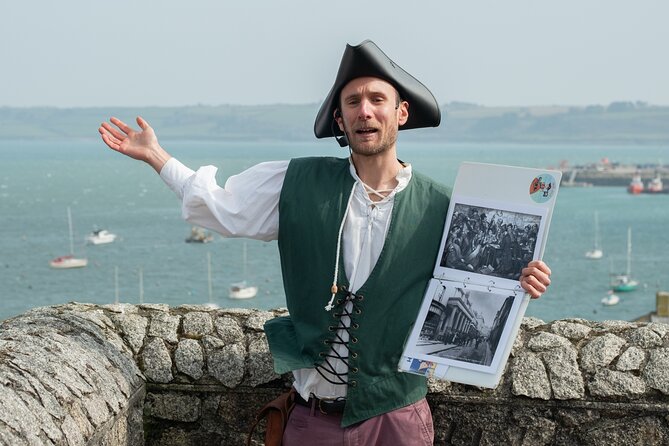
Market Street places you in the heart of old Falmouth. Here, the guide talks about the women who once worked the streets at night and about the strange story of Falmouth’s famous cannibal arrivals.
The details are deliberately colorful. This is social history from the ground level, focused on how people lived, behaved, earned money, and became part of local memory. It gives the central street a past that is far more complicated than its modern shops suggest.
I like the fact that the route does not stop at grand events or famous buildings. The most telling stories often concern ordinary streets and the people who used them. Market Street is a good example of that approach.
This part lasts about 10 minutes. It is brief, but it helps connect the earlier stories of sailors, crime, and outsiders with the daily life of the town.
Prince of Wales Pier and one final human story
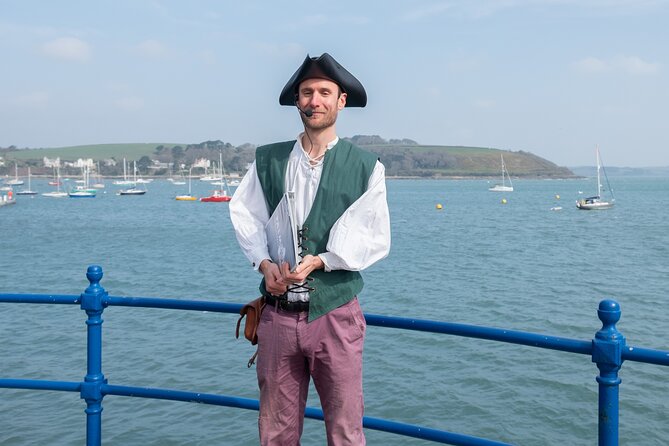
The tour ends at Prince of Wales Pier, with the harbour around you. It is a fitting finish because the walk begins with Falmouth’s founders and ends by returning to the sea.
The final story concerns a former slave who became a local celebrity. It adds another layer to the town’s social history and challenges the idea that Falmouth’s past can be reduced to ships and merchants.
The 10-minute ending gives you a chance to look back across the route. You finish in a useful location for continuing your visit, with the harbour close by and the town centre within reach.
Ending at the pier also works well for cruise passengers and anyone planning to explore independently afterward. Just remember that this is a one-way walk. You should think about where you want to go next rather than assuming you will finish near the starting point.
The music, humor, and guide style
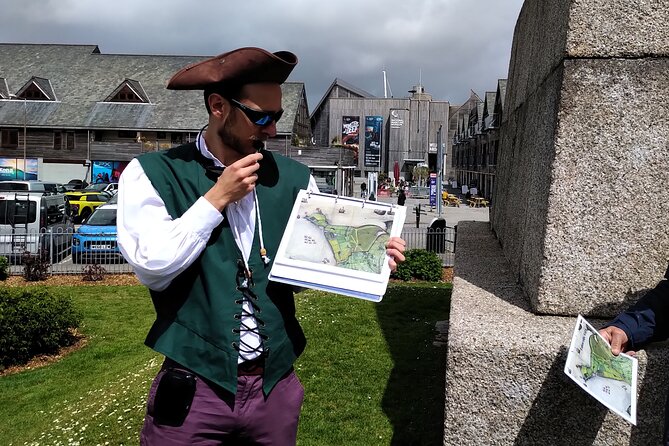
The strongest feature of this experience is the delivery. Guides have used accordions or melodeons, played sea shanties, and added period clothing to the walk. Will’s music has been a memorable part of the experience, while Bobby has brought a pirate character and town-crier energy to his tours.
These touches are not decoration for its own sake. Music suits a port town, and a tune can help fix a place in your memory. A good joke also gives you a break from names and dates. You are more likely to remember the story of a street if the guide makes you laugh there.
The exact presentation depends on who leads your group. Will and Bobby are both associated with especially lively tours, but no booking information promises one particular guide. You should expect a guide who is comfortable speaking to a group and who may use a microphone, rather than assume a specific costume or instrument.
The humor may not suit every taste. One section can feel story-heavy if you prefer modern information about how people live and work in Falmouth today. The focus is mainly on the town’s past. If you want current wages, industries, housing, or local life, this walk may not answer those questions.
How much value do you get for $22.18?
At $22.18 per person, the tour is reasonably priced for a 90-minute guided walk, especially because all six stops are included without separate admission charges. You are paying for local interpretation, route planning, and access to stories that would be difficult to assemble from a map alone.
The value is strongest if you are visiting Falmouth for the first time. In an hour and a half, you get a working introduction to the harbour, old streets, social groups, crime, trade, and local characters. You also finish with a better idea of where to return for your own exploring.
It is less compelling if you have already spent several days studying Falmouth’s history or if you want entry to museums and historic buildings. This is an outdoor storytelling walk, not an attraction pass.
The group limit is 25 people. That is large enough to create energy but still manageable, especially since microphones are used. The tour generally starts promptly, so arrive at Grove Place with enough time to find the meeting point.
Who should take this walk?
I would recommend it to first-time visitors, cruise passengers with a few hours in town, families, and anyone who likes local stories more than formal lectures. Children have an activity sheet, and the music and humor give younger participants something to follow while the guide explains the past.
It also suits people who want to see more than the main shopping street. The route includes less obvious corners of Falmouth and gives you a reason to look up, turn into older lanes, and notice the town’s shape.
You should think twice if hills and stairs are a major problem. The walk is manageable for many people, but it is not fully level. A moderate level of physical fitness is expected, and the Smithick Hill section may be the hardest part.
The tour runs in English, with a mobile ticket. Service animals are allowed, and the route is near public transportation. It requires good weather, so poor conditions may lead to a different date or a full refund.
Booking, cancellation, and practical planning
You can cancel up to 24 hours before the start time for a full refund. Changes made inside that 24-hour window are not accepted, and late cancellations are not refunded.
The experience also requires a minimum number of participants. If that minimum is not reached, you can be offered another date or experience, or receive a full refund.
Because the tour is often booked well ahead, with an average booking lead time of about 55 days, it is sensible to reserve early if your visit dates are fixed. This matters most for cruise calls and short stays, when you may have little room to move the activity.
Wear comfortable shoes, bring weather-appropriate clothing, and be ready for a short uphill section. If you need a slower pace or have mobility concerns, contact the provider before booking rather than relying on changes on the day.
Should you book Falmouth Uncovered?
Book this tour if you want Falmouth explained through character, gossip, music, and place. The pirate founders, harbour trade, mixed communities, street crime, and final story of a former slave give you a fuller sense of the town than a simple walk through the centre.
I would choose it early in a Falmouth visit. The route gives you useful bearings, and the stories may send you back to streets you would otherwise overlook. The price is fair for the time and personal delivery, and the family-friendly format makes it an easy choice for a mixed-age group.
Skip it if you need a flat route, dislike theatrical storytelling, or mainly want present-day information. For everyone else, this is a lively and memorable introduction to Falmouth, with enough odd characters and local detail to make the town feel much more than a harbour stop.
FAQ
How long does the Falmouth Uncovered Walking Tour last?
The tour lasts approximately 1 hour and 30 minutes.
Where does the tour begin?
The tour begins at Grove Place Toilets, Falmouth TR11 4AU, UK.
Where does the tour finish?
The walk finishes at Prince of Wales Pier, Falmouth TR11 3DF, UK.
What sights are included?
The route includes the Killigrew Monument, Custom House Quay, Gyllyng Street, Smithick Hill, Market Street, and Prince of Wales Pier.
Is the tour suitable for children?
Yes. The tour is child-friendly, and an activity sheet is provided for children.
Is the route physically demanding?
You need a moderate level of fitness. The walk includes an uphill section and some stairs, especially around Smithick Hill and the older streets.
Is the tour offered in English?
Yes. The tour is offered in English.
Can I cancel for a full refund?
Yes. You can cancel at least 24 hours before the start time for a full refund. Cancellations or changes made less than 24 hours before the start time are not accepted for a refund.
Just added around the UK
- Stirling Castle, Loch Lomond Walk & Whisky Distillery Tour from Glasgow★ 5.0 · 79 reviews
- Merchant City Music Walking Tour of Glasgow★ 5.0 · 94 reviews
- Walking Tour of Glasgow★ 5.0 · 96 reviews
- Gothic Glasgow Walking Tour★ 5.0 · 448 reviews
- Glasgow: Pubs & History Walking Tour with Beer Tasting★ 5.0 · 81 reviews
- Glencoe, Scenic Walk & Highlands Guided Tour starting Glasgow★ 5.0 · 121 reviews
- Gander Walking Tours in Glasgow★ 5.0 · 506 reviews
- Group Walk up Ben Nevis from Fort William★ 5.0 · 108 reviews
Walking Tours, compared.

Magical London: Harry Potter Guided Walking Tour
Read our review →
Reykjavik Food Walk – Local Foodie Adventure in Iceland
Read our review →
History and Hauntings of Salem Guided Walking Tour
Read our review →
New Orleans Premier Ghost, Voodoo and Vampire Walking Tour
Read our review →
Amsterdam Anne Frank: Small-Group Walking Tour & Local Guide
Read our review →

Edinburgh Castle: Guided Walking Tour with Entry Ticket
Read our review →
Anne Frank’s Story – Guided Walking Tour through Amsterdam
Read our review →Browse the lists this tour appears in