
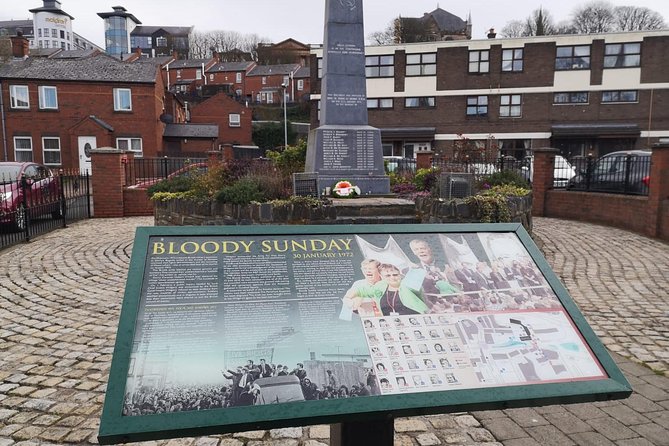
REVIEW · UK
Derry City: The Bloody Sunday Story – Walking Tour
The most powerful part of this Derry walking tour is its personal voice. Depending on the day, you may be guided by John McKinney, whose brother William was killed on Bloody Sunday, or by local guides such as Noel, Neal, or Mickey. You walk through the Bogside with someone tied directly to its past, not just someone reciting dates from a script.
I like the small groups of no more than 12, which make it easier to hear and ask questions. I also like the way the tour links the massacre site, Free Derry Corner, the memorial, and the civil rights murals into one clear story.
The main consideration is emotional weight. This is not a light sightseeing stroll, and some of the detail is painful. The route is outdoors, so poor weather can also affect the experience.
Key points to know before you book
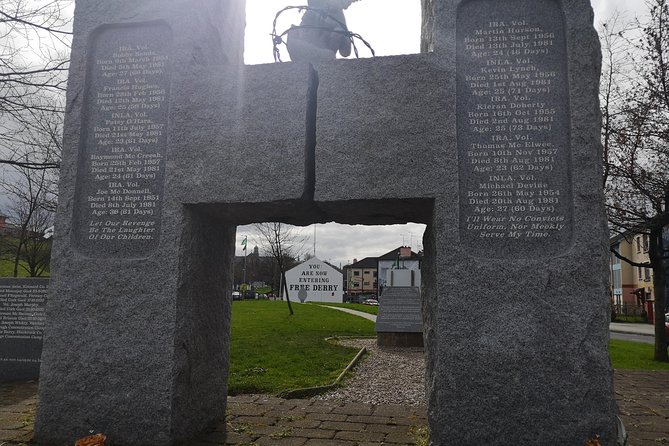
- Personal connection: John McKinney is the brother of Bloody Sunday victim William McKinney and has spent decades seeking justice.
- Bogside at close range: The route takes you to Free Derry Corner, the massacre site, the memorial, and republican murals.
- A compact 90 minutes: You get a focused introduction to Derry’s civil rights story without giving up a full morning.
- Small-group format: The maximum group size is 12, useful when the guide is explaining sensitive details outdoors.
- Several times each day: Multiple departure times make it easier to fit the walk around a museum visit or other Derry plans.
- Strong value at $28.34: The ticket includes a local guide and access to public sites that are free to enter.
Why this Bogside walk feels different
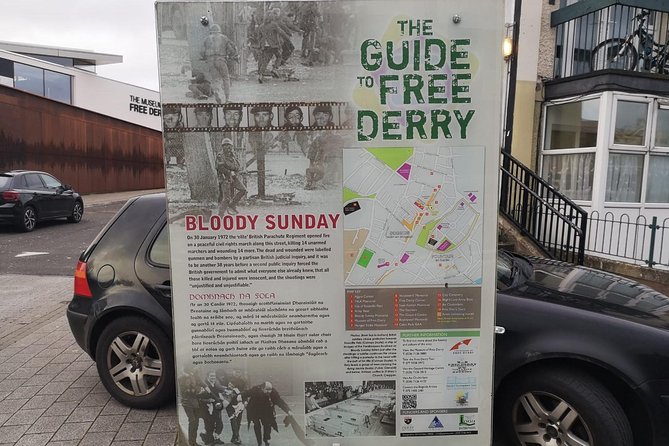
Derry’s Bogside is not simply a collection of murals and memorials. It is the place where civil rights protests, community resistance, military force, and the campaign for justice became part of everyday life. This tour helps you read the streets as part of that story.
The focus is Bloody Sunday, the 1972 event in which civil rights demonstrators were killed by British soldiers. The guide also explains what led up to the day and what followed it. That wider frame matters. Without it, you see a memorial and a painted wall. With it, you begin to understand why the Bogside remains so important to Derry.
The personal element gives the walk its force. John McKinney’s older brother William was one of the victims. John has spoken about growing up in the area, the effect of the event on his family, and the long fight for justice. The tour is not simply a family story, though. It connects one family’s loss to the wider civil rights movement and to later efforts to establish what happened.
You may also meet guides such as Noel, Neal, Mickey, or Mr McElhinney. Their approach can differ slightly, but the central subject remains the same: the history of the Bogside told by someone with a close local connection. Neal, for example, was present during Bloody Sunday, while John brings the perspective of a surviving family member.
That difference matters if you are trying to understand the place rather than just photograph it. You hear how the area felt to people who lived there, how community ties continue, and why the names of those killed are still carefully remembered.
A few more walking tours around the UK worth a look
- Magical London: Harry Potter Guided Walking Tour
★ 4.7 · 22,044 reviews - Edinburgh: Harry Potter Magical Guided Walking Tour
★ 4.8 · 11,944 reviews - Edinburgh Castle: Guided Walking Tour with Entry Ticket
★ 4.7 · 11,699 reviews
Starting at the Museum of Free Derry
The meeting point is the Museum of Free Derry at 55 Glenfada Park, Londonderry, BT48 9DR. You return to this same point at the end, so you do not need to arrange a separate pickup or work out where the walk finishes.
The museum is a useful starting point because the tour and the surrounding area deal with the same events from different angles. The walk itself takes you into the streets and to the places connected with Bloody Sunday. The museum can then help you spend more time with documents, photographs, and displays after the guide has given you the basic story.
The walk is offered in English and comes with a mobile ticket. Several departure times are available during the day, a practical help if you are fitting Derry into a short visit. Since the experience is often booked around three weeks ahead, I would not leave it until the last minute if your schedule is tight.
You are in an urban area with public transport nearby. The activity information says most people can take part, and service animals are allowed. Since this is a walking tour with outdoor stops, wear shoes you can use comfortably and check the forecast before setting out.
Free Derry Corner and the Bogside
The first part lasts about an hour and takes you around the historic Bogside, including the site of the Bloody Sunday massacre and Free Derry Corner. This is the longest section of the tour, and rightly so. It gives the guide time to explain the streets, the political setting, and the events that shaped the neighborhood.
Free Derry Corner is one of the best-known markers in the area. It represents the idea of a community asserting its own identity during the Troubles. Here, the story becomes physical. The corner is not an abstract reference in a textbook. It is part of the neighborhood where people lived, marched, argued, mourned, and organized.
The guide explains the civil rights movement as part of the story. This helps prevent a common mistake: treating Bloody Sunday as an isolated incident. The walk places it within a period of discrimination, protest, tension, and confrontation. You also hear about the experience of people in the Bogside, rather than only the official version of events.
This is where the guide’s delivery matters most. John has been involved in the Bloody Sunday Justice Campaign and has continued the family’s search for accountability. A guide with that background may pause on details that a general city walk would pass over, including the effect of the event on families and the community.
Expect a serious tone, but not a dry one. John has been described as using both hard facts and humor when appropriate. That balance can make a difficult subject easier to follow without making light of it. You may also find that guides answer questions in a direct, personal way because they grew up in or have strong ties to the Bogside.
One small drawback is that the amount of detail can feel heavy. The names of the people injured or killed are important to the community, and the guide may spend time remembering them individually. If you prefer a quick overview, this section may feel slower than expected. If you want to understand the human cost, that care is one of the reasons to take the tour.
The Bloody Sunday Memorial
The memorial stop lasts about 15 minutes. It is where the victims of the massacre are remembered, and the guide explains the event in the place where its consequences remain visible.
This is likely to be the most emotional pause. Several guides have a direct link to the victims, and John’s connection to his brother gives the memorial a particular weight. You are not just being told that people died. You are hearing how one family carried that loss through the decades.
The memorial also gives the guide a chance to explain the aftermath. The story did not end when the shooting stopped. Families continued to seek recognition and justice, and the campaign became a long effort involving investigations and public pressure. John’s account brings that passage of time into view.
I recommend treating this as a listening stop, not a photo stop. You can take photographs if appropriate, but the value is in hearing the names and understanding why the memorial matters. The information is direct and sometimes upsetting. If you are visiting with children, use your judgment based on their age and their comfort with serious historical subjects.
The tour does not present Bloody Sunday as ancient history. It remains tied to current questions about truth, responsibility, and equal rights. One particularly useful point is the link between the historical struggle and modern civil rights campaigns. You leave with a better sense of why this event still carries meaning beyond Derry.
Same streets, a different route:
- Underground Vaults Walking Tour in Edinburgh Old Town
★ 4.5 · 8,506 reviews - London: The Original Jack the Ripper Walking Tour
★ 4.7 · 7,833 reviews - Oxford University Walking Tour With University Alumni Guide
★ 5.0 · 6,905 reviews - Edinburgh Castle: Guided Walking Tour with Entry Ticket
★ 5.0 · 5,540 reviews
Republican murals and the civil rights story
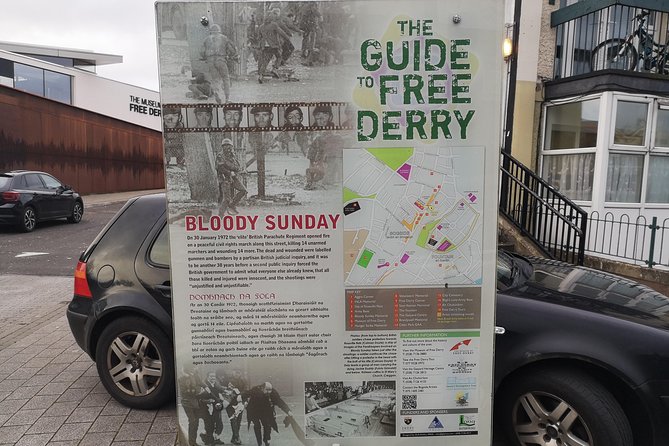
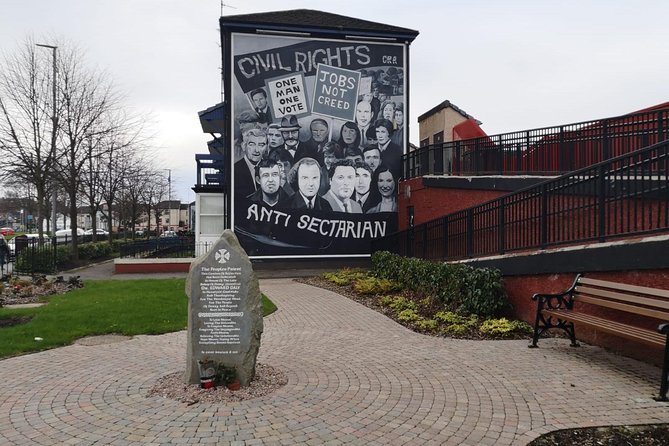
The final listed stop is the republican murals and the Civil Rights Association story, with about 15 minutes devoted to this part of the walk. The murals add a visual record to the guide’s explanation of the area.
Murals can be easy to skim. You see a large image, take a quick picture, and move on. Here, the guide explains the political message and the connection to the civil rights story. That context helps you understand why the walls are treated as public memory, not simply decoration.
This part also broadens the tour beyond the massacre itself. You learn about the civil rights movement that provided the vehicle for protest and about the issues that shaped life in the Bogside. The murals show how the community has used public art to remember struggle, express identity, and keep particular events in view.
The time is short, so do not expect an exhaustive tour of every mural in Derry. The point is to connect a few important images to the larger story. If you want a longer art-focused walk, this experience may not be enough on its own. If you want the murals explained as part of Bloody Sunday and the Troubles, the balance works well.
After this stop, the group returns to the Museum of Free Derry. That finish is convenient and gives you an obvious next step if you want more background.
A small group makes a difference
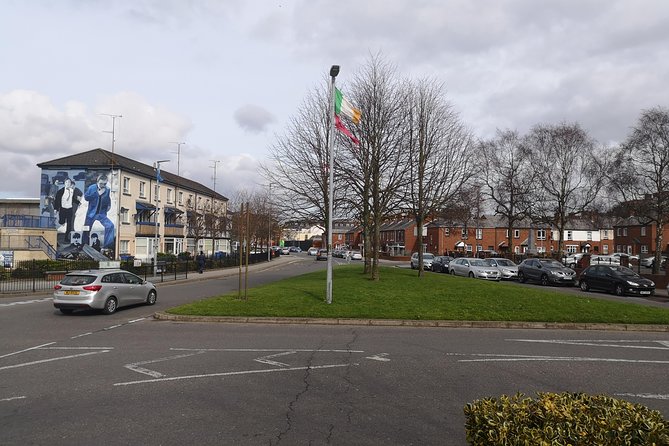
The group size is limited to 12 people. For a 90-minute outdoor tour, that is a useful limit. You are less likely to lose the guide’s voice in a crowd, and questions can be handled without bringing the walk to a halt.
Small groups also suit the subject. The guide may need to explain a personal connection, respond to a thoughtful question, or pause while the group takes in a memorial. A large group can make that feel rushed. With fewer people, the walk has more room for conversation.
The group size does not guarantee a private tour. You may still share the experience with other people, and the pace will suit the group as a whole. Still, a maximum of 12 is a strong feature for anyone who wants more than a short speech at each stop.
You should also expect the exact guide and tone to vary. The names associated with the experience include John McKinney, Noel, Neal, Mickey, and Mr McElhinney. Some bring firsthand memories of the period, while John brings the particular perspective of a victim’s brother and justice campaign member.
What $28.34 gets you
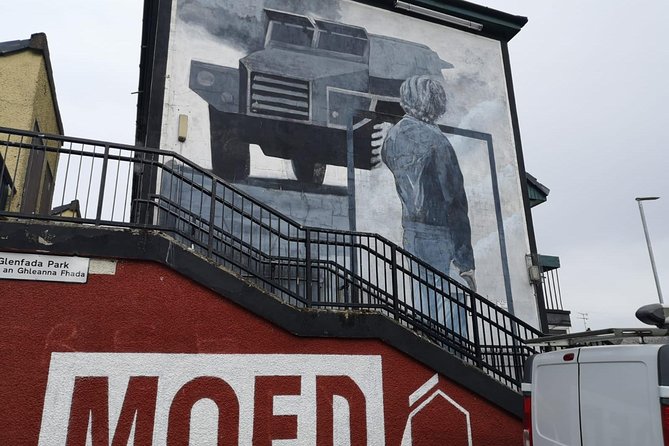
At $28.34 per person, this is not the cheapest way to see public landmarks in Derry. You can walk past Free Derry Corner and the murals without paying an entrance fee. The value comes from the explanation, the local connection, and the way the stops are joined into a single story.
I would consider the price fair if you want a guided introduction to the Bogside. In 90 minutes, you get the main sites, a civil rights background, a personal account, and a clear explanation of the massacre and its aftermath. You also avoid spending your first hour in Derry trying to work out what you are looking at.
The value is especially good for first-time visitors with limited time. You can take one of the available departures, walk the route, and then decide if you want to return to the museum or explore more of the city. The tour itself ends where it begins, so it is easy to fit into a day of sightseeing.
The price may feel less worthwhile if you already know the history in detail or have arranged a longer private history tour. In that case, the personal account may still offer something new, but the compact format could repeat information you already know.
Who should book this walk
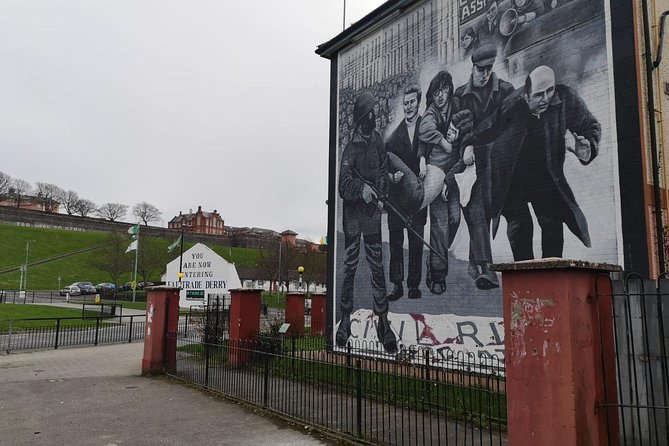
I would choose this tour if you want to understand Derry through the experience of the Bogside community. It suits history lovers, visitors interested in civil rights, and anyone who wants a local account rather than a general city introduction.
It is also a good choice if you are visiting Northern Ireland for the first time and want a clear starting point for the Troubles. The guide explains the background without requiring you to arrive as an expert. You can ask questions as the story develops.
The walk is less suited to anyone seeking a relaxed sightseeing tour with light commentary. Bloody Sunday is a painful subject, and the personal links make the account more affecting. You should be prepared to listen carefully and to give the memorial the respect it deserves.
Weather is another practical concern. The experience requires good weather, and if poor conditions lead to cancellation, you are offered a different date or a full refund. You can also cancel for a full refund up to 24 hours before the start time. Changes or cancellations inside that window are not accepted.
Should you book the Bloody Sunday Story walking tour?
Book it if you want a focused, personal account of Derry’s Bogside, especially if John McKinney is guiding and you value the perspective of someone whose brother was killed on Bloody Sunday. The combination of Free Derry Corner, the memorial, the murals, and the local story gives you a strong introduction in a manageable 90 minutes.
Skip it if you want a cheerful city walk, dislike emotionally serious subjects, or already have a detailed tour centered on the same sites. For most first-time visitors interested in Derry’s recent past, though, the small group, several daily times, and direct connection to the justice campaign make $28.34 a sensible use of your time.
FAQ
How long is the Bloody Sunday Story walking tour?
The tour lasts approximately 1 hour and 30 minutes.
Where does the tour begin?
It begins at the Museum of Free Derry, 55 Glenfada Park, Londonderry, BT48 9DR, UK.
Where does the tour finish?
The activity ends back at the Museum of Free Derry, the same place where it starts.
Which sites are included?
The route includes the historic Bogside, Free Derry Corner, the Bloody Sunday massacre site, the Bloody Sunday Memorial, and republican murals connected with the civil rights story.
Is the tour offered in English?
Yes. The tour is offered in English.
How many people can join the tour?
The maximum group size is 12 people.
Are several tour times available?
Yes. Multiple tour times are offered throughout the day.
Is the tour suitable for most people?
The activity information says most people can participate. Service animals are also allowed, and the meeting point is near public transportation.
What happens if the weather is poor or I need to cancel?
The experience requires good weather. If the operator cancels because of poor weather, you can choose another date or receive a full refund. You can cancel up to 24 hours before the start time for a full refund.
Just added around the UK
- Merchant City Music Walking Tour of Glasgow★ 5.0 · 94 reviews
- Stirling Castle, Loch Lomond Walk & Whisky Distillery Tour from Glasgow★ 5.0 · 79 reviews
- Walking Tour of Glasgow★ 5.0 · 96 reviews
- Gothic Glasgow Walking Tour★ 5.0 · 448 reviews
- Glasgow: Pubs & History Walking Tour with Beer Tasting★ 5.0 · 81 reviews
- Glencoe, Scenic Walk & Highlands Guided Tour starting Glasgow★ 5.0 · 121 reviews
- Gander Walking Tours in Glasgow★ 5.0 · 506 reviews
- Group Walk up Ben Nevis from Fort William★ 5.0 · 108 reviews
Walking Tours, compared.

Magical London: Harry Potter Guided Walking Tour
Read our review →
Reykjavik Food Walk – Local Foodie Adventure in Iceland
Read our review →
History and Hauntings of Salem Guided Walking Tour
Read our review →
New Orleans Premier Ghost, Voodoo and Vampire Walking Tour
Read our review →
Amsterdam Anne Frank: Small-Group Walking Tour & Local Guide
Read our review →

Edinburgh Castle: Guided Walking Tour with Entry Ticket
Read our review →
Anne Frank’s Story – Guided Walking Tour through Amsterdam
Read our review →Browse the lists this tour appears in