
REVIEW · UK
Private Guided Walking Tour in Derry City
Derry’s past is written on its walls, and this private walk takes you straight into that story. You’ll visit Free Derry Corner, the Bloody Sunday Memorial, the Bogside murals, and the old city walls while a local guide explains how centuries of political tension shaped modern Northern Ireland.
I like the private format, which lets you ask direct questions and set the pace. I also like the personal accounts from guides such as Michael and Noel, who grew up in Derry or lived through the Troubles. The main drawback is that the tour presents painful and politically charged subjects from a strong local viewpoint, so you should expect a clear perspective rather than a detached lecture.
Key points to know before booking
- Personal local storytelling: Guides including Michael and Noel connect major events to their own memories and local knowledge.
- Four important areas in under two hours: The route covers the walls, Free Derry Corner, the Bloody Sunday Memorial, and the Bogside murals.
- A private group experience: Only your party takes part, making it easier to ask questions about sensitive subjects.
- A direct look at the Troubles: You’ll hear about civil rights, Bloody Sunday, the IRA, British policy, sectarian division, and the peace process.
- A good introduction to Derry: The walk ends in Rossville Street, in the heart of the Bogside, leaving you well placed to continue exploring.
- Prepare for serious material: The tour deals with killings, prison, inequality, protest, and political violence. It may feel heavy for younger children.
Why this Derry walk matters
Derry is not a city you understand by admiring the buildings alone. The street plan, murals, memorials, and walls all carry political meaning. This tour brings those pieces together in a short route that is easy to fit into a day in town.
The city is also called Londonderry, and even that name points to the divided loyalties at the heart of its story. Your guide explains how the medieval and 17th-century past connects to the modern conflict, rather than treating the Troubles as an isolated episode.
I find that useful because visitors often arrive knowing one or two famous terms, perhaps Bloody Sunday or Free Derry, but not how the events fit together. The walk gives you a working framework. You leave with a clearer sense of why the Bogside mattered, why the walls mattered, and why the peace process became important far beyond Northern Ireland.
The tour is private, so your group can ask for clarification without holding up a large crowd. If you want to understand a difficult subject rather than simply collect photographs, that personal format is worth paying for.
More Private Walking Tours in the UK:
- Edinburgh: Private Walking Tour with a Local
★ 4.4 · 78 reviews - Edinburgh: Private Walking Tour in French with Clémentine
★ 5.0 · 73 reviews - Private Walking Grand Tour of Copenhagen
★ 5.0 · 3,953 reviews
Starting beside the city walls
The tour normally begins near the famous city walls, close to Derry Guildhall. The listed meeting point is Derry Guildhall, Londonderry BT48 7BB, and the walk finishes on Rossville Street in the Bogside.
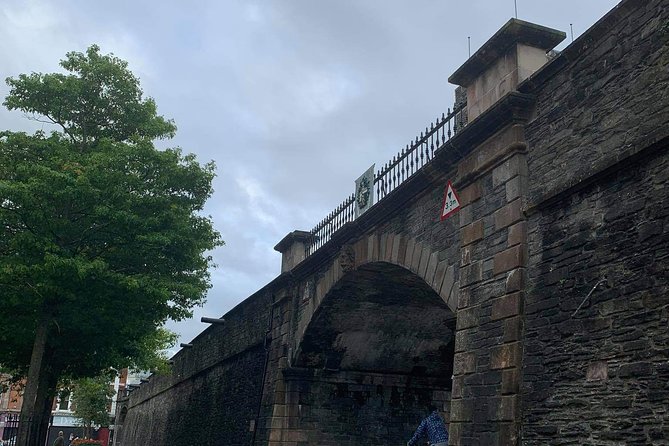
The walls give your guide a useful starting point. Their role in the 17th-century Plantation of Ulster and the Siege of Derry helped shape later political divisions. Those subjects can sound distant in a textbook, but here they are tied to the physical city around you.
You’ll learn why the walls became such a powerful symbol for the Protestant and British tradition, and how the city’s divided identity developed over time. This opening context makes the later murals easier to read. Without it, the paintings can look like colorful political artwork. With it, you can see them as part of an argument about power, memory, and identity.
The walk is about 1 hour 45 minutes. That is long enough for serious explanation but short enough to fit into a day trip. One useful detail is that the route is described as an easy walk, though you should still dress for Northern Ireland’s changeable weather. One person completed the tour alone on a cold day, and another group managed it during snow showers and rain, but poor weather can make any outdoor history tour less comfortable.
Free Derry Corner and the civil rights story
Free Derry Corner is one of the most recognizable sights in the Bogside. The painted gable marks the area as a center of civil rights protest and resistance.
You’ll make a short photo stop here, planned for about 10 minutes. The stop is brief, but the explanation gives the place weight. This is not simply a mural to photograph. It represents a community asserting its identity and protesting unequal treatment.
Your guide sets the scene for the civil rights movement and explains why the Bogside became so central to the conflict. You’ll hear how the struggle was tied to political power and equality, not just to religious differences. That distinction matters. Describing the Troubles as only Catholic versus Protestant misses the deeper issues of voting rights, housing, policing, representation, and control.
The guide’s local perspective is especially useful here. Michael, one of the guides associated with this experience, is described as having lived through the unrest. Noel is also described as having been present during Bloody Sunday. Their personal memories can make the location feel immediate, but they also mean the presentation is shaped by lived experience.
The Bloody Sunday Memorial
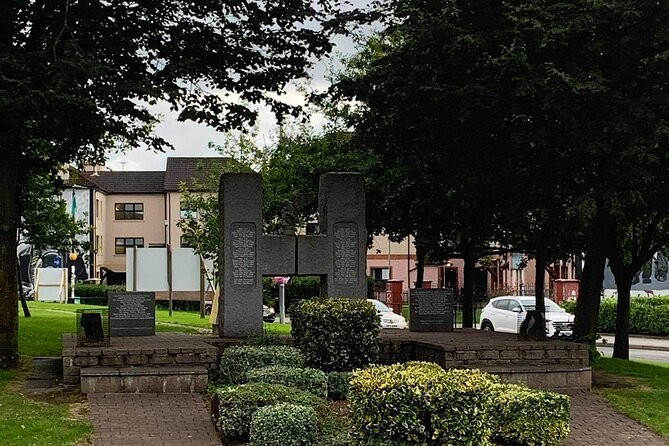
The Bloody Sunday Memorial is the emotional center of the walk. The planned stop lasts about 15 minutes, including an explanation of what happened and why it affected the conflict and later peace process.
This is a place to slow down. Your guide explains the events in the setting where they unfolded, helping you understand the connection between the memorial and the surrounding streets. Some guides bring direct personal memories to this part of the tour, which can make the account especially moving.
You should expect serious material. Bloody Sunday involved the deaths of civil rights marchers, and the event became a lasting source of anger and mistrust. The tour also considers the effect of official accounts and false reporting on public opinion. That point is important because the conflict was fought not only on the streets, but also through competing versions of what had happened.
I would not treat this stop as a quick sightseeing box to tick. Give yourself a little emotional space afterward. The tour continues into the murals, but the memorial may be the point that stays with you longest.
More Guided Tours in the UK:
- Magical London: Harry Potter Guided Walking Tour
★ 4.7 · 22,044 reviews - Edinburgh: Harry Potter Magical Guided Walking Tour
★ 4.8 · 11,944 reviews - Edinburgh Castle: Guided Walking Tour with Entry Ticket
★ 4.7 · 11,699 reviews - Oxford University Walking Tour With University Alumni Guide
★ 5.0 · 6,905 reviews
Reading the Bogside murals
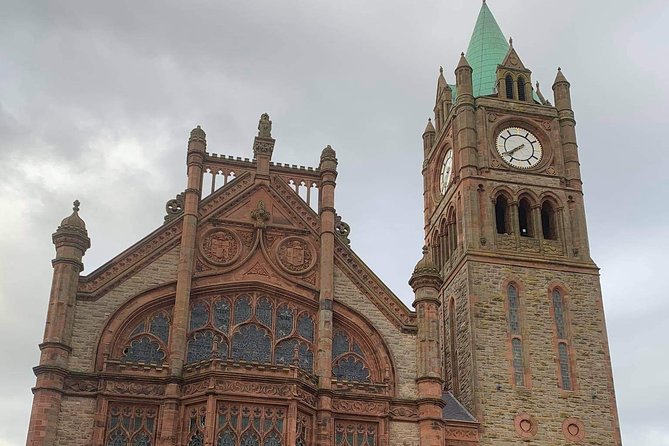
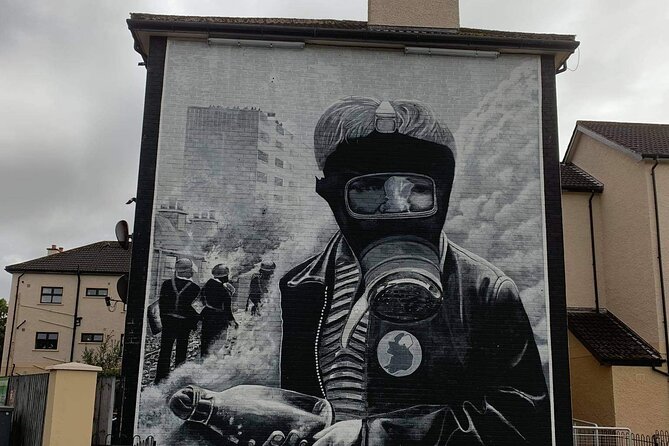
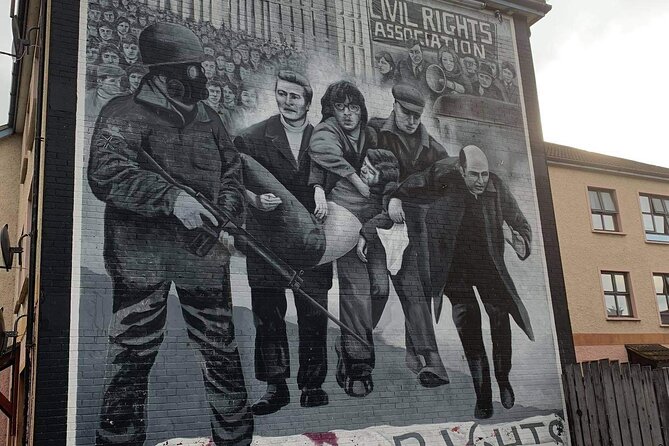
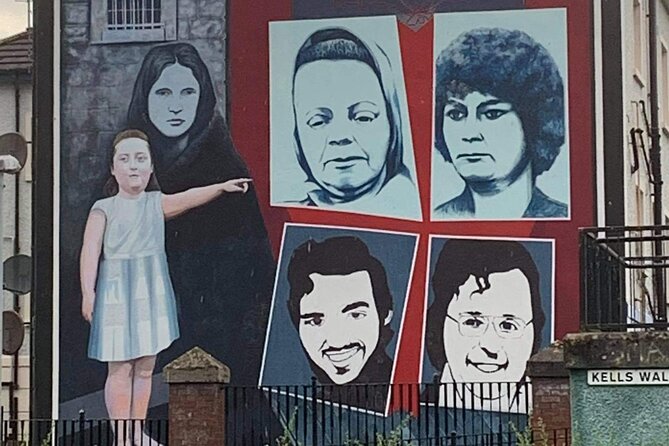
The mural section takes about an hour, making it the longest part of the route. You’ll receive explanations of the main murals in the Bogside, including Republican imagery, and the wider tour also highlights Republican and Loyalist murals around Derry.
This is where the walk earns its price. A mural can be easy to admire without understanding its symbols, names, or political purpose. Your guide explains what the images refer to and how they connect to local events. You get more than a photo stop. You get the story behind the image.
The murals preserve memories of protest, imprisonment, death, resistance, and community identity. Some honor people regarded locally as heroes. Others remember specific events or express a political position. Your guide helps you separate the subjects and dates, which is difficult to do on your own during a short visit.
A local guide can also explain why the murals matter to people who live here now. They are not old decorations detached from daily life. They remain part of how Derry remembers the Troubles and presents its political identity.
The balance here deserves attention. Many people will value the clear local account, especially if they want to understand the Republican community’s experience. One negative account described the guide as too politically one-sided and objected to the treatment of figures such as Bobby Sands and Che Guevara. That criticism points to a real consideration: this is not a neutral university seminar.
If you need every issue presented with equal space and identical sympathy, you may want to add a second tour or museum visit with a different viewpoint. If you want a direct account from the Bogside and are ready to ask respectful questions, the strong perspective can be one of the tour’s most useful features.
How the peace process fits in
The walk does not stop with the years of violence. It also explains the peace process and how the Northern Ireland model has influenced peace efforts elsewhere.
That gives the tour a wider purpose. You are not only learning what went wrong. You are also hearing how people moved from conflict toward political negotiation. The route helps connect the murals and memorials to the difficult work of building peace.
The peace process is not presented as a simple happy ending. The subject includes competing memories, continuing political disagreements, and the question of how communities remember victims and former combatants. Still, ending with peace efforts gives the tour a forward-looking shape.
I especially value this part because it helps you see Derry as more than a place frozen in the Troubles. The city’s painful past remains visible, but the story also includes change, compromise, and the possibility of using political solutions after years of violence.
What the private format adds
At $41.61 per person, the tour is not the cheapest way to walk around Derry, but the comparison should be with a private history lesson, not an ordinary stroll. Your price pays for a local guide, a small personal setting, and nearly two hours of explanation at places that are free to enter.
The value is strongest for couples, families, and small groups who want to ask questions. A family of four can pause over a point that interests them, while a solo visitor can have a more conversational experience. A private booking also avoids being folded into a large crowd.
You should not book this expecting a broad city sightseeing tour. It is tightly focused on political history, civil rights, the Troubles, and peace. The route includes important city landmarks, but the main product is interpretation.
The booking pattern suggests that people often reserve about 29 days ahead. That does not guarantee every date will sell out, but it is a good reason to arrange the tour before your Northern Ireland trip takes shape, especially if Derry is only one stop on a fixed itinerary.
Pickup is offered, and the tour is available in English. Confirmation is sent within 48 hours, subject to availability. Service animals are allowed, and the meeting area is near public transportation.
Who will get the most from this tour
I would choose this walk if you want:
- A focused introduction to Derry’s political history
- Personal stories from a guide with local connections
- A private experience instead of a large group
- Clear explanations of the murals and memorials
- A short activity that fits into a day in Derry
- A better understanding of how the peace process developed
Families should think about the age and temperament of their children. One family found the material heavy for children aged 11 and 14, even though the children still learned from it. The tour deals with real deaths, political violence, imprisonment, and community trauma. That is valuable history, but it is not light entertainment.
The walk also suits solo visitors. One person who came from Belfast by train for a day trip found the private format welcoming, even when taking the tour alone. If you have only a few hours in Derry, this route gives you a strong introduction without taking the entire day.
Practical tips for a better walk
Wear shoes suited to city walking and bring rain protection. The walk is outdoors, and the experience has continued in cold, wet, and snowy conditions.
Arrive ready to listen. The guide may spend more time on one subject if your group has questions, so the exact balance between walls, memorial, and murals can feel conversational rather than rigid.
Treat the personal stories with care. A guide who lived through the Troubles may describe events with conviction. That can make the tour more powerful, but it also means you should listen for the difference between personal memory, political interpretation, and established fact.
If you want a wider picture, use this tour as your foundation and then seek another perspective. The guide can explain the Republican experience in detail, while your own reading or another site can help you compare Unionist, British, and other viewpoints.
Should you book this Derry walking tour?
Book it if Derry’s modern history is a major reason for your visit. The private route is short, focused, and personal, with enough time at the walls, Free Derry Corner, Bloody Sunday Memorial, and Bogside murals to make each place meaningful.
I would be more cautious if you dislike politically direct storytelling or want a strictly neutral presentation. The tour’s strength is its local voice, and that is also its main limitation. At $41.61 per person, it offers good value for a small group that wants context rather than a list of landmarks.
For most adults interested in Northern Ireland’s past, I would make this an early activity in Derry. It gives you the background to see the rest of the city with sharper eyes.
FAQ
How long is the private Derry walking tour?
The tour lasts approximately 1 hour and 45 minutes.
Where does the tour start and finish?
The listed start point is Derry Guildhall in Londonderry. The tour ends on Rossville Street in the heart of the Bogside.
What places are included?
The route includes the city walls, Free Derry Corner, the Bloody Sunday Memorial, and the Republican murals in the Bogside. The experience also highlights Republican and Loyalist murals around Derry.
Is this a private group tour?
Yes. Only your group participates in the activity.
Is the tour offered in English?
Yes, the tour is offered in English.
Can I cancel for a full refund?
Yes. You can cancel at least 24 hours before the local start time for a full refund. Cancellations or changes made less than 24 hours before the start time are not refunded.
Just added around the UK
- Falmouth: Vibrant Historical Walking Tour (award-winning)★ 4.9 · 75 reviews
- The Must-Sees of Edinburgh: Small Group Walking Tour in French★ 4.9 · 88 reviews
- Edinburgh: Old Town History Walking Tour★ 4.9 · 528 reviews
- Edinburgh: Old Town Stories – Guided Walking Tour★ 4.9 · 86 reviews
- Ghosts, Ghouls & Gallows :The Original Bristol Ghost Walk★ 4.6 · 76 reviews
- Edinburgh: Private Walking Tour with a Local★ 4.4 · 78 reviews
- Edinburgh: Private Walking Tour in French with Clémentine★ 5.0 · 73 reviews
- Edinburgh: Multi-Sensory Old Town Historical Walking Tour★ 4.6 · 290 reviews
Private Walking Tours, compared.
Barcelona Helicopter, Sailboat & Old Town Private Walking Tour
Read our review →
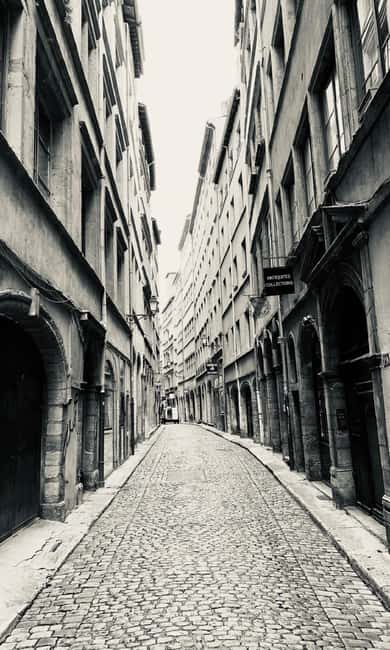
Lyon: Private Walking Tour of “Traboules” in the Old Town
Read our review →
Browse the lists this tour appears in