
REVIEW · AUSTRALIA
Darwin Heritage Walk
Darwin’s past is written into a surprisingly small part of its city centre. On this two-hour heritage walk, you move from old ruins and restored government buildings to modern Parliament House, with the bombing of Darwin and Cyclone Tracy shaping much of the story. Guides such as John, Robin, and Yvonne bring local experience and plenty of time for questions.
I like the small maximum of six people, which makes it easier to hear and ask about details. I also like the thoughtful pace: guides often stop in the shade, allow time for photographs, and point out corners you could easily miss on your own. The main drawback is that the early part can feel slow if you want a brisk sightseeing walk. Much of the experience is listening rather than covering a long distance.
Key points to know before you book
- Pre-Cyclone Tracy Darwin: See Star Village, one of the few original buildings still standing from before the 1974 cyclone.
- Stories behind familiar places: Brown’s Mart Theatre, the Old Town Hall, Parliament House, and Bicentennial Park all gain context beyond their facades.
- Local guides make the difference: John, Robin, Yvonne, and other guides bring personal knowledge, anecdotes, and a willingness to answer questions.
- Easy pace, tropical conditions: The walk includes regular standing and outdoor time, so wear enclosed non-slip shoes and bring water, sunscreen, and a hat.
- Small-group setting: The tour accepts no more than six people, but at least two people are needed for it to run.
- Useful first morning in Darwin: The 8:30 am start gives you a clear introduction before you explore more of the city alone.
Why Darwin’s centre works so well on foot
Darwin can look young at first glance. Much of the city was damaged by bombing during the Second World War and then badly hit by Cyclone Tracy in 1974. Modern buildings now fill the central business district, but older fragments remain in plain sight.
That mix is the point of this walk. You are not simply taken from one grand building to another. You are shown how Darwin has changed, what survived, and why certain sites still matter. A plain street corner may connect to early civic life, wartime Darwin, or the determined rebuilding that followed the cyclone.
I would book this near the start of your stay. The route gives you a working map of central Darwin, and the guide can suggest places to revisit or local things to do afterward. Several tours also included current civic or political context, so this is not only a look backward.
The walk starts at 8:30 am near John McDouall Stuart in central Darwin, at the corner of The Mall and Knuckey Street. It finishes around the intersection of The Esplanade and Knuckey Street, opposite Lyons Cottage. No hotel pickup is included, so you need to make your own way to the starting point.
A few more walking tours around Australia worth a look
- Sydney Opera House Official Guided Walking Tour
★ 4.5 · 3,770 reviews - From Sydney: Blue Mountains Tour with Waterfall Walk & Lunch
★ 4.8 · 2,400 reviews - Sydney The Rocks Guided Walking Tour
★ 5.0 · 1,546 reviews
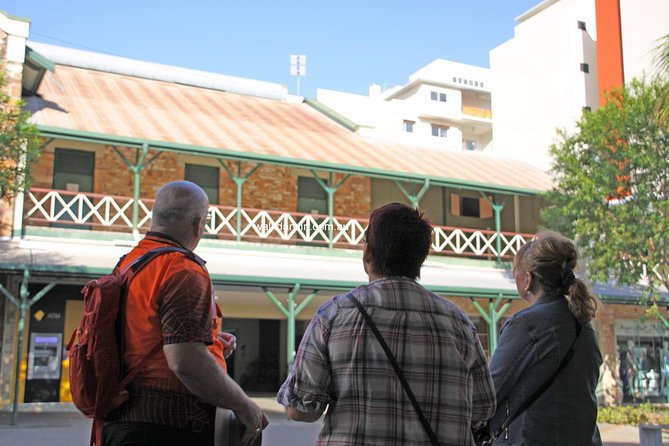
Star Village and Darwin before Cyclone Tracy
Star Village is one of the most distinctive early stops. It began as an open-air cinema and is one of the few original pre-Cyclone Tracy buildings still in use. Today it has been converted into a stylish retail centre, but the guide points out the older features and explains how the place once functioned.
This is a good example of the walk’s method. You see a working part of modern Darwin, then learn to look past its current shops and notice the structure’s earlier life. It is also a useful reminder that heritage in Darwin does not always appear as a preserved museum building. Sometimes it is an older shell adapted for a new purpose.
You spend about 10 minutes here, with no admission charge. Bring your camera, but listen closely too. The value is in the story attached to the building, not in a long interior visit.
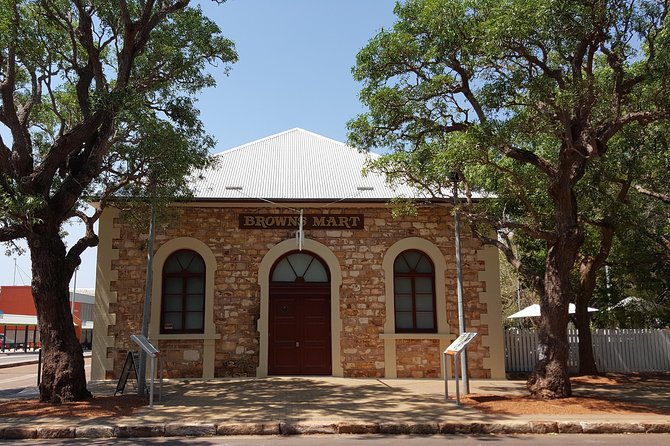
Brown’s Mart Theatre and the city’s social life
Brown’s Mart Theatre has been part of Darwin’s social culture for more than a century. The stop focuses on the exterior, with the guide explaining its role and sharing some of its past.
This is a short stop, but it helps widen the tour beyond disasters and government. Darwin’s story includes theatres, gathering places, and the ordinary social life that helped the city hold together. You also begin to see how a building can remain useful while carrying several generations of local memory.
The drawback is simple: if you expect to enter every building, this walk may disappoint you. The route is an outdoor history lesson, and much of the detail comes through spoken commentary rather than interiors or exhibits.
The Old Town Hall and visible ruins

The Old Palmerston Town Hall is now in ruins. It offers a direct, physical reminder of Darwin’s early civic life and of the people who passed through the city’s first public institutions.
This stop gives the walk some visual weight. At Star Village and Brown’s Mart, the past survives through buildings still in use. Here, the remains themselves tell the story. The contrast helps you understand that Darwin’s old city was not simply preserved intact. It endured damage, rebuilding, neglect, and change.
Allow around 10 minutes. The guide’s explanation matters more than the amount of ground covered, so stay close enough to hear. If you like architecture, local government, or signs of a city’s earlier scale, this is one of the more rewarding stops.
Same streets, a different route:
- Ultimate Melbourne Walking Tour: History, Laneways & Culture
★ 5.0 · 1,451 reviews - Sydney: The Rocks 90-Minute History Walking Tour
★ 4.7 · 1,092 reviews - Great Ocean Road Tour Plus Koalas, Forest Walk and Morning Tea
★ 4.5 · 1,068 reviews - Blue Mountains Small Group Tour with Waterfall Walk & Fresh Lunch
★ 5.0 · 628 reviews
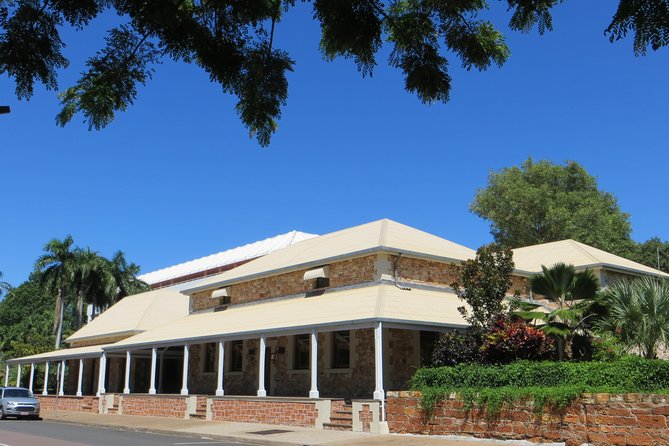
The Administrator’s buildings and tropical gardens
The buildings used by the Administrator of the Northern Territory have been restored, and their surrounding gardens offer a calmer part of the route. Together, they show what life and government looked like in Darwin’s early years.
The setting also changes the feel of the walk. After several urban stops, the gardens provide space and shade. Guides have made a point of pausing in comfortable areas, which matters in Darwin’s heat and humidity. You are still standing outdoors, but the stop feels less hurried.
You cannot treat this as a full garden tour or government-building visit. The focus remains on the exterior and the stories linked to the site. Still, it is a useful stop for understanding how Darwin’s administration developed and how older structures can continue in official use.
Parliament House and modern self-government
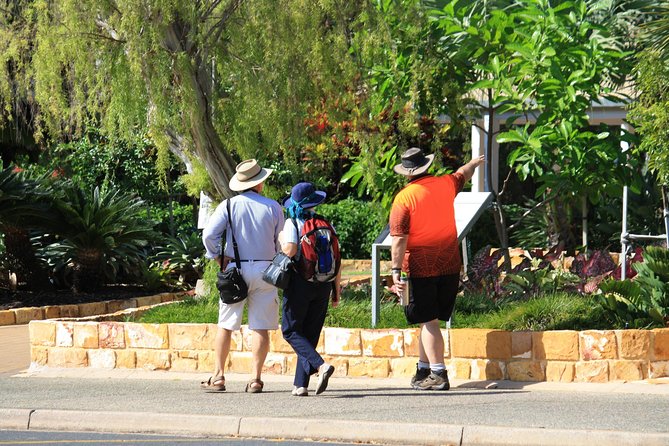
Parliament House gives the route a clear link to present-day Darwin. The large building overlooks Darwin Harbour, and the guide explains more about the self-governing Northern Territory and the modern city.
This is where the tour moves from early settlement and civic beginnings into contemporary public life. Guides may also discuss current affairs and local politics, depending on the questions from the group. That flexibility is valuable because you can ask about subjects that interest you instead of receiving a fixed speech from start to finish.
The building itself is grander and more modern than several earlier stops. Some people may prefer the smaller historic sites, but Parliament House helps complete the story. Darwin is not only a city recovering from past disasters. It is also the political centre of the Northern Territory.
Bicentennial Park and the harbour edge
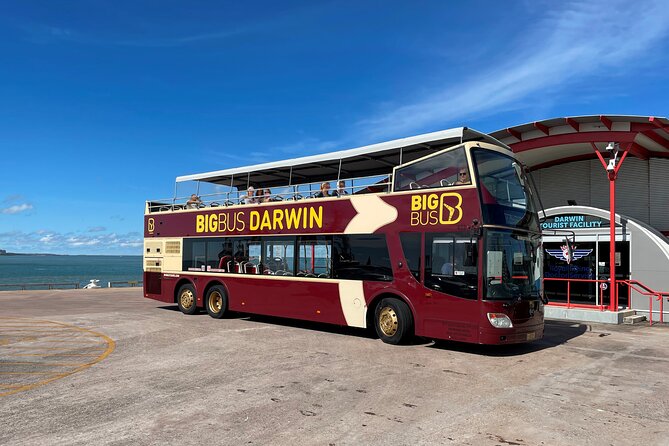
Bicentennial Park is the longest listed stop, at about 15 minutes. Set above Darwin Harbour, it gives you open space, views, and a chance to notice smaller reminders of the city’s early years.
This is a good place for photographs, though the tropical sun can be strong. The guide may point out less obvious details in the park and explain how the area connects to Darwin’s development. The setting gives you a break from building fronts and makes the final part of the route feel more spacious.
The finish near Lyons Cottage keeps you close to the harbour and the centre. You can continue exploring on foot afterward, but the tour itself does not include food, drinks, or transport back to your accommodation.
The guide shapes the entire experience
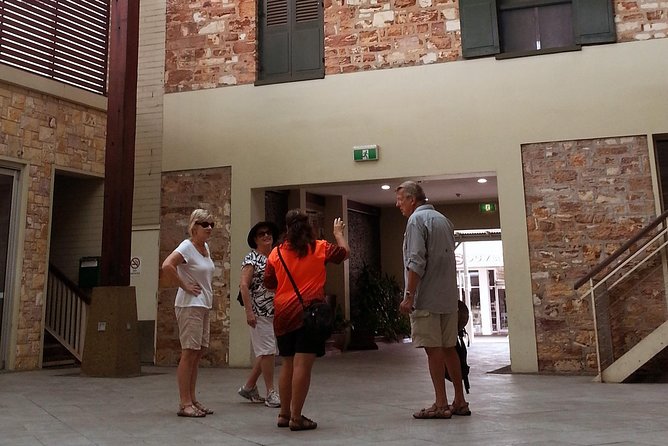
The strongest part of this walk is the person leading it. John is repeatedly praised for his clear explanations, local experience, patience with questions, and obvious affection for Darwin. Robin has also led tours with personal stories and a broad grasp of local life. Yvonne has been described as an engaging source of Darwin information.
That does not mean every tour will feel identical. A guide who has lived in Darwin for decades can add anecdotes and personal memories, while another may focus more closely on buildings, politics, or major events. The tour works best when you take part. Ask about the bombing, Cyclone Tracy, early contact, local politics, or places to visit later.
One important point deserves attention. The listed material gives little detail about the Larrakia people and the effects of colonisation. If Indigenous history and first contact are important to you, ask the guide directly about those subjects. The guide may be able to adapt the commentary, but you should not assume they will receive equal time without a question.
The most frequently praised qualities are clear local storytelling, a friendly manner, and a willingness to stop for photos. The best guides turn a short walk into a conversation about people, not just dates and buildings.
What the pace and physical effort are really like
The tour is described as suitable for people with a moderate level of fitness. You will walk between central sites and spend time standing while the guide speaks. It is not presented as a demanding hike, and several tours have been described as easy paced or slow paced.
That slower rhythm has two sides. It lets you hear the stories, ask questions, and take photographs without being rushed. It also means the experience may feel drawn out if you want constant movement or a long list of attractions. One section around The Mall and Smith Street has been singled out as too lengthy by at least one person, while the later stops were considered more interesting.
Darwin’s weather is a practical concern. The walk operates in all weather conditions, except when poor conditions cause cancellation, so wear light, suitable clothing and bring sunscreen, a hat, and drinking water. Enclosed non-slip walking shoes are recommended. Guides have often chosen shaded stopping points, but you should still prepare for heat.
Price, group size, and overall value
At $42.32 per person, the walk is not the cheapest way to spend two hours in Darwin, but the value depends on how much context you want. The buildings and parks are free to see alone. You are paying for the local commentary, the route planning, the stories behind the sites, and the chance to ask questions in a group capped at six people.
That small size is a real advantage. You are less likely to lose the guide’s voice, and it is easier to ask about something you have just noticed. It also gives the experience a more personal feel than a large city walk.
The tour requires at least two people to operate. It is commonly booked about 45 days ahead, so reserve early if your Darwin dates are fixed. Confirmation is provided when you book, and free cancellation is available up to 24 hours before the start time. If poor weather or an insufficient number of bookings cancels the tour, you are offered another date or a full refund.
Who should book the Darwin Heritage Walk
I would choose this for a first visit, especially if you want to understand why Darwin looks the way it does. It suits you if you enjoy buildings, local stories, wartime history, Cyclone Tracy, public life, and small details that are easy to miss from a map.
It also works well for anyone who prefers a gentle morning activity. You do not need to cover a huge distance to learn a lot, and the guides make time for photographs and questions. Families can join, but children must be accompanied by an adult, and younger children who need constant action may find the listening portions long.
I would think twice if you want a fast-paced sightseeing circuit or a tour focused mainly on Indigenous history. The walk gives only limited stated attention to Larrakia history, so ask about that before booking or raise it during the tour.
Should you book it?
Book the Darwin Heritage Walk if you want local explanation rather than a checklist of sights. Its best moments come when a guide such as John or Robin connects an ordinary facade, ruined wall, or harbour-side park with the people and events that shaped Darwin.
Skip it if you dislike standing outdoors, prefer to explore without commentary, or want extensive interior access. For most first-time visitors who can handle a couple of hours on foot in tropical conditions, the small group, careful pace, and strong guide-led storytelling make the $42.32 worthwhile.
FAQ
How long does the Darwin Heritage Walk last?
The walk lasts approximately two hours to two hours and 30 minutes.
What time does the tour start?
The tour starts at 8:30 am.
Where does the walk begin?
It begins at John McDouall Stuart, at the corner of The Mall and Knuckey Street in Darwin City.
Where does the tour finish?
It ends at the intersection of The Esplanade and Knuckey Street, opposite Lyons Cottage.
What does the price include?
The price includes a local guide and spoken commentary. Hotel pickup, drop-off, food, and drinks are not included.
How many people can join the tour?
The tour has a maximum of six people. At least two people are required for it to operate.
What should I bring?
Bring a camera, sunscreen, a hat, and drinking water. Enclosed non-slip walking shoes are recommended.
Can I cancel for a refund?
You can cancel at least 24 hours before the start time for a full refund. Cancellations or changes made less than 24 hours before the start are not refunded or accepted.
Just added around Australia
- Old Hobart Pub Walking Tour★ 4.5 · 91 reviews
- Southwest Tasmania Wilderness Experience: Fly Cruise and Walk Including Lunch★ 5.0 · 233 reviews
- Hobart History, People & Places – 2 hour city walk★ 5.0 · 224 reviews
- Walk with Wildlife: Guided Tour in Great Ocean Road★ 5.0 · 148 reviews
- Freycinet Walking Tour★ 5.0 · 100 reviews
- Daintree Rainforest Night Walk in Cape Tribulation★ 4.5 · 141 reviews
- Night Walk in Cairns Botanic Gardens – Let’s Go Buggin★ 5.0 · 153 reviews
- Brisbane City Essentials Walking Tour★ 5.0 · 118 reviews
Walking Tours, compared.

Magical London: Harry Potter Guided Walking Tour
Read our review →
Reykjavik Food Walk – Local Foodie Adventure in Iceland
Read our review →
History and Hauntings of Salem Guided Walking Tour
Read our review →
New Orleans Premier Ghost, Voodoo and Vampire Walking Tour
Read our review →
Amsterdam Anne Frank: Small-Group Walking Tour & Local Guide
Read our review →

Edinburgh Castle: Guided Walking Tour with Entry Ticket
Read our review →
Anne Frank’s Story – Guided Walking Tour through Amsterdam
Read our review →Browse the lists this tour appears in