
REVIEW · UK
Guided Walking Tour of Bristol Old City and Harbour
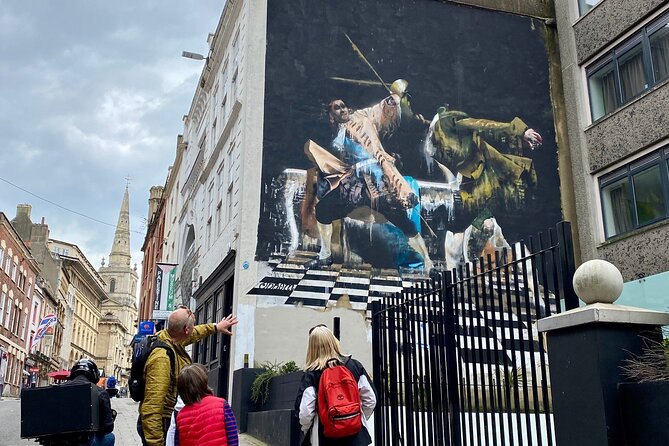
Bristol’s story is written across its streets, docks, churches, bridges, and old trading buildings. This walking tour links those pieces in one useful route, from Bristol Cathedral and Park Street to the harbour, Queen Square, King Street, and the medieval Old City. Guide Mike adds local stories, visual material, and pointers to Banksy’s work.
I like the small group of no more than eight and the supplied audio receiver, which helps you hear without crowding around the guide. I also like the range: you get Bristol’s maritime past, its churches and civic buildings, its slave-trading legacy, and its modern street art in one outing. The main consideration is pace. You cover a lot of ground in about two and a quarter hours, so comfortable shoes matter.
At a glance
- Ten stops in one compact route: The walk covers Bristol Cathedral, the harbour, Queen Square, Bristol Old Vic, Castle Park, the Old City, and more.
- Mike leads the walk: He brings local knowledge, visual aids, humour, and practical suggestions for the rest of your stay.
- Audio receivers are provided: You can hear the commentary in busy parts of central Bristol.
- The tour mixes old and new Bristol: Expect medieval gates, shipping docks, Georgian buildings, Banksy references, and modern social history.
- Groups are capped at eight: This gives you a better chance to ask questions and keep in touch with the guide.
- Plan for a proper walk: The route is described as a steady pace, but some people find it brisk and estimate close to 12,000 steps.
Why this is a useful first look at Bristol
The best feature here is the route itself. Bristol can feel scattered when you first arrive. The harbour, cathedral quarter, Old City, shopping streets, and theatre district each have their own character, and a map does not always explain how they connect. This walk gives you that layout early in your stay.
You begin at the Bristol Marriott Royal Hotel on College Green at 2 p.m. From there, the route moves through central Bristol and returns to the same meeting point. That makes it easy to fit around a hotel stay, an afternoon arrival, or a later meal.
Mike is the named guide, and his approach is more personal than a simple list of dates. He uses photographs and drawings to show how parts of Bristol changed, and he invites questions along the way. That is useful in a city where a modern street can hide a medieval boundary or a former trading site.
The audio receiver is more than a small extra. Central Bristol can be noisy, especially near roads, the harbour, and busy pedestrian areas. You do not need to stand shoulder to shoulder with the guide to catch the explanation. Several tour accounts specifically valued the earpieces, and they should help if your hearing is not perfect.
More Old Town Walking Tours in the UK
- Underground Vaults Walking Tour in Edinburgh Old Town
★ 4.5 · 8,506 reviews - Edinburgh: Old Town History and Tales Walking Tour
★ 4.8 · 2,361 reviews - Old Town Walking Tour History and Tales in Edinburgh
★ 5.0 · 2,168 reviews
Bristol Cathedral and the first city views
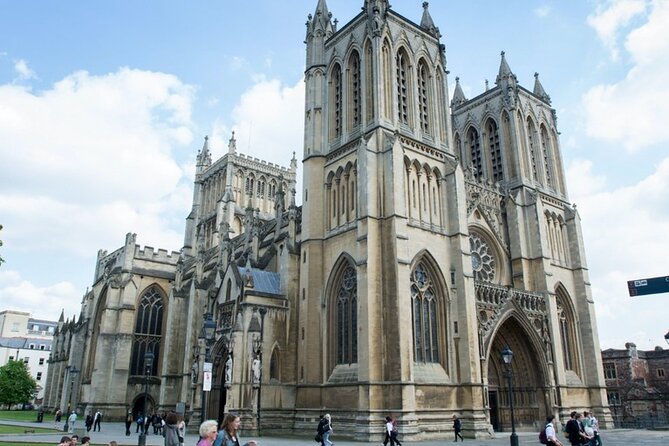
The opening stop is Bristol Cathedral, with time to admire the building and the surrounding area. The route also takes in Well Hung Lover, St Mark’s, the Council House, Park Street, and other nearby buildings.
This is a strong start because it places several sides of Bristol next to each other. You see religious architecture, civic buildings, a major city street, and street art within a short walk. The reference to Well Hung Lover introduces Banksy and Bristol’s modern art scene early, rather than treating the city as only an old port.
The cathedral stop lasts about 10 minutes and does not include an admission charge. You should not expect a long interior visit or a quiet period for detailed architecture study. The point is to understand the area and hear how its buildings fit into Bristol’s story.
Canon’s Marsh and the working harbour
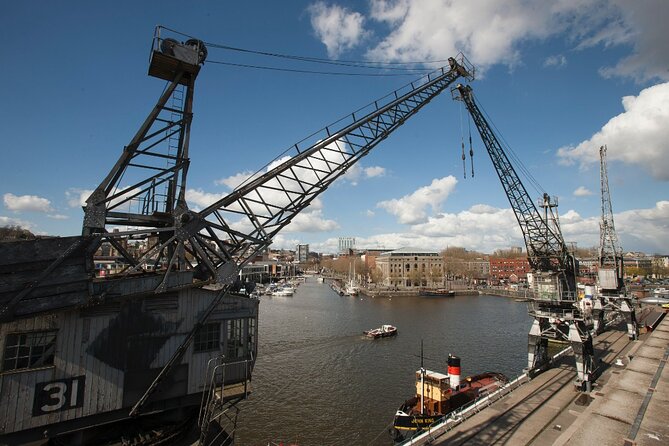
At Canon’s Marsh, you look toward Oporto Quay, Limekiln Dock, cranes, and shipping. This is where Bristol’s waterfront becomes easier to read. Instead of seeing the harbour as a pleasant place for a stroll, you get a sense of its working purpose and the movement of goods.
The short stop is mainly about views and explanation. You will not be spending a long time inside a museum or boarding a vessel here. That is worth knowing if you want extended time at the M Shed or a close look at every dockside attraction.
Still, the harbour section gives the tour a practical strength. Bristol’s trade shaped its wealth, buildings, and links with the wider world. The walk makes that connection visible before you move toward the Old City and its merchants’ streets.
Pero’s Bridge and Bristol City Docks
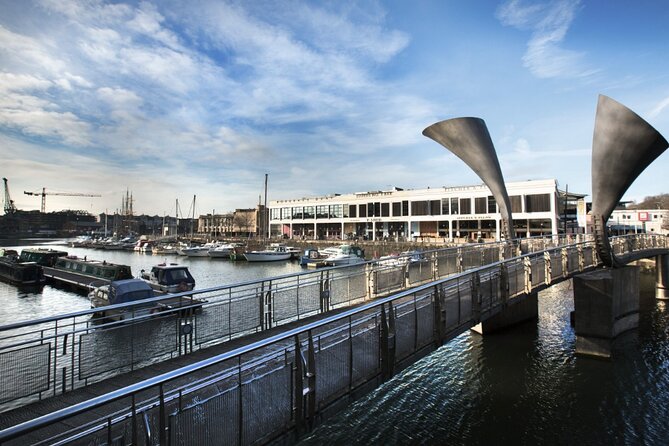
The route continues through Bristol City Docks, including a medieval trench and Pero’s Bridge, then on toward Arnolfini. This part blends old defensive traces with the more modern cultural life of the waterfront.
Pero’s Bridge is also a useful point for understanding Bristol’s difficult past. The route later includes slave captains’ houses, so the subject is not treated as a footnote. You get several reminders that the city’s prosperity had a human cost, alongside stories of its buildings and trade.
The 10-minute timing means the guide must keep the commentary focused. If you like stopping for photographs, you may need to take them while the group moves or during a brief pause. The small group helps here, since it is easier to stay close and ask a quick question than on a large coach tour.
Same streets, a different route:
- Magical London: Harry Potter Guided Walking Tour
★ 4.7 · 22,044 reviews - Edinburgh: Harry Potter Magical Guided Walking Tour
★ 4.8 · 11,944 reviews - Edinburgh Castle: Guided Walking Tour with Entry Ticket
★ 4.7 · 11,699 reviews - London: The Original Jack the Ripper Walking Tour
★ 4.7 · 7,833 reviews
Prince Street Bridge, M Shed, and the old prison ruins
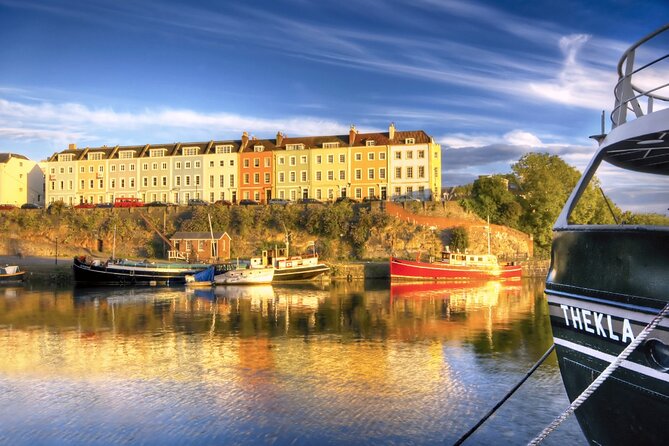
Crossing Prince Street Bridge brings views of M Shed, the historic ship Matthew, Container Village, and old prison ruins. This is one of the more varied parts of the walk. You see museums, a ship, reused waterfront space, and remains connected with an earlier period of punishment and confinement.
The view from the bridge helps you understand the scale of the docks. It also gives you a good sense of how Bristol has reused its waterfront. The route does not include entry to M Shed or Matthew, so you will need to return independently if you want a longer visit.
That can be a plus. A walking tour should help you decide where to spend your own time later, rather than use the whole afternoon inside one attraction. Several people used the tour as a first orientation and returned to areas that caught their interest.
Bathurst Basin and Redcliffe’s difficult stories
Bathurst Basin brings the route to the Old Mill Pond, Guinea Street, Redcliffe Church, and houses linked with slave captains. The stop also refers to A House Through Time, a television series that followed the lives of people who lived in one Bristol house.
This is an important section because it connects grand homes with the people and systems behind them. Bristol’s past includes maritime trade, money, faith, industry, and exploitation. A good city walk should let you hold those facts together rather than offer only attractive façades.
Again, expect an outdoor explanation, not a full house or church tour. The stop lasts around 10 minutes, so you receive a clear introduction and can make a note of places to revisit. Redcliffe Church and the surrounding streets reward a slower look if you have another day in Bristol.
Queen Square and Bristol’s changing waterfront
The walk works around the docks to Queen Square, the King William statue, the American Consulate, and the Spy Glass Inn, associated with Treasure Island. This section shifts from dockside history to a formal urban square and literary connections.
Queen Square gives you a different view of Bristol’s planning and civic life. The route also shows how stories connected with the city can travel through books, buildings, and public memory. You are not simply following a line between attractions. You are seeing how Bristol’s identity has been built from trade, politics, literature, and local characters.
This stop lasts about 15 minutes, the longest pause on the route. It is a useful place to listen, ask questions, and catch your breath before the Old City section.
Bristol Old Vic, King Street, and Welsh Back
The Bristol Old Vic, King Street, and Welsh Back follow. The Old Vic gives the walk a theatrical strand, while King Street and Welsh Back continue the connection with Bristol’s waterfront and historic commercial centre.
King Street is one of the areas where details can be easy to miss if you explore alone. A guide can point out what to look for and explain why a building or street matters. The tour does not promise an interior theatre visit, so plan to return separately if a performance or building tour interests you.
The pace here is steady, not designed for long pauses at every doorway. I would keep your camera ready, but listen first. The value is in the links Mike makes between places rather than in collecting a photograph at each stop.
Baldwin Street and the medieval Old City
At Baldwin Street, the route turns toward the beginnings of Bristol as a Saxon settlement, then passes Castle Park and enters the Old City. This is the densest historical section of the walk.
You see churches, law courts, merchants’ trading areas, the Corn Exchange, and the Nails and guild meeting places. These details show how business and local government once worked in the city. The Old City is not just a pretty quarter. It was a place of rules, markets, negotiations, worship, and public life.
This is also where the tour can feel fullest. Mike has a lot to cover, and his memory for names, dates, and places is one reason this section works well for people who want context. If you prefer a slow architectural walk with long pauses, you may find the schedule a little tight.
The route’s broad time span is one of its strongest points. You move from Saxon origins to medieval commerce, then toward modern street art and social change. That makes the city easier to understand than a tour focused on one century.
St John on the Wall and Bristol’s surviving gate
St John on the Wall brings you to one of the remaining old city gates. You also see the conduit and more street art. This is a small-scale stop, but it gives you a direct look at how Bristol’s medieval boundary once worked.
The contrast between the old gate and newer artwork neatly sums up the tour’s approach. Bristol is not presented as a preserved museum city. It is a living place where old structures share space with modern art, traffic, businesses, and daily life.
The short stop is best for orientation and explanation. You may want to return later if you are interested in photographing the gate or nearby art without having to keep pace with the group.
Edward Colston and the walk back to College Green
The final stop covers the statue of Edward Colston, the cenotaph, and the return to the Marriott. Colston remains a major part of Bristol’s public debate because of his connection with the slave trade and the removal of his statue. Including this location gives the tour a direct way to address how the city remembers, questions, and revises its past.
That ending is fitting. The walk does not stop with a simple celebration of famous buildings. It brings you back to questions about wealth, memory, public figures, and who gets represented in a city’s streets.
You finish where you began, which is handy for collecting a forgotten jacket, finding public transport, or heading to dinner. Mike has also offered pub and restaurant suggestions to people at the end of the walk, so you can ask for ideas if you are new to Bristol.
Price, group size, and walking effort
At about $29.86 per person, this is a fair price for a 2-hour-15-minute guided walk, especially with a maximum of eight people and an audio receiver included. You are paying for a broad route and local interpretation, not admission to attractions, refreshments, or transport.
The small group improves the value. You can hear the guide, ask questions, and keep the experience flexible. The tradeoff is that the route covers a lot. Some people describe it as leisurely, while others call it fast paced. Both can be true: the walking itself is manageable, but the number of sights means you should stay attentive.
Wear comfortable shoes and carry water. Tea and coffee are not included. The tour runs in English and is near public transport. Service animals are allowed, and most people can take part, but anyone with limited walking ability should consider the route length and steady movement between stops.
Free cancellation is available up to 24 hours before the 2 p.m. start. Weather and minimum-group requirements can affect operation, with another date or a full refund offered if the experience is cancelled for those reasons.
Who should book this Bristol walk
I would choose this tour if you are visiting Bristol for the first time and want the city’s main areas connected in one afternoon. It also suits repeat visitors who want more background on streets they already know, especially if you enjoy local stories, architecture, and street art.
It is a good match for you if:
- You want both the harbour and Old City in one walk.
- You like history explained through buildings and people.
- You want to ask questions in a small group.
- You appreciate Banksy references and modern Bristol alongside older sites.
- You plan to use the tour to choose where to explore on your own later.
I would think twice if you want long interior visits, frequent café breaks, or a very slow photography walk. The tour is broad by design, and the reward is the overall picture of Bristol rather than exhaustive time at any single stop.
Should you book it?
Yes, if you want a friendly orientation with real local detail. Mike’s style combines dates and names with visual aids, humour, street art, difficult history, and practical advice. The audio receiver and eight-person limit solve two common problems on city walks: poor sound and a group that is too large to feel personal.
Book it near the start of your stay if possible. You will finish with a better sense of Bristol’s layout and a list of places worth revisiting, from the harbour and M Shed to Redcliffe, King Street, and the Old City. Just wear good shoes, allow for a brisk stretch, and do not expect the tour to replace a full visit inside the cathedral, museums, or ship.
FAQ
Where does the tour start?
It starts at the Bristol Marriott Royal Hotel on College Green, Bristol BS1 5TA, UK.
What time does the walking tour begin?
The stated start time is 2 p.m.
Where does the tour finish?
The walk ends back at the Bristol Marriott Royal Hotel, the starting point.
How long does the experience last?
It lasts approximately 2 hours and 15 minutes. Some tours may run slightly longer while the guide answers questions and covers the route.
How many people can join?
The group has a maximum of eight travelers.
Is an audio guide or receiver provided?
An audio receiver is included so you can hear the guide clearly, including in busier parts of central Bristol.
What happens if I need to cancel?
You can cancel for a full refund up to 24 hours before the local start time. Cancellations or changes made less than 24 hours before the start are not accepted for a refund.
Just added around the UK
- Merchant City Music Walking Tour of Glasgow★ 5.0 · 94 reviews
- Stirling Castle, Loch Lomond Walk & Whisky Distillery Tour from Glasgow★ 5.0 · 79 reviews
- Walking Tour of Glasgow★ 5.0 · 96 reviews
- Gothic Glasgow Walking Tour★ 5.0 · 448 reviews
- Glasgow: Pubs & History Walking Tour with Beer Tasting★ 5.0 · 81 reviews
- Glencoe, Scenic Walk & Highlands Guided Tour starting Glasgow★ 5.0 · 121 reviews
- Gander Walking Tours in Glasgow★ 5.0 · 506 reviews
- Group Walk up Ben Nevis from Fort William★ 5.0 · 108 reviews
Old Town Walking Tours, compared.
Underground Vaults Walking Tour in Edinburgh Old Town
Read our review →
3-Hour Walking Tour of Old Town & Prague Castle
Read our review →


Old Town and Jewish Quarter Guided Walking Tour
Read our review →
Marrakech: Ben Youssef, Secret Garden, & Souks Walking Tour
Read our review →Browse the lists this tour appears in