
REVIEW · BORDEAUX
Bordeaux Walking Tour with a Local Private Guide
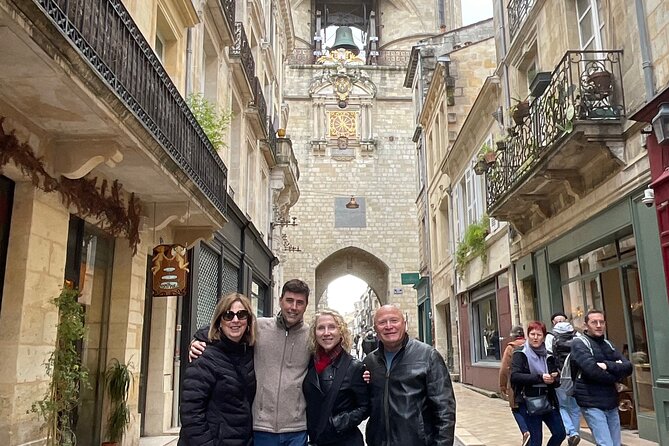
Bordeaux reveals itself best on foot, where a medieval gate, a grand square, and a wine-trade story can appear within a few minutes of one another. This private walk links the city’s major sights from Place Pey Berland to Place des Quinconces, giving you a useful first look rather than a quick pass from a bus window.
I like the private format, which lets you ask about your own interests and adjust the pace. I also like the local advice built into the tour: guides such as Lila, Rafael, Pascale, Guadalupe, and Marina have helped visitors choose restaurants, plan the rest of their stay, and understand Bordeaux beyond its postcard views.
The main consideration is that the tour is primarily an exterior sightseeing walk. Monument entry is not included, and communication around meeting times has not always been perfect, so confirm the start details and arrive promptly.
Key points at a glance
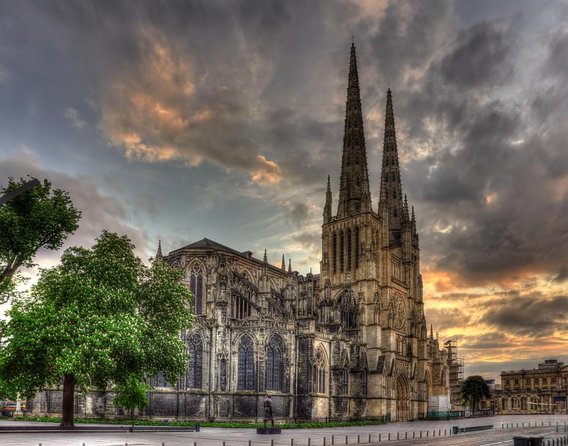
- A city walk with a strong visual payoff: Begin at Bordeaux Cathedral and finish near the Girondins monument, passing medieval streets, riverfront squares, and the famous Water Mirror.
- Private attention throughout: Only your group participates, so you can ask questions, request a café stop, or focus more on architecture, local life, or history.
- Two timing options: Pick roughly two hours for a brisk introduction or three hours for more explanation and questions.
- Mostly exterior sightseeing: You see the listed landmarks from outside unless you arrange monument entry separately.
- Useful first-day orientation: Guides can suggest restaurants, food options, and ways to spend the rest of your time in Bordeaux.
- A few practical cautions: The walk needs good weather, and the route ends at Place des Quinconces unless you arrange something different.
Why this walk works well as your Bordeaux introduction
Bordeaux can seem easy to understand at first. The central area is compact, the streets are pleasant, and the main squares are close together. Yet the city’s story is layered: medieval pilgrimage routes, English rule, port commerce, the French Revolution, and 18th-century rebuilding all appear along this route.
That is where a private guide earns the fee. You are not simply collecting photographs of famous façades. You can ask why the cathedral has a separate bell tower, how the old port shaped the city, or what the Water Mirror means beyond being a popular picture stop.
The experience costs $114.89 per person. That is not the cheapest way to see Bordeaux, especially if you are alone, but the price makes more sense for a small private group that wants a personal introduction. You are paying for the guide’s time, not for a large group moving from one fixed point to another.
The 4.8 out of 5 rating from 97 reviews, with 95 percent recommending the experience, fits its strongest qualities: clear explanations, friendly guides, flexibility, and a good overview in a short time. The individual guide matters, though, and the experience can feel different depending on who leads your walk.
More Guided Tours in Bordeaux:
- Bordeaux: Guided Walking Tour
★ 4.4 · 1,038 reviews - Bordeaux: City Highlights Guided Walking Tour
★ 4.7 · 316 reviews - Bordeaux City – Private Guided Walking Tour with Local Sophia
★ 5.0 · 164 reviews
Starting at Saint-André Cathedral and Tour Pey-Berland
Meet at the Statue of Jacques Chaban Delmas in Place Pey Berland. From there, you begin with Bordeaux Cathedral, officially the Cathédrale Saint-André, a useful place to set the city’s religious and political story in motion.
The cathedral dates to 1096, and the guide discusses its architecture and long history while you view it from outside. Fifteen minutes is enough for an introduction, but not for a full interior visit or a detailed architectural study.
Next comes Tour Pey-Berland, the separate 15th-century belfry beside the cathedral. Its position raises an obvious question: why was it built apart from the main church? That small puzzle is one of the best reasons to have a guide at this stop.
The tour does not include admission inside the cathedral or tower. If you want to climb the belfry or inspect the cathedral interior, ask the guide about arranging entry, but treat that as extra time and cost rather than part of the standard walk.
Place Camille Jullian and the old Saint-Projet quarter
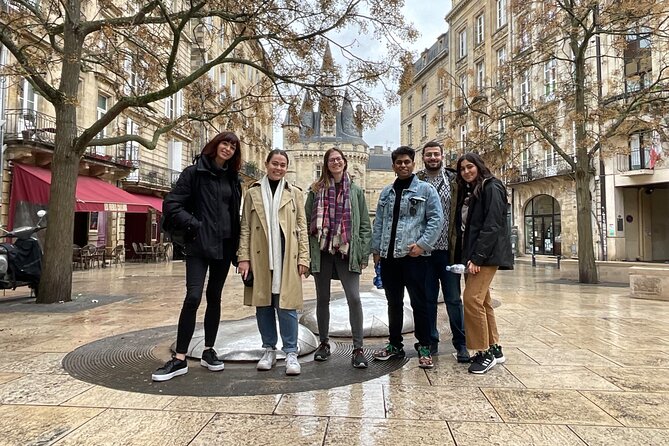
The route continues to Utopia in Place Camille Jullian. You stop for about ten minutes to view the building, which gives the walk a change of mood after the cathedral and tower.
From there, Place Saint-Projet offers a small lesson in how much of old Bordeaux survives in fragments. The Saint Projet church once occupied this site in the Middle Ages, and you can look for the old bell tower that remains.
These stops are not grand attractions in the same way as the cathedral or Place de la Bourse. I like them because they help you read the city at street level. A private guide can point out what you might otherwise pass without noticing.
Porte Cailhau and Bordeaux under changing rulers
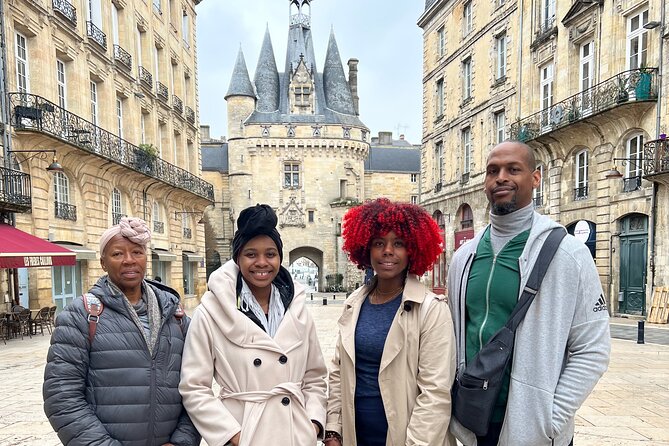
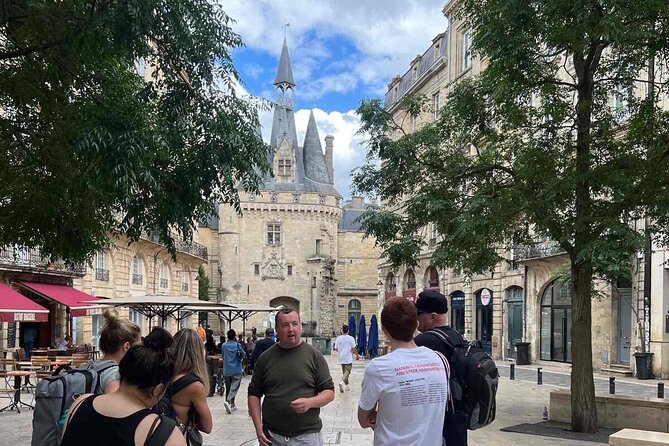
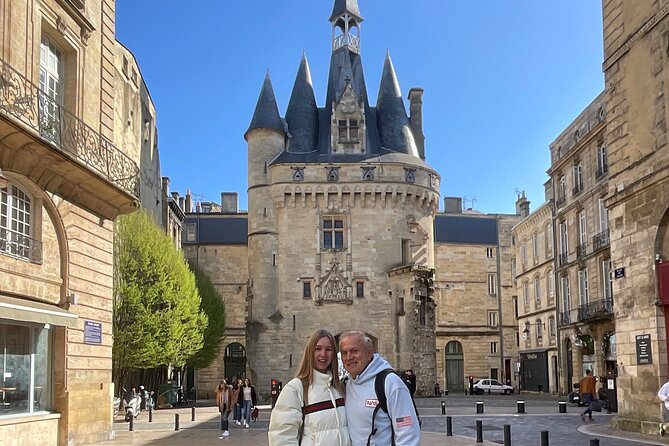
Porte Cailhau is one of the route’s most striking sights. Built in 1495, this medieval gateway gives you a strong sense of Bordeaux before the elegant 18th-century façades took over the city center.
The guide connects the gate to the region of Guyenne, English rule, and the later move into modern French history. That wider political context matters. Bordeaux was not shaped by one kingdom or one period, and Porte Cailhau makes those changes easier to picture.
You view the gate from outside, and admission is not included. Ten minutes may sound brief, but the stop works well as part of a moving walk. If you want a full visit inside the gateway, you will need to make separate plans.
A few more walking tours around Bordeaux worth a look
- Private – Best of Bordeaux Walking Tour + Glass of Bordeaux Wine
★ 5.0 · 240 reviews - Professional – Bordeaux Wine and Cheese Tasting with a walking tour
★ 5.0 · 218 reviews - 2-Hour Walking Tour of the City’s Iconic Sights and History
★ 4.0 · 207 reviews - Bordeaux: Mystery and Myths Walking Tour
★ 4.8 · 187 reviews
Saint-Pierre and the old port
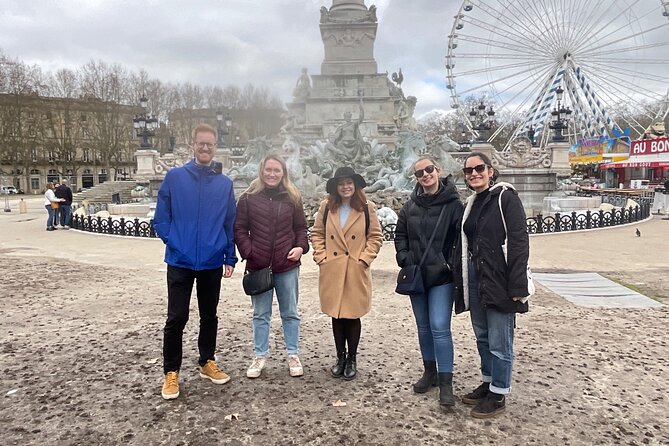
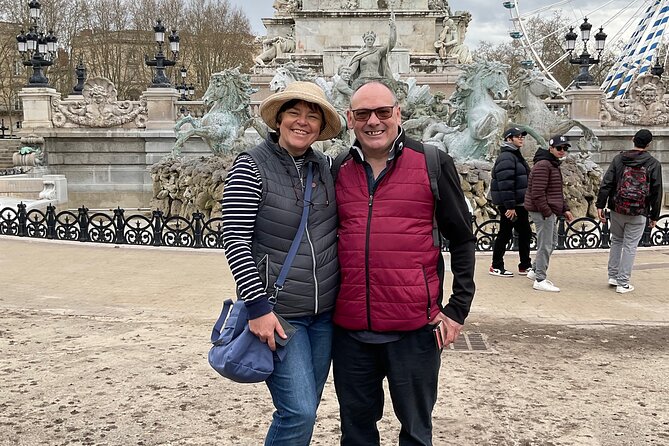
At Église Saint-Pierre, the route reaches the area of Bordeaux’s first port, dating to the 12th century. The church and surrounding streets help explain why this part of the city became so important.
The guide also discusses pilgrimage to Santiago de Compostela. That detail widens the story beyond wine and trade. Bordeaux was connected to religious journeys as well as river commerce, and the old port district carried people, goods, and ideas through the city.
This is another place where questions improve the experience. You can ask how the district changed, what remains of the old waterfront, or which nearby streets are worth revisiting after the tour.
Water Mirror and Place de la Bourse
The Water Mirror is the most photographed stop on the route, and it is easy to understand why. The shallow reflecting surface gives you a broad view toward Place de la Bourse and the Pont de Pierre in the distance.
You have around ten minutes here, enough to take photographs and enjoy the contrast between the water and Bordeaux’s stone architecture. The effect depends on conditions, so do not expect the same reflection every time, but the stop remains one of the city’s essential views.
Then you move to Place de la Bourse, the 18th-century neoclassical square that forms the visual focus of the quays. Fifteen minutes here allows the guide to explain the port, the square’s role in Bordeaux, and what you might want to do during the rest of your stay.
I consider this the tour’s best planning stop. Once you understand how the quays, historic center, and major squares fit together, it becomes easier to decide where to return for a longer look, a meal, or an evening stroll.
Grand Théâtre and the Golden Triangle
The Grand Théâtre introduces another side of Bordeaux. Built in the late 18th century, it forms the heart of the Golden Triangle, an area known for grand urban design and important city life.
The tour pauses for about ten minutes. You will view the theatre from outside, hear about its place in Bordeaux, and see how its scale differs from the medieval streets earlier in the walk.
This stop also shows the range of the route. In two or three hours, you move from a cathedral founded in the 11th century to a 15th-century gate, an old port church, an 18th-century theatre, and a modern public art landmark. The route is not just a list of attractions. It is a quick visual guide to the city’s changing shape.
Ending at the Girondins monument
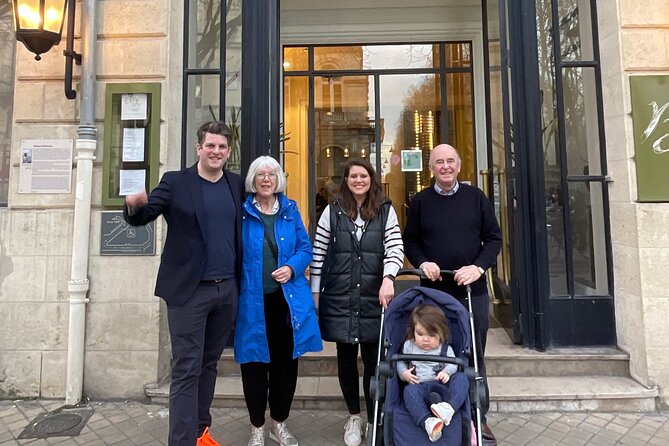
The usual finish is the Monument aux Girondins at Place des Quinconces. You spend about fifteen minutes viewing the monument and discussing the French Revolution.
Place des Quinconces is a useful ending point because you can continue exploring from there, and the guide may offer suggestions for food or later sightseeing. The official end can change at your request, but you should not assume that hotel drop-off is included. It is not.
The monument gives the tour a final political chapter. After seeing religious buildings, port districts, royal-era architecture, and commercial squares, you finish with a reminder that Bordeaux also played a role in the upheavals of modern France.
Two hours or three hours?
The two-hour option suits you if you want a fast orientation at the start of a short stay. It covers the main route and gives you enough background to return later to the cathedral, Water Mirror, Place de la Bourse, or other sights.
Choose three hours if you like questions, stories, and a slower pace. Several guides have been praised for keeping a three-hour walk interesting, especially by adding local details and answering questions about food, restaurants, and the city today.
There is a small risk with the longer option: one person reported receiving a tour that felt closer to two hours despite booking three. Confirm the duration at the start, especially if the timing matters for a train, meal, or another reservation.
A three-hour walk can also feel detailed. One visitor found that the amount of information made the longer option feel less suitable than two hours. I would choose three hours for history fans and curious first-time visitors, and two hours for anyone who mainly wants orientation and photographs.
What the private format adds
A private tour is most useful when you take advantage of it. Ask the guide to slow down at the places that interest you, skip extra detail when you are ready to move, or recommend a restaurant that fits your needs.
The guides named in the feedback include Pascale Rocher, Camilla, Lilia, Leyla, Rafael, Emma, Marina, Indigo, Guadalupe, Cassandra, Clement, and others. Their strengths vary, but the most consistent praise goes to guides who explain Bordeaux clearly, show genuine affection for the city, and adapt to the group.
Rafael, for example, helped with restaurant and food suggestions for people managing allergies. Marina helped a first-time visitor build a plan for the following week. Guadalupe brought wine knowledge to an overview of Bordeaux and the wider region.
That does not mean every guide will offer the same specialty. It does mean you should tell your guide at the beginning what you want from the walk. Say if you care most about architecture, wine, the Revolution, food, or a simple route through the city.
Walking effort, weather, and practical details
This is an active walking tour, not a ride between monuments. Most people can participate, and the route is near public transportation, but you should wear comfortable shoes and be ready to spend two or three hours outside.
The experience requires good weather. If poor weather cancels the tour, you can receive a different date or a full refund. A rainy day does not automatically ruin the walk, and one group still enjoyed its experience in wet conditions, but weather can affect comfort and the Water Mirror views.
Bring your booking confirmation on your phone. A mobile ticket is accepted, and service animals are allowed. Hotel pickup and drop-off are not included, so plan your own way to Place Pey Berland and onward from Place des Quinconces.
The tour requires a minimum number of participants to operate. If that minimum is not met, you are offered another date or experience, or a full refund. You can cancel for a full refund up to 24 hours before the start time, but changes or cancellations inside that window are not accepted.
Who should book this Bordeaux walk?
I would book it for a first visit, especially during the first day or two. The route gives you a map in your head, points out places worth revisiting, and helps you use the rest of your time more wisely.
It also suits couples, families, and small groups who want direct access to a guide rather than a fixed group script. The private setup is useful if your group has mixed interests or if you want restaurant and food advice along the way.
I would be more cautious if you want to go inside several monuments. The standard experience visits the sights from outside, and entrance tickets are not included. In that case, treat this as an orientation walk and schedule interior visits separately.
Should you book it?
Book this Bordeaux walking tour if you want a friendly, flexible introduction to the city’s architecture, political story, port past, and famous riverfront views. The best value comes when you use the private format: ask questions, request local advice, and tell the guide what matters to you.
Choose two hours for a compact overview. Choose three hours for more stories and conversation. Just confirm the meeting details, arrive on time, and remember that the fee covers guiding and exterior sightseeing rather than entry into the monuments.
FAQ
Where does the Bordeaux walking tour begin?
The tour begins at the Statue of Jacques Chaban Delmas in Place Pey Berland, Bordeaux.
Where does the tour finish?
It usually finishes at the Monument aux Girondins in Place des Quinconces. The end point can depend on your request.
How long does the tour last?
You can choose a tour of approximately two or three hours.
Is the tour private?
Yes. Only your group participates in the private activity.
Are monument entrance tickets included?
No. The guide visits the listed landmarks from the exterior. Entrance inside monuments is not included unless separately requested.
Is hotel pickup included?
No. Hotel pickup and drop-off are not included.
Is the tour offered in English?
Yes. The experience is offered in English.
Can I cancel for a refund?
You can cancel at least 24 hours before the local start time for a full refund. Cancellations or changes made less than 24 hours before the start time are not accepted.
Just added around Bordeaux
- Bordeaux Historic and Gourmet Food Walking Tour★ 4.5 · 82 reviews
- 2-Hour Walking Tour of the City’s Iconic Sights and History★ 4.0 · 207 reviews
- Free Walking Bordeaux Tour ENG + 1 glass of wine (Tip based)★ 5.0 · 90 reviews
- Traditional Gourmet Food & Wine Tour in Bordeaux★ 5.0 · 81 reviews
- Bordeaux City – Private Guided Walking Tour with Local Sophia★ 5.0 · 164 reviews
- Exclusive! Bordeaux: Nighttime Highlights Walking Tour★ 4.9 · 85 reviews
- Bordeaux: Private Walking Tour with a Local★ 4.3 · 117 reviews
- Bordeaux: Mystery and Myths Walking Tour★ 4.8 · 187 reviews
Walking Tours, compared.

Magical London: Harry Potter Guided Walking Tour
Read our review →
Reykjavik Food Walk – Local Foodie Adventure in Iceland
Read our review →
History and Hauntings of Salem Guided Walking Tour
Read our review →
New Orleans Premier Ghost, Voodoo and Vampire Walking Tour
Read our review →
Amsterdam Anne Frank: Small-Group Walking Tour & Local Guide
Read our review →

Edinburgh Castle: Guided Walking Tour with Entry Ticket
Read our review →
Anne Frank’s Story – Guided Walking Tour through Amsterdam
Read our review →Browse the lists this tour appears in