
REVIEW · UK
Birmingham Walking Tour: Canals, Victorians & Today (1:30pm)
Birmingham’s story is written in sharp contrasts: old canals beside glass offices, Victorian civic buildings near bold modern design, and a former sorting office now home to the BBC. This two-hour city-centre walk gives you a useful first look without pretending Birmingham can be understood from one postcard view.
I like the strong mix of landmarks and local stories, and I like the live audio receiver when it is used, since you can hear the guide without crowding around him. Jonathan is known for quick wit and personal stories, while Michael brings years of experience explaining Birmingham to students. The main consideration is that the canal section is fairly short, so this is a city overview with canals, not a canal-focused walk.
Key points to know before you book
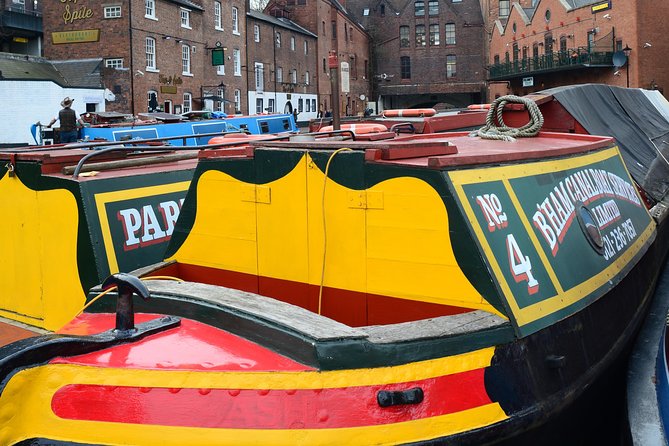
- Gas Street Basin gets about 15 minutes: You see the heart of Birmingham’s canal network, but most of the walk covers the wider city centre.
- Jonathan and Michael are the names to watch for: Both are lively, informed guides who use humour as well as facts.
- The route balances old and new: Victorian squares, an Art Deco memorial, converted industrial buildings, modern public spaces, and bold contemporary architecture all appear.
- The Library of Birmingham is both start and finish: This makes the meeting point easy to find and puts you near major city-centre sights.
- The pace is active but manageable: Expect roughly two hours on foot, with a moderate fitness level recommended.
- The price is modest for a first orientation: At $20.80, it works best as a practical introduction before exploring Birmingham on your own.
Why this walk makes sense on a first afternoon
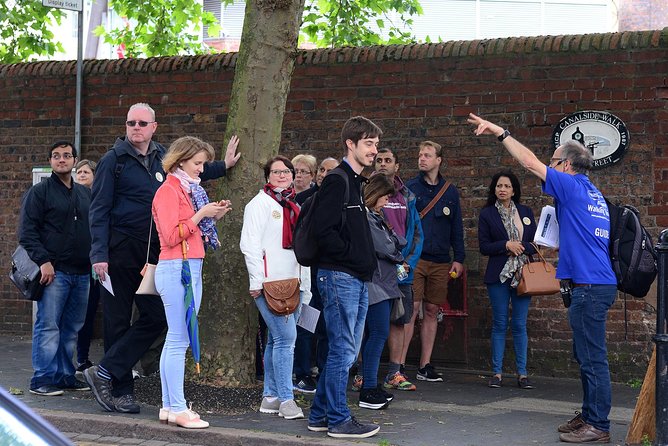
Birmingham can be hard to read at first. Its centre has been rebuilt, redesigned, and repurposed many times, so a short walk can help you see how the pieces fit together. This route does that by moving between canals, public squares, cultural buildings, memorials, and former industrial sites.
You start at the Library of Birmingham in Centenary Square at 1:30pm. That timing works well if you arrive in the city around midday or want an afternoon activity after lunch. The tour finishes at the same place, so you do not need to work out a separate return route.
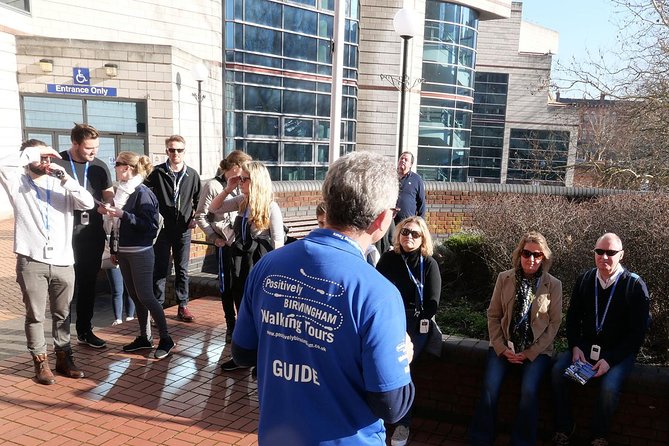
The group can include up to 35 people. That is not a private walk, but the audio receiver helps the guide’s voice carry. Bring earphones with a standard 3.5mm socket if you have them. A new pair can be provided if needed. The audio equipment may not always be used, so do not treat it as guaranteed on every departure.
The guides are a major part of the experience. Jonathan uses energy, jokes, and a fast delivery style. Michael is calm, friendly, and has spent much of his working life explaining Birmingham to students at Birmingham City University. Both styles suit the route, though you may want to stay close if Jonathan is leading, since his pace and speech can be brisk.
A few more walking tours around the UK worth a look
- Magical London: Harry Potter Guided Walking Tour
★ 4.7 · 22,044 reviews - Edinburgh: Harry Potter Magical Guided Walking Tour
★ 4.8 · 11,944 reviews - Edinburgh Castle: Guided Walking Tour with Entry Ticket
★ 4.7 · 11,699 reviews
The Library of Birmingham sets the tone
The Library of Birmingham is more than a meeting point. It is one of the city’s major modern landmarks, with a striking design that quickly tells you this will not be a tour limited to old stone buildings.
You spend about 10 minutes here at the beginning and return at the end. That short stop gives the guide room to explain the building and its place in the changing city. It also gives you a clear visual anchor for the rest of the walk.
If you have time before or after the tour, Centenary Square is a useful place to pause and look around. The walk itself does not include a long indoor visit, so think of the library as an exterior landmark and orientation point rather than a museum stop.
Symphony Hall and the ICC show Birmingham’s civic side
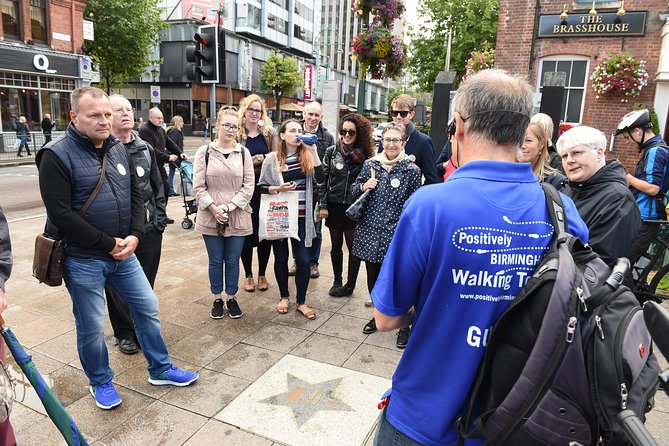
The next stop is the International Convention Centre, including Symphony Hall. You spend around 10 minutes considering the complex and its role in the city.
This part of the route helps explain Birmingham as a working cultural and business centre, not just a place of historic buildings. The ICC is part of the modern city’s public face, while Symphony Hall gives the area a strong arts connection.
The stop is brief, but it fits the wider purpose of the walk. You are not being asked to tour every building inside. Instead, you get enough context to understand why this part of the centre matters and how it connects with the canalside district nearby.
Brindleyplace and the city’s reinvention
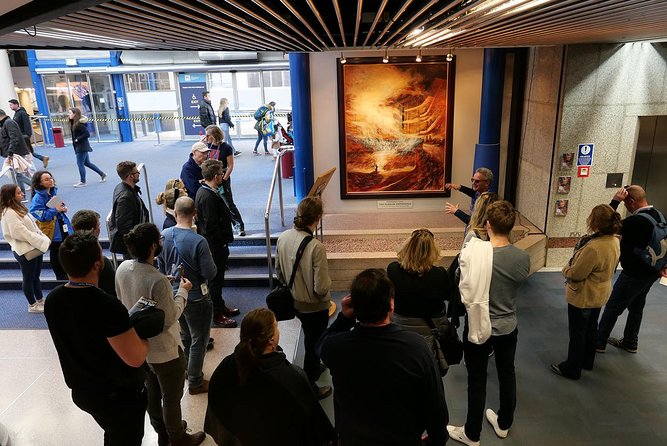
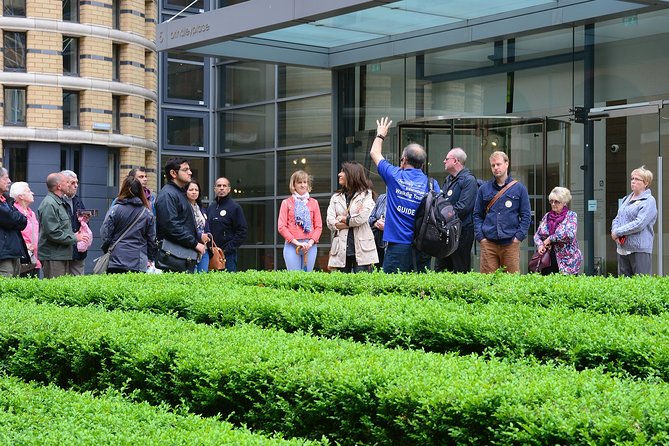
At Brindleyplace, the guide looks at both the area’s past and its present use. This is one of the clearest examples of Birmingham turning older commercial and industrial land into a modern mixed-use district.
You spend about 10 minutes here. That is enough for a short explanation and a look at the buildings around you, but not enough for a detailed architectural study. The value is in seeing the change in person, especially when the guide links the current development to the city’s earlier growth.
This is where the route begins to show its main theme: Birmingham is not a preserved historic centre frozen in one era. It is a place that has repeatedly replaced, adapted, and reworked its buildings and public spaces.
Same streets, a different route:
- Underground Vaults Walking Tour in Edinburgh Old Town
★ 4.5 · 8,506 reviews - London: The Original Jack the Ripper Walking Tour
★ 4.7 · 7,833 reviews - Oxford University Walking Tour With University Alumni Guide
★ 5.0 · 6,905 reviews - Edinburgh Castle: Guided Walking Tour with Entry Ticket
★ 5.0 · 5,540 reviews
Gas Street Basin is the most atmospheric stop
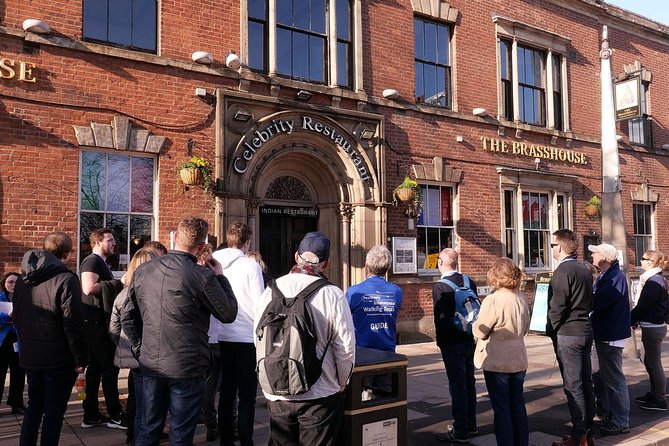
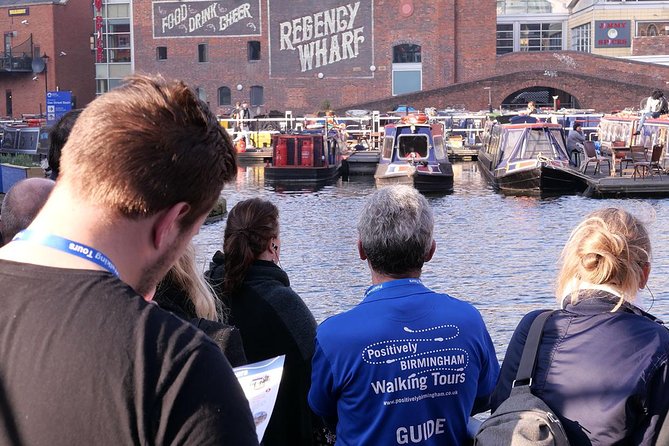
Gas Street Basin receives the longest stop, at about 15 minutes. It is the point most closely tied to the tour’s canals theme, and it gives you a chance to see where Birmingham’s canal network feels most concentrated and atmospheric.
The guide discusses the arrival of the canals and the importance of this basin within the national canal network. You get a visual break from broad civic spaces and busy city streets, with water, towpaths, bridges, and older canal-side structures shaping the scene.
One useful expectation to set: the tour does not spend most of its time beside the water. If you book it mainly for canals, you may find the canal portion shorter than expected. If you want an introduction to Birmingham as a whole, Gas Street Basin works very well as one chapter in a broader city story.
Victoria Square puts Victorian Birmingham on display
Victoria Square is the main stop for Birmingham’s Victorian development and public art. You spend around 10 minutes here, looking at how the city presented itself during its period of rapid growth.
The square also helps you compare different layers of Birmingham. Public sculpture, civic buildings, and newer changes to the city centre appear together, giving the guide plenty to explain. The oldest building in the square, Birmingham Town Hall, comes later in the walk, so this stop begins the discussion before you reach that landmark.
I find this kind of stop more useful than a simple list of dates. You can see how public spaces were designed to express civic confidence, then consider how the same central area is being updated for current city life.
Chamberlain Square points toward the future
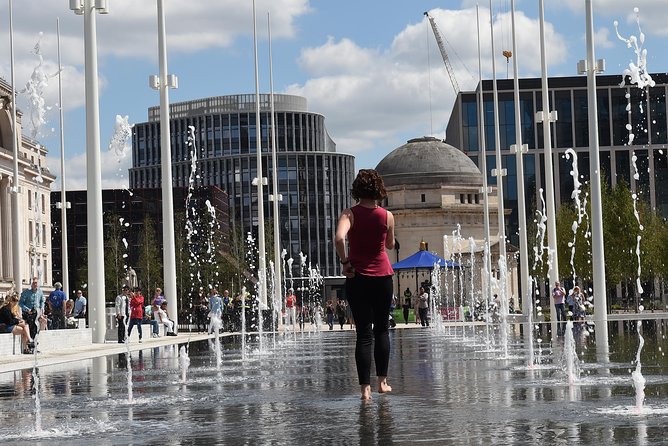
Chamberlain Square follows Victoria Square and receives about 10 minutes. Here, the focus shifts to how Birmingham is moving forward.
The stop is useful because it keeps the walk from becoming only a history lesson. Birmingham’s older buildings sit beside new projects, redesigned open spaces, and changing patterns of city use. The guide explains those changes while you are standing among them, rather than describing them from a distant viewpoint.
For you, the main benefit is context. A modern building can look like an isolated piece of design until someone explains what replaced it, why the area changed, or how it fits into the city centre plan.
The museum, Town Hall, and a lesson in civic architecture
The route passes Birmingham Museum & Art Gallery, where you see the entrance and its impressive 1880s double portico. This is a very short stop, about two minutes, so you are not visiting the collections.
That matters when planning your day. If you want to see the museum inside, allow separate time before or after the walk. The tour gives you the building’s external design and its place in the city, but it is not an art museum visit.
Birmingham Town Hall receives about five minutes and is described as the oldest building in Victoria Square, dating from 1834. This is a compact stop, but it adds weight to the Victorian section of the route. You see how the city’s civic ambitions were expressed through large public buildings, not only through commercial growth.
The Mailbox and The Cube reveal a different Birmingham
The Mailbox is a former post office sorting office converted into a mixed-use development. The stop lasts around five minutes and includes its role as the Birmingham headquarters of the BBC.
This is a good example of adaptive reuse. Instead of seeing an old industrial building as a relic, you see how a large former workplace can be given a new public and commercial role. The BBC connection also adds a current cultural dimension.
Nearby, The Cube is a major development at the rear of the Mailbox complex. The stop itself is only about a minute, but the building is visually memorable, and its upper floors are noted for some of the city’s best views. The tour does not promise an extended visit to those upper floors, so treat this as a quick exterior reference rather than a rooftop experience.
The Ikon Gallery and the Hall of Memory add quieter detail
The Ikon Gallery was originally built as a school and is one of more than 40 buildings designed by the architects Martin and Chamberlain. That detail gives the route a welcome change of scale. You are not only looking at famous public buildings, but also at how education and civic design shaped Birmingham’s streets.
The Hall of Memory is an Art Deco memorial built in 1925 to remember those who died in the First World War. Its role now includes the Second World War and later conflicts. You spend about five minutes here.
Look for its Art Deco features, including the William Bloye tablets. This stop is quieter and more reflective than the commercial districts around Brindleyplace and the Mailbox. It also shows how Birmingham’s public spaces carry memories of national events, not just stories of trade and construction.
The ICC Mall links the centre back to the canals
The ICC Mall is described as the main route from Centenary Square to the canalside. You spend about 10 minutes here, which makes it an important connecting section rather than a single landmark.
This part of the route helps you understand the physical relationship between the library, the convention centre, and Gas Street Basin. Birmingham’s centre can feel fragmented when you explore alone, especially with roads, large buildings, and different pedestrian areas breaking up the view.
The guide’s job here is to make those connections clear. You see how a route through the city centre leads from major cultural buildings toward the water, then loops back to the civic heart.
What the guiding style adds
The strongest part of this experience is the human explanation. Jonathan brings a fast, playful style, with local stories, current details, and the occasional dad joke. Michael is also lively and friendly, with a strong grasp of the city’s past and present.
The tone is not formal or academic. That will suit you if you want history explained in plain language, with room for questions and humour. It may be less suitable if you prefer a quiet, slow walk with long stretches for photography.
The guides also bring personal perspective. One particularly useful feature is the discussion of Birmingham’s development over the last 45 years, alongside earlier history. That lets you see the city as a place still changing, rather than a finished historic display.
The audio system can improve the experience in a larger group. You receive a small receiver and listen through your own earphones or a provided pair. Several details in the tour require you to keep moving, so being able to hear without standing shoulder to shoulder is practical.
Who will get the most from the $20.80 price
At $20.80 per person, this is good value if you are new to Birmingham and want a clear starting point. You see a wide range of central landmarks in about two hours, and you finish with a better sense of where to return for more time.
It is also useful for people who have visited Birmingham before but usually explore without context. The route can show you why the city looks the way it does, including the relationship between older civic buildings, redeveloped industrial sites, canals, and new construction.
The value is lower if you want a specialist canal walk, a long museum visit, or extended access inside buildings. Most stops are short, and several are exterior viewpoints. The tour gives you breadth rather than lengthy time at any one attraction.
A maximum of 35 people means the experience can feel like a standard group walk rather than a private tour. Some departures may be much smaller, but the group size can vary. Moderate fitness is recommended, and you should be ready to walk for the full two hours in ordinary city weather.
Service animals are allowed, and the meeting point is near public transport. The tour requires good weather. If poor weather causes cancellation, you can choose another date or receive a full refund. You can cancel for a full refund up to 24 hours before the 1:30pm start, but cancellations inside that period are not refunded.
Should you book this Birmingham walk?
Book it if you want a friendly first look at Birmingham, especially if you like city stories, changing architecture, and a brisk route that covers many central sights. Jonathan and Michael bring warmth and personality, and the mix of canals, Victorian buildings, memorials, cultural venues, and modern developments gives you a useful picture of the city.
Do not book it expecting a dedicated canal excursion or a series of indoor admissions. The canal section is a highlight, but it is only one part of the route, and the museum, library, and other buildings are mainly seen from outside.
For most first-time visitors, I would take this tour early in a Birmingham stay, then use the guide’s suggestions to choose what to explore in more detail afterward. At this price, it is a sensible way to get your bearings and put the city’s many different eras in order.
FAQ
How long does the Birmingham walking tour last?
The tour lasts approximately two hours.
What time does the tour start?
It starts at 1:30pm.
Where does the tour meet?
The meeting point is the Library of Birmingham, Centenary Square, Birmingham B1 2ND, UK.
Where does the tour finish?
The activity finishes back at the Library of Birmingham meeting point.
What landmarks are included?
The route includes the Library of Birmingham, the ICC, Symphony Hall, Brindleyplace, Gas Street Basin, Victoria Square, Chamberlain Square, Birmingham Museum & Art Gallery, The Mailbox, The Cube, the Ikon Gallery, the Hall of Memory, and Birmingham Town Hall.
Is the tour focused mainly on Birmingham’s canals?
No. The tour includes Gas Street Basin and the canalside route, but it also covers Victorian buildings, public squares, cultural venues, memorials, and modern developments across the city centre.
Is an audio system provided?
A live audio system may be used. When it is used, each person receives a receiver, and you can bring earphones with a 3.5mm socket. A new pair can be provided if needed. The system is not used on every tour.
How many people can join the tour?
The maximum group size is 35 people.
What is the cancellation policy?
You can cancel up to 24 hours before the start time for a full refund. Cancellations or changes made less than 24 hours before the start are not refunded. If poor weather causes the tour to be canceled, you can receive a full refund or choose another date.
Just added around the UK
- Merchant City Music Walking Tour of Glasgow★ 5.0 · 94 reviews
- Stirling Castle, Loch Lomond Walk & Whisky Distillery Tour from Glasgow★ 5.0 · 79 reviews
- Walking Tour of Glasgow★ 5.0 · 96 reviews
- Gothic Glasgow Walking Tour★ 5.0 · 448 reviews
- Glasgow: Pubs & History Walking Tour with Beer Tasting★ 5.0 · 81 reviews
- Glencoe, Scenic Walk & Highlands Guided Tour starting Glasgow★ 5.0 · 121 reviews
- Gander Walking Tours in Glasgow★ 5.0 · 506 reviews
- Group Walk up Ben Nevis from Fort William★ 5.0 · 108 reviews
Walking Tours, compared.

Magical London: Harry Potter Guided Walking Tour
Read our review →
Reykjavik Food Walk – Local Foodie Adventure in Iceland
Read our review →
History and Hauntings of Salem Guided Walking Tour
Read our review →
New Orleans Premier Ghost, Voodoo and Vampire Walking Tour
Read our review →
Amsterdam Anne Frank: Small-Group Walking Tour & Local Guide
Read our review →

Edinburgh Castle: Guided Walking Tour with Entry Ticket
Read our review →
Anne Frank’s Story – Guided Walking Tour through Amsterdam
Read our review →Browse the lists this tour appears in