
REVIEW · USA
Birmingham Civil Rights Tour- Riding & Walking
Birmingham’s civil rights story is spread across churches, parks, neighborhoods, schools, and street corners. This three-hour riding and walking tour connects those places into one clear story, from the central Civil Rights District to Dynamite Hill and the former Black business district.
I like the mix of a small group, capped at 14 people, and an air-conditioned vehicle between stops. I also like the personal approach of guides such as Mike Clay, whose talks include photographs, artifacts, local detail, and time for hard questions. The main catch is physical: you will walk more than a mile, sometimes in temperatures from 40 to 100 degrees Fahrenheit.
Key points to know before booking
- Birmingham beyond the main sights: You visit Kelly Ingram Park and 16th Street Baptist Church, then go farther to Dynamite Hill, Bethel Baptist Church, and the Freedom Riders attack site.
- A guide who explains the connections: Mike Clay and Clay are praised for clear, chronological storytelling and for showing how people, churches, schools, and neighborhoods fit together.
- A useful ride-walk balance: The van saves time and energy between sites, while walking lets you pause where events actually happened.
- Small groups matter here: With no more than 14 people, it is easier to hear the guide and ask questions about difficult subjects.
- No surprise admission charges: Taxes, fees, transportation, guiding, and activities are included.
- Plan for heat, cold, and walking: The tour runs in ordinary rain and requires a reasonable walking pace. Severe weather can lead to a new date or full refund.
Why this tour helps you understand Birmingham
A self-guided visit to Birmingham can leave you with a set of important addresses but little sense of how they relate. The 16th Street Baptist Church is close to Kelly Ingram Park, yet the movement’s story also reaches into residential streets, schools, auditoriums, and churches outside the central district.
This tour gives you that wider view. You ride between neighborhoods, then walk at the places where demonstrations, attacks, organizing, and community life took place. That approach is especially useful if you have only a short time in Birmingham or do not want to arrange several separate visits.
The tone is serious and direct. You will hear about violence, racist intimidation, bombings, police opposition, and the deaths of four young girls. You will also hear about courage, organizing, church leadership, school integration, and the people whose work did not always make it into the best-known accounts.
I would not choose this tour for light sightseeing or quick photo stops. I would choose it if you want context and are ready to give the subject your full attention.
A few more walking tours around the USA worth a look
- History and Hauntings of Salem Guided Walking Tour
★ 5.0 · 14,564 reviews - New Orleans Premier Ghost, Voodoo and Vampire Walking Tour
★ 4.5 · 12,856 reviews - Little Havana Food and Walking Tour in Miami
★ 5.0 · 8,882 reviews
Starting in the Civil Rights District
The meeting point is at 512 16th Street North, with a 9:45 am start. The tour begins in the central Civil Rights District, where you walk through Kelly Ingram Park and see 16th Street Baptist Church.
The opening walk gives you the basic geography. You can look across the streets and understand how the park, church, and demonstrations were connected rather than treating each place as an isolated attraction.
The first two listed stops overlap in this area, and that is useful rather than confusing. The guide can first establish the district, then focus more closely on the park’s statues and the people who marched there.
Wear shoes you can comfortably walk in. The route is not described as strenuous, but the full outing includes more than a mile on foot, with time spent standing outdoors.
Kelly Ingram Park and the movement in public view
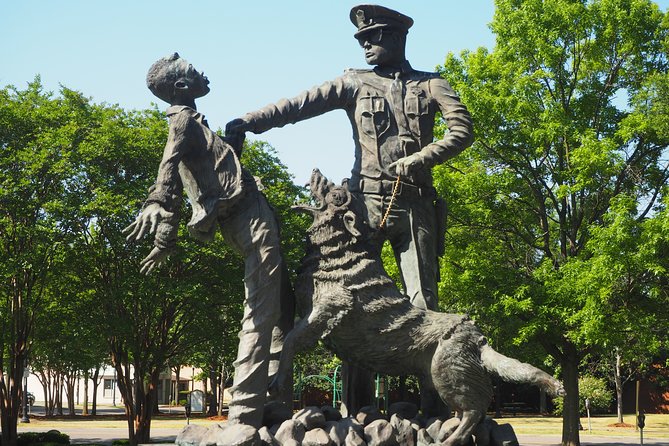
Kelly Ingram Park is the emotional center of the walking portion. Its statues show children and adults confronting the forces used against civil rights protesters. The guide’s role here is important because the sculptures alone cannot explain the planning, fear, discipline, and resolve behind the demonstrations.
You will learn about people who marched for freedom in Birmingham and how public protest became impossible for local authorities to ignore. This is one of the places where a good explanation changes what you see. Instead of simply passing a row of monuments, you begin to picture the park as a place where real people took serious risks.
This part can be moving, and the pace may feel deliberate. That is a benefit if you want time to look and ask questions. It may feel slow if you prefer a fast sightseeing circuit.
16th Street Baptist Church and the four girls
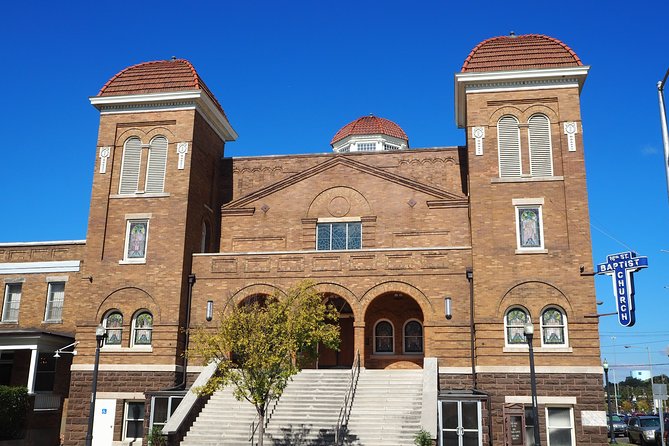
The church is one of the tour’s essential stops. It played a major role in Birmingham’s civil rights movement, and the bombing that killed four young girls remains one of the city’s most painful chapters.
Expect the guide to explain both the church’s role as an organizing place and the human cost of the bombing. The point is not just to name the event. It is to show why this building mattered to the movement and why the attack shocked people far beyond Birmingham.
The activity information does not promise interior admission, and all stops are listed with no admission charge. Plan on learning about the church from the outside and from your guide unless the day’s arrangements provide something different.
The subject requires attention and respect. Families can take part, but children must be accompanied by an adult, and parents should decide if the material suits their children.
Same streets, a different route:
- Chicago: Gangsters and Ghosts Walking Tour
★ 5.0 · 7,155 reviews - Boston: Freedom Trail History Small Group Walking Tour
★ 5.0 · 6,450 reviews - Historic Charleston Guided Sightseeing Walking Tour
★ 5.0 · 6,216 reviews - New Orleans Food Walking Tour of the French Quarter with Small-Group Option
★ 5.0 · 6,118 reviews
Linn Park and Boutwell Auditorium
At Linn Park, you see where march protests ended and hear about the groups involved in Birmingham’s civil rights fight. The stop is brief, about 15 minutes, but it adds an important piece of the public demonstration story.
Boutwell Auditorium follows with more about Bull Connor and his clashes with those seeking civil rights. This stop helps explain the political and police resistance that protesters faced. It also keeps the story from becoming a simple tale of marches and victories. You see the forces working against change and the public spaces where those conflicts played out.
These stops are viewed from the outside, so do not expect a long building visit. Their value comes from the guide’s explanation and from seeing the places in relation to the downtown district.
Dynamite Hill in Smithfield
The ride to Smithfield takes you beyond the most familiar downtown landmarks. At Dynamite Hill, you see houses and churches that were bombed during the civil rights era.
This is one of the tour’s strongest reasons to choose a guided vehicle rather than a self-led walk. The neighborhood is not simply another downtown stop, and the guide can explain why it became associated with attacks on Black residents and institutions.
The name alone can sound like a label from a history book. Seeing the homes and churches makes the danger more concrete. You are looking at ordinary places where families worshiped and lived, not only at formal memorials.
The stop lasts about 15 minutes. You should expect a short visit, not an extended neighborhood walk. That keeps the tour moving, though some people may wish for more time at locations this serious.
Bethel Baptist Church and Fred Shuttlesworth
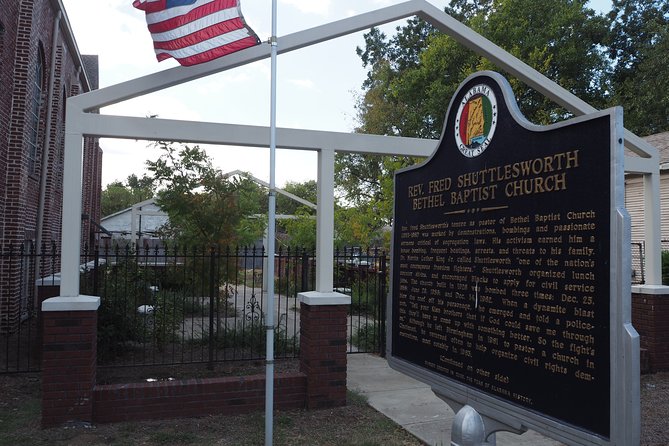
The Historic Bethel Baptist Church is linked to Rev. Fred Shuttlesworth, who led the movement from this church. The stop gives you a chance to focus on local leadership and the role of Black churches as centers of planning, support, and resistance.
A major strength of the tour is that it does not limit the story to a few famous national figures. The guide brings attention to leaders and local organizers whose work shaped Birmingham on the ground.
The church stop lasts about 20 minutes, making it one of the longer visits outside the main district. If your guide, Mike or Clay, brings photographs or artifacts, this is the kind of setting where those materials can help connect the person, place, and event.
The Black business district at Eddie Kendrick Memorial Park
At Eddie Kendrick Memorial Park, you spend about five minutes seeing the Black business district and learning about Black life in Birmingham during its heyday.
This is the shortest stop, but it widens the focus. Civil rights history is not only a record of protest and repression. It also includes businesses, neighborhoods, jobs, churches, families, and daily life built by Black residents.
Do not expect a long walk or a full museum visit here. Think of it as a compact piece of context that helps you picture the community people were defending and trying to improve.
John Herbert Phillips Academy and school integration
The stop at John Herbert Phillips Academy covers Rev. Fred Shuttlesworth’s attempt to integrate Birmingham schools. It shows that the movement did not end with downtown marches. Education was another central battleground, with its own risks and resistance.
At about 15 minutes, this is long enough for the guide to explain the event without turning the day into a lecture at every stop. The sequence also works well: after learning about church organizing and neighborhood life, you see the fight move into schools.
The tour’s chronological structure is helpful here. Guides are praised for presenting the story in a clear order, which makes it easier to understand how different campaigns overlapped.
The Freedom Riders attack site
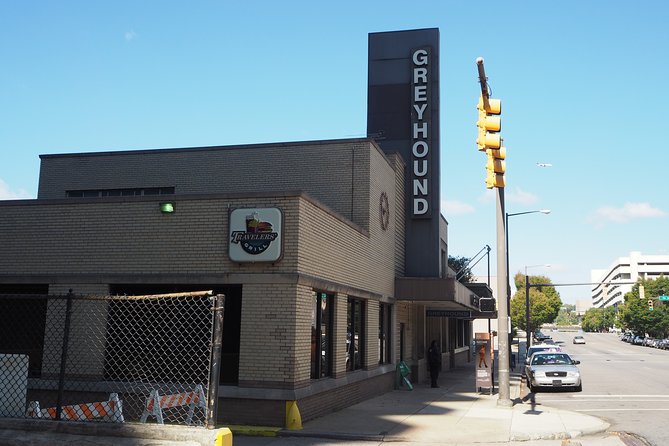
The final listed stop is near the Wells Fargo ATM, where you see the location of the 1961 Freedom Riders attack in Birmingham. This is an especially useful inclusion because it takes you beyond the standard park and church circuit.
You will hear about the Freedom Riders and the violence they faced when they arrived in Birmingham. The stop connects the local story to the wider civil rights campaign while keeping the focus on what happened in this city.
The visit lasts about 10 minutes. It is a location stop rather than a museum experience, so the explanation from the guide carries much of the weight.
Afterward, the tour returns to the meeting point. The stated duration is about three hours, though the exact timing can vary with group size and the pace of the day.
Why the small vehicle and small group help
The air-conditioned transportation is more than a comfort feature. Birmingham’s sites are spread out, and riding saves you from spending the entire morning walking beside roads or trying to find each location yourself.
It also matters in summer. The tour can run in temperatures up to 100 degrees, and the vehicle gives you a break between outdoor stops. In rain, transportation can help if conditions become uncomfortable, though the tour runs rain or shine in ordinary weather.
A group limit of 14 is a good fit for this subject. You can usually hear the guide clearly, and the format leaves room for questions. Several guide accounts emphasize that Mike and Clay take time with difficult topics, answer questions thoughtfully, and adjust explanations for younger people.
The experience is not private by default. If only a very small number of people book on a given day, you may receive a more personal outing, but you should not reserve it assuming a private tour.
The guides and the storytelling style
Mike Clay is repeatedly identified as a local guide with a strong command of Birmingham’s civil rights story. Clay is also praised as a guide, and the company is family owned by a son and father.
The strongest part of the guiding style is the combination of facts and human detail. You are not simply told that a march happened at a certain place. The guides explain who organized it, what people risked, how authorities responded, and what changed.
They also use photographs and artifacts at times, according to the tour information. That can make the talk more concrete, especially at places where the building itself gives you few visual clues.
The tone is not softened for comfort. You will hear about bombing, attacks, segregation, and the deaths of children. At the same time, the guides frame the story around courage and the possibility of a better future. That balance suits the subject.
Walking, weather, and practical comfort
You need to walk more than a mile without assistance and keep a reasonable pace. The tour is not recommended for anyone unable to walk at least a mile or badly affected by hot or cold weather.
Bring water, dress for the forecast, and wear sensible shoes. Shade and rest stops may be provided when possible, but you should not treat this as an indoor museum tour.
Rain does not automatically cancel the outing. It runs rain or shine, and transportation is available if rain becomes a problem. If significant weather such as a hurricane, tornado, or ice forces cancellation, you can choose another date or receive a full refund.
Service animals are allowed. Children must be accompanied by an adult.
Is the tour good value?
No price is provided here, so I cannot judge the exact cost against other Birmingham tours. I can judge what is included: the guide, live commentary, air-conditioned transportation, all activities, taxes, fees, and handling charges.
That package has real value if you want to visit sites outside the central district. You avoid arranging transport to Smithfield, Bethel Baptist Church, the academy, the Black business district, and the Freedom Riders site. You also gain the local explanation that makes those places meaningful.
The value is lower if you prefer to move at your own pace, spend a long time at one church, or read quietly without commentary. This is a guided interpretation of Birmingham, not a flexible hop-on, hop-off service.
Free cancellation is available up to 24 hours before the 9:45 am start time. Cancellations or changes within 24 hours are not refunded, except when significant weather causes the operator to cancel.
Who should book this Birmingham tour?
I would recommend it to first-time visitors, history-minded families with older children, teachers, students, and anyone who wants the local story presented in a clear order.
It is also a strong choice for people who have visited the 16th Street Baptist Church area but feel they missed the wider picture. Dynamite Hill, Bethel Baptist Church, the school integration site, and the Freedom Riders location add places you may not reach alone.
I would hesitate if you have limited mobility, cannot tolerate outdoor heat or cold, or want a quiet sightseeing morning. The material is emotionally heavy, and the walking requirement is real.
Should you book it?
Book this tour if you want Birmingham’s civil rights story to feel connected, local, and human. The ride-walk format covers more ground than a downtown stroll, while Mike Clay or Clay can explain why each site matters.
Skip it only if you are looking for a light introduction or cannot manage more than a mile on foot. For most visitors who come to Birmingham specifically to understand its role in the civil rights movement, this is a focused and worthwhile use of three hours.
FAQ
How long is the Birmingham Civil Rights Tour?
The tour lasts approximately three hours. The exact timing can vary with the size of the group and the pace between stops.
Where does the tour start?
It starts at 512 16th Street North, Birmingham, Alabama 35203.
What time does the tour begin?
The scheduled start time is 9:45 am.
Where does the tour end?
The activity ends back at the meeting point.
How many people can join the tour?
The maximum group size is 14 people.
Is transportation provided?
Yes. Air-conditioned transportation is included, along with a driver and guide and live commentary during the ride.
How much walking is involved?
You will walk more than a mile during the tour. You must be able to walk unassisted at a reasonable speed.
Does the tour run in the rain?
Yes. The tour runs rain or shine, and transportation is available if rain becomes an issue. Significant weather such as a hurricane, tornado, or ice may lead to a new date or full refund.
Are entrance fees included?
Yes. Taxes, fees, handling charges, activities, and entrance costs are included. The listed stops do not require a separate admission payment.
What is the cancellation policy?
You can cancel at least 24 hours before the start time for a full refund. Cancellations or changes made less than 24 hours before the start time are not refunded.
Just added around the USA
- Fan Tribute: Taylor Swift in New York Walking Tour★ 4.9 · 147 reviews
- Explore Must-See Spots: Las Vegas Strip Walking Tour★ 4.8 · 77 reviews
- East Nashville Walking Food Tour with 5+ Tastings★ 4.7 · 178 reviews
- Las Vegas: Fremont Street Walking Tour★ 4.9 · 153 reviews
- NYC: Guided Bus and Walking Tour with Staten Island Ferry★ 4.6 · 209 reviews
- DC: Smithsonian Highlights Walking Tour with Air and Space★ 4.8 · 97 reviews
- DC: Lincoln Assassination Tour with Ford’s Theatre Entry★ 4.6 · 72 reviews
- Deep Dive into Denver: Small-Group Walking Tour★ 4.8 · 119 reviews
Walking Tours, compared.

Magical London: Harry Potter Guided Walking Tour
Read our review →
Reykjavik Food Walk – Local Foodie Adventure in Iceland
Read our review →
History and Hauntings of Salem Guided Walking Tour
Read our review →
New Orleans Premier Ghost, Voodoo and Vampire Walking Tour
Read our review →
Amsterdam Anne Frank: Small-Group Walking Tour & Local Guide
Read our review →
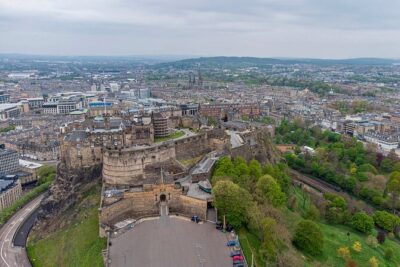
Edinburgh Castle: Guided Walking Tour with Entry Ticket
Read our review →
Anne Frank’s Story – Guided Walking Tour through Amsterdam
Read our review →Browse the lists this tour appears in