
REVIEW · WALKING TOURS
Baku Oil Heritage & Old Town Walking Tour
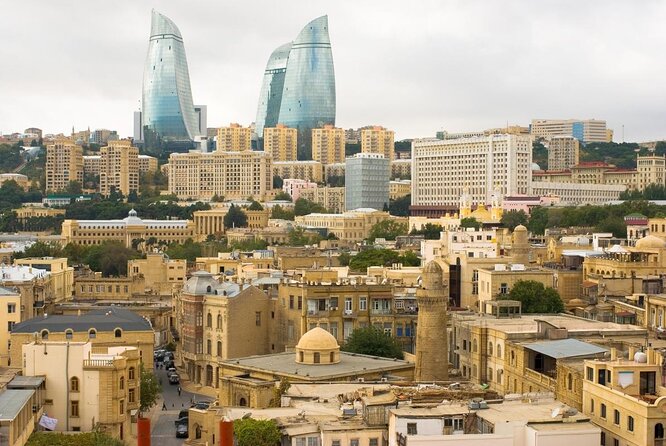
Baku’s story makes more sense when you connect its oil-boom fortunes to the city’s grand palaces, European façades, and sudden expansion beyond the old fortress. This 2.5-hour walk does that well, then brings you into Icherisheher, where narrow lanes and medieval walls tell a much older story.
I like the personal guide format, especially when the guide is Gani, whose storytelling, humor, and use of old photographs have earned repeated praise. I also like the route’s range: you get the Maiden Tower and Shirvanshahs’ Palace, then the Town Hall, Palace of Happiness, former girls’ school, and Ismailiyya Palace.
The main tradeoff is that the tour explains the major sights from outside rather than taking you inside the Maiden Tower or Shirvanshahs’ Palace. Also, the tour is described as private but lists a maximum of 30 participants, so confirm the group arrangement if a fully exclusive walk matters to you.
Key points to know before you book
- Oil money shaped the route: See how Baku’s first oil boom produced grand civic buildings, private mansions, schools, gardens, and monuments.
- Icherisheher gets the medieval focus: Walk through the Gosha Gala Gate, fortress walls, Maiden Tower, Muhammad Mosque, and Shirvanshahs’ Palace area.
- Guides bring visual context: Gani is frequently praised for clear storytelling, humor, historic photographs, and answers to detailed questions. Lina is also mentioned as an engaging guide.
- No major admission fees are included: The sights are explained from outside, so this is a city walk rather than an interior museum tour.
- It is an easy first-day orientation: The tour covers central Baku on foot and ends where it begins at Fountain Square.
- Practical advice is part of the experience: You can ask for food ideas, vegetarian suggestions, Azerbaijani phrases, and plans for the rest of your visit.
Baku’s oil story begins at Fountain Square
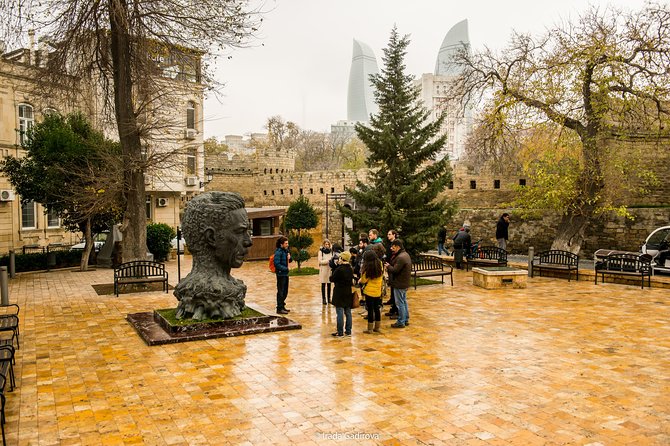
The walk starts at Fountain Square on Nizami Street, a useful central meeting point and one of the easiest places in Baku to get your bearings. Today it is a leisure and entertainment center, but its importance began during the first oil boom in the late 19th and early 20th centuries, when this area became a main trading street.
That opening idea is important. Baku did not simply become wealthy and then decorate itself. Oil changed the city’s economy, population, architecture, and place in the world. A good guide can show you how commercial ambition and personal vanity shaped the streets you are walking through.
I like beginning here because the square provides a clean bridge between present-day Baku and the city’s industrial past. You are not starting with a list of dates. You are starting with the question of how an oil town became a capital filled with European-inspired buildings and old Muslim neighborhoods.
The initial stop is short, about 10 minutes, and the tour returns here at the end. That makes the route convenient if you want to continue shopping, eat nearby, or use the square as a fixed point for the rest of your day.
More Old Town Walking Tours in the world:
- Underground Vaults Walking Tour in Edinburgh Old Town
★ 4.5 · 8,506 reviews - Prague: 3-Hour Walking Tour of Old Town & Prague Castle
★ 4.7 · 5,696 reviews - Dubrovnik: Old Town Walking Tour
★ 4.8 · 5,174 reviews
Entering Icherisheher through the Gosha Gala Gate
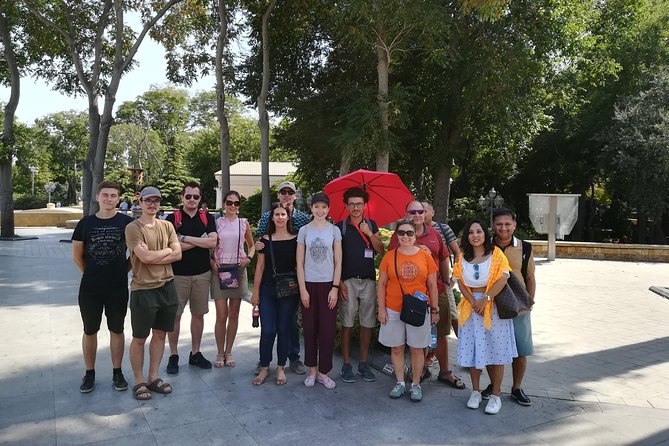
From Fountain Square, the tour moves into Icherisheher, Baku’s Old City. The Gosha Gala Gate provides the formal entrance, and the fortress walls give you an immediate sense of the older settlement beneath modern Baku.
The Old City is the strongest part of the walk for first-time visitors. Its streets are narrow, its buildings are close together, and the scale changes quickly from grand city avenues to intimate lanes. You will stop at major landmarks, but the real value comes from seeing how those landmarks fit into the compact old quarter.
The route covers the 12th-century citadel walls, the Maiden Tower, the 11th-century Muhammad Mosque, and the area around the Shirvanshahs’ Palace, a 15th-century royal complex. These sites are connected with UNESCO World Heritage recognition, giving the guide a chance to explain both their local importance and their place in Baku’s wider story.
The tour does not include entry into the Maiden Tower or Shirvanshahs’ Palace. Instead, your guide explains the sites at their entrances and uses historic photographs to help you picture earlier versions of the city. That is useful if you want an overview before paying for separate admission, but it may disappoint you if your main aim is to explore interiors.
You will also pass the Muhammad Mosque and the Museum of Miniature Books. The miniature book museum is a pleasant change of pace from the larger monuments. It adds a small cultural detail to a route that could otherwise feel focused only on rulers, oil barons, and grand architecture.
Allow about an hour for the Old City portion. The pace is designed for explanation and questions, not for racing from one photo stop to the next. Since the streets are narrow and the sights are close together, the guide can point out details that are easy to miss when you walk alone.
What the oil boom left along Istiglaliyyat Street
Leaving the fortress area, the walk follows Istiglaliyyat Street, formerly known as Nikolayevskaya and Kommunisticheskaya. This was one of Imperial Russian Baku’s main streets, and it shows how the city expanded beyond its old defensive walls.
This section is where the tour’s theme becomes most visible. Oil wealth brought new public buildings, private mansions, schools, gardens, and cultural institutions. The men who made fortunes from oil often spent heavily on architecture, public status, charitable projects, and family memorials.
The route takes in Governor’s Garden, the Town Hall, Philharmonic Hall, the Palace of Happiness, the Institute of Manuscripts of Azerbaijan, Ismailiyya Palace, the Literature Museum, and the statue of Nizami. You will not enter each building, but the concentration of landmarks makes this stretch valuable for understanding Baku’s urban growth.
I especially like the contrast between the Old City and Istiglaliyyat Street. Inside the walls, the setting feels medieval and compact. Outside them, the architecture reflects European influence and the ambitions of a fast-growing cosmopolitan city. The change happens within a short walk, which makes the history easier to grasp.
Philharmonic Fountain and the Ali and Nino connection
The Philharmonic Fountain marks one of the green spaces created as Baku expanded beyond its fortress. Here, the guide links the garden to Ali and Nino, the famous novel associated with Baku and the cultural meeting point between Europe and Asia.
This is a brief stop, around 10 minutes, but it adds a literary layer to the architecture. The story of Baku is not only about oil production and grand buildings. It is also about identity, cultural contact, romance, and the tension between different traditions.
You might find this stop most rewarding if you have read Ali and Nino or plan to read it before your trip. If you have not, the connection still gives the garden a human angle and helps move the discussion beyond dates and construction styles.
A few more walking tours around the world worth a look
- Magical London: Harry Potter Guided Walking Tour
★ 4.7 · 22,044 reviews - Reykjavik Food Walk – Local Foodie Adventure in Iceland
★ 5.0 · 18,952 reviews - History and Hauntings of Salem Guided Walking Tour
★ 5.0 · 14,564 reviews - New Orleans Premier Ghost, Voodoo and Vampire Walking Tour
★ 4.5 · 12,856 reviews
Baku Town Hall and the city’s mixed influences
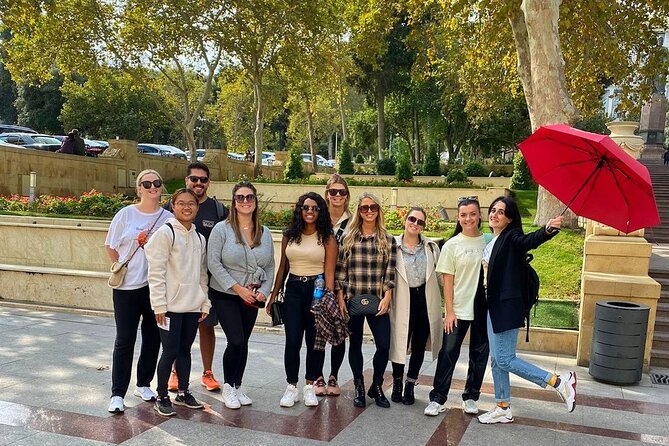
The Baku City Executive Power building, formerly the Town Hall, is one of the clearest examples of the oil-boom era’s monumental architecture. The guide uses it to explain European design influences and the effect of Baku’s mixed population on the city.
This is a valuable stop because Baku’s identity cannot be reduced to one cultural source. Oil drew different communities, businesses, and ideas into the city. The result was an urban center shaped by local traditions, Imperial Russian administration, European architecture, Muslim philanthropy, and the demands of a modern economy.
The stop lasts about 10 minutes. You will mainly examine the exterior and listen to the explanation, so think of it as an architectural reading rather than a museum visit. If ornate façades interest you, this part of the route gives you plenty to study.
Saadet Sarayi, a palace with a personal story
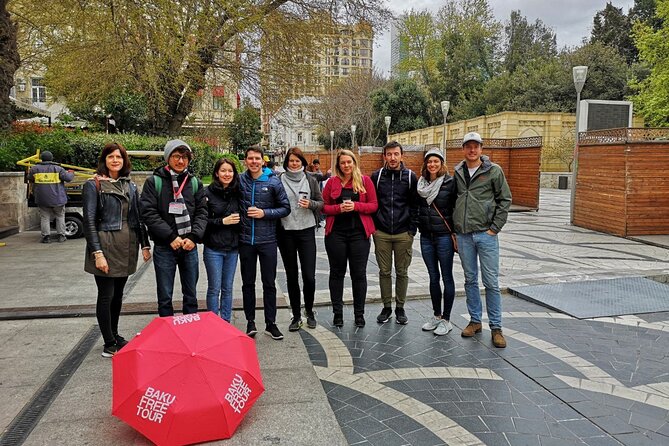
Saadet Sarayi, also called the Palace of Happiness, brings the oil boom down to a more personal scale. The guide tells the story of an oil baron and his wife, whose home later became associated with marriage ceremonies and now serves as a marriage registry.
This is one of the route’s more memorable ideas: private wealth becomes public memory. A mansion built for one family can later become part of the city’s rituals for many families.
The building’s function today gives the story a natural emotional hook, but the tour does not turn into a romantic tale alone. It also shows how oil wealth allowed individuals to commission elaborate homes and how those buildings continued to shape public life long after the original owners were gone.
The former girls’ school and Azerbaijan’s modernization
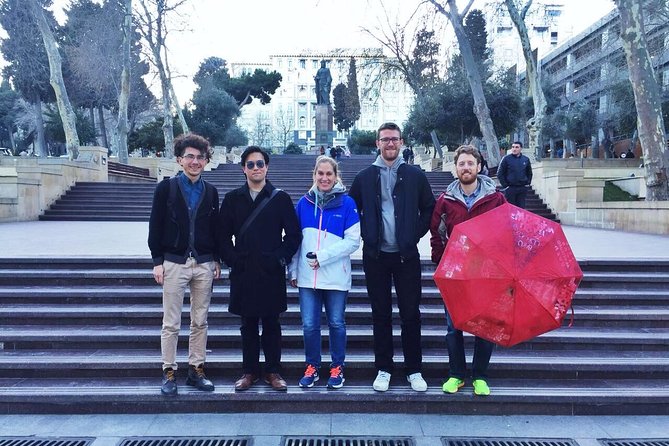
The former Taghiyev School for Girls, now the Institute of Manuscripts of Azerbaijan, is one of the most important stops for understanding social change. The guide explains the school as the first secular school for Muslim women and connects it to modernization in Baku and the country’s first independence.
This stop broadens the tour beyond wealthy men and decorative buildings. It asks what modern education meant for women and how new institutions changed Azerbaijani society.
I would pay close attention here because it gives the oil story a human consequence. Wealth can build palaces, but schools change who gets access to public life. The building represents an effort to move into a modern era while still dealing with religious, social, and political expectations.
The stop lasts roughly 10 minutes. That is enough for a strong introduction, though anyone especially interested in education, women’s history, or Azerbaijan’s independence may want to ask follow-up questions.
Ismailiyya Palace and the cost of personal glory
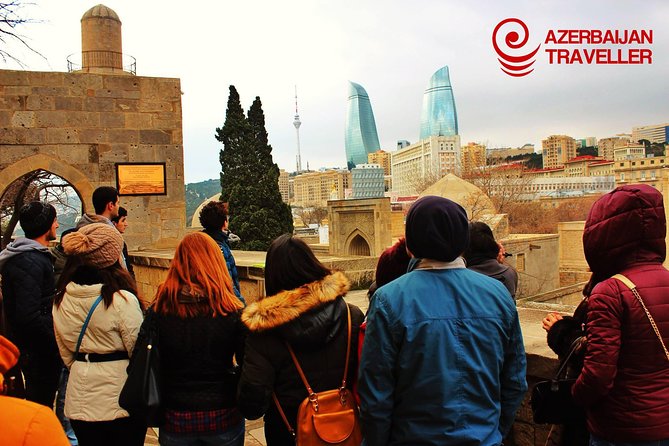
Ismailiyya Palace is one of the route’s signature buildings. An oil baron commissioned it in memory of his son, and its Venetian Gothic design makes it one of Baku’s most striking architectural landmarks.
The story captures the mixture of grief, wealth, and public display that runs through Baku’s oil-boom architecture. It was a memorial, but it was also a highly visible statement about status and taste.
The guide’s role matters here. Without context, the building can look like an attractive European-style façade in an unexpected place. With context, you can read it as part of a broader pattern: wealthy Baku residents used architecture to honor family, show social position, support institutions, and leave a mark on the city.
The route also includes the Literature Museum and Nizami’s statue, adding a cultural counterweight to the commercial story. These stops remind you that Baku’s public identity was built through literature and learning as well as oil and money.
How the guide shapes the experience
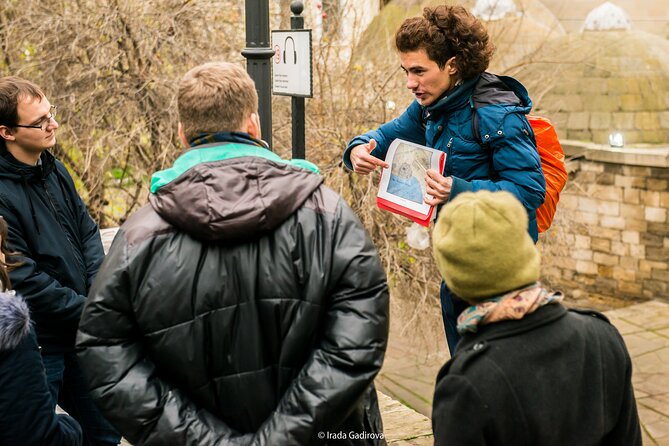
The guide can make or break a walking tour, and this experience depends heavily on the person leading it. Gani receives repeated praise for his clear English, humor, strong command of local history, and ability to keep a group engaged. His use of prepared photographs and diagrams helps you compare present-day Baku with earlier periods.
He is also praised for answering questions, speaking patiently with families, and adding personal and cultural observations rather than reciting only architectural facts. That style suits this route, which crosses several centuries and political eras in a short time.
Lina is also identified as a guide who gives a warm introduction to Old Baku and practical suggestions, including baklava and vegetarian food. Guide assignments can change, so you should not assume a specific person is guaranteed unless the booking confirms it.
The tour is described as private and offers personal attention, but the maximum listed group size is 30. That wording deserves clarification. A private guide does not always mean a one-party tour, especially when group discounts are available. If conversation and flexible pacing are your priorities, ask how many people will be in your departure.
Price, pace, and what the $70 covers
At $70 per person, this is not the cheapest way to see Baku’s center. The value comes from having a guide connect the Old City, oil-boom architecture, social change, literature, and everyday life in one organized walk.
You are paying for interpretation, not transportation or extensive interior access. Bottled water is included, but lunch, private transport, and admission fees are not. Since the route is on foot and begins near public transportation, the lack of a vehicle is usually an advantage rather than a problem for this central itinerary.
The tour lasts about 2 hours and 30 minutes. That is long enough to cover the main story without taking your entire day, but short enough that you can add a museum, meal, or independent exploration afterward.
The experience is booked, on average, about 25 days ahead. That suggests you should reserve early if your Baku dates are fixed, particularly if you want a specific guide or departure time. Mobile tickets are available, and confirmation is provided at booking.
Wear comfortable shoes and plan for ordinary city walking. The Old City includes narrow streets and the route has several stops, so you will get more from it if you are comfortable standing while listening.
Who should book this Baku walk?
I would choose this tour early in a Baku visit. It gives you a mental map of the central districts and helps you decide which buildings, museums, and neighborhoods deserve a second look.
It suits first-time visitors, history fans, architecture lovers, families, and anyone who wants context rather than a simple checklist of photo stops. The guide’s use of humor, stories, photographs, and practical suggestions also makes it a good fit for people who find formal historical tours too dry.
It is less suitable if you want to enter every major monument, spend long periods inside museums, or avoid walking. You should also clarify the group setup if the promise of a private tour is central to your decision.
The cancellation policy is generous if you plan ahead: cancel at least 24 hours before the local start time for a full refund. Changes or cancellations within 24 hours are not refunded. Poor weather or failure to reach the minimum number of participants can lead to a new date, another experience, or a full refund.
Should you book it?
Book it if you want Baku’s major sights tied into one clear story. The strongest feature is not any single building. It is the way the walk links medieval Icherisheher with the oil boom, modernization, Soviet influence, literature, and present-day life.
The tour offers especially good value as a first introduction, and guides such as Gani appear to bring unusual warmth, humor, and visual material to the route. Just remember that the main monuments are explained from outside, admission is not included, and the private format should be confirmed if you do not want a larger group.
FAQ
How long is the Baku Oil Heritage and Old Town Walking Tour?
The tour lasts approximately 2 hours and 30 minutes.
What is the price?
The listed price is $70 per person.
Where does the tour begin?
It begins at KFC9RCP+28F on Nizami Street in Baku, near Fountain Square.
Where does the tour end?
The tour ends back at the meeting point at Fountain Square.
Is the tour private?
The experience is described as including a personal guide and private touring, but the listed maximum is 30 participants. Confirm the exact group arrangement when booking.
Which Old City sights are covered?
The route covers Gosha Gala Gate, the 12th-century citadel walls, Maiden Tower, Muhammad Mosque, narrow Old City streets, the area around Shirvanshahs’ Palace, and the Museum of Miniature Books.
Are entry tickets to the Maiden Tower and Shirvanshahs’ Palace included?
No. The tour explains these sights from their entrances and does not include entry.
What is included in the price?
Bottled water is included.
Is transportation or lunch included?
No. Private transportation, lunch, and admission fees are not included.
Can I cancel for a full refund?
Yes. You can receive a full refund if you cancel at least 24 hours before the experience start time. Cancellations within 24 hours are not refunded.
What happens if the weather is poor or the tour does not reach its minimum?
You will be offered a different date or experience, or a full refund.
Just added around the world
- Vatnajökull Glacier Walk from Hali★ 5.0 · 479 reviews
- Old Hobart Pub Walking Tour★ 4.5 · 91 reviews
- Ice Cave and Glacier Walk into Blue Glacier Canyon★ 5.0 · 224 reviews
- Southwest Tasmania Wilderness Experience: Fly Cruise and Walk Including Lunch★ 5.0 · 233 reviews
- Saigon’s Hidden Flavors – Private Street Food Walk with Local Students★ 5.0 · 301 reviews
- Hobart History, People & Places – 2 hour city walk★ 5.0 · 224 reviews
- Vegan Walk Not Just Vegan Food★ 5.0 · 266 reviews
- Ho Chi Minh City: Highlights & Hidden Gems – Free Walking Tour★ 5.0 · 194 reviews
Old Town Walking Tours, compared.
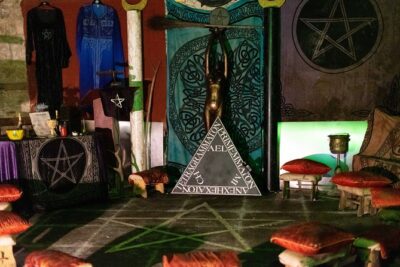
Underground Vaults Walking Tour in Edinburgh Old Town
Read our review →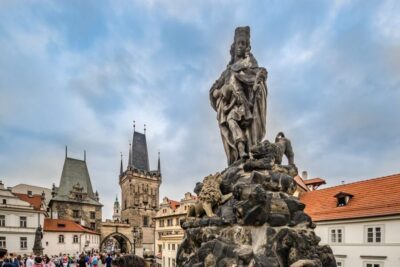
3-Hour Walking Tour of Old Town & Prague Castle
Read our review →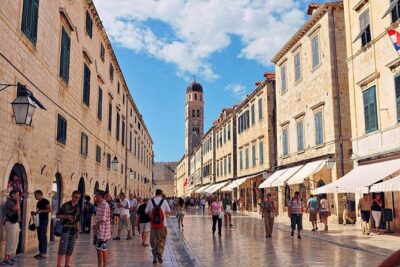
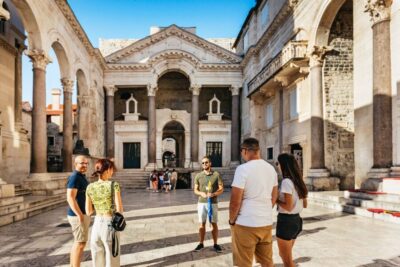
Old Town and Jewish Quarter Guided Walking Tour
Read our review →
Marrakech: Ben Youssef, Secret Garden, & Souks Walking Tour
Read our review →Browse the lists this tour appears in