
REVIEW · WALKING TOURS
Sidemen Trekking: A Walk from a Different Perspective
Sidemen’s best views are not always found at a lookout. They appear along narrow rice-field paths, beside irrigation channels, and from a slightly shaky wooden bridge used by both motorbikes and pedestrians. This two-hour walk takes you through the working countryside rather than a staged photo stop.
I like the close look at Balinese farming, from plowing and planting to harvesting, and I like the one-way route, which keeps the scenery changing. Guides such as Adidas, Daria, Wayan, and Komang add local stories and help with photos. The main drawback is the footing: paths can be narrow, slippery, and uneven, so this is not a gentle stroll for everyone.
Key points at a glance
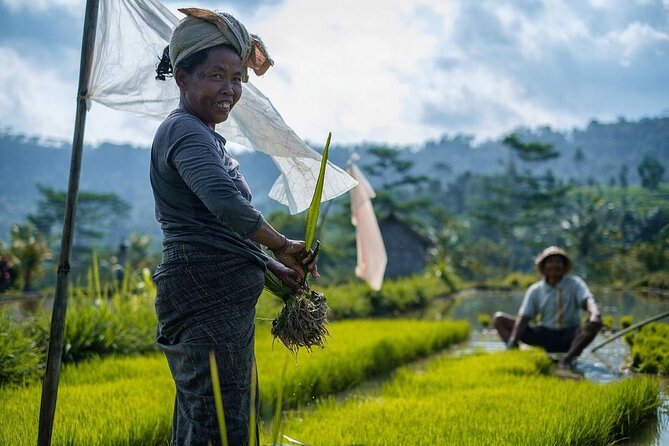
- Rice farming up close: See active fields, mixed crops, irrigation channels, and farmers at work.
- A local route: Walk through Sidemen villages and the Subak of Ogang, far from the busy tourist circuits.
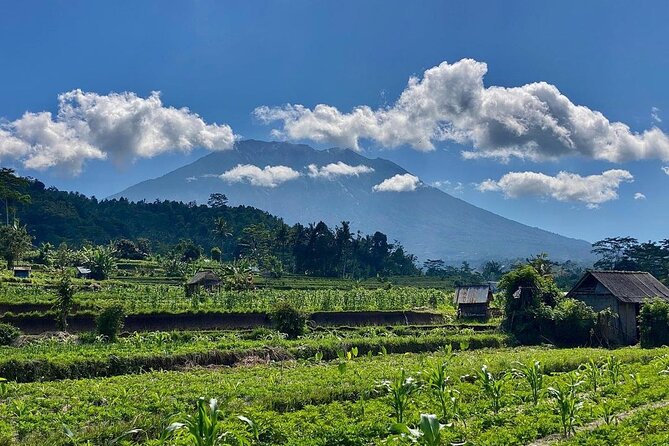
- Mount Agung views: On clear days, the rice terraces open toward the mountain and the valley.
- A useful one-way design: You keep moving through new scenery instead of retracing your steps.
- Small groups: The tour is limited to 10 people and led in English.
- Good value at $13: A guide and bottled water are included, but you arrange your own transport.
Why Sidemen’s rice fields feel different
Sidemen gives you a more practical view of Bali. The rice terraces are not simply scenery arranged for a photograph. They are part of everyday work, with farmers tending crops, managing water, and moving between plots along narrow raised paths.
That is the real appeal of this walk. You are not only looking at terraces from a roadside viewpoint. You are walking through them, often close enough to see the lines separating one field from another and the channels carrying water through the traditional Subak system.
The route also brings you into village life. You pass homes, a temple used by local villagers for prayer, small roads, plantations, and farming areas. Guides who grew up in the area can explain details that are easy to miss on your own, including local plants, crops, farming methods, and the role of water in Balinese agriculture.
I would not choose this outing if your main aim is a strenuous mountain hike. It is a relaxed but active countryside walk, with several uphill and downhill sections. The terrain, not the distance, is what makes it demanding.
More Hikes and Treks in the world:
- Self guided Hike Trail to Nature Walk & Waterfall
★ 4.5 · 283 reviews - Tenerife: Underwater Walk – Sea Trek Experience
★ 5.0 · 237 reviews - Los Angeles: Griffith Observatory Guided Hike/Walking Tour
★ 4.9 · 199 reviews
Starting at Pasar Sidemen and Upa Boga
The walk begins at Toko Upa Boga Pertenunan, beside Pasar Sidemen on the main road. Look for the shop with the sign Upa Boga. Your guide comes to meet you there, so allow a little extra time to find the correct storefront rather than waiting in the middle of the market.
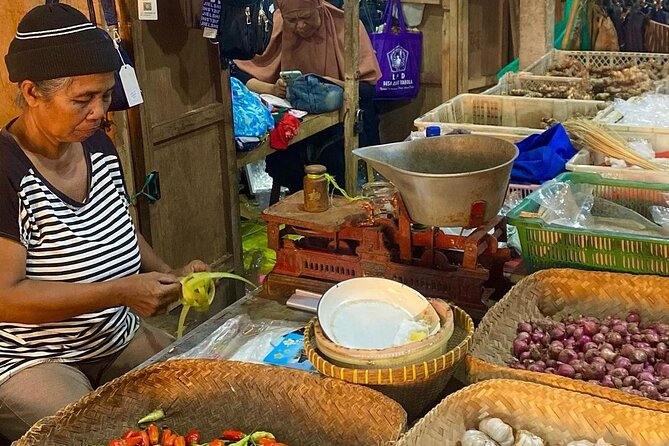
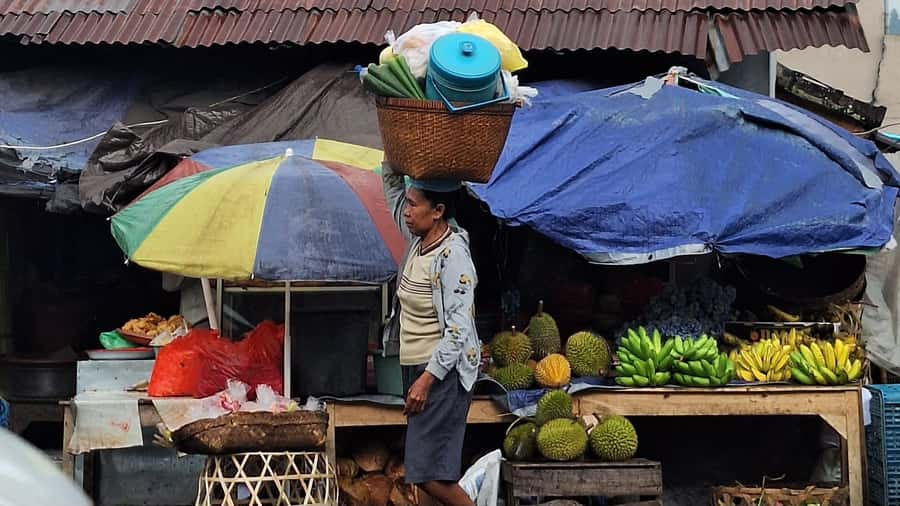
If you book a morning departure, you can spend about 10 minutes looking around Pasar Sidemen before setting off. The traditional market is open from 5:00 AM to 10:00 AM, so an early start is the only way to include it properly. You will find a working food market rather than a polished attraction, and it gives you a quick look at what local residents buy and sell.
A later start means you may miss the market. That is worth considering when you choose your time, especially if local food markets are important to you. The main trek still follows the same countryside route, but the market adds a useful beginning.
This is also where you should meet your transport plan head-on. Hotel pickup and drop-off are not included. If you are staying in Sidemen, arrange a ride through your hotel, since some hotels do not allow Grab drivers to collect passengers. A driver should meet you at the finish point, not the starting point.
Through the village toward Mount Agung

After the market, the walk heads toward the rice paddies. The route rises and falls through village streets before reaching the fields, so you get a gradual change from shops and homes to open farmland.
The views are one of the strongest reasons to book. From higher points, you can look across the terraces toward the valley and, on a clear day, Mount Agung. The mountain view is not guaranteed, since cloud and weather can change quickly, but the open rice fields still make the route worthwhile.
Your guide may also point out native plants and mixed plantations along the way. Sidemen is not just rice. The variety of crops gives the walk more texture and helps explain how local families use the land across the year.
I like this section because it connects the postcard view with the people who maintain it. You see that rice farming is a process, not a background decoration. Depending on the season, you might see plowing, cultivating, planting, or harvesting.
Irrigation channels and the Yellow Bridge

The walk follows water routes connected with the Subak system. Subak is the traditional Balinese approach to organizing irrigation, and the route passes through the Subak of Ogang.
This is one of the most useful parts of the experience because the system becomes easy to understand when you are standing beside the channels. Instead of hearing an abstract explanation, you can watch water move through the same network that supports the fields.
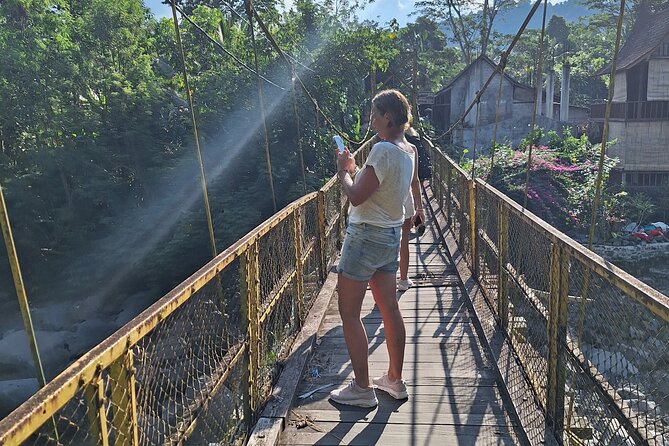
The route then reaches Jembatan Kuning Tukad Yeh Unda, the Yellow Bridge. It is a scenic photo stop, but it is also a working crossing used by people and motorbikes. The bridge may feel slightly shaky, and it is not the place to rush or stare at your phone while crossing.
If you are uneasy with narrow crossings, tell your guide. The guide can help you keep a steady pace and make sure the group stays together. The bridge is one of the route’s memorable details, but it is also a reminder that this is a real village walk rather than a carefully paved park path.
A few more walking tours around the world worth a look
- Magical London: Harry Potter Guided Walking Tour
★ 4.7 · 22,044 reviews - Reykjavik Food Walk – Local Foodie Adventure in Iceland
★ 5.0 · 18,952 reviews - History and Hauntings of Salem Guided Walking Tour
★ 5.0 · 14,564 reviews - New Orleans Premier Ghost, Voodoo and Vampire Walking Tour
★ 4.5 · 12,856 reviews
Dukuh village and the daily rhythm of Bali
From the bridge, the route continues into Dukuh village. You walk along roads and paths, passing through the community before returning to the rice fields.
This section matters because it gives you a break from scenery and brings the focus back to people. You may see local residents moving through their daily routines, while your guide explains parts of Balinese culture and village life. Several guides, including Adidas and Daria, are praised for mixing useful information with humor, which helps keep the walk conversational rather than lecture-like.
The group size is limited to 10 people. That is small enough to ask questions and hear the guide, though the actual feel can depend on how many people book your departure. Private walks may also be available through the provider, but the standard activity is described as a small-group tour.
The guide’s local background is especially valuable here. Adidas, for example, is from the area and has explained local crops, plants, and farming from firsthand experience. Other guides named in the tour feedback include Wayan, Daria, Adi, Komang, and Gede. The exact guide depends on the date and schedule, so book this for the local interpretation rather than expecting one particular person.
Babakan Dukuh Rice Terrace
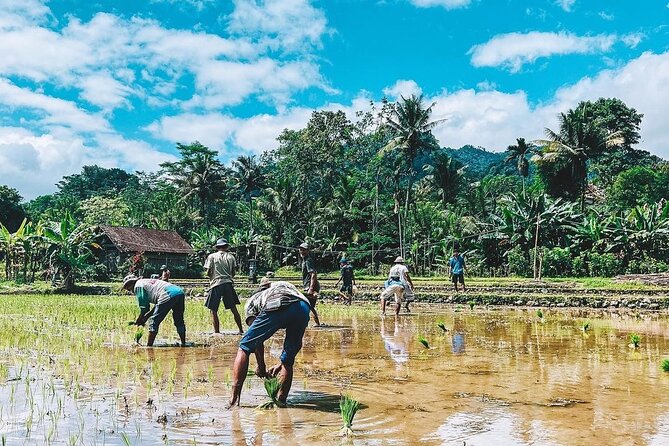
The final major section leads into Babakan Dukuh Rice Terrace. This is the longest part of the walk, with about 45 minutes spent among the fields, terraces, and views.
Here you get the clearest sense of how the route works. You move along narrow paths between plots, stop at scenic points, and look across layers of cultivated land. The path can be high grass in places, and one person reported red ants along the way, so long trousers may be more comfortable than shorts.
The footing deserves honest attention. You may encounter narrow walls between paddies, wet ground, slippery sections, and uneven paths. Good hiking or sports shoes with a firm sole are important. Sandals and flip-flops are specifically not allowed, and that rule makes sense here.
The walk is not presented as a technical hike, but you need reasonable balance and a basic level of fitness. It is not suitable for children under five, pregnant women, people with heart problems, people over 60, or people with a low level of fitness according to the activity guidance. Those limits are broad, so anyone with concerns should judge the terrain carefully before booking.
Weather can change the feel of the route. Rain may make the paths more slippery, but it can also bring out the deep greens of the fields. Bring a raincoat, sunscreen, a hat, and sunglasses. The included bottled water is useful, but you should still arrive prepared for a warm walk.
Finishing at Warung Ume Anyar
The trek ends at Warung Ume Anyar in Ogang Village, not back at the market. This one-way arrangement is a smart feature because you continue through new villages and plantations instead of turning around.
The finish point is also the detail most likely to cause trouble if you ignore it. Arrange a pickup before the walk begins. Ask your driver to meet you at Warung Ume Anyar around two to two and a half hours after your start time, allowing some flexibility for stops, weather, and the pace of the group.
If needed, you can walk back to the starting point along the main road. It is about 3 kilometers and takes roughly 30 to 40 minutes, but that is an extra walk after the trek and is not the most appealing plan in hot weather.
The experience does not include hotel transport, meals, or a restaurant stop as part of the tour. Warung Ume Anyar is the finish location, so you should confirm your onward plans rather than assume a meal or ride is included.
Is $13 good value?
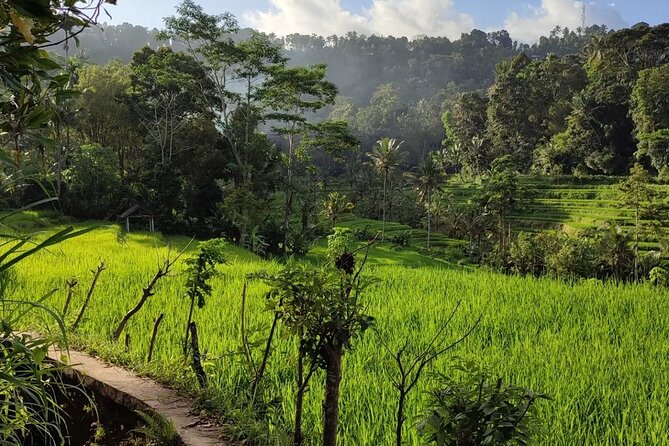
At $13 per person, this is strong value if you want a guided introduction to Sidemen’s countryside. The fee includes an English-speaking guide and bottled water, and the guide is the part that makes the route practical. Without local help, it would be easy to miss the best paths through the fields or confuse a public road with a route across the paddies.
The price is less impressive if you only want a short viewpoint visit. You are paying for two hours of walking, local explanation, route-finding, and the chance to see farming areas that are not obvious from the main road.
Transport is the main extra cost. You need to reach Pasar Sidemen and arrange a ride from Ogang Village afterward. Factor that into your budget, especially if you are staying outside Sidemen.
The activity offers free cancellation up to 24 hours before the start time, and you can reserve now and pay later. Those policies are useful if your Bali plans are still shifting, but they do not remove the need to arrange transport.
Who should book this walk?
I would recommend it to anyone staying in Sidemen who wants to understand why the area feels different from busier parts of Bali. It suits people who enjoy farms, village roads, local culture, photography, and a calm pace more than intense exercise.
Families with older children may enjoy it, and one six-year-old completed the route with extra care from the guide. Still, the official guidance says it is not suitable for children under five, and the uneven paths mean you should judge younger children individually.
You should skip it if you dislike narrow paths, wet ground, insects, or changing elevation. You should also think twice if your fitness is low or if you need a fully paved route.
For photographers, the combination of rice terraces, Mount Agung views, the Yellow Bridge, village scenes, and working farms gives you plenty of variety. Guides often stop at good viewpoints and may help take photos, which is handy for couples and small groups.
Practical tips for a better walk
- Wear hiking shoes or sturdy sports shoes with good grip.
- Bring a hat, sunglasses, sunscreen, and a raincoat.
- Consider long trousers for high grass and insects.
- Book a morning session if you want to visit Pasar Sidemen.
- Meet at Toko Upa Boga Pertenunan beside the main road market.
- Arrange your return ride to Warung Ume Anyar before the walk.
- Allow two to two and a half hours before scheduling pickup.
- Keep your phone and camera secure on the bridge and narrow field paths.
- Tell the guide if you need a slower pace or extra help on slippery ground.
Should you book Sidemen Trekking?
Book it if you want working rice fields, village life, and local explanation rather than another polished Bali photo stop. The price is low, the route is varied, and the guides add the context that turns a pretty walk into a useful look at Sidemen.
Skip it if you want a hard mountain trek, a fully accessible path, or door-to-door transport. For most fit visitors staying in or near Sidemen, though, this is an easy way to spend two hours seeing the area from ground level. Just wear proper shoes and arrange your pickup before you set out.
FAQ
Where does the Sidemen trek start?
It starts at Toko Upa Boga Pertenunan beside Pasar Sidemen on the main street. Look for the shop with the Upa Boga sign, where the guide will meet you.
Where does the walk finish?
The trek ends at Warung Ume Anyar Restaurant in Ogang Village.
How long does the trek take?
The walk lasts about two hours. You should allow two to two and a half hours when arranging your pickup, since stops and walking pace can vary.
Is hotel pickup included?
No. Hotel pickup and drop-off are not included. You need to arrange transport to the market and a ride from the finish point.
Can I visit the traditional market during the tour?
Yes, if you book a morning departure. Pasar Sidemen is open from 5:00 AM to 10:00 AM, and the market visit takes about 10 minutes.
What should I wear?
Wear hiking shoes or sports shoes with good grip. Sandals and flip-flops are not allowed. Long trousers may help protect you from high grass and insects.
Is the tour suitable for children?
The activity is not suitable for children under five. The route has narrow and slippery sections, so older children should be comfortable walking on uneven ground.
Is the tour available in English?
Yes. The tour includes a live English-speaking guide, and the group is limited to 10 participants.
Just added around the world
- Vatnajökull Glacier Walk from Hali★ 5.0 · 479 reviews
- Old Hobart Pub Walking Tour★ 4.5 · 91 reviews
- Ice Cave and Glacier Walk into Blue Glacier Canyon★ 5.0 · 224 reviews
- Southwest Tasmania Wilderness Experience: Fly Cruise and Walk Including Lunch★ 5.0 · 233 reviews
- Hobart History, People & Places – 2 hour city walk★ 5.0 · 224 reviews
- Saigon’s Hidden Flavors – Private Street Food Walk with Local Students★ 5.0 · 301 reviews
- Vegan Walk Not Just Vegan Food★ 5.0 · 266 reviews
- Ho Chi Minh City: Highlights & Hidden Gems – Free Walking Tour★ 5.0 · 194 reviews
Walking Tours, compared.

Magical London: Harry Potter Guided Walking Tour
Read our review →
Reykjavik Food Walk – Local Foodie Adventure in Iceland
Read our review →
History and Hauntings of Salem Guided Walking Tour
Read our review →
New Orleans Premier Ghost, Voodoo and Vampire Walking Tour
Read our review →
Amsterdam Anne Frank: Small-Group Walking Tour & Local Guide
Read our review →

Edinburgh Castle: Guided Walking Tour with Entry Ticket
Read our review →
Anne Frank’s Story – Guided Walking Tour through Amsterdam
Read our review →Browse the lists this tour appears in