
REVIEW · SALEM
Salem: 1692 Witchcraft Trials Walk
The most useful way to understand Salem’s witch trials is to walk the streets where the crisis unfolded. This 90-minute tour connects the jails, courthouse, and homes of judges and accused people, turning a grim chapter of history into a human story about fear, politics, family rivalry, and neighbors turning on neighbors.
I like two things here: the route covers real locations tied to the trials, and the guides make the story personal rather than treating it like a spooky Halloween show. Guides including Christine, Bob, Mark, James, and Stache have been praised for clear explanations, humor, local knowledge, and keeping children and adults involved.
The main drawback is that the walk ends where it begins, so you do not finish at another major Salem sight. You also may not see every site connected with the trials, and the tour runs rain or shine, so good shoes and weather-ready clothing matter.
Key points at a glance
- A 1.5-hour walk through Salem’s trial story: Cover a little over a mile with roughly eight to ten stops.
- Places tied to the crisis: See former jail locations, the courthouse area, and homes linked to judges and accused people.
- History beyond ghost stories: Learn how fear, political turmoil, and family rivalries helped drive the accusations.
- Personal stories at the center: Hear about the people accused, the officials who judged them, and the families caught in the panic.
- Strong guide-led experience: Guides such as Christine, Bob, Mark, James, and Stache are known for lively delivery and clear facts.
- Easy walking logistics: The route is fairly flat, wheelchair accessible, and supported by an amplifier for larger groups.
Why Salem’s witch trials make sense on foot
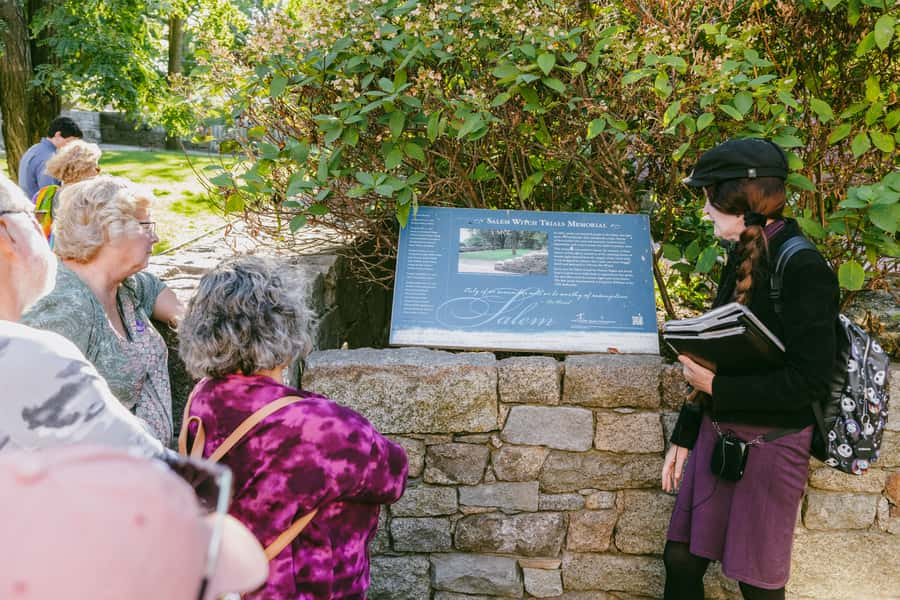
Salem’s 1692 crisis can seem impossible when reduced to a list of executions. Twenty people were executed for witchcraft, while five more died in jail. A walking tour gives you a better way to connect those numbers with the town where accusations spread.
The tour begins with the conditions that allowed the panic to grow. Two girls began having fits, and the community interpreted their behavior as evidence of the Devil’s presence. What followed was not a single dramatic event, but a chain of suspicion, testimony, arrests, examinations, and court proceedings.
You hear how fear moved through a small community. Political turmoil added pressure. Family rivalries sharpened old arguments. Neighbor testified against neighbor, and family members could find themselves on opposite sides of the accusation. The story becomes less about supernatural claims and more about how ordinary people behave when institutions accept panic as proof.
That is the tour’s greatest value. You are not simply asked to remember that Salem had witch trials. You are shown how a local crisis gathered force and why it became so destructive.
A few more walking tours around Salem worth a look
- History and Hauntings of Salem Guided Walking Tour
★ 5.0 · 14,564 reviews - Salem Voodoo, Vampires, and Ghosts Guided Walking Tour
★ 5.0 · 1,931 reviews - Bewitched Walking Tour of Salem
★ 5.0 · 1,895 reviews
Starting at Central and Essex Streets
Meet at 8 Central Street, at the large brick building on the corner of Essex and Central Streets. Look for the purple signs. This is also where the walk ends, so you can leave a bag, meal plan, or nearby attraction for later without needing to arrange transportation across town.
The meeting point is practical for a first Salem activity. The tour gives you a framework for the city before you spend time on other attractions, museums, or historic sites. If you are visiting during a busy period, arrive with enough time to find the building and gather before departure.
The exact starting time depends on availability, so check the schedule when booking. The activity lasts 90 minutes, and the route covers a little more than a mile. That is a manageable distance, but you will be standing and walking for most of the experience.
Eight to ten stops that build the story
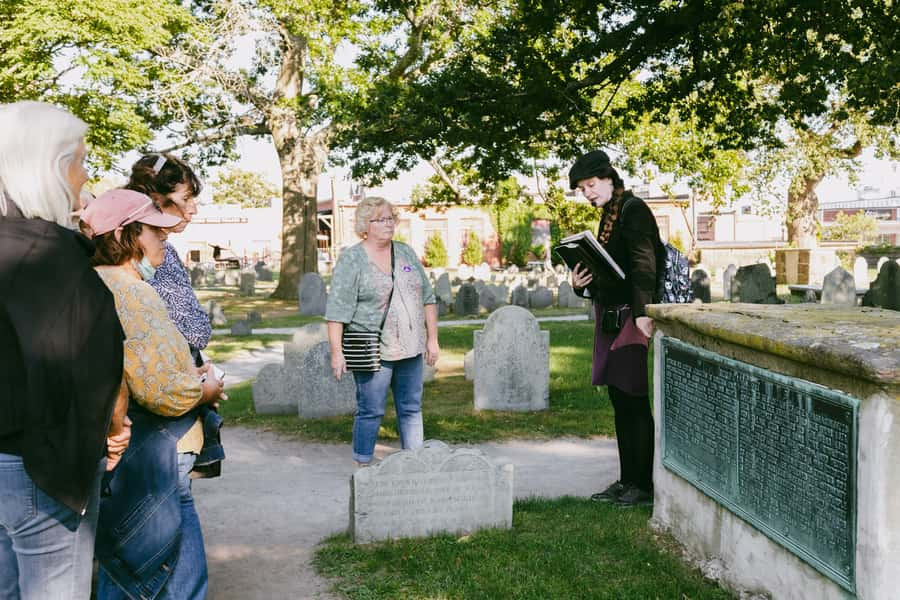
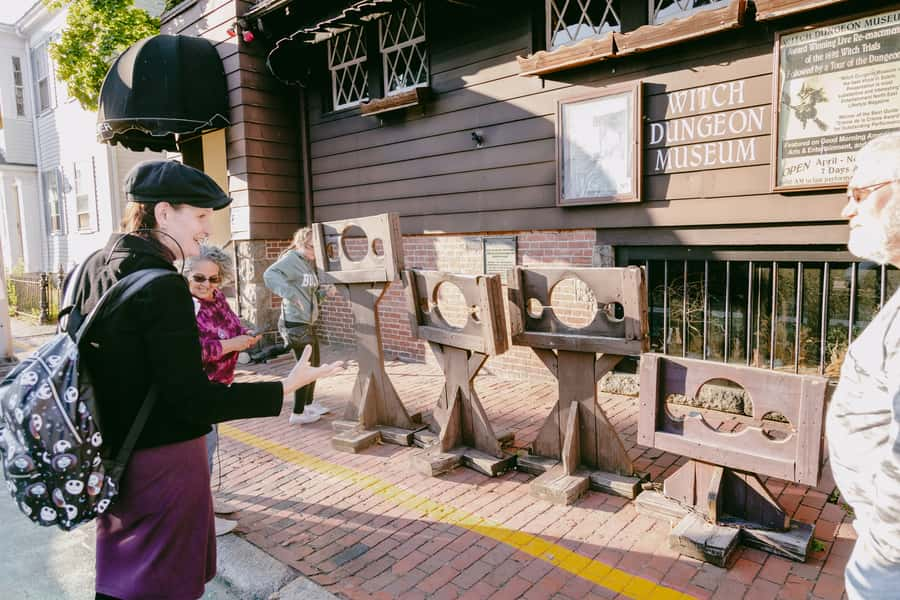
The route includes eight to ten stops. The supplied details do not assign fixed names or exact order to every stop, but the major themes are clear: the jails where suspected witches were held, the courthouse, and homes associated with judges and accused people.
That variety matters. A courthouse alone can make the trials feel like a distant legal episode. A jail location reminds you that accusations had immediate physical consequences. Homes bring the story back to individuals, families, property, status, and neighborhood tension.
At each stop, the guide explains what happened there and how the site fits into the larger crisis. The best guides use the locations as prompts for storytelling, not as excuses for a string of dates. You should expect facts, personal accounts, and details about the people involved.
Some stops may be more visual than others. Salem has changed since 1692, and not every important place survives as a complete period building. The tour is strongest when you listen closely to the guide’s explanation and use the present-day street as a setting for the past.
From the first fits to a public panic
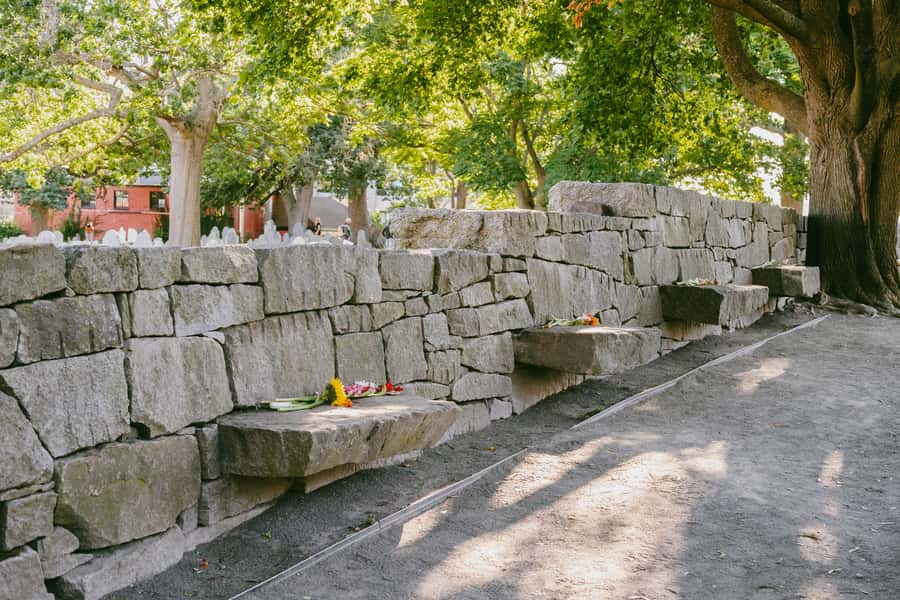
The story begins with two girls whose fits helped set the crisis in motion. Their symptoms were treated as signs of witchcraft, and the idea quickly gained power in the community.
From there, suspicion widened. Once accusations were accepted, each new testimony could appear to confirm the last. The search for the Devil became a frantic effort to identify and remove supposed threats.
I appreciate that this experience places the hysteria in a social and political setting. The tour does not treat the events as a strange isolated episode. It explains how fear combined with local disputes and authority figures who were willing to hear accusations.
This is also where the personal stories matter most. The accused were not anonymous names from a schoolbook. They were people with families, homes, reputations, and relationships in the same community as the accusers. Hearing those stories makes the cost of the trials easier to grasp.
Same streets, a different route:
- Satanic Salem Walking Tour
★ 5.0 · 1,635 reviews - Mysteries and Murders of Salem Guided Night-Time Walking Tour
★ 5.0 · 1,488 reviews - The Salem Witch Walk
★ 4.5 · 1,301 reviews - 2.5-Hour Salem History & Sightseeing Guided Walking Tour
★ 5.0 · 850 reviews
The jails, courthouse, and homes of Salem
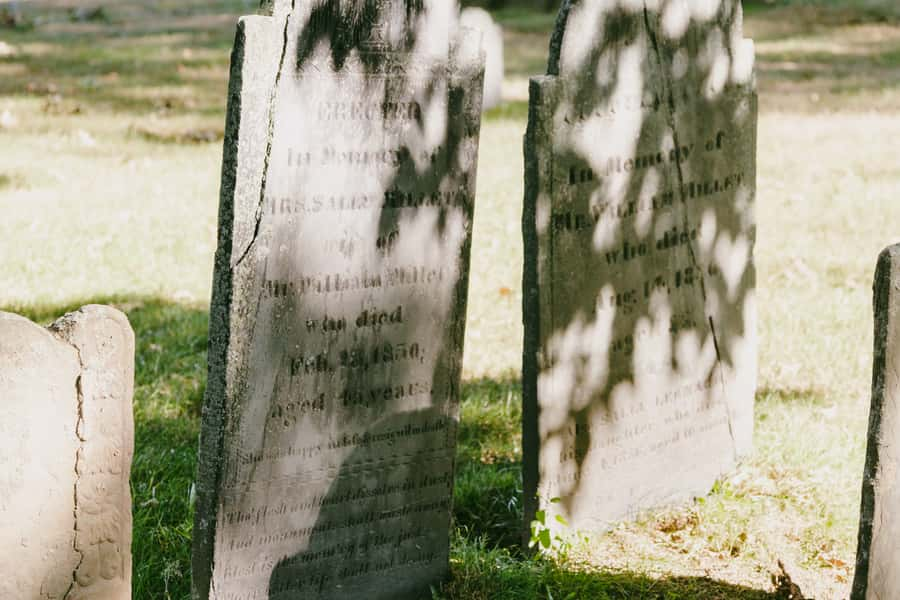
The former jail sites show the harshest side of the process. Suspects were held in difficult conditions, and five people died in jail before the crisis ended. The jail stops help you understand that imprisonment itself could become a sentence, even before a formal execution.
The courthouse portion explains how accusations moved through the legal system. The court did not simply reflect the panic outside. Its proceedings helped give the accusations authority, allowing fear to take the form of official judgment.
Homes connected to judges and accused people add another layer. You begin to see how close the opposing sides were. This was not an abstract conflict between strangers. It unfolded among people who lived in the same town and, in some cases, belonged to connected families and social circles.
You should not expect to enter every building or see a preserved interior at each stop. The value comes from standing in the area while the guide explains who lived there, what role the person played, and how that place connects to the trial story.
Guides who keep a serious subject lively
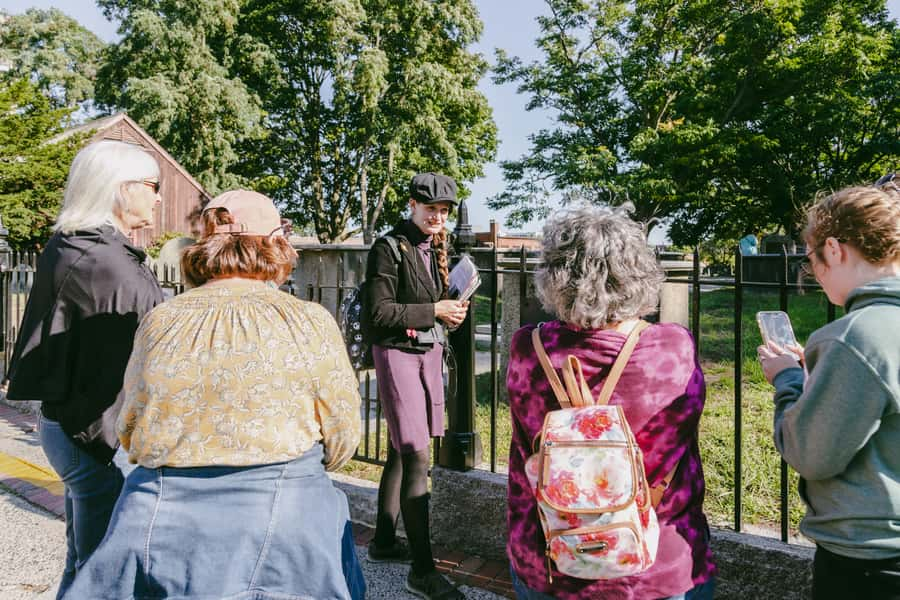
A good Salem witch-trial tour needs balance. The subject involves executions and deaths in jail, but a presentation that is grim from start to finish can become hard to follow. The guides on this experience are praised for combining clear facts with humor and interaction.
Christine is specifically noted for making the tour interactive and enjoyable for different ages. She has also been attentive to children working on school projects, helping them gather useful information and offering to answer follow-up questions.
Bob is described as local and connected to the area, with a strong grasp of the history. Mark is praised for being friendly and informative. James is noted for an interesting and considerate style, while Stache is described as courteous and well prepared.
Those names may not be available on every departure, so do not book expecting one particular person unless the operator confirms it. Still, the range of guide styles is encouraging. You may get a guide who uses character-based delivery, animated storytelling, dry humor, or a more direct academic approach.
For larger groups, an amplifier is used. That is a small but important detail. Street noise can easily swallow a soft-spoken guide, and hearing every explanation is central to the experience.
A flat, accessible route with a little weather planning
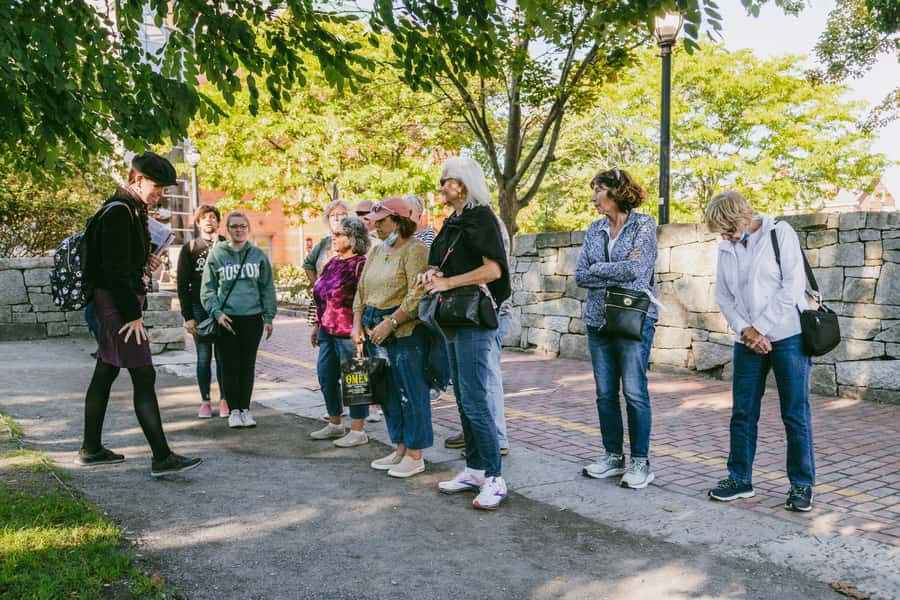
The route is wheelchair accessible and fairly flat. That makes this a practical choice if steep streets or long climbs would limit your options. The total distance is a little over a mile, divided among eight to ten stops rather than walked without pauses.
You should still wear comfortable shoes. The route involves outdoor walking, standing, and moving between sites. The tour operates rain or shine, so bring a coat, umbrella, sun protection, or other weather-appropriate clothing according to the forecast.
Large groups may feel less intimate than small ones, though the amplifier helps with hearing. One useful advantage of a small group is the chance to ask questions and stay close to the guide. The walk remains worthwhile in either setting, but arrive ready to pay attention at each stop.
Smoking, video recording, and audio recording are not allowed. Plan to take written notes or still photographs only if permitted by the guide and surroundings. For a school project, the live explanations can be useful, but you should not rely on recording the tour.
What the $25 price really buys
At $25 per person, this is a reasonably priced introduction to Salem’s central historical story. You are paying for 90 minutes with a live guide, a planned route, and explanations that connect several places into one narrative.
The value depends on how you use it. If you walk Salem without background, you may pass a jail site, courthouse area, or historic home without understanding its connection to the trials. This tour supplies that context in one compact outing.
It is also a good first activity because it can help you decide what deserves more of your time afterward. You may leave with particular people or places you want to investigate on your own.
The price is less attractive if you already know the trial story well and want access to interiors, exhibits, or original objects. This is a guided outdoor walk, not a museum visit. You are buying interpretation and local context rather than entry to a collection.
Discount categories are available for veterans, police, firefighters, teachers, EMTs, nurses, and Salem residents when valid identification is provided. Students, seniors, and military visitors pay the same price as the standard ticket.
The right tour for families and first-time visitors
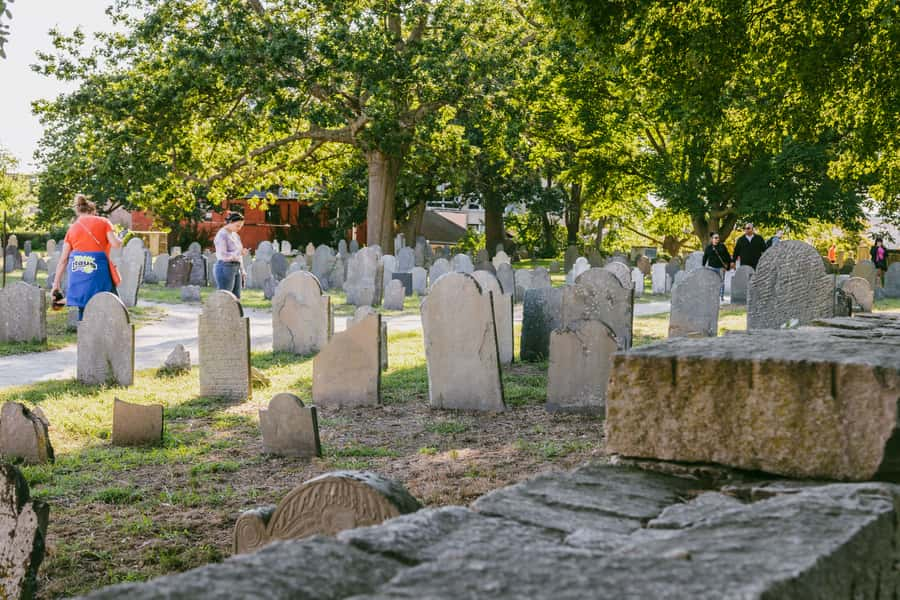
This walk suits first-time visitors who want to understand Salem beyond its witch-themed shops and seasonal atmosphere. It also works well for families, since the guides are expected to keep the material active and understandable for different ages.
A student working on the witch trials may find the personal stories and place-based explanations especially useful. The guide can explain the sequence of events in a way that is easier to remember than reading a list of names and dates.
History-minded adults should appreciate the focus on causes and consequences. The tour asks you to think about fear, authority, local politics, and family conflict, not just the sensational parts of the story.
It may be less suitable if you want a theatrical ghost walk, a fully indoor activity, or a tour focused on modern Salem culture. Although the guides may use humor or character-based storytelling, this is primarily a historical walking tour.
How to fit it into your Salem day
Because the tour returns to 8 Central Street, it is easy to place near other activities in central Salem. I would take it early in the day if you want its background to shape the rest of your visit.
An early tour can help you recognize names and locations later. You may also prefer a later departure if you want to explore first and use the walk as a focused history lesson before dinner.
Allow more time around the 90-minute duration if you are traveling with children, using a wheelchair, or visiting in poor weather. The walking distance is modest, but gathering, moving between stops, and asking questions can make the experience feel longer than the advertised time.
Free cancellation is available up to 24 hours in advance, and you can reserve now while paying later. That flexibility is useful if your Salem plans depend on weather, ferry schedules, or a changing day trip itinerary.
Should you book the Salem witch-trial walk?
Book this tour if you want a clear, human account of Salem’s 1692 crisis and prefer learning while walking through the town. The combination of jails, courthouse history, homes, and personal stories gives you more context than a quick photo stop or a themed attraction.
I would especially recommend it for first-time visitors, families, students, and anyone who wants a guide who can answer questions and keep the subject lively. The flat route and wheelchair access make it easier to include in a mixed-ability group.
Skip it if you need an indoor experience, access to historic interiors, or a strictly academic lecture. Also think twice if steady rain or cold weather would spoil an outdoor walk.
For $25, the tour is a sensible way to get your bearings and understand why Salem’s witch trials became such a powerful part of the city’s identity. Bring comfortable shoes, dress for the weather, and listen for the human details. That is where the story becomes more than a ghost tale.
FAQ
How long does the Salem witchcraft trials walk last?
The tour lasts 1.5 hours.
How far will I walk?
The total walking distance is a little over one mile.
How many stops are included?
The route includes approximately eight to ten stops.
Where does the tour begin?
Meet at 8 Central Street, at the large brick building on the corner of Essex and Central Streets. Look for the purple signs.
Where does the tour end?
The tour ends back at the meeting point on Central Street.
What places connected with the trials will I see?
The tour visits locations connected with the jails, courthouse, judges, and accused people, including relevant homes and sites around Salem.
Is the tour wheelchair accessible?
Yes. The route is fairly flat and wheelchair accessible.
What language is the tour in?
The live tour guide speaks English.
Does the tour operate in bad weather?
Yes. Tours operate rain or shine, so bring weather-appropriate clothing and comfortable shoes.
Can I cancel my booking?
Yes. You can cancel up to 24 hours in advance for a full refund. You can also reserve now and pay later.
Just added around Salem
- Salem: Secrets of Salem Hidden History Walking Tour★ 4.5 · 198 reviews
- Salem, MA: Hocus Pocus Movie Guided Walking Tour★ 4.7 · 263 reviews
- Salem: Ghosts, Witches, & Warlocks Guided Walking Tour★ 4.3 · 398 reviews
- Salem, MA: History and Hauntings Guided Walking Tour★ 4.8 · 651 reviews
- Best Salem Witch Trials Historical Walking Tour★ 4.0 · 743 reviews
- 2.5-Hour Salem History & Sightseeing Guided Walking Tour★ 5.0 · 850 reviews
- The Salem Witch Walk★ 4.5 · 1,301 reviews
- Mysteries and Murders of Salem Guided Night-Time Walking Tour★ 5.0 · 1,488 reviews
Walking Tours, compared.

Magical London: Harry Potter Guided Walking Tour
Read our review →
Reykjavik Food Walk – Local Foodie Adventure in Iceland
Read our review →
History and Hauntings of Salem Guided Walking Tour
Read our review →
New Orleans Premier Ghost, Voodoo and Vampire Walking Tour
Read our review →
Amsterdam Anne Frank: Small-Group Walking Tour & Local Guide
Read our review →

Edinburgh Castle: Guided Walking Tour with Entry Ticket
Read our review →
Anne Frank’s Story – Guided Walking Tour through Amsterdam
Read our review →Browse the lists this tour appears in