
REVIEW · CROATIA
Rovinj: Guided Walking Tour
Rovinj’s best story is how thousands of people once lived on a small island reached by a channel that no longer exists. This 90-minute walk brings that change to life, then leads you through trade streets, old walls, the former Jewish Ghetto, and up to St. Euphemia Church, where the Adriatic opens out below.
I like the tour’s local point of view and its useful food and coffee advice. Guides such as Goran add humor and explain not only old buildings, but also where locals shop, eat, swim, and watch the sunset. The main consideration is the footing: cobblestones cover much of the old town, and the uphill walk to the church may be hard for anyone with limited mobility.
Key points at a glance
- The missing bridge has a story: Learn why Bridge Square has no bridge today and where the former channel ran.
- A local guide leads the way: Guides are from Rovinj, with Goran especially praised for clear explanations, humor, and practical suggestions.
- The route moves through real neighborhoods: Walk Carera Street, the waterfront, the old Jewish Ghetto area, stables, and the ancient walls.
- The finale is Rovinj’s best viewpoint: Finish at St. Euphemia Church, a strong place for sunset over the Adriatic.
- You get useful local tips: Find out where to buy produce, drink coffee, eat cake and gelato, and locate good beach areas.
- Plan for cobbles and an incline: Half of the walk is in the historic center, with uneven streets and a fairly easy but noticeable climb.
Why Rovinj’s vanished channel matters
Meet your guide outside the farmers’ market in the lower town, in front of the large white World War II memorial on Pietra Ive Street. The exact meeting point is just off the market, near the ATM marked Auro Domus.
This is a practical starting place because you begin in the part of town where daily life still happens. You are not dropped straight into a monument-heavy route. Instead, the guide first helps you understand how Rovinj is arranged, where the lower town begins, and how people approach the old center from the north.
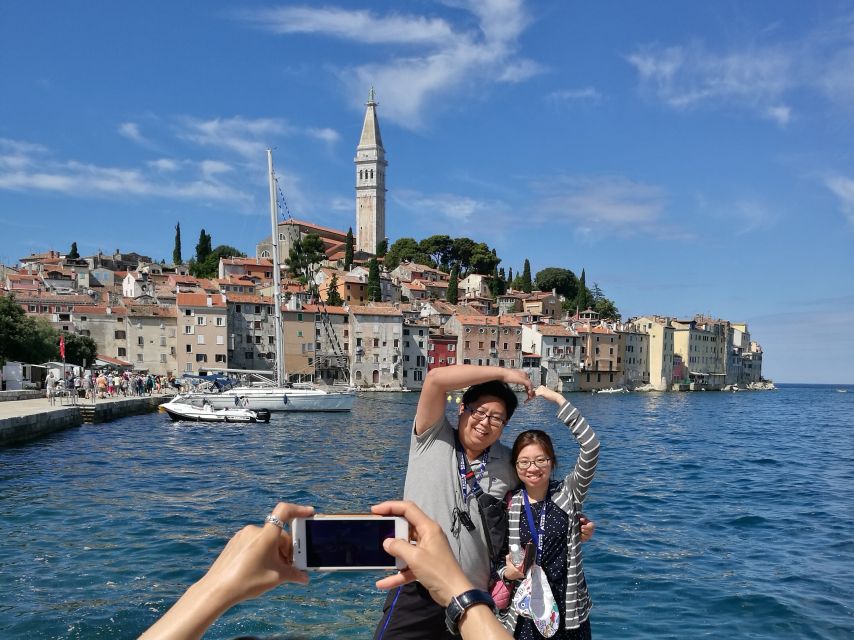
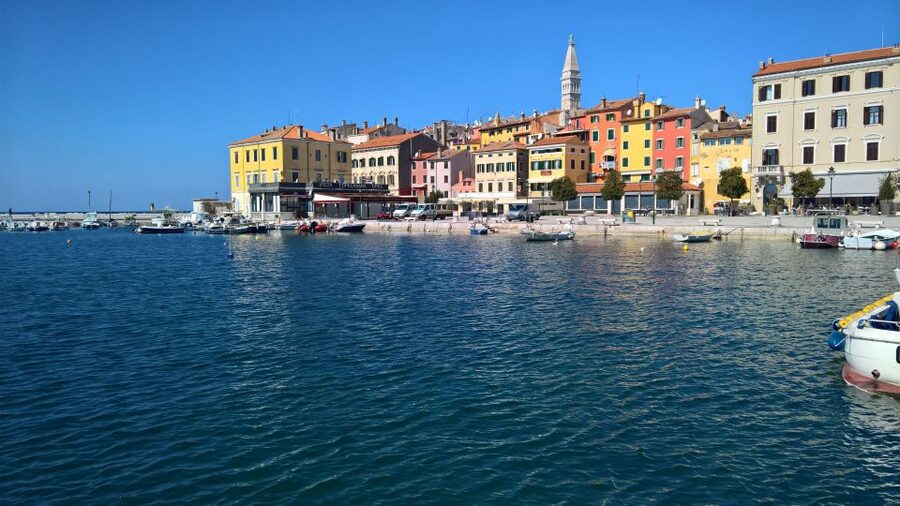
The first major stop is Valdibora Square. This is the area people see when approaching Rovinj from the north, and it offers a useful view of the city’s shape. With the blue Adriatic behind the rooftops, you can start to understand why Rovinj looks like a town rising from the water.
The guide explains where the old channel ran and where a bridge once connected the island to the mainland. The name Bridge Square survives, but there are no bridges to cross today. The channel was filled in about 1,000 years ago, changing the relationship between the settlement and the shore.
That detail gives the rest of the walk a clear purpose. Rovinj’s narrow streets, crowded old center, and compact form are not random. They grew from centuries of life in a limited space. You begin to see the town not just as a pretty Adriatic view, but as a place shaped by water, trade, and the need to make room for a large population on a small island.
More Guided Tours in Croatia:
- Plitvice Lakes: Guided Walking Tour with Bus and Boat Ride
★ 4.5 · 1,303 reviews - Split: Diocletian Palace & Old Town Guided Walking Tour
★ 4.7 · 882 reviews - Dubrovnik Food and Drink Walking Tour with a Local Guide
★ 5.0 · 654 reviews
Carera Street and the money behind the old town
From Valdibora Square, the walk continues along Carera Street. This is where the guide connects Rovinj’s architecture with the goods that helped build its fortunes.
In the 18th century, trade in olive oil, fish, and wine brought wealth to the town. As you walk, you get an idea of how those products supported the houses, shops, and streets around you. The value here is the connection between ordinary urban details and the work that paid for them.
A guide who grew up in Rovinj can add the local angle that a sign or guidebook usually misses. Goran, named frequently by people booking this walk, is known for explaining the city’s past in a lively way, with humor that keeps the history moving. The language options are English, Italian, Portuguese, French, and Croatian.
This part of the route should suit you if you like context more than a rapid list of dates. The walk does not appear designed as a formal architecture lecture. Instead, it links trade, daily life, and the changing shape of the town.
The waterfront, with time for an Aperol Spritz
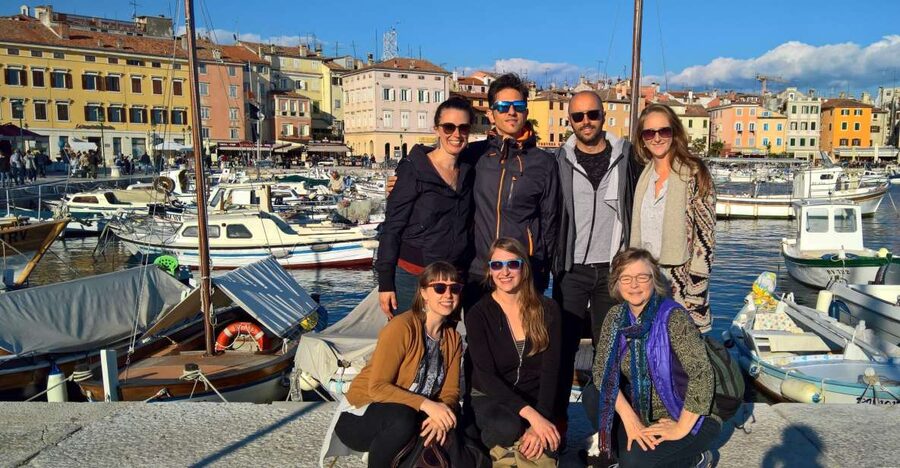
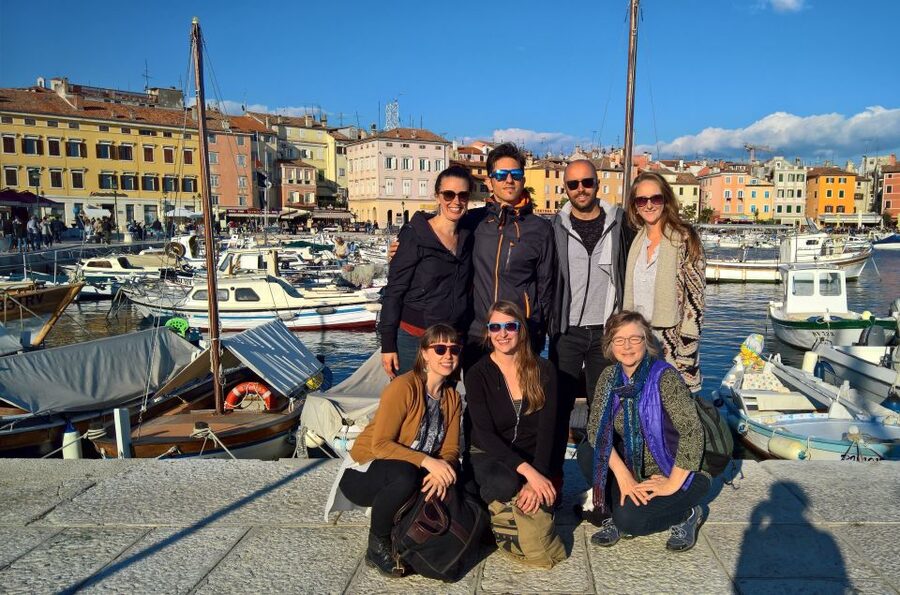
The route reaches Rovinj’s waterfront, one of the town’s essential stops. Here, the old center, harbor, and open Adriatic come together in one view.
The waterfront is also where the tour shifts from history to practical enjoyment. The guide points out places for coffee, food, cakes, and gelato, and the location makes an Aperol Spritz an obvious choice after the walk. Drinks are not included, so any stop for an aperitif is at your own expense.
I like this balance. A good walking tour should help you understand a place and help you use it. Knowing where to return for a drink or a late-afternoon view can matter as much as hearing when a wall was built.
The route does not promise a long break here, so do not treat the waterfront as a full café stop during the 90 minutes. Think of it as a guided orientation. You can return later with a better sense of where you want to sit.
Through the old Jewish Ghetto and stables area
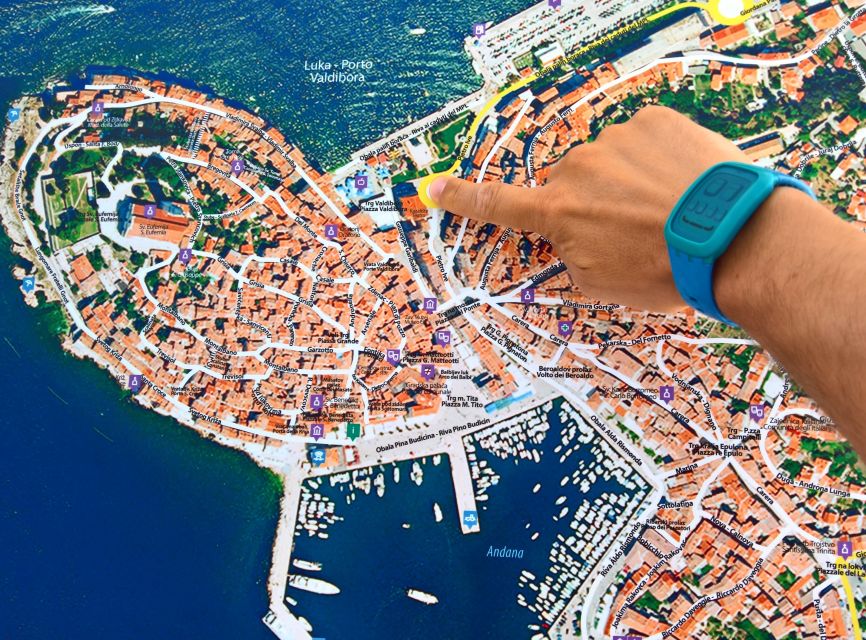
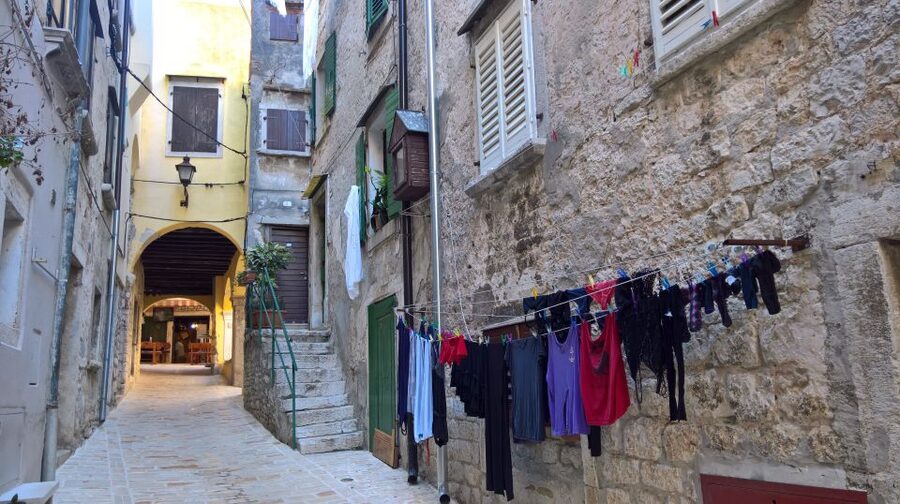
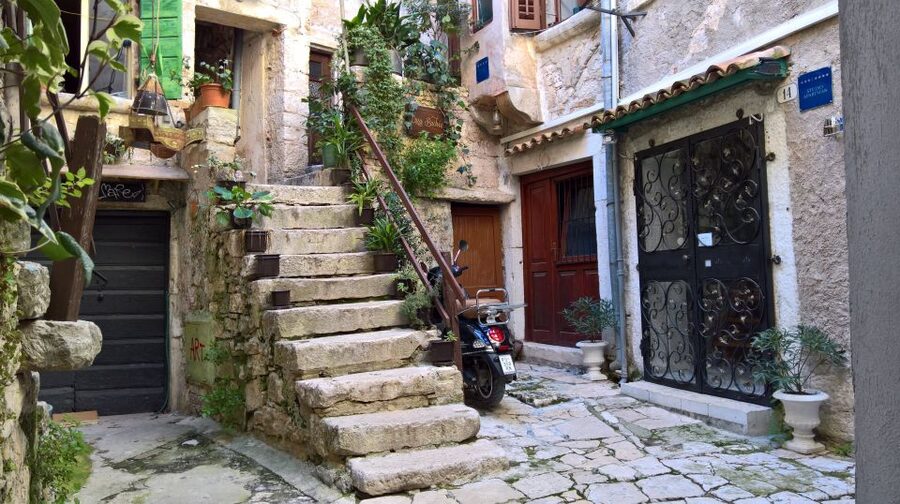
Next comes one of the more unusual sections of the walk. You move through the maze of cobbled streets toward the area around Rovinj’s old Jewish Ghetto, just off the Arch of the Bearded.
This section shows why a local guide is useful. The streets can feel like a puzzle, and a short visit can otherwise blur into a pleasant but nameless walk through stone lanes. The guide gives the area a place in the city’s social and religious past, then connects it with the nearby stables area.
The route through the old center is atmospheric, but it is also the part that demands the most care underfoot. Half of the walking tour takes place on cobblestones. Wear shoes with a firm sole, and be cautious if rain has made the stones slippery.
The narrow streets also mean you should not expect every stop to offer a broad view or a clear photo angle. Some of the value comes from the story attached to the place, not from a single grand monument. This is a good fit for anyone who enjoys small details and layered local history.
A few more walking tours around Croatia worth a look
- Dubrovnik: Old Town Walking Tour
★ 4.8 · 5,174 reviews - Split: Old Town and Diocletian Palace Walking Tour
★ 4.9 · 4,727 reviews - Dubrovnik Discovery Old Town Walking Tour
★ 5.0 · 4,458 reviews - Walking Tour of Split and Diocletian’s Palace
★ 5.0 · 2,588 reviews
Following the walls uphill to St. Euphemia
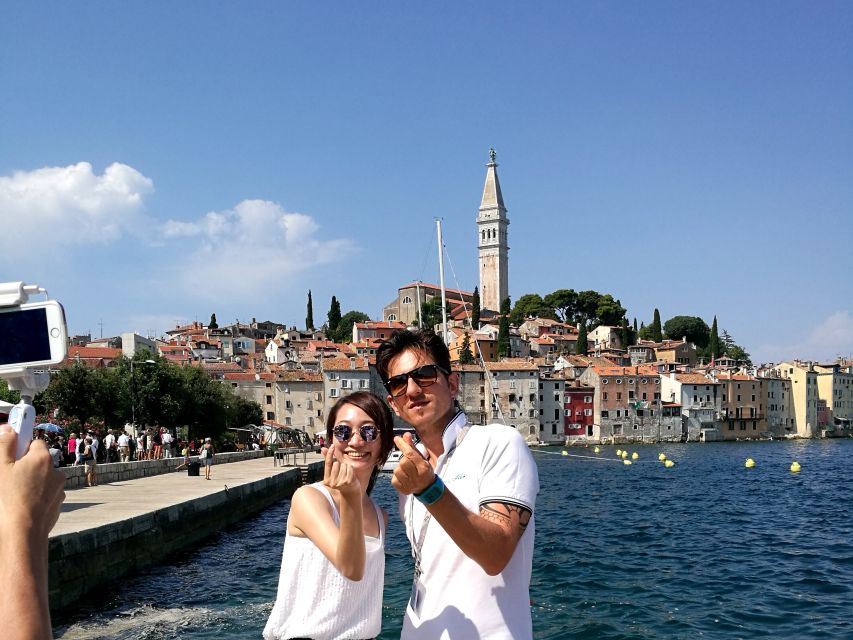
The final 30 minutes lead along the ancient city walls and uphill toward St. Euphemia Church. The climb is described as fairly easy, but it is still a climb over old-town streets. People with mobility limitations may find this portion difficult, and the experience is not suitable for people with mobility impairments.
The reward is the city’s strongest viewpoint. From the church area, you can look back over Rovinj’s rooftops and out toward the Adriatic. The tour ends here, which is a smart choice. You finish above the tightly packed streets rather than having to retrace your steps to the lower town.
St. Euphemia is also promoted as one of the best places to watch sunset in the Adriatic. Timing matters, of course. The 90-minute schedule and starting times vary, so check availability if sunset is your main goal. The walk itself does not include a sunset guarantee, but ending at the church gives you the right setting to stay on afterward.
I would plan a little extra time after the tour if the light is good. The official walk ends at the church, not back at the meeting point, so you can continue exploring or settle in for the view.
What the 90 minutes really gives you
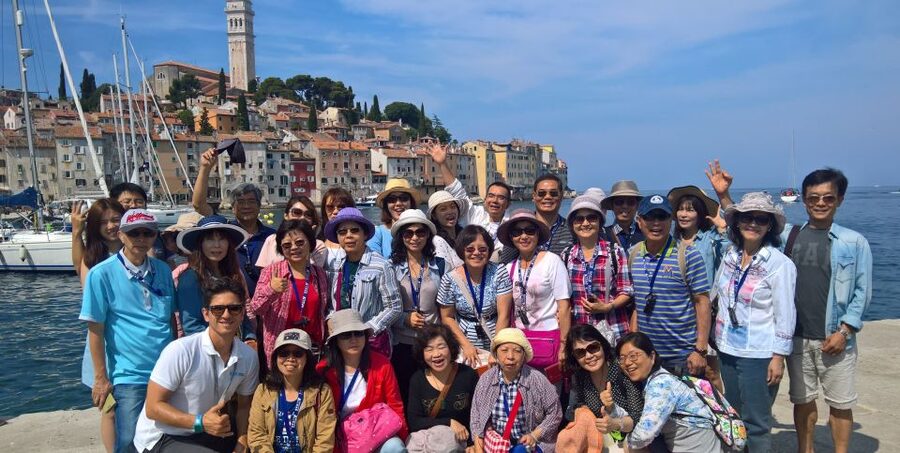
The tour divides its time into short sections rather than spending the full hour and a half at one landmark. The broad pattern is:
- About 15 minutes for the guided introduction to Rovinj
- About 15 minutes around the early historic areas
- About 10 minutes at another short stop
- About 20 minutes through the central streets and waterfront
- About 30 minutes for the old town, walls, and climb to the church
The exact flow can depend on the guide and the pace of the group, but the route covers a lot of ground. You get an overview rather than a museum-style examination of one site.
That makes this a useful first activity in Rovinj. You can use the advice later in the day, return to a café you noticed, find the market again, or choose a beach area with a clearer idea of the town’s layout.
It is less suitable if you want entry into several museums, a long church visit, or extended time for photographs. The tour is outdoors and built around movement, explanation, and orientation.
The most useful local advice
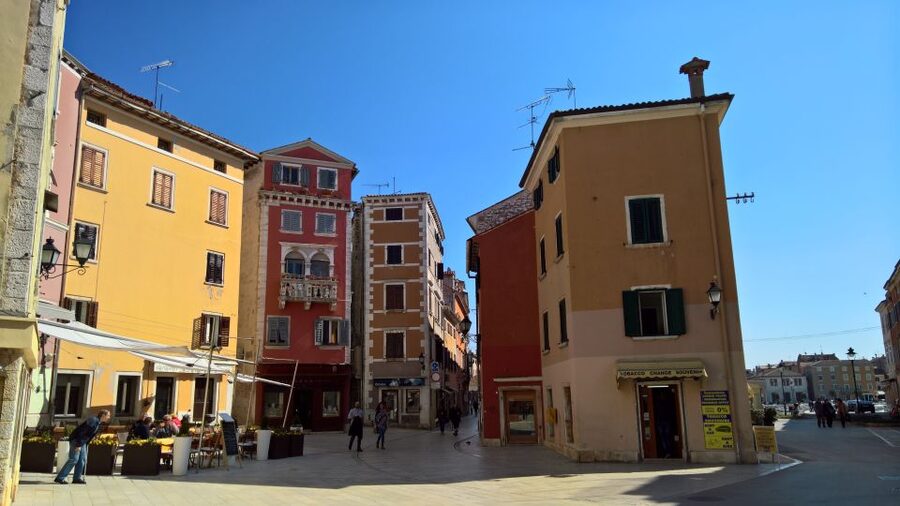
The practical tips are a major reason to book this walk. By the end, you should know where locals buy fruits and vegetables, where to find good coffee, and where to look for cakes and gelato.
You also receive suggestions for restaurants and traditional foods. Several comments about the tour specifically praise the dining and gelato recommendations, which can save you from choosing a place at random in a busy old center.
The advice is not limited to food. The guide also points out the best beach areas. That matters because Rovinj’s shoreline is spread across different parts of town, and your ideal place for swimming may not be the same as the best location for a sunset drink.
I would keep a note on your phone during the walk. With restaurants, cafés, gelato shops, beaches, and market advice arriving alongside history, it is easy to forget a name by the end.
The guide makes the difference
This experience depends heavily on the person leading it. The guide is a local, born in Rovinj, and the stated aim is to present the city in an authentic way and answer questions.
Goran is the guide most often identified in the booking feedback. His strengths are clear English, animated delivery, humor, and a broad grasp of Rovinj and the surrounding area. Past comments also single out his ability to keep the history from becoming dull and to speak with everyone in a small group.
That last point matters. One group described having five people, with the guide answering questions across the whole group. Group size can change, so you should not assume every departure will be this small, but the format allows for questions rather than a fixed speech if the group remains manageable.
If you like a guide who tells stories, gives opinions, and offers restaurant suggestions, this should suit you. If you prefer silent exploration or a strictly academic presentation, the personal style may feel more than you need.
Price, timing, and practical value
At $32 per person, the tour is priced like a compact orientation walk rather than a full-day excursion. You are paying for 90 minutes with a licensed local guide, not for transport, meals, drinks, or attraction admission.
For a first look at Rovinj, I consider that fair value. The route covers the former channel, Carera Street, waterfront, old Jewish Ghetto area, stables, city walls, and St. Euphemia Church. Just as important, it gives you recommendations you can use for the rest of your stay.
The value is strongest when you take the tour early in your visit. You can follow up on the guide’s coffee, beach, restaurant, and gelato suggestions afterward. If you book it on your last morning, much of that practical advice comes too late to use.
You can cancel up to 24 hours before the activity for a full refund, and the reserve-now, pay-later option keeps your plans flexible. Starting times vary, so check availability before booking, especially if you want to finish near sunset.
Who should book this Rovinj walk?
I would recommend it to first-time visitors who want the city to make sense quickly. It also fits people who enjoy local stories, short walks, scenic views, and practical food advice more than formal sightseeing.
It is especially useful for:
- Couples or small groups who want a simple introduction to the old town
- Visitors interested in how Rovinj’s island past shaped its streets
- People who want recommendations for coffee, gelato, restaurants, markets, and beaches
- Anyone who prefers a local guide to a recorded audio tour
- Visitors with enough time to return to places suggested during the walk
Think carefully if you have difficulty walking on uneven ground. The old-town cobbles and uphill finish are part of the route, not optional extras.
FAQ
Where does the Rovinj walking tour meet?
Meet the guide in front of the large white World War II memorial on Pietra Ive Street, just off the local farmers’ market. The meeting point is near the ATM marked Auro Domus.
Where does the tour finish?
The walk finishes at the Church of St. Euphemia at the top of Rovinj’s historic center.
How long does the walking tour last?
The tour lasts 90 minutes.
What languages are available?
The tour is offered in English, Italian, Portuguese, French, and Croatian.
Is food or drink included?
No. Personal expenses, including food and drinks, are not included.
Is the walk suitable for people with limited mobility?
The historic center has cobblestone streets, and the route climbs toward St. Euphemia Church. People with limited mobility may find it challenging, and the activity is not suitable for people with mobility impairments.
Can I cancel for a full refund?
Yes. You can cancel up to 24 hours in advance for a full refund. You can also reserve now and pay later.
Should you book it?
Book this tour if you want Rovinj’s streets to have meaning before you explore them on your own. The vanished channel, former island settlement, trade routes, Jewish Ghetto area, city walls, and church viewpoint give you a solid sense of how the town developed.
The strongest reason to choose it is the combination of history and usable local advice. A guide such as Goran can help you understand the city, then point you toward coffee, gelato, restaurants, produce, beaches, and sunset views.
Skip it only if uneven streets are a serious problem or if you prefer to wander without a guide. For most first visits, $32 is a sensible way to get your bearings and turn a beautiful town into a place you understand.
Just added around Croatia
- Dubrovnik Jewish Heritage Private Walking Tour★ 5.0 · 121 reviews
- Dubrovnik Old Town: Small-Group Walking Tour With A Local★ 5.0 · 123 reviews
- Game of Thrones Cruise And Walking Tour Karaka Dubrovnik★ 5.0 · 401 reviews
- Dubrovnik’s Old Town Walking Tour★ 5.0 · 96 reviews
- Early Bird Dubrovnik History Tour – 7:30 Start★ 5.0 · 198 reviews
- Dubrovnik Old Town Walking Tour★ 4.5 · 186 reviews
- Dubrovnik By Night Walking Tour★ 5.0 · 134 reviews
- Dubrovnik City Tour: Panorama Drive & Sightseeing Walk★ 4.5 · 404 reviews
Walking Tours, compared.

Magical London: Harry Potter Guided Walking Tour
Read our review →
Reykjavik Food Walk – Local Foodie Adventure in Iceland
Read our review →
History and Hauntings of Salem Guided Walking Tour
Read our review →
New Orleans Premier Ghost, Voodoo and Vampire Walking Tour
Read our review →
Amsterdam Anne Frank: Small-Group Walking Tour & Local Guide
Read our review →

Edinburgh Castle: Guided Walking Tour with Entry Ticket
Read our review →
Anne Frank’s Story – Guided Walking Tour through Amsterdam
Read our review →Browse the lists this tour appears in