
REVIEW · ROME
Rome: Dark Past Walking Tour with Capuchin Crypt Ticket
The Capuchin Crypt is the unforgettable centerpiece here: a quiet underground place decorated with the bones of Capuchin friars. From there, the tour links Rome’s famous sights with tales of death, ghosts, strange customs, and human drama.
I like the route for two reasons. First, you see major landmarks such as Trevi Fountain, the Pantheon, and Piazza Navona without getting a standard history lecture. Second, the small-group format lets your guide tell local stories and answer questions. The main drawback is that two hours covers a lot of ground, so the stops are brief and the walk can feel rushed.
Key points to know before booking
- The Capuchin Crypt is the main event: Allow yourself time to take in its unusual bone decorations, even though the visit lasts about 30 minutes.
- You see six atmospheric locations: The route runs from Piazza Barberini through the city center to Santa Maria dell’Orazione e della Morte.
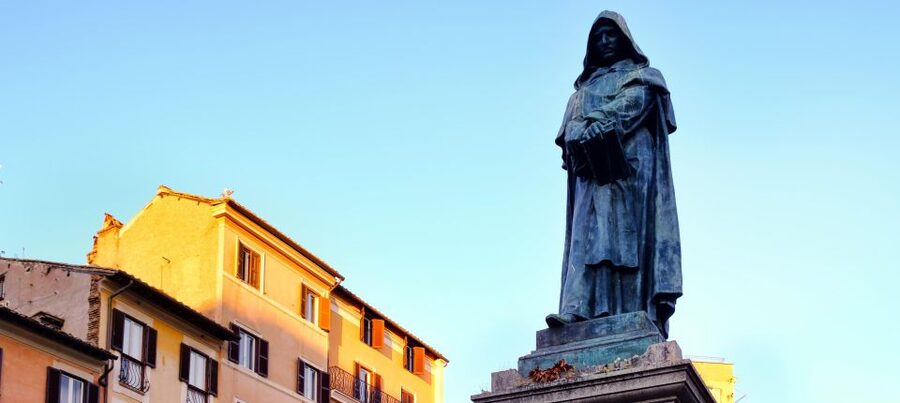
- The stories go beyond dates and names: Expect legends, ghostly tales, curiosities, and the sad story of Giordano Bruno.
- Small groups make a difference: Guides such as Sarah, Fabienne, Gabriella, and Giuseppe have been praised for animated storytelling and personal advice.
- This is a walking tour, not a museum-heavy outing: You receive guided visits at each stop, but the time inside the Pantheon, Piazza Navona, and Campo de’ Fiori is short.
- Dress rules matter: No shorts, short skirts, sleeveless shirts, large bags, photographs, or video inside the crypt.
Why the Capuchin Crypt sets the tone

Rome has plenty of grand churches and ancient ruins. This tour begins with something far less polished and much more unsettling.
The Capuchin Crypt is an underground site decorated with the skeletal remains of Capuchin friars. The bones are arranged as part of the crypt’s design, turning human remains into a solemn, startling display. It is not a quick novelty stop. You need to look closely, listen carefully, and give yourself a moment to process what you are seeing.
The guided visit lasts about 30 minutes. That is enough time for an introduction and a measured look around, though it is not a long museum visit. The crypt also has firm rules. Photography and video are forbidden, so put your phone away and pay attention to the guide.
The crypt is not suitable for young children, and the tour is specifically not recommended for children under 12. That advice makes sense. The setting is serious and macabre rather than playful, and some people may find the display disturbing.
The crypt ticket is included in the tour price, which matters because this is the one paid admission built into the experience. Guides have included Sarah, Fabienne, Gabriella, Giuseppe, and Célia, though you cannot assume you will receive a particular guide unless the booking allows you to request one.
More Entry Tickets in Rome:
- Rome: Guided Walking Tour and Pantheon Priority Entry Ticket
★ 4.3 · 317 reviews - Edinburgh Castle: Guided Walking Tour with Entry Ticket
★ 4.7 · 11,699 reviews - Beijing: Forbidden City Tour(Group/Private)-Tickets Included
★ 4.8 · 7,974 reviews
From Piazza Barberini to the Capuchin Crypt
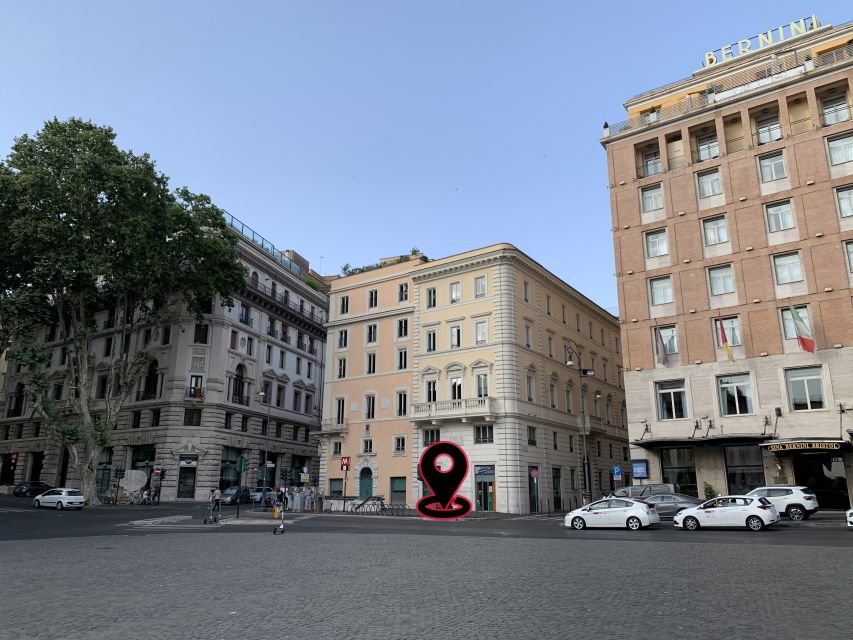
You meet at the corner of Piazza Barberini, 21, and Via di San Nicola da Tolentino, next to Hotel Bernini. This is also the starting point for the tour, so arrive early and make sure you can identify your guide.
One practical warning: a past participant had trouble finding the guide at the meeting point and suggested a banner or flag would help. Do not cut it close. If you arrive late, you will not be allowed to join the tour.
The tour begins around Piazza Barberini before moving to the crypt. You may receive a headset, particularly useful if the group is spread out or the surrounding streets are noisy. Small groups and private departures are available, but the exact group size depends on the option you book.
Trevi Fountain with a darker story

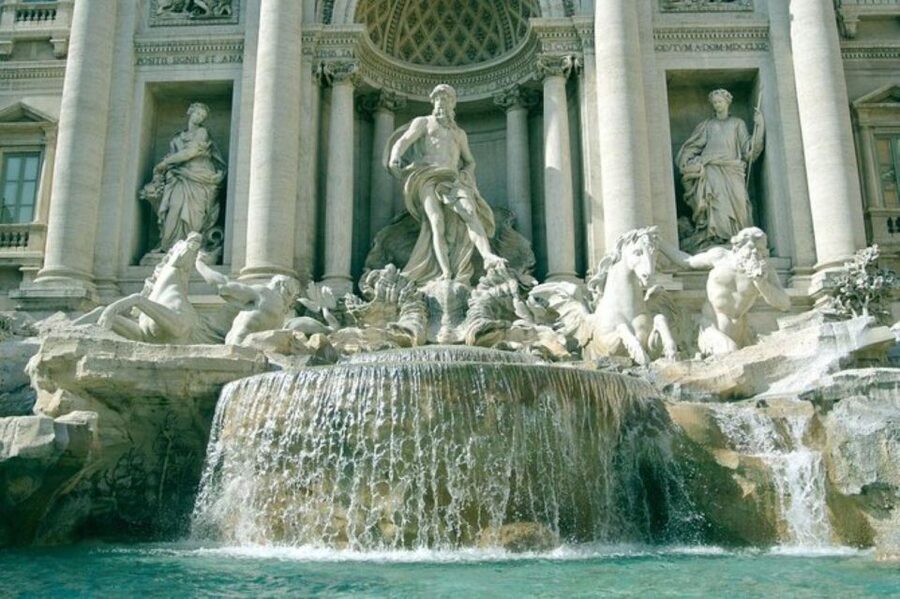
After the crypt, the route heads toward the Trevi Fountain. This is one of Rome’s most famous sights, and it can be difficult to appreciate when the area is crowded.
The guide gives you about 20 minutes here, using the fountain as more than a photo stop. You will hear about its Baroque design, the legends tied to its wishes, and the familiar custom of tossing a coin to ensure your return to Rome. If you have never seen the fountain, this is a useful first introduction. If you already know it well, the local stories give the stop a different flavor.
A good guide can make a real difference at Trevi. Sarah has been praised for helping a small group move through the crowded area without losing the pleasure of the visit. That is important because the fountain is not a quiet place, especially at popular times.
Do not expect a long pause for photographs or a detailed art lecture. This tour is built around movement and storytelling. You see the fountain, learn its key points, and continue through Rome’s streets.
The Pantheon in a quick 15-minute stop
The next major stop is the Pantheon. Its ancient architecture and later religious use give the guide plenty to discuss, particularly when the tour is focused on the tension between myth, faith, death, and daily life.
The scheduled visit lasts about 15 minutes. That is enough for orientation and a focused explanation, but not enough for a slow inspection of every feature. If the Pantheon is high on your list, plan to return on your own for more time.
This short stop is one of the tradeoffs of the tour. You cover several famous places in a single evening, but you do not linger at each one. I would think of the route as an introduction to the historic center, with the guide pointing out what deserves a longer return visit.
The walk between locations also matters. You move through cobbled streets and smaller lanes instead of staying on one broad sightseeing route. Wear comfortable shoes. The route is only two hours, but hard surfaces and frequent stops can make a difference.
A few more walking tours around Rome worth a look
- Rome: Guided Food Walking Tour with Wine in Trastevere
★ 4.9 · 3,105 reviews - Rome: Trastevere & Campo de Fiori Street Food Walking Tour
★ 4.9 · 2,768 reviews - Rome: Paranormal Night Walking Tour & Secret Backstreets
★ 4.9 · 1,921 reviews - Rome: Trastevere Street Food Walking Tour with Local Expert
★ 4.8 · 1,784 reviews
Ghost stories around Piazza Navona
Piazza Navona brings the tour into one of Rome’s grandest Baroque spaces. The square is lined with impressive buildings and decorated with fountains, but the guide focuses on the less visible side of the area.
You will hear about spectral presences said to linger in the palaces facing the piazza. These stories are presented alongside the square’s history and architecture, adding a theatrical edge without turning the stop into a staged haunted attraction.
The scheduled visit lasts about 15 minutes. That gives you time to take in the setting and hear the main stories, but again, it is a compact stop. The square can also be busy, so stay close to the guide and use the headset if provided.
This is where a personable guide can make the experience work. Sarah has been described as animated, while guides such as Camilla, Marinelly, and Gabriella have been praised for mixing frightening and funny stories. The quality of the tour depends heavily on the guide’s delivery, since the route itself is accessible to anyone with a map.
Campo de’ Fiori and the story of Giordano Bruno

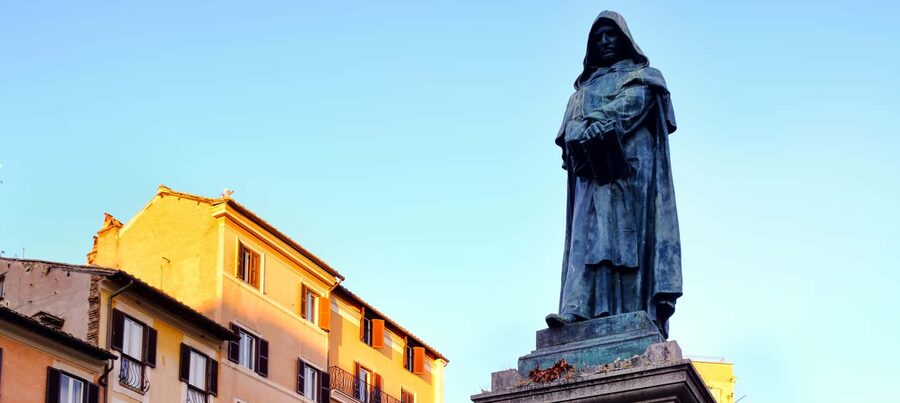
The tour continues to Campo de’ Fiori, a square with a difficult past beneath its lively public face. Here, the guide explains the story of Giordano Bruno, including the impressive and sad parts of his life and death.
This stop gives the tour more substance than a collection of ghost stories. Bruno’s story connects Rome’s public monuments with questions of belief, punishment, power, and memory. It is a reminder that the city’s darker past is not limited to legends.
The visit is scheduled for about 15 minutes, so you receive a concentrated account rather than a full biography. Pay attention to the guide’s explanation and ask questions if time allows. The tour is at its best when it uses a famous square to explain the people and events connected with it.
Campo de’ Fiori also shows the tour’s wider approach. You are not simply being led from one famous fountain to another. The guide uses the city’s streets as prompts for stories that are easy to miss if you are sightseeing alone.
The final stop at Santa Maria dell’Orazione e della Morte
The tour ends at the Church of St. Mary of the Oration and Death, also known as Chiesa Santa Maria dell’Orazione e della Morte. Its name alone fits the mood of the evening.
The church is linked to mystery and death, and the guide closes by explaining the stories surrounding this sacred place. The ending is less about a grand monument and more about leaving you with a final sense of the strange, hidden layers beneath Rome’s familiar streets.
Because the tour ends here, think about your plans afterward. The experience does not include hotel pickup or drop-off, food, or drinks. You are responsible for making your own way back after the final stop.
What the two-hour format really means
At $76 per person, this is not the cheapest way to see Rome’s famous center. Its value depends on what you want from the evening.
You are paying for a guide, the Capuchin Crypt entrance ticket, a headset, and a themed route connecting several major sights. The ticket alone gives the tour a useful base, while the guide adds context and navigation through busy areas. If you enjoy legends, unusual history, and small-group conversation, the price can make sense.
The value is weaker if you want long visits inside every location. The schedule gives about 30 minutes at the crypt, 20 minutes at Trevi Fountain, and 15 minutes each at the Pantheon, Piazza Navona, and Campo de’ Fiori. Some of that time also includes walking between sites.
I would compare it with booking a crypt visit and exploring the central sights independently. Going alone costs less in guiding fees, but you lose the route’s storytelling and the benefit of someone helping you through crowded places. You also need to research the background yourself.
The tour offers free cancellation up to 24 hours before departure and a reserve-now, pay-later option. Those policies are helpful if your Rome schedule is still changing.
The guides make or break the experience
The strongest part of this experience is the guide’s delivery. The route contains plenty of material, but the stories need warmth, timing, and a sense of place.
Fabienne has been praised for bringing each location to life with detailed explanations. Sarah has been singled out for animated storytelling and for handling the crowds near Trevi Fountain. Gabriella has been remembered for combining strong historical information with restaurant and sightseeing suggestions, especially useful if this is your first visit to Rome.
Other guides named in past tours include Célia, Giuseppe, Camilla, Marinelly, and Go. Their styles may differ, so you should not book on the assumption that one particular guide will lead your departure. Still, the repeated praise for friendly, passionate guides suggests that the operator places real weight on personal presentation.
One useful point is that the tour can sometimes feel almost private when numbers are low. A pair traveling together once found themselves with the guide alone, and another small group had a particularly personal experience. That cannot be promised, but the small-group option gives you a better chance of asking questions than a large coach tour.
There is one fair criticism to keep in mind. A guide once offered to shorten the walk because of group preference, which left one participant disappointed. Another guide had forgotten photographs normally used to explain certain topics. These are minor issues, but they show why the guide’s preparation and the group’s expectations matter.
Who should book this Rome walking tour?
I would recommend it to adults and teenagers age 12 or older who enjoy eerie stories, religious history, unusual monuments, and walking through central Rome after the usual sightseeing hours.
It is also a good choice for a first visit if you want an overview of several central landmarks with a clear theme. You will leave with a list of places to revisit, plus stories that help familiar squares feel less ordinary.
You should think twice if you dislike macabre displays, skeletons, ghost stories, or dramatic accounts of death. The crypt is not a minor detail. It shapes the mood from the beginning.
This is also a poor fit for anyone with limited mobility or wheelchair users. The route includes cobbled streets and several walking sections, and the tour provider does not recommend it for people with mobility impairments. Children under 12 cannot join.
Wear comfortable shoes and bring an umbrella in uncertain weather. Avoid shorts, short skirts, sleeveless shirts, large bags, and luggage. Bring a passport or ID card, as requested for the activity.
My verdict on the Capuchin Crypt and Dark Past Tour
Book this tour if you want Rome told through bones, legends, public squares, and unsettling human stories rather than through a standard list of dates. The Capuchin Crypt is the clear highlight, while Trevi Fountain, the Pantheon, Piazza Navona, and Campo de’ Fiori give the evening a useful sweep through central Rome.
Skip it if you want a slow, detailed visit at each landmark or if the subject matter sounds too grim. At $76, the tour earns its price through the crypt ticket, small-group format, headsets, and guide-led storytelling, not through long admission times.
For the right audience, it is an enjoyable and unusual way to see Rome. Arrive early, dress for walking, stay near the guide in crowded squares, and give the crypt the serious attention it deserves.
FAQ
How long does the Rome Dark Past Walking Tour last?
The tour lasts two hours.
Where does the tour begin?
It begins at the corner of Piazza Barberini, 21, and Via di San Nicola da Tolentino, next to the Hotel Bernini.
Where does the tour finish?
It finishes at the Church of St. Mary of the Oration and Death, also called Chiesa Santa Maria dell’Orazione e della Morte.
Is the Capuchin Crypt ticket included?
Yes. The entrance ticket to the Capuchin Crypt is included.
Are photographs allowed inside the Capuchin Crypt?
No. Photography and video are not allowed inside the crypt.
What languages are available?
The live guide may conduct the tour in English, Italian, Portuguese, Russian, Spanish, or French.
Is this tour suitable for children?
No. The tour is not suitable for children under 12.
Can wheelchair users join the tour?
No. The tour is not recommended for wheelchair users or people with mobility impairments.
What should I wear and bring?
Wear comfortable shoes and bring an umbrella if needed. You must not wear shorts, short skirts, or sleeveless shirts, and large bags or luggage are not allowed. Bring a passport or ID card.
Just added around Rome
- Rome: Colosseum and Ancient Rome Guided Walking Tour★ 4.5 · 95 reviews
- Rome Walking Tour: Pantheon, Trevi, Navona & Hidden Gems★ 4.8 · 501 reviews
- Rome: Underground Trastevere Guided Walking Tour★ 4.8 · 87 reviews
- Rome: Trastevere and Roman Ghetto Guided Walking Tour★ 4.7 · 79 reviews
- Rome: Guided Walking Tour and Pantheon Priority Entry Ticket★ 4.3 · 317 reviews
- Rome: Trevi Fountain, Spanish Steps & Pantheon Walking Tour★ 4.6 · 336 reviews
- Rome Night Mysteries Guided Walking Tour★ 4.9 · 119 reviews
- Rome: Relics from the Passion of the Christ Walking Tour★ 4.9 · 84 reviews
Walking Tours, compared.

Magical London: Harry Potter Guided Walking Tour
Read our review →
Reykjavik Food Walk – Local Foodie Adventure in Iceland
Read our review →
History and Hauntings of Salem Guided Walking Tour
Read our review →
New Orleans Premier Ghost, Voodoo and Vampire Walking Tour
Read our review →
Amsterdam Anne Frank: Small-Group Walking Tour & Local Guide
Read our review →

Edinburgh Castle: Guided Walking Tour with Entry Ticket
Read our review →
Anne Frank’s Story – Guided Walking Tour through Amsterdam
Read our review →Browse the lists this tour appears in