
REVIEW · WALKING TOURS
Riga: 2-Hour History of Art Nouveau Walking Tour
Riga’s Art Nouveau district is not a single grand monument. It is a whole neighborhood of elaborate facades, bold symbols, and clever design ideas, best understood with someone pointing out what your eyes would otherwise miss. This two-hour walk begins at the House of the Black Heads and leads from the Old Town to Alberta Street, the city’s great Art Nouveau showcase.
I like the way the tour connects Mikhail Eisenstein’s dramatic buildings with the work of Latvian, German, Russian, and Jewish architects. I also like the easy walking format: you get the city’s architectural story without spending half a day inside a museum. The main consideration is pace. Two hours gives you a useful introduction, but not a full study of every Art Nouveau street.
Key points to know
- Start at the House of the Black Heads: Meet at the Smile Line office in Town Hall Square, 7, then walk from the Old Town toward the Art Nouveau district.
- Focus on Mikhail Eisenstein: Learn about the controversial architect and his place in Riga when the city was a major port of the Russian Empire.
- See several Art Nouveau styles: Compare ornate facades with more restrained national romantic designs.
- Small-group format: The tour needs at least three participants, and groups are often kept below ten people.
- Guide-led interpretation: English and German tours are offered, with other languages available by request.
- Good practical value: At $39 for two hours, the tour is priced as a focused introduction rather than an all-day architecture course.
Why Riga Makes Art Nouveau Easy to See
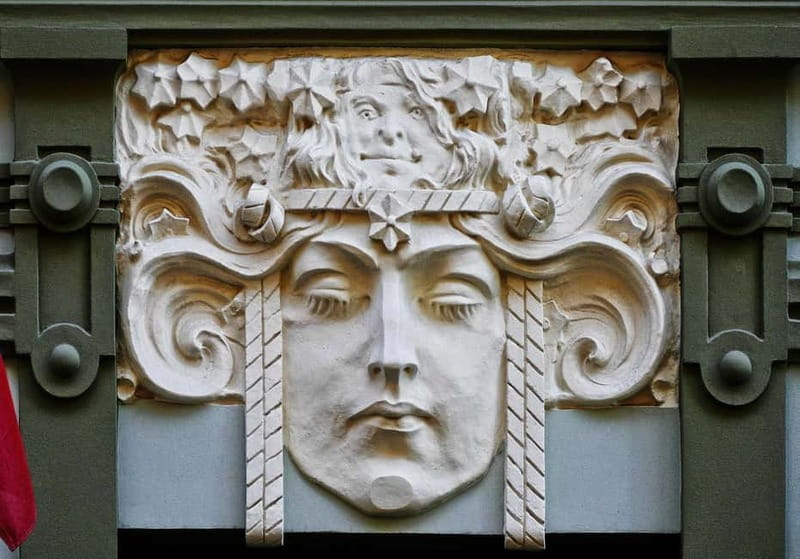
Riga is one of Europe’s best cities for seeing Art Nouveau in ordinary city streets. You do not need to chase scattered examples across town. The central district brings a long run of decorated apartment buildings, civic facades, and early twentieth-century experiments within a manageable walk.
That concentration makes a guide especially useful. On your own, you may notice the masks, curved lines, flowers, animals, and stern-looking figures. A guide can explain why the buildings look so different from one another, and how Art Nouveau could be both highly decorative and practical.
The style developed around the idea that everyday objects and buildings should be designed as complete works. A doorway, window, balcony, and facade were not treated as separate pieces. They were meant to work together, while still serving the basic needs of a city apartment building.
That tension is one of the most interesting parts of the walk. These buildings were made to be beautiful, but they also had to function as homes and businesses. The guide invites you to judge how well they managed that balance.
More Two-Hour Tours in the world:
- Berlin’s Best: 2 Hour Walking Tour Third Reich and the Cold War
★ 5.0 · 5,486 reviews - Budapest City Landmarks Walking Tour in 2 Hours
★ 5.0 · 2,048 reviews - Leipzig: 2-Hour Guided Walking Tour in German
★ 4.8 · 1,612 reviews
Starting at the House of the Black Heads
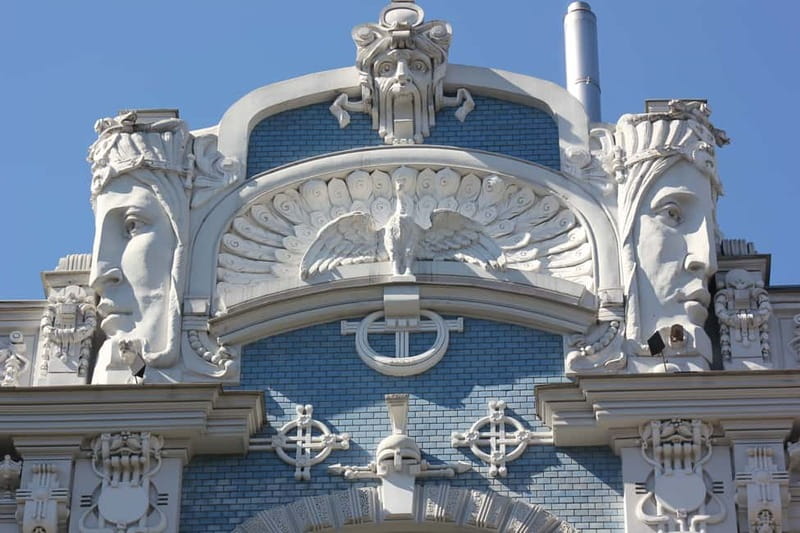
The meeting point is the Smile Line office inside the House of the Black Heads at Town Hall Square, number 7. This gives the walk a useful beginning in central Riga, rather than dropping you straight into a specialist architecture district without context.
From here, the route passes through the Old Town before heading toward the Art Nouveau area. That transition matters. You are not only looking at facades in isolation. You are seeing how Riga changes from its older medieval core to streets shaped by later growth and new architectural ideas.
The House of the Black Heads itself is not an Art Nouveau building, so the starting point provides contrast. The Old Town represents an earlier chapter of Riga’s development, while the later district reflects a period of economic growth and changing tastes.
Be ready to walk on city streets for the full two hours. Comfortable shoes are the one item specifically recommended, and they are sensible advice. This is an outdoor tour with stops for explanation, not a seated lecture.
Crossing from Old Riga to the Art Nouveau District
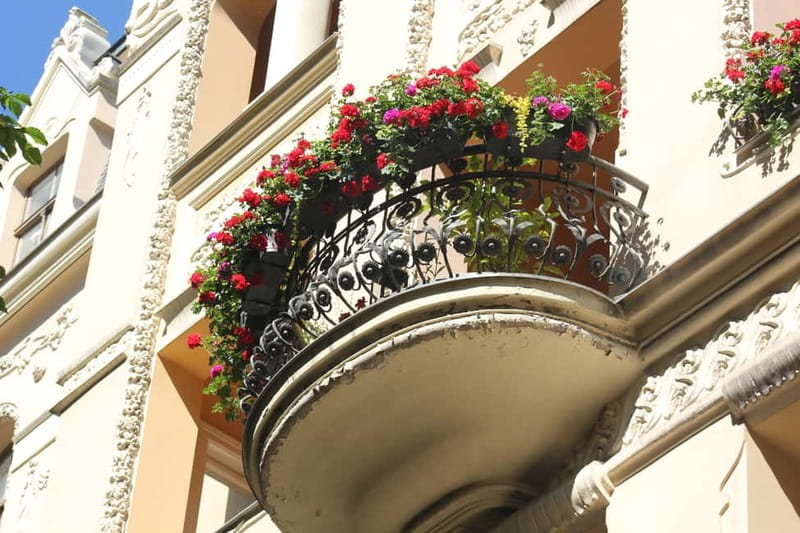
The walk from the Old Town to the Art Nouveau district gives your guide room to explain Riga’s place in the Russian Empire. The city was then an important port, with strong Latvian, German, Russian, and Jewish communities.
That mix appears in the architecture and in the stories attached to the buildings. The tour does not reduce Riga’s design history to one national style or one famous architect. Instead, it shows how different communities and professional traditions helped shape the city.
This part of the route is useful if you are new to Riga. You begin to see the city as more than a pretty collection of old buildings. Its architecture reflects commerce, empire, migration, local identity, and changing ideas about how a modern city should look.
The guide also helps put Art Nouveau into its proper time period. It was not simply a decorative fashion added to older buildings. It was connected to new ways of thinking about art, urban life, and the design of ordinary surroundings.
Mikhail Eisenstein and His Unmistakable Facades
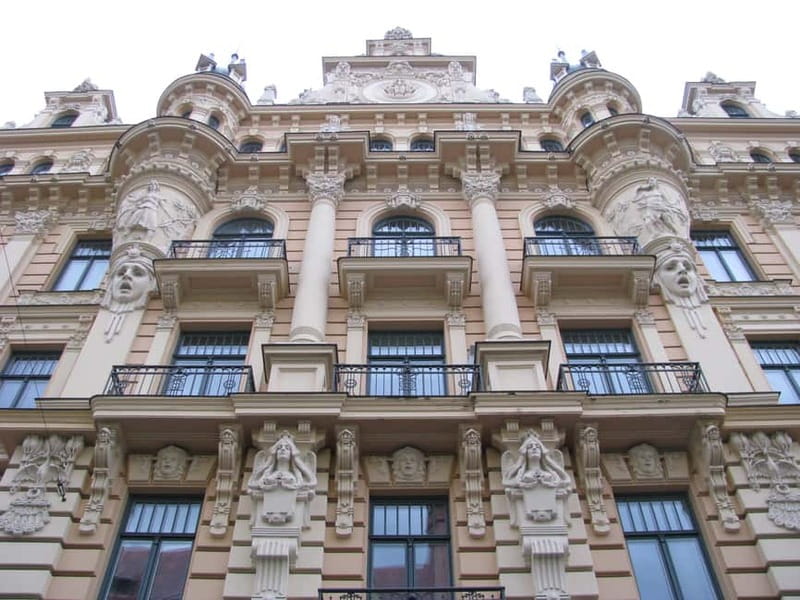
Mikhail Eisenstein is the central character of the walk. He was a talented and controversial architect whose buildings are among the most memorable in Riga’s Art Nouveau district.
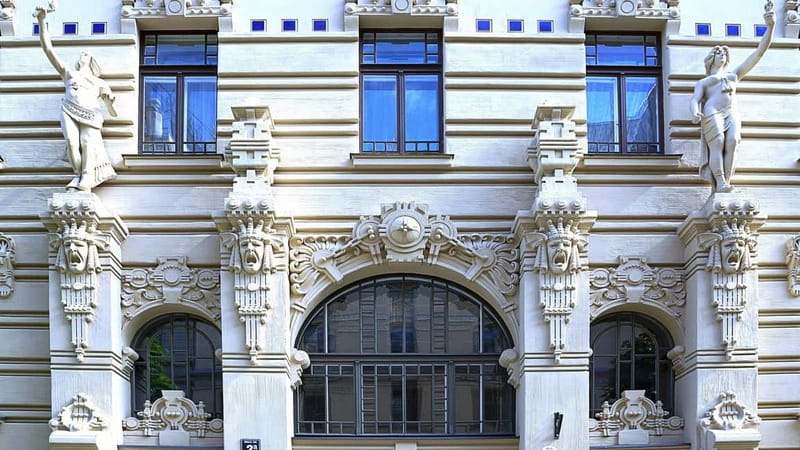
The tour uses Eisenstein’s work to show the more theatrical side of the style. You can expect facades with heavy ornament, striking figures, strong symmetry, and details designed to catch your eye from street level.
The guide also explains Eisenstein’s history in Riga, when the city was one of the most important ports in the Russian Empire. That background gives his work more meaning. His buildings were not created in a vacuum. They belong to a city expanding in wealth, influence, and population.
I find this focus valuable because famous architecture can become a blur after a while. One decorated doorway begins to resemble the next. Learning about Eisenstein gives you a thread to follow, and his buildings provide clear examples of the boldest Art Nouveau approach.
At the same time, you should not expect the entire tour to be about one man. Eisenstein is an important part of the story, but the route also covers other architects and the wider mix of styles found in Riga.
A few more walking tours around the world worth a look
- Magical London: Harry Potter Guided Walking Tour
★ 4.7 · 22,044 reviews - Reykjavik Food Walk – Local Foodie Adventure in Iceland
★ 5.0 · 18,952 reviews - History and Hauntings of Salem Guided Walking Tour
★ 5.0 · 14,564 reviews - New Orleans Premier Ghost, Voodoo and Vampire Walking Tour
★ 4.5 · 12,856 reviews
Alberta Street and the Main Architectural Payoff
Alberta Street is the high point for most people on this walk. It is one of the best-known Art Nouveau streets in Riga, with a concentration of facades that reward slow looking.
The guide draws your attention to the details rather than simply naming buildings. Look up at the figures around windows, the ornament above entrances, the use of curved forms, and the way the upper floors complete the design.
Some facades are theatrical and heavily decorated. Others use a quieter, more intellectual approach. That contrast keeps the walk from becoming a parade of identical pretty buildings.
You will also hear about national romanticism, a related direction that built local identity into architectural design. Its forms can feel more restrained and rooted in regional ideas than the most elaborate Eisenstein facades.
This is where a guide earns the $39 price. You can walk down Alberta Street alone and see plenty. But a good explanation changes the experience from looking at attractive buildings to reading them.
Several guides have received especially warm praise for making this information clear and engaging. Tatiana is singled out for her strong English, patience, and enthusiasm. Gunta is noted for giving careful answers in a small group, while Caspars is described as organized and attentive to architectural detail. Liga and Nelli have also been praised for bringing strong subject knowledge and energy to the walk.
The agency uses more than one guide, so your exact experience depends on who leads the group. That is normal for a walking tour, but it is worth keeping in mind if you have a specific language or guide preference.
Decorative Style Versus Practical Design
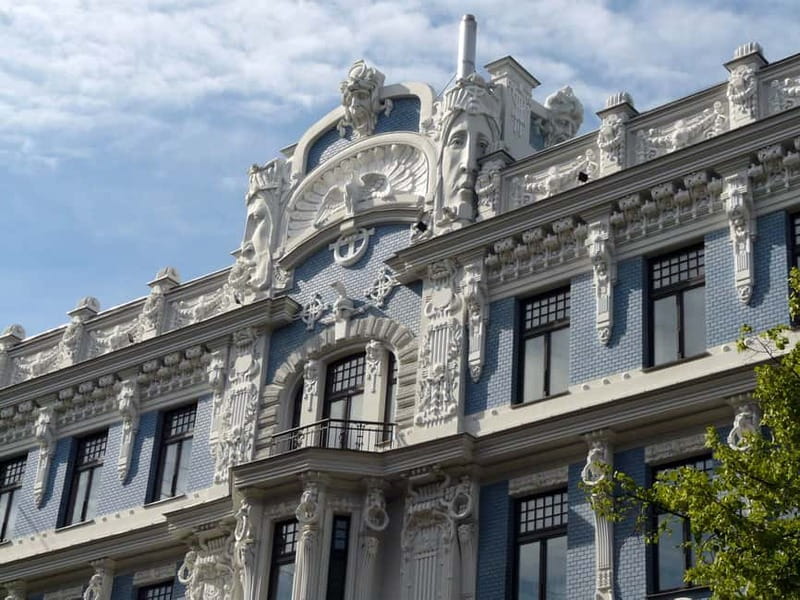
Art Nouveau is often remembered for decoration, but this tour keeps returning to function. That is an important correction to the usual postcard view of Riga.
The buildings were designed as usable structures, not just street-side sculpture. The tour asks you to consider how decoration, windows, entrances, light, and living space fit together.
You may find that some facades feel almost too busy at first. That is part of the fun. Once the guide separates the main forms from the smaller details, you can see how the design was assembled.
The more restrained buildings offer a useful counterpoint. Their decoration may be less obvious, but their ideas can be just as interesting. This range makes the tour suitable for people who like design but do not already know much about architectural history.
It also gives you a way to keep exploring after the walk. Once you understand the basic vocabulary, you can look at other Riga buildings with a better eye. One visitor said the tour changed the way they looked at buildings, which is a fair measure of success for an architecture walk.
What the Two-Hour Format Really Gives You
Two hours is long enough for a proper introduction and short enough to fit into a busy Riga schedule. You can take the tour on a first day to get your bearings, or place it later in your visit when you already know the Old Town.
The pace is described as easy, which helps when you are stopping often to look up and listen. The walking is not presented as strenuous, and the tour is wheelchair accessible. Still, you should allow for regular city walking and bring comfortable shoes.
An audio system may be used, allowing you to hear the guide while looking at the buildings. That can be helpful in a group, especially on a lively street where people are spread out around a facade.
The minimum group size is three participants. If too few people book, the tour may be cancelled with a full refund, or you may be offered the chance to upgrade to a private tour. This is a small uncertainty to accept when booking, but the policy is straightforward.
Groups can be small, sometimes under ten people. That size makes it easier to ask questions and hear the guide clearly. It also suits a subject where everyone may want a few moments to study the same facade.
The Guides Make the Difference
Architecture tours depend heavily on the guide. A list of buildings is easy to find. Clear interpretation, good pacing, and useful answers are harder.
The strongest guide comments focus on three traits: strong subject knowledge, clear English, and a friendly manner. Tatiana appears several times in the praise for the experience, and other named guides receive similar approval.
The tour is offered in English and German. Swedish, Norwegian, Polish, Spanish, Portuguese, French, Italian, and Japanese can be requested, though you should arrange that in advance rather than assume it will be available at every departure.
Children under six can join for free. Older children pay the regular price according to the information provided, and one family found that children over six became bored toward the end. I would choose this tour mainly for adults, older children, or teenagers already interested in buildings and city history.
Is $39 a Fair Price?
At $39 per person, this is not the cheapest way to spend two hours in Riga. You can walk through the Art Nouveau district without paying anything.
The value comes from the interpretation. You are paying for a local guide who connects architecture with Riga’s political, cultural, and commercial past, then points out details that are easy to miss. For someone interested in design, history, or photography, that is a reasonable price.
The tour does not include entry tickets. Since the main activity is viewing exterior architecture, that may not matter much, but do not expect an interior museum visit to be part of the basic price.
I would call it good value if you want an organized introduction and prefer to ask questions as you go. If you already have a strong background in Art Nouveau and enjoy researching buildings independently, you may find the price less appealing.
The free cancellation policy gives you useful flexibility. You can cancel up to 24 hours before the tour for a full refund, and the reserve now, pay later option means you do not have to pay at the time of booking.
Who Should Book This Riga Walking Tour?
I would recommend it to first-time visitors who want to understand why Riga’s architecture matters, not just photograph it. It is also a good choice for anyone interested in Art Nouveau, urban design, or the history of the Russian Empire’s Baltic port cities.
Solo visitors may appreciate the organized route and local guide. One solo participant felt comfortable joining the group and valued having someone point out details that would have been easy to miss alone.
It also works well near the beginning of a Riga visit. The walk starts in central Riga, introduces the Old Town, and ends in the Art Nouveau district, giving you useful orientation for later exploring.
You may want to skip it if your main interest is going inside buildings. This is an exterior walking tour, and no entry tickets are included. You may also want a private tour if you need a slower pace, have a particular language requirement, or want more time for photography.
Final Verdict: A Smart Introduction to Riga’s Architecture
Book this tour if you want Riga’s Art Nouveau buildings to make sense rather than simply look attractive. The two-hour route covers the Old Town connection, Mikhail Eisenstein, Alberta Street, national romanticism, and the city’s wider mix of architectural voices.
The best reasons to go are the focused route, small-group feel, and guides such as Tatiana, Gunta, Caspars, Liga, and Nelli, who are known for clear explanations and a warm approach. Bring comfortable shoes, keep your expectations focused on exterior architecture, and remember that the group requires at least three participants.
At $39, it is a fair buy for a well-explained first look at Riga’s Art Nouveau district. If you enjoy buildings, this is one of the easiest ways to see the city with sharper eyes.
FAQ
Where does the Riga Art Nouveau walking tour begin?
The meeting point is the Smile Line office in the House of the Black Heads at Town Hall Square, 7, in central Riga.
How long does the tour last?
The walking tour lasts two hours.
What languages are available?
The regular tour languages are English and German. Swedish, Norwegian, Polish, Spanish, Portuguese, French, Italian, and Japanese are available upon request.
Is the tour wheelchair accessible?
Yes, the activity is listed as wheelchair accessible.
How many people are needed for the group tour?
The group tour requires a minimum of three participants. If there are not enough bookings, the tour may be cancelled with a full refund, or you may be offered a private-tour upgrade.
Are children allowed to join?
Yes. Children under six can join free of charge. The information provided does not list a discount for children over six.
Can I cancel for a full refund?
Yes. You can cancel up to 24 hours before the tour for a full refund.
Just added around the world
- Vatnajökull Glacier Walk from Hali★ 5.0 · 479 reviews
- Old Hobart Pub Walking Tour★ 4.5 · 91 reviews
- Ice Cave and Glacier Walk into Blue Glacier Canyon★ 5.0 · 224 reviews
- Southwest Tasmania Wilderness Experience: Fly Cruise and Walk Including Lunch★ 5.0 · 233 reviews
- Saigon’s Hidden Flavors – Private Street Food Walk with Local Students★ 5.0 · 301 reviews
- Hobart History, People & Places – 2 hour city walk★ 5.0 · 224 reviews
- Vegan Walk Not Just Vegan Food★ 5.0 · 266 reviews
- Ho Chi Minh City: Highlights & Hidden Gems – Free Walking Tour★ 5.0 · 194 reviews
Walking Tours, compared.

Magical London: Harry Potter Guided Walking Tour
Read our review →
Reykjavik Food Walk – Local Foodie Adventure in Iceland
Read our review →
History and Hauntings of Salem Guided Walking Tour
Read our review →
New Orleans Premier Ghost, Voodoo and Vampire Walking Tour
Read our review →
Amsterdam Anne Frank: Small-Group Walking Tour & Local Guide
Read our review →
Edinburgh Castle: Guided Walking Tour with Entry Ticket
Read our review →
Anne Frank’s Story – Guided Walking Tour through Amsterdam
Read our review →Browse the lists this tour appears in