
REVIEW · WALKING TOURS
Manila: Street Food and Drinks Walking Tour with Tastings
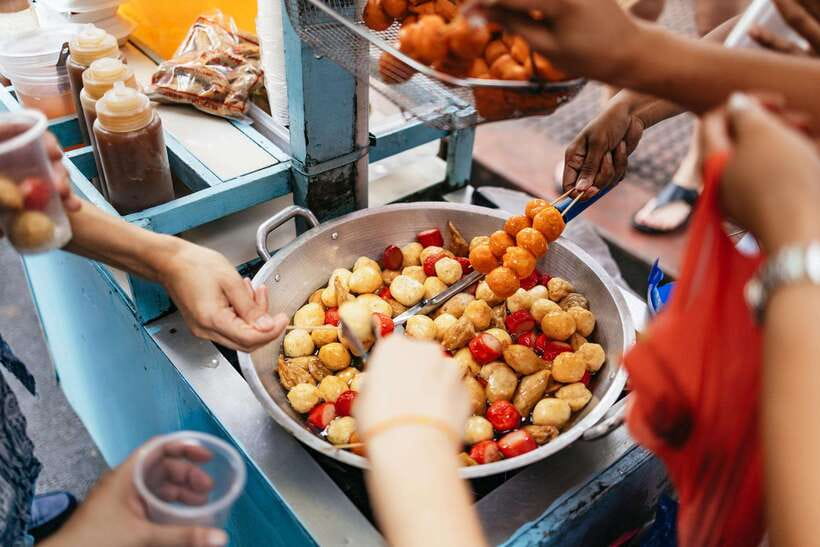
Manila’s best food stories are often served from a cart, a tiny stall, or a shop with barely enough room for its counter. This two-hour Binondo street-food walk takes you into those everyday corners for banana cue, kwek kwek, siomai, soup, pancit, grilled seafood, mango with shrimp paste, and halo-halo.
I like two things right away: the small-group size, capped at about 10 to 12 people, and the local transport. A jeepney or so-called Lamborghini tricycle turns the tour into more than a series of tastings. The main drawback is simple: this is not a gentle snack crawl. You may eat 6 to 10 portions, and many dishes contain meat or seafood.
Key points at a glance
- Binondo meeting point: Start at Grand Cafe 1919 on Juan Luna Street, a practical place to meet, have a drink, and use the facilities before eating.
- Six to ten tastings: Expect a generous spread that can include kwek kwek, turon, pancit palabok, grilled squid, siomai, soup, and halo-halo.
- Local transport included: A jeepney ride or colorful tricycle adds a genuine Manila street experience.
- Guides with personality: Mari receives especially warm praise for her energy, humor, food knowledge, and care in crowded streets. Tess, Jessie, and Chai have also led tours.
- Small and social: The group limit keeps the walk manageable in busy lanes and gives you plenty of time to ask questions.
- Come hungry: The amount of food is closer to a light meal, or two, than a few sample bites.
Starting at Grand Cafe 1919 in Binondo
The tour begins at Grand Cafe 1919, at Juan Luna in Manila’s Binondo district. This is a useful meeting point because you can arrive early, settle in with a beverage, and use the restroom before heading into the streets.
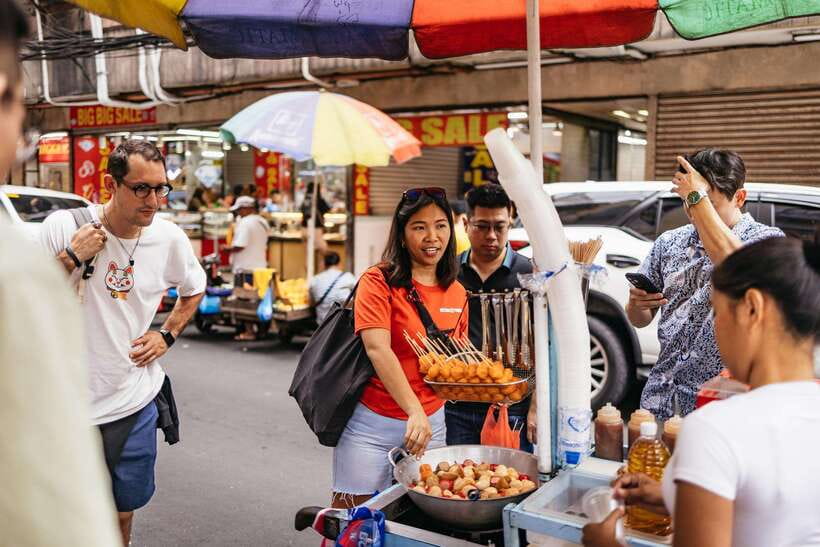
Binondo is commonly known as Manila’s Chinatown, but this food walk is not limited to a polished restaurant strip. You move through side streets, market areas, and crowded passages where daily shopping and eating carry on around you. That setting matters. You are not being shown a staged food court. You are seeing where ordinary meals and snacks fit into city life.
The area can be hard to read on your own. Streets are crowded, food names may be unfamiliar, and some vendors work at a fast pace. A guide helps you choose what to try, explains what is in each dish, and keeps the group together when the pavement tightens.
I especially like that the tour is built around conversation. Guides such as Mari bring in local history and personal stories as you walk, rather than stopping every few minutes for a long lecture. The best pace feels like a friend showing you favorite places, with enough context to make the food more meaningful.
More Street Food Walks in the world:
- Naples: Street Food Walking Tour with Local Guide
★ 4.9 · 4,976 reviews - Private Street Food Evening Walking Tour in Ho Chi Minh City
★ 5.0 · 3,175 reviews - Rome: Trastevere & Campo de Fiori Street Food Walking Tour
★ 4.9 · 2,768 reviews
Fried bananas, sweet snacks, and the first tastes
The tasting list changes with what is available, so no two departures need to be identical. You may begin with simple Filipino street snacks such as banana cue, kamote fries, or turon.
Banana cue is banana fried with brown sugar, while turon is a crisp fried roll usually built around banana. These are approachable first bites: sweet, hot, filling, and easy to understand even if Filipino food is new to you. Several people singled out the fried banana and turon, and I can see why. They provide a pleasant break from the salty and savory dishes that follow.
Kamote fries bring a different texture and a mild sweetness. Small snacks like these also show how Filipino street food makes use of affordable ingredients without treating them as dull. The cooking does much of the work: frying, caramelizing, seasoning, and serving food while it is at its best.
You should not expect delicate tasting portions at every stop. The portions are generous enough that breakfast may be a mistake, especially if you want to try everything. Pace yourself early, even when the first few bites are tempting.
Kwek kwek, siomai, and the more adventurous stops
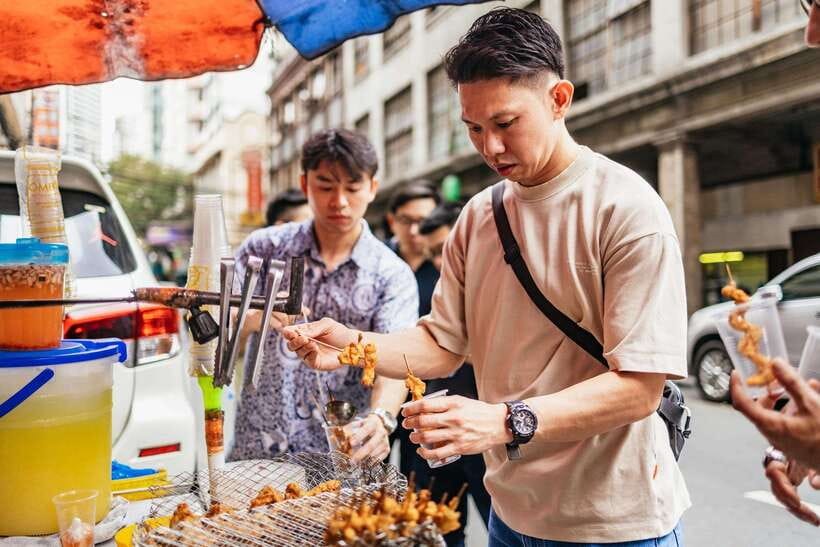
Kwek kwek is one of the tour’s recognizable street-food treats: quail eggs coated in orange batter and fried. It is colorful, salty, and usually served with a dipping sauce. For many people, this is a comfortable step toward more unusual food.
Siomai brings a familiar dumpling-style bite, though the local preparation and accompanying sauce give it a Filipino street-stall character. The guide can explain how each dish is eaten and help you decide how adventurous you want to be.
Some departures have included balut, the well-known duck embryo egg. It is not guaranteed in the stated tasting list, and you are not forced to eat anything. If it appears, you can try it, share it, or pass. One useful tip is to tell your guide early about your limits. You can still enjoy the tour without accepting every challenge.
The food is mostly meat, seafood, eggs, or dishes cooked with animal-based ingredients. That makes this a poor fit for vegetarians and vegans. The tour information also lists it as unsuitable for pregnant women, so check carefully before booking if that applies to you.
Soup, pancit, and the heart of the meal
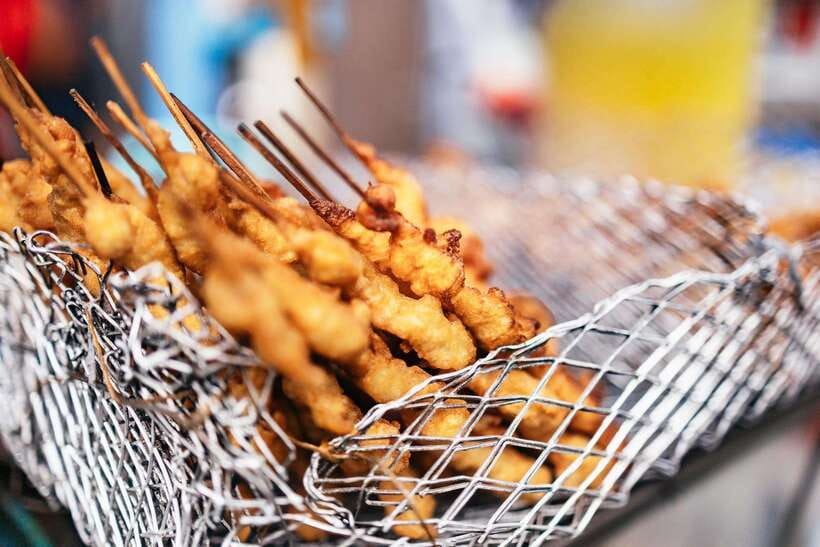
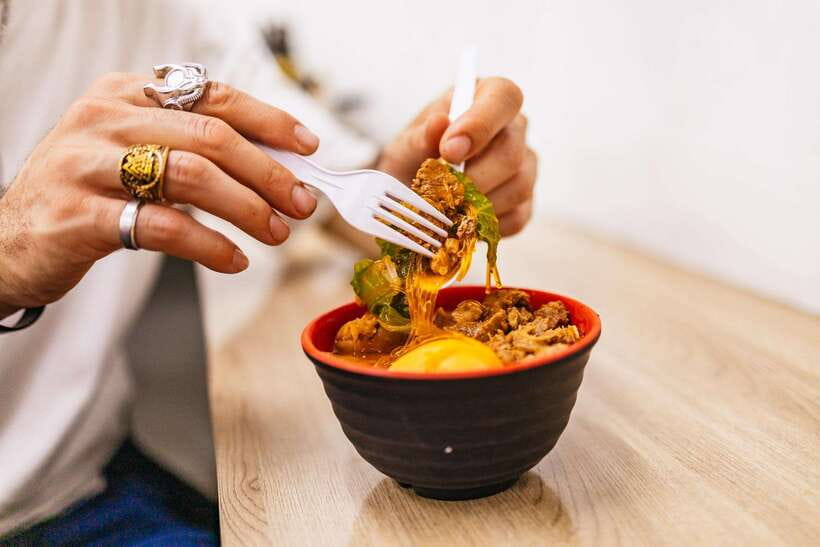
As the walk continues, the food becomes more substantial. Sotanghon soup may appear as a warm noodle dish, while pancit or palabok provides a more filling taste of Filipino home-style cooking.
Pancit palabok was a particular favorite for several people, and it is an important dish to include on a food walk because it shows another side of Filipino cooking. Street food is not only skewers and fried snacks. Noodles, sauces, seafood, and toppings bring a fuller meal to the table.
The exact menu depends on availability, so you should treat the advertised list as a guide rather than a fixed restaurant menu. You may receive Filipino pansit, palabok, soup, or another local specialty. This flexibility is part of the point: the walk follows what is being cooked and sold that day.
Drinks are included as well. Depending on the route and weather, you may receive water, refreshing juice, buko juice, or another local drink. The refreshments matter in Manila’s heat, especially because you spend much of the tour walking and stopping outdoors. One guide was praised for spacing drinks through the route rather than leaving the group to struggle through the afternoon.
More Wine and Tapas Walks in the world:
- Barcelona Tapas and Wine Experience Small-Group Walking Tour
★ 5.0 · 5,804 reviews - Barcelona: Tapas Walking Tour with Food, Wine, and History
★ 4.8 · 4,261 reviews - Madrid Tapas & Wine Tasting Walking Tour – Small Group Local Bars
★ 5.0 · 3,644 reviews - Athens: Guided Greek Food Walking Tour with Tastings
★ 4.9 · 2,859 reviews
Grilled seafood, mango with shrimp paste, and halo-halo
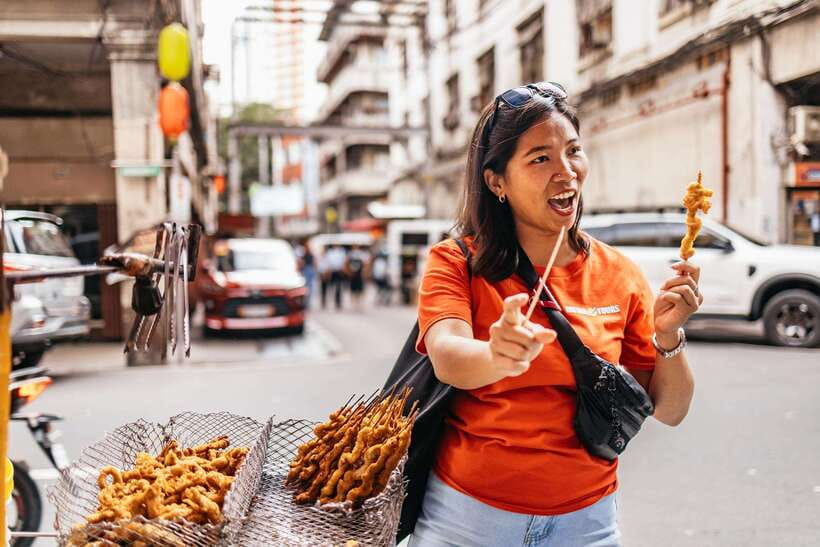
The savory stops may include grilled squid and other seafood, along with mango served with shrimp paste. Mango with shrimp paste is a useful introduction to the Filipino love of strong contrasts: sweet fruit with salty, savory, and sometimes pungent seasoning.
Grilled squid offers a smoky change from fried foods. It also helps break up the steady rhythm of sweet snacks and battered bites. If you are sensitive to seafood or strong flavors, ask what is coming next and take smaller portions when possible.
The tour usually finishes with halo-halo, a cold Filipino dessert made with a mixture of sweet ingredients, crushed ice, and creamy toppings. It is a fitting ending after hot food and city walking. The textures shift with each spoonful, and the dessert gives you a cool pause before the tour wraps up.
The generous food program is both a strength and a weakness. You get a broad picture of Filipino street eating for the price, but you may not want dinner afterward. One practical approach is to eat a very light breakfast, drink water before starting, and avoid treating every stop as a challenge to finish a full portion.
Riding a jeepney or the Lamborghini tricycle
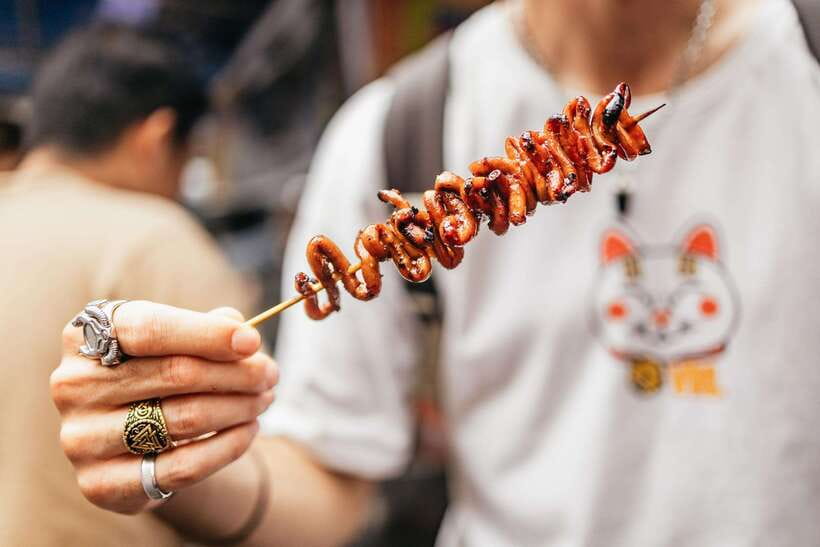
Local transportation is one of the tour’s best extras. Depending on the route and what is operating that day, you may ride a jeepney or a brightly decorated tricycle sometimes called a Lamborghini tricycle.
The jeepney gives you a quick look at how Manila gets around. It can be crowded and boarding may require care, so keep your belongings close and follow the guide’s instructions. The tricycle is smaller and more playful, with a distinctly local feel. One reported route ended with a tricycle ride back toward the cafe, which made a nice final note.
The transport element is not a long sightseeing ride. It is a short, practical part of moving through the city. That is precisely why I like it. You are not being driven around in a private vehicle while the city passes behind glass. You are using the same basic transport that locals use.
The advertised experience is not guaranteed in exactly the same form every time. One departure did not include the promised jeepney ride, so keep your expectations flexible. Traffic, vehicle availability, and the day’s route can affect this part.
What the group size and guide really add
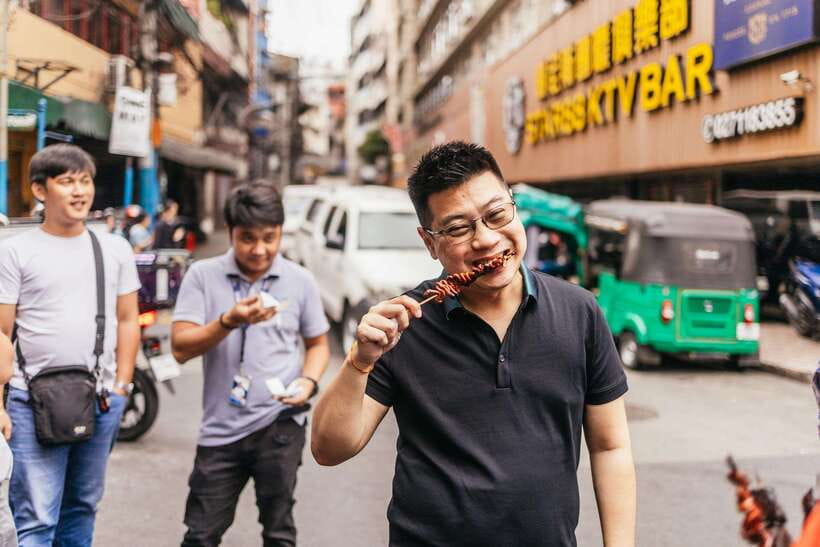
The small group limit is important in Binondo. A large crowd would be awkward at narrow stalls and difficult to keep together across busy crossings. With around 10 people, the guide can answer questions, watch the pace, and help you order without turning the walk into a slow procession.
Mari is the guide most often named in the supplied material. She is described as energetic, funny, warm, and highly engaged with Filipino food and culture. She also has a practical role: keeping people together, helping solo visitors feel comfortable, taking photos, and offering hand sanitizer during the walk.
Other departures have been led by Tess, Jessie, Chai, or another English and Tagalog-speaking guide. The personality may vary, but the format remains the same: walk, taste, ask questions, and use local transport. If having a particular guide matters to you, confirm availability before booking rather than assuming Mari will lead every departure.
The guide is the main reason to choose this over wandering Binondo alone. You could find food without help, but you might miss the best stalls, misunderstand what you are ordering, or spend your limited Manila time moving in circles. The guide also gives you social confidence when a dish looks unfamiliar.
Walking conditions, timing, and comfort
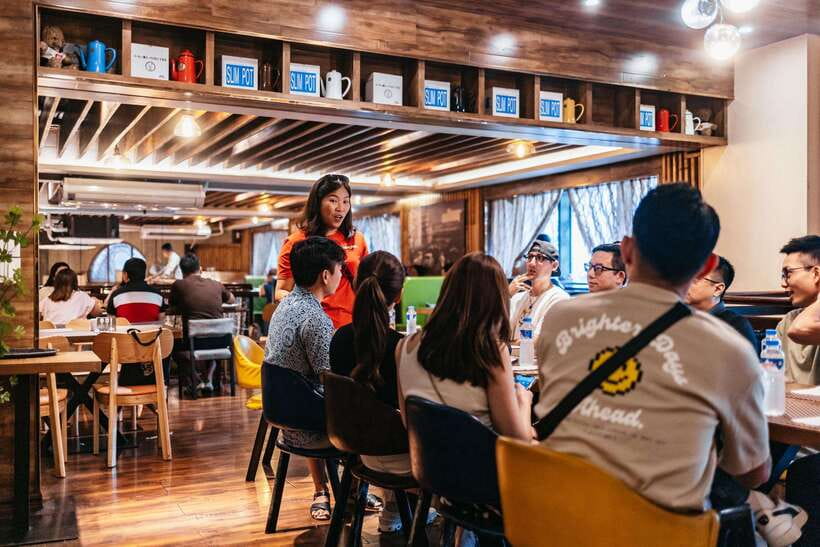
Two hours sounds short, but the tour packs a lot into that time. You walk through busy streets, pause at several food stops, and may board or leave local transport. Comfortable shoes are essential.
This is not a polished, air-conditioned food tour. Expect crowds, uneven moments in the route, heat, and the noise of city streets. The tour runs rain or shine, so carry suitable rain protection and wear clothing that can handle a little mess.
The route is not suitable for wheelchair users. Children aged 3 to 7 may join with guidance, but parents should think carefully about the food, traffic, crowding, and amount of walking. Very young children may not be ready for the pace or the more adventurous dishes.
The tour is conducted in English, with Tagalog used by the local guide when speaking with vendors. Bring questions. The guides are at their best when you ask about ingredients, customs, neighborhood life, or how a dish fits into an ordinary Filipino day.
Is the 68 dollar price good value?
At 68 dollars per person, this is not the cheapest way to buy street food in Manila. If your only goal is to eat a few inexpensive snacks, you can spend far less by exploring on your own.
The value comes from the package. You receive 6 to 10 tastings, drinks, a walking route through local areas, help with ordering, cultural explanation, and a ride on local transport. You also avoid the uncertainty that comes with choosing stalls without knowing what is fresh, popular, or easy for a first-time visitor to understand.
For a solo visitor or first-time Manila visitor, that guidance can justify the price. A private guide would cost more, while a large group might feel less personal. This sits in the middle: more organized than going alone, but still small enough to feel informal.
I would not book it if you are vegetarian, vegan, pregnant, unable to walk comfortably, or looking for a refined restaurant meal. I would consider it good value if you want a concentrated introduction to Filipino food and prefer a guide to handle the confusing parts.
Free cancellation up to 24 hours before the start and reserve-now, pay-later terms add useful flexibility. Book at least 24 hours ahead, and check the available start time before you commit.
Who should book this Manila food walk?
You should consider this tour if you:
- Want to try Filipino street food but feel unsure about ordering alone
- Like eating in ordinary neighborhoods rather than only in restaurants
- Enjoy guides who talk about culture as well as ingredients
- Have a healthy appetite and are willing to try meat, seafood, eggs, and strong flavors
- Want a small-group activity early in your Manila stay
- Like local transport as part of the experience
You may want another activity if you need a strict vegetarian menu, a wheelchair-friendly route, or a quiet and carefully controlled food setting. The tour is also not ideal if you dislike crowds or prefer to choose every dish yourself.
Should you book the Binondo street-food tour?
I would book this for an authentic first taste of Manila, especially at the beginning of a stay. It gives you a working map of Filipino flavors, introduces you to parts of Binondo and nearby neighborhoods, and shows how food, transport, and daily life fit together.
The strongest reasons to go are the personal guidance and the sheer variety of food. The strongest reasons to pause are the large amount of food, the walking conditions, and the meat-heavy menu.
Come hungry, wear comfortable shoes, keep an open mind, and tell the guide about dietary limits at the start. If that sounds like your kind of afternoon, this is a practical and flavorful way to meet Manila.
FAQ
Where does the tour meet?
The meeting point is Grand Cafe 1919 in Binondo, at Juan Luna in Manila.
How long does the tour last?
The walking and food experience lasts two hours.
How many people join the tour?
The group is limited to about 10 participants, with some tour information stating a maximum of 12.
What food is included?
Possible tastings include banana cue, kamote fries, turon, kwek kwek, siomai, sotanghon soup, palabok, Filipino pancit, grilled squid, mango with shrimp paste, halo-halo, and drinks. The exact selection depends on what is available.
Is a jeepney ride included?
The experience includes a jeepney ride or a Lamborghini tricycle, depending on the route and availability. The transport portion can vary.
Is the tour suitable for vegetarians or vegans?
No. The tour is not suitable for vegetarians or vegans because several of the dishes contain meat, seafood, eggs, or other animal-based ingredients.
Can children join?
Children aged 3 to 7 may join with guidance.
What should I bring?
Bring comfortable shoes. The tour is a walking experience and runs rain or shine.
Can I cancel the booking?
You can cancel up to 24 hours in advance for a full refund. You can also reserve now and pay later, subject to the booking terms.
Just added around the world
- Vatnajökull Glacier Walk from Hali★ 5.0 · 479 reviews
- Old Hobart Pub Walking Tour★ 4.5 · 91 reviews
- Ice Cave and Glacier Walk into Blue Glacier Canyon★ 5.0 · 224 reviews
- Southwest Tasmania Wilderness Experience: Fly Cruise and Walk Including Lunch★ 5.0 · 233 reviews
- Saigon’s Hidden Flavors – Private Street Food Walk with Local Students★ 5.0 · 301 reviews
- Hobart History, People & Places – 2 hour city walk★ 5.0 · 224 reviews
- Vegan Walk Not Just Vegan Food★ 5.0 · 266 reviews
- Ho Chi Minh City: Highlights & Hidden Gems – Free Walking Tour★ 5.0 · 194 reviews
Street Food Tours, compared.
Ho Chi Minh City Street Food Tour & Sightseeing By Motorbike
Read our review →
Private Street Food Evening Walking Tour in Ho Chi Minh City
Read our review →
Trastevere & Campo de Fiori Street Food Walking Tour
Read our review →
[HOT] Hanoi Old Quarter Walking Street Food – Small Group Tour
Read our review →
Palermo Original Street Food Walking Tour by Streaty
Read our review →
Trastevere Street Food Walking Tour with Local Expert
Read our review →
Super Niche Walking Street Food Tour in Ho Chi Minh City
Read our review →Browse the lists this tour appears in