
REVIEW · UK
Manchester: Media City & The Quays Guided Walking Tour
Media City and Salford Quays tell one of Manchester’s best modern stories: a working dock transformed into a centre for television, culture, homes, and new business. This two-hour walk links that past and future along canals, bridges, and the Manchester Ship Canal, with the Lowry and Imperial War Museum North as major stops.
I like the old photographs used to show how sharply the docks have changed, and I like the headsets, which let you hear the guide clearly without crowding around him. Guides such as Frank have been singled out for their local insight, friendly delivery, and ability to answer questions. The only catch is the 5-kilometre route, which can feel long in cold, wet weather.
Key points to know before you book
- A docklands transformation: Follow the change from major industrial port to Media City and Salford Quays.
- A useful 5-kilometre route: The walk takes about two hours and returns to its starting point.
- Clear commentary: English-language headsets help you hear the guide outdoors.
- Strong local guiding: Frank is especially well regarded for bringing the area’s past and future to life.
- Major cultural stops: See the Lowry Arts Centre and Imperial War Museum North from the outside and along the route.
- Good value at $18: You get a guided overview of an area that is easy to admire but harder to understand on your own.
Why Media City makes a better walking subject than you might expect
At first glance, Media City can seem like a modern business district with shiny buildings, wide public spaces, and a huge digital screen. The walking tour gives you the missing story. This is not simply a stroll past offices. It is a lesson in how Salford’s docks helped shape Manchester, declined, and then found a new purpose.
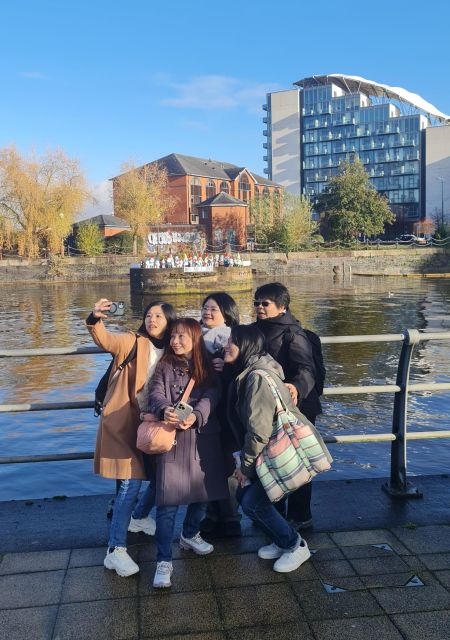
The tour starts in Media City Piazza, beneath the large digital screen opposite BBC Quay House and beside the Media City Metrolink station. That meeting point is hard to confuse, and the tram connection makes it practical if you are staying in central Manchester.
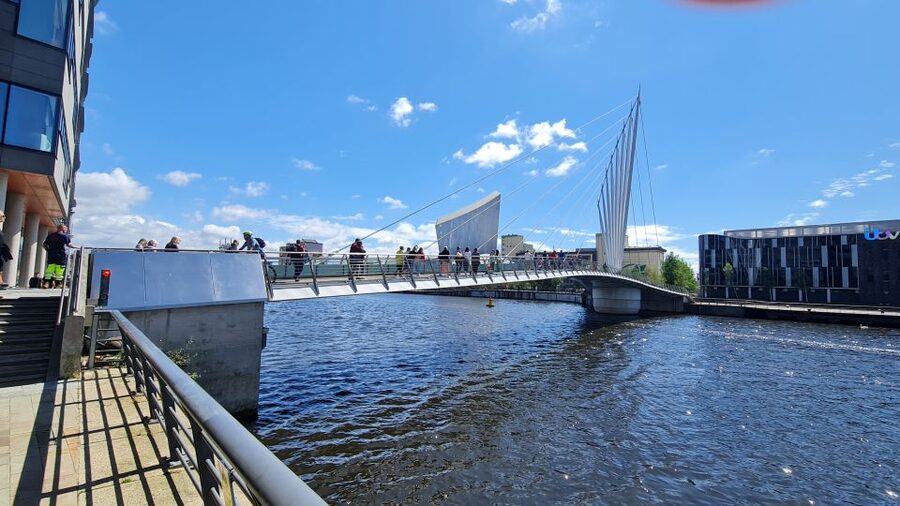
From here, your guide sets the scene before leading you toward Salford Quays. You hear about the Manchester Ship Canal, the industrial importance of the docks, and the scale of the changes now taking place. The route uses the waterfront itself as a classroom, so you are not just listening to dates and names. You are looking at the canals, bridges, buildings, and public spaces being discussed.
I particularly like this approach for first-time visitors who want more than a photo stop at Media City. The area is easy to visit independently, but its meaning is not always obvious. A guide helps you connect the BBC, the arts centre, the museum, the canal, and the new construction into one clear story.
More Guided Tours in the UK:
- Magical London: Harry Potter Guided Walking Tour
★ 4.7 · 22,044 reviews - Edinburgh: Harry Potter Magical Guided Walking Tour
★ 4.8 · 11,944 reviews - Edinburgh Castle: Guided Walking Tour with Entry Ticket
★ 4.7 · 11,699 reviews
Setting out from Media City Piazza
The opening section introduces the modern face of the Quays. Media City has become a major base for digital and creative businesses, and the tour explains why this location matters to the wider Manchester and Salford area.
You can expect the guide to point out architectural features, public spaces, and the role of the district in the area’s current growth. The commentary also looks ahead, with attention to planned developments and the continuing regeneration of the waterfront.
This future-facing element is one of the tour’s strongest features. Many city walks focus only on what is old. Here, you learn about a place still changing. That makes the tour useful even if you have visited Media City before, since new buildings and plans can alter the area quickly.
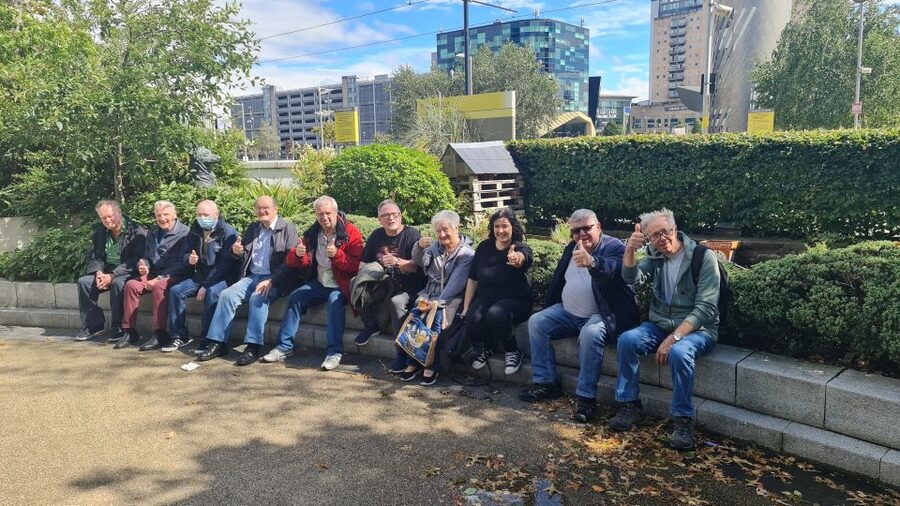
Guides are also an important part of the experience. Frank is the name most often associated with this walk, and his style appears to suit both visitors and local people. He uses photographs to compare the former docks with the present-day Quays, and he explains complicated changes in a way that remains easy to follow. Craig has also led the walk and is noted for handling questions well.
The headsets are a small but valuable touch. Outdoor tours often lose people at crossings or busy points, but an earpiece means you can stand back, take in the view, and still hear the explanation. You are not forced to walk shoulder to shoulder with the guide.
Along the Manchester Ship Canal
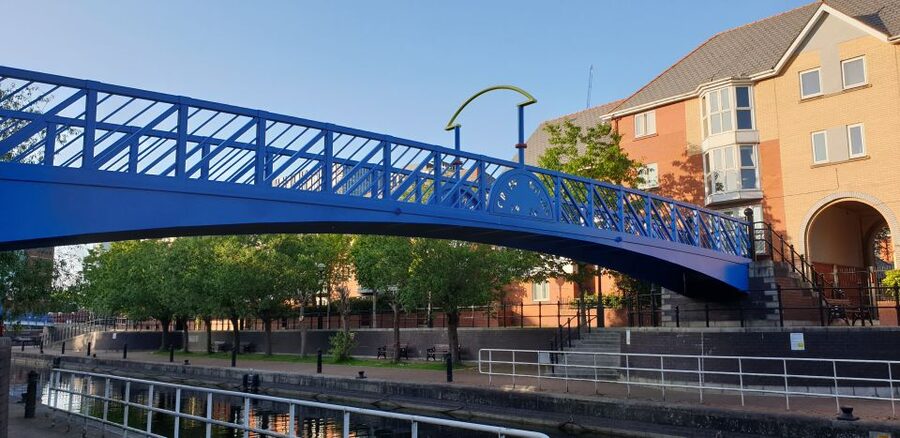
The Manchester Ship Canal gives the walk its historical backbone. Your route follows the water and crosses bridges, giving you time to see how the old dock area was arranged and how its new uses fit around it.
The canal was central to Manchester’s industrial growth. The tour explains the docks as a place of trade, work, transport, and ambition, then shows how that working role changed over time. You also hear about the decline of the docklands and the later effort to bring homes, culture, business, and leisure back to the waterfront.
The value here is context. Without it, the canal is an attractive route for a walk or meal. With it, you understand why the waterway is the reason this district exists at all.
The guide may pause at features that are easy to pass without noticing. These stops give the walk a comfortable rhythm: listen, look, ask a question, then move on. One two-hour experience included plenty of pauses to inspect details that would otherwise be missed, and that balance helps make the distance manageable.
Still, remember that this is a real walking tour, not a short viewpoint visit. The route covers around 5 kilometres. Most of the walk is outdoors, and the tour operates in rain or shine. Wear shoes you can comfortably walk in, bring weather-appropriate clothing, and skip high heels. In winter, warm layers matter. The Quays can feel exposed, especially beside the water.
The Lowry Arts Centre and the cultural side of the Quays
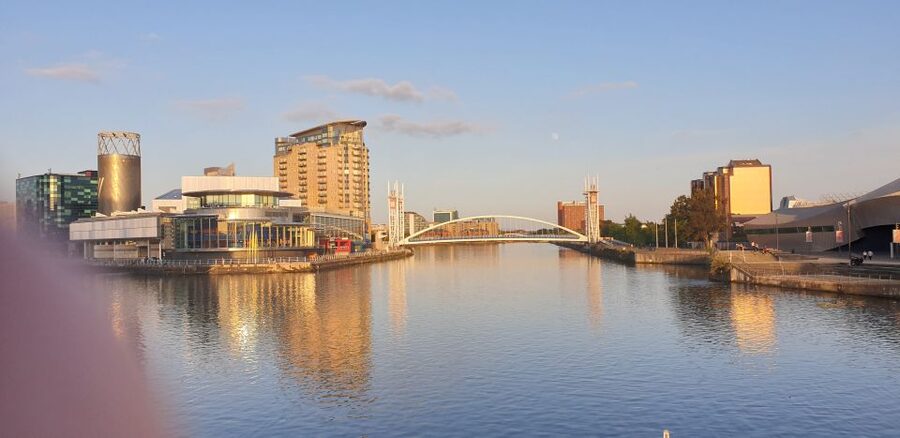
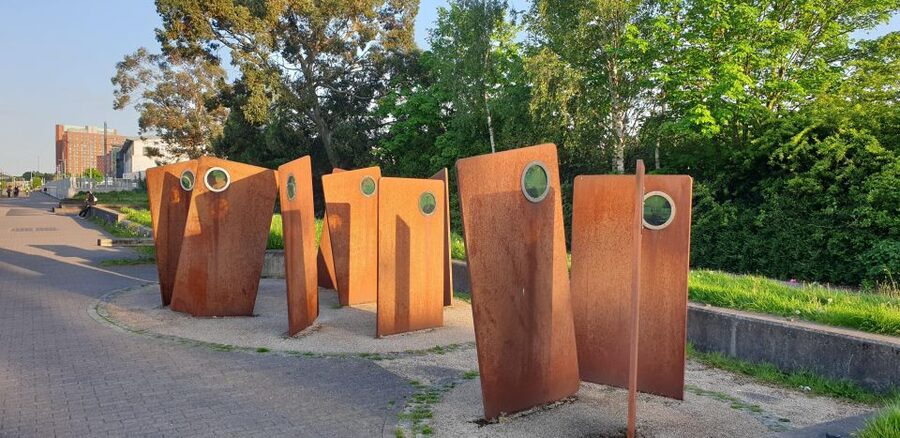
The Lowry Arts Centre is one of the route’s key landmarks. The building gives the tour a chance to move from docks and business into art, performance, and public culture.
Your guide explains how cultural venues fit into the wider regeneration of Salford Quays. That is important because the area is not only a place to work. It is also designed for exhibitions, performances, food, shopping, and leisure.
The stop works well for anyone who wants to understand how an old industrial zone can be given a new public role. You should not expect a full guided visit inside the arts centre. The focus is the wider Quays and the part the building plays within it.
If you plan to spend more time at The Lowry after the walk, check its own opening information separately. This tour gives you orientation and background rather than an extended indoor visit.
A few more walking tours around the UK worth a look
- Underground Vaults Walking Tour in Edinburgh Old Town
★ 4.5 · 8,506 reviews - London: The Original Jack the Ripper Walking Tour
★ 4.7 · 7,833 reviews - Oxford University Walking Tour With University Alumni Guide
★ 5.0 · 6,905 reviews - Edinburgh Castle: Guided Walking Tour with Entry Ticket
★ 5.0 · 5,540 reviews
Imperial War Museum North and the meaning of memory
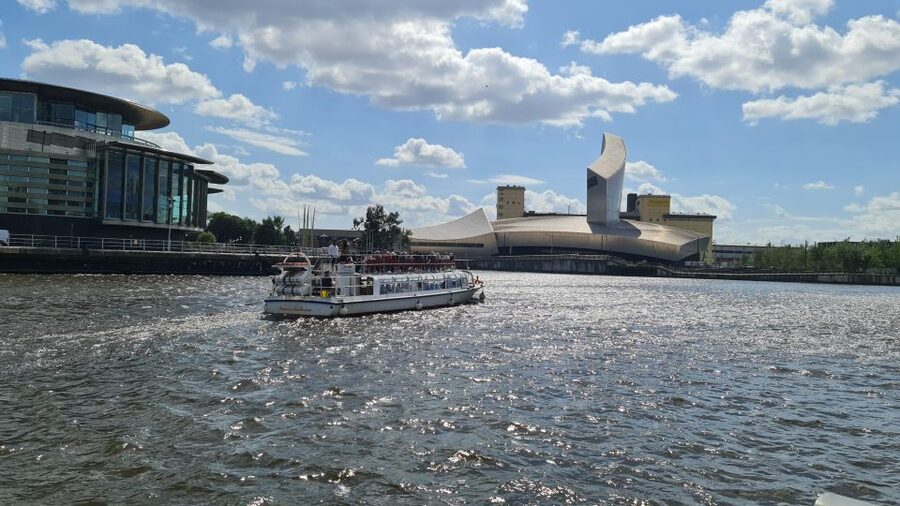
Imperial War Museum North adds another layer to the route. Its dramatic form and position beside the water make it easy to spot, but the guide helps explain why it belongs in the story of the Quays.
The museum connects the waterfront to the human cost of conflict and to the wider national story. Alongside the industrial past and the glossy Media City future, it gives the area a more serious point of reference.
Again, this is an exterior and area tour rather than a museum admission. If you want the museum’s full galleries, allow extra time and arrange that separately. The walking tour helps you decide how the museum fits into your day and points out why the building is significant.
This is one reason I would schedule the walk early in a visit to Salford Quays. You get a clearer sense of what you are seeing, then you can return to the Lowry or Imperial War Museum North with more context.
What the guide adds to the experience
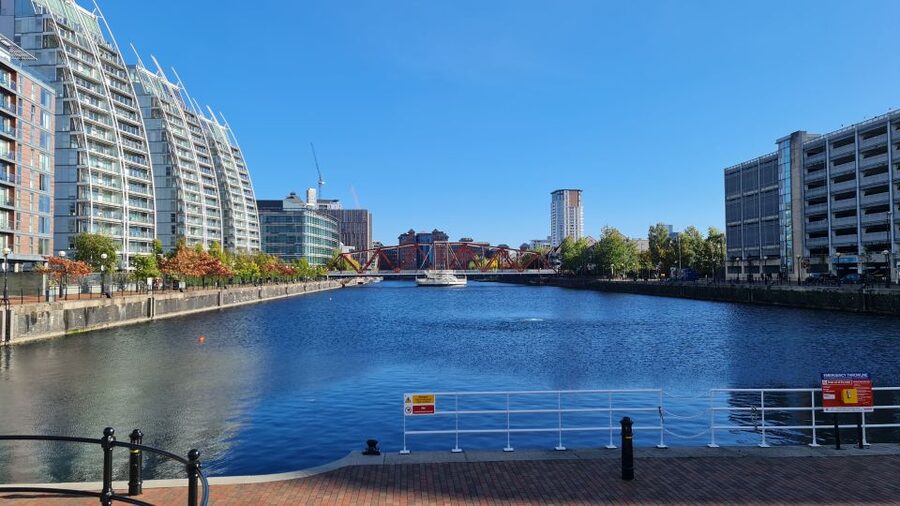
A good local guide matters more here than on a simple city-centre walk. Media City is young, while the docklands story reaches back much further. The guide has to move between industrial history, architecture, media, art, and future development without making the walk feel like a lecture.
Frank’s strongest quality is his ability to connect those subjects. He has used a folder of old photographs to show the contrast between the former docks and the regenerated waterfront. That visual comparison is especially useful because the modern buildings can hide how industrial the area once was.
The walk also benefits from a personal, question-friendly style. Some outings have had only a few people, and solo participants have felt welcomed rather than awkward. A small group can make the experience more conversational, though group size is not fixed in the information available.
Do keep the pace in mind. One person found that Frank’s long stride made the walk feel brisk, while others described the pace as comfortable. The guide can adapt the pace to the group, so speak up if you need to slow down. The route can also be adjusted to avoid steps.
Is $18 fair for two hours?
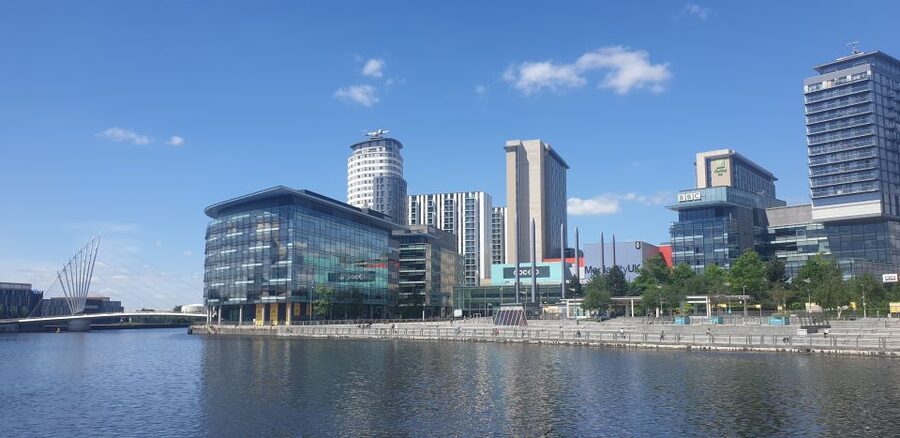
At $18 per person, this is good value if you want an explanation rather than just a waterfront walk. You are paying for two hours of guiding, local history, future development updates, and the convenience of a clear route that links several major sights.
The price is especially reasonable for visitors who would otherwise spend time trying to piece together the story themselves. The Manchester Ship Canal, Media City, the Lowry, and Imperial War Museum North are close enough to visit in one outing, but their connections are not immediately clear.
The value is lower if you only want photographs or prefer to wander alone. You will still see the waterfront without a guide, and the tour does not include museum admission, food, or transport beyond meeting beside the tram station.
For most people, though, $18 is a modest cost for a strong introduction. You can use the rest of the day to revisit the places that interest you most.
Who will enjoy this walk most?

This tour suits first-time visitors to Manchester, people staying around Salford Quays, and local residents who have seen Media City but never learned how it developed. It is also a good choice for anyone interested in urban renewal, industrial history, architecture, media, or public art.
Families can join, and the route is suitable for all ages. Dogs on leads are welcome. Wheelchair users can take part, with the route adjusted to avoid steps when needed.
You should choose another activity if you dislike outdoor walking, need frequent indoor breaks, or want a museum-led experience. The walk is also less appealing in poor weather if you are not prepared. The waterfront is exposed, and two hours outside can feel longer than two hours in a gallery.
Solo visitors should not feel put off. The meeting setup is simple, and the guide’s welcoming style can make a one-person booking feel comfortable. Couples and small groups will also find plenty of space to ask questions.
Practical planning for the day
Allow the full two hours, with a little extra time around the start and finish. The walk begins and ends at Media City Piazza, so you do not need to arrange a separate pickup.
Meet beneath the large digital screen, next to the Media City Metrolink station and opposite BBC Quay House. Arrive ready to walk rather than treating the meeting point as a quick photo stop.
Bring:
- Comfortable walking shoes
- Weather-appropriate clothing
- Warm layers in colder months
- A waterproof layer for wet weather
The tour runs in all weather. It is offered in English, with an English-speaking live guide and English audio through the headsets. Cancellation is available up to 24 hours before departure for a full refund, and you can reserve now and pay later, which helps if your Manchester plans are still shifting.
Should you book the Media City and The Quays walk?
Book it if you want to understand why Salford Quays matters, not just see its modern buildings. The combination of ship-canal history, old photographs, cultural landmarks, and future plans gives you a fuller picture than an unstructured stroll.
I would especially choose it early in a Manchester visit, then use the rest of the day for the Lowry, Imperial War Museum North, shopping, or food around the Quays. The main drawback is simple: you must walk 5 kilometres outdoors, often beside open water. Dress for the forecast and wear sensible shoes.
At $18, the tour earns its price through clear commentary, a thoughtful route, and guides such as Frank who can make a transformed dockland area feel understandable. If you want a short, practical lesson in Manchester’s past and next chapter, this is a strong choice.
FAQ
Where does the tour begin?
The tour begins beneath the large digital screen in Media City Piazza, next to the Media City Metrolink station and opposite BBC Quay House.
Where does the tour finish?
The walk returns to Media City Piazza, where it began.
How long is the tour?
The tour lasts two hours. You should allow the full two hours to be safe.
How far do you walk?
The route covers around 5 kilometres.
What language is the tour in?
The live tour and included audio are in English.
Are headsets provided?
Yes. English-language headsets are included so you can hear the guide clearly while walking.
Which landmarks does the route visit?
The route includes Media City, the Manchester Ship Canal, the Lowry Arts Centre, Imperial War Museum North, canals, bridges, and other points around Salford Quays.
Is the tour suitable for children?
Yes. It is family-friendly and suitable for all ages.
Is the tour wheelchair accessible?
Yes. The route can be adjusted to avoid steps, and the pace can be adapted for the group.
Can I bring my dog?
Yes. Dogs are welcome when kept on leads.
Just added around the UK
- Walking Tours in Inverness City Centre★ 5.0 · 128 reviews
- Merchant City Music Walking Tour of Glasgow★ 5.0 · 94 reviews
- Stirling Castle, Loch Lomond Walk & Whisky Distillery Tour from Glasgow★ 5.0 · 79 reviews
- Walking Tour of Glasgow★ 5.0 · 96 reviews
- Gothic Glasgow Walking Tour★ 5.0 · 448 reviews
- Glasgow: Pubs & History Walking Tour with Beer Tasting★ 5.0 · 81 reviews
- Glencoe, Scenic Walk & Highlands Guided Tour starting Glasgow★ 5.0 · 121 reviews
- Gander Walking Tours in Glasgow★ 5.0 · 506 reviews
Walking Tours, compared.

Magical London: Harry Potter Guided Walking Tour
Read our review →
Reykjavik Food Walk – Local Foodie Adventure in Iceland
Read our review →
History and Hauntings of Salem Guided Walking Tour
Read our review →
New Orleans Premier Ghost, Voodoo and Vampire Walking Tour
Read our review →
Amsterdam Anne Frank: Small-Group Walking Tour & Local Guide
Read our review →

Edinburgh Castle: Guided Walking Tour with Entry Ticket
Read our review →
Anne Frank’s Story – Guided Walking Tour through Amsterdam
Read our review →Browse the lists this tour appears in