
REVIEW · ROME
Ghosts, Legends & Mysteries of Rome Tip-Based Walking Tour
Rome’s grand monuments look different after sunset, when a guide points out the places tied to executions, poisonings, inquisitions, and ghost stories. This 90-minute evening walk links Castel Sant’Angelo with Campo de’ Fiori, using Rome’s streets as the setting for grim tales rather than a standard monument lecture.
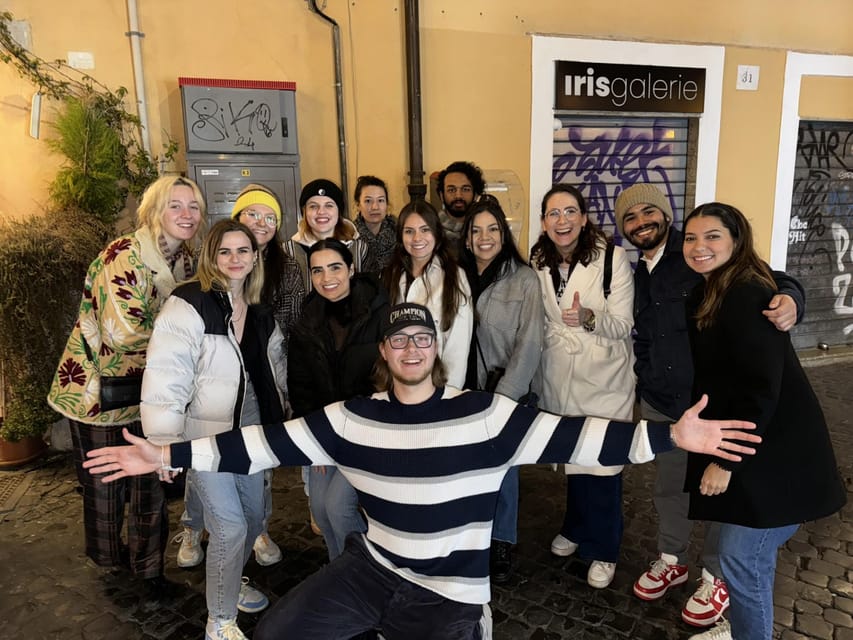
I like the face-to-face storytelling, with no headphones mentioned and room for questions. I also like the mix of documented crimes and urban legends, especially stories connected with witches, corrupt popes, assassins, and Giulia Tofana, Rome’s notorious poisoner. Guides such as Ivan, Leonardo, Simone, Simon, and Max are repeatedly praised for humor and energy.
The main consideration is length. Ninety minutes passes quickly, and the route can feel more like a string of dark episodes than one steadily building story. It is also tip-based, so the low booking price is not the full cost you should plan for.
Key points to know before you book
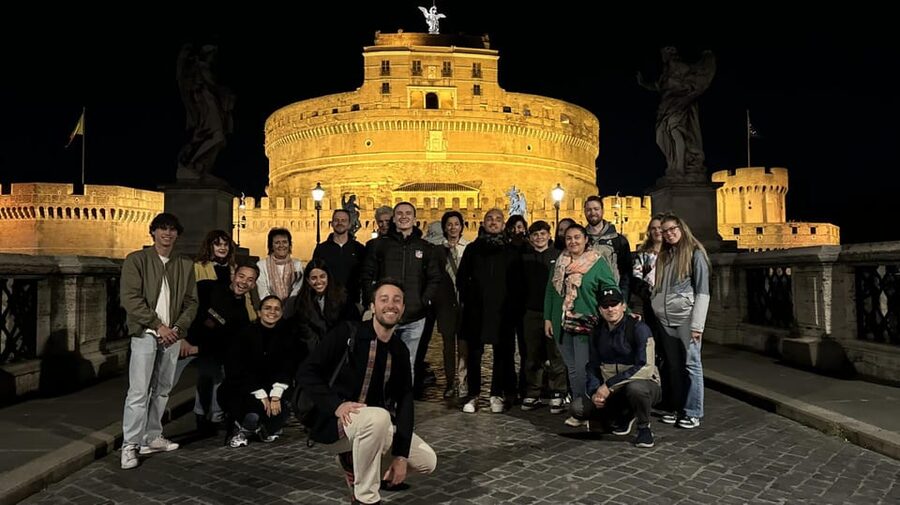
- Start at Castel Sant’Angelo: Meet in front of the castle entrance by Ponte Sant’Angelo, then begin with one of Rome’s most dramatic night views.
- Finish at Campo de’ Fiori: The route ends near restaurants, bars, and gelaterias, making it easy to continue your evening.
- Expect dark humor: The guide uses politically incorrect jokes and an irreverent tone, which will not suit every group.
- Hear crimes as well as ghost stories: The focus includes executions, poisonings, the Inquisition, witches, heretics, and assassins.
- Pay by tip: The booking price is only a small reservation cost. A cash tip of at least €10 per person is a sensible amount to budget, though the final tip is your choice.
- Choose English or Spanish: Live guiding is offered in both languages, with guides including Ivan, Leonardo, Simone, Simon, and Max.
Why this Rome night walk feels different
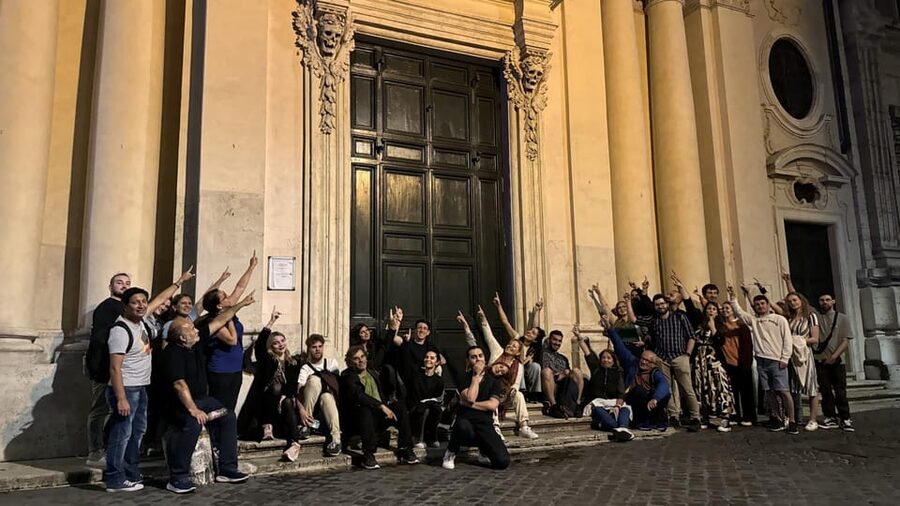
Most Rome walks lead you toward emperors, painters, and famous churches. This one turns the city’s darker corners into the main attraction. You still see important buildings, but the guide’s attention goes to what happened around them: who was imprisoned, who was executed, who was poisoned, and which stories grew into legends.
That change in subject gives you a different way to read Rome. A palace is no longer only a palace. A bridge may become the setting for a grim punishment. A small fountain or side street can carry a story that would never make it into a standard sightseeing tour.
I like this approach because it adds texture without requiring a long museum visit. You are walking through central Rome, stopping often, and listening to a live storyteller who can answer questions. Several guides are praised for keeping the group involved, using humor, and making complicated episodes easy to follow.
The tone matters. This is not a solemn history seminar. Dark humor and politically incorrect jokes are part of the presentation. If you enjoy crime stories, strange deaths, and legends told with a raised eyebrow, the style should suit you. If you prefer a careful, formal treatment of suffering, the jokes may feel too casual.
More Ghost and Haunted Walks in Rome:
- Rome: Paranormal Night Walking Tour & Secret Backstreets
★ 4.9 · 1,921 reviews - Rome: Haunted City Night Walking Tour
★ 4.9 · 616 reviews - New Orleans Premier Ghost, Voodoo and Vampire Walking Tour
★ 4.5 · 12,856 reviews
Starting beside Castel Sant’Angelo
The meeting point is directly in front of the entrance to Castel Sant’Angelo, by the Sant’Angelo bridge. This is a practical place to begin because the castle is easy to identify, and the bridge provides a memorable first setting.
The castle itself gives the guide plenty to work with. Its imposing shape, former prison connections, and association with papal power make it a natural opening for stories about violence, confinement, and death. The tour allows about 15 minutes here for a photo stop, guided commentary, and walking.
You should not expect a full interior visit to Castel Sant’Angelo. The activity is a street walk, not a museum tour. The castle works as a backdrop and starting point, while the guide sets up the darker side of Roman political and religious life.
The bridge is also useful for orientation. From here, the route moves toward the historic center, so you begin beside a major landmark and gradually shift into narrower streets and less obvious stops.
The first short stops and Rome’s darker past
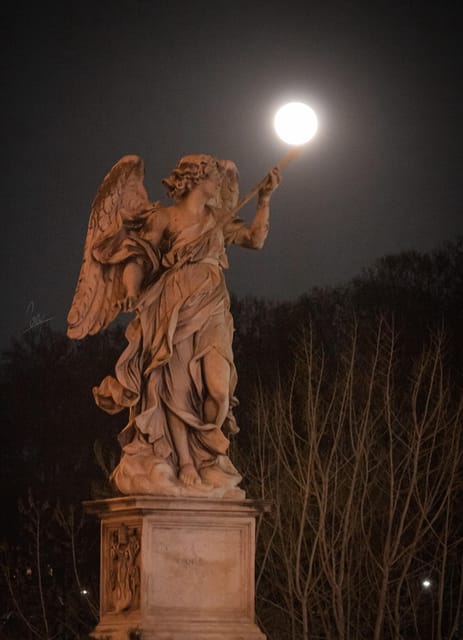
After Castel Sant’Angelo, several brief stops each receive about five minutes of commentary. The exact names of some stops are not given, but the format is clear: walk a short distance, gather around the guide, hear one episode, then continue.
This quick rhythm helps keep the evening moving. You are not standing in one place for half an hour, and the route does not ask you to focus on a single monument. The tradeoff is that some stories may feel compact. If you want detailed dates, long historical explanations, or time for extensive questions at every location, the 90-minute format may feel tight.
The subject matter includes corrupt popes, assassins, witches, heretics, and the Roman Inquisition. These topics give the tour a wide range. Some stories are about real crimes. Others belong to folklore or urban legend. A good guide needs to signal the difference, and the activity presents the evening as a blend of true crime, local tradition, and haunting stories.
I would pay attention to how your guide handles that balance. The appeal is not that every ghost story can be proven. The appeal is seeing how fear, religion, politics, and public punishment shaped the city’s memory.
Secret stops and overlooked corners
The itinerary includes two secret stops, one lasting about 10 minutes and another about five. Their names are kept out of the advance description, which adds a small sense of discovery without promising anything supernatural.
The value of these stops is likely in the setting. Rome’s most memorable moments are not always in front of its largest monuments. A dark passage, old façade, or quiet corner can carry a stronger mood at night than a crowded square.
Do not expect a grand attraction at each secret stop. The point is the story and the atmosphere created by hearing it on location. This is one reason the guide’s delivery matters so much. Ivan, Leonardo, Simone, Simon, and Max are all noted for engaging presentations, but the individual guide assigned to your date can vary.
Group size may also affect these stops. One account describes a comfortable, manageable group, while another found the group too large for everyone to speak easily. If you arrive late, contact with the guide may help, but you should still aim to reach the meeting point on time.
A few more walking tours around Rome worth a look
- Rome: Guided Food Walking Tour with Wine in Trastevere
★ 4.9 · 3,105 reviews - Rome: Trastevere & Campo de Fiori Street Food Walking Tour
★ 4.9 · 2,768 reviews - Rome: Trastevere Street Food Walking Tour with Local Expert
★ 4.8 · 1,784 reviews - Rome: Small-Group Guided Day or Night Walking Tour
★ 4.8 · 1,009 reviews
The Fountain of the Mask
The Fountain of the Mask receives about five minutes. It is a small stop, but that is part of the charm of this route. You are not simply moving from one famous Roman attraction to another. The guide uses a less obvious feature as a doorway into local stories.
This stop should appeal if you enjoy details that are easy to walk past. The fountain becomes more than a place for a quick photograph because the guide supplies the backstory and connects it to the evening’s themes.
The short time allocation also tells you what not to expect. This is not a formal art explanation or a long architectural study. It is a focused story stop, followed by more walking.
Farnese Palace and the power behind the stories
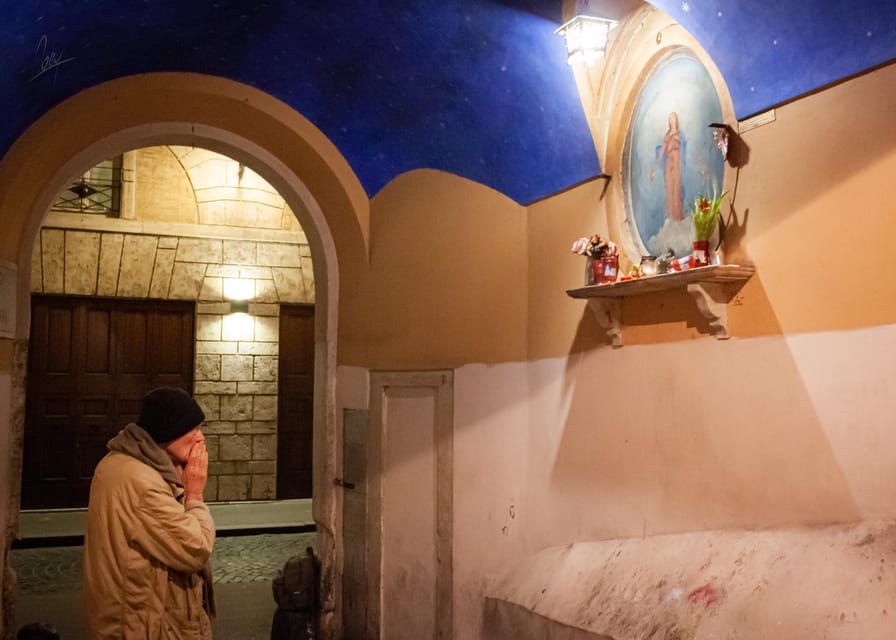
The route then reaches Farnese Palace for another five-minute explanation. The palace brings the tour back to Rome’s powerful families, papal politics, and the grand buildings that frame many of the city’s darker events.
This is where the contrast between beauty and brutality becomes useful. Elegant façades can hide stories of ambition, punishment, conspiracy, or scandal. The tour’s strength is placing those stories in the streets rather than treating them as distant facts.
The stop is short, so you will get a pointed account rather than a full lesson on the palace. That works well for a night walk, especially if you have already spent the day visiting museums and major churches. You get a new angle on the center without adding another lengthy indoor visit.
Campo de’ Fiori and the final ten minutes
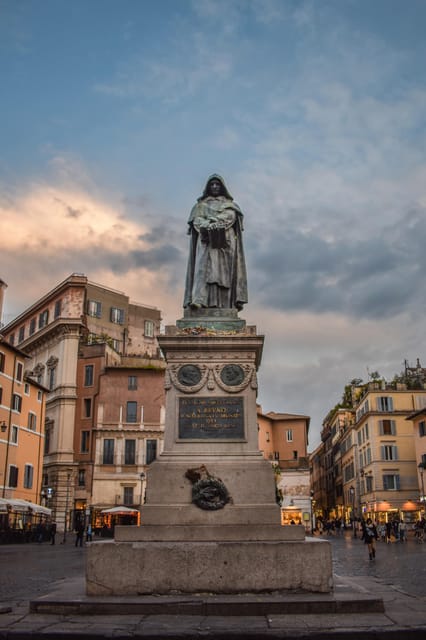
Campo de’ Fiori is the final major stop, with about 10 minutes of guided commentary. It is a fitting ending for a tour focused on punishment, public memory, and Rome’s less comfortable past.
The square gives the guide a strong place to close the narrative. By this point, you have moved from the imposing Castel Sant’Angelo through smaller streets and story locations, then arrived at one of Rome’s most recognizable public spaces.
Campo de’ Fiori is also useful after the tour. You finish in an area with food and drink options, and the guide may offer recommendations for local eateries, gelaterias, and places to continue the evening. That practical touch is worth noting. You are not dropped at an isolated end point with no idea where to go next.
The final stop can also make the tour easy to combine with dinner. Since the walk lasts about 1.5 hours, you can schedule it before a late meal or use it as an after-dinner activity, depending on the available start time.
What the guides do best
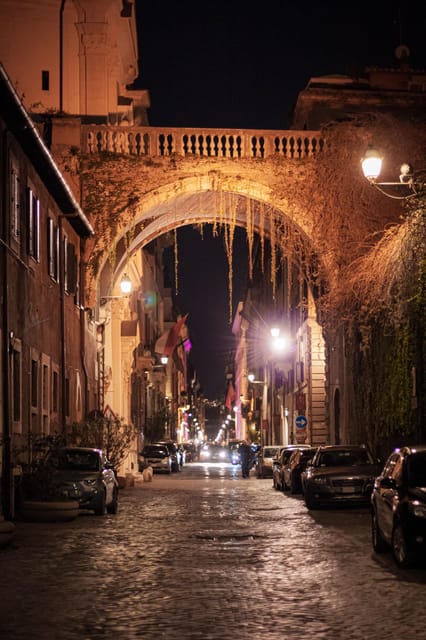
Storytelling is the heart of this activity. The strongest feedback centers on guides who are funny, sincere, energetic, and able to keep attention during a sequence of short stops.
Ivan is repeatedly praised for charisma, humor, and his ability to make grim material entertaining. Leonardo is noted for clear explanations, strong preparation, and a lively delivery. Simone and Simon are also praised for passion, humor, and answering questions. Max receives similar praise for making the walk informative and fun.
You should still keep expectations flexible. A guide can make the route feel vivid, but the subject matter is not light. Stories include real violence, terrible crimes, executions, and tragic deaths. The comedy is there to make the walk approachable, not to remove the seriousness of what happened.
The lack of headphones is another plus for some people. One account specifically liked being able to speak directly with the guide and ask questions. That setup can feel more personal than a large tour with recorded audio, though it also means you need to stay close enough to hear clearly.
Price, tipping, and the real value
The advertised price is about $3.77 per person, but this is a tip-based walk. The guides work for tips, and the amount is left to your judgment at the end. A practical budget is at least €10 per person in cash, with the stated usual range reaching as high as $50 depending on what you feel the tour was worth.
That makes the price less simple than a normal prepaid ticket. The small booking charge gets you a place, but your tip is the meaningful payment. I would not book this expecting a nearly free night out. Treat the low price as a flexible starting point, then set aside a fair tip if you enjoy the guide’s work.
The value is strongest if you want an entertaining introduction to Rome’s darker stories without paying for a long museum tour. It is also good value for a first evening in the city because you see several central locations while learning where to eat and drink afterward.
The value is weaker if you want access inside Castel Sant’Angelo, extensive historical detail, or a longer route. One assessment found the tour a little short, and that is fair. At 90 minutes, the walk gives you a sample of many stories rather than a full study of any one period.
Cancellation is flexible up to 24 hours before the start for a full refund, and you can reserve now and pay later. Check the available start time when booking, since this is a night activity and the schedule may vary.
Who should book this experience
I would recommend it to you if you:
- Enjoy true crime, ghost stories, and unusual local history
- Want a night activity beyond the usual monuments
- Like guides who use humor and involve the group
- Prefer walking through real locations to sitting in a lecture
- Have already seen Rome’s major sights and want a different angle
- Are comfortable hearing about executions, poisoning, torture, and violent crime
I would be more cautious if you are traveling with young children, dislike politically incorrect jokes, or want a polished academic presentation. The activity is designed around mood, narrative, and surprise. It is not a conventional Roman history lesson.
The tour also suits repeat visitors well. You may already know Castel Sant’Angelo, Farnese Palace, and Campo de’ Fiori, but the guide can change how you see them. You are likely to remember the story attached to a building long after you forget another list of dates.
Should you book the Ghosts, Legends & Mysteries of Rome walk?
Book it if you want Rome after dark with a sinister twist, especially if Ivan, Leonardo, Simone, Simon, or Max is leading the language you need. The strongest part is the storytelling, not the number of sights or the depth of each stop.
Plan for a tip of at least €10 per person, arrive at Castel Sant’Angelo on time, and expect jokes alongside disturbing material. If you can accept the short length and informal format, this is a clever way to see central Rome from a less polished and more human angle.
FAQ
Where does the Ghosts, Legends & Mysteries of Rome tour start?
It starts in front of the entrance to Castel Sant’Angelo, by the Sant’Angelo bridge.
Where does the tour finish?
The walk finishes at Campo de’ Fiori.
How long does the tour last?
The stated duration is 1.5 hours.
What language is the tour offered in?
Live guiding is available in English and Spanish.
Is the tour fully prepaid?
No. It uses a pay-what-you-want model. The guide works for tips, which you give at the end based on what you think the tour was worth.
How much should I budget for the tip?
The information gives a usual range of €10 to $50, and one practical recommendation is to plan for at least €10 per person in cash. The final amount is your choice.
Does the tour include entry to Castel Sant’Angelo?
No interior entry is listed. Castel Sant’Angelo is the starting point and receives a photo stop, guided commentary, sightseeing, and walking time.
What subjects does the guide cover?
The tour covers haunted places, executions, urban legends, corrupt popes, witches, heretics, the Inquisition, assassins, and Giulia Tofana, the infamous poisoner.
Can I cancel the booking?
Yes. You can cancel up to 24 hours in advance for a full refund. You can also reserve and pay later.
Just added around Rome
- Rome: Colosseum and Ancient Rome Guided Walking Tour★ 4.5 · 95 reviews
- Rome Walking Tour: Pantheon, Trevi, Navona & Hidden Gems★ 4.8 · 501 reviews
- Rome: Underground Trastevere Guided Walking Tour★ 4.8 · 87 reviews
- Rome: Guided Walking Tour and Pantheon Priority Entry Ticket★ 4.3 · 317 reviews
- Rome: Trevi Fountain, Spanish Steps & Pantheon Walking Tour★ 4.6 · 336 reviews
- Rome: Trastevere and Roman Ghetto Guided Walking Tour★ 4.7 · 79 reviews
- Rome Night Mysteries Guided Walking Tour★ 4.9 · 119 reviews
- Rome: Relics from the Passion of the Christ Walking Tour★ 4.9 · 84 reviews
Ghost and Haunted Walking Tours, compared.

New Orleans Premier Ghost, Voodoo and Vampire Walking Tour
Read our review →
Ghost Walking Tour Where Legends Come To Life
Read our review →
St. Louis Cemetery No. 1 Official Walking Tour
Read our review →

Savannah History and Haunts Candlelit Ghost Walking Tour
Read our review →
Browse the lists this tour appears in