
REVIEW · WALKING TOURS
Vilnius: Regular Walking Tour of Soviet Vilnius
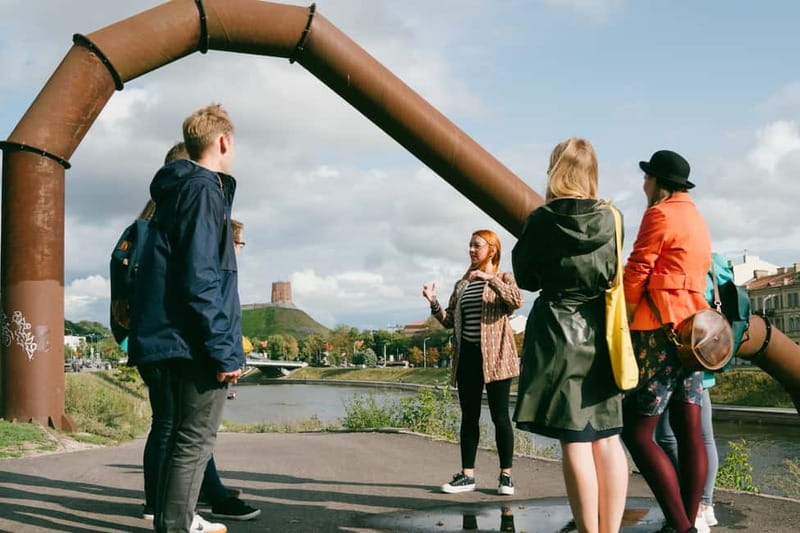
Vilnius reveals its Soviet past best outside the postcard center. This 2.5-hour walking tour leads from Cathedral Square to Seimas through concrete landmarks, renamed squares, former propaganda sites, and places tied to Lithuania’s struggle for freedom. I like that it treats architecture and ordinary life as parts of the same story.
I also like the guides’ personal approach. Ieva, Tadas, and Šarūnas have been praised for clear storytelling, humor, and family memories of Soviet-era Lithuania. The tour’s $24 price is fair for a long, guided walk with strong historical context and access to parts of the city many people skip.
The main drawback is simple: you cover a lot of ground. The route is mostly flat and paced with regular stops, but comfortable shoes are essential, and this is not a good match if long walks are difficult.
Key points at a glance
- A walk beyond the Old Town: Follow the route from Cathedral Square into modern Vilnius, where Soviet planning and architecture become the main subject.
- Brutalist landmarks: See the former Palace of Concerts and Sports, the National Opera and Ballet Theatre, and other buildings whose plain exteriors conceal complicated stories.
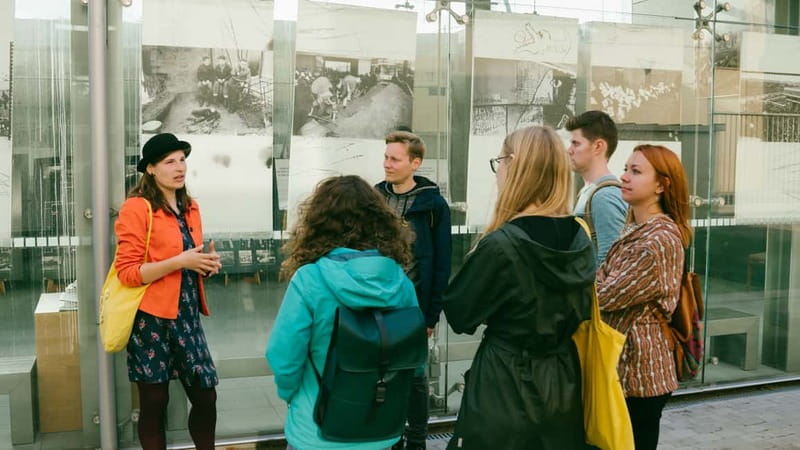
- Personal accounts of Soviet life: Guides such as Ieva and Tadas use family memories to explain shortages, restrictions, fear, and daily routines.
- A clear route to independence: Learn how former Lenin’s Square changed and why the area around Seimas mattered during the 1991 independence defense.
- A serious but human tone: Expect stories about repression and the KGB, balanced with humor, questions, and practical explanations.
- A real walking commitment: The route lasts 2.5 hours, with plenty of time on foot and a possible comfort break during the walk.
Why Soviet Vilnius needs a walking tour
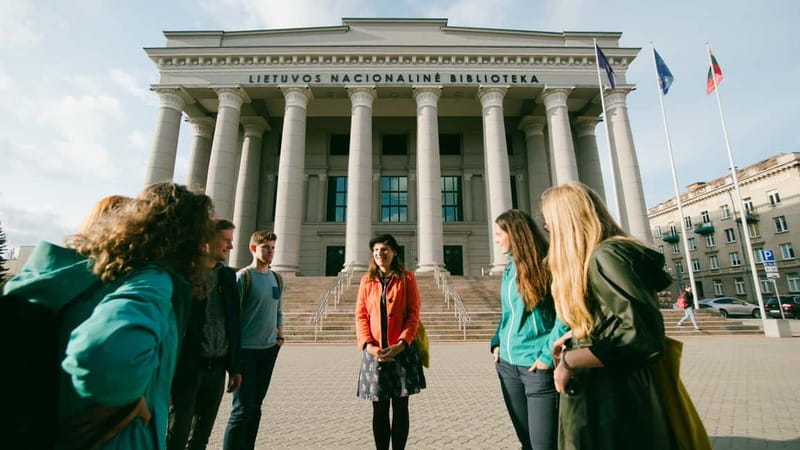
Vilnius Old Town can make the city feel entirely medieval and Baroque. That picture is accurate, but incomplete. The Soviet period reshaped the city’s streets, public buildings, monuments, names, and everyday routines, and much of that story sits just beyond the usual sightseeing circuit.
This tour helps you read those places. A large concrete building is no longer just an unattractive block. A renamed square becomes evidence of political change. A bridge without its former statues still tells you something about propaganda and the decisions made after independence.
I find that approach more useful than a tour that simply lists dates. You learn what the buildings were designed to do, how people used them, and how the city changed after Lithuania declared independence. The subject is political, architectural, and personal at the same time.
The route begins beside the Gediminas monument at Cathedral Square. Look for a guide carrying a yellow bag and a yellow Vilnius with Locals Tours sign. From there, the group leaves the Old Town and heads toward a very different side of Vilnius.
A few more walking tours around the world worth a look
- Magical London: Harry Potter Guided Walking Tour
★ 4.7 · 22,044 reviews - Reykjavik Food Walk – Local Foodie Adventure in Iceland
★ 5.0 · 18,952 reviews - History and Hauntings of Salem Guided Walking Tour
★ 5.0 · 14,564 reviews
From Cathedral Square to the Palace of Concerts and Sports
The first major change is visual. Medieval towers and ornate façades give way to larger postwar structures and wider urban spaces. This transition helps you understand how Soviet planning altered Vilnius without requiring a lecture on architecture before the walk even begins.
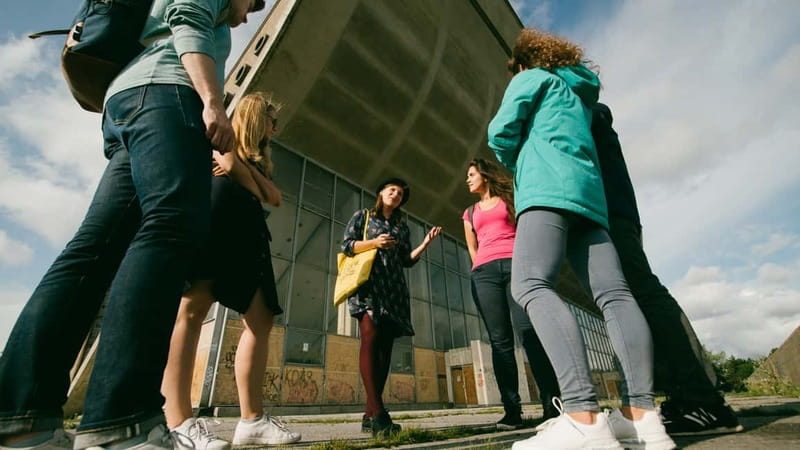
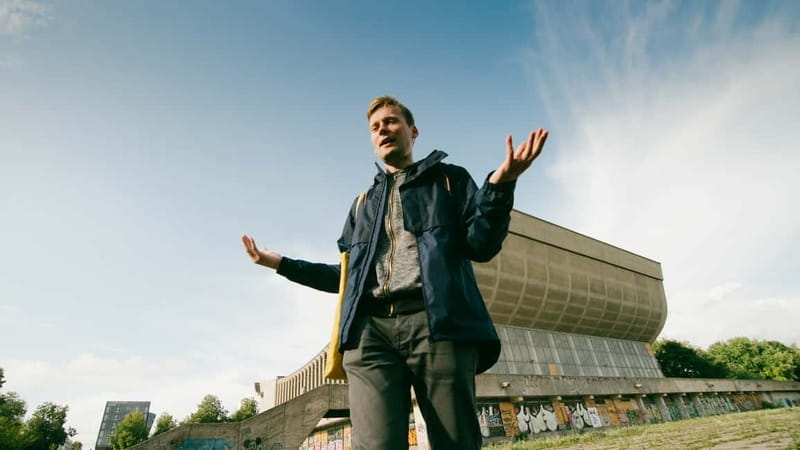
The former Palace of Concerts and Sports is one of the tour’s main sights. Its brutalist concrete design is imposing, spare, and difficult to ignore. During the Soviet period, it hosted concerts and basketball games, so the building was not merely an office or government facility. It was part of public entertainment and city life.
Your guide explains how to look at the building rather than simply photograph it. The shape, scale, and materials reflect a period when public architecture often aimed for authority and mass appeal. At the same time, the building’s current condition raises questions about how cities handle difficult architectural inheritances.
This is a good stop for anyone interested in design, but you do not need an architecture background. The explanation connects the structure to sport, entertainment, city planning, and politics. An architect who took the tour found the discussion of Soviet planning and the reshaping of Vilnius especially worthwhile.
Along the river and toward the Green Bridge
The route continues along the river, giving you a change of pace after the heavy concrete of the concert hall. From here, you get broad views toward the Green Bridge, a useful place to discuss how public art can serve political power.
The bridge was once known for its Soviet propaganda statues. Those figures were removed in recent years, so the site now presents an absence as much as an object. Your guide explains what the statues represented and why the city chose to take them down.
That makes the bridge more interesting than a standard photo stop. You are asked to consider who controls public symbols, how a city remembers occupation, and what happens when a new state decides that old monuments no longer belong in prominent spaces.
The river walk also gives the tour some breathing room. The subject becomes emotionally heavy, particularly when the guide moves from architecture to repression and fear. The outdoor setting and steady pace help keep the discussion manageable.
Lukiskiu Square and the KGB Museum area
Lukiskiu Square brings the political story closer to the personal one. It sits next to the KGB Museum, officially the Museum of Occupations and Freedom Fights, and the tour uses this setting to discuss the terror connected with Soviet rule.
Expect some disturbing stories here. The tour information specifically warns of horrific tales, and that is fair notice. This is not a light architectural stroll with a few retro buildings thrown in. You hear about the impact of state control on real people and families.
The guides handle the subject in different ways, but the strongest accounts combine historical context with family experience. Ieva, for example, has used stories from her relatives to explain what occupation meant at home. Tadas has also drawn on childhood memories of the Soviet era. Those details make the period easier to understand without turning the tour into a personal family memoir.
The tone is serious, but not grim from start to finish. Guides have been praised for using humor at suitable moments, answering questions patiently, and breaking a complicated topic into clear sections. That balance matters. A tour about repression needs care, but it also needs a human voice.
You do not enter the KGB Museum as part of this activity. The museum is a nearby reference point and an important part of the setting. If you plan to visit it separately, this walk can give you useful background first, though the tour itself already includes a substantial discussion of the period.
Same streets, a different route:
- New Orleans Premier Ghost, Voodoo and Vampire Walking Tour
★ 4.5 · 12,856 reviews - Amsterdam Anne Frank: Small-Group Walking Tour & Local Guide
★ 4.8 · 12,789 reviews - Edinburgh: Harry Potter Magical Guided Walking Tour
★ 4.8 · 11,944 reviews - Edinburgh Castle: Guided Walking Tour with Entry Ticket
★ 4.7 · 11,699 reviews
Former Lenin’s Square and a city renamed
Another important stop is the site of former Lenin’s Square. The name has changed, the surroundings have changed, and the political meaning of the place has changed with them.
This stop is valuable because it shows independence as a physical process. Lithuania’s break from Soviet rule was not simply a date in a textbook. Streets were renamed, monuments were removed or replaced, public spaces were reinterpreted, and the city had to decide what it wanted to remember.
Your guide explains how the square looked and functioned under the Soviet system, then sets that against the post-independence city. Images shown on a guide’s iPad have sometimes been used to add visual context, allowing you to compare past and present more easily.
I like this part of the route because it avoids a simple before-and-after story. The old system did not disappear from every building or habit overnight. The tour asks you to notice what remains, what has been altered, and what still creates debate.
Finishing near Seimas and the events of 1991
The walk ends near Seimas, Lithuania’s parliament building. This is one of the most meaningful places on the route because Lithuanians defended their independence there in 1991.
By this point, the tour has moved from concrete buildings and propaganda statues to the choices people made during a dangerous political moment. The final stop gives the earlier stories a clear direction: life under Soviet rule, the demand for independence, and the effort to protect that independence.
You will not get every detail of modern Lithuanian history in one afternoon, but the route gives you a workable outline. It connects daily life with national politics and explains why certain sites matter now.
The ending also leaves you in a useful part of the city for continuing your sightseeing. Since hotel pickup is not included, you should plan your own route back or onward after the tour. The meeting point at Cathedral Square is easy to find, and the finish near Seimas gives the walk a clear one-way shape.
The guides make the difference
The activity is offered in English, and the guide is central to its quality. The strongest guide experiences have come from Ieva, Tadas, Šarūnas, and other local historians who combine preparation with personal connection.
Ieva has been described as having a history degree and extensive guide training. Her style includes family stories, historical interpretation, humor, and calm answers to difficult questions. Tadas is known for sharing memories from the Soviet period in a relaxed and easy-to-follow way.
Šarūnas has also led the walk for local residents, who found that he pointed out details they had never noticed. That is a useful sign for the subject. The tour is not built only for people arriving with no background in Lithuania. Even someone familiar with Vilnius may see ordinary buildings differently after the walk.
The guides also seem comfortable with active groups. One tour ran almost an hour over time because people had many questions. That is a positive sign for discussion, but you should not assume every departure will last longer than the advertised 2.5 hours.
The personal stories are especially useful for people who know little about life behind the Iron Curtain. They explain the period through work, family, possessions, restrictions, and public behavior rather than only through leaders and political slogans.
How much walking is involved?
A lot. The route leaves Cathedral Square, crosses into areas outside the Old Town, follows the river, continues through several city locations, and finishes at Seimas.
One guide described the walking as easy-paced and flat, and the stops are spaced so you are not racing from one point to the next. Still, the total distance matters. You are outdoors for 2.5 hours, and the weather can shape the experience. Rain and cold have been manageable for determined participants, but neither makes a long walk more pleasant.
Wear proper walking shoes. Bring weather protection and water, especially if you are visiting in colder months or during changeable weather. The tour may include a short comfort break after roughly 1.5 hours, but do not treat that as a guarantee for every departure.
The activity is marked wheelchair accessible, yet it is also not recommended for people with limited mobility because of the amount of walking. If you use a wheelchair or have specific mobility needs, contact the provider before booking and ask about the exact route and stop conditions.
Is $24 good value?
At $24 per person, this is good value if you want more than a quick introduction to Vilnius. You receive a live English-language guide, a 2.5-hour route, and a focused account of a period that is visible across the city but easy to miss.
The price is particularly reasonable because the tour combines three subjects: Soviet architecture, ordinary life under communist rule, and Lithuania’s road to independence. A shorter architecture walk might show the buildings without explaining their human cost. A museum visit might give you documents and interiors without showing how the city itself was organized.
You also avoid paying for transport or a formal attraction ticket. Hotel pickup and drop-off are not included, but that is not a serious drawback for a central walking experience. The main thing you pay with is your time and energy.
Free cancellation up to 24 hours before the start and reserve-now, pay-later booking add flexibility. Check the available departure times when booking, since the exact schedule is not fixed in the information provided.
Who should book this walk?
I would choose this tour if you have an interest in twentieth-century Europe, communism, architecture, occupation, or the political changes that followed the collapse of the Soviet Union. It is also a strong choice if you have already seen the Old Town and want to understand modern Vilnius.
The walk suits adults and teenagers who can handle serious subject matter. The stories around the KGB Museum are not softened into entertainment, though the guides keep the presentation clear and approachable.
It is also useful for anyone with limited time in Vilnius. In one afternoon, you get a compact explanation of the city’s Soviet period and see places you might otherwise pass without stopping.
I would think twice if you want a gentle stroll, frequent indoor breaks, or a tour focused mainly on medieval sights. This activity spends much of its time outside the Old Town, and its subject includes repression, fear, and painful family memories.
Should you book Soviet Vilnius?
I recommend booking it if you want to understand how Lithuania became the country you see today. The combination of brutalist buildings, removed propaganda statues, renamed public spaces, personal memories, and the 1991 independence story gives the city a stronger sense of place.
Book it early in your stay if possible. The walk can help you interpret other museums and buildings afterward. Choose another activity if long walks are difficult or if your main interest is Vilnius’s medieval and Baroque center.
For most people who can manage the distance, the history and guiding are worth the $24. Bring good shoes, expect serious stories, and give yourself time to look beyond the façades.
FAQ
Where does the Soviet Vilnius walking tour begin?
The tour begins in front of the Gediminas monument at Cathedral Square. Look for a guide with a yellow bag and a yellow Vilnius with Locals Tours sign.
Where does the tour finish?
The walk finishes near Seimas, the Lithuanian parliament building.
How long does the tour last?
The advertised duration is 2.5 hours. A short comfort break may take place during the walk, and question-heavy departures can sometimes run longer.
What language is the tour in?
The live guided tour is conducted in English.
How much walking is involved?
There is a lot of walking. The route leaves the Old Town, follows the river, visits several Soviet-era sites, and ends near Seimas. The pace is generally easy and the route is described as flat, but comfortable shoes are important.
Is the tour suitable for people with limited mobility?
The activity is marked wheelchair accessible, but it is not recommended for people with mobility impairments because of the amount of walking. Contact the provider before booking if you need specific accessibility information.
What does the $24 price include?
The price includes the guided walking tour. Hotel pickup, hotel drop-off, and any other personal expenses are not included.
Just added around the world
- 3 Hour Rainforest Walk & Totem Park Wild Wolf Tours★ 5.0 · 265 reviews
- 2 Hour Alaska Rainforest Walk and Totem Park Small Group Tour★ 5.0 · 187 reviews
- Ketchikan Rainforest Canoe and Nature Walk★ 4.5 · 89 reviews
- Kelowna: #1 Rated Walking Food Tour with 7 Tastings and 4 Drinks★ 5.0 · 460 reviews
- Walking Food Tour Exploring Hanalei★ 5.0 · 282 reviews
- A Walk Through Time in Kennebunkport – Celebrating 200+ Years!★ 5.0 · 111 reviews
- Kampala’s Best Experience walking tour★ 5.0 · 137 reviews
- 3-Hour Rainforest, Beach & Wildlife Walk★ 5.0 · 73 reviews
Walking Tours, compared.

Magical London: Harry Potter Guided Walking Tour
Read our review →
Reykjavik Food Walk – Local Foodie Adventure in Iceland
Read our review →
History and Hauntings of Salem Guided Walking Tour
Read our review →
New Orleans Premier Ghost, Voodoo and Vampire Walking Tour
Read our review →
Amsterdam Anne Frank: Small-Group Walking Tour & Local Guide
Read our review →

Edinburgh Castle: Guided Walking Tour with Entry Ticket
Read our review →