
REVIEW · SPAIN
Valencia: Essentials and World Heritages Sites Walking Tour
Valencia’s unusual claim to fame is the focus here: three UNESCO World Heritage properties, each telling a different story about the city. You’ll connect the Silk Exchange with medieval trade, the Water Tribunal with living local law, and Fallas with fire, art, and public celebration.
I like the sensible route from Estación del Norte through the old center, and I like the way guides such as Sara, Maria, and Gabor mix dates with useful advice on food and places to visit later. The main consideration is time: two hours gives you a sharp introduction, not a detailed look inside every monument.
- Three UNESCO stories in one walk: Learn about the Silk Exchange, Water Tribunal, and Fallas festival.
- Silk Exchange entry included: Go inside Valencia’s finest Gothic trade building when it is open.
- City Hall access may be included: The guided visit runs on working days, except during official events.
- A useful first-day tour: The route helps you get your bearings before exploring alone.
- English-speaking local guides: Guides including Sara, Maria, Gabor, Sofi, and Eugenia have been praised for clear explanations and personal recommendations.
- Easy central meeting point: Begin at the Tourism Hub beside Estación del Norte, near Xàtiva Metro.
Why Valencia’s three UNESCO stories make this tour worthwhile
Many city walks give you a string of monuments and a blur of dates. This one has a clearer idea behind it. Valencia’s three UNESCO listings are not three similar buildings. They represent commerce, civic tradition, and popular culture.
The Lonja de la Seda, or Silk Exchange, belongs to the age when Valencia was a major Mediterranean trading center. The Water Tribunal is still connected with the practical business of sharing irrigation water. Fallas brings the story into the present, with enormous temporary figures, satire, fire, and fireworks.
That mix gives the walk more shape than a standard old-town introduction. You are not only looking at old stone. You are seeing how Valencia traded, governed itself, and still celebrates in its own loud, smoky way.
The price is $21 per person. I consider that fair for a two-hour guided walk with entry to the Silk Exchange and, when open, the City Hall. The value is strongest if you are new to Valencia and want someone to explain what you are seeing rather than simply point at a building.
Starting at Estación del Norte and finding the old center
The meeting point is the Tourism Hub inside the West Tower of Estación del Norte, on the ground floor at Carrer de Xàtiva, 24. Face the railway station and it is the tower on the right. Xàtiva is the nearest metro station, so this is a practical start for anyone arriving by train or using the city’s metro.
Estación del Norte is a useful place to begin because it puts you close to the historic center while giving you an immediate sense of Valencia’s decorative style. The tour does not spend its full two hours at the station, but starting here makes the route easy to find and avoids the confusion of meeting in a large plaza.
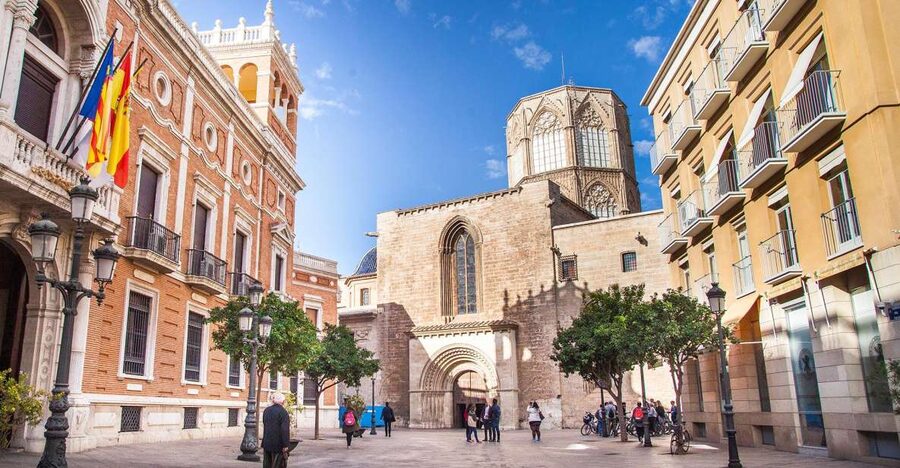
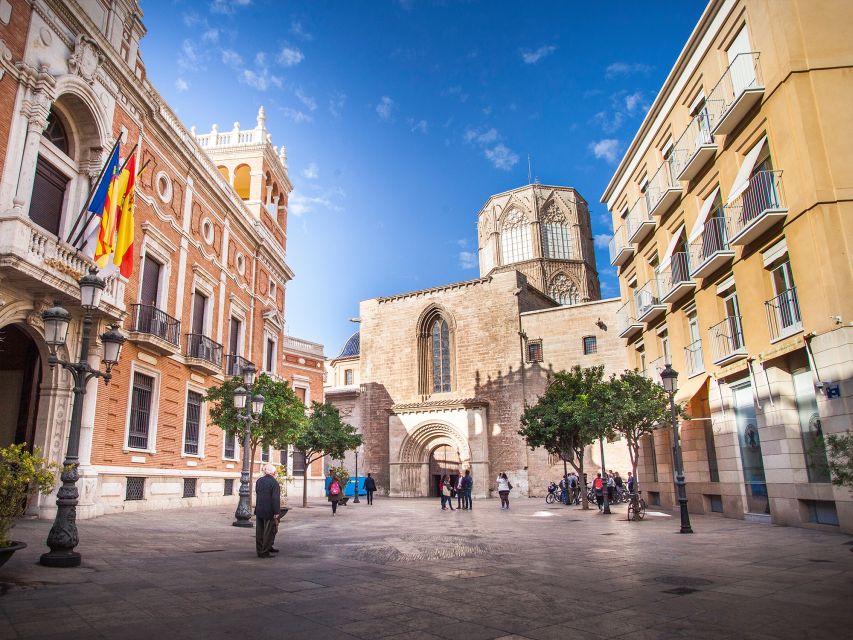
From here, you move toward the central civic area. The exact order can vary, especially if a building is closed for an official event, but the walk generally takes in the City Hall, nearby squares, the Central Market area, the Silk Exchange, and the cathedral area.
I recommend taking this tour early in your stay. Several guides use the walk to explain what to do after it ends, and that advice can save you time later. One guide, Gabor, is particularly noted for restaurant suggestions and for helping visitors get oriented quickly. Other guides, including Maria and Sara, are praised for giving practical ideas about further sightseeing.
A few more walking tours around Spain worth a look
- Barcelona Tapas and Wine Experience Small-Group Walking Tour
★ 5.0 · 5,804 reviews - Barcelona: Tapas Walking Tour with Food, Wine, and History
★ 4.8 · 4,261 reviews - Madrid Tapas & Wine Tasting Walking Tour – Small Group Local Bars
★ 5.0 · 3,644 reviews
City Hall and Valencia’s civic heart
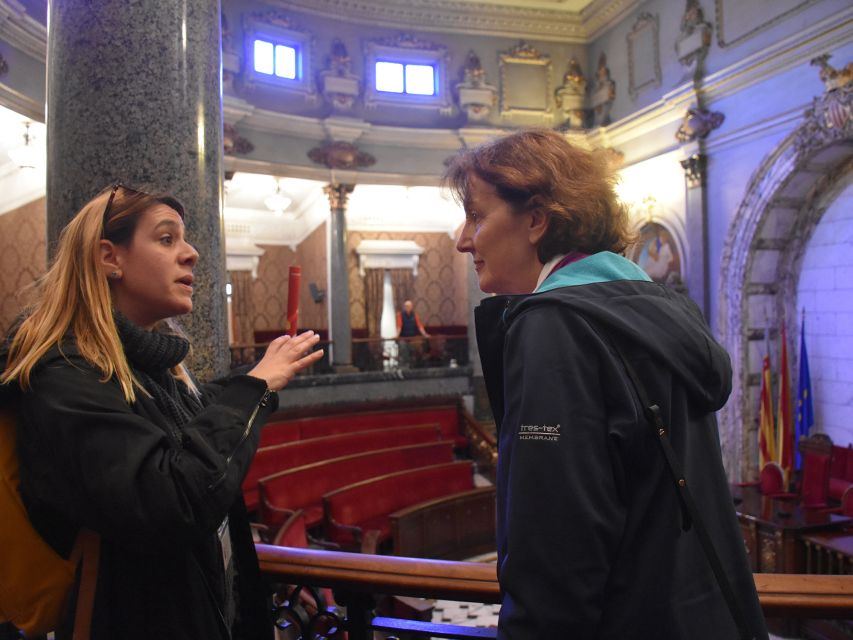
The City Hall is one of the tour’s indoor stops when it is open. The guided visit takes place on working days, but an official event can close access. That restriction matters, so do not treat the City Hall entrance as absolutely guaranteed for every departure.
Inside, your guide can give the building more meaning than a quick photo from outside. It represents the modern administrative center of Valencia and helps connect the city’s older commercial past with its present-day public life.
This is also a useful pause in the walk. Valencia can be hot, and standing in open squares for two hours takes more energy than the distance suggests. The tour is described as involving short stretches between sights, and one guide made a point of finding shady places for the group during a warm summer visit.
If you want a detailed tour of the City Hall itself, this experience may feel brief. The strength is context. You see the building as part of a larger story about how Valencia developed, rather than spending the whole visit on rooms and architecture.
The Central Market area and the practical side of Valencia
The route around the Central Market adds daily life to the historic monuments. The market area helps you see that Valencia’s center is not just an open-air museum. It is still a place for shopping, eating, meeting, and getting on with ordinary business.
The tour does not include a market meal or a food tasting, so keep your expectations clear. You will receive explanation and orientation, not a culinary excursion. Still, this part of the route is valuable because it links local food culture with the city streets you will probably revisit on your own.
Guides often offer suggestions for restaurants and local dishes at the end. Gabor recommended Armonia to one family, who enjoyed the paella there. That does not turn the walk into a food tour, but it shows how the guide’s advice can continue to help after the official route ends.
I like this kind of stop because it gives you a practical reason to return. You can come back to the market area later, take your time, and explore without trying to absorb a history lecture at the same time.
Entering the Lonja de la Seda
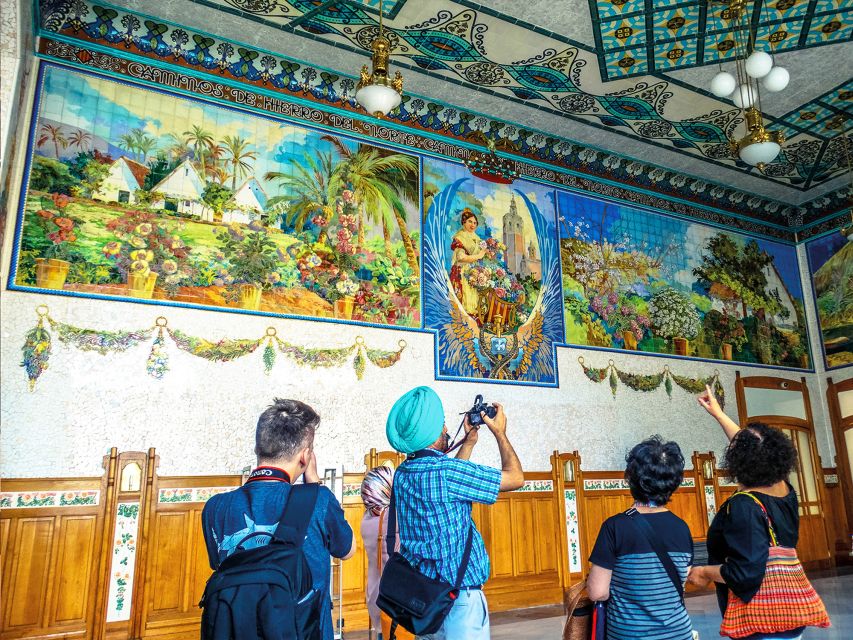
The Silk Exchange is the tour’s most important interior visit. Entry is included according to the monument’s opening schedule, and this is where the walk’s UNESCO theme becomes especially concrete.
The Lonja de la Seda was built for commerce, and its design reflects Valencia’s medieval trading power. Your guide explains why the building mattered and how the silk trade fitted into the wider life of the city. The stone columns, vaulted spaces, and formal rooms are far more rewarding once you understand their purpose.
This is not simply a pretty Gothic building. It tells you that Valencia was connected to major commercial networks long before modern tourism. The building’s name points to silk, but the wider story is about contracts, money, trust, and the rules that allowed merchants to do business.
The Silk Exchange visit can also be the most rushed section if the group arrives during a busy period. Two hours must cover several major sights, and the guide has to keep everyone moving. If you want close architectural study or quiet photography, plan a separate return visit if the opening hours allow.
An event can also close the building during the tour. In that case, the operator may send you the ticket so you can enter independently in the afternoon, or attempt to exchange it for admission to another museum or monument of equal value. This is a fair solution, but it changes the experience from a guided interior visit to a self-guided one.
Same streets, a different route:
- Granada: Albaicín and Sacromonte Guided Sunset Walking Tour
★ 4.9 · 2,962 reviews - Toledo Tour & Vineyard Walk with Wine Tasting from Madrid
★ 5.0 · 2,546 reviews - Madrid Walking Tour from Puerta del Sol to Retiro Park
★ 5.0 · 2,285 reviews - Barcelona: Food Walking Tour with Tapas and Wine
★ 4.9 · 2,180 reviews
The Water Tribunal and a living tradition
The Water Tribunal is one of the most interesting subjects on the walk because it is not just a historical reference. It represents Valencia’s long-standing system for managing irrigation water, a practical concern in the farming areas around the city.
The guide explains the tribunal as part of Valencia’s civic culture and points out why UNESCO recognition applies to a working tradition rather than only to a building. That distinction is important. You learn that heritage can be a meeting, a rule, and a local custom, not only an old monument.
The tour does not promise a separate courtroom visit or a full session of the tribunal. Think of this as an explanation of the institution and its place in Valencia’s story. If the idea catches your interest, ask your guide what you can see or learn about it later.
This stop gives the tour a welcome change of pace. After the stonework of the Silk Exchange and the formal City Hall, the Water Tribunal shows how old customs can continue to shape everyday life.
Fallas, fire, and Valencia’s noisy modern identity
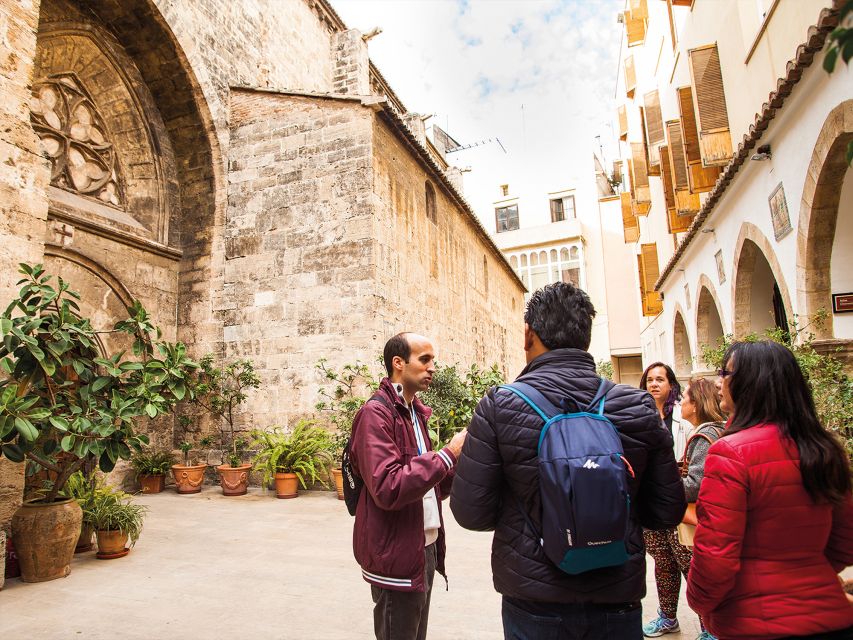
The third UNESCO story is Fallas, Valencia’s famous annual festival of temporary art, fire, and fireworks. The tour explains why a festival built around figures that are eventually burned can hold such cultural importance.
Fallas helps you understand the city’s sense of humor and public identity. The sculptures are not permanent monuments. Their value comes from the work, satire, gathering, ceremony, and final destruction. That makes Fallas a useful counterpoint to the Silk Exchange, which has survived for centuries in stone.
You will not experience the full festival simply by taking this two-hour walk, and the activity does not include a festival event or fireworks display. Instead, you get the background needed to understand what you see if you visit Valencia during Fallas season, or encounter its imagery at other times of year.
I especially like that the tour treats Valencia as a living city. The old center is not presented as a collection of frozen dates. The Fallas story gives you a reason to look at present-day Valencia with more curiosity.
The cathedral area and the final orientation

The route commonly finishes near the cathedral after moving through the old center. The cathedral is one of Valencia’s essential sights, and seeing it in relation to the surrounding streets helps you understand the scale of the historic core.
The tour does not include a full cathedral visit as an included feature, so check the details before you book if entering the cathedral is your main goal. The value here is the outside explanation and the wider orientation. You can return later if you want more time inside.
The final section is also when the guide’s local advice becomes most useful. Sara, Maria, Sofi, and other guides have been praised for clear English, thoughtful answers, and recommendations for places to visit after the walk. Eugenia has been singled out for her enthusiasm for her home city, while Gabor is often praised for his patience and friendly manner.
A good guide can also adjust the pace. The tour is described as involving limited distances between stops, and one family found it suitable for different ages. Still, this is a walking tour, so comfortable shoes and protection from sun or rain make sense.
Guide quality and group atmosphere
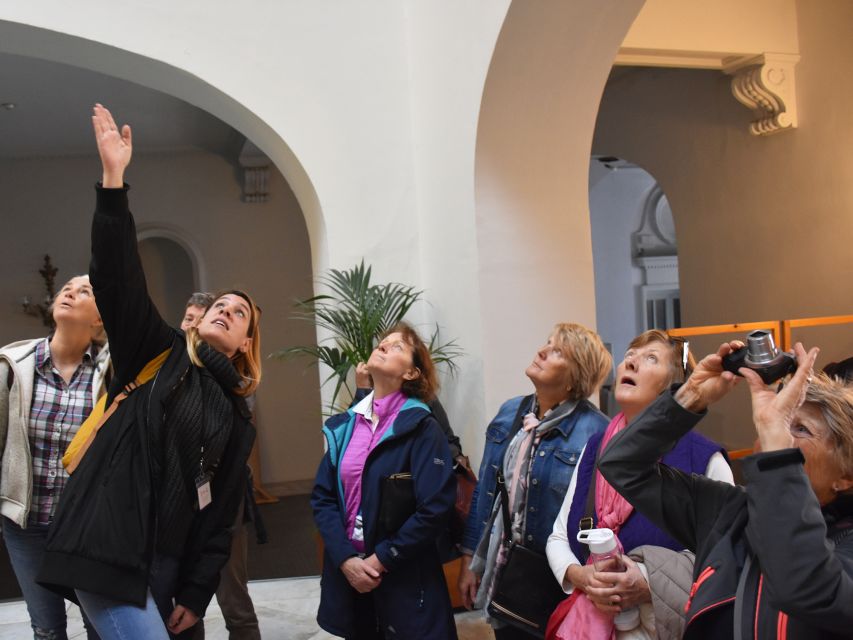
The guide can make or break a short city tour. Here, the strongest pattern is clear explanation delivered at a steady pace. Names that appear repeatedly in the experience include Gabor, Sara, Maria, Sofi, and other members of the local team.
Gabor is known for warmth, patience, photos, restaurant tips, and a strong command of Valencia’s past. Sara is praised for bringing the city to life, answering questions carefully, and adapting explanations to what the group already knows. Maria is valued for her clear English, cheerful approach, and ability to make history easy to follow.
Group size can vary. Some departures have been intimate, with only two or three people, while others are larger. A small group gives you more room to ask questions and may let the guide adjust the discussion to your interests. You should not book on the assumption that every departure will be private.
The stated tour language is English. If you want to change groups based on language, that depends on availability and carries an extra charge of €5 per person. This is worth checking before you book rather than expecting a last-minute switch.
How much can two hours really cover?
Two hours is enough for an introduction, but not for a full study of Valencia’s monuments. The pace is generally comfortable, and the stops are not far apart, yet the route covers a lot: the City Hall, squares, market area, Silk Exchange, cathedral area, and three UNESCO subjects.
I would treat this as a well-organized first look. You get the city’s broad outline, then choose where to spend more time. If you already know Valencia well, the tour may feel too basic unless you particularly want the UNESCO angle or a guide’s interpretation of the old center.
The short length is also a benefit. You can fit it into your first morning, leave the afternoon open, and still have energy for another museum or neighborhood. The tour is wheelchair accessible, though access to individual sites can still depend on opening conditions and official events.
Who should book this Valencia walking tour?
I would choose this tour if you are visiting Valencia for the first time, have limited time, or prefer to understand a city before exploring it alone. It is especially useful for people who want a mix of architecture, local traditions, and practical orientation rather than a single-subject museum tour.
Families and older visitors may appreciate the short distances and steady pace. History lovers will value the Silk Exchange and the explanation of the Water Tribunal. Festival fans will enjoy learning why Fallas matters beyond its spectacular images.
I would look elsewhere if you want a long food tour, extensive time inside the cathedral, or a deep architectural study of every monument. I would also check the City Hall and Silk Exchange opening conditions before booking if those interiors are your main reason for going.
Cancellation is free up to 24 hours before the start, and you can reserve now and pay later. Those terms are useful if your Valencia schedule is still moving.
My verdict on the $21 price
At $21, the tour offers solid value. The Silk Exchange admission alone adds substance, and the guide provides a framework that would take much longer to build from guidebooks and scattered signs. The City Hall access, when available, makes the package even better.
The real value is not the number of buildings. It is the way the tour links three very different parts of Valencia: medieval trade, water management, and Fallas. You leave with a usable map of the old center and a better idea of which places deserve a return visit.
Book it for your first day if you want a friendly, efficient introduction with a strong local voice. Skip it only if you already know central Valencia well or need a slower, more specialized tour.
FAQ
Where does the Valencia walking tour meet?
It meets at the Tourism Hub inside the West Tower of Estación del Norte, on the ground floor at Carrer de Xàtiva, 24. When facing the station, use the tower on the right.
Is the meeting point near public transportation?
Yes. Xàtiva Metro station is the nearby metro stop, and the meeting point is at Estación del Norte.
How long does the tour last?
The tour lasts two hours.
What language is the tour conducted in?
The listed tour language is English, led by a live guide.
Is the Silk Exchange admission included?
Yes. Entry to the Silk Exchange is included according to the monument’s opening schedule.
Is City Hall admission included?
City Hall admission is included according to opening conditions. The guided visit is available on working days, except when an official event is taking place.
What happens if the Silk Exchange is closed?
You may receive the ticket to enter independently in the afternoon, or the operator may try to exchange it for admission to another museum or monument of the same value.
Is the tour wheelchair accessible?
Yes, the activity is listed as wheelchair accessible.
Can I change to a group in another language?
A language-group change depends on availability and costs an additional €5 per person.
Can I cancel for a full refund?
Yes. You can cancel up to 24 hours in advance for a full refund. You can also reserve now and pay later.
Just added around Spain
- English Cádiz Tour: Walking Tour with Local Guide★ 4.7 · 431 reviews
- Corralejo: Walking tour with tastings of local products★ 4.9 · 237 reviews
- Patios of Cordoba Walking Tour★ 4.4 · 199 reviews
- Cordoba: Monuments Walking Tour★ 4.8 · 479 reviews
- Cartagena: Ancient Roman Walking Tour with Entry Tickets★ 4.5 · 89 reviews
- Cartagena: Guided Walking Tour with Tapas and Drinks★ 4.6 · 143 reviews
- Cáceres: City Highlights Walking Tour with Local Guide★ 4.9 · 72 reviews
- Bilbao: San Juan de Gaztelugatxe and Walk along Basque Coast★ 4.9 · 114 reviews
Walking Tours, compared.

Magical London: Harry Potter Guided Walking Tour
Read our review →
Reykjavik Food Walk – Local Foodie Adventure in Iceland
Read our review →
History and Hauntings of Salem Guided Walking Tour
Read our review →
New Orleans Premier Ghost, Voodoo and Vampire Walking Tour
Read our review →
Amsterdam Anne Frank: Small-Group Walking Tour & Local Guide
Read our review →

Edinburgh Castle: Guided Walking Tour with Entry Ticket
Read our review →
Anne Frank’s Story – Guided Walking Tour through Amsterdam
Read our review →Browse the lists this tour appears in