
REVIEW · SPAIN
Toledo: Guided Monument Walking Tour with Wristband Pass
Toledo’s most moving sight is inside a small church: El Greco’s The Burial of the Lord of Orgaz, where heaven and earth meet in a crowded, highly charged canvas. This three-hour walk links that painting with Santa María la Blanca and the Monastery of San Juan de los Reyes, giving you a useful first look at Toledo’s three-faith past.
I like the seven-monument wristband, which stays valid throughout your time in Toledo, and I like the local guides’ knack for putting buildings into a human story. Raquel, Jesus, Tamara, Carmen, and others have been especially praised for clear explanations, humor, and genuine affection for the city.
The main consideration is the bilingual format. If English and Spanish are spoken together, the tour can take longer and some information may be repeated. A strong guide handles this well, but visitors seeking a fast, English-only tour should check the arrangement before booking.
Key points to know before you book
- El Greco’s masterpiece: See The Burial of the Lord of Orgaz inside the Church of Santo Tomé.
- Three major monuments: The guided route covers Santo Tomé, Santa María la Blanca, and San Juan de los Reyes.
- Seven sites for one price: Keep the wristband and visit four additional monuments on your own.
- A useful city introduction: The walk explains Toledo through its Christian, Jewish, and Muslim connections.
- Bilingual tours are possible: English and Spanish may be delivered at the same time.
- Plan for hills and stone streets: Wear comfortable shoes and arrive 10 to 15 minutes early at Zocodover Square.
Why this Toledo walk works so well as a first visit
Toledo is compact on a map but confusing on foot. Its old center is a maze of narrow streets, uneven paving, small squares, and sudden turns. This tour gives you a fixed starting point, a guide to explain what you are seeing, and a wristband that encourages you to keep exploring after the formal walk ends.
The meeting point is beside the yellow mailbox in Zocodover Square, the city’s central gathering place. Arrive 10 to 15 minutes early. That matters here because a few minutes of lateness can become a long chase through twisting streets.
The advertised duration is three hours. That is enough time to visit the three main monuments without turning every stop into a rushed photo opportunity. You should expect a moderate amount of walking, with some uphill sections likely in Toledo’s old center. One useful point from the practical experience of the tour is that it does not require constant steep climbing, though you still need shoes that can handle stone streets.
The visit can be run in English and Spanish at the same time. This is helpful for mixed-language families and couples, and several guides have handled it with care. You may hear one explanation followed by the other, so the pace can feel slower than an English-only walk. You also may have a few moments to look around while the guide speaks to the other language group.
More Guided Tours in Spain:
- Granada: Albaicín and Sacromonte Guided Sunset Walking Tour
★ 4.9 · 2,962 reviews - Madrid: Tapas & Wine Tasting Tour with Local Guide
★ 4.8 · 2,171 reviews - Madrid: Royal Palace Skip-the-Line Guided Tour
★ 4.5 · 2,140 reviews
Santo Tomé and the painting that makes the stop worthwhile
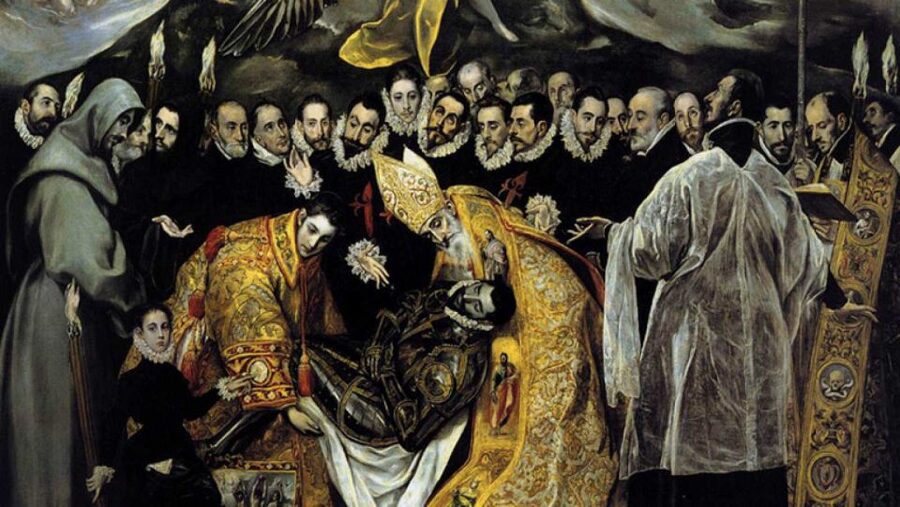
The first major highlight is the Church of Santo Tomé, best known for El Greco’s The Burial of the Lord of Orgaz. You do not need to be an art specialist to appreciate this stop. The painting is large, dramatic, and filled with figures, gestures, and spiritual tension.
The subject comes from the story of Gonzalo Ruiz de Toledo, Lord of Orgaz, whose burial was said to have been attended by Saints Stephen and Augustine. El Greco divides the scene between the earthly funeral below and the heavenly realm above. The result is less like a quiet church commission and more like a vision unfolding in front of you.
Your guide helps you look beyond the famous name. Pay attention to the contrast between the solemn, weighty figures at the burial and the elongated, almost otherworldly figures above. A good explanation also makes the painting feel connected to Toledo rather than treating it as an isolated art lesson.
Santo Tomé is a strong opening because it gives you a clear sense of how art, religion, local legend, and civic pride overlap in Toledo. The drawback is simple: the church’s main attraction is concentrated in one painting. The visit is not a long museum stop, so the value comes from the guide’s explanation and from knowing what details to look for.
Santa María la Blanca and Toledo’s Jewish quarter
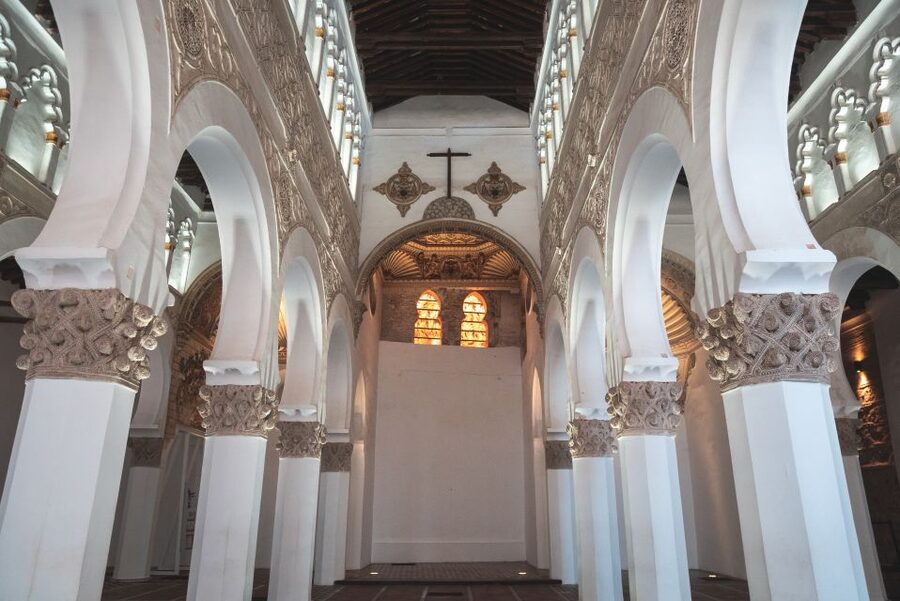
The walk continues to the Synagogue of Santa María la Blanca, one of Toledo’s most memorable interiors. Built in the 12th century as a synagogue, it was converted into a Catholic church in the 15th century. Today it functions as a historical and cultural monument.
The building is notable for its whitewashed interior and rows of horseshoe arches. The repeated arches create a calm, almost weightless effect. It is a good place to think about Toledo as a city shaped by several faiths and architectural traditions, not as a collection of separate attractions.
The description of Santa María la Blanca as the oldest standing synagogue in Europe gives this stop considerable weight. At the same time, the building’s later conversion is part of its story. A responsible explanation should not reduce the site to a simple tale of harmony. Toledo’s periods of cooperation and tolerance existed alongside political pressure, religious conflict, and forced change.
That balance is one reason a guide helps. You can walk through the white interior alone and admire its form, but it is harder to understand what the building has represented to different communities over time without context.
The synagogue is also the most distinctive stop for visitors interested in Jewish Toledo. If your schedule is tight, this is one of the three places where the guided explanation adds real value. Take a moment to look along the arches and at the way the light changes the feel of the room.
Food is not allowed inside the monuments, so finish snacks and drinks before entering. This is a small rule, but it is worth knowing when you are planning a long morning or afternoon.
San Juan de los Reyes and the Catholic Monarchs
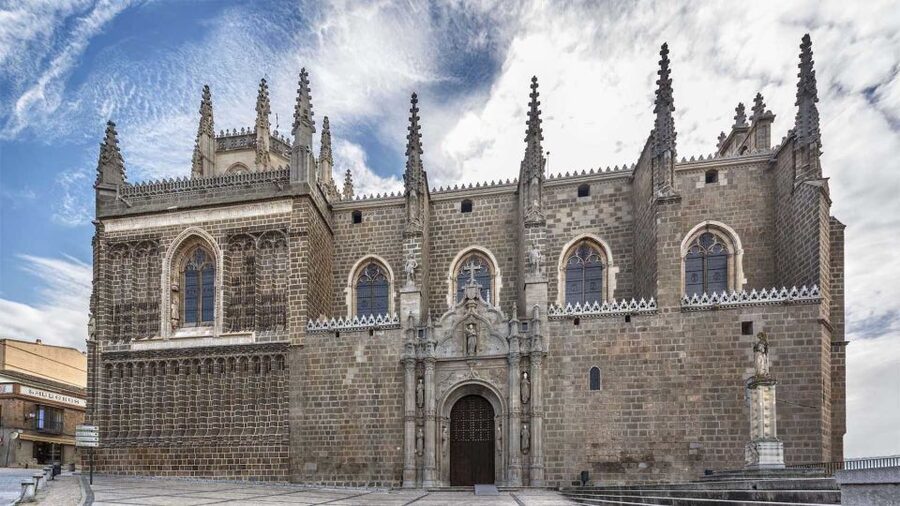
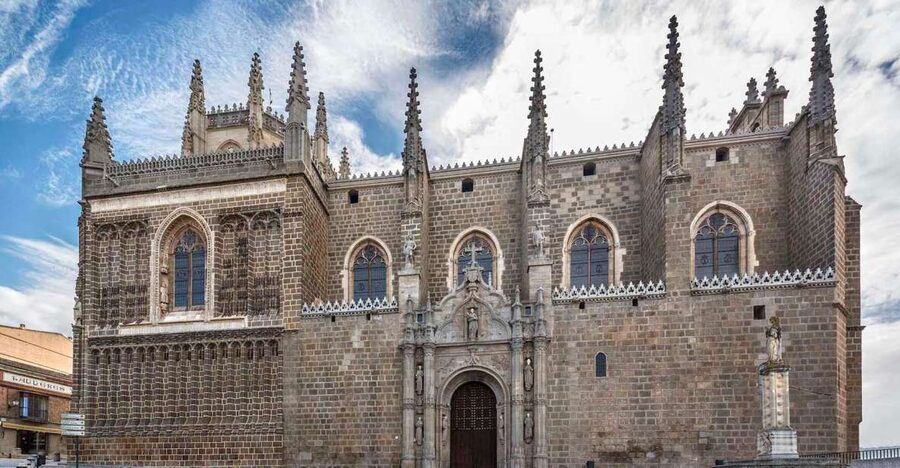
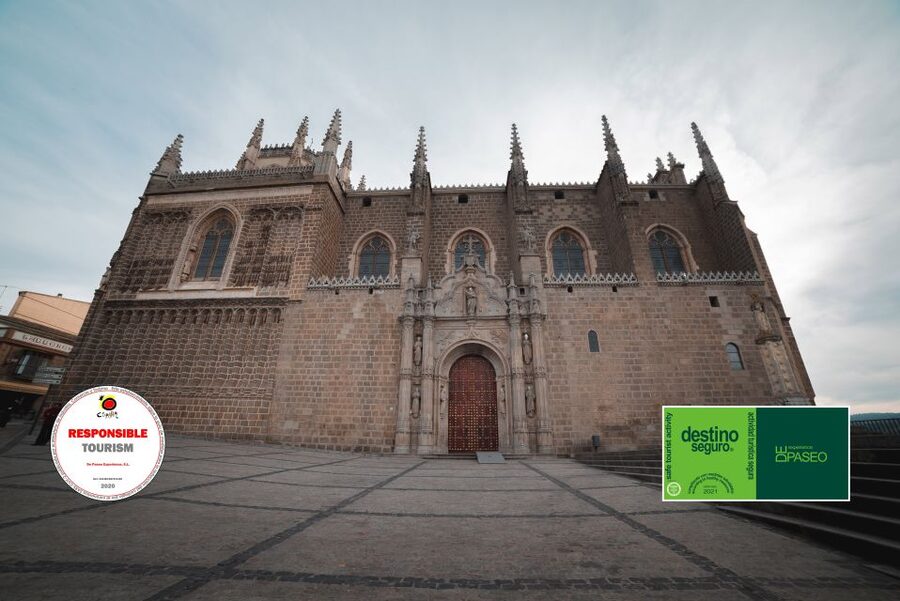
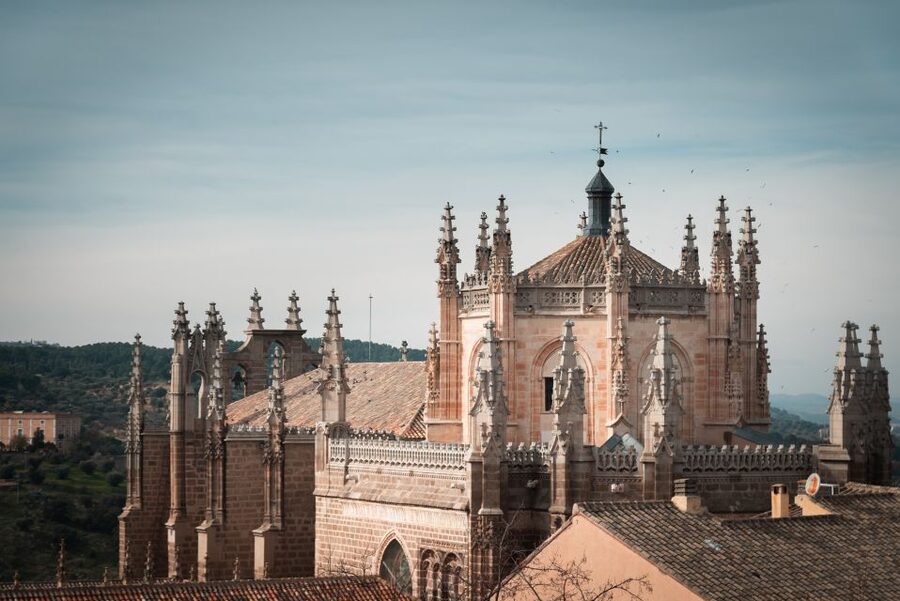
The Monastery of San Juan de los Reyes is the most imposing building on the guided route. It was commissioned by Queen Isabella and King Ferdinand and is closely tied to their political and personal story.
Architecturally, it is a fine example of Spanish-Flemish Gothic design. The monastery’s details reward a slower look: stonework, decorative patterns, religious symbols, and the relationship between the church and cloister. This is not merely another old building to tick off. Its design reflects royal power, religious purpose, and the ambitions of late medieval Spain.
A guide can explain why the Catholic Monarchs wanted this monastery and how it fit into their public image. That background gives the building more meaning than its decoration alone. You will also hear how the monastery fits into Toledo’s changing religious and political life.
The order of the three visits can change. Do not worry if your route begins with the monastery rather than Santo Tomé, or if Santa María la Blanca comes earlier than expected. The essential content remains the same, and the guide will direct the group between the sites.
This stop can be especially rewarding for anyone interested in Gothic architecture or the reigns of Isabella and Ferdinand. It is also a good counterpoint to Santa María la Blanca. One building speaks of a Jewish past and later Catholic use, while the monastery expresses the strength of the Catholic monarchy. Together, they show how Toledo’s buildings carry several layers of history.
A few more walking tours around Spain worth a look
- Barcelona Tapas and Wine Experience Small-Group Walking Tour
★ 5.0 · 5,804 reviews - Barcelona: Tapas Walking Tour with Food, Wine, and History
★ 4.8 · 4,261 reviews - Madrid Tapas & Wine Tasting Walking Tour – Small Group Local Bars
★ 5.0 · 3,644 reviews - Toledo Tour & Vineyard Walk with Wine Tasting from Madrid
★ 5.0 · 2,546 reviews
The wristband gives you a second half-day in Toledo
The guided portion includes three monuments, but the tourist bracelet opens the door to seven sites in all:
- Monastery of San Juan de los Reyes
- Synagogue of Santa María la Blanca
- Church of Santo Tomé
- Jesuit Church
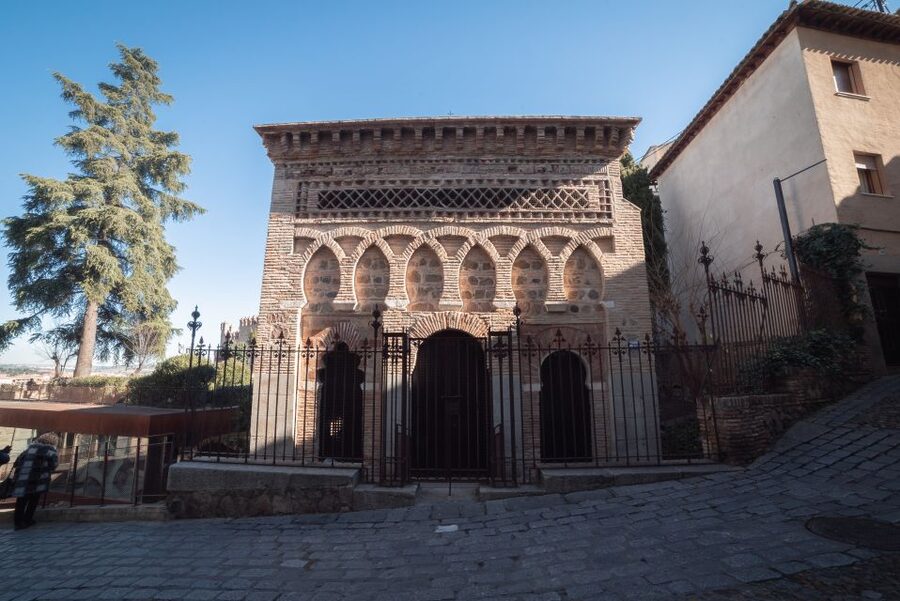
- Mosque of Cristo de la Luz
- Church of El Salvador
- Royal College of Noble Maidens
The practical advantage is flexibility. After the guide finishes, you can choose the monuments that match your interests instead of being pushed through all seven in one long route. The wristband remains valid throughout your stay in Toledo, so you can return to the old center later.
If you have only one day, plan carefully. The bracelet is most useful when your guided walk starts early enough to leave time for extra sites. One person who took a later tour wished the wristband could have been collected in advance, since a late start reduced the remaining time. That is a fair concern, especially for a day trip from Madrid.
The Jesuit Church may appeal to you for its interior and city views, while the Mosque of Cristo de la Luz offers another important connection between Toledo’s Muslim and Christian past. El Salvador and the Royal College of Noble Maidens add variety beyond the three guided stops.
You do not need to visit every site to get value from the bracelet. If you are short on time, choose one or two additional monuments and allow time for lunch, photos, and simply walking the streets. Toledo rewards unplanned pauses.
The guides make the largest difference
The strongest part of this experience is the guide. Many guides have received praise for their clear English, energy, humor, and ability to explain small details that you might miss alone.
Raquel has been singled out for strong stories about Toledo and Spain, along with a nuanced explanation of the city’s place in Spanish history. Jesus is often described as enthusiastic and warm, with a talent for making history approachable. Tamara has been praised for her English and Spanish delivery, comfortable pace, and willingness to answer questions.
Other named guides include Carmen, Susanna, Olga, Marianne, Lorena, Josefina, Juan Pedro, Juan Carlos, and Barbara. The exact guide is not guaranteed, but these names give you a sense of the guiding style associated with the experience: personal, locally informed, and conversational rather than purely scripted.
A particularly useful feature is the guide’s role after the formal stops. You are shown three monuments, then given suggestions for the remaining four. That helps you decide what to see next and prevents the wristband from becoming a piece of plastic you forget about.
The quality of a bilingual tour depends heavily on the person leading it. Several bilingual walks have worked well because the guide gives each language group enough attention. One practical complaint was that a strong accent made parts of the explanation difficult to follow. If language clarity is crucial to you, confirm the language setup and consider bringing patience for repeated explanations.
Is $125 a fair price?
At $125 per person, this is not a bargain walking tour. The price needs to be judged against what you use.
You receive three hours with a live guide, entry to three major monuments, and a wristband covering seven sites during your stay. If you visit several of the additional monuments, the package becomes more attractive. The guide also saves you time and gives you historical context that is difficult to assemble from plaques alone.
If you only attend the guided walk and leave Toledo soon afterward, the price may feel high. You are paying for access, but also for orientation, translation if needed, and the chance to ask questions in real time. For a first visit, that can be worthwhile.
The value is strongest for a family, private group, or small party that wants a structured introduction without arranging separate tickets and guides. The experience is described as a private group activity, though the bilingual format and past group sizes can vary. Confirm the setup when you book if group size matters to you.
Free cancellation up to 24 hours before the start and reserve-now, pay-later booking make the commitment easier. Those policies do not lower the price, but they help if your Toledo plans are still shifting.
Who will enjoy this tour most?
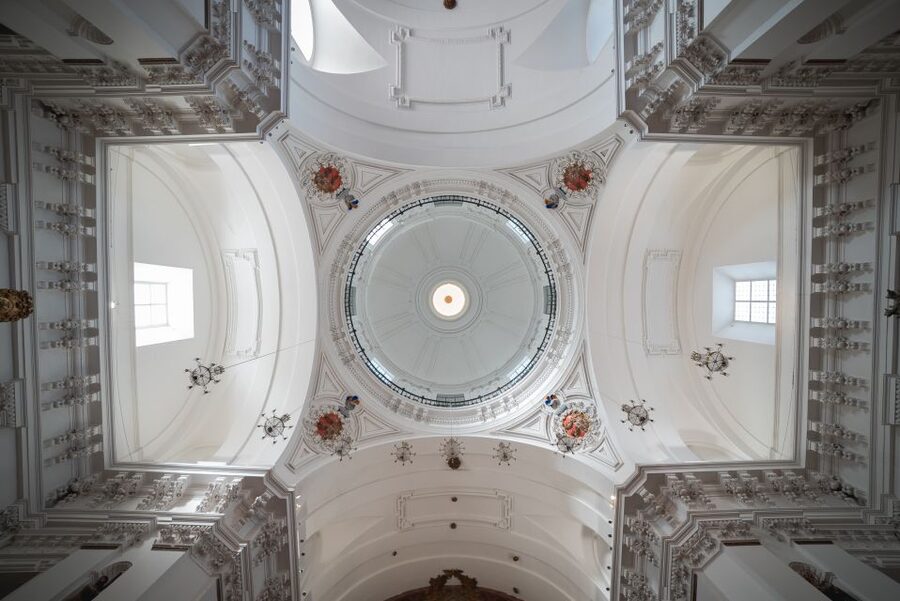
I would choose this walk if you are visiting Toledo for the first time and want a clear historical framework. It is especially useful if you are interested in religious buildings, medieval Spain, El Greco, or the complicated relationship between Christian, Jewish, and Muslim communities.
Families can also benefit. The guides use stories, humor, and visual details to keep the buildings from feeling like a list of dates. A private group can ask questions without worrying about holding up a large crowd.
This is less suitable if you prefer to move quickly, avoid guided tours, or spend a long time at one artwork. The three-hour route gives you orientation rather than an exhaustive study of each monument. You may want a separate visit to Toledo Cathedral or other major sites not included in the seven-monument bracelet.
The tour is listed as wheelchair accessible, but Toledo’s old center includes narrow streets and historic buildings. Ask the provider about your specific mobility needs before booking, since accessibility inside individual monuments may differ.
Small planning tips that improve the day
Wear shoes with good support. Toledo’s old streets are attractive but not gentle on your feet, and the tour involves a moderate amount of walking.
Arrive early at Zocodover Square and look for the yellow mailbox. Do not rely on finding the group at the last second.
Keep the wristband safe after the guided walk. Its real value comes from using it later at the Jesuit Church, Mosque of Cristo de la Luz, Church of El Salvador, or Royal College of Noble Maidens.
Use the guide’s recommendations while the sites are fresh in your mind. If your tour starts before noon, you may have enough time to add several monuments. If it starts after 12, choose carefully and avoid turning the rest of the day into a race.
Remember that the order of visits can change. The route is designed around access and timing, not a fixed sequence.
Should you book the Toledo wristband tour?
Book it if you want a guided introduction plus independent exploring afterward. The combination of Santo Tomé, Santa María la Blanca, and San Juan de los Reyes gives you three very different ways into Toledo, while the wristband adds four more monuments at your own pace.
I would be most likely to book this for a first full day in Toledo, especially if a local-style explanation matters to you. Raquel, Jesus, Tamara, and the other guides have shown that the experience can be warm, funny, and informative rather than dry.
Think twice if your visit is only a few hours, your budget is tight, or you strongly prefer an English-only tour. In those cases, the bilingual pace and the unused part of the wristband may reduce the value.
For most first-time visitors who want to understand Toledo before wandering its maze of streets, the tour earns its place in the schedule. Just arrive early, wear sensible shoes, and leave enough time to use the bracelet.
FAQ
Where does the tour meet?
The meeting point is in Zocodover Square, next to the yellow mailbox.
How long does the guided tour last?
The guided walking tour lasts three hours.
Which monuments are included in the guided portion?
The guided visit includes the Church of Santo Tomé, the Synagogue of Santa María la Blanca, and the Monastery of San Juan de los Reyes.
What does the tourist wristband include?
The wristband provides access to seven monuments: San Juan de los Reyes, Santa María la Blanca, Santo Tomé, the Jesuit Church, the Mosque of Cristo de la Luz, the Church of El Salvador, and the Royal College of Noble Maidens.
How long does the wristband remain valid?
The wristband remains valid throughout your stay in Toledo.
Is the tour available in English?
Yes. The live guide languages are English and Spanish. The tour may be conducted in both languages at the same time.
Can I cancel for a refund?
You can cancel up to 24 hours in advance for a full refund.
Is the tour wheelchair accessible?
The activity is listed as wheelchair accessible.
What should I bring or wear?
Wear comfortable shoes because the tour involves a moderate amount of walking. Food is not allowed inside the monuments, and arriving 10 to 15 minutes before check-in is recommended.
Just added around Spain
- Walking tour in Alhambra, Nasrid Palaces and Generalife★ 3.0 · 135 reviews
- Sunset Walking Tour in Albaicín & Sacromonte★ 5.0 · 95 reviews
- Granada’s Hidden Treasures: Albayzin and Sacromonte Walking Tour★ 4.5 · 575 reviews
- Albayzin and Sacromonte Guided Walking Tour in Granada★ 4.5 · 98 reviews
- Albaicín & Sacromonte Walking Tour★ 4.5 · 87 reviews
- Girona History, Legends, and Food Walking Tour with food tasting★ 5.0 · 195 reviews
- Game Of Thrones Walking Tour in Girona★ 5.0 · 406 reviews
- Cordoba Walking Tour with Arabian Baths Experience★ 4.0 · 93 reviews
Walking Tours, compared.

Magical London: Harry Potter Guided Walking Tour
Read our review →
Reykjavik Food Walk – Local Foodie Adventure in Iceland
Read our review →
History and Hauntings of Salem Guided Walking Tour
Read our review →
New Orleans Premier Ghost, Voodoo and Vampire Walking Tour
Read our review →
Amsterdam Anne Frank: Small-Group Walking Tour & Local Guide
Read our review →

Edinburgh Castle: Guided Walking Tour with Entry Ticket
Read our review →
Anne Frank’s Story – Guided Walking Tour through Amsterdam
Read our review →Browse the lists this tour appears in