
REVIEW · WALKING TOURS
Samarkand: Historical Monuments Guided Walking Tour
Samarkand’s great sights are close enough to connect on foot, but far too important to rush past with a quick photo. This five-hour walking tour links Gur-e-Amir, Registan Square, Bibi-Khanym Mosque, Siyob Bazaar, and Shah-i-Zinda in one history-packed route.
I like the way the tour adds stories to the monuments, especially through guides such as Gulsanam, Sarvinoz, and Shahrizoda, who are praised for clear English, local insight, and thoughtful pacing. I also like the finish at Siyob Bazaar and Shah-i-Zinda, where the experience shifts from grand imperial buildings to food, shopping, and spiritual architecture. The drawback is simple: you will walk a lot, and entrance fees add roughly $21.50 to the $20 tour price.
Key points to know
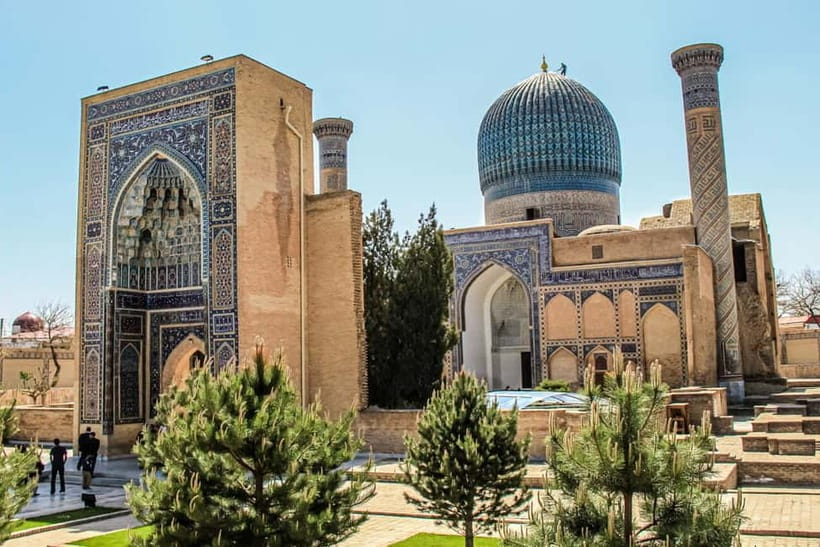
- Gur-e-Amir begins the route: See the blue-domed tomb of Amir Timur and learn why it matters to Samarkand’s identity.
- Registan gets two hours: This is the longest stop, allowing time for all three madrasahs and plenty of photographs.
- The route covers a lot on foot: Comfortable shoes, a hat, and sunscreen are practical essentials.
- Siyob Bazaar adds local flavor: Use the half-hour break for dried fruit, nuts, bread, and small souvenirs.
- Shah-i-Zinda may be the visual finale: The tour allows about an hour there, with sunset listed as part of the sightseeing.
- Budget for entrance tickets: The tour fee covers the guide, but not admission to the four main paid sites.
Why this route works for a first day in Samarkand
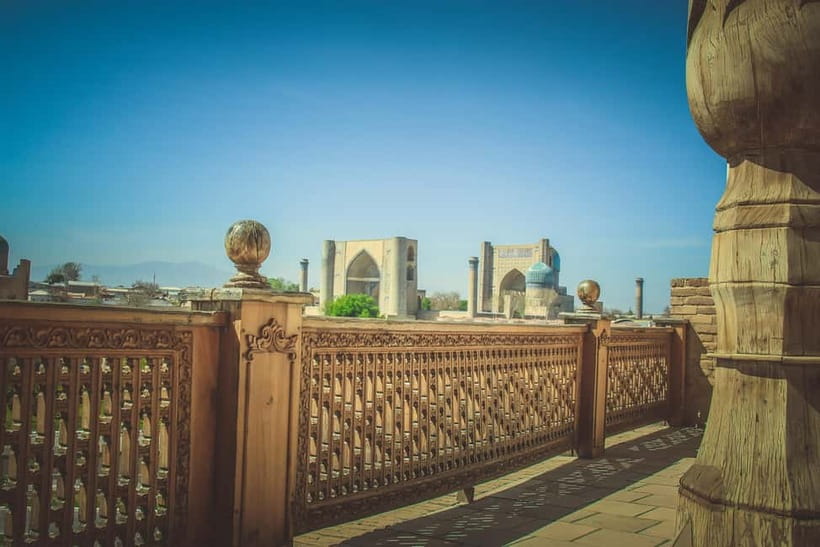
Samarkand can feel like a collection of grand monuments scattered across a large city. This route gives you a useful structure. You begin with Amir Timur’s mausoleum, move to the imperial showpiece of Registan, continue to Bibi-Khanym Mosque, pause at the market, and finish among the tombs of Shah-i-Zinda.
That order gives you more than a checklist. You see how Samarkand presents power in different forms: a ruler’s tomb, a center of learning, a huge mosque, a working market, and a sacred burial complex.
I would choose this tour early in a Samarkand stay. A good guide can give you the basic timeline, explain the Timurid rulers, and help you recognize the difference between decorative tilework, religious function, and later restoration. Afterward, you can return to the places that caught your eye.
The advertised price is $20 per person, which is reasonable for five hours with a professional English-speaking guide. It is not the full cost, though. Admission is separate at Gur-e-Amir, Registan Square, Bibi-Khanym Mosque, and Shah-i-Zinda. The listed prices total about 275,000 UZS, or approximately $21.50 at the supplied rates. Add personal purchases and food at Siyob Bazaar, and you should plan on spending more than the headline tour price.
More Guided Tours in the world:
- Magical London: Harry Potter Guided Walking Tour
★ 4.7 · 22,044 reviews - History and Hauntings of Salem Guided Walking Tour
★ 5.0 · 14,564 reviews - Amsterdam Anne Frank: Small-Group Walking Tour & Local Guide
★ 4.8 · 12,789 reviews
Starting at Gur-e-Amir and meeting Amir Timur
The meeting point is the entrance to the Gur-e-Amir complex. This is a sensible starting place because the mausoleum introduces one of the central figures in Samarkand’s story, Amir Timur, also known as Tamerlane.
The guided visit lasts about 100 minutes, making it one of the tour’s longer stops. You have time to look closely at the blue-tiled dome, the interior decoration, and the details that show the power of the Timurid period.
A guide is especially useful here. Without context, the mausoleum can look like another beautiful blue-and-gold building. With explanation, it becomes a place tied to Timur’s rule, dynastic memory, and the image Samarkand has built around its imperial past.
The interior is a religious space, so dress in a normal, respectful manner. Very short or thin clothing is discouraged, smoking is not allowed, and flash photography is forbidden inside the monuments. Photography is allowed otherwise, so keep your camera ready but use natural light indoors.
The first stop also sets the pace for the rest of the day. You are not simply stepping off a bus, taking one picture, and leaving. You are walking through the complex with time to ask questions. Several guides, including Gulsanam and Sarvinoz, are praised for answering questions about both the monuments and everyday life in Uzbekistan.
Registan Square and the three madrasahs
Registan Square is the centerpiece of the tour, with about two hours scheduled here. That generous block matters. The square is not one building but a grand architectural ensemble made up of the Ulugh Beg, Sher-Dor, and Tillya-Kori madrasahs.
You can use the time to compare the three facades rather than treating them as one enormous backdrop. Look for the different tile patterns, domes, arches, and decorative schemes. The square rewards slow viewing because its details are easy to miss when you are focused only on the wide view.
A guide can also explain the role of a madrasa and place the buildings in the wider story of Central Asian scholarship and Timurid power. The tour descriptions emphasize both architectural ambition and intricate craftsmanship, while the strongest guide feedback points to stories and context rather than bare dates.
This is likely the busiest part of your camera roll. Guides such as Gulsanam and Shahrizoda are repeatedly praised for helping with photographs and finding good angles. That is a useful extra on a walking tour, especially if you are traveling alone or want more than hurried self-timer pictures.
Two hours sounds generous, but it can pass quickly. You may spend much of it inside and around the three madrasahs, asking questions, taking pictures, and examining the tilework. If you prefer to explore independently at a very slow pace, the group schedule may feel structured. If you want a clear introduction to Samarkand, the length is a strength.
Registan is also where the walking route can feel most rewarding. The scale is hard to grasp from a photograph. Standing in the square, you see how carefully the buildings frame one another and why this place has become the visual symbol of Samarkand.
Bibi-Khanym Mosque and Timur’s grand ambitions
The visit to Bibi-Khanym Mosque lasts about 30 minutes. That is enough for a guided look and photographs, but it is the shortest major monument stop, so do not expect the same amount of detail you receive at Gur-e-Amir or Registan.
Bibi-Khanym is tied to Timur’s ambitious building program. Its scale is the point. The mosque was intended to project authority, and the remaining architecture gives you a clear sense of how bold that plan was.
The guide can also explain the legends connected with its construction. Treat those stories as part of the cultural life of the monument rather than as a simple construction record. They help show how Samarkand’s buildings have gathered layers of memory over time.
At this stop, look beyond the broad facade. Notice the relationship between open space, monumental entrances, and decorative surfaces. The mosque is a good counterpoint to Gur-e-Amir: one is intimate and centered on a tomb, while the other expresses public religious and imperial ambition.
Because the stop is short, listen closely at the beginning of the explanation. If you want more time for independent photographs, you may need to use the available minutes carefully. The walking tour is designed to give you a broad view of Samarkand in one day, not a long architectural study of each site.
A few more walking tours around the world worth a look
- Reykjavik Food Walk – Local Foodie Adventure in Iceland
★ 5.0 · 18,952 reviews - New Orleans Premier Ghost, Voodoo and Vampire Walking Tour
★ 4.5 · 12,856 reviews - Edinburgh: Harry Potter Magical Guided Walking Tour
★ 4.8 · 11,944 reviews - Edinburgh Castle: Guided Walking Tour with Entry Ticket
★ 4.7 · 11,699 reviews
Siyob Bazaar and a useful half-hour break
Siyob Bazaar is the practical pause in the middle of the monumental sightseeing. About 30 minutes are set aside for a break, photographs, and shopping.
This is where I would put away the guidebook and pay attention to the everyday side of Samarkand. You can look for dried fruit, nuts, local bread, and other treats. Samarkand non, the city’s well-known bread, is specifically recommended in the tour information and has been noted at around 8,000 soms per loaf in one experience.
Do not expect a full included lunch. Meals and personal expenses are not covered, and the itinerary only promises a short break. You can use it to buy a snack, but if you need a proper meal, plan separately.
The bazaar also gives you a chance to ask your guide for help with local products and prices. Sevinch, for example, has been praised for helping with souvenirs and purchases at the market. That kind of assistance can be useful if you are unsure what to buy or how much to pay.
Thirty minutes is enough for a quick look and a few purchases, not an unhurried market exploration. Keep an eye on the time so you do not lose part of the Shah-i-Zinda visit. The stop works best as a reset for your feet and attention before the final monument.
Shah-i-Zinda and the day’s most detailed tilework
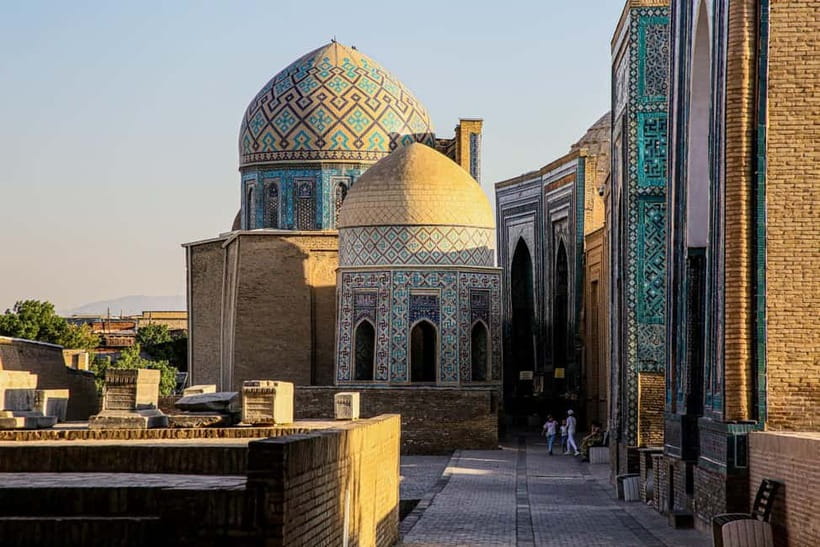
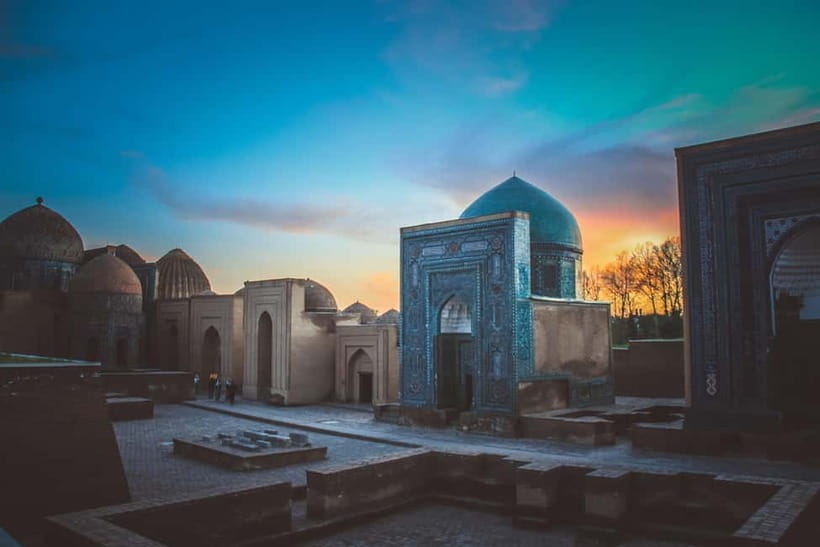
The final scheduled stop is Shah-i-Zinda, with about one hour for a guided visit, sightseeing, and photographs. Sunset is listed as part of the experience, though the actual light will depend on the start time and season.
Shah-i-Zinda is a sacred necropolis made up of mausoleums from different periods. Its narrow passageways bring you close to turquoise tiles, patterned mosaics, carved details, and carefully arranged facades. Unlike the open scale of Registan or Bibi-Khanym, this place unfolds in a tighter sequence.
The setting also calls for a quieter manner. These are religious sites, not just photo locations. Dress respectfully, avoid smoking, and do not use flash inside the monuments.
This is a stop where the guide’s storytelling can change what you notice. The architecture reflects different periods of construction, and a good explanation helps you see the changes rather than treating the entire alley as one decorated wall. Guides including Sarvinoz, Sevara, and Shahrizoda are often praised for making historical details clear and for allowing time to take photographs.
The one-hour visit may feel short if you want to study every mausoleum. Still, it gives you a strong final impression and keeps the whole route within a half-day schedule. If Shah-i-Zinda is your main reason for coming to Samarkand, consider returning later for more time on your own.
The walking demands and daily comfort
This is a genuine walking tour, not a sightseeing trip with short walks between vehicle stops. The monuments are spread across Samarkand, and one detailed account specifically notes that you need to walk quite a bit, with breaks along the way.
Wear shoes you can use for several hours. Bring a hat and sunscreen, especially in hot weather. Water is also a sensible personal item, although it is not listed as an included service.
The schedule totals about five hours as advertised, but the individual stop times add up to slightly more than that. Guides may adjust the pace, route, or time at each site. Several guides are praised for adapting to the group’s abilities, repeating explanations, and allowing extra time for questions or photographs.
The tour is not recommended for children under six. The information also says it is not suitable for wheelchair users or people with mobility impairments. One part of the booking information describes the activity as wheelchair accessible, so anyone with access needs should confirm the current route and site conditions before paying.
Private groups are available. That can be useful if you want a slower pace, have specific interests, or are traveling with family or friends. Group size can vary, and some bookings may feel nearly private when few people join.
Guides, language, and the human side of the tour
The tour is conducted in English by a live guide. The strongest pattern in the guide feedback is not just historical knowledge. It is warmth, patience, clear explanations, flexibility, and help with photographs.
Gulsanam is frequently praised for making the history easy to follow, answering questions, and taking good pictures. Sarvinoz is noted for a friendly manner, detailed explanations, and helpful advice about Samarkand. Shahrizoda is praised for her interest in Central Asian history, patient answers, and photography. Sevinch is known for local tips and assistance at Siyob Bazaar.
You may be assigned another guide, including Sevara, Shah, Charos, Zulfina, Amira, or Abrorbek. The repeated pattern is reassuring: the guides are expected to explain the monuments, answer questions, and adjust the pace when possible.
I would use the walking time to ask about modern Samarkand as well as Timur and the madrasahs. The guide information supports questions about local life, food, culture, and practical places to visit after the tour. That conversation is one of the best reasons to choose a guide instead of following a self-guided route.
Who should book this Samarkand walking tour?
I would recommend it to a first-time visitor who wants to see the major monuments in one organized half-day. It suits people who enjoy history, architecture, photography, and walking, and it is particularly useful if you have limited time in Samarkand.
It also works well for solo visitors. A guide can help with photographs, explain local customs, and make the route feel less complicated. Couples and small groups may prefer the private option if they want more control over timing.
You should think twice if you dislike walking, want long quiet visits at each monument, or need a full meal included. The tour covers a lot, so the pace must remain purposeful. You will see the main sights, but you will not have unlimited time at every one.
Respectful clothing is important because all four main monuments are religious or sacred places. Avoid very short or thin clothing, and remember that drones, alcohol, drugs, smoking inside monuments, and flash photography are not allowed.
Should you book it?
Book this tour if you want an efficient introduction to Samarkand with a real person connecting the buildings to Timur, the Silk Road, local culture, and present-day life. The $20 guiding fee is fair for five hours, especially if you value clear explanations and help with photographs.
Budget separately for roughly $21.50 in listed entrance fees, food, and market purchases. Wear proper walking shoes and treat the day as active sightseeing rather than a relaxed stroll.
I would be especially happy to book it with a flexible guide such as Gulsanam, Sarvinoz, or Shahrizoda, though guide assignment cannot be guaranteed. If you have only one full day in Samarkand, this route gives you a strong first look. If you have several days, use it to learn the city, then return to Shah-i-Zinda or Registan for slower independent visits.
FAQ
How long does the Samarkand historical monuments tour last?
The advertised duration is five hours. The listed stop times add up to slightly more than five hours, so the guide may adjust the pace and time at each site.
Where does the tour begin?
You meet the guide at the entrance of the Gur-e-Amir complex.
Which monuments are included in the walking route?
The route visits Gur-e-Amir Mausoleum, Registan Square, Bibi-Khanym Mosque, and Shah-i-Zinda. It also includes a break at Siyob Bazaar.
Is an English-speaking guide included?
Yes. A professional live guide in English is included.
Are entrance fees included in the $20 price?
No. Admission fees are separate. The listed prices are 75,000 UZS for Gur-e-Amir, 100,000 UZS for Registan Square, 50,000 UZS for Bibi-Khanym Mosque, and 50,000 UZS for Shah-i-Zinda.
How much walking is involved?
You should expect substantial walking because the monuments are spread across Samarkand. Comfortable shoes are required, and the route includes breaks.
Is the tour suitable for wheelchair users?
The detailed activity information says it is not suitable for wheelchair users or people with mobility impairments. Another part of the booking information describes it as wheelchair accessible, so confirm the current conditions with the provider before booking.
Are meals included?
No. Lunch and meals are not included. Siyob Bazaar provides about 30 minutes for a break, shopping, photographs, and personal food purchases.
Can I cancel or pay later?
You can cancel up to 24 hours in advance for a full refund. A reserve now and pay later option is also available.
Just added around the world
- Nahargarh Water Walk – Guided 2-Hour Heritage Tour in Jaipur★ 5.0 · 89 reviews
- Downtown Fernandina Historical Walking Tour★ 4.5 · 119 reviews
- Cultural Walk and Food Tasting In Jaipur★ 5.0 · 118 reviews
- Old Town Of Istanbul Orientation – Tip Based Walking Tour★ 5.0 · 181 reviews
- Local Food, History and Hidden Places Walking Tour in Istanbul★ 4.5 · 81 reviews
- Full Day Historical Walking Tour of Istanbul Old City from Hagia Sophia★ 4.5 · 114 reviews
- Istanbul Private Walking Highlights Tour★ 5.0 · 102 reviews
- Half day Fener-Balat Walking Tour in Turkiye★ 5.0 · 308 reviews
Walking Tours, compared.

Magical London: Harry Potter Guided Walking Tour
Read our review →
Reykjavik Food Walk – Local Foodie Adventure in Iceland
Read our review →
History and Hauntings of Salem Guided Walking Tour
Read our review →
New Orleans Premier Ghost, Voodoo and Vampire Walking Tour
Read our review →
Amsterdam Anne Frank: Small-Group Walking Tour & Local Guide
Read our review →

Edinburgh Castle: Guided Walking Tour with Entry Ticket
Read our review →