
REVIEW · PALERMO
Palermo No Mafia walking tour: discover the Anti-mafia culture in Sicily
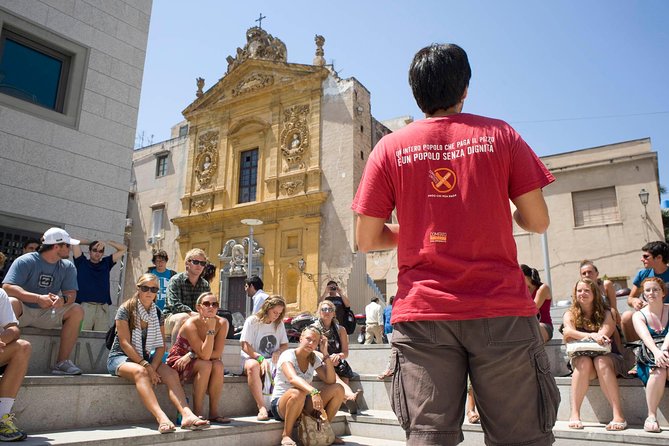
Palermo’s No Mafia walk turns a familiar movie subject into a story about real people making hard choices. You move from Teatro Massimo to memorials, markets, the Cathedral, and a gelateria that refuses to pay pizzo, the extortion money once demanded from shopkeepers. I like that the tour focuses on resistance rather than mafia glamour, and that part of your fee supports Addiopizzo. The main drawback is that this is not a broad art-and-history tour. You will spend a lot of time standing while your guide explains the anti-mafia movement, and some history may feel repeated.
I also like the small maximum of 15 people. Guides such as Sylvia, Valeria, Marienella, Federico, and Giuseppe have been praised for clear English, personal stories, and strong command of the subject. Still, come ready for a serious three hours. This is a civic lesson with Palermo’s streets as its classroom, not a light stroll built around pretty views and gelato.
Key points to know before you book
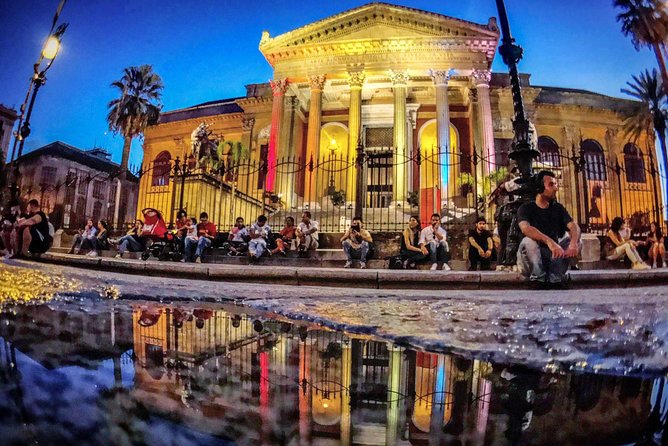
- Teatro Massimo begins the story: Palermo’s grand opera house is linked to The Godfather Part III, but here it represents the city’s recovery after mafia violence.
- The focus is anti-mafia action: You learn about judges, prosecutors, shopkeepers, children, churches, politicians, and citizens who resisted organized crime.
- The route covers major sights: Expect Teatro Massimo, the Wall of Legality, an old open-air market, the Palace of Justice, Palermo Cathedral, City Hall, and Fontana Pretoria.
- Your spending can support the cause: A small solidarity contribution goes to Addiopizzo, and you can buy gelato at a business that rejects the pizzo.
- The group stays small: The maximum is 15 people, useful when you want to ask questions or hear a guide such as Sylvia or Valeria.
- Plan for outdoor walking: Wear comfortable shoes, and bring an umbrella and a dry jacket if rain is possible.
Why this Palermo walk matters
The mafia is often presented through films, dramatic music, and stylish fictional characters. This tour works to strip away that polish. Its subject is not the mythology of gangsters, but the damage caused by extortion, corruption, and violence, along with the long effort to push back.
That distinction matters. Several points on the route show how organized crime affected ordinary Palermo life. Shopkeepers faced pressure to pay. Public institutions could be corrupted. Judges and prosecutors risked their lives. Churches and politicians had to decide where they stood. Addiopizzo, the organization connected to this experience, promotes consumption that rejects protection payments and supports businesses that refuse them.
The result is a tour about civic courage. You will still see important buildings and streets, but the guide uses them to explain what happened there and what those places mean now. The strongest guides make the topic personal without turning the tour into a performance. Valeria, for example, has spoken about how mafia influence affected her own life, as well as the lives of people close to her.
At $39.30 per person, I consider the tour fairly priced for about three hours with a local guide and a maximum group of 15. The price also includes a small contribution to Addiopizzo. You are paying for interpretation and a cause, not for museum admissions or a meal. If you want a long list of indoor attractions, this will feel less useful. If you want a clearer picture of modern Palermo and its citizens, the value is stronger.
A few more walking tours around Italy worth a look
- Venice: Doge’s Palace and St Mark’s Basilica Walking Tour
★ 4.4 · 6,291 reviews - Milan: Guided Walking Tour & Last Supper Visit with Ticket
★ 4.7 · 5,409 reviews - Naples: Street Food Walking Tour with Local Guide
★ 4.9 · 4,976 reviews
Teatro Massimo: from movie set to civic symbol
The tour starts at Piazza Giuseppe Verdi, outside Teatro Massimo. Palermo’s opera house is famous to film fans as the setting for the final dramatic scene of The Godfather Part III. That connection may bring you here, but the guide shifts attention quickly to the building’s wider meaning.
Teatro Massimo is presented as a symbol of Palermo’s renewal after decades marked by mafia violence. That gives the first stop a useful frame: the city is not defined only by what happened to it. It also matters how residents, institutions, and public life responded.
You spend around 30 minutes here, the longest stop on the route. That gives your guide time to set out the main ideas before the walk moves into streets where the subject becomes more direct. If you hoped to enter the opera house, note that the stop is outside and admission is not included.
This is also a good point to ask questions. The material can cover the origins of mafia power, its changing role, and the anti-mafia response. Guides including Sylvia and Federico have been praised for making a complicated subject easy to follow in English.
The Wall of Legality and the faces behind the headlines
The Wall of Legality is a 70-meter mural, described as Italy’s longest wall painting. It depicts well-known victims of the mafia and forms part of an urban renewal project.
This stop is brief, about 10 minutes, but its visual impact helps put names and faces to a subject that can otherwise seem distant. You get time for photographs, but the main purpose is recognition. The victims are not abstract symbols in a lecture. They are people whose work and lives shaped the fight against organized crime.
The mural also fits the tour’s larger approach. You are not simply hearing about mafia power. You are seeing how Palermo remembers those who opposed it. The city’s walls become part of the public record.
The old market and the price of refusing pizzo
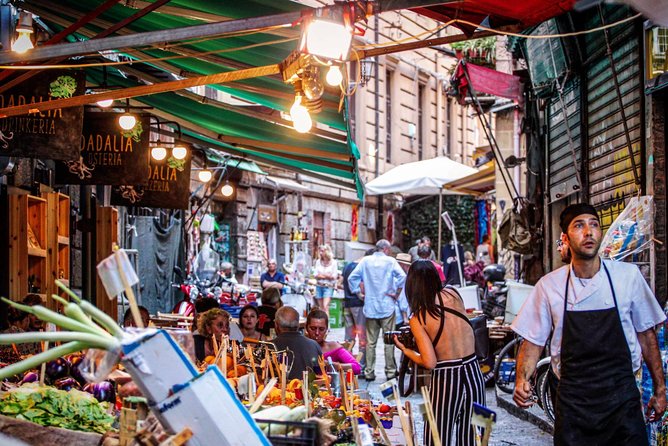
The open-air market is one of the most useful parts of the route because it connects the topic to daily commerce. It is colorful, loud, and crowded with the ordinary business of buying and selling. Here, the guide explains the relationship between the mafia and shopkeepers.
This is where pizzo becomes more than a term. The extortion racket affected the people behind small businesses, not only public officials or famous anti-mafia figures. The market helps you understand how pressure could become part of the cost of operating a shop, stall, or family business.
The stop does not have a listed duration, so the pace may depend on the group and the guide. Be prepared for street noise and changing conditions. That is part of the point, but it can make it harder to hear. Stay close enough to your guide and be ready to listen carefully.
The market also gives the walk a welcome change of rhythm after the memorial stops. You are learning while moving through a real working part of Palermo, not a set built for sightseers.
Same streets, a different route:
- Florence: Highlights Walking Tour with Expert Guide
★ 4.6 · 4,662 reviews - Venice: San Marco to Rialto Walk & Spritz Like a Local
★ 4.2 · 3,651 reviews - Venice Walking Tour and Gondola Ride
★ 3.5 · 3,630 reviews - Uffizi & Accademia Timed Entry: Small Group Duomo Walking Tour
★ 4.5 · 3,630 reviews
Piazza della Memoria at the Palace of Justice
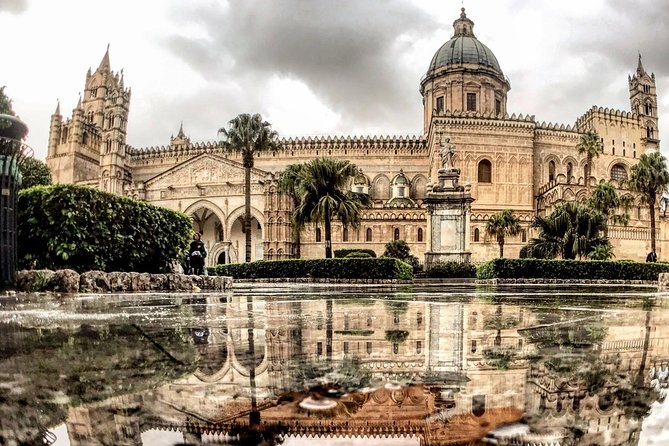
At the Palace of Justice, the tour pauses at Piazza della Memoria. This memorial honors judges and prosecutors killed by the mafia.
The setting adds weight to the earlier discussion of corruption and resistance. Courts are supposed to defend the rule of law, yet the people working inside them became targets. Your guide explains the risks faced by those who pursued organized crime and the wider effect of their deaths.
Allow about 15 minutes here. The stop is mainly about context, so it may feel slow if you prefer constant walking. That is one of the practical tradeoffs of this experience. A guide needs time to explain names, events, and connections, and the group often stands in one place while listening.
The material can be moving, particularly when the guide connects public events with personal memories. It also helps correct the idea that the mafia is only a criminal story. It is a story about courts, government, families, public trust, and the cost of doing difficult work.
Palermo Cathedral and the church’s complicated role
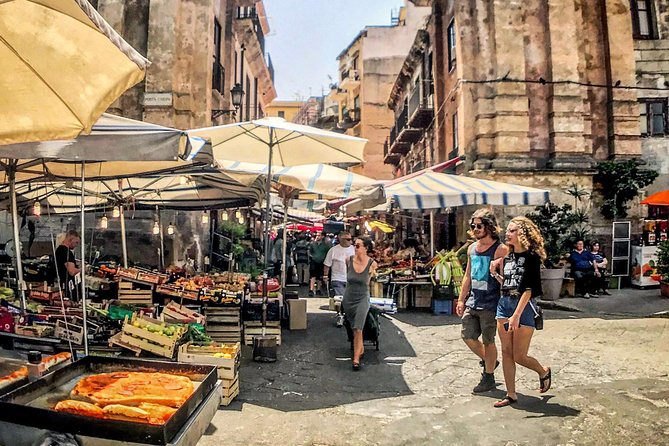
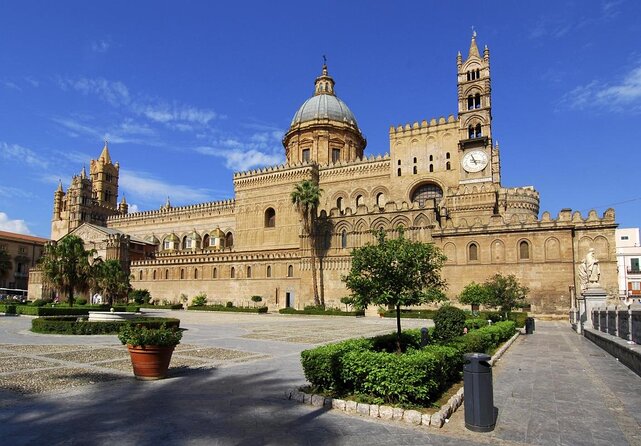
In front of Palermo Cathedral, the guide discusses the relationship between the Catholic Church and the mafia. The Cathedral itself is one of the city’s essential Arab-Norman sights, so this is a useful place to combine architecture with civic history.
You will not receive a full architectural tour. The focus is the Church’s role, its links to local society, and the ways religious authority could either challenge or tolerate mafia influence. That narrower approach is important to understand before booking. If you want detailed explanations of the Cathedral’s mosaics, construction phases, and chapels, choose a separate art tour.
The Cathedral stop lasts about 15 minutes. Its location on the Cassaro keeps the walk moving through one of Palermo’s major historic corridors. You get a major landmark, but the real subject is the institution behind it and the choices made by people connected to it.
Cappadonia Gelati and a practical act of support
At Cappadonia Gelati, you see an orange sticker associated with the Addiopizzo campaign. The sticker identifies businesses that have said no to paying the pizzo and support mafia-free consumption.
This is one of the most practical stops because you can respond with your wallet. Buying gelato here is not just a snack break. It supports a business that has chosen to reject extortion and makes the anti-mafia message part of ordinary shopping.
The stop is listed at about 15 minutes. Gelato is not included, so plan to pay for your own purchase. That is a small extra cost, but it gives the tour a tangible action instead of leaving the cause at the level of speeches and memorials.
You will also walk along the Cassaro, one of Palermo’s main old-town streets. The guide may offer additional food tips at the end, and this is a useful moment to note the names of other businesses connected to the mafia-free campaign.
City Hall and the final walk to Fontana Pretoria
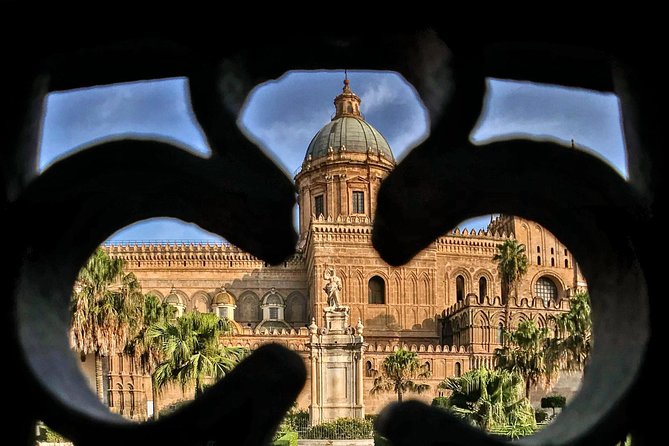
The final major stop is Palazzo Pretorio, Palermo’s City Hall. The building has been associated with both corrupt politicians and officials who fought the mafia. That contrast gives the tour a final look at public power.
The guide uses the site to explain that anti-mafia work is not only about police raids or courtroom victories. Government decisions, public credibility, and local leadership also shape how much room organized crime has to operate. The stop lasts about 15 minutes.
The tour ends at Fontana Pretoria in the heart of Palermo’s old town. This is a convenient finish because you are already near many restaurants, shops, and historic streets. Your guide offers suggestions for continuing your visit and finding Sicilian specialties, so keep a few minutes afterward if you want local recommendations.
The route’s ending also makes the walk useful as a first Palermo activity. You have crossed several central areas and received a social and political framework for the city. You will not know every monument, but you will have a better sense of why certain places matter.
Guide quality, group size, and the walking pace
The guide can make or break a serious subject. The strongest names associated with this tour include Sylvia, Valeria, Federico, Marienella, Giuseppe, Ermes, Laura, and Salvadore. Specific guides may vary by date, but the qualities to look for are clear English, personal commitment, and a willingness to answer questions.
The maximum group size is 15. That is small enough for a more direct exchange than you usually get on a large city walk. It also helps at the market, where you need to stay together and hear the explanation over street noise.
Expect a mix of walking and standing. One person found there was too much standing and suggested a more continuous walking format. That criticism is fair. The tour depends on explanations at specific locations, so you cannot always keep moving while the guide speaks.
Wear comfortable shoes. The tour is about three hours and takes place outdoors. In rain, bring an umbrella and a dry jacket. The route is near public transportation, and most people can participate, with no health restrictions listed.
Who will get the most from this experience
I would book this tour if you want to understand Palermo beyond its churches, markets, and Norman architecture. It is especially useful early in your stay because it gives you context for the city and may change how you view later stops.
It suits adults interested in modern Italian history, politics, social movements, and the gap between film stereotypes and real life. It can also work for families. One group completed the three-hour experience with a four-year-old, though the serious subject and standing time may not suit every young child.
You should think twice if you want a conventional sightseeing walk. The tour is not designed to cover Palermo’s artistic history in a balanced way. It also is not a detailed account of every mafia event. Its purpose is narrower: to show the places and people connected with civil resistance and the anti-mafia movement.
The 4.8 rating from 1,011 ratings and 95 percent recommendation rate fit the experience’s strengths: passionate guides, clear explanations, and an important subject. Still, the one lower assessment points to a real issue. If the anti-mafia message is repeated without enough historical structure, the three hours may feel less satisfying to someone expecting a chronological history lesson.
Booking details and cancellation
The walk costs $39.30 per person and lasts about three hours. A local guide and a small contribution to Addiopizzo are included. Hotel pickup, hotel drop-off, and lunch are not included.
You meet at P.za Giuseppe Verdi, 455, near Teatro Massimo, and finish at Fontana Pretoria. The ticket is mobile, and confirmation arrives when you book. Free cancellation is available up to 24 hours before the start time. Cancellations or changes made inside that window are not accepted for a refund.
Should you book the Palermo No Mafia walk?
Book it if you want a thoughtful introduction to Palermo’s anti-mafia culture, especially if you are tired of the way movies glamorize Cosa Nostra. The best parts are the Wall of Legality, the market, the Palace of Justice, and the chance to support an Addiopizzo business with a simple gelato purchase.
Do not book it as your only Palermo sightseeing tour. You will not get a full art, architecture, or food survey. Instead, use it alongside those experiences. At $39.30, the walk offers solid value for a three-hour, small-group lesson that connects major landmarks with the people who worked to reclaim their city.
FAQ
How long is the Palermo No Mafia walking tour?
The tour lasts approximately three hours.
What language is the tour offered in?
The tour is offered in English.
Where does the tour start?
It starts at P.za Giuseppe Verdi, 455, 90133 Palermo, near Teatro Massimo.
Where does the tour end?
It ends at Fontana Pretoria in Palermo’s old town center.
What sights are included on the route?
The route includes Teatro Massimo, the Wall of Legality, an old open-air market, Palazzo di Giustizia, Palermo Cathedral, Cappadonia Gelati, Palazzo Pretorio, and Fontana Pretoria.
Is food included?
No. Lunch is not included, and any gelato or other purchases at Cappadonia Gelati are at your own cost.
What should I bring?
Wear comfortable shoes. If rain is expected, bring an umbrella and a dry jacket.
Just added around Italy
- Ferrara: City Highlights Walking Tour with Local Guide★ 4.6 · 219 reviews
- Verona: Romeo and Juliet Guided Walking Tour★ 4.6 · 82 reviews
- Discover Pompeii: French Walking Tour of the Buried City★ 4.8 · 253 reviews
- Naples: Maradona Stadium Guided Exterior Walking Tour★ 4.3 · 113 reviews
- Dark Heart of Rome – Facts, Legend & Mystery Walking Tour★ 4.5 · 329 reviews
- Catania: Street Food Guided Walking Tour★ 4.9 · 326 reviews
- Cefalù: History and Legends Guided Walking Tour★ 4.8 · 132 reviews
- Catania: Guided Street Food Walking Tour★ 4.7 · 300 reviews
Walking Tours, compared.

Magical London: Harry Potter Guided Walking Tour
Read our review →
Reykjavik Food Walk – Local Foodie Adventure in Iceland
Read our review →
History and Hauntings of Salem Guided Walking Tour
Read our review →
New Orleans Premier Ghost, Voodoo and Vampire Walking Tour
Read our review →
Amsterdam Anne Frank: Small-Group Walking Tour & Local Guide
Read our review →
Edinburgh Castle: Guided Walking Tour with Entry Ticket
Read our review →
Anne Frank’s Story – Guided Walking Tour through Amsterdam
Read our review →Browse the lists this tour appears in