
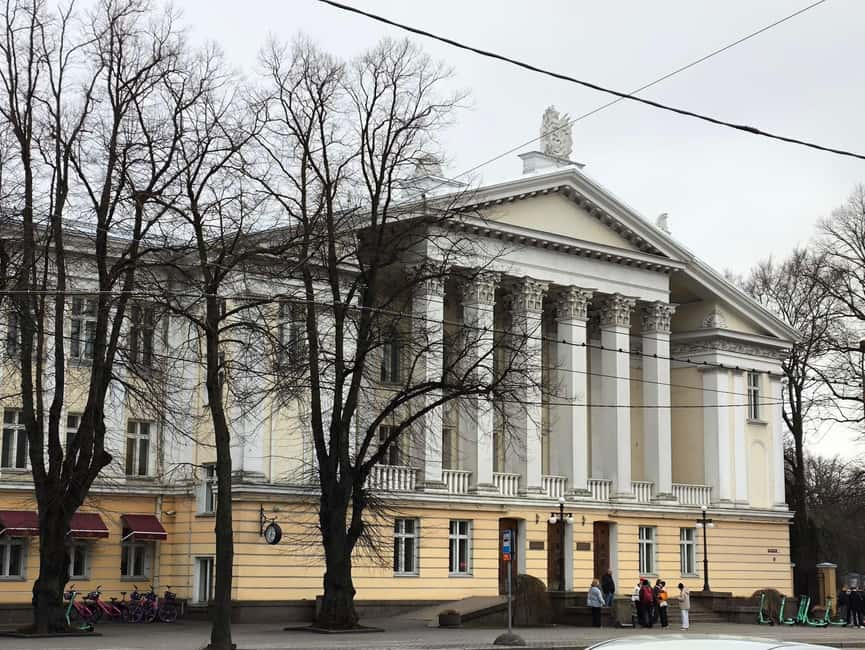
REVIEW · WALKING TOURS
Hidden Tallinn: Soviet Walking Tour
Tallinn’s Old Town is beautiful, but this tour shows you the city’s more complicated recent past. You’ll pass the former KGB Headquarters, the surveillance-linked Viru Hotel, Central Market, and the crumbling Linnahall, while Tom explains how Soviet rule shaped ordinary streets and ordinary lives.
I like the focus on everyday life, not just grand political events. I also like the small, easily missed locations and Tom’s habit of adding reading suggestions after the walk. The main drawback is that two hours can feel short, especially if you want to continue on to the KGB museum or Soviet-era garden afterward.
Key points to know before you book
- Former KGB Headquarters: See one of Tallinn’s most chilling Soviet sites and learn how surveillance worked in practice.
- Central Market: Visit Tallinn’s last remaining Soviet-era market, still used as an everyday city space.
- Viru Hotel: Understand why this bold hotel became linked with state monitoring and foreign visitors.
- Linnahall finale: End at an abandoned piece of grand Soviet architecture, with impressive scale and potentially icy steps in winter.
- Tom’s storytelling: Expect well-researched facts, personal stories, humor, and time for questions.
- Good value at $35: Two hours of focused guiding costs less than many museum visits and adds meaning to buildings you might otherwise walk past.
Why Soviet Tallinn is worth two hours
This is not a tour of polished medieval Tallinn. It looks at the decades when Estonia was part of the Soviet Union, a period that still shapes the city’s buildings, memories, and public spaces.
That makes the walk useful even if you know little about Soviet history. Tom connects broad events with the practical details of daily life: what people could buy, how information was controlled, how citizens dealt with shortages, and how quiet acts of resistance could take many forms.
I like this approach because Soviet rule can seem distant when presented only through dates and political leaders. A market, hotel, office building, or concrete public hall makes the subject easier to grasp. You begin to picture how people worked, waited, watched what they said, and found small ways to retain control over their own lives.
The tour is conducted in English and lasts about two hours. It costs $35 per person, which is fair for a private-feeling history lesson spread across several important sites. You are paying not only to walk from place to place, but also to understand what you are seeing.
A few more walking tours around the world worth a look
- Magical London: Harry Potter Guided Walking Tour
★ 4.7 · 22,044 reviews - Reykjavik Food Walk – Local Foodie Adventure in Iceland
★ 5.0 · 18,952 reviews - History and Hauntings of Salem Guided Walking Tour
★ 5.0 · 14,564 reviews
Meeting Tom outside Hampton by Hilton Tallinn
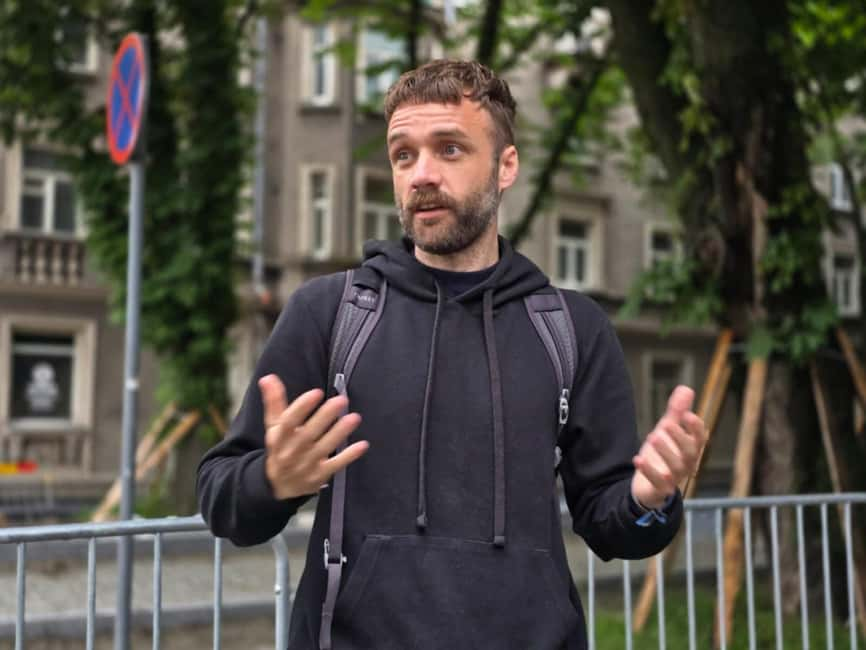
The walk begins outside Hampton by Hilton Tallinn, next to the Hampton Hilton sign. If rain is falling, the meeting point moves into the hotel lobby.
That is a practical start. You do not need to find an obscure street corner or a museum entrance, and the hotel provides an easy landmark for anyone arriving from elsewhere in the city. You will need to arrange your own way to the start, since transport is not included.
Tom is the guide associated with Hidden Tallinn. His strongest quality is his ability to explain difficult subjects without making the walk feel like a lecture. He uses facts, anecdotes, humor, and stories about people to make the setting easier to understand.
The pace appears well judged. You walk between stops, then pause for commentary, so the experience does not become a long march through cold or rain. Several people particularly appreciated that Tom answered questions directly and cared for the group’s comfort.
You should still wear proper outdoor clothing. The route is outside, and Tallinn can be bitterly cold in late autumn and winter. Comfortable shoes matter more than smart clothes.
The former KGB Headquarters and the machinery of surveillance
The former KGB Headquarters is one of the most important early stops. You pass the building while Tom explains its role in Soviet Tallinn and the fear attached to it.
This is where the tour moves from general history to the experience of being watched. The point is not only that a state security service occupied the building. It is the effect that surveillance had on speech, friendships, work, travel, and family life.
Tom’s commentary helps you consider how people adapted when private conversations could carry risk. You hear about the pressure of official control, but also about the quiet choices people made to protect themselves and push back in small ways.
The building itself may not offer the visual drama of a medieval church or palace. That is part of its power. You are looking at an ordinary urban structure with an extraordinary role, and you are asked to imagine what it meant to pass by it when its purpose was widely understood.
The tour passes the KGB Prison Cells as part of the route. Since this experience is a walking tour rather than a guaranteed interior museum visit, you should not expect a long indoor examination of the cells. Instead, the surrounding story gives the place its weight and connects it to the broader system of arrests, interrogation, and state control.
Viru Hotel and the politics of a modern-looking building
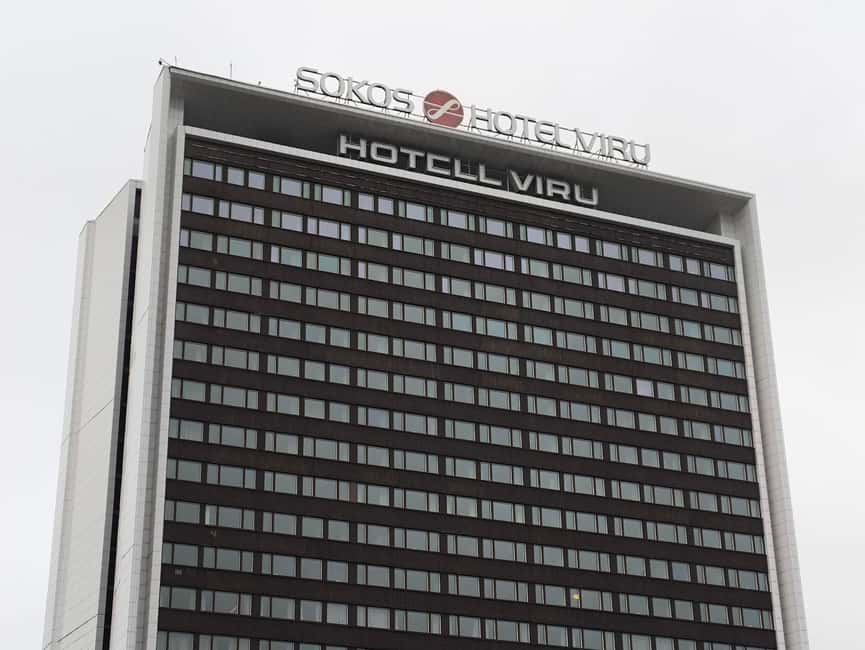
The Viru Hotel is a particularly interesting stop because it shows how Soviet power could hide behind modern design and hospitality.
At first glance, a large hotel may seem like a symbol of leisure. In Soviet Tallinn, it also had a more complicated function. The hotel’s history of surveillance gives Tom a way to explain how foreign visitors were monitored and how carefully controlled contact with the outside world could be.
This makes the Viru Hotel more than a striking building. It becomes a lesson in the contrast between public appearance and private reality. A hotel could welcome visitors while also serving the interests of the security system.
I like this part of the tour because it adds variety. You are not looking only at abandoned concrete or grim official buildings. You are seeing how surveillance could operate in a place designed to look welcoming.
The hotel also helps explain Tallinn’s position within the Soviet system. The city was close to Finland, and contact with the West carried special meaning. Tom uses sites such as the Viru Hotel to show how geography, tourism, and state control overlapped.
Same streets, a different route:
- New Orleans Premier Ghost, Voodoo and Vampire Walking Tour
★ 4.5 · 12,856 reviews - Amsterdam Anne Frank: Small-Group Walking Tour & Local Guide
★ 4.8 · 12,789 reviews - Edinburgh: Harry Potter Magical Guided Walking Tour
★ 4.8 · 11,944 reviews - Edinburgh Castle: Guided Walking Tour with Entry Ticket
★ 4.7 · 11,699 reviews
Central Market and the practical side of Soviet life
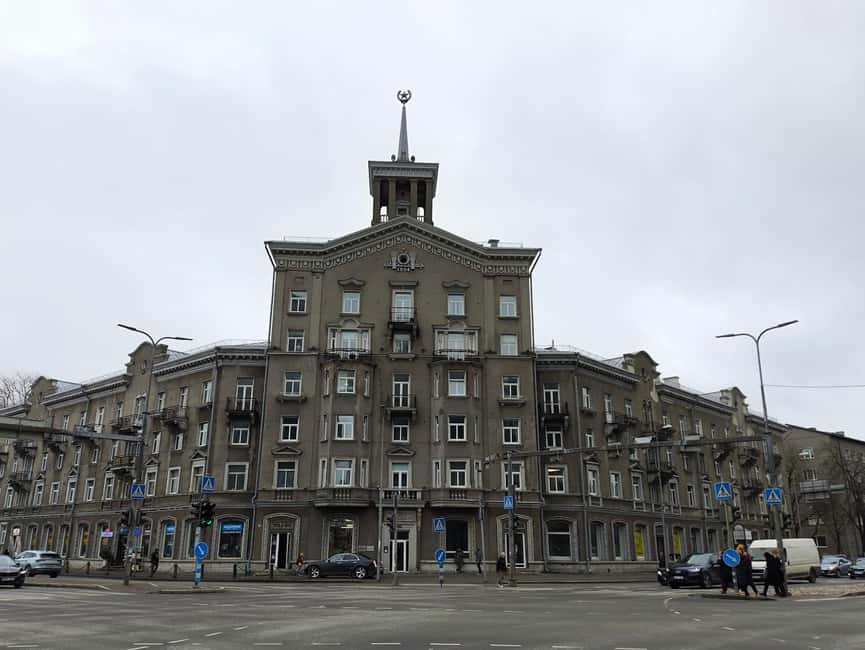
The visit to Tallinn’s Central Market brings the tour down to street level. This is described as the last remaining Soviet-era market in the city, and it remains an everyday place rather than a preserved historical display.
That distinction matters. A museum can explain the past, but a working market lets you consider how people actually obtained food and goods. Tom uses the setting to discuss shortages, queues, informal exchanges, and the practical habits people developed under Soviet rule.
You will not simply hear about government policy. You will hear how policy affected shopping, meals, household planning, and family routines. Those details often explain a historical period better than a list of official decisions.
The market also breaks up the more solemn parts of the walk. After hearing about surveillance and political pressure, you get a more ordinary view of life. People still had to shop, make do, exchange favors, and find moments of normality.
Because it is a functioning market, the atmosphere can change from one visit to the next. Treat it as a living city space with historical importance, not a staged attraction. If you want a polished, museum-like presentation, this may feel less tidy. If you want to see how the past can remain part of daily Tallinn, it is one of the tour’s most useful stops.
Small sites that most city walks skip
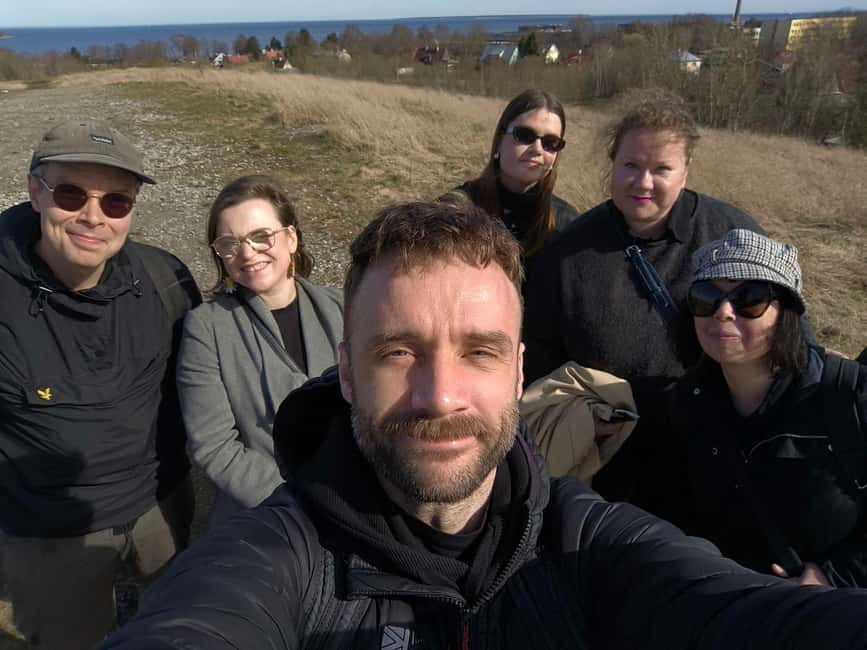
Several locations on the route are described simply as places to pass by. That may sound modest, but it is central to the experience.
Tallinn’s Soviet story is not confined to one museum. It survives in apartment blocks, public buildings, signs, streets, and spaces whose importance is easy to miss. Tom gives these locations context, showing you what they meant and why they still matter.
This is where a guide adds real value. On your own, you may notice concrete, faded architecture, or a building with an unusual shape. You are unlikely to know which places mattered to officials, residents, foreign visitors, or dissidents.
The walk also helps you see how the city has changed since independence. Some Soviet structures have been repurposed, some remain in use, and others are decaying or threatened by redevelopment. Tom’s attention to current conditions gives the history a present-day edge.
A local reviewer who had already seen many of the buildings found that the stories behind them changed how the city looked. That is a good measure of this tour’s purpose. It is less about collecting famous sights and more about learning to read the city.
Linnahall, grand design, and the end of the Soviet dream
The tour finishes at Tallinna Linnahall, one of Tallinn’s most memorable Soviet-era structures.
Linnahall was built on a huge scale, with broad concrete forms and steps leading toward the waterfront. It was intended as a major public venue, but its current condition gives it a very different mood. The building now feels like a relic of grand planning, a reminder of how quickly official ambition can turn into neglect.
The site is visually striking, but it also needs care. The steps can be unsafe when conditions are very icy, and in winter the tour may finish in Tallinn’s Old Town instead. Check the conditions and wear shoes with good grip.
You should not expect a fully restored attraction or a polished interior visit. The appeal is the exterior scale and the story attached to it. Linnahall helps you think about the relationship between architecture and political power: large public buildings were meant to project confidence, order, and progress.
Ending here gives the walk a strong final image. You have moved from surveillance offices and everyday markets to a giant public structure that reflects the Soviet state’s ambitions. It is a fitting close, even if the building’s present condition is less glamorous than its original purpose.
What Tom does especially well
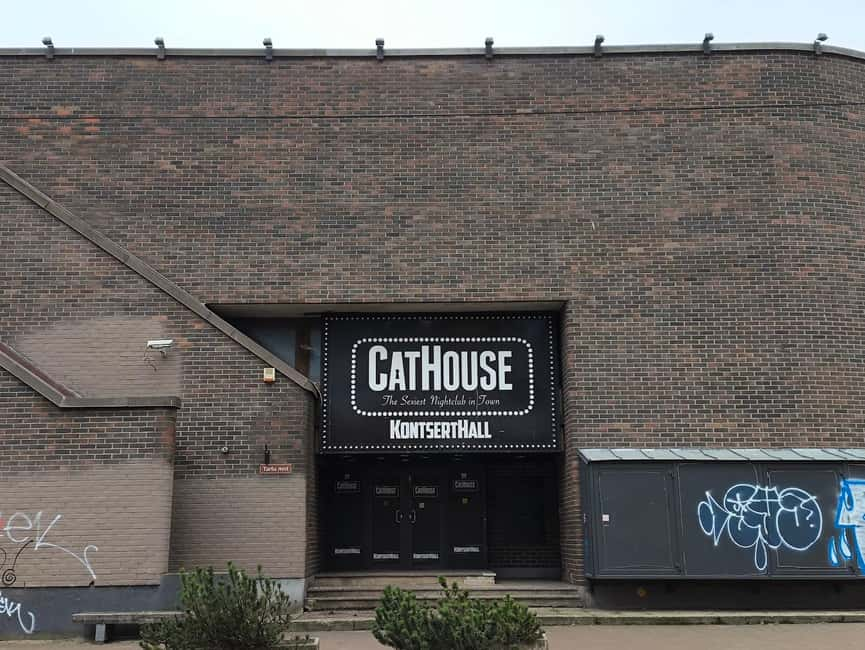
Tom’s delivery is the most consistently praised part of the experience. He is described as enthusiastic, organized, caring, and deeply prepared. More important, he makes complex subjects clear without reducing them to simple slogans.
His storytelling includes amusing details as well as difficult material. That balance matters. A two-hour account of repression, shortages, and surveillance could become heavy, but humor and human stories keep the walk moving.
He also leaves room for questions. If you want to connect Soviet Tallinn with the wider Cold War, ask. If you are curious about a building you pass, ask. The guide’s ability to respond to questions is a major benefit over a self-guided route.
Another useful touch is the follow-up reading material he has sent after the walk. That gives you a way to continue learning after the tour, particularly if the subject catches your interest and you want to visit the KGB museum or Soviet garden later.
The route can suit families with older teenagers. One parent and teenage daughter especially appreciated its original subject and stories about ordinary Estonian life. The minimum age is 12, so it is not designed for young children.
Is $35 good value?
At $35, this is a sensible purchase if you want historical context rather than a quick photo stop.
The tour lasts two hours and covers several sites that you could visit independently, but the buildings alone would not explain their meaning. The former KGB Headquarters, Viru Hotel, Central Market, and Linnahall each become more useful when connected to one another.
The price also compares well with the cost of separate museum admissions, though this tour does not replace an indoor museum visit. Think of it as an introduction and a framework. It may leave you wanting to visit the KGB museum afterward, which is a sign that the route gives you useful direction.
Free cancellation up to 24 hours before the start and the option to reserve now and pay later make the booking less restrictive. Meals, drinks, transport to the meeting point, and personal spending are not included.
Who should book this walk?
I would choose this for anyone curious about the Cold War, Soviet society, modern Estonian identity, or the way political systems shape ordinary routines.
It is especially good for:
- First-time visitors who have already seen the medieval center and want another side of Tallinn
- History enthusiasts who enjoy buildings with political stories
- Older teenagers and adults
- Visitors who prefer clear storytelling to a formal museum display
- People who want to understand daily life, not just official history
- Repeat visitors who have seen the main sights and want places they would otherwise miss
I would think twice if you dislike walking outdoors in poor weather, want a long indoor museum visit, or have only enough time for the city’s most famous sights. The route is also not intended for children under 12.
The accessibility information needs checking before you book. The activity details describe the tour as wheelchair accessible, but they also say it is not suitable for wheelchair users. Contact Hidden Tallinn directly to confirm the current route and conditions for your needs.
Weather, winter timing, and practical tips
Wear weather-appropriate clothing in every season. Rain does not necessarily cancel the walk, but it changes the meeting point to the hotel lobby.
Winter deserves extra planning. Tallinn can be very cold, and the Linnahall steps may become dangerous when icy. In those conditions, the ending point may change to the Old Town.
I would schedule this tour early in your stay. Tom’s suggestions can help you decide what to visit next, and the route may point you toward the KGB museum, the Soviet garden, or other places you would not have considered.
Give yourself a little spare time after the tour if you expect many questions. The official duration is two hours, and one of the few limitations is that the route cannot cover every Soviet-related site in Tallinn.
Should you book Hidden Tallinn?
Book it if you want to understand Tallinn beyond its medieval streets. The tour’s greatest strength is the link between major sites and ordinary life: surveillance at the KGB Headquarters, controlled hospitality at the Viru Hotel, shopping at Central Market, and political ambition at Linnahall.
I would not book it as a substitute for every Soviet museum in the city. I would book it as the clearest way to get your bearings, learn the stories behind overlooked buildings, and decide what deserves a longer visit.
At $35 for two hours, with an English-speaking guide and a route shaped by strong research and engaging storytelling, it offers solid value. Bring warm clothes, ask questions, and treat the walk as a key to the city’s recent past rather than just another sightseeing circuit.
FAQ
How long does the Hidden Tallinn Soviet Walking Tour last?
The tour lasts two hours.
How much does the tour cost?
The listed price is $35 per person.
Where does the tour begin?
Meet outside Hampton by Hilton Tallinn, next to the Hampton Hilton sign. If it is raining, the meeting point is inside the hotel lobby.
What language is the tour conducted in?
The live guided tour is conducted in English.
Where does the tour finish?
The normal finish is Tallinna Linnahall. In winter, the ending point may change to Tallinn’s Old Town if weather conditions make the Linnahall steps unsafe.
Is the tour suitable for wheelchair users?
The activity information gives conflicting details. It lists the tour as wheelchair accessible but also says it is not suitable for wheelchair users. Contact Hidden Tallinn before booking to confirm the current route and accessibility conditions.
Just added around the world
- Half Day Kyoto Sagano Bamboo Grove & Arashiyama Walking Tour★ 4.5 · 81 reviews
- Ubud yoga, rice terrace walk and floating Breakfast tour★ 5.0 · 85 reviews
- Ephesus: Private Tour with Skip-The-Line & Less Walking★ 5.0 · 125 reviews
- Bungle Bungle Scenic Flights, Domes & Cathedral Gorge Walk★ 5.0 · 312 reviews
- Historic Krakow : Old Town & Wawel Castle Walking tour★ 5.0 · 318 reviews
- Krakow Jewish Quarter Guided Walking Tour★ 5.0 · 247 reviews
- Kuala Lumpur Local Street Food Private Walking Tour by Night★ 4.5 · 224 reviews
- Creepy Krakow City Walking Tour★ 4.5 · 138 reviews
Walking Tours, compared.

Magical London: Harry Potter Guided Walking Tour
Read our review →
Reykjavik Food Walk – Local Foodie Adventure in Iceland
Read our review →
History and Hauntings of Salem Guided Walking Tour
Read our review →
New Orleans Premier Ghost, Voodoo and Vampire Walking Tour
Read our review →
Amsterdam Anne Frank: Small-Group Walking Tour & Local Guide
Read our review →

Edinburgh Castle: Guided Walking Tour with Entry Ticket
Read our review →