
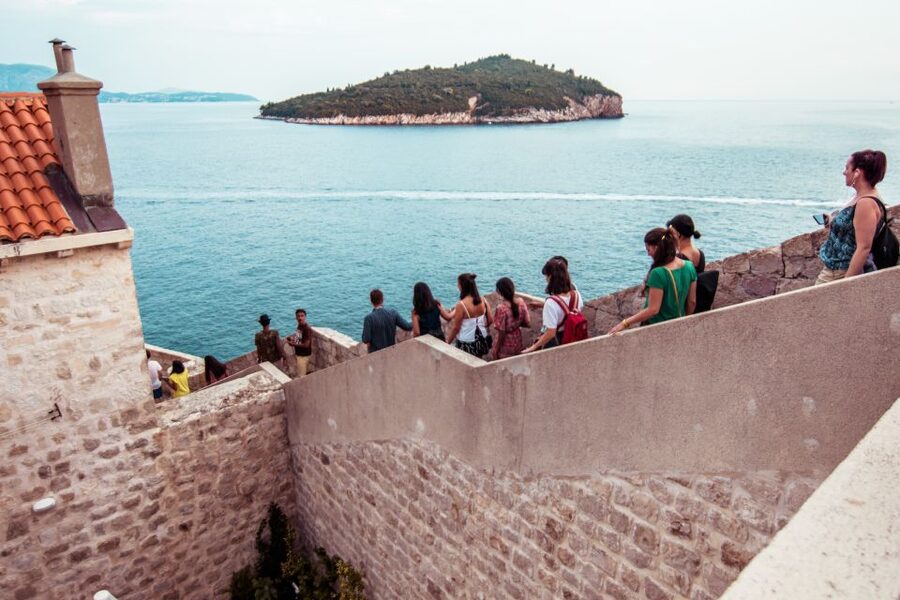
REVIEW · DUBROVNIK
Dubrovnik: Walls and Wars Walking Tour
Dubrovnik’s walls are far more than a photo platform above the Adriatic. They explain how this small republic survived powerful rivals, earthquakes, sieges, and the 1991 war. This two-hour walk links the stonework beneath your feet with the politics and battles that shaped the city.
I especially like the local guides, including Davor, Goran, Andreja, and Darko, who bring both old and recent history to life. I also like the headset system, since it lets you hear the guide while walking in a line along the narrow ramparts. The main catch is cost: the tour is $29, but the mandatory wall ticket is extra at €40 per adult.
- About 1,150 steps: Expect a real climb, not a flat stroll around town.
- Local, English-speaking guides: Guides such as Goran and Davor explain both medieval Dubrovnik and the Croatian Homeland War.
- Major defensive landmarks: See Revelin Fortress, Minceta Tower, Lovrijenac Fortress, and the harbor from above.
- Headsets included: These help you follow the talk, though reception can weaken if you fall far behind.
- Best in cooler weather: Early morning or the 6 pm departure can make the exposed walls easier to handle.
- Tickets cost extra: Buy the wall admission separately, at the entrance, in advance, or with the Dubrovnik Pass.
Why Dubrovnik’s walls matter
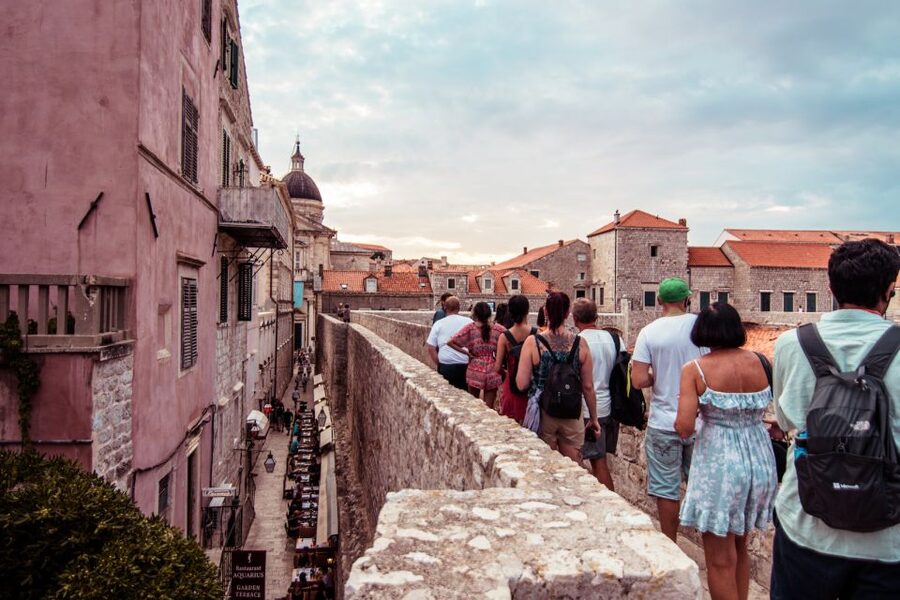
The old city walls make Dubrovnik easy to admire but harder to understand without context. From street level, you see polished limestone lanes, red roofs, and churches. From the ramparts, you see the city as its rulers once did: a compact port protected by towers, steep rock, sea, and diplomacy.
For centuries, Dubrovnik functioned as the Republic of Ragusa, a small but prosperous maritime state. Its leaders survived by balancing trade, negotiation, and defense. The walls were not decoration. They guarded homes, warehouses, churches, government buildings, and the harbor that supported the city’s wealth.
I like this tour because it treats the fortifications as a working system rather than a single monument. Your guide explains why one tower protected a certain approach, why a fortress was built outside the main walls, and how the city’s political choices affected its ability to survive.
The tour also reaches into recent history. Several guides have personal connections to the Croatian Homeland War, and the 1991 attacks on Dubrovnik are part of the story. That gives the walk a human edge. You are not only hearing about medieval threats from distant centuries. You are also learning how the city and its people faced a conflict within living memory.
Meeting at Pile Gate
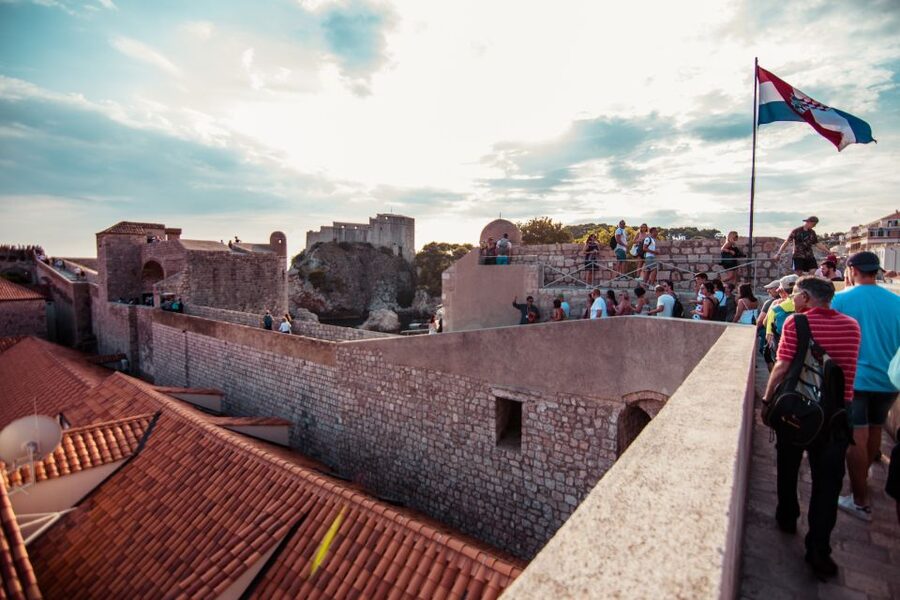
The walk begins at Dubrovnik Walks, Brsalje 8, beside the Pile local bus stop. This is the final stop before the Old Town, so it is a useful place to meet if you are arriving by bus. Look for the orange umbrellas held by Dubrovnik Walks representatives.
Allow enough time to find the meeting point. Pile is busy, especially when cruise passengers arrive, and the area outside the Old Town can feel hectic. The orange umbrella is the practical landmark.
The guide speaks English and is licensed through Croatia’s Ministry of Tourism. You receive a headset so you can hear clearly as the group moves. This matters on the walls, where the path is narrow and visitors can spread out between towers and stairways.
The headsets are helpful, but stay reasonably close to the group. A few people have found that the signal weakens when they fall well behind. The route is easy to follow, but you will get more from the talk if you keep pace.
A few more walking tours around Dubrovnik worth a look
- Dubrovnik: Old Town Walking Tour
★ 4.8 · 5,174 reviews - Dubrovnik Discovery Old Town Walking Tour
★ 5.0 · 4,458 reviews - Dubrovnik: Game of Thrones Walking Tour
★ 5.0 · 1,732 reviews
The wall walk and its 1,150 steps
The main part of the activity lasts about two hours. You climb onto Dubrovnik’s fortifications and follow the wall around the Old Town, pausing for explanations, photographs, and views.
This is not a casual stroll. One guide estimated roughly 1,150 steps, and the route includes steep sections. The stone surface can be uneven, and the walls offer little shade. On a hot day, the physical demands can be greater than the distance suggests.
Bring water, wear proper walking shoes, and carry a hat. A credit card is also listed among the useful items, particularly for purchases connected with your time in Dubrovnik. You should not count on finding much shelter from the sun once you are up on the ramparts.
The effort pays off quickly. The wall gives you changing views in every direction. You look down into the lanes of the Old Town, across the roofs toward the sea, and over the port where Dubrovnik’s trading power once centered. The views are excellent, but the guide’s explanations give them purpose.
You also get regular chances to stop. One highly regarded guide, Davor, was praised for finding shady spots during a hot evening tour. Andreja was also noted for checking when the group needed rest or drinks. That kind of attention matters here. A good guide can keep the walk interesting without turning the route into a race.
Revelin Fortress and the eastern defenses
Revelin Fortress helps explain how Dubrovnik adapted its defenses as weapons changed. Located near the eastern side of the Old Town, it protected an important approach and helped guard the harbor area.
Your guide uses the fortress to show how Dubrovnik’s defenses were layered. The city did not depend on one wall or one tower. It used gates, thick ramparts, projecting fortifications, and carefully chosen positions to make an attack difficult.
This is one of the tour’s strongest features. You are not simply told that Dubrovnik was well defended. You see how the pieces fit together. The position of the fortress, the shape of the wall, and the view toward the port all make more sense when someone explains the problem each structure was built to solve.
Minceta Tower and the highest views
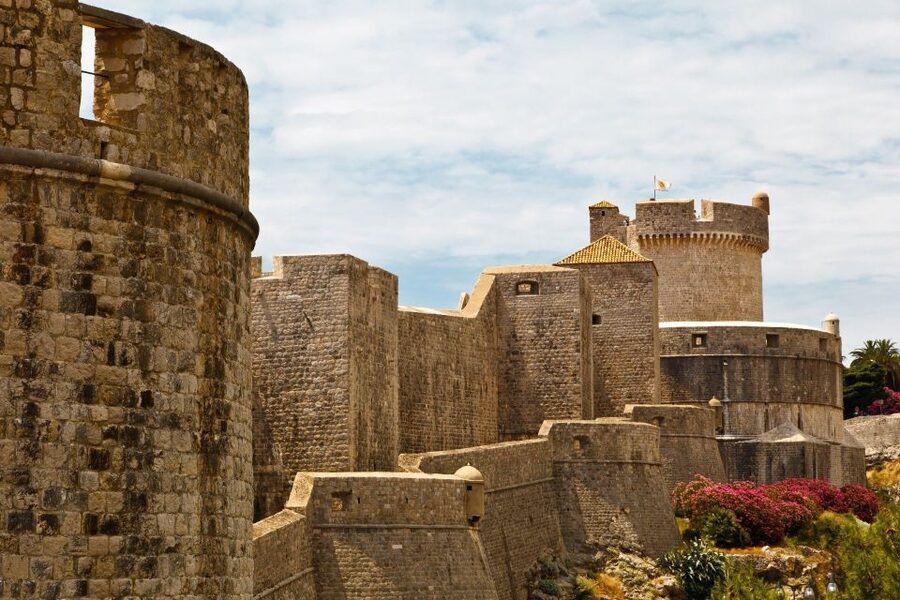
Minceta Tower is one of the most impressive points on the route. It is closely associated with the city’s northern defenses and gives you a strong sense of the wall’s size and strength.
From this part of the fortifications, you can look across the Old Town and out toward the surrounding coastline. The views are the sort that make you stop taking photographs for a moment and simply look. You see how tightly packed the city is, and how exposed it would have been without its defensive ring.
The tower also helps you understand why height mattered. Defenders needed a clear view of approaching ships and armies. The higher positions offered better sightlines, while the thick masonry gave protection from attack.
Be sensible about the steps and edges. The tour is not suitable for people with vertigo or a fear of heights. It is also not designed for wheelchair users, baby strollers, or people with significant mobility limits.
Same streets, a different route:
- Dubrovnik: The Original Game of Thrones Tour & Lokrum Option
★ 4.8 · 5,064 reviews - Dubrovnik Old Town History Walking Tour
★ 5.0 · 1,684 reviews - Dubrovnik: City Walls Early Morning or Sunset Walking Tour
★ 4.8 · 1,523 reviews - Dubrovnik: Ancient City Walls & Wars Walking Tour
★ 5.0 · 1,270 reviews
Lovrijenac Fortress and the outer defense
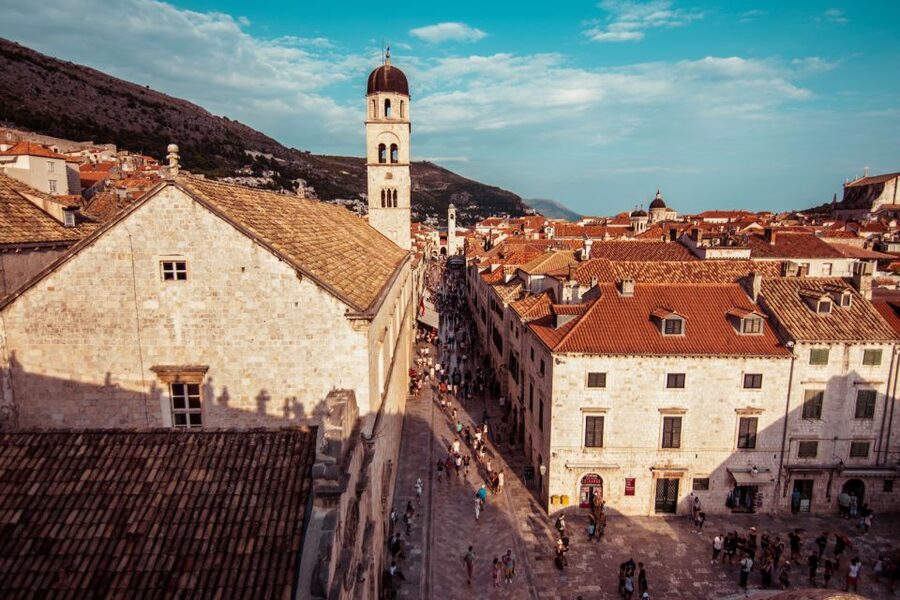
Lovrijenac Fortress is vital to the story because it sits outside the main city walls, on a rocky position overlooking the western approach. Its location made it an important shield for Dubrovnik and a powerful visual reminder of the city’s defensive planning.
The fortress helps answer a basic question: why would a city build a major defense away from its central walls? The answer is position. An outer stronghold could challenge an approaching force before it reached the city itself.
Depending on the exact route and timing, your guide will explain Lovrijenac as part of Dubrovnik’s wider system rather than as an isolated sight. You will also hear about the political pressures faced by the republic and the need to protect both people and trade.
The tour ends near the Old Town port. That is convenient if you want to continue exploring the harbor, eat in the Old Town, or walk back toward the city gates. It also gives the tour a satisfying geographic finish, since the port was central to Dubrovnik’s wealth and survival.
Medieval power and the 1991 war
The tour’s title includes wars, and that is important. This is not only a medieval fortification walk. The guides also address the Croatian War of Independence and the shelling of Dubrovnik in 1991.
For many people, this is the most meaningful part of the experience. Guides with personal or family connections to the conflict can explain what the city faced in a direct but measured way. The subject is serious, and the best guides allow room for questions rather than turning it into a simple battle summary.
Davor, Goran, Andreja, and other guides have been singled out for combining clear explanations with humor and personal perspective. Goran, in particular, has spoken about his lived experience of the war. That recent layer changes the way you see the repaired roofs and old stonework.
It also prevents the city from becoming a postcard. Dubrovnik is beautiful, but its walls have protected real communities through real danger. Knowing that makes the views more powerful, not less.
The price and what you receive
The tour costs $29 per person. That price covers the guide, the two-hour wall walk, and the headset. It does not cover admission to the city walls.
The separate admission is currently listed as €40 per adult and €15 for children aged 7 to 18. That is a major extra cost, especially for a family. You can buy the ticket at the entrance, purchase it in advance, or use the Dubrovnik Pass if that fits your plans.
The total price may feel high for a two-hour walk. I understand the concern. The wall admission alone is expensive, and the tour fee comes on top. Still, I think the guide adds real value if you care about understanding what you are seeing. Walking the walls alone gives you the views. This tour explains the defensive layout, the republic’s survival, and the city’s recent wartime experience.
If you already have strong background knowledge and prefer to move at your own speed, you may decide to walk independently. If the ticket price is already stretching your budget, check the Dubrovnik Pass before paying separately. It may include access to the walls and other heritage attractions.
Timing, weather, and group comfort

The walls are exposed. In summer, there is little shade, and temperatures around 34 degrees Celsius can make the climb punishing. I would choose an early departure or the 6 pm tour when available. The later time can be cooler and often gives softer light for photographs.
Wind and rain do not necessarily ruin the experience. A wet, windy walk can make the walls feel dramatic, though you still need suitable clothing and secure footwear. Conditions change quickly on the exposed route, so check the forecast before setting out.
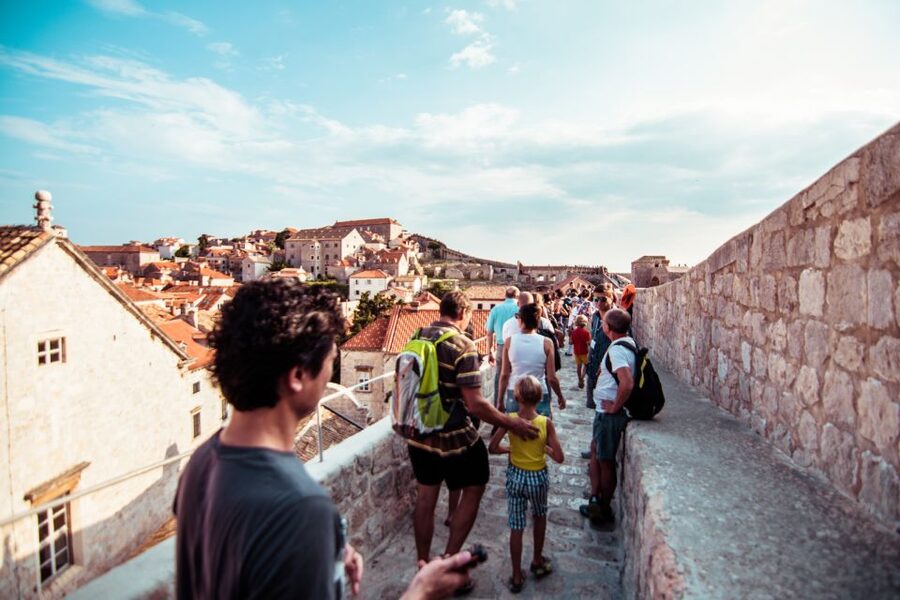
Group size can affect the experience. A large group may stretch along the narrow wall, and the headset signal can become frustrating if you lag behind. Stay near the guide and keep moving during transitions. The walk usually includes pauses for explanations, so you will still have time to take photographs.
The pace has generally been described as comfortable, but this is not the same as easy. You need a reasonable level of fitness. The activity is not suitable for pregnant women, people with heart or respiratory problems, people with mobility impairments, wheelchair users, people over 80, or anyone with vertigo or a strong fear of heights.
Video recording is not allowed. Bring a camera for still photographs, but give yourself time to listen. The best moments often come when the guide points out a feature you would have walked past without noticing.
Who should book this walk?

I would recommend it to first-time visitors who want the walls to make sense, not just provide a good view. It suits history fans, architecture enthusiasts, families with older children, and anyone curious about how Dubrovnik survived as a small independent republic.
It is also a strong choice if you want to understand the Croatian Homeland War in the setting where part of that story unfolded. The local perspective adds something a book or an audio guide cannot easily provide.
I would be cautious if you have limited mobility, poor heat tolerance, heart or breathing problems, or a fear of heights. The wall ticket is also a serious budget item. Check the price before booking so the extra €40 per adult does not surprise you at the meeting point.
Should you book the Dubrovnik Walls and Wars tour?
Book it if you can handle steep stairs and want more than attractive photographs. The guides, especially people such as Davor, Goran, Andreja, and Darko, are praised for clear explanations, humor, patience, and personal insight. The headsets help, and the route connects the city’s fortresses with its political and wartime story.
Skip it if you want a slow, independent walk or cannot manage roughly 1,150 steps in an exposed setting. For everyone else, the extra tour fee is worthwhile because the city wall ticket buys access, while the guide gives you the reasons to care about what you are seeing.
FAQ
How long does the Dubrovnik Walls and Wars tour last?
The walking tour lasts about two hours. It includes a guided walk along Dubrovnik’s city walls and stops for sightseeing and photographs.
Is the city wall ticket included?
No. The mandatory city wall entry ticket costs €40 per adult and €15 per child aged 7 to 18. You can buy it at the entrance, in advance, or with the Dubrovnik Pass.
Where does the tour meet?
Meet at Dubrovnik Walks, Brsalje 8, beside the Pile local bus stop. Look for representatives holding orange umbrellas.
Where does the tour finish?
The tour ends near the Old Town port in Dubrovnik.
Is the tour suitable for people with mobility problems?
No. The route includes many stairs, including roughly 1,150 steps, and is not suitable for wheelchair users or people with mobility impairments. It is also not recommended for people with vertigo, a fear of heights, heart problems, respiratory issues, low fitness, or pregnancy.
What should I bring?
Bring comfortable shoes, water, and a hat. A credit card is also recommended. Video recording is not allowed, and baby strollers cannot be taken on the tour.
Just added around Dubrovnik
- Dubrovnik: Panoramic Ride and Old Town Guided Walking Tour★ 4.7 · 261 reviews
- Dubrovnik: Game of Thrones&Lokrum Island Walking Tour★ 4.8 · 245 reviews
- Dubrovnik: Game of Thrones And Iron Throne Walking Tour★ 4.8 · 505 reviews
- Dubrovnik By Night Walking Tour★ 4.8 · 208 reviews
- Dubrovnik: Early Bird Walking Tour★ 4.9 · 123 reviews
- Dubrovnik: Legendary Game of Thrones Walking Tour★ 4.8 · 220 reviews
- Dubrovnik: Old Town History Walking Tour★ 4.9 · 474 reviews
- Tour The Game of Thrones – Private Walking Tour★ 5.0 · 464 reviews
Walking Tours, compared.

Magical London: Harry Potter Guided Walking Tour
Read our review →
Reykjavik Food Walk – Local Foodie Adventure in Iceland
Read our review →
History and Hauntings of Salem Guided Walking Tour
Read our review →
New Orleans Premier Ghost, Voodoo and Vampire Walking Tour
Read our review →
Amsterdam Anne Frank: Small-Group Walking Tour & Local Guide
Read our review →

Edinburgh Castle: Guided Walking Tour with Entry Ticket
Read our review →
Anne Frank’s Story – Guided Walking Tour through Amsterdam
Read our review →Browse the lists this tour appears in