REVIEW · WALKING TOURS
City Tour Sighisoara Legends & Landmarks A Walk Through Time
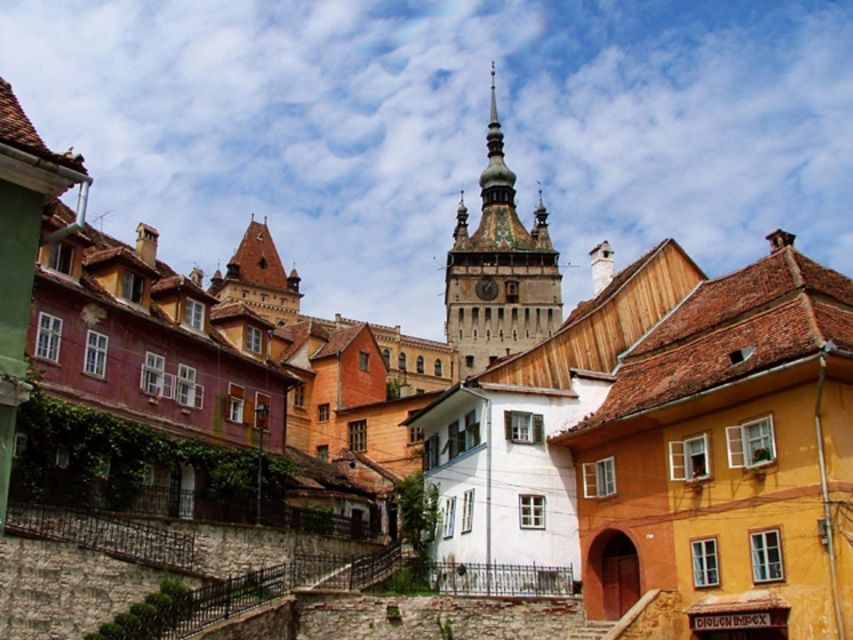
Sighișoara’s most interesting stories are tucked into its lanes, towers, stairways, and painted houses. This two-hour walking tour turns a pretty medieval town into a place you can understand, from Vlad the Impaler’s birthplace to the old guild system that guarded the walls. I like the route for two reasons: it covers the main sights without wasting time, and guides such as Peter, Charles, Carol, and Andrea bring in useful details about Romanian life beyond the citadel. The Clock Tower and the Church on the Hill give the walk a strong visual payoff.
The main consideration is the uphill walking. The Covered Staircase has 164 steps, and the Church on the Hill requires a climb. Entrance fees, food, and drinks are not included, and the tour is not suited to people with mobility impairments. If your legs are willing, though, the $45 price buys a good introduction to Sighișoara and the wider story of Transylvania.
Key points at a glance
- The Covered Staircase has 164 steps: This is the route to the School Hill and Church on the Hill, not just a quick photo stop.
- Dracula’s birthplace is part of the walk: You see the house linked with Vlad the Impaler, now used as a restaurant and museum.
- The Clock Tower reaches 64 meters: Its clock mechanism, historical objects, and town views make it the citadel’s central landmark.
- The cemetery adds human detail: The German Cemetery helps explain the families and communities that shaped Sighișoara.
- Guild towers tell the defense story: Butchers, tailors, furriers, and tin moulders each had a role in protecting the town.
- The guides are a major strength: Peter, Charles, Carol, Andrea, Jacob, and others are praised for clear English, patience, local knowledge, and willingness to answer questions.
Why Sighișoara works best on foot
Sighișoara is compact, but it is not merely a collection of old buildings. Its medieval citadel still has a clear shape, with walls, towers, steep lanes, and a main square that make the town easy to read on foot.
That is where a guide helps. You can photograph the colorful houses by yourself, but it is harder to understand why the towers carry names such as the Butchers’ Tower and Tailors’ Tower. A good explanation connects the stonework with the guilds that once defended the settlement.
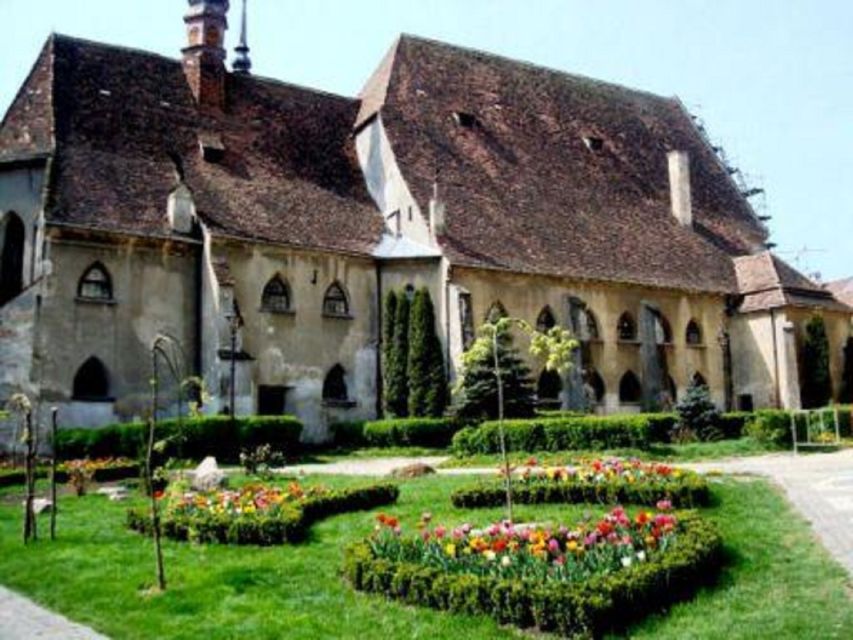
The tour begins at 11:00 in front of the Monastery Church at Piața Muzeului 5. Some booking details also list Piața Muzeului 6 as a starting or finishing point, so check your confirmation carefully. The walk returns to the same small area, making it easy to continue sightseeing, find lunch, or head toward the train station afterward.
The experience is conducted in English and lasts two hours. That is enough time for a strong first look, though not enough for long visits inside every building. Think of it as a guided orientation with history, architecture, and local stories, rather than a series of full museum visits.
A few more walking tours around the world worth a look
- Magical London: Harry Potter Guided Walking Tour
★ 4.7 · 22,044 reviews - Reykjavik Food Walk – Local Foodie Adventure in Iceland
★ 5.0 · 18,952 reviews - History and Hauntings of Salem Guided Walking Tour
★ 5.0 · 14,564 reviews
Piața Muzeului and the citadel’s market place
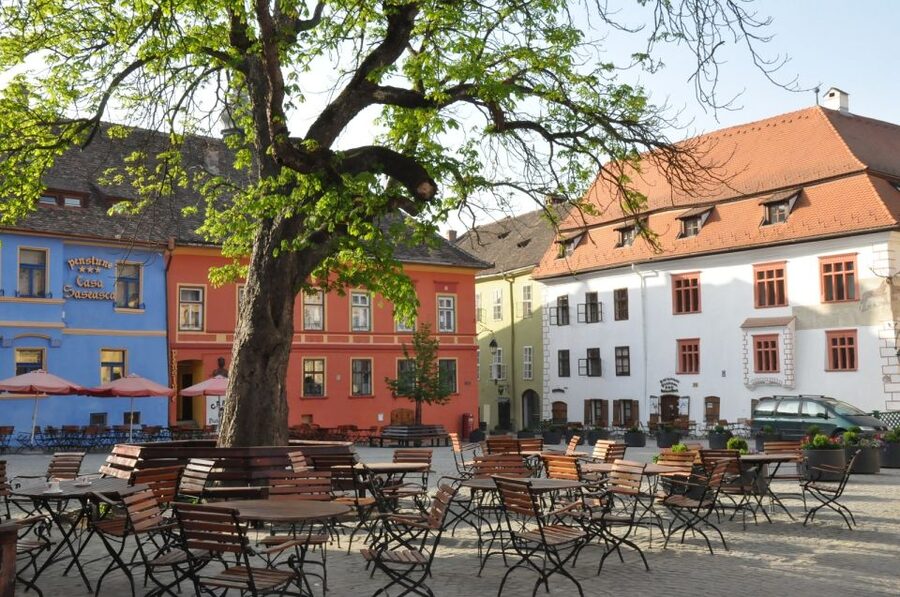
The opening section takes you into the heart of the medieval citadel. The market place is surrounded by colorful burgher houses, the sort of façades that make Sighișoara look almost theatrical.
The useful part is learning to look past the colors. These houses reflect the town’s past as a fortified trading center, where merchants and craft workers lived close to the defensive walls. Your guide can point out how the square fits into the old urban plan and how daily life once worked inside the citadel.
This is also a good place to ask for practical recommendations. Guides such as Charles and Peter have been praised for adapting the conversation to guests’ interests, including questions about architecture, Romanian traditions, and everyday life. If you want more detail about a particular building, ask early. The tour appears to allow plenty of questions rather than rushing from one photo stop to the next.
Dracula’s birthplace, with the legend put in place
The house associated with Vlad the Impaler is one of Sighișoara’s biggest draws. Vlad, also known as Vlad Dracul, is the historical figure connected with the Dracula legend. His story is more complicated than the popular vampire image, and this stop gives your guide a natural chance to separate documented history from later fiction.
The building now operates as a restaurant and a museum focused on Sighișoara’s past. The entrance fee is not included, so decide on the day whether you want to go inside. Even if you do not enter, the exterior and the explanation are useful because they place the Dracula connection within the town rather than treating it as a free-floating horror story.
I like this part of the tour because it avoids making the entire city about Dracula. The legend attracts attention, but the wider story includes Saxon settlement, trade, guilds, churches, fortifications, and changing political life. Several guides are praised for giving that broader context, which is exactly what you need if you want more than a themed photo stop.
The Clock Tower and the view over Sighișoara
The Clock Tower is the citadel’s main landmark and one of the clearest orientation points in town. At 64 meters, it gives you a sense of how tightly packed the old center is and how the surrounding streets connect.
Inside, you can see the clock mechanism and historical artifacts. The tower visit is a separate cost because entrance fees are not included in the tour price. If the tower is open and you have time after the walk, it is one of the more worthwhile paid additions, especially for the elevated view across the citadel.
The guide’s explanation matters here. A tower is easy to admire from the outside, but the clock mechanism gives the building a working, practical role. The tower was not simply decoration. It helped mark time and formed part of the town’s defensive identity.
The walk itself does not promise a long stop inside every attraction, so ask whether you want to return later for a closer look. That is one reason this tour works well on your first day: it shows you which sights deserve a second visit.
Same streets, a different route:
- New Orleans Premier Ghost, Voodoo and Vampire Walking Tour
★ 4.5 · 12,856 reviews - Amsterdam Anne Frank: Small-Group Walking Tour & Local Guide
★ 4.8 · 12,789 reviews - Edinburgh: Harry Potter Magical Guided Walking Tour
★ 4.8 · 11,944 reviews - Edinburgh Castle: Guided Walking Tour with Entry Ticket
★ 4.7 · 11,699 reviews
The Covered Staircase and School Hill
The Covered Staircase is one of the tour’s most memorable sections. Built in the 17th century, the wooden passage has 164 steps and was designed to protect schoolchildren from harsh weather as they climbed toward the school and church.
The staircase is more than a quaint shortcut. Its length and enclosed design show how the town adapted to winter conditions and steep ground. Once you hear why it was built, the climb feels less like a tourist attraction and more like a piece of everyday medieval planning.
You should take the ascent seriously if you have limited mobility or dislike stairs. The tour provider specifically lists the experience as unsuitable for people with mobility impairments. Wear shoes with a firm grip, and allow yourself time on the steps. There is no need to treat this as a race.
At the top, the School Hill and Church on the Hill reward the effort. A guide can explain how education and religious life were tied to this part of the citadel. One past guide even adjusted a route for guests who needed to finish early, skipping the hill section after they had visited it independently. That suggests some flexibility, but you should raise physical or timing concerns before the walk begins.
The Church on the Hill and the German Cemetery
The Church on the Hill is the tour’s most atmospheric stop. It is a Gothic church with medieval frescoes and a notable interior, giving you a change of mood after the narrow streets and defensive towers.
The supplied information calls it mysterious, and that is fair in the best sense. Its position above the citadel, reached by the long covered stairway, makes it feel separate from the commercial center below. The climb gives the visit a sense of arrival.
Nearby, the German Cemetery adds a more personal side to Sighișoara. The graves belong to influential local families and help explain the town’s German-speaking heritage. A cemetery can tell you things a grand building cannot: names, family connections, social status, and the lasting mark of a community.
Several guides are praised for using the cemetery to explain the town’s demographics. That makes this stop especially valuable if you want to understand Sighișoara as a lived-in place, not just a preserved medieval setting. It also gives the tour a welcome pause from legends and military stories.
Guild towers and the old defensive ring
Sighișoara’s towers are among its clearest links to the guild system. The Butchers’ Bastion and Tower introduce the way craft groups helped protect the citadel. The Butchers, Tailors, Furriers, and Tin Moulders were not just tradespeople. Their work groups had duties tied to the town’s defenses.
The Tailors’ Tower and Furriers’ Tower show how protection was divided among different guilds. Their names preserve a record of the people who maintained the city as well as those who fought for it.
This section is a strong reason to choose a guided tour instead of a solo stroll. Without an explanation, the towers can blur together. With one, each name becomes a clue. You begin to see Sighișoara as a working town organized around labor, walls, trade, and shared responsibility.
The route also helps you picture the citadel under pressure. You are not simply looking at attractive stone structures. You are seeing the practical remains of a place that had to defend itself and manage limited space.
Venetian House and the House with the Deer Antler
The Venetian House brings a different architectural note. Its Renaissance-style appearance and unusual story offer a break from the more obvious medieval fortifications. This is a good reminder that Sighișoara changed over time rather than remaining frozen in one period.
The final stop is the House with the Deer Antler, named for the antlers mounted on its façade. It is an odd, memorable detail and a fitting end to a walk built around legends and visual surprises.
I like the way these buildings widen the tour beyond the headline sights. The Clock Tower and Dracula’s birthplace may bring you here, but smaller features such as the Venetian House and deer antlers often stay in your memory longer. They give you something specific to look for as you continue exploring on your own.
Guide style and the value of the experience
The strongest pattern in the guide feedback is clear communication and patience. Peter is repeatedly praised for his broad understanding of Sighișoara and Romania. Charles is described as friendly, adaptable, and strong on architecture and history. Carol, Andrea, Jacob, and other guides are also praised for making the walk personal and easy to follow.
That matters because a two-hour history walk can become a lecture. Here, the best accounts describe guides answering questions, changing the route when needed, finding places to sit or shade, and occasionally running a little over time. One guide used old photographs to show how the town had changed. Another adjusted the route for a train departure.
You should still remember that guide quality can vary by the person assigned on your date. The available guide names include Peter, Charles, Carol, Andrea, Jacob, and Sebastian, but you may not be able to select one. The common strength is the local, conversational approach rather than a fixed audio-script feel.
The tour has earned a 4.9 rating from 83 reviews, with repeated praise for the guides’ English, patience, humor, and command of local history. I would put more weight on the repeated themes than on the number alone: people consistently value the explanations, the chance to ask questions, and the way the tour connects Sighișoara with Romania and Transylvania.
Is $45 a fair price?
At $45 per person, the tour is not the cheapest way to walk around Sighișoara. You can see the streets and façades without paying for a guide. The value comes from the structure and the interpretation.
You are paying for two hours with an English-speaking specialist who covers the main citadel, the Clock Tower area, Dracula’s birthplace, the Covered Staircase, the church, cemetery, defensive towers, and distinctive houses. Food, drinks, entrance fees, and souvenir photos cost extra, so set aside more if you want to enter paid sights.
A private tour requires a $20 per-person supplement. That may suit couples, families, or history-focused visitors who want a slower pace and more room for questions. For most people, the standard tour should be enough, particularly if the group is small on your date.
The best value comes when you take the tour early in your stay. You get your bearings, learn which attractions deserve a return visit, and gain enough context to make the rest of your time in Sighișoara more meaningful.
Practical advice before you go
Meet at Piața Muzeului 5, in front of the Monastery Church. Since Piața Muzeului 6 also appears as an alternate start or finish point, check the exact meeting details before leaving your accommodation.
Bring a passport or ID card. Large bags and oversize luggage are not allowed, so leave heavy luggage elsewhere. The route includes cobbled streets, stairs, and an uphill section, so comfortable shoes are essential.
The tour departs daily at 11:00. Two hours is a useful length for a first look, but the walk may feel full if you stop often for photographs or want long interior visits. Entrance fees are separate, so keep the schedule flexible if you plan to return to the Clock Tower or another paid attraction.
Free cancellation is available up to 24 hours in advance, and you can reserve now and pay later. Those terms help if your Romanian itinerary is still shifting.
Who should book this Sighișoara walk?
I recommend it most for first-time visitors, history fans, architecture lovers, and anyone who wants the old town explained rather than simply photographed. Families can also benefit, since one guide was praised for connecting well with children.
It is less suitable if you want a relaxed, level stroll or have trouble with stairs. The Covered Staircase and hill climb are central parts of the route, even though a guide may be able to adapt the walk. It is also not the right choice if you expect every entrance ticket to be included.
Should you book it?
Book this tour if you want Sighișoara to become more than a beautiful backdrop. The strongest parts are the Clock Tower, the Covered Staircase, the Church on the Hill, the cemetery, and the guild towers, all tied together by guides who explain how the town functioned.
Skip it if you prefer exploring entirely alone, need a fully accessible route, or plan to spend the entire day inside museums. For most visitors, though, the two-hour format is a sensible first step. You leave with a clearer map, a better grasp of the Dracula story, and many more reasons to look up at the walls, houses, and towers.
FAQ
How long does the Sighișoara city tour last?
The tour lasts two hours.
What time does the tour begin?
The listed departure time is 11:00, and the tour operates daily.
Where is the meeting point?
Meet at Piața Muzeului 5, in front of the Monastery Church.
Is the tour conducted in English?
Yes. An English-speaking live guide leads the tour.
What sights are covered?
The route includes the medieval citadel and market place, Dracula’s Birth House, the Clock Tower, Covered Staircase, School Hill, Church on the Hill, German Cemetery, Butchers’ Bastion and Tower, Tailors’ Tower, Furriers’ Tower, Tin Moulders’ Tower, Venetian House, and House with the Deer Antler.
Are entrance fees included?
No. Entrance fees are not included in the $45 tour price.
Are food and drinks included?
No. Food and drinks are not included.
What should I bring?
Bring a passport or ID card. Comfortable walking shoes are also a practical choice because the route includes cobbled streets, stairs, and a hill.
Can I bring large luggage?
No. Oversize luggage and large bags are not allowed.
Is the tour suitable for people with mobility impairments?
No. The experience is listed as unsuitable for people with mobility impairments because it includes walking, stairs, and an uphill section.
Can I cancel for a refund?
Yes. You can cancel up to 24 hours in advance for a full refund. You can also reserve now and pay later.
Just added around the world
- Fez: Walking Tour in the Ancient City of Fez★ 4.8 · 73 reviews
- Fira: Guided Foodie Walking Tour with Tastings★ 4.9 · 474 reviews
- Fez: Guided Walking Tour of the Historic Medina★ 5.0 · 359 reviews
- Faro: Old Town Guided Walking Food Tour★ 4.9 · 94 reviews
- Feel like a local – Walking Tour in Mykonos Town 2hours★ 4.4 · 77 reviews
- Fes: A Guided Walking Tour Through the Historic Medina★ 4.4 · 97 reviews
- Fez: Half-Day City Private Walking Tour with a Guide★ 4.6 · 114 reviews
- Fanal / Assobiadores – Levada Walk★ 4.6 · 93 reviews
Walking Tours, compared.

Magical London: Harry Potter Guided Walking Tour
Read our review →
Reykjavik Food Walk – Local Foodie Adventure in Iceland
Read our review →
History and Hauntings of Salem Guided Walking Tour
Read our review →
New Orleans Premier Ghost, Voodoo and Vampire Walking Tour
Read our review →
Amsterdam Anne Frank: Small-Group Walking Tour & Local Guide
Read our review →

Edinburgh Castle: Guided Walking Tour with Entry Ticket
Read our review →