

REVIEW · BUDAPEST
Budapest: 3-Hour Walking Tour of Pest with a Historian
Pest reveals itself best on foot, and this tour links its grandest sights with the stories that explain modern Budapest. You move from the Danube Promenade and Gresham Palace to St. Stephen’s Basilica, Andrássy Avenue, and Heroes’ Square, with a historian to connect the buildings to Hungary’s complicated past.
I like the small group of no more than 10, which leaves room for real questions and occasional route adjustments. I also like that the basilica ticket and subway fares are included, since you get both a major interior and a short ride on the historic Millennium Underground without sorting out extra payments.
The main consideration is pace. Three hours covers a lot of ground, and this is a walking tour with a subway ride, not a slow architectural tour with long stops at every sight. Comfortable shoes and sensible planning around weather will make a real difference.
Key points to know before you book
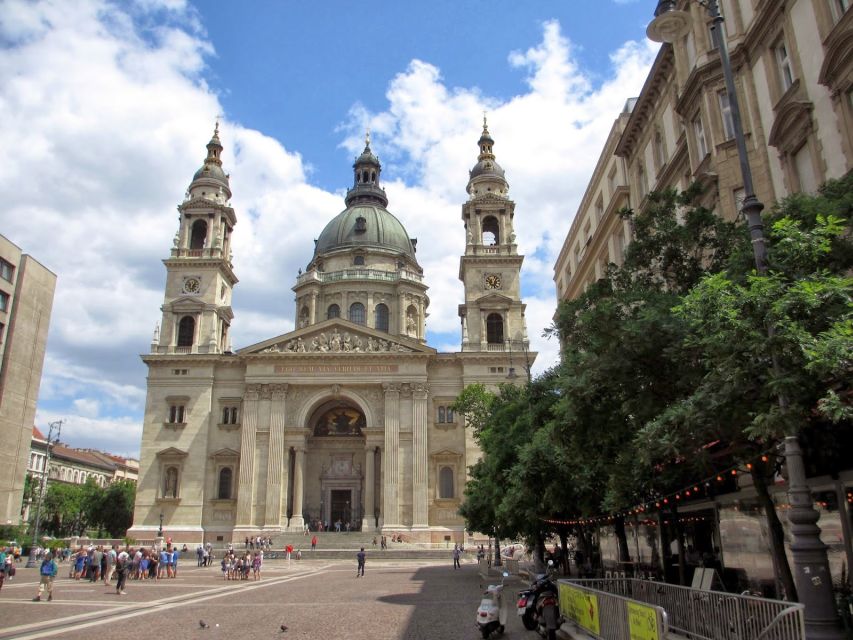
- St. Stephen’s Basilica inside: The largest church in Budapest is part of the tour, with admission included.
- A historian who welcomes questions: Guides such as Judit, Greg, Barbara, Monica, and Andrea have been praised for explaining both history and present-day Hungary.
- The Millennium Underground: You ride Europe’s oldest continental underground railway, using the included subway ticket.
- Heroes’ Square in context: The monuments introduce 1,000 years of Hungarian history and some of the country’s most important figures.
- UNESCO-listed Andrássy Avenue: You walk one of Budapest’s grand ceremonial avenues, including the Hungarian State Opera.
- Useful for a first visit: The route gives you a broad sense of Pest, practical orientation, and ideas for later meals and sightseeing.
What this Pest walk helps you understand

Budapest is one city, but Buda and Pest still feel like two different worlds. Buda rises across the Danube with hills, castle walls, and a quieter residential mood. Pest is flatter, busier, and more urban, with broad avenues, cafés, offices, shops, grand institutions, and the city’s political and commercial center.
This three-hour route concentrates on Pest. That makes it a useful choice if you want to understand the eastern and younger side of the capital before exploring on your own. I especially like tours that explain how a city functions today, not just which king built which building. This one includes discussion of the different attitudes associated with Buda and Pest residents, along with Hungary’s past and present life.
Your guide is an English-speaking historian, and the small format matters. You can ask about politics, daily life, architecture, or the difficult chapters of Hungarian history without trying to catch the guide’s attention from the back of a large crowd. Guides named in the experience feedback include Judit, Greg, Barbara, Monica, Andrea, Noemi, Raymond, and Gergely Molnár. The strongest praise goes to guides who tell stories clearly and connect their own experience of Hungary to the larger national story.
More Three-Hour Tours in Budapest:
- 3-Hour Orientation Walking Tour of Buda and Pest
★ 4.8 · 1,834 reviews - Budapest: 3-Hour Grand City Tour and Castle Walk
★ 4.3 · 1,437 reviews - Budapest 3-Hour Walking Tour in Italian
★ 4.6 · 217 reviews
Starting at Erzsébet Square
The meeting point is in front of the Kempinski Hotel Corvinus Budapest, facing the Ferris wheel in Erzsébet Square. The address is Erzsébet tér 7, 1051, in central Budapest.
This is a practical starting point because Deák Ferenc tér, one of the city’s main transport intersections, is close by. You can reach it on metro lines M1, M2, and M3, as well as several buses and trams. If you are staying in central Budapest, the location should be straightforward to reach, but give yourself enough time to identify the hotel entrance and the correct side of the square.
The tour begins in the heart of Pest, so you do not spend the opening minutes traveling out to a distant suburb. That is useful on a short visit. You start seeing the city immediately, and the opening section can help you get your bearings for later independent walks.
The Danube Promenade and Gresham Palace
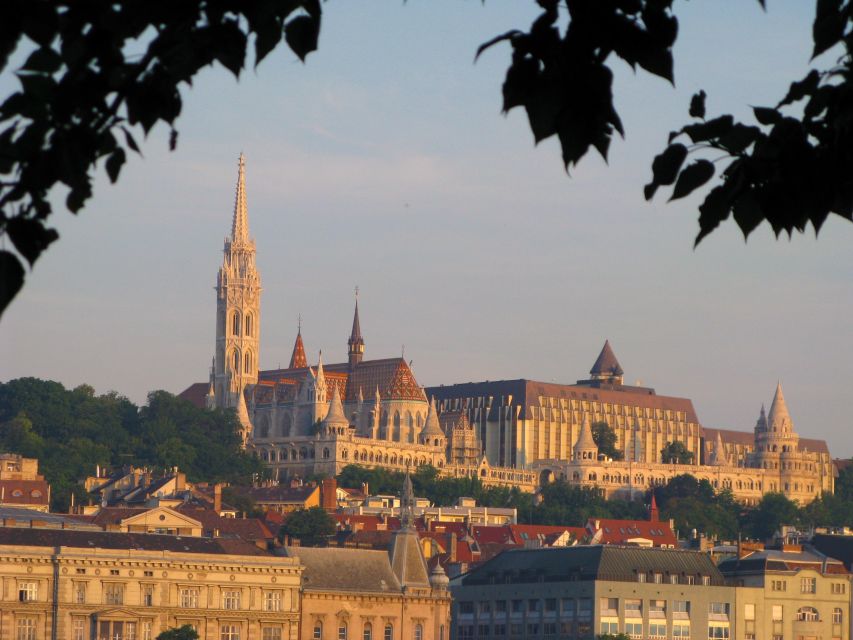
The Danube Promenade introduces Pest from its riverfront. Across the water, you have views toward Buda, while the Pest side presents a sequence of grand buildings and public spaces. This is where the basic division between the two halves of Budapest becomes easy to grasp.
The route also includes Gresham Palace, an Art Nouveau landmark with elaborate decoration and a strong connection to Budapest’s turn-of-the-century prosperity. You may not spend a long time inside, but the exterior gives your guide a useful opening to discuss the city’s architecture and its period of rapid growth.
The nearby Hungarian Academy of Sciences adds another layer. It is not simply another impressive façade. The building represents Hungary’s intellectual and national ambitions, and its place beside the Danube helps explain why this part of Pest became such a formal civic center.
I like this opening because the buildings do more than provide photo stops. They show you how Budapest wanted to present itself as a modern European capital. The drawback is that city streets can be noisy, and a guide’s explanation may compete with traffic or crowds around the riverfront.
Zrínyi Street and St. Stephen’s Basilica
From the riverfront, the walk continues through Zrínyi Street toward St. Stephen’s Basilica. The cobblestones give this short stretch a different feel from the broad avenues and open squares. It is a compact urban link, but it helps you see how Budapest alternates between formal public spaces and smaller street scenes.
St. Stephen’s Basilica is the tour’s main interior visit. It is Budapest’s largest church, and your entrance ticket is included in the $57 price. That matters because a walk past the exterior can only tell you so much. Inside, the scale and decoration make the building’s role in Budapest easier to understand.
Your guide can place the basilica in the story of the city and the country, rather than leaving you with a list of architectural details. St. Stephen was Hungary’s first king and a central figure in the country’s Christian identity, so the church offers a natural point for discussing national history as well as religious art.
Allow yourself a little patience here. A major church is a functioning public place, and the amount of time spent inside may depend on conditions at the site. The tour promises the entrance, but not a private visit or an extended architectural study. If you want to inspect every chapel and decorative detail, you may need to return on your own.
A few more walking tours around Budapest worth a look
- Budapest: Buda Castle Walk with Saint Stephen’s Hall
★ 4.5 · 3,012 reviews - Big Bus Budapest Hop-On Hop-Off Bus and Walking Tour
★ 3.5 · 2,206 reviews - Budapest: Buda Castle District Walking Tour
★ 4.6 · 2,108 reviews - Budapest City Landmarks Walking Tour in 2 Hours
★ 5.0 · 2,048 reviews
Andrássy Avenue and the Hungarian State Opera
The route then reaches Andrássy Avenue, one of Budapest’s most important streets and a UNESCO World Heritage Site. This is a highlight for anyone who enjoys city planning and architecture. The avenue stretches through Pest in a grand, deliberate line, with elegant buildings and cultural institutions along its route.
Walking here gives you more than a quick photograph. You can see how Budapest created a ceremonial axis linking the city center with Heroes’ Square. Your guide can explain why the avenue matters and how it fits into the city’s growth during the late nineteenth century.
The Hungarian State Opera is another major stop along the way. Even from outside, it adds weight to the avenue’s cultural role. I find this part especially useful if you plan to return for a performance or an independent architectural visit later. The tour gives you context first, so the building is not just another ornate façade.
Andrássy Avenue is also one of the places where the tour’s walking demands become clear. You are covering a substantial section of central Pest, and the experience works best if you are comfortable staying on your feet for most of three hours. There is no promise of a long café break, so plan accordingly.
Riding the Millennium Underground
One of the tour’s most distinctive features is a ride on the Millennium Underground. It is the oldest underground railway on the European continent, and the subway ticket is included.
This is not merely a practical transfer. The railway forms part of the story of Budapest’s modernization. Its construction reflected the city’s confidence and ambition at the end of the nineteenth century, when Budapest was developing new public transport and grand avenues for a growing urban population.
I like the way this short ride changes the rhythm of the tour. After walking through the central streets, you use the same transport system that helps make the city work today, while also encountering a major piece of its past. It gives the experience a more local shape than a tour that stays entirely on foot.
There is one practical limitation: the ride itself is brief, and you should not expect an extended underground history lesson. Its value comes from using it as part of the route and learning why it matters. If you have mobility concerns, ask the operator for current details before booking, since the supplied information does not describe accessibility arrangements.
Heroes’ Square and 1,000 years of Hungary
The tour reaches Heroes’ Square, where monuments to major figures in Hungarian history create one of Budapest’s most recognizable public spaces. This is the point where the route widens from city sightseeing into a national story.
The square can be hard to interpret on your own. Statues and columns do not automatically explain Hungary’s changing borders, rulers, political pressures, and national ambitions. A historian can turn the monument into a framework for understanding 1,000 years of Hungarian history, from the early foundations of the state through later periods of imperial rule, war, and political change.
Several people who took the tour particularly valued explanations of the Austro-Hungarian Empire, World War II, and the Communist era. Those subjects are essential if you want to understand Budapest beyond its attractive streets. They also require care, since Hungarian history does not fit neatly into a simple story of triumphs and defeats.
Gergely Molnár has been praised for giving a short historical overview near the beginning, then using that framework throughout the walk. That is a smart method. Instead of hearing disconnected facts at each stop, you can place the buildings and monuments within a larger timeline.
Heroes’ Square is also a spacious, exposed area. On a hot, cold, or wet day, the weather may affect your comfort. The tour can still be worthwhile, but bring water and dress for conditions, especially since the experience lasts three hours and includes outdoor walking.
The human side of Hungarian history
The best part of a historian-led walk is not simply the number of dates you hear. It is the chance to ask what those dates mean for people living in Hungary now.
The guides on this experience are encouraged to discuss present-day life and answer questions about Budapest and Hungary. Monica, for example, added personal memories of growing up in Hungary to the historical explanation. Judit has been praised for discussing current affairs and for helping visitors understand both the city’s past and its culture today.
That personal layer can make a major difference. A standard audio guide may explain when a building was completed. A good local guide can also tell you why the building matters to residents, how the city changed after communism, or how daily life differs between Buda and Pest.
You should still remember that current affairs can vary by guide and by the questions you ask. The experience promises an open conversation, not a fixed political lecture. If you have a subject you care about, ask directly and respectfully. The small group makes that much easier.
Pace, group size, and what to wear
The tour lasts three hours and is limited to 10 participants. That is a comfortable size for a city walk. You are less likely to lose the guide at a crossing, and the guide can hear questions without stopping the entire street.
The pace appears designed to cover the planned sights without making you feel hurried. Greg, for example, has been praised for keeping the group moving while still allowing time for explanations and questions. On another date, one person had the guide alone, which allowed for a more flexible route and many questions. You should not count on a private tour, but a small group gives you a better chance of personal attention.
Wear comfortable shoes. The route includes city sidewalks, cobblestones on Zrínyi Street, open public spaces, and the subway. Since the itinerary is spread across central Pest, I would not schedule a demanding activity immediately afterward.
Weather is worth considering. The walk is mostly outdoors, and one guide continued a good discussion despite poor weather, but rain can still make three hours less pleasant. The free cancellation policy allows cancellation up to 24 hours in advance for a full refund, and you can reserve now while paying later, which offers some useful flexibility when your Budapest plans are still shifting.
Is $57 a fair price?
At $57 per person, this is not the cheapest way to see Budapest. You can walk past many of these buildings for free, and public transport on its own costs far less. The value comes from combining a historian’s interpretation, the basilica entrance, the Millennium Underground ride, and a carefully linked route in a small group.
I think the price is fair if you want more than photographs. A guide can save you time by giving the city a clear structure from the start. You also avoid paying separate admission for St. Stephen’s Basilica and separate subway fares during the tour.
The value is strongest for a first visit or a short stay. You see a broad range of Pest in three hours, learn which areas deserve a second look, and get practical suggestions for food and further sightseeing. Barbara has been praised for sharing ideas about where to eat and what to see, which can be especially useful if you are new to Budapest.
The value is weaker if you prefer exploring alone, dislike scheduled walking, or already know Pest well. You may also want a separate Buda tour, since this experience focuses on Pest and does not cover the Castle District or the hills across the river.
Who should book this experience?
I would choose this tour for a first-time visitor who wants a strong introduction without spending an entire day on a formal sightseeing program. It also suits history-minded travelers who want to ask questions about Hungary’s twentieth century, politics, and daily life.
It is a good match for people who prefer small groups to large coach tours. The limited size gives the experience a conversational feel, and several guides have been praised for making the walk personal without losing historical focus.
Families with older children may also find it useful if they can manage three hours of walking. The route includes recognizable landmarks, public transport, and stories rather than a long series of museum rooms. Still, the operator does not provide specific child or accessibility information, so ask before booking if those details matter to you.
I would skip it if you want a relaxed café crawl, a dedicated food tour, or a detailed visit inside every landmark. This is a broad introduction to Pest, with history and orientation taking priority over long stops.
Should you book the Pest historian walk?
Book it if you want Budapest to make sense quickly. The combination of St. Stephen’s Basilica, the Danube Promenade, Gresham Palace, Andrássy Avenue, the Opera, the Millennium Underground, and Heroes’ Square gives you a strong first map of Pest.
The strongest reason to choose it is the guide. Names such as Judit, Greg, Barbara, Monica, Andrea, and Gergely Molnár have been associated with warm, clear storytelling and a willingness to discuss Hungary beyond the standard sightseeing script. You get the most from the tour when you ask questions and treat it as a conversation.
At $57, it is a sensible buy for a visitor who values context and wants to use limited time well. Bring comfortable shoes, allow for weather, and remember that Pest is only half of Budapest. Add a separate visit to Buda if you want the full picture.
FAQ
Where does the Budapest Pest walking tour meet?
The meeting point is in front of the Kempinski Hotel Corvinus Budapest at Erzsébet tér 7, 1051, facing the Ferris wheel in Erzsébet Square.
How long does the walking tour last?
The tour lasts three hours. Starting times vary, so check availability when you book.
What language is the tour conducted in?
The tour is conducted in English by a live guide.
Is the entrance to St. Stephen’s Basilica included?
Yes. The entrance ticket to St. Stephen’s Basilica is included in the tour price.
Is public transportation included?
Yes. Subway ticket or tickets are included, including the ride on the Millennium Underground.
How large is the group?
The tour is limited to 10 participants. On some dates, fewer people may attend, but a private tour is not guaranteed.
Can I cancel the booking?
Yes. You can cancel up to 24 hours in advance for a full refund. The booking also offers a reserve-now-and-pay-later option.
Just added around Budapest
- Budapest 3-Hour Walking Tour in Italian★ 4.6 · 217 reviews
- Budapest: Castle District Walking Tour★ 4.8 · 223 reviews
- Budapest: Jewish History Guided Walking Tour with Historian★ 4.8 · 205 reviews
- Budapest Guided Food Walking Tour with Drinks Included★ 4.8 · 472 reviews
- Budapest: Walking Tour to the Shoes Memorial and Parliament★ 4.7 · 151 reviews
- Budapest: Walking Tour in the Buda Castle District★ 4.9 · 113 reviews
- Budapest: Walking Tour and Photoshoot with Digital Photos★ 4.7 · 82 reviews
- Budapest: Hungarian Cooking Class and Market Walk★ 5.0 · 91 reviews
Walking Tours, compared.

Magical London: Harry Potter Guided Walking Tour
Read our review →
Reykjavik Food Walk – Local Foodie Adventure in Iceland
Read our review →
History and Hauntings of Salem Guided Walking Tour
Read our review →
New Orleans Premier Ghost, Voodoo and Vampire Walking Tour
Read our review →
Amsterdam Anne Frank: Small-Group Walking Tour & Local Guide
Read our review →

Edinburgh Castle: Guided Walking Tour with Entry Ticket
Read our review →
Anne Frank’s Story – Guided Walking Tour through Amsterdam
Read our review →Browse the lists this tour appears in