
REVIEW · WALKING TOURS
Arusha Guided Walking City Tour, Culture, Lifestyle & History
Arusha’s best stories are found between its landmarks. This four-hour city tour links the old German Boma, the Tanzanite trade, a central clock tower, Maasai crafts, and a major African art center. I like the way it connects history with ordinary city life, rather than treating Arusha as only a stop before a safari. I also like the help of a local guide such as Israel, whose clear English and personal knowledge make the busy streets easier to understand.
The main thing to note is that this is not a nonstop walking tour. Depending on the day, you may use a tuk-tuk or vehicle between sights, then walk at each area. The route can also stretch from roughly two and a half to six hours, while the advertised visit lasts about four hours, so confirm the timing and pickup plan when booking.
Key points to know before booking
- Old Boma Museum: See a German colonial fort now used for exhibitions on human evolution, Arusha’s past, and wildlife photography. The adult admission fee is $6.
- Tanzanite explained locally: Learn how this violet-blue stone is mined, cut, polished, and sold in the only country where it is found.
- Markets with practical guidance: Visit Maasai crafts and, depending on the route, local market streets where a guide can help you handle a busy shopping area.
- A useful first-day orientation: The clock tower, public buildings, hotels, schools, markets, and galleries help you get your bearings in Arusha.
- Good value at $26: The price includes a guide, Tanzanite museum, Cultural Heritage Centre, and pickup and drop-off near central hotels, but not every museum fee or food.
- Small enough for conversation: The group limit is 19, and Israel is especially praised for his English, history knowledge, friendly manner, and help with city traffic.
What this Arusha city walk really offers
This is a city orientation with cultural stops, not a formal museum marathon. You spend time learning how Arusha developed, what local products matter, and how the city works today.
The experience is sold as a four-hour tour, but the stated guided time can range from two and a half to six hours. That broad range suggests that the exact pace depends on the route, transport, museum timing, and your interest in shopping. I would allow a generous half-day and avoid booking a tight afternoon connection.
Pickup and drop-off are offered for hotels near the city center. The tour has a maximum group size of 19, and public transportation is nearby. Some accounts describe a mix of walking and short rides, including a tuk-tuk to the first sight, so you should expect a practical city outing rather than four straight hours on foot.
The route is especially useful at the start of a Tanzania trip. You can learn the basic shape of Arusha before heading into the national parks, ask questions about local customs, and get a better sense of the city beyond safari lodges. It also suits a solo visitor. Israel is repeatedly praised for being easy to talk with, clear in English, and helpful when guiding someone through crowded streets and markets.
More Guided Tours in the world:
- Magical London: Harry Potter Guided Walking Tour
★ 4.7 · 22,044 reviews - History and Hauntings of Salem Guided Walking Tour
★ 5.0 · 14,564 reviews - Amsterdam Anne Frank: Small-Group Walking Tour & Local Guide
★ 4.8 · 12,789 reviews
Old Boma Museum and Arusha’s German-era beginning
The Old Boma, also called the Natural History Museum, is the most substantial historical stop. Before reaching it, the route passes the East African Community headquarters, the international conference building, and a large public hospital. These sights give you a quick look at Arusha’s role as a regional and administrative center.
The Boma began as a German colonial fort and is described as the oldest building in the city. Today, it operates as a government museum with permanent and temporary exhibitions. Plan around 45 minutes here, though the museum admission is not part of the tour price. Adults pay $6.
The human evolution display explains the theory of human development through replica fossils, tools, and an old footprint found in East Africa. This is an important stop because it places Tanzania within one of the world’s major areas for human origins. You will not simply hear a broad statement about prehistory. You will see the kinds of evidence used to tell that story.
A smaller exhibition covers the history of the Boma and Arusha from 1884 to 1919. That period helps explain why the building exists and how colonial rule shaped the town. An ecology and wildlife photography exhibition adds a link to the animals and natural areas that draw so many people to northern Tanzania.
I like this stop because it gives the rest of the outing some context. The drawback is the extra $6 fee, and the museum may feel brief if you want a long look at every display. If human evolution or colonial-era history matters to you, consider asking for enough time here rather than rushing on to the shopping stops.
Tanzanite Experience and the stone tied to Tanzania
The Tanzanite Experience explains a product that has become closely linked with Tanzania. Tanzanite is mined only in Tanzania and is known for its violet-blue color. The museum presents it as rarer than diamond because its known source is so limited.
The visit covers mining, cutting, and polishing. You also hear the stories and beliefs attached to the stone, which makes this more useful than a simple shop visit. The guide can explain how an uncut stone becomes finished jewelry and why color and quality affect the price.
A shop is attached to the museum. Prices listed for stones and jewelry range from about $100 to $3,000 and higher, so you can look without needing to buy. That said, this is clearly a commercial stop. If you are not interested in gemstones, 30 minutes may feel like plenty.
I would treat the museum as the main value here and the shop as optional. Ask questions before considering a purchase, and remember that the tour price does not include anything you buy. The stop works well for someone curious about Tanzania’s economy, mining, and local crafts, even if you leave with no jewelry.
Arusha Clock Tower and the city’s meeting point
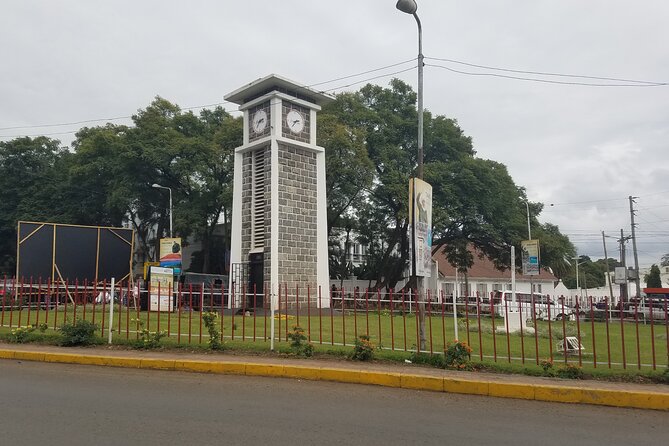
The Clock Tower is a short stop, listed at about 15 minutes, but it carries a lot of local meaning. It is known as a meeting point in central Arusha and offers a simple landmark around which you can understand the city.
The tower was built by Galanos, a Greek millionaire who came to Tanganyika in the early twentieth century. Local tradition also places it between Cairo and Cape Town, and near the meeting point of Tanzania, Kenya, and Uganda. Treat those location claims as part of the tower’s story rather than a precise geographic lesson.
From here, the route continues toward one of the oldest hotels and schools built during the colonial period. These passing sights matter because they show how the city’s older institutions sit beside modern commercial streets.
Do not expect a long visit at the tower. Its value comes from the explanation and the chance to connect several parts of the city. It is also a useful place to pause, take a photo, and understand why locals use the landmark when arranging to meet.
A few more walking tours around the world worth a look
- Reykjavik Food Walk – Local Foodie Adventure in Iceland
★ 5.0 · 18,952 reviews - New Orleans Premier Ghost, Voodoo and Vampire Walking Tour
★ 4.5 · 12,856 reviews - Edinburgh: Harry Potter Magical Guided Walking Tour
★ 4.8 · 11,944 reviews - Edinburgh Castle: Guided Walking Tour with Entry Ticket
★ 4.7 · 11,699 reviews
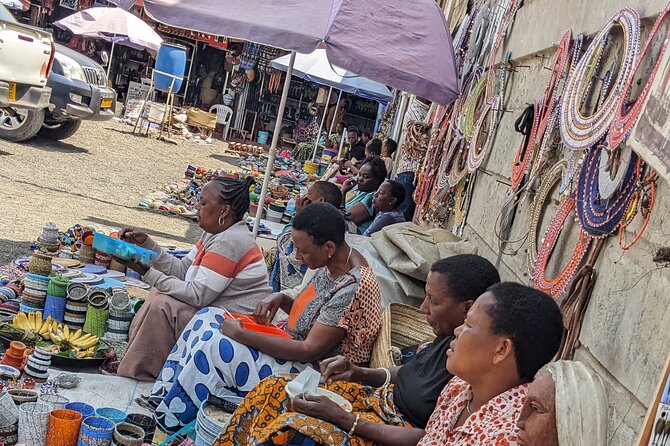
Maasai Market for fabrics, shoes, jewelry, and gifts
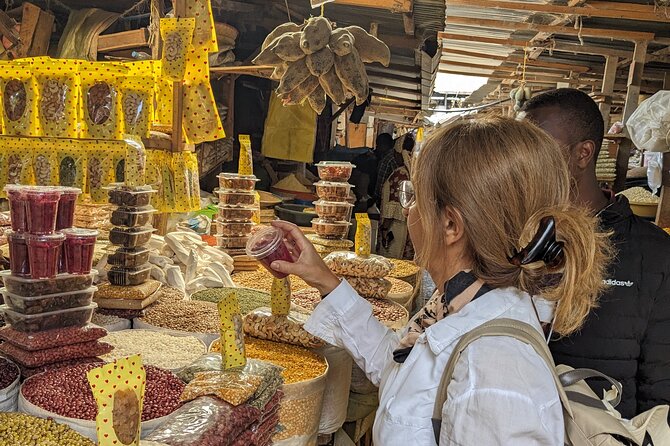
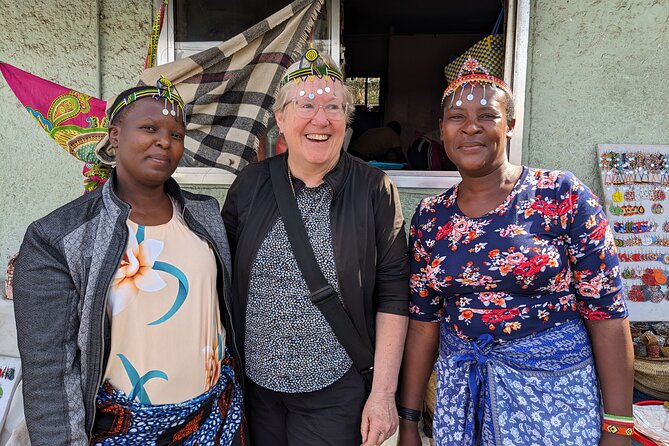
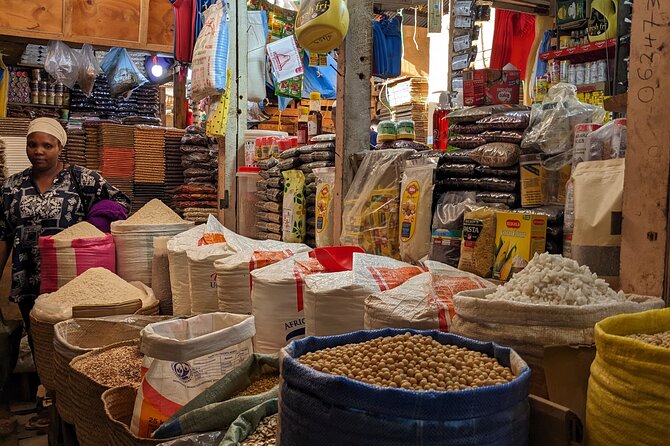
The Maasai Market is the most hands-on shopping stop. You may find African pots and pans, safari shirts, Tanzanian jerseys, fabric clothing, Maasai shoes and sandals, necklaces, jewelry, bags, shuka blankets, and artwork.
The appeal is the range and the chance to see common souvenir items in one place. If you want a small gift rather than an expensive art purchase, this may be the most practical stop on the route. Bring cash, since money for purchases is not included and cash is specifically advised.
A guide is valuable here for more than finding the entrance. Markets can feel hectic, and Israel is praised for helping visitors feel comfortable around busy streets and shopping areas. You can ask about materials, local use, and fair prices, though the tour does not promise a fixed-price shopping arrangement.
Give yourself room to browse without pressure. You do not need to buy something at every stall. If shopping is not your interest, this stop may feel longer than the museum or clock tower. If you like textiles, handmade objects, and useful souvenirs, it adds a direct connection to daily commerce in Arusha.
Cultural Heritage Centre and African art
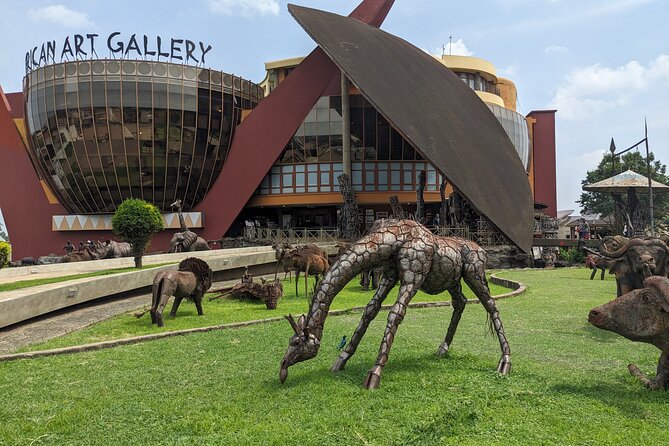
The Cultural Heritage Centre is the largest art stop on the route. It presents art from different parts of Tanzania and other African countries, with a shop nearby for souvenirs.
This is a good place to see a wider range of styles than you will find at a small street market. The centre also gives you time to compare carved work, paintings, decorative pieces, and other forms of African art in one setting. The scheduled visit lasts about 40 minutes.
The included admission adds real value to the $26 price, especially if you are already interested in art. The attached shop makes it easy to browse more formal souvenirs, but again, buying is optional and your purchases are extra.
The main limitation is that the centre is a commercial attraction as well as a gallery. If your ideal city tour focuses only on public history and local neighborhoods, you may prefer more time at the Boma. If you want to understand the art market and see work from across Africa, this is one of the strongest stops.
What the guide adds to a busy city

The guide is the most important part of this experience. The itinerary itself is useful, but the quality of the explanations determines whether the outing feels like a list of stops or a connected story.
Israel receives especially strong praise for his clear English, friendly manner, and command of Tanzanian history. He is described as young, energetic, proud of his country, and easy to talk with. That combination matters when you want to ask direct questions about culture, government buildings, markets, or everyday life.
You can also expect practical help. One account describes a solo woman meeting Israel at her hotel, while another notes that his guidance through busy markets and streets made the city feel more manageable. That does not remove the need to watch your belongings or stay aware, but it is useful support in an unfamiliar place.
The tour is offered by Tanzania Songbirds Safaris. Because the group can reach 19 people, ask at booking whether your departure is private, small, or close to the maximum. A larger group may make market movement slower and reduce time for personal questions.
Is $26 a fair price?
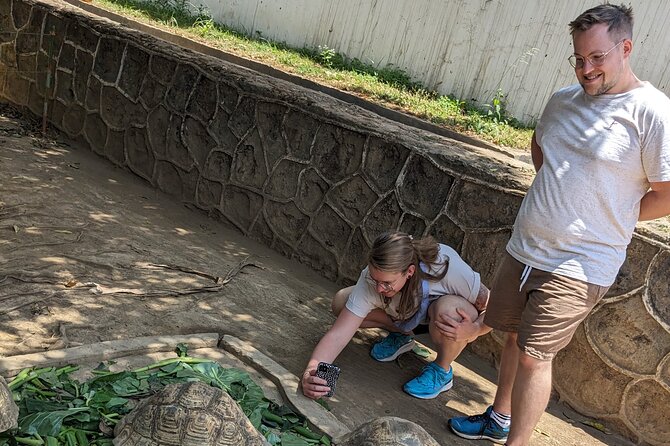
At $26 per person, this is a solid value if you use the included stops. The price covers a professional local guide, the Tanzanite museum, the Cultural Heritage Centre, and hotel pickup and drop-off near central Arusha.
The Old Boma admission is extra at $6 per adult. Food, drinks, souvenirs, accommodation, tips, and any added activity after the city tour are also excluded. Those costs are easy to manage, but you should know the advertised price is not an all-inclusive day rate.
For a half-day introduction to Arusha, the package is reasonably priced. You are paying for local explanation and city navigation, not just transport between attractions. The value is strongest for first-time visitors who would otherwise spend time working out the city on their own.
I would compare it with the cost of arranging separate rides, museum visits, and a guide. The tour also removes some guesswork from the markets and gives you a set route. If you mainly want a long shopping session or a private museum tour, the value is less clear.
Who should book this Arusha experience?
I would recommend it to first-time visitors, solo visitors, couples, and anyone with a free morning or afternoon before a safari. It suits people who want history, art, local shopping, and city orientation in one outing.
It is also a good choice if you want to ask questions. The strongest part of the experience is the guide’s explanation of Tanzania’s past and present, not any single monument.
You may want a different plan if you dislike shopping stops, have limited walking tolerance, or want a tightly timed four-hour schedule. The route includes walking and may include vehicle transfers, but the exact balance can change. Ask about the day’s transport and timing before you commit.
Free cancellation is available if you cancel at least 24 hours before the start time. Cancellations within 24 hours are not refunded, and changes inside that window are not accepted.
Should you book the Arusha walking tour?
Book it if you want a friendly, practical introduction to Arusha that combines the Old Boma, Tanzanite, markets, and African art. The guide, especially Israel when available, is the reason this outing earns its strong reputation. His clear English and local perspective can turn a busy city into a place you can read and understand.
Skip it if you want a pure walking route, a museum-only visit, or a quiet private experience with no shopping. For most visitors with a half-day to spare, $26 is a sensible way to meet Arusha through its streets, stories, crafts, and working city life.
FAQ
How long does the Arusha guided walking tour last?
The advertised duration is about four hours. The stated guided time can range from two and a half to six hours, so confirm the expected schedule when booking.
Is hotel pickup included?
Pickup and drop-off are included for hotels near Arusha city center. The exact pickup arrangement should be confirmed at booking.
Is this a walking-only tour?
No. The experience mixes walking with short rides. One description notes a tuk-tuk ride to the first sight, and another says transportation may be used between locations.
What is included in the price?
The $26 price includes a professional local guide, the Tanzanite museum, Cultural Heritage Centre costs, and pickup and drop-off for hotels near the city center.
Is the Old Boma Museum admission included?
No. The Natural History Museum, also called the German Boma, charges $6 per adult, paid separately.
Are food and drinks included?
No. Food and drinks are not included in the tour price.
How many people can join the tour?
The maximum group size is 19 people.
What is the cancellation policy?
You receive a full refund if you cancel at least 24 hours before the local start time. Cancellations or changes made less than 24 hours before the start are not refunded or accepted.
Just added around the world
- Nahargarh Water Walk – Guided 2-Hour Heritage Tour in Jaipur★ 5.0 · 89 reviews
- Downtown Fernandina Historical Walking Tour★ 4.5 · 119 reviews
- Cultural Walk and Food Tasting In Jaipur★ 5.0 · 118 reviews
- Local Food, History and Hidden Places Walking Tour in Istanbul★ 4.5 · 81 reviews
- Old Town Of Istanbul Orientation – Tip Based Walking Tour★ 5.0 · 181 reviews
- Full Day Historical Walking Tour of Istanbul Old City from Hagia Sophia★ 4.5 · 114 reviews
- Istanbul Private Walking Highlights Tour★ 5.0 · 102 reviews
- Half day Fener-Balat Walking Tour in Turkiye★ 5.0 · 308 reviews
Walking Tours, compared.

Magical London: Harry Potter Guided Walking Tour
Read our review →
Reykjavik Food Walk – Local Foodie Adventure in Iceland
Read our review →
History and Hauntings of Salem Guided Walking Tour
Read our review →
New Orleans Premier Ghost, Voodoo and Vampire Walking Tour
Read our review →
Amsterdam Anne Frank: Small-Group Walking Tour & Local Guide
Read our review →

Edinburgh Castle: Guided Walking Tour with Entry Ticket
Read our review →