
REVIEW · BUDAPEST
Alternative Budapest Walking Tour
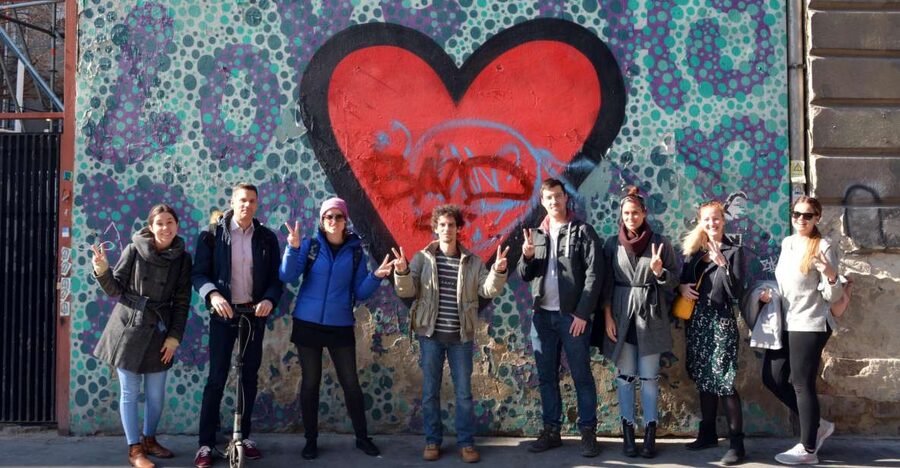
Budapest’s alternative side comes into view through murals, ruin bars, old synagogues, design shops, and cafés rather than grand monuments. This walk leads you into the Jewish district and other less polished corners where art, music, and community projects have reshaped neglected buildings. It is a good way to see how modern Budapest is still being made.
I like the small groups of up to 10 and the chance to ask a local guide what is happening now, not only what happened centuries ago. I also like that guides such as Petra, Ray, Anna, and Krisztián have brought history into stories about graffiti, nightlife, politics, and daily life. The possible drawback is price: at $67, it costs more than a basic city walk, and the focus may feel light if you mainly want Budapest’s grand sights.
Key points to know before booking
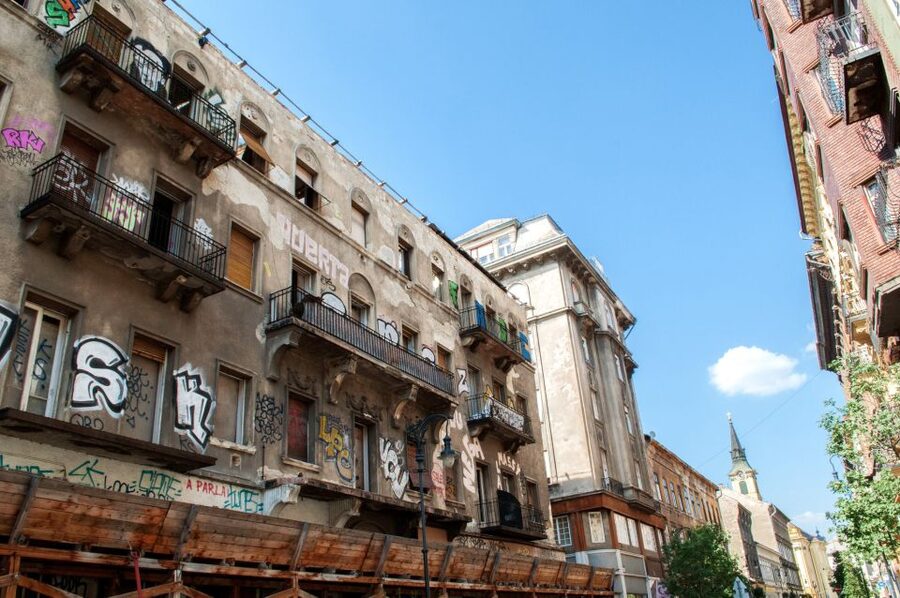
- The Jewish district is the main stage: See murals, old religious buildings, cafés, galleries, and the ruin-bar quarter in one walk.
- The route changes: The tour follows Budapest’s current art and alternative culture, so exact stops can vary.
- Small groups help: With no more than 10 people, you can ask about food, nightlife, local politics, and places to visit later.
- Ruin bars are treated as cultural spaces: Stops can include places connected with community projects, workshops, photography, and music.
- Guides make the difference: Past walks have been led by Petra, Ray, Anna, Bella, Antonia, Boti, and Krisztián.
- Wear proper walking shoes: This is an outdoor city walk and is not suitable for wheelchair users or people with mobility impairments.
What this Budapest walk is really about
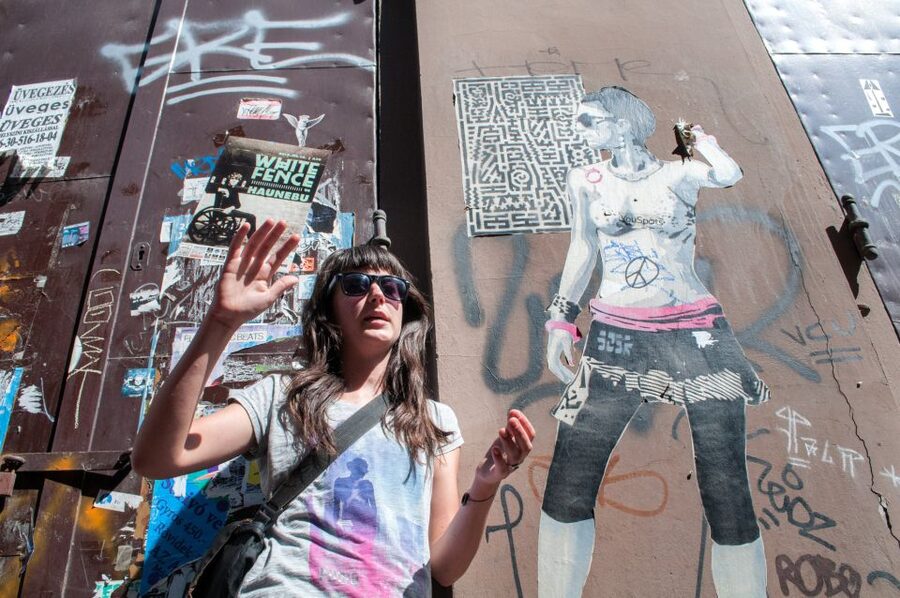
This is not a greatest-hits tour. You will not spend the whole time gazing at Parliament, crossing the Chain Bridge, or ticking off churches. Instead, you will use street art and alternative culture as a way to understand Budapest today.
That makes the tour especially useful after you have seen the major sights, or early in your stay if you want local ideas for the rest of your visit. The guide can point you toward cafés, bars, shops, music venues, studios, and galleries that do not always appear in a standard sightseeing plan.
The experience lasts about 2.5 hours, although the description of the walk also refers to a three-hour format. Allow a little flexibility, especially if the group stops for a coffee or beer and conversation runs long.
The walk is in English and begins in front of the pale-yellow Lutheran Church, on the church steps. There is no hotel pickup. You meet the guide in the city center and travel on foot from there.
A few more walking tours around Budapest worth a look
- Budapest: Buda Castle Walk with Saint Stephen’s Hall
★ 4.5 · 3,012 reviews - Big Bus Budapest Hop-On Hop-Off Bus and Walking Tour
★ 3.5 · 2,206 reviews - Budapest: Buda Castle District Walking Tour
★ 4.6 · 2,108 reviews
Starting at the Lutheran Church
The meeting point gives you a central, easy-to-recognize place to begin. Look for the pale-yellow Lutheran Church and wait on the steps in front. If you have trouble finding the guide, the local partner can be called for help.
The opening is likely to set the tone: this is a walk about the city behind the postcard image. One past guide began by pointing out the main tourist zone, then led the group away from it. That simple contrast helps you understand the purpose of the tour from the first few minutes.
Expect an informal pace rather than a formal lecture. Guides have been praised for being friendly, clear, funny, and willing to answer questions. The best use of the opening is to tell your guide what interests you: street art, nightlife, Jewish history, shops, music, architecture, or current local life.
Entering the Jewish district and Seventh District
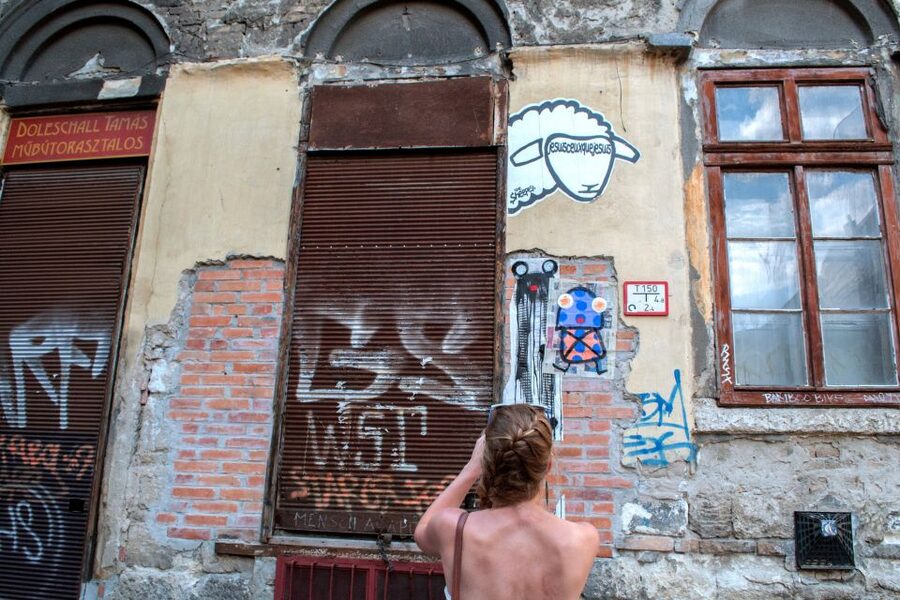
The Jewish district, particularly the Seventh District, forms the heart of the experience. This part of Budapest carries layers of Jewish life, wartime loss, neglected buildings, new businesses, nightlife, and artistic renewal.
The walk connects those layers rather than treating the district as a simple party quarter. You may hear about the Jewish community, the changing use of old buildings, and the way cafés, bars, galleries, and cultural projects have brought new energy to streets that were once overlooked.
A guide called Cristian once explained the district’s history alongside the rise of street art, local politics, and ruin bars. That combination is useful because the district makes little sense if you look only at its nightlife. A mural, courtyard, or bar may also reflect questions about memory, housing, community, and who gets to shape the city.
You should expect a fair amount of walking on city streets. The tour is not suitable for wheelchair users or people with mobility impairments, so check your comfort level before booking.
Reading Budapest through murals and graffiti
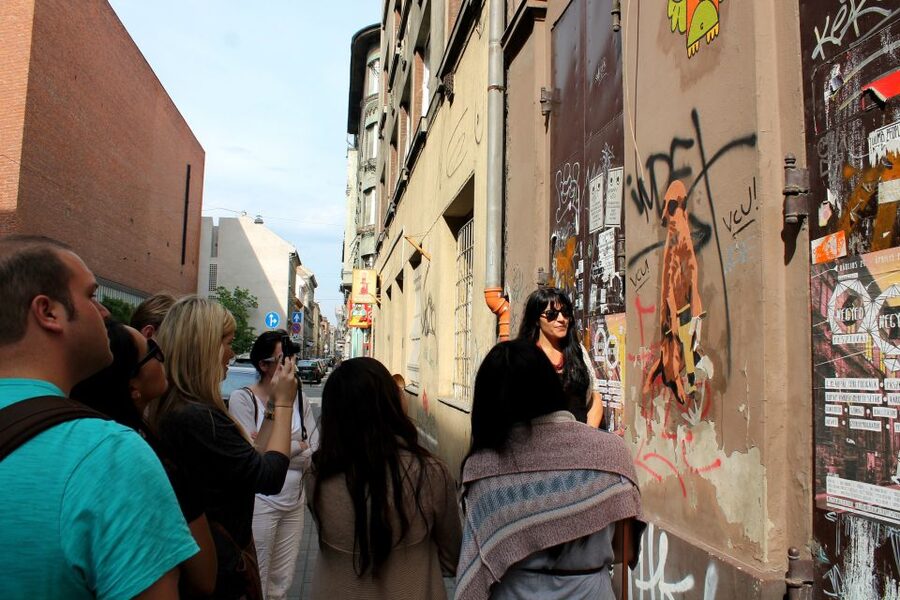
Street art is not just decoration here. The guide explains local graffiti writers and artists, and helps you notice why certain walls, sidewalks, and buildings have been used as canvases.
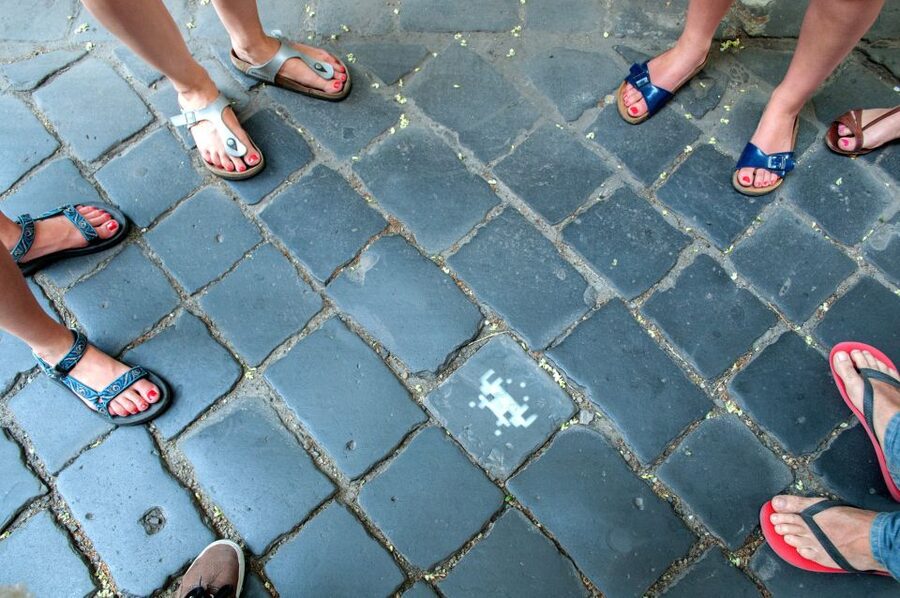
One past participant particularly appreciated learning why paint appears on sidewalks and how Hungarian attitudes toward architecture differ from expectations elsewhere. Details like this make the city easier to read. You begin to notice surfaces, abandoned spaces, unusual repairs, and visual jokes that you might otherwise pass without a second look.
The art scene changes, so do not book this expecting a fixed checklist of murals. The route is described as ever-changing, which is a strength for repeat visitors and a small uncertainty for anyone seeking one specific artwork.
If you already follow Budapest street art closely, some stops may be familiar. One assessment made that point clearly: the walk is strongest for people who want context and access to less obvious places, not for serious street-art specialists hoping to discover something entirely new.
Same streets, a different route:
- Budapest City Landmarks Walking Tour in 2 Hours
★ 5.0 · 2,048 reviews - 3-Hour Orientation Walking Tour of Buda and Pest
★ 4.8 · 1,834 reviews - Budapest: 3-Hour Grand City Tour and Castle Walk
★ 4.3 · 1,437 reviews - Budapest Historical Sightseeing – Free Walking Tour
★ 5.0 · 1,302 reviews
Cafés, design shops, and art collectives
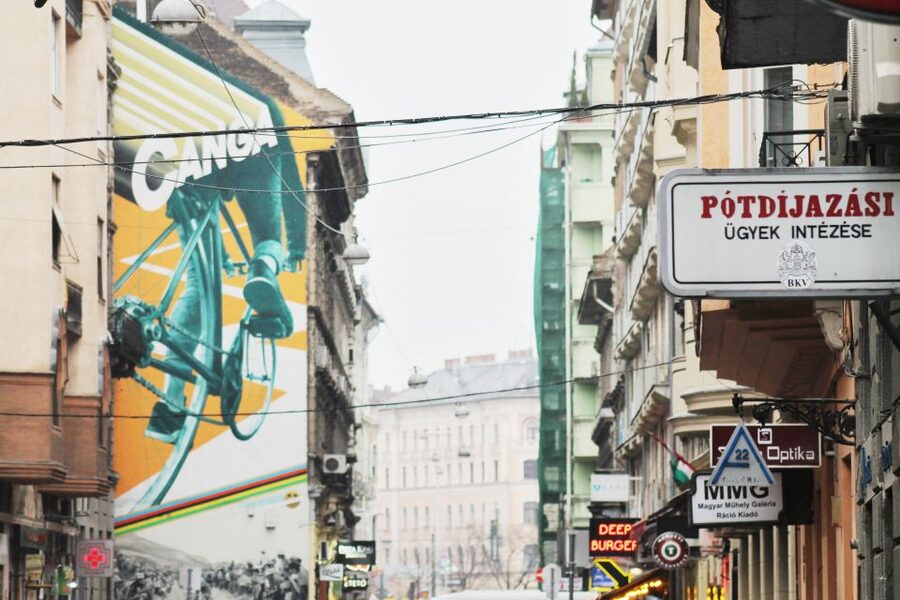
The walk can include small cafés, design shops, galleries, studios, and cultural centers. These stops give the tour a useful break from monuments and let you see how creative work fits into ordinary city life.
A recurring favorite has been Printa, an eco-design shop and coffee stop. The combination matters. You are not only looking at products or drinking coffee. You are seeing how design, sustainability, retail, and social space can share one address.
Other possibilities include a bookshop café, an art-and-coffee collective, or a place tied to analogue photography. Exact visits depend on the guide and the day, so food and drinks are not included in the $67 price.
I would bring enough money for a coffee or beer if you want to join a stop. You should also dress for the weather. The walk operates in rain and cold, with past groups taking indoor breaks and even stopping for mulled wine and coffee on a very cold afternoon.
Ruin bars as more than nightlife
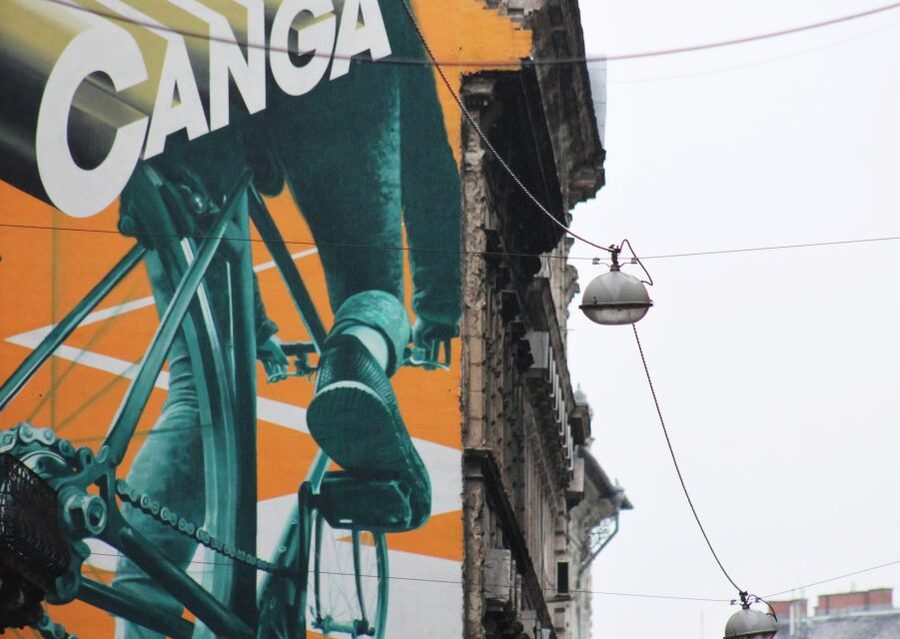
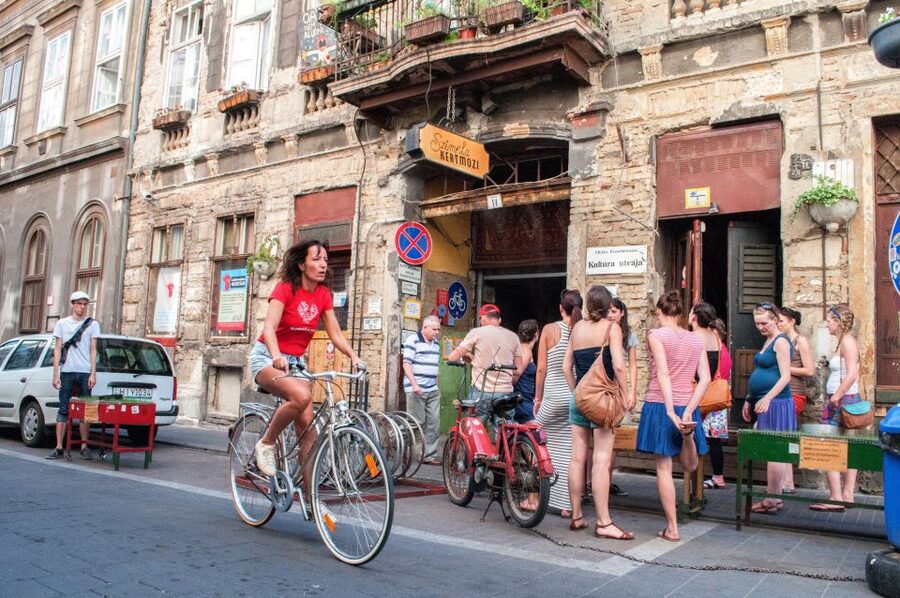
Ruin bars are a major reason many people book this walk, but the tour presents them as more than drinking venues. These spaces often occupy old or neglected buildings and can combine bars with music, art, workshops, shops, and community activity.
Szimpla Kert is the clearest example. A past route ended there, showing a complex of rooms around a courtyard, with mismatched objects and even a Trabant turned into seating. It is the kind of place that makes more sense when someone explains how the ruin-bar idea developed.
Another possible stop has been described as a ruin bar combined with a community center, bicycle workshop, and analogue photography gallery. That mix gives you a better sense of the district’s alternative culture than a quick evening drink would.
Keep in mind that a ruin bar can be noisy, crowded, or visually chaotic, and the tour does not promise a full evening out. The point is to understand the spaces and get useful suggestions. You may choose to return later on your own.
Music, fashion, and spaces off the regular route
The tour also reaches into Budapest’s independent music and fashion scenes. The emphasis is on the present and future, rather than only on the past.
One early route included a visit to the A38 ship bar and venue, with a chance to see a sound check. That stop may not be part of every current route, but it shows the sort of local angle the experience has offered: places connected with live music and creative work, not merely sights designed for sightseeing.
You might also pass independent shops, galleries, or studios. The value is partly practical. If you like local design, small music venues, or alternative nightlife, you can ask the guide where to go later that evening.
The tour can suit a wide range of ages, but its subject matter is most appealing if you are curious about art, music, architecture, cafés, nightlife, or changing neighborhoods. If your ideal day is a sequence of royal palaces and famous churches, choose a traditional city tour instead.
Why the guide matters more than the route
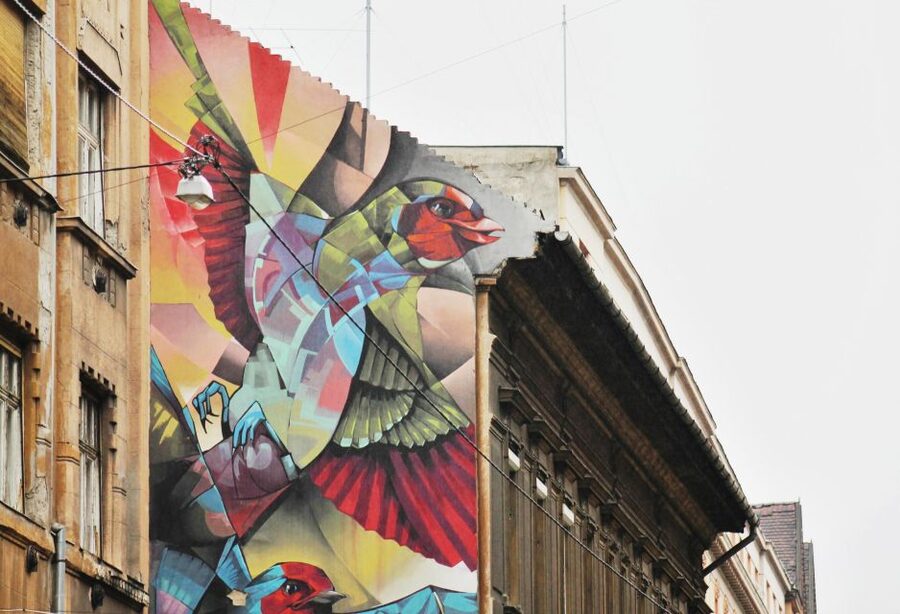
Because the stops can change, the guide is the real constant. The strongest part of the experience is the conversation between places.
Past guides have included Ray, Petra, Anna, Bella, Antonia, Boti, Zsophia, Lauren, and Krisztián. Ray was especially praised for combining city history with murals, shops, galleries, and ruin bars. Petra was described as warm and engaging, while Anna was noted for sharing local details and sometimes adding places beyond the expected route.
That range tells you something important: you should not expect one fixed script. One group may focus more on the Jewish district, another on street art, and another on nightlife or daily life. A small group makes it easier to steer the discussion toward your interests.
The guides also provide value beyond the scheduled walk. Ask for advice about where to eat, which bars are worth your time, what music venues are active, or what areas to explore next. Several past walks ended with the group sitting together for a drink or coffee and continuing the conversation. That social element is not guaranteed, but the format allows it.
Is $67 a fair price?
At $67 per person, this is not a budget walking tour. The price includes the walk and a professional English-speaking guide, but not drinks, food, entrance fees, transportation, or hotel pickup.
I think the value depends on how you use it. You are paying for a small group, a specialist subject, and local interpretation of places you could technically visit alone. If you already know the Jewish district and its ruin bars, the price may feel high. One past assessment made exactly that point.
For a first visit, the price can make more sense if you are interested in contemporary Budapest and want to avoid spending an evening guessing which bars, galleries, or shops are worth your time. A good guide can save you hours and give meaning to places that otherwise look like random old buildings with colorful walls.
The strongest value comes when you book it near the start of your stay. You can use the guide’s advice for the remaining days. If your schedule is short, the walk also provides a quick introduction to a part of Budapest that standard sightseeing often misses.
Who should take this tour?
I would recommend it to you if you:
- Want a modern view of Budapest alongside its traditional sights
- Like street art, independent design, cafés, galleries, music, or nightlife
- Prefer small groups and conversation over a large scripted tour
- Want to understand the Jewish district beyond its bars
- Need local suggestions for the rest of your stay
- Enjoy seeing how old and neglected spaces are reused
I would hesitate if you:
- Have limited mobility
- Want a tour centered on the major landmarks
- Already know Budapest’s street-art and ruin-bar scene well
- Prefer a quiet museum-style experience
- Do not want to walk outdoors in uncertain weather
Bring comfortable shoes, comfortable clothes, and weather-appropriate layers. The tour is on foot, and the possibility of rain or cold should not be ignored.
Should you book the Alternative Budapest Walking Tour?
Book it if you want Budapest to feel like a living city rather than a list of monuments. The Jewish district, street art, cafés, galleries, and ruin bars give you a useful view of how the city’s culture is changing.
I would choose this tour early in a Budapest visit, especially for a first-time visitor who likes local atmosphere and wants practical nightlife or café advice. At $67, it is a considered purchase, not a bargain. Still, the small group and flexible guide-led format can justify the cost if you value conversation and places you would not easily find alone.
Skip it in favor of a classic sightseeing walk if the Parliament Building, Castle Hill, churches, and major historical landmarks are your priority. Choose this one when you want the Budapest behind the grand façades.
FAQ
How long does the Alternative Budapest Walking Tour last?
The activity is listed as lasting 2.5 hours. The description also refers to a three-hour walking format, so allow some flexibility in your schedule.
What language is the tour conducted in?
The tour is conducted in English with a live English-speaking guide.
How many people are in the group?
The group is limited to 10 participants, allowing more time for questions and personal conversation.
Where does the tour meet?
Meet the guide on the steps in front of the pale-yellow Lutheran Church. Contact the local partner by phone if you have trouble locating the guide.
Does the tour include food or drinks?
No. Food and beverages are not included. You may have opportunities to stop at a café or bar, but you pay for anything you order.
Does the tour include entrance fees?
No entrance fees are included. The experience is primarily a guided walking tour through streets, cultural spaces, shops, galleries, and bars.
Is hotel pickup included?
No. Hotel pickup and drop-off are not included.
Is the tour suitable for wheelchair users?
No. The activity is not suitable for wheelchair users or people with mobility impairments.
What should I bring?
Wear comfortable shoes and clothes, and dress for the weather. A little extra time and money for a possible coffee or beer stop are also useful.
Just added around Budapest
- Budapest 3-Hour Walking Tour in Italian★ 4.6 · 217 reviews
- Budapest: Castle District Walking Tour★ 4.8 · 223 reviews
- Budapest Guided Food Walking Tour with Drinks Included★ 4.8 · 472 reviews
- Budapest: Walking Tour to the Shoes Memorial and Parliament★ 4.7 · 151 reviews
- Budapest: Jewish History Guided Walking Tour with Historian★ 4.8 · 205 reviews
- Budapest: Walking Tour in the Buda Castle District★ 4.9 · 113 reviews
- Budapest: Walking Tour and Photoshoot with Digital Photos★ 4.7 · 82 reviews
- Budapest: 3-Hour Walking Tour of Pest with a Historian★ 4.9 · 81 reviews
Walking Tours, compared.

Magical London: Harry Potter Guided Walking Tour
Read our review →
Reykjavik Food Walk – Local Foodie Adventure in Iceland
Read our review →
History and Hauntings of Salem Guided Walking Tour
Read our review →
New Orleans Premier Ghost, Voodoo and Vampire Walking Tour
Read our review →
Amsterdam Anne Frank: Small-Group Walking Tour & Local Guide
Read our review →

Edinburgh Castle: Guided Walking Tour with Entry Ticket
Read our review →
Anne Frank’s Story – Guided Walking Tour through Amsterdam
Read our review →Browse the lists this tour appears in