
REVIEW · DUBROVNIK
A walk through life in communist Yugoslavia
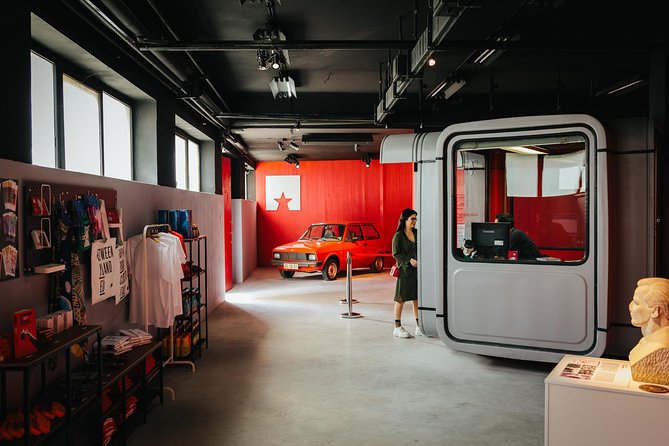
Dubrovnik is famous for its medieval walls and sea views, but the Red History Museum tells a very different story. In a compact space, it recreates everyday life in communist Yugoslavia through room sets, real household objects, music, political displays, and personal stories. I like the direct, physical approach: you do not just read about the period, you see the objects people used and the rooms they inhabited. I also like that the museum covers more than party politics, including design, popular culture, secret agencies, and Yugoslavia’s Non-Aligned position.
The main drawback is the limited treatment of the final years, when the system began to break down. If you want a full account of Yugoslavia’s collapse, this museum may leave you wanting more. Still, its small size and clear focus make it a useful stop, especially if this part of Croatian history is new to you.
Key points at a glance
- A 300-square-meter time capsule: Room sets and genuine 20th-century objects show ordinary life, not just official politics.
- A hands-on history lesson: New and old technologies help bring Yugoslav-era stories, music, and images to life.
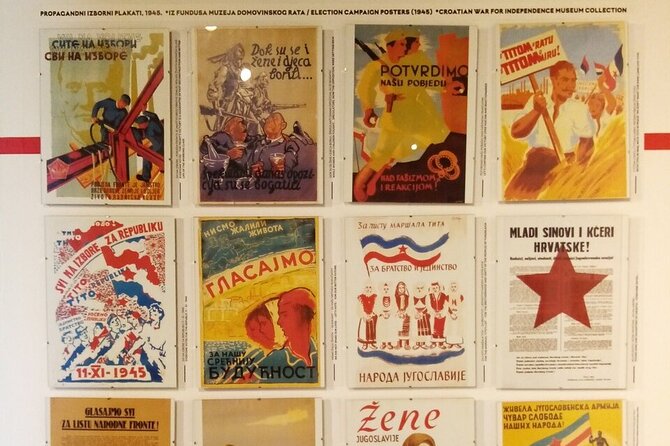
- More than communist slogans: Displays cover art, design, political control, secret agencies, and the Non-Aligned movement.
- Plan for about 90 minutes: The stated visit can run from roughly 50 minutes to 1 hour 35 minutes, depending on your pace.
- A strong rainy-day or hot-weather stop: The museum offers a useful break from Dubrovnik’s outdoor sights while adding context to modern Croatia.
- Good value depends on the price you see: Admission is listed at $211, so check the current cost carefully before booking a short museum visit.
Why this small museum matters in Dubrovnik
Many first-time visitors see Dubrovnik through its medieval past. The old town, stone walls, and maritime setting naturally pull attention toward centuries of earlier history. Yet modern Croatia was also shaped by the decades when it was part of socialist Yugoslavia, and that period is close enough to the present that many local families still remember it.
The Red History Museum gives you a way to approach that era without needing a long political lecture. Its subject is life under communist rule, but the focus is often practical: what people saw, heard, bought, used, and believed. That makes the museum especially useful if you know little about Yugoslavia or only associate the country with its breakup in the 1990s.
I appreciate museums that help me understand a place I am visiting today. This one can add context to modern Croatian identity, even though it is not a large national museum and does not attempt to tell every part of the country’s past.
A few more walking tours around Dubrovnik worth a look
- Dubrovnik: Old Town Walking Tour
★ 4.8 · 5,174 reviews - Dubrovnik Discovery Old Town Walking Tour
★ 5.0 · 4,458 reviews - Dubrovnik: Game of Thrones Walking Tour
★ 5.0 · 1,732 reviews
Entering the 300-square-meter Red History Museum
Your visit begins at the Red History Museum on Ul. Svetog Križa 3 in Dubrovnik. The activity starts and ends at this same location, so there is no separate meeting point, transfer, or guided walk to coordinate.
Inside, the museum uses a mixture of older artifacts and newer presentation methods. The result is designed to feel more like an experience than a row of glass cases. You might move from a room arrangement to a display about government control, then from music or graphic design to an explanation of Yugoslavia’s place in the world.
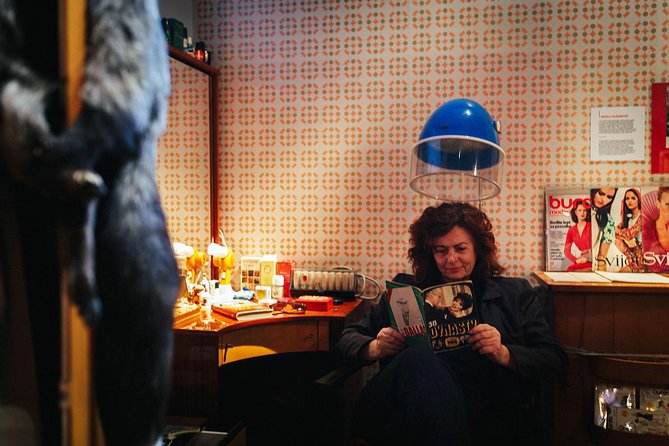
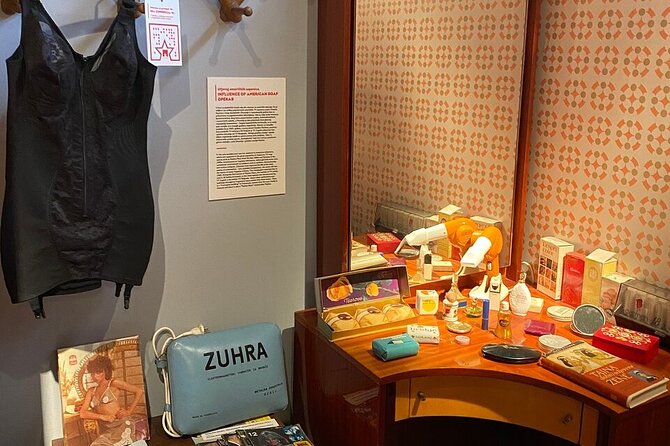
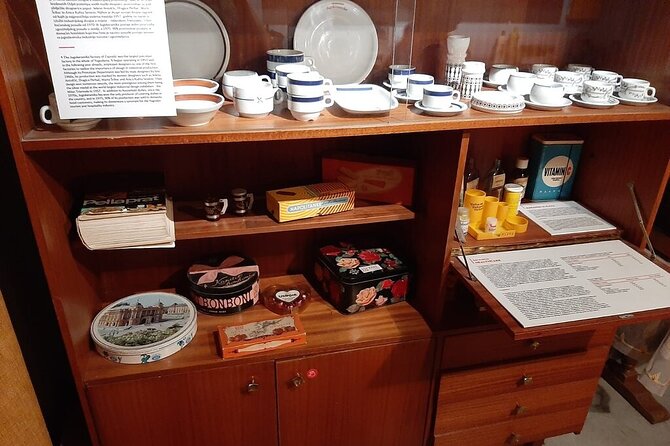
The room sets are one of the strongest features. Everyday objects can explain a political system more clearly than a page of dates. A household item, a piece of furniture, a record, or a period design choice can show what was normal, desirable, or restricted at the time.
That approach also helps younger visitors and anyone who does not usually enjoy formal history museums. You do not need a background in Balkan politics to follow the basic story. The displays are meant to make the period visible and understandable.
The everyday life of communist Yugoslavia
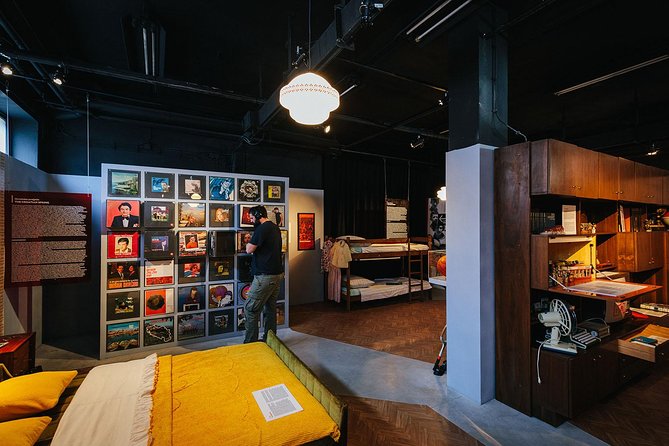
The most valuable part of the museum is its attention to ordinary life. Communist Yugoslavia was not simply a list of party leaders and official policies. It was also a place where people went to work, listened to music, furnished homes, followed fashions, watched television, and managed daily life within a one-party system.
The museum presents this period as a lived experience. You can expect displays about the way people lived under the Communist Party, with objects and room sets that help explain the gap between political ideals and private routines.
This is where the museum feels most useful to me. Political history can seem distant, especially when it is presented only through institutions and dates. Everyday things give you a more personal sense of the period. They show how a system reached into homes, leisure time, taste, and personal choices.
The presentation is also a reminder that life under communism was not identical everywhere. Yugoslavia had its own model, distinct from the Soviet Union, and the museum’s focus on Yugoslav society helps keep that difference in view.
Art, design, music, and the Non-Aligned movement
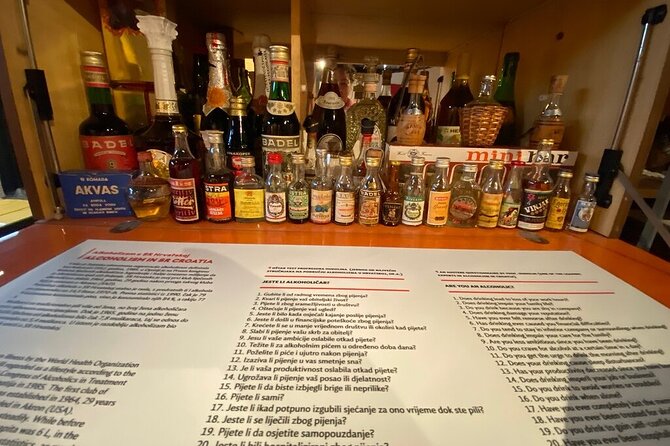
The museum does not limit itself to repression or bureaucracy. Art and design are part of the story, as is the music of the period. Hearing the era’s greatest hits can change the mood of the visit and give you a sense of the culture people enjoyed beyond official political messages.
This matters because a country’s history is never only its government. Popular music, visual style, consumer goods, and public design can tell you how a society wanted to present itself and how people found room for pleasure and identity.
The display also covers the Non-Aligned movement. That subject is important for understanding Yugoslavia’s position during the Cold War. It shows that the country’s political identity did not fit neatly into the familiar division between the Western bloc and the Soviet-led Eastern bloc.
You should not expect a university course on international relations in this small museum. Instead, the Non-Aligned material gives you a useful frame for the country’s foreign policy and its place in the world. It broadens the visit beyond local Croatian history.
Same streets, a different route:
- Dubrovnik: The Original Game of Thrones Tour & Lokrum Option
★ 4.8 · 5,064 reviews - Dubrovnik Old Town History Walking Tour
★ 5.0 · 1,684 reviews - Dubrovnik: City Walls Early Morning or Sunset Walking Tour
★ 4.8 · 1,523 reviews - Dubrovnik: Ancient City Walls & Wars Walking Tour
★ 5.0 · 1,270 reviews
Secret agencies and life under watch
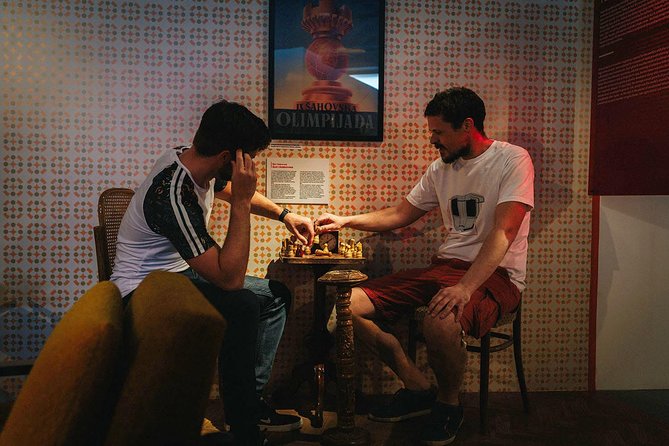
One of the darker parts of the experience deals with secret agencies and the monitoring that formed part of totalitarian society. This section adds needed weight to the room sets and cultural material. Without it, the museum could feel like a nostalgic look at old furniture and music.
The subject is uncomfortable, but it belongs in any honest account of communist rule. The museum helps connect daily life with the political structure behind it. People could have ordinary routines, enjoy popular culture, and still live under a system that watched and controlled them.
That contrast is one reason I would allow enough time rather than rushing through. The displays work best when you pause and connect the personal objects with the larger system. A quick walk may show you the visual appeal of the museum, but a slower visit gives the political material more force.
The experience is not described as a traditional guided tour, and no guide names are provided. You should expect to make your way through the interactive exhibits at your own pace rather than rely on a named historian leading a fixed talk.
A history lesson with an unfinished final chapter
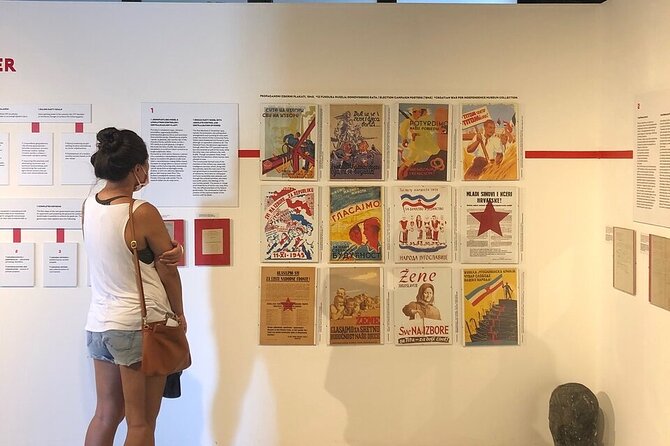
The museum charts Yugoslavia’s communist period from beginning to end, but one important qualification is worth keeping in mind. The final years, when the system weakened and broke apart, do not receive as much attention as some visitors might hope.
That gap matters because Croatia’s current political and social setting cannot be understood without the breakup of Yugoslavia. If you want a detailed account of the wars, nationalism, economic troubles, or the end of the federation, plan to use other sources as well.
I do not see this as a reason to skip the museum. Its main strength is the picture it gives of life during the communist era. Just set your expectations correctly. You are getting a focused look at a particular period, not a complete account of every event from the creation of Yugoslavia through modern Croatia.
For many people, that focus is an advantage. A small museum with a clear subject can be easier to follow than a large institution that tries to explain everything.
How long to allow for the visit
The published timing ranges from about 50 minutes to 1 hour 35 minutes, with roughly 1 hour 30 minutes given as the expected museum visit. Your pace will make the difference.
If you read every display, listen to the music, study the objects, and stop to consider the political sections, plan close to the longer estimate. If you mainly want to see the room sets and get the basic story, you may finish in under an hour.
That makes this an easy addition to a Dubrovnik day. It is long enough to feel worthwhile but short enough to fit around other plans. I would avoid placing it between two tightly timed activities, since interactive exhibits are more enjoyable when you do not feel pushed out the door.
The duration also makes the museum suitable for families or mixed groups with different interests. Someone fascinated by Cold War politics can spend longer with the displays, while another person can take a quicker route through the space.
Is the $211 price good value?
The listed price is $211, which is high for a museum visit lasting about an hour to an hour and a half. At that price, I would check the final booking total carefully and compare it with the museum’s direct admission price if that option is available to you.
Prepaid entry has practical value. You secure a place for your chosen day, receive confirmation at booking, and avoid stopping at a ticket counter. That can matter during a busy Dubrovnik visit, when every saved bit of planning helps.
Still, convenience does not automatically make a short museum visit good value at any price. The price may reflect the booking channel or package structure rather than a simple walk-up admission, so confirm exactly what is included before paying. The information provided identifies mobile ticket entry and admission to the museum, but it does not list extra transport, a private guide, or additional attractions.
If the $211 amount is the price for one person, I would be cautious. If it covers multiple people or a larger booking, the calculation changes. The museum itself sounds worthwhile, but the cost needs checking before you commit.
Who will enjoy this experience most?
I would recommend the museum to you if you want more than Dubrovnik’s famous older monuments. It is particularly helpful if you are unfamiliar with Croatia’s communist period and want a clear introduction without signing up for a long lecture.
History fans will find plenty to think about in the political displays, the secret-agency material, and the account of Yugoslavia’s Non-Aligned role. Design and music fans may enjoy the cultural side more than the political sections.
It also suits anyone looking for an indoor activity. Dubrovnik can be hot, and the museum gives you a break from stone streets and strong sun. The confirmation and mobile ticket make the visit simple to add to a planned day.
The museum may be less suitable if you want a large collection, a long guided talk, or a detailed account of the 1990s. It is also not the best choice if your main interest is ancient Dubrovnik. This is a modern-history stop with a narrow subject and a hands-on format.
Most people can participate, and service animals are allowed. The museum is near public transportation, which makes reaching the meeting point easier. The maximum group size is listed as 200, though the actual feel of your visit will depend on how many people are inside at the same time.
Booking, timing, and cancellation
You receive confirmation at the time of booking, and the ticket is mobile, so you should not need a printed voucher. The start and finish point is the museum at Ul. Svetog Križa 3.
Free cancellation is available if you cancel at least 24 hours before the scheduled start time. If you cancel within 24 hours, you will not receive a refund, and changes made during that period are not accepted. The cut-off follows local Dubrovnik time, so keep that in mind if you are booking from another time zone.
I would choose a time that gives you breathing room. The visit can take less than an hour or close to 95 minutes, and you will get more from it if you are not watching the clock.
Should you book the Red History Museum?
Book it if you want a compact, clear, and physical introduction to life in communist Yugoslavia. The room sets, period objects, music, design, secret-agency material, and Non-Aligned displays give the museum more range than its small size suggests.
I would especially recommend it for first-time visitors to Croatia who want to understand the modern country, not just its medieval landmarks. Just check the $211 price carefully, and do not expect a complete account of Yugoslavia’s collapse or the wars that followed.
If the admission cost is reasonable for your group, this is a worthwhile 60 to 95 minutes indoors. If the quoted price is truly for one person, I would compare alternatives before booking. The museum’s subject and presentation are strong, but the value depends heavily on the final price.
FAQ
Where is the Red History Museum located?
The museum is at Ul. Svetog Križa 3, 20000 Dubrovnik, Croatia.
How long does the museum visit take?
The experience is listed as lasting from about 50 minutes to 1 hour 35 minutes. The expected visit time is around 1 hour 30 minutes.
What does the museum focus on?
It explores everyday life in communist Yugoslavia, including art, design, politics, secret agencies, music, and the Non-Aligned movement.
Are admission tickets included?
Yes. Admission to the Red History Museum is included with the experience.
Is the ticket available on a mobile phone?
Yes. The experience provides a mobile ticket.
Does the visit start and end at the museum?
Yes. The activity begins at the Red History Museum and ends back at the same meeting point.
Can service animals participate?
Yes. Service animals are allowed.
What is the cancellation policy?
You can cancel for a full refund up to 24 hours before the experience begins. Cancellations or changes made less than 24 hours before the start time are not accepted for a refund.
Just added around Dubrovnik
- Dubrovnik Jewish Heritage Private Walking Tour★ 5.0 · 121 reviews
- Dubrovnik Old Town: Small-Group Walking Tour With A Local★ 5.0 · 123 reviews
- Game of Thrones Cruise And Walking Tour Karaka Dubrovnik★ 5.0 · 401 reviews
- Dubrovnik’s Old Town Walking Tour★ 5.0 · 96 reviews
- Early Bird Dubrovnik History Tour – 7:30 Start★ 5.0 · 198 reviews
- Dubrovnik Old Town Walking Tour★ 4.5 · 186 reviews
- Dubrovnik By Night Walking Tour★ 5.0 · 134 reviews
- Dubrovnik City Tour: Panorama Drive & Sightseeing Walk★ 4.5 · 404 reviews
Walking Tours, compared.

Magical London: Harry Potter Guided Walking Tour
Read our review →
Reykjavik Food Walk – Local Foodie Adventure in Iceland
Read our review →
History and Hauntings of Salem Guided Walking Tour
Read our review →
New Orleans Premier Ghost, Voodoo and Vampire Walking Tour
Read our review →
Amsterdam Anne Frank: Small-Group Walking Tour & Local Guide
Read our review →

Edinburgh Castle: Guided Walking Tour with Entry Ticket
Read our review →
Anne Frank’s Story – Guided Walking Tour through Amsterdam
Read our review →Browse the lists this tour appears in