REVIEW · WALKING TOURS
Cluj-Napoca: 2.5-Hour Guided Walking Tour
Cluj-Napoca’s old center packs several centuries into a walkable route: a Hungarian king’s birthplace, a Gothic church, medieval guilds, old fortifications, and grand Romanian institutions. I like that this tour connects those sights instead of treating them as isolated photo stops. I also like the broad historical sweep, from the Dacians and Romans through the Middle Ages, the world wars, Communism, and modern Cluj.
The guides are a major part of the appeal. Daniela is praised for clear storytelling and an easy sense of humor, while Andrei, David, and other guides are described as flexible and happy to answer questions. The main point to consider is that the focus leans strongly toward history and religion, so you may want extra time afterward for food, daily life, art, and modern culture.
Key points at a glance
- Matthias Corvinus’s birthplace: Visit the modest house where Hungary’s famous 15th-century king was born.
- St. Michael’s Church: See one of Cluj’s defining Gothic buildings on Union Square.
- A city shaped by three cultures: Learn how Hungarian, German, and Romanian influences meet in Cluj.
- Stories beyond the monuments: Hear about medieval witches, guilds, wine, education, and city defenses.
- Two major Avram Iancu Square sights: See the 1930s Orthodox Cathedral and the 1906 National Theatre.
- A steady 2.5-hour walk: Expect several comfortable pauses, but wear good shoes and be ready to walk.
A useful first look at Cluj-Napoca
This is a city orientation tour with real historical weight. You are not simply being led from one attractive building to the next. The route explains why Cluj has so many layers: Roman beginnings, medieval Hungarian rule, German craft traditions, Romanian national institutions, religious change, and the political shifts of the 20th century.
That context matters in Cluj. Place names, statues, churches, and public buildings often reflect different chapters of the city’s past. A good guide can help you read those clues without turning the walk into a lecture. Daniela, Andrei, and David are among the guides associated with especially strong feedback, and the guiding style appears to be conversational rather than stiff.
The tour lasts the full 2.5 hours, which is long enough to give the city a proper introduction without taking up an entire day. You should expect a fairly steady route through the center, with opportunities to sit during the walk. One recent experience included comfortable seated breaks, and another guide stayed longer to finish the material.
At $34 per person, the price is fair if you want a serious introduction to Cluj and plan to use the rest of your stay more independently. It is less appealing if you only want a quick photo walk or prefer to explore without historical explanation.
More Guided Tours in the world:
- Magical London: Harry Potter Guided Walking Tour
★ 4.7 · 22,044 reviews - History and Hauntings of Salem Guided Walking Tour
★ 5.0 · 14,564 reviews - Amsterdam Anne Frank: Small-Group Walking Tour & Local Guide
★ 4.8 · 12,789 reviews
Matthias Corvinus and the medieval beginning
The tour visits the birth house of Matthias Corvinus, one of Hungary’s best-known kings. The building itself is an important reminder that Cluj was part of a Hungarian-speaking medieval world long before modern national borders shaped the region.
The stop is valuable because it gives a human starting point to the city’s past. Instead of beginning with dates alone, your guide can place a major royal figure in a real street and a real house. You also hear stories about Corvinus’s life and the importance of wine in the region, an appealing detail that brings daily life into a political story.
Do not expect a lavish palace here. The interest lies in the connection between a relatively modest birthplace and a powerful monarch. That contrast makes the stop more memorable than a grand monument with no personal story.
This part also introduces the tour’s wider theme: Cluj cannot be explained through one national identity. Hungarian, German, and Romanian influences overlap throughout the center. Your guide’s job is to explain those changes clearly, especially where language, religion, rulers, and public memory intersect.
Union Square and St. Michael’s Church
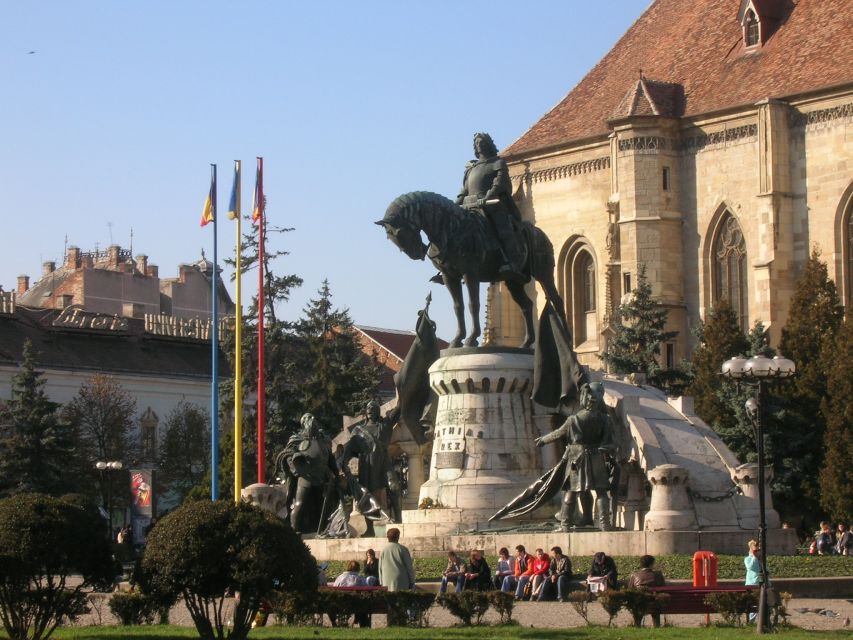
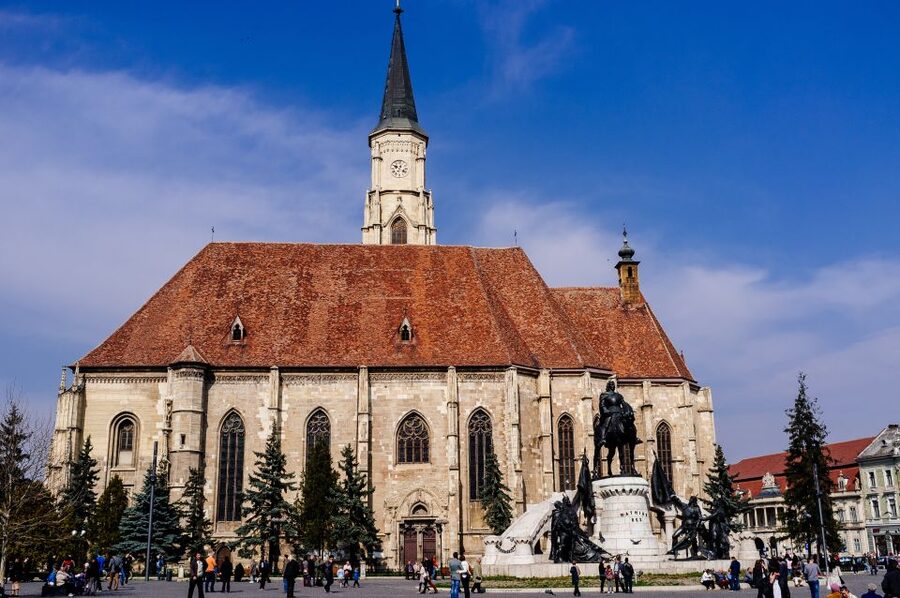
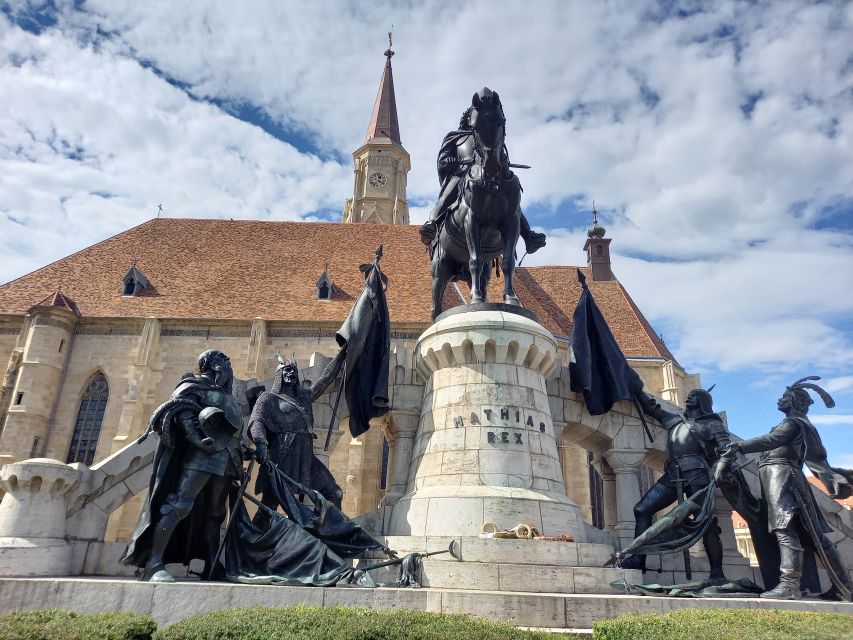
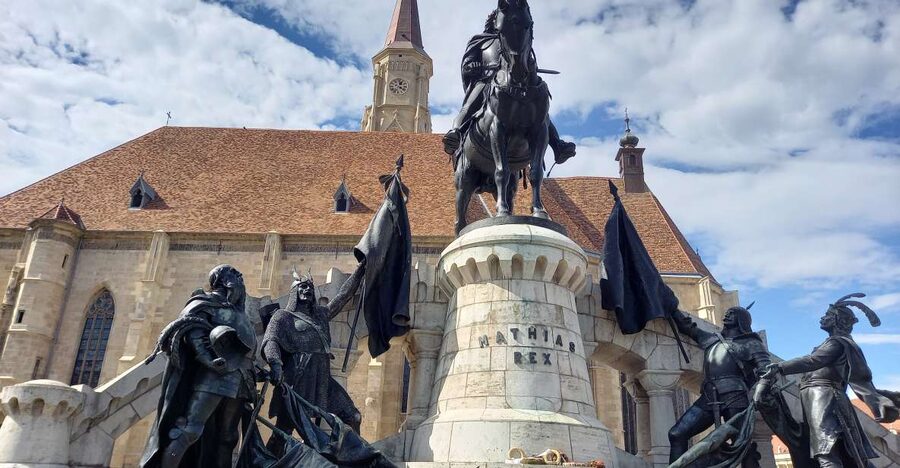
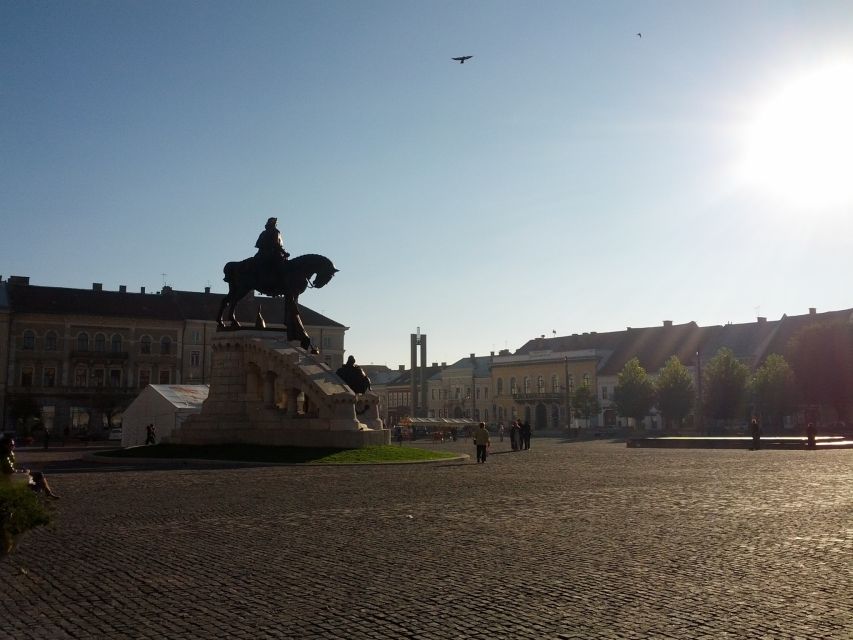
The route continues to Union Square, the broad central space dominated by St. Michael’s Church and the equestrian statue of Matthias Corvinus. This is one of the clearest visual highlights of the walk.
St. Michael’s Church is a major example of 14th-century Gothic architecture. Its scale and vertical lines give the square a strong medieval character, while the surrounding buildings show later periods of Cluj’s growth. You get the best value here by listening to the explanation of how the church fits into the city’s religious and political development, not just by admiring its exterior.
The large statue of Corvinus adds another layer. It links the royal birthplace to a public monument placed in the city center. Your guide can help explain why this king remains such an important figure in Cluj’s shared Hungarian and Romanian story.
One limitation is clear from the experience: the tour is mainly an exterior walk. If you want to see several church interiors, this may leave you wanting more. One participant specifically wished for more indoor visits. Check what is open on your date, but do not book this expecting a full church-interior tour.
Still, Union Square gives you one of the strongest photo and orientation stops in the city. It is the point where the medieval story becomes easy to see all at once.
The Street of the Intellectuals
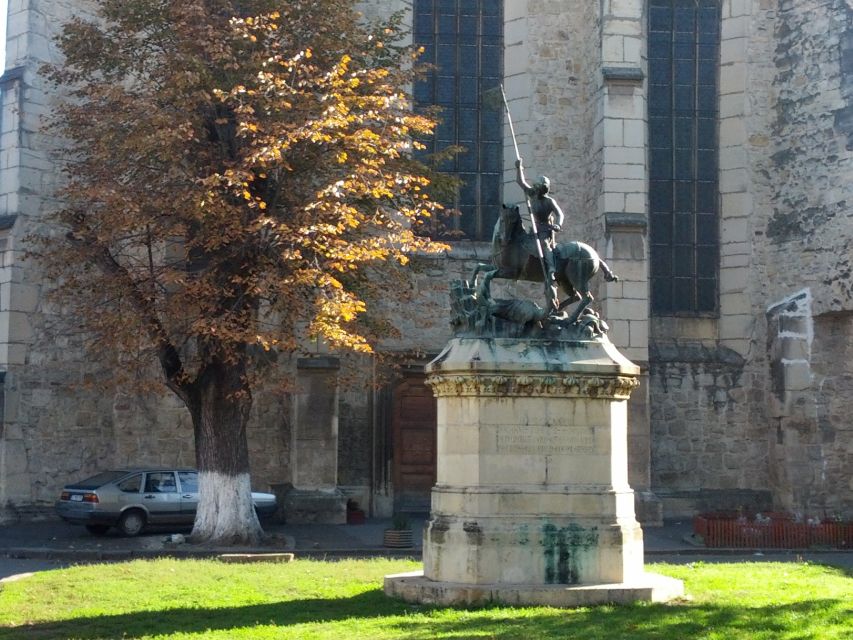
From Union Square, the route heads toward what is known as the Street of the Intellectuals. The name reflects the concentration of educational institutions in this part of the center, including Babes-Bolyai University.
This section helps explain why Cluj feels like a university city as well as a historic one. Education has long shaped the city’s public life, and the university buildings add a different mood from the medieval square. You move from royal history and Gothic architecture into the world of scholarship, language, and civic debate.
Babes-Bolyai University is particularly useful as a stop because it highlights Cluj’s layered cultural identity. The institution is associated with both Romanian and Hungarian academic traditions, making it a natural place to discuss the city’s multilingual and multicultural character.
The guide may also tell stories about medieval witches in Cluj. This is the kind of detail that gives the walk variety. Political history can become heavy after a while, but stories about accusations, superstition, and ordinary people make the Middle Ages easier to picture.
You also learn about the formation of guilds. Guilds were not just trade associations. They affected who could work, how crafts were regulated, and how urban communities were organized. In a city with German and Hungarian connections, guild history helps explain the role of merchants and skilled craftspeople in Cluj’s growth.
A few more walking tours around the world worth a look
- Reykjavik Food Walk – Local Foodie Adventure in Iceland
★ 5.0 · 18,952 reviews - New Orleans Premier Ghost, Voodoo and Vampire Walking Tour
★ 4.5 · 12,856 reviews - Edinburgh: Harry Potter Magical Guided Walking Tour
★ 4.8 · 11,944 reviews - Edinburgh Castle: Guided Walking Tour with Entry Ticket
★ 4.7 · 11,699 reviews
Old walls, city defenses, and changing power
The walk passes remains of the city’s defensive walls. These fragments are easy to overlook if you pass them alone, which is one reason a guided route earns its price here.
Cluj’s old fortifications show that the city was once a protected medieval settlement, not simply a collection of churches and handsome squares. Walls tell you about fear, trade, authority, and the limits of the old city. A guide can point out what survives and explain how the urban center expanded beyond its original defenses.
This is also where the route’s historical range becomes useful. The tour does not stop at medieval Cluj. Guides have provided an overview stretching from the Dacians and Romans to World War I, World War II, Communism, and the present. That broad timeline gives you a framework for the buildings you see later.
The strength of this approach is clarity. You can leave with a basic answer to an important question: why does Cluj look and feel like a meeting point of several Central and Eastern European traditions? The possible weakness is that a long timeline can move quickly. If you want detailed military history or a close study of every political period, you will need a more specialized visit.
Avram Iancu Square and the Romanian chapter
The route ends in a newer part of the old city at Avram Iancu Square. This area shifts the visual story again, from medieval Hungarian and German influences toward modern Romanian national identity.
The Orthodox Cathedral, built in the 1930s, is the square’s major religious landmark. Its presence gives you a chance to discuss Romanian Orthodoxy and the changing public role of Romanian institutions. The building also contrasts sharply with the Gothic form of St. Michael’s Church, making the two sights useful to compare.
Nearby, the National Theatre was built in 1906 by Viennese architects. This is a reminder that Cluj’s cultural links reached well beyond local borders. Vienna influenced architecture and urban design across the region, and the theater reflects that wider Central European connection.
Avram Iancu Square works well as the final stop because it brings the tour into the modern era. You have seen a medieval church, a royal statue, a university district, old defenses, an Orthodox cathedral, and a grand theater. Together, those places explain more than any one monument could.
The drawback is that the tour may not spend much time inside the theater or cathedral. You should treat them as major exterior landmarks and ask your guide what can be visited later if interiors matter to you.
The guides make the difference
A walking tour rises or falls on its guide, and this one has several names worth noting. Daniela receives repeated praise for making history clear, answering questions, and keeping the mood warm. She has also adjusted the pace and level of detail to suit different groups.
David is described as especially effective at revealing streets and buildings that are easy to miss when walking alone. Andrei is praised for holding attention and welcoming questions. Other guides have added humor, local recommendations, and discussion of politics, religion, art, architecture, and current life in Romania.
The strongest pattern is not one particular script. It is the ability to adapt. A group with a strong interest in history can receive a fuller political timeline, while a mixed group may get simpler explanations and more time for questions.
That flexibility matters during 2.5 hours. A guide who talks continuously can make even an attractive route tiring. The best version of this experience gives you enough facts to understand the city while leaving room for stories and conversation.
You should tell the guide early what interests you. If you want more culture, food, art, or modern city life, say so. The material naturally leans toward history and religion, and direct questions can help broaden the conversation.
Walking comfort and practical planning
You need comfortable shoes. The route covers the historic center on foot, and although the distance is not described as excessive, two and a half hours is long enough for hard shoes to become a problem.
Bring a sun hat in warm weather. A face mask or protective covering is also listed among the items to bring. Pets are not allowed.
There is an important mobility point to consider. The activity is marked wheelchair accessible, but it is also not recommended for people with limited mobility and is listed as unsuitable for people with mobility impairments. Those details do not fully agree, so you should contact the provider before booking if you have mobility concerns. Ask about the exact meeting point, route surface, seating, and access to each stop.
The meeting point may vary depending on the option you book. Confirm it carefully before setting out, especially if you are staying outside the central area.
The tour is offered in English and German. Starting times depend on availability. Free cancellation is available up to 24 hours before the tour, and you can reserve now and pay later, which is useful when your Cluj plans are still moving around.
Who will get the most from this walk
I would choose this tour for a first visit to Cluj, especially if you want the city to make sense before exploring alone. It gives you a practical map of the center and a historical structure for later visits.
It also suits anyone interested in Central European history, architecture, religious change, universities, or the overlap of Romanian and Hungarian identities. The stops are varied enough to keep the walk moving, and the stories about witches, guilds, wine, and royal history add texture.
Families with older children may appreciate the stories more than a museum-heavy introduction. The same is true for adults who want history in plain language rather than a formal academic lecture.
I would be more cautious if your priority is contemporary culture, restaurant advice, shopping, or extensive interior visits. You can ask for those subjects, but they are not the main purpose of the route.
The tour can also work well for a private-feeling experience. At some dates and times, small demand has resulted in a tour becoming private, with the guide able to adjust the pace and answer more questions. That cannot be guaranteed, but flexible timing may improve your chances of a quieter experience.
Is $34 good value?
At $34, you are paying for time, interpretation, and orientation rather than admission tickets. The price is strongest when you use the tour as the first step in a longer Cluj visit.
A guide helps you connect Matthias Corvinus’s birthplace with the statue in Union Square. You see the difference between St. Michael’s Church and the Orthodox Cathedral. You learn why the university district matters and why fragments of wall still have a story to tell.
That kind of connection is difficult to get from a guidebook while walking. You could visit the same public sights for free, but you would miss much of the political, religious, and social background.
The value drops if you already know Cluj well or prefer to spend your time inside museums and churches. In that case, a shorter orientation or self-guided walk may suit you better.
Should you book the Cluj walking tour?
Book it if you want a strong first look at Cluj-Napoca, enjoy history told through buildings and streets, and can comfortably walk for 2.5 hours. The route covers the city’s major central landmarks while explaining the German, Hungarian, and Romanian forces that shaped them.
I especially recommend it for first-time visitors who want to understand the city before choosing where to return. Ask for Daniela, Andrei, or David if one of them is available, and tell the guide if you want more modern culture or local-life discussion.
Skip it if you need extensive interior access, have serious mobility limits, or want a tour focused mainly on food and contemporary life. For most history-minded visitors, though, $34 buys a useful introduction with enough detail to make the rest of Cluj easier to read.
FAQ
How long does the Cluj-Napoca walking tour last?
The tour lasts 2.5 hours.
How much does the tour cost?
The price is $34 per person.
Which languages are available?
The tour is offered in English and German.
What sights are included?
The route includes Matthias Corvinus’s birth house, Union Square, St. Michael’s Church, the equestrian statue of Corvinus, the Street of the Intellectuals, Babes-Bolyai University, remains of the old defensive walls, Avram Iancu Square, the Orthodox Cathedral, and the National Theatre.
Is the tour suitable for people with limited mobility?
The activity is listed as wheelchair accessible, but it is also not recommended for people with limited mobility and is marked unsuitable for people with mobility impairments. Contact the provider before booking to confirm whether the route fits your needs.
What should I bring?
Bring comfortable shoes, a sun hat, and a face mask or protective covering.
Can I cancel the booking?
You can cancel up to 24 hours in advance for a full refund. Reserve now and pay later is also available.
Just added around the world
- Fira: Guided Foodie Walking Tour with Tastings★ 4.9 · 474 reviews
- Fez: Guided Walking Tour of the Historic Medina★ 5.0 · 359 reviews
- Fez: Walking Tour in the Ancient City of Fez★ 4.8 · 73 reviews
- Faro: Old Town Guided Walking Food Tour★ 4.9 · 94 reviews
- Feel like a local – Walking Tour in Mykonos Town 2hours★ 4.4 · 77 reviews
- Fes: A Guided Walking Tour Through the Historic Medina★ 4.4 · 97 reviews
- Fez: Half-Day City Private Walking Tour with a Guide★ 4.6 · 114 reviews
- Fanal / Assobiadores – Levada Walk★ 4.6 · 93 reviews
Walking Tours, compared.

Magical London: Harry Potter Guided Walking Tour
Read our review →
Reykjavik Food Walk – Local Foodie Adventure in Iceland
Read our review →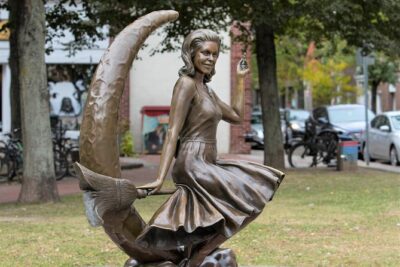
History and Hauntings of Salem Guided Walking Tour
Read our review →
New Orleans Premier Ghost, Voodoo and Vampire Walking Tour
Read our review →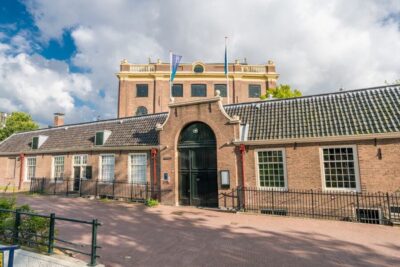
Amsterdam Anne Frank: Small-Group Walking Tour & Local Guide
Read our review →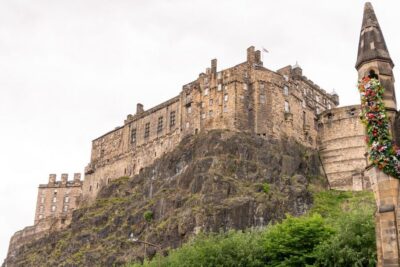
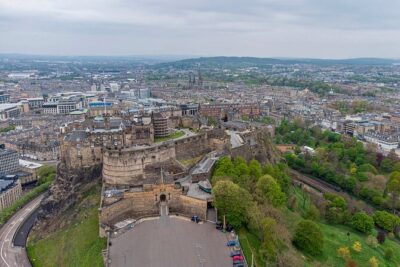
Edinburgh Castle: Guided Walking Tour with Entry Ticket
Read our review →