REVIEW · WALKING TOURS
Communist Walking Tour of Sofia
Sofia’s communist past is written across its city center, but you need someone to point out what changed, what vanished, and what was quietly preserved. This three-hour walk connects the Palace of Justice, the Largo, the Soviet Army Monument, the National Palace of Culture, and a piece of the Berlin Wall with stories of power, protest, religion, and daily life.
I like the personal family stories that guides such as Nikola, Niki, Vasko, and Martin bring to the subject. I also like the route itself: it doubles as a useful introduction to central Sofia, not just a talk about politics. The main drawback is the 4:00 pm start, which can leave the final monuments in darkness during winter.
Key points to know before booking
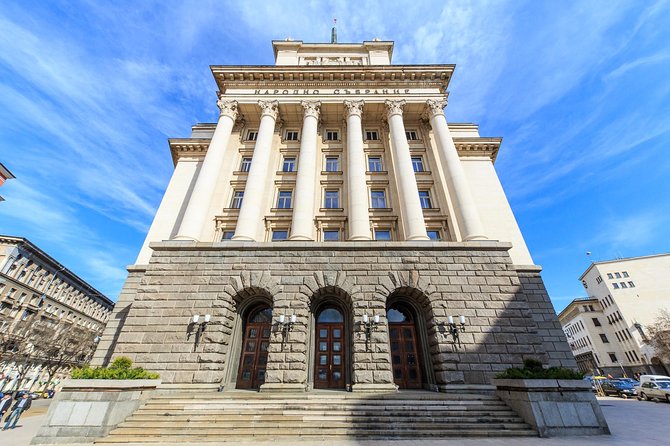
- The route links major communist landmarks: Walk from the Palace of Justice through the Largo, City Garden, the Soviet Army Monument, and the National Palace of Culture.
- Personal stories make the politics easier to grasp: Guides use family memories, photographs, anecdotes, and everyday examples to explain life under the regime.
- Plan on a genuine three-hour walk: The distance is manageable for most people, but it is not ideal if you have limited mobility.
- The tour balances praise and criticism: You hear about ideology, state power, shortages, control, opposition, and the fall of communism.
- Winter light can be a problem: The 4:00 pm departure works well in summer, but the last hour may be dark in the colder months.
- The price is modest for the amount covered: At $21.77 per person, you get a local professional guide and a focused introduction to Bulgaria’s recent past.
Why this walk helps you read Sofia
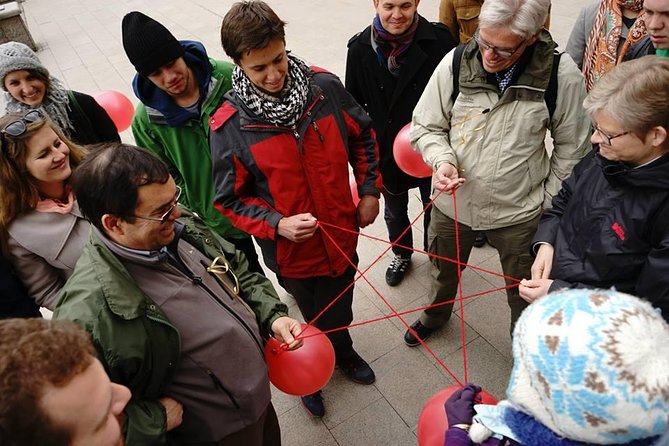
A standard sightseeing walk can show you Sofia’s churches, Roman remains, and grand government buildings. This tour asks a different question: what did these places mean during the communist period, and what clues remain today?
That question gives the city center a second layer. A building may look like a piece of formal architecture, but the guide can explain how it fitted into the state system. A monument may look like a simple statue, but its position, symbolism, and later removal tell you much about Bulgaria’s changing politics.
I especially like this approach for a first or second day in Sofia. You see several central sights while gaining a framework for understanding Bulgaria after the Second World War. The subject is serious, but the guides keep it conversational, with humor, questions, and stories from family life.
The tour is conducted in English and has a maximum group size of 25. That is large enough to create a social atmosphere, but still small enough for questions in most cases. The guides named in the feedback include Nikola, Niki, Vasko, Martin, Stefan, Yoan, Vasil, and Niki. Your guide will vary, but the strongest recurring feature is a clear personal interest in the subject.
A few more walking tours around the world worth a look
- Magical London: Harry Potter Guided Walking Tour
★ 4.7 · 22,044 reviews - Reykjavik Food Walk – Local Foodie Adventure in Iceland
★ 5.0 · 18,952 reviews - History and Hauntings of Salem Guided Walking Tour
★ 5.0 · 14,564 reviews
Starting at the Palace of Justice
Meet outside the Sofia City Court, also called the Palace of Justice, at 2 Vitosha Boulevard. This is a central location and is close to public transportation, so it is easy to reach from other parts of central Sofia.
The first part of the walk uses the Palace of Justice as a starting point for the communist story. The building itself provides a useful setting for discussing authority, law, and the role of the state. A second meeting-point reference identifies the nearby 365 Association Sofia Tours office, so check your confirmation carefully and follow the stated starting instructions rather than heading to the final stop at NDK.
The early minutes also let the group settle in. The guide introduces the route and begins setting out how communism rose in Bulgaria, how Soviet influence shaped the country, and why the system eventually collapsed. I would arrive a little early, especially if you are unfamiliar with Sofia’s central streets.
Saint Petka and religion under communism
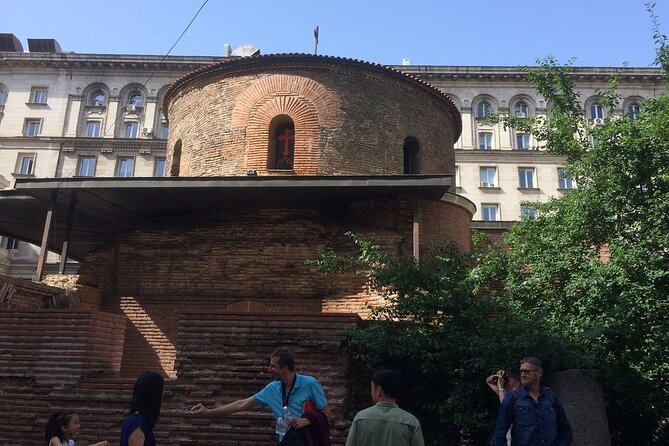
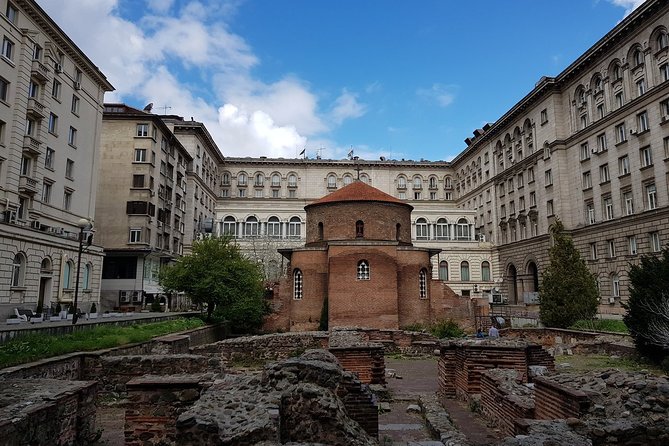
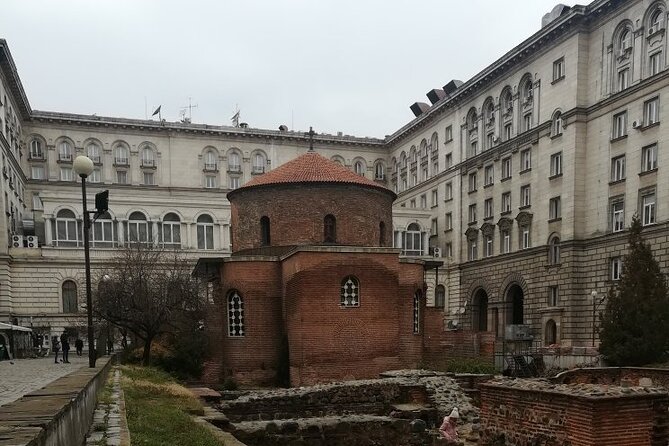
The walk continues to the Ancient Orthodox Church of Saint Parascheva, often called the old Saint Petka Church. This small, tucked-away church offers a sharp contrast to the monumental government buildings that come later.
Here, the guide discusses religion during the communist period. The stop is brief, around 10 minutes, but it matters because it moves the subject beyond statues and political offices. Communism promoted an official ideology that competed with religious belief, and the survival of an old Orthodox church in the center of Sofia gives the discussion a physical anchor.
I like this stop because it shows how the tour is not limited to grand architecture. You also look at the quieter traces of social life and belief. The church is a short stop rather than an interior visit with a dedicated admission ticket, so do not book this expecting a long church tour.
The Presidency and the arrival of Soviet power
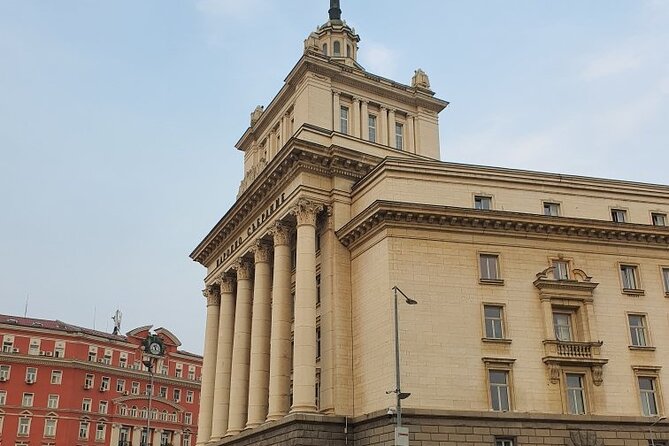
At the Presidency Building, the guide turns to the arrival of the Soviet Army in Bulgaria. This is where the wider European story becomes specifically Bulgarian.
The tour explains how Soviet influence took hold and how the political system changed. Rather than treating communism as an abstract chapter in a textbook, the guide links events to the streets and institutions around you. That makes the political timeline easier to follow, particularly if you know little about Bulgaria before arriving.
The strongest guides use photographs and personal examples to make this section clear. Niki, Nikola, Vasko, and Martin are all praised for bringing political material to life with stories and an easy way of answering questions. You should feel free to ask about points that are unclear. The format allows questions, and guides are expected to explain both the benefits claimed by the system and the costs imposed on ordinary people.
Same streets, a different route:
- New Orleans Premier Ghost, Voodoo and Vampire Walking Tour
★ 4.5 · 12,856 reviews - Amsterdam Anne Frank: Small-Group Walking Tour & Local Guide
★ 4.8 · 12,789 reviews - Edinburgh: Harry Potter Magical Guided Walking Tour
★ 4.8 · 11,944 reviews - Edinburgh Castle: Guided Walking Tour with Entry Ticket
★ 4.7 · 11,699 reviews
The Largo, the red star, and the former party headquarters
The former Bulgarian Communist Party headquarters is part of the Largo complex, one of Sofia’s most imposing central spaces. The scale of the buildings helps you understand how the state wanted to present itself: orderly, powerful, and permanent.
The guide tells the story of the red star and the former Statue of Lenin. These symbols were once central to the public image of the regime. Their removal also shows how quickly political meaning can change. The same square can shift from a stage for official power to a place where people question that power.
This is one of the most useful stops for understanding communist symbolism. You are not only hearing names and dates. You are looking at the architecture, open space, and visual messages used to shape public life.
The Largo can feel formal and impersonal on your own. With the guide, you get a sharper explanation of what you are seeing. I would pay attention to the details the guide points out, including marks left behind after communist symbols were removed. Small physical traces can carry more weight than a large monument.
City Garden and the story of the Mausoleum
The City Garden provides a change of pace and a chance to hear about the Mausoleum. The stop helps explain how the regime presented its leaders and how public attitudes shifted after the political system began to fall apart.
This section also shows the value of having a guide who knows Sofia beyond the standard sightseeing route. You may see a park as a pleasant break in the center. The tour uses it as a place to discuss memory, ceremony, political display, and the removal of symbols.
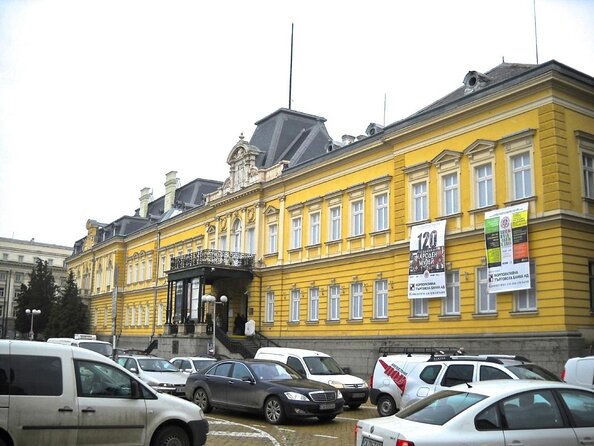
The itinerary also includes the former Royal Palace during the early communist years. That detail adds an important contrast. Sofia’s political story did not begin with communism, and the relationship between the monarchy, the new regime, and public institutions helps fill in the years of transition.
The exact order and timing can vary slightly with the group, but the route covers these places within the central part of the walk. Expect brief explanations at each stop, with longer discussion when the subject raises questions.
The Soviet Army Monument and public protest
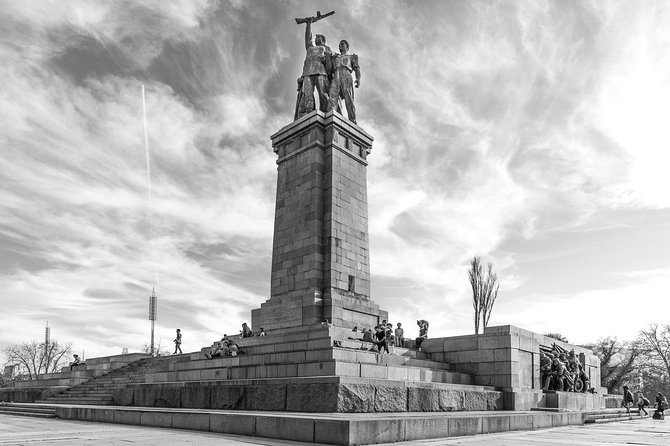
The Soviet Army Monument is probably the tour’s most striking outdoor stop. It is also Sofia’s most controversial monument, and the guide explains why.
The monument represents Soviet military power, but its meaning has been disputed for years. The tour covers early uprisings against the communist regime and later acts of protest, including graffiti art. The contrast between the monument’s official message and the public response gives you a direct way to understand how contested memory works.
This stop lasts about 15 minutes. It is a good place to ask how Bulgarians view the monument today, since the answer is not simple or uniform. Some people see it as a reminder of liberation from Nazi influence. Others see it as a symbol of foreign domination and decades of political control.
The monument is also a useful reminder that historical debate is not safely locked in the past. The painted figures, altered symbols, and public arguments around the site show that Sofia continues to negotiate its twentieth-century story.
The National Palace of Culture, Sofia’s major communist project
The route then moves toward the National Palace of Culture, commonly called NDK. Built as a major cultural center, it is one of Sofia’s largest and best-known communist-era projects.
The building gives the guide a chance to explain how culture functioned under the regime. Large public venues could host concerts, ceremonies, conferences, and official events. They were places for genuine cultural activity, but they also formed part of the state’s public image.
NDK is an especially useful stop because it shows a less obvious side of the period. Communism was not only about party offices, statues, and security services. It also shaped cultural institutions, public celebrations, architecture, and the way a capital city presented itself.
The walk may feel long by this point, but the route is broken up with stories and pauses. One guide, Vasko, was especially effective at planning breaks and using photographs to explain the past. Another guide, Niki, was praised for keeping children involved and making the material accessible to a mixed-age group.
Ending beside a piece of the Berlin Wall
The tour ends beside a section of the Berlin Wall on the left side of the NDK park. It is a fitting final stop because the wall offers a clear visual symbol for the end of the Cold War division.
The guide explains how communism ended in Bulgaria and places that change within the larger European story. The final section ties together the earlier stops: Soviet influence, party authority, public symbols, opposition, and the shift toward a different political system.
There is also a practical reason to note the endpoint. The tour does not return to the Palace of Justice. You finish near NDK, a useful location for continuing your evening, finding food, or reaching public transportation. If you are meeting someone afterward, use the NDK endpoint rather than the starting address.
In winter, this final stretch may take place in fading light or darkness. That does not erase the value of the discussion, but it can make monuments and outdoor details harder to see. I would choose an earlier communist-themed tour if one is offered during the colder months. With the stated 4:00 pm start, summer and early autumn are better for seeing the route.
What $21.77 buys you
At $21.77 per person, this is good value if you want more than a general introduction to Sofia. The price includes a local professional guide, and the tour covers roughly three hours of walking and discussion across several major sites.
You are not paying for museum admissions or transport. The stops are outdoor landmarks and public places, so the value comes from the guide’s explanation, route planning, and ability to connect political events with what you see.
I would compare it with the cost of spending three hours trying to piece together the same story from scattered websites and plaques. The tour gives you a structure, a route, and someone who can answer questions as they arise. That is particularly useful if you know little about Bulgaria’s twentieth-century history.
The price is less attractive if you dislike political history or prefer indoor sightseeing. You also need to be comfortable walking for much of the afternoon. Still, for an affordable specialist walk in central Sofia, the coverage is strong.
Timing, weather, and walking effort
The tour lasts about three hours and covers a fair distance. One guide used regular breaks and an easy route, but this remains a walking tour rather than a short stroll between two nearby buildings.
Wear comfortable shoes. The route moves through city streets, parks, and open public spaces, so dress for the weather. The experience has continued in cold conditions, including temperatures around minus 6 degrees Celsius, and in rain. A storm may force a short pause in a nearby bar or café, but you should not count on indoor shelter as part of the tour.
The 4:00 pm start is convenient if you want a relaxed morning or an earlier city visit first. It is less practical in winter because daylight fades during the final hour. This is the single clearest planning issue, and I would take it seriously if you want to photograph the monuments.
The group can include up to 25 people. Most people can participate, and service animals are allowed. Children must be accompanied by an adult. If you have limited mobility, ask yourself honestly if three hours on foot through the city will be comfortable.
Who will get the most from this experience
I would choose this tour if you like recent political history, urban architecture, contested monuments, or stories about ordinary life under changing governments. It is also a strong choice early in a Sofia visit because it gives you useful context for places you may see again.
Families can make it work, particularly with a guide who involves children through questions and stories. Teenagers who find textbook history dull may respond better to the statues, graffiti, vanished symbols, and personal anecdotes.
I would be more cautious if you want a fast orientation walk or a purely architectural tour. The political discussion is the point, and some subjects are serious. You will hear about ideology, state power, repression, protest, religion, and the fall of the system.
The guides vary in personality, but the names associated with especially engaging tours include Nikola, Niki, Vasko, Martin, Stefan, Yoan, and Vasil. You cannot guarantee a specific guide from the information provided, but you can expect the tour to be led by a local English-speaking professional.
Should you book the Communist Walking Tour of Sofia?
I would book it if you want to understand why Sofia looks the way it does and how Bulgaria’s communist decades still shape public memory. The route is well chosen, the price is fair, and the mix of political explanation with family stories keeps three hours from feeling like a lecture.
Book with two cautions in mind: plan for a substantial walk, and avoid the 4:00 pm start in winter if seeing the monuments clearly matters to you. The free-cancellation policy allows a full refund when you cancel at least 24 hours before the start time, which gives you some flexibility.
For a first visit, this is one of the better ways to connect Sofia’s buildings and public spaces with the people and arguments behind them. It is not a casual sightseeing loop, but if the subject interests you, the walk should give you a much clearer sense of Bulgaria than a list of postcard sights alone.
FAQ
Where does the Communist Walking Tour of Sofia start?
It starts at Sofia City Court, the Palace of Justice, at bul. Vitosha 2 in Sofia’s Old City Center. The stated start time is 4:00 pm.
Where does the tour finish?
The tour ends at the National Palace of Culture, beside a piece of the Berlin Wall on the left side of the NDK park.
How long does the tour last?
The walk lasts approximately three hours.
What language is the tour offered in?
The tour is offered in English.
What is included in the price?
The price includes a local guide and a professional guide.
How many people can join the tour?
The maximum group size is 25 people.
Is the tour suitable for children?
Children can participate, but they must be accompanied by an adult.
Can I cancel for a full refund?
Yes. You can cancel at least 24 hours before the experience start time for a full refund. Cancellations or changes made less than 24 hours before the start are not accepted for a refund.
Just added around the world
- Fira: Guided Foodie Walking Tour with Tastings★ 4.9 · 474 reviews
- Fez: Guided Walking Tour of the Historic Medina★ 5.0 · 359 reviews
- Fez: Walking Tour in the Ancient City of Fez★ 4.8 · 73 reviews
- Faro: Old Town Guided Walking Food Tour★ 4.9 · 94 reviews
- Feel like a local – Walking Tour in Mykonos Town 2hours★ 4.4 · 77 reviews
- Fes: A Guided Walking Tour Through the Historic Medina★ 4.4 · 97 reviews
- Fez: Half-Day City Private Walking Tour with a Guide★ 4.6 · 114 reviews
- Fanal / Assobiadores – Levada Walk★ 4.6 · 93 reviews
Walking Tours, compared.

Magical London: Harry Potter Guided Walking Tour
Read our review →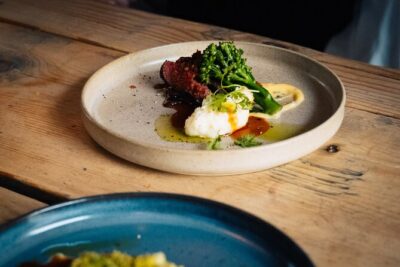
Reykjavik Food Walk – Local Foodie Adventure in Iceland
Read our review →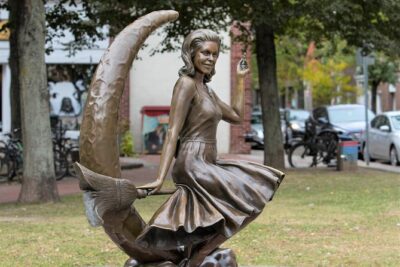
History and Hauntings of Salem Guided Walking Tour
Read our review →
New Orleans Premier Ghost, Voodoo and Vampire Walking Tour
Read our review →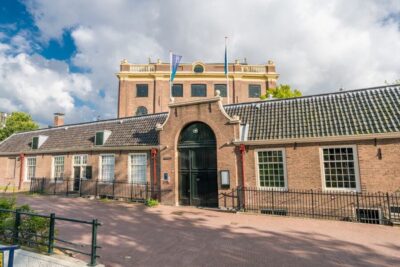
Amsterdam Anne Frank: Small-Group Walking Tour & Local Guide
Read our review →
Edinburgh Castle: Guided Walking Tour with Entry Ticket
Read our review →