
REVIEW · NEW YORK CITY
Artistic, Alternative Greenwich Village Walking Tour
Greenwich Village is where New York’s polished surface gives way to stories about artists, musicians, rebels, and social change. On this two-hour walk, you’ll pass brownstones, old bars, music landmarks, LGBTQ+ history sites, and the apartment building used for Friends, while your guide connects the streets to people such as Edgar Allan Poe, Bob Dylan, and Jimi Hendrix.
I like the strong local point of view, especially when guides such as Steve draw on decades of living in the neighborhood. I also like the practical finish near Washington Square and Christopher Street, where you can keep exploring, grab a meal, or settle into one of the nearby bars.
The main drawback is the walking: two to three miles at a moderate pace, mostly outdoors and in all weather. The tour is wheelchair and stroller accessible, but anyone who needs frequent stops should tell the guide at the start.
Key points to know before you book
- Stories over sightseeing: The tour explains how Greenwich Village became a home for artists, musicians, bohemians, and social movements.
- A local guide makes the difference: Angela, Steve, Rob, and Dave have each been praised for lively storytelling and personal knowledge of the area.
- Expect two to three miles on foot: Wear comfortable shoes and plan for weather, traffic, and city sidewalks.
- The route reaches Washington Square Park: You’ll learn about the park’s past, including its use as a forgotten cemetery.
- The end point is useful: The walk finishes near Village Cigars, Christopher Street, and Seventh Avenue South.
- A good choice beyond the usual New York sights: This is for people who want neighborhood character, music history, pop culture, and social history in one walk.
Why Greenwich Village works so well as a walking tour
Greenwich Village is not best understood from a sightseeing bus. Its appeal is in the small changes from block to block: a brownstone beside a restaurant, a former club site beside an ordinary apartment, or a quiet street tied to a major shift in American culture.
The tour covers more than 200 years, but it is not simply a march through dates. You’ll hear how the neighborhood became a refuge for writers, painters, musicians, political thinkers, and people challenging social rules. That mix gives the walk its shape.
The word alternative here is useful, though it does not mean the Village is untouched or frozen in its bohemian past. The area has changed, and the best guides address that change directly. Steve, who has lived in the neighborhood for roughly 50 years, has been especially praised for explaining gentrification and its effect on local people.
That present-day view matters. You are not being shown a museum set. You are walking through a working Manhattan neighborhood where old stories share space with restaurants, shops, apartments, and busy streets.
A few more walking tours around New York City worth a look
- SoHo, Little Italy, and Chinatown Walking Tour in New York
★ 5.0 · 3,153 reviews - Secrets of Grand Central Station Walking Tour New York City
★ 5.0 · 1,796 reviews - Greenwich Village Walking and Food Tasting Tour
★ 5.0 · 1,572 reviews
Starting at 375A Sixth Avenue at 1:30 pm
The meeting point is 375A Sixth Avenue, at Waverly Place. The tour begins at 1:30 pm, so arrive early enough to find the exact spot and settle in before the group moves off.
The group can contain up to 20 people. That is large enough for a social atmosphere but still small enough for a guide to speak with the group rather than simply broadcast a script. A smaller group can also make it easier to ask about a particular interest, such as music, architecture, television, LGBTQ+ history, or local food.
One useful habit is to tell your guide what you care about during the opening minutes. Angela has been praised for asking about the group’s interests and then adjusting her stories to match. That can make a difference if you are returning to the Village, looking for traces of a musician, or traveling with a teenager who knows the neighborhood mainly from television.
The route has a moderate pace and covers two to three miles. New York sidewalks can be crowded, uneven, or interrupted by traffic, so comfortable shoes are not optional. The tour operates in rain or shine, with cancellations reserved for extreme weather. Bring the right coat, water, and sun protection rather than assuming the tour will pause for a weather problem.
Brownstones, bars, and the Village’s changing identity
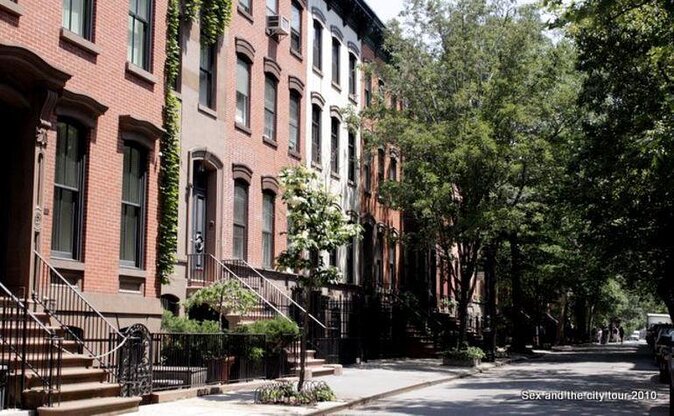
Early in the walk, the focus is likely to be the neighborhood itself: its handsome brownstone buildings, old gathering places, restaurants, and the odd combination of residential calm and city energy.
A guide adds value here by explaining what you are seeing. Without context, a row of attractive townhouses is simply a pretty New York street. With a local guide, the buildings become part of a story about writers, performers, activists, nightlife, and people who came to the Village because it allowed a little more freedom than other parts of the city.
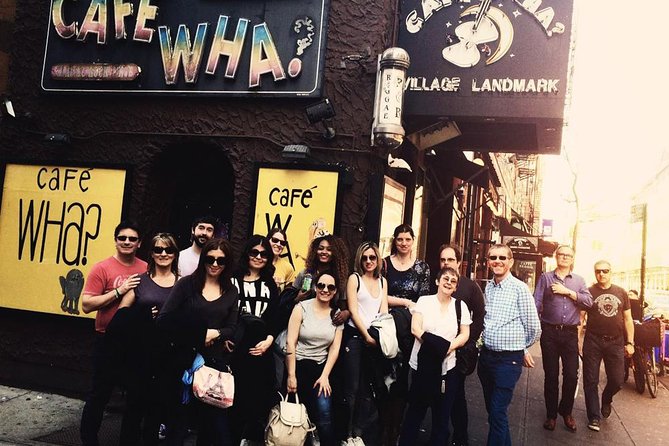
The area’s bars and restaurants are not just useful tips for after the tour. They help explain how the neighborhood supported artistic and political communities. In the past, small venues and informal meeting places gave musicians and writers room to work, argue, perform, and find an audience.
Several guides also share food and nightlife suggestions at the end. Angela has been praised for pointing out places to eat, drink, shop, and find local events. Rob is known for helping people with practical neighborhood choices, including restaurants and places to get a slice.
These recommendations are one reason to schedule the tour early in your New York stay. You can return to a place that caught your eye instead of trying to make every decision on the fly.
Poe, Dylan Thomas, and the literary Village
The literary side of Greenwich Village gives the tour some of its strongest historical contrast.
Edgar Allan Poe lived and wrote in the neighborhood, connecting the streets to the darker, more romantic side of American literature. Dylan Thomas also spent time here and died after a heavy drinking episode. Those stories are memorable, but they also show that the Village’s creative reputation was never only glamorous.
The route includes figures such as John Reed and Upton Sinclair, whose political writing helped fuel counterculture movements. You’ll hear how the neighborhood became a place for radical ideas, not just a backdrop for artists posing in cafés.
I like this part of the tour because it avoids reducing Greenwich Village to celebrity trivia. The people connected to the area were not all doing the same thing. Some wrote fiction, some pushed political reform, some made music, and some simply used the neighborhood as a place where unconventional lives could take root.
A good guide will also help you see the gap between the Village’s old reputation and its present reality. The streets still carry traces of that past, but the neighborhood has changed. That tension is more interesting than a simple claim that everything remains as it was.
Same streets, a different route:
- True Crime NYC: Mafia Walk w/Ret. NYPD Detective and Local Food
★ 5.0 · 848 reviews - Central Park Guided Walking Tour
★ 5.0 · 774 reviews - New York City: Private Walking Tour with a Local
★ 4.6 · 771 reviews - NYC Lower East Side Walking and Food Tour
★ 5.0 · 646 reviews
Bob Dylan, Jimi Hendrix, and the small-club tradition
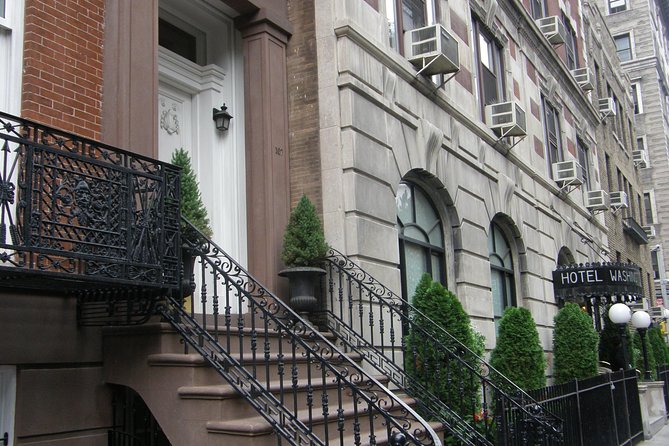
Music is one of the main reasons to choose this walk. Bob Dylan and Jimi Hendrix played small clubs in the Village before reaching wider fame, and the tour places their careers within the neighborhood that helped shape them.
The point is not only to list famous names. Greenwich Village mattered because small rooms gave musicians a place to test songs, meet other performers, and build a following. The scale of those venues is part of the story. A tiny club can have more influence than its size suggests.
You may also hear about the Beat movement and the bohemian communities that gathered around poetry, music, and unconventional art. This gives the neighborhood a wider frame. The Village was not an isolated music district. It was a meeting point for different creative scenes.
Guides bring this material to life in different ways. Steve offers a long-term resident’s view of how the area changed. Rob combines local stories with the perspective of a retired history teacher. Angela is especially energetic and uses personal connections to the neighborhood to make the past feel close.
If you are a serious music fan, remember that this is still a general Greenwich Village tour. It is not presented as a specialist Bob Dylan or Jimi Hendrix pilgrimage. You will get the musical context alongside architecture, television, politics, and LGBTQ+ history.
LGBTQ+ history and the Village’s role in social change
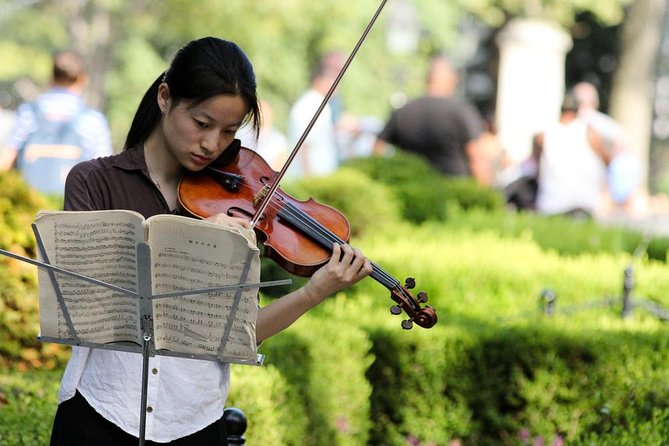
One of the most important parts of the route is its discussion of the gay rights movement. As you pass local landmarks, the guide explains how parts of that movement were born in Greenwich Village.
This subject gives the tour weight beyond its celebrity stories. The Village was not only a place where famous musicians played or writers lived. It also became a site where people organized, resisted discrimination, and demanded public recognition.
The presentation is likely to be strongest when the guide links major events to ordinary streets and buildings. Social change often feels abstract when you read about it in a book. On foot, you can see how close those events were to homes, shops, bars, and public spaces.
Angela has been praised for telling these stories with care and emotion, especially during Pride Month. That does not mean every moment is solemn. The tour still has humor and a relaxed pace, but it treats the subject as a central part of the Village’s identity rather than a quick aside.
For visitors who want more than architecture and celebrity anecdotes, this is a major reason to book. You get a fuller picture of why Greenwich Village mattered to American culture.
The Friends apartment and other pop culture stops
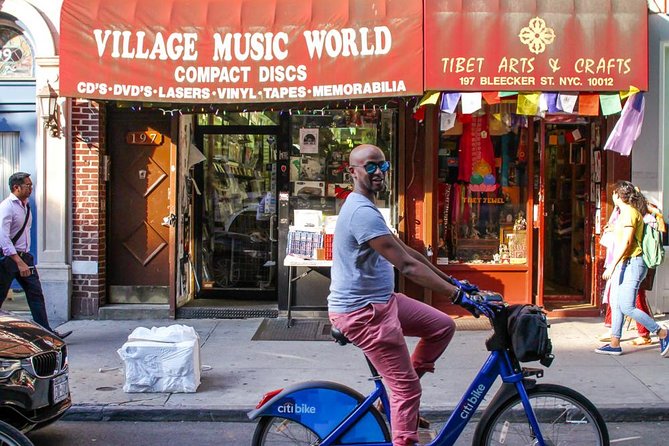
The tour also includes famous television locations, including the apartment building associated with Friends. This is a smart addition because it gives first-time visitors an immediate point of recognition.
The television connection is not the whole tour. It works best as one layer among many: brownstones, writers, musicians, social movements, and present-day neighborhood life. If you know the show, the stop adds a fun photo opportunity. If you do not, it still fits into the broader discussion of how Greenwich Village has been presented to the public.
Do not expect to enter private buildings or spend long periods at every location. This is a walking tour through an active neighborhood, so the value comes from the guide’s explanation and the route’s connections rather than from formal admissions.
That is also why the mobile ticket is useful. You can keep the confirmation on your phone and focus on finding the starting point instead of collecting paper documents.
Washington Square Park and the final 15 minutes
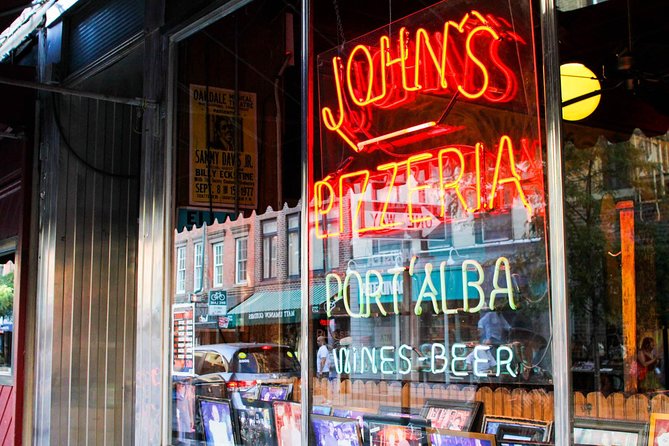
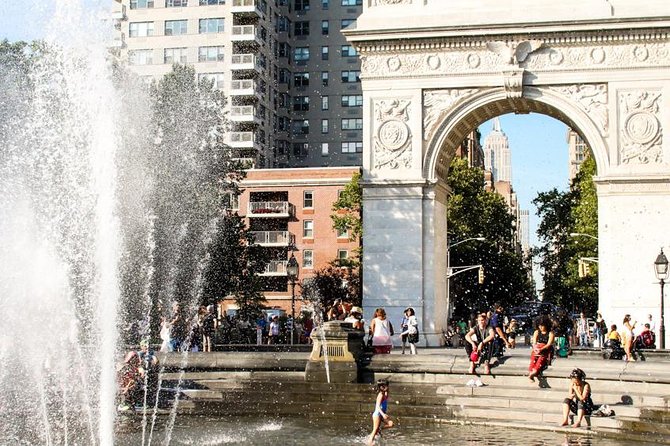
The walk finishes in Washington Square Park, one of the most recognizable public spaces in the Village. The park offers a welcome change of pace after the denser city streets.
The tour’s Washington Square portion lasts about 15 minutes. You’ll learn that the park was built atop a forgotten cemetery, a detail that adds an unexpectedly unsettling layer to this familiar gathering place.
Washington Square works as the final stop because it gathers many themes from the tour in one place. It is public, musical, historic, social, and constantly changing. Depending on the day, you might see people relaxing, performing, playing chess, or simply crossing the park.
One guide, Rob, has been praised for introducing people to Johnny Chess, a well-known local chess figure. That kind of encounter cannot be guaranteed, but it shows how the park can connect formal history with the people who give the area its current character.
The final destination is Village Cigars at 110 Seventh Avenue South, near Christopher Street and Seventh Avenue. You are well placed for continued exploring after the official two hours. The end point also makes it easy to continue toward nearby restaurants, bars, shops, or other West Village streets.
How the guides shape the experience
This tour depends heavily on the person leading it. The same route can feel flat with a guide who only recites names, or engaging with someone who can explain why a place matters.
Angela is energetic, attentive, and comfortable adjusting the walk to the group. She has helped with breaks and shared written recommendations after the tour. That follow-up can be useful if you want a short list of places to return to.
Steve brings the strongest long-term local perspective. He has lived in Greenwich Village for about five decades, and his stories focus on change, gentrification, local life, and the difference between the neighborhood’s past and present.
Rob combines local experience with a history-teaching background. His style is suited to people who like stories with a clear sense of context. Dave has also been praised for using a binder of photographs to help connect past images with the streets in front of you.
You cannot select a particular guide from the information provided, so book for the route and subject matter rather than for one person alone. Still, the range of guide styles is a strength. The experience is not limited to a single canned performance.
Is $39 a fair price for two hours?
At $39 per person, the tour sits in a reasonable range for a guided New York walk. You are paying for two hours with a local guide, a planned route, historical context, and help noticing places you could easily pass without understanding.
The value is strongest if you are new to Greenwich Village or want a clear introduction before exploring on your own. It is also a good choice for repeat visitors. Several people familiar with New York have learned new details about the neighborhood through the route, which suggests that the tour goes beyond the most obvious landmarks.
The value is weaker if you prefer to wander alone, stop for long meals, or spend an hour inside one museum or historic building. This is an outdoor storytelling experience, not an attraction with admission rooms or exhibits.
The two-hour length is a practical middle ground. It is long enough to cover the Village’s literary, musical, political, LGBTQ+, and television connections, but short enough to leave the rest of the afternoon open.
Who should book this Greenwich Village walk?
I would choose this tour for first-time New York visitors who want to get beyond Times Square and the major museums. It is also a good fit for repeat visitors who have walked the Village before but never understood its artistic and political importance.
It suits:
- People interested in writers, music, television, or social history
- Couples and families who want a shared neighborhood activity
- Solo visitors who prefer a planned route and local company
- New Yorkers taking a staycation and looking at a familiar area differently
- Older adults who can manage two to three miles at a moderate pace
- Anyone who wants restaurant, bar, event, and shopping suggestions for later
The walk can work for families with teenagers, especially if the group enjoys music or Friends. It is also accessible for wheelchairs and strollers, according to the tour information, though the moderate distance and city sidewalks still make personal comfort important.
Service animals are allowed, and most people can participate. If you need a particular pace or regular breaks, mention it at the beginning so the guide can plan sensibly.
Should you book the Artistic, Alternative Greenwich Village Walking Tour?
Book it if you want the Village explained through people and movements, not just photographed buildings. The strongest parts are the local guide’s personal stories, the music and literary connections, the LGBTQ+ history, and the chance to finish in Washington Square with the rest of the afternoon free.
Think twice if you dislike walking in all weather or want a tightly focused tour devoted only to Bob Dylan, Friends, architecture, or gay rights history. This route combines several subjects, so its strength is variety.
For most people, $39 is a fair price for a lively introduction to one of New York’s most layered neighborhoods. I would schedule it near the start of your visit, wear good shoes, and save time afterward to follow up on the food, nightlife, and local spots your guide points out.
FAQ
Where does the Artistic, Alternative Greenwich Village Walking Tour begin?
The tour begins at 375A Sixth Avenue in New York City, near Waverly Place.
What time does the tour start?
The stated start time is 1:30 pm.
Where does the tour finish?
The tour ends at Village Cigars, 110 Seventh Avenue South, near the intersection of Christopher Street and Seventh Avenue.
How long does the tour last?
The walking tour lasts approximately two hours.
How much walking is involved?
You can expect two to three miles of walking at a moderate pace.
Is the tour wheelchair accessible?
Yes. The tour is listed as accessible for wheelchairs and strollers.
Does the tour operate in bad weather?
Yes. The tour runs rain or shine, so dress for the forecast. In rare cases of extreme weather, you may be offered a rescheduled tour or a full refund.
How many people can join the tour?
The tour has a maximum group size of 20 people.
Can I cancel for a full refund?
Yes. You can cancel at least 24 hours before the start time for a full refund. Cancellations or changes made less than 24 hours before the tour are not refunded.
Just added around New York City
- Fan Tribute: Taylor Swift in New York Walking Tour★ 4.9 · 147 reviews
- NYC: Guided Bus and Walking Tour with Staten Island Ferry★ 4.6 · 209 reviews
- Central Park TV & Movie Sites Walking Tour – NYC★ 4.7 · 86 reviews
- Brooklyn: Dyker Heights Christmas Walking Tour★ 4.5 · 249 reviews
- Williamsburg Food Tasting & Walking Tour★ 5.0 · 228 reviews
- Half-Day Hell’s Kitchen Food Tour and Central Park Stroll★ 5.0 · 335 reviews
- NYC Professional Photoshoot and Walking Tour with Private Guide★ 5.0 · 608 reviews
- NYC Greenwich Village Italian Food Guided Walking Tour★ 5.0 · 627 reviews
Walking Tours, compared.

Magical London: Harry Potter Guided Walking Tour
Read our review →
Reykjavik Food Walk – Local Foodie Adventure in Iceland
Read our review →
History and Hauntings of Salem Guided Walking Tour
Read our review →
New Orleans Premier Ghost, Voodoo and Vampire Walking Tour
Read our review →
Amsterdam Anne Frank: Small-Group Walking Tour & Local Guide
Read our review →

Edinburgh Castle: Guided Walking Tour with Entry Ticket
Read our review →
Anne Frank’s Story – Guided Walking Tour through Amsterdam
Read our review →Browse the lists this tour appears in