
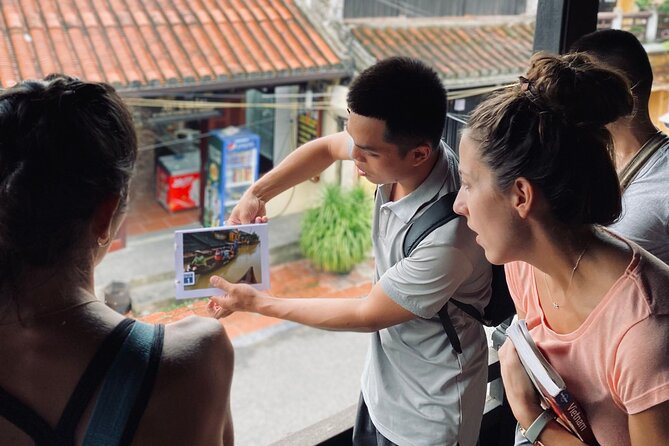
REVIEW · VIETNAM
Hoi An Ancient Town Walking Tour with a Local
Hoi An’s best stories are tucked into its old buildings, market lanes, and mixed architectural styles. This three-hour walk connects the Japanese Culture Gallery, Japanese Covered Bridge, Cantonese Assembly Hall, Quan Thang Ancient House, traditional art theatre, and central market with a local guide who explains how the town grew through contact with Japan, China, and Vietnam.
I like the small group limit of 10, which gives you room to ask questions and keep a comfortable walking pace. I also like the practical finish at the market, where you can taste local items and leave with restaurant, shopping, and lantern-boat advice from guides such as Kun, Anh, Trang, and Minh. The main drawback is that the $9.89 price does not include the Hoi An UNESCO entrance ticket, listed at ₫120,000 per person, and the tour involves several hours on foot.
Key points to know before booking

- Six useful stops in three hours: You move from cultural exhibits and historic houses to a performance venue and the central market.
- A genuine local perspective: Guides including Kun, Anh, Trang, Minh, Nguyen, June, and Sanh explain architecture, daily life, customs, and Hoi An’s past.
- Small groups help: The maximum group size is 10, and some departures may become a private walk if only one person books.
- Market tasting is part of the appeal: You receive a special herbal tea and may sample local delicacies while learning about food and daily life.
- Plan for extra admission costs: The UNESCO ticket costs ₫120,000 per person and is not included in the tour price.
- Good opening activity: Guide recommendations for restaurants, shops, and lantern rides can help shape the rest of your stay.
Why this Hoi An walk is worth your morning or afternoon
Hoi An is easy to admire on your own. Yellow walls, wooden shutters, lanterns, and narrow streets make the old town pleasant to wander. But without context, you can miss why the buildings look different from one another or why Japanese, Cantonese, Chinese, and Vietnamese features appear in the same compact area.
That is where this tour earns its modest price. You are not simply ticking off monuments. You are moving through the town in a sequence that makes its cultural connections easier to understand. The Japanese Culture Gallery sets the scene, the Covered Bridge gives you a famous symbol, the assembly hall and merchant house show different communities at work, and the market brings the town into the present.
The pace is described as leisurely, though you should still expect steady walking for about three hours. One guide kept the group moving without rushing, while another offered a break with cold herbal tea. Those details matter in Hoi An, where heat and humidity can make even a gentle walk feel longer than expected.
The guide is the key variable. The strongest feedback is directed toward the local hosts rather than the buildings alone. Kun is praised for warmth, energy, and a good sense of pace. Anh is especially strong at explaining architecture, cultural change, and everyday life. Trang is noted for clear English and useful suggestions for the rest of a trip. Minh is described as engaging when discussing local customs and the town’s past.
A few more walking tours around Vietnam worth a look
- Private Street Food Evening Walking Tour in Ho Chi Minh City
★ 5.0 · 3,175 reviews - [HOT] Hanoi Old Quarter Walking Street Food – Small Group Tour
★ 5.0 · 2,163 reviews - Super Niche Walking Street Food Tour in Ho Chi Minh City
★ 5.0 · 1,636 reviews
Starting at the Japanese Culture Gallery
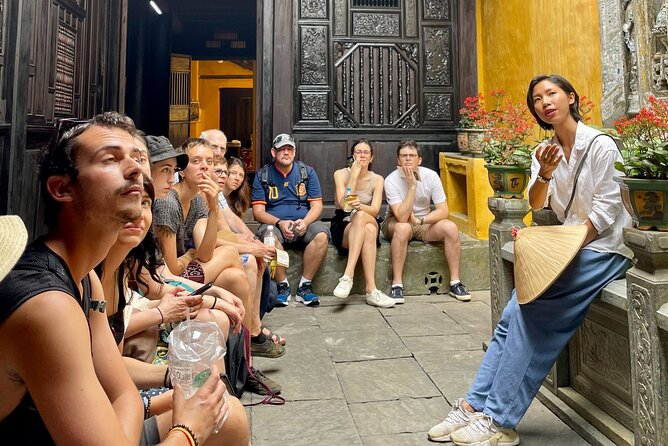
The walk begins at 125 Phan Chu Trinh, in Hoi An’s Minh An area. The first stop is the Japanese Culture Gallery, where you get a short timeline of Hoi An and an introduction to Japan’s artistic traditions.
This is a smart opening because it gives meaning to what comes next. Rather than seeing the Japanese Covered Bridge as a lone photo stop, you begin to understand why Japanese influence took root here and how Hoi An developed as a meeting point for trade and culture.
The planned visit lasts about 25 minutes. Admission is not included, so keep the separate UNESCO entrance charge in mind. The gallery is best for visitors who like a little background before walking through old streets. If you prefer to get straight to the famous sights, this first section may feel more explanatory than visual, but it gives the rest of the tour a clearer frame.
Your guide can also answer questions here about how Hoi An started and why Japanese residents were present. That local explanation is more useful than a string of dates because it connects the site to the town you are about to walk through.
Seeing the Japanese Covered Bridge with context
The Japanese Covered Bridge is the most recognizable stop on the route. Its compact form and Japanese architectural character make it one of Hoi An’s signature sights, but the visit is not simply a quick photograph.
The planned stop lasts about 20 minutes. Your guide explains the bridge as part of Hoi An’s wider story, helping you see it as a link between communities rather than an isolated landmark. This is also a good place to ask about the different architectural influences you will notice across the old town.
Admission is not included. Because the bridge is famous and often busy, your experience can depend on the time of day and the number of people around it. The tour gives you a reason to pause, but it cannot guarantee a quiet viewing area.
I would not book this walk only for the bridge. You can see its exterior without a guide. The value comes from placing it within the town’s Japanese, Chinese, and Vietnamese connections, then carrying that understanding into the next stops.
Reading the Cantonese Assembly Hall
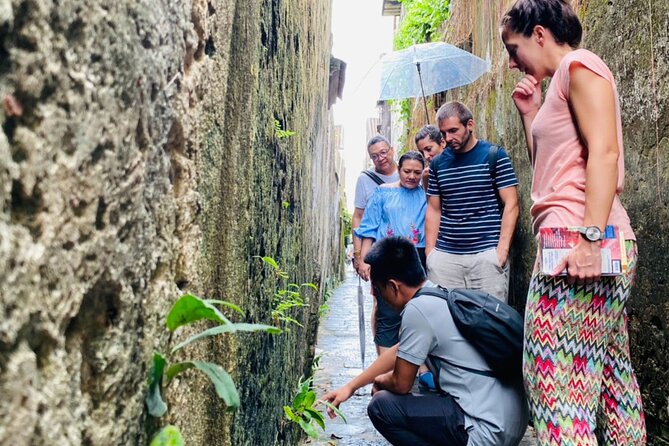
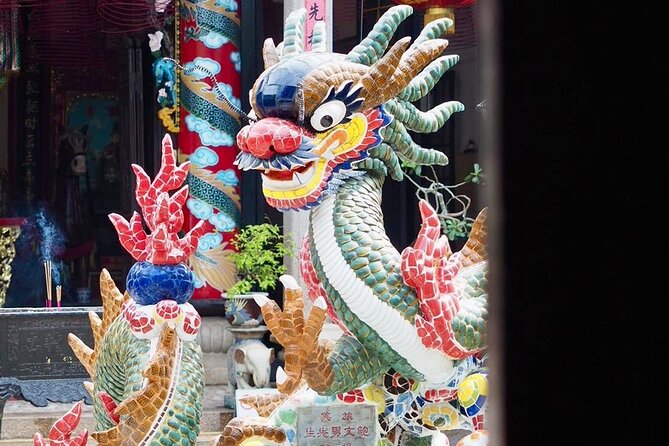
The Cantonese Assembly Hall is scheduled for about 25 minutes. Its decorated structure shows how Cantonese residents shaped Hoi An’s built environment and community life.
Here, pay attention to details rather than rushing through. The colors, decorative work, and layout offer clues about the people who used the hall and the role of shared cultural spaces. A local guide can point out features you might otherwise pass without noticing.
This stop adds balance to the Japanese focus at the start. Hoi An was not shaped by one outside culture. The walk makes that point through buildings you can enter and compare, not just through a general explanation.
The assembly hall is also a good place for questions. If you are curious about how different communities lived, traded, worshipped, or maintained their traditions, this is one of the stops where the guide’s personal knowledge matters most. Keep your expectations practical, though. The visit is short, and the experience is based on interpretation and observation rather than a long formal presentation.
Same streets, a different route:
- Ho Chi Minh City Street Food Tour & Sightseeing By Motorbike
★ 5.0 · 9,413 reviews - Private Walking Tour of Hanoi City
★ 5.0 · 1,251 reviews - Hanoi: Small-Group Street Food Walking Tour
★ 4.8 · 1,165 reviews - Private Hanoi Street Food Walking Tour With Real Foodie
★ 5.0 · 1,042 reviews
Stepping inside Quan Thang Ancient House
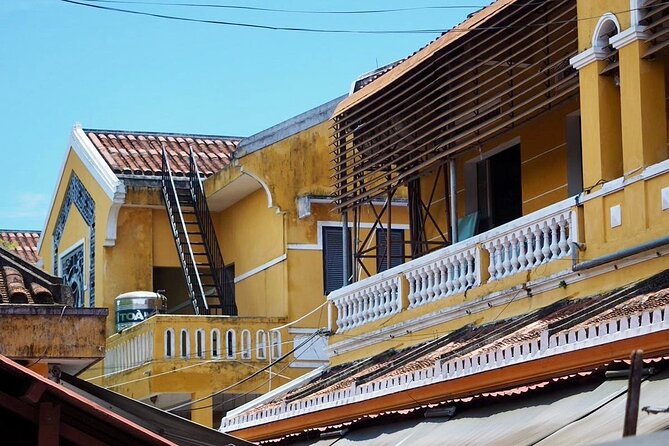
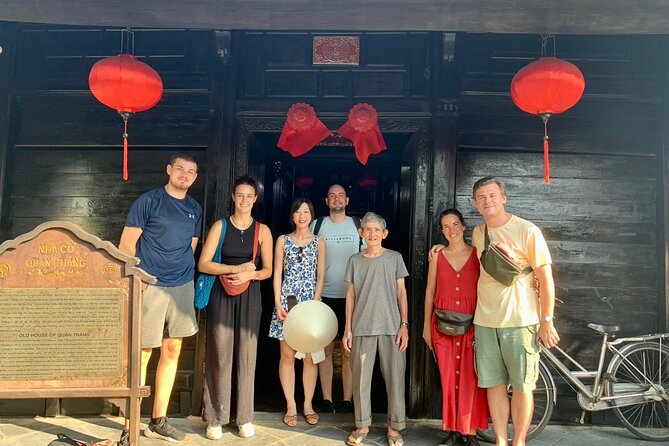
Quan Thang Ancient House gives you a look at the life of a prosperous merchant family. The planned visit lasts about 25 minutes, making it one of the more useful stops for understanding domestic architecture and family life in old Hoi An.
The house is valuable because it shifts your attention from public buildings to private space. You can consider how rooms were arranged, how a merchant household functioned, and how the building reflects the town’s trading past.
One of the most interesting details shared by guide Anh is a look through the back entrance into an old working kitchen. She also explains how the house has survived repeated floods across eight generations of one family. That kind of detail turns an old building into a lived place. It also gives you something practical to watch for elsewhere in Hoi An: raised levels, timber construction, and signs of adaptation to water.
This stop may be especially rewarding if you enjoy architecture. It is less about grand decoration and more about how a real house served a family over time. The short visit means you will not examine every room at length, but the guide’s explanation helps you notice what matters.
Adding music at the traditional art theatre
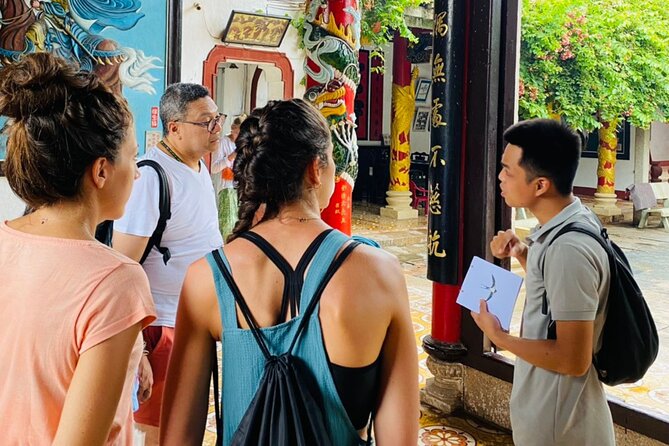
The Hoi An Traditional Art Performance Theatre is scheduled for about 35 minutes. This section brings music, dance, theatrical performance, and traditional instruments into a tour that has so far focused on buildings.
The performance offers a change of pace. After several historic interiors, you can sit or pause while seeing regional artistic traditions presented by local performers. The format also helps show that Hoi An’s heritage is not only preserved in wood, tile, paint, and stone. It continues through music and performance.
Because admission is not included, check how the UNESCO ticket applies to the sites visited during your departure. The supplied tour details list the Hoi An UNESCO entrance ticket separately at ₫120,000 per person.
The theatre stop is best approached as a compact cultural performance, not a full evening show. Its 35-minute place in the route keeps the tour moving while giving you a welcome break from walking. If you are mainly interested in food or architecture, this may be the least essential stop, but it rounds out the picture of Hoi An.
Finishing at Hoi An Central Market
The final stop is Hoi An Central Market, at 19 Tran Phu. The scheduled visit lasts about 35 minutes, and this is where the tour becomes most hands-on.
You go from stall to stall, see local delicacies, and may try small tastes. The included special herbal tea adds a simple pause, and the guide can explain food customs and local habits. The description also connects the market to the local idea of longevity, giving you a chance to ask about ingredients and eating patterns.
Do not expect a full meal. This is a guided introduction to the market, not a dedicated food tour. You may find enough samples to identify dishes you want to try later, but bring some money if you want to buy additional food, handicrafts, or souvenirs.
The market is a useful ending because you leave with practical knowledge. Guides have offered suggestions for restaurants and shops, along with tips for arranging a lantern boat ride. Trang also provides a list of recommendations at the end of the walk, which can save you from choosing dinner at random.
The market can be crowded and noisy, so keep valuables secure and stay close to the group. Its busy atmosphere is part of the setting, but it can be less comfortable if you are sensitive to heat or crowds.
What the $9.89 price really covers
At $9.89 per person, this is inexpensive for a three-hour guided walk, especially with a maximum of 10 people. You are paying mainly for the guide’s time, local explanation, route planning, and market introduction.
The price is not all-inclusive. The Hoi An UNESCO entrance ticket costs ₫120,000 per person and is not included. The individual stops also list admission as separate, so you should budget beyond the headline price. Coffee or tea is included in the form of special herbal tea.
The value is strongest if you are new to Hoi An and want a useful orientation at the start of your stay. You can then return to the places you liked, follow the restaurant suggestions, and explore the market with more confidence.
It is less compelling if you already know the old town well or want a private, highly customized architectural tour. Still, the small group size keeps it more personal than a large coach excursion, and a one-person booking may become private, as happened for Sanh’s solo guest.
Pace, meeting point, and practical planning
The meeting point is 125 Phan Chu Trinh in Minh An. The tour ends at Hoi An Market, 19 Tran Phu, in Cam Chau. That one-way structure is useful because you finish near food, shops, and further old-town exploration rather than walking back to the starting point.
Allow about three hours. Wear comfortable shoes and expect to walk between several stops. The pace is generally relaxed, but the route includes outdoor sections and standing time. A guide may include a tea pause, but do not treat that as a substitute for water and sun protection.
The group maximum is 10 people. That is small enough for questions, though the exact feel depends on how many people book and how actively they participate. Mobile tickets make arrival simple, and confirmation is provided at booking.
Most people can take part, and service animals are allowed. The tour requires good weather and a minimum number of participants. If poor weather cancels it, you are offered another date or a full refund. If the minimum is not met, you are offered another date or experience, or a full refund.
Free cancellation is available up to 24 hours before the start time. Changes or cancellations inside that 24-hour window are not accepted for a refund, so check the local cut-off time before making plans.
Who should book this walk
I would recommend it to first-time visitors who want to understand Hoi An rather than simply photograph it. It suits you if you enjoy a mix of history, architecture, local customs, performance, and food, all without committing to a full-day excursion.
It is also a good choice for solo visitors. The small group can add company, and a departure with only one booking may become a private experience. Couples and families who want a gentle introduction can benefit from the clear route and short stops.
The tour may not suit you if walking in warm weather is difficult, if you want extensive time inside each building, or if you are looking for a serious food crawl. The market tasting is a useful sample, not the main event. You should also be comfortable paying the separate heritage entrance fee.
Guide quality matters, and the named hosts give this experience a strong personal element. Kun, Anh, Trang, Minh, Nguyen, June, and Sanh are all associated with specific strengths such as clear explanations, humor, warmth, good pacing, and practical advice. You cannot choose a particular guide from the information provided, but the repeated focus on personable local hosting is one of the tour’s strongest reasons to book.
Should you book the Hoi An Ancient Town Walking Tour with a Local?
Yes, if you want a low-cost orientation with real local explanation and a compact route through Hoi An’s main cultural sights. The best parts are the small group size, the comparison of Japanese, Cantonese, and Vietnamese influences, the merchant house, and the market finish with food and restaurant advice.
Go in knowing that the $9.89 fee is only the starting cost, admission is extra, and the route takes about three hours on foot. If that suits your plans, this is a practical first walk for Hoi An, one that can help you spend the rest of your stay with better context and fewer guesswork meals.
FAQ
How long does the Hoi An Ancient Town Walking Tour with a Local last?
The tour lasts approximately three hours.
What is the price of the tour?
The listed price is $9.89 per person.
What is the maximum group size?
The experience has a maximum of 10 travelers.
Where does the tour start?
The meeting point is 125 Phan Chu Trinh, Phuong Minh An, Hoi An, Quang Nam 510000, Vietnam.
Where does the tour end?
The tour ends at Hoi An Market, 19 Tran Phu, Cam Chau, Hoi An, Vietnam.
Is the Hoi An UNESCO entrance ticket included?
No. The Hoi An UNESCO entrance ticket is listed at ₫120,000 per person and is not included.
Is food or drink included?
Special herbal tea is included. The market portion also includes opportunities to try local delicacies, while other purchases are not included.
Can I cancel for a full refund?
Yes. You can cancel at least 24 hours before the experience start time for a full refund. Cancellations or changes made less than 24 hours before the start time are not accepted.
Just added around Vietnam
- Hue Imperial City Walking Tour: Citadel & Forbidden City★ 5.0 · 280 reviews
- 3-Hours Hue Imperial Walking Tour with Guide with Lunch/ Dinner★ 5.0 · 125 reviews
- Hue Imperial City Walking Tour (Kids Half-Price)★ 5.0 · 133 reviews
- Half-Day Guided Street Food Walking Tour at Hue★ 5.0 · 116 reviews
- Hoi An Street Food Walking Tour with Tastings★ 5.0 · 317 reviews
- Hoi An Walking Tour★ 5.0 · 269 reviews
- Saigon’s Hidden Flavors – Private Street Food Walk with Local Students★ 5.0 · 301 reviews
- Saigon Street Food & Hidden Alleys by Scooter – 7/9/12 Tastings★ 5.0 · 235 reviews
Walking Tours, compared.

Magical London: Harry Potter Guided Walking Tour
Read our review →
Reykjavik Food Walk – Local Foodie Adventure in Iceland
Read our review →
History and Hauntings of Salem Guided Walking Tour
Read our review →
New Orleans Premier Ghost, Voodoo and Vampire Walking Tour
Read our review →
Amsterdam Anne Frank: Small-Group Walking Tour & Local Guide
Read our review →

Edinburgh Castle: Guided Walking Tour with Entry Ticket
Read our review →
Anne Frank’s Story – Guided Walking Tour through Amsterdam
Read our review →Browse the lists this tour appears in