
REVIEW · HO CHI MINH CITY
Vegan Walk Not Just Vegan Food
Ho Chi Minh City’s best vegan food is often tucked into places you would walk past without noticing. This three-hour walk with Spring or Hugh takes you from a street-side bánh mì to an old dessert stop, with food, alleys, apartment blocks, and local stories along the way. It is much more than a meal crawl.
I like the small group limit of six, which makes it easier to ask questions and follow your guide through narrow lanes. I also like the range of food: smoky mushroom pâté, curry, bánh xèo, vegan pho, grilled noodle bowls, tropical fruit, and Vietnamese sweets. The main drawback is that the full tasting list can change when a vendor stops selling a dish, and you should be ready for plenty of walking.
Key points at a glance
- Nine possible food stops: Try everything from bánh mì chay and vegan pho to chè, bánh xèo, fruit, and bột chiên.
- A small group of up to six: You get a more personal walk and easier conversation with your guide.
- Real neighborhood settings: Visit the Communist Apartment Complex and the Maze of Alleys instead of staying on the main tourist streets.
- Guides who add city context: Spring and Hugh do more than point out dishes, helping you get comfortable with Saigon’s food and streets.
- A useful take-home extra: The recipe ebook lets you try some of the dishes again after returning home.
- Good value at $39: Several tastings, a three-hour walk, and neighborhood touring make the price reasonable for a first look at vegan Saigon.
Why this vegan walk is different from a standard food tour
Many food walks in Ho Chi Minh City include one or two vegan dishes as a backup. This experience makes vegan food the main event. That matters if you want to eat local food without repeatedly asking if fish sauce, meat stock, or animal products are included.
The food is not limited to salads or simple rice plates. You can expect dishes built around mushrooms, seitan, tofu, rice flour, coconut milk, herbs, noodles, mung beans, lotus seeds, and local fruit. The variety gives you a better sense of how Vietnamese cooks create texture and flavor without meat.
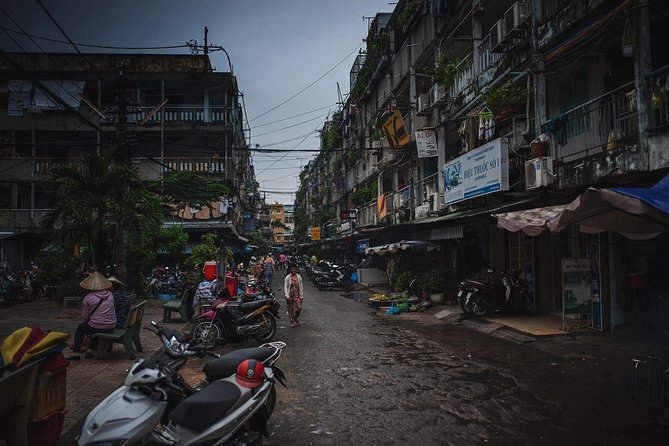
You also get a look at parts of the city that are easy to miss. The route includes the Communist Apartment Complex and the Maze of Alleys, two settings where the food stops are tied to everyday neighborhood life. I like this combination because you are not simply moving from restaurant to restaurant. The walk gives the meal a sense of place.
The tour lasts about three hours and begins at 200 Lê Lai in District 1. It ends at 63 Lý Thái Tổ in District 10, which is still close to District 1. That ending point is useful to know when planning your evening, especially if you have a hotel, dinner booking, or other activity afterward.
A few more walking tours around Ho Chi Minh City worth a look
- Ha Noi Walking Food Tour, Non Vegetarian,Vegan, vegetarian Option
★ 5.0 · 846 reviews
Starting with bánh mì chay at 200 Lê Lai
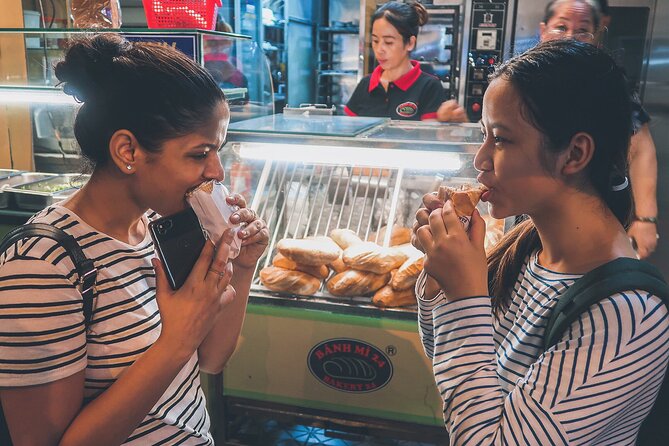
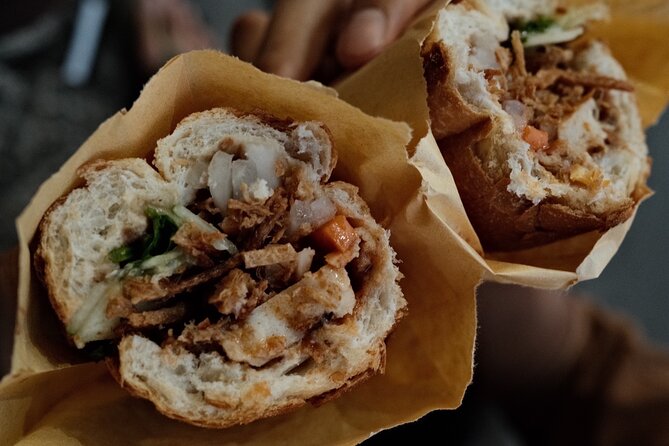
The first taste is a smart introduction to Vietnamese street food: bánh mì chay. This version comes with smoky mushroom pâté, crunchy pickles, and soy sauce inside the familiar crisp baguette.
It is a small but telling start. You get the contrast that makes a good bánh mì work, with soft filling, sharp pickles, and a salty sauce against the bread. The mushroom pâté also shows how the tour handles vegan food. The aim is not to remove flavor, but to rebuild the dish around plant-based ingredients.
The first stop lasts about 10 minutes, so do not expect a long sit-down meal here. Think of it as an opening bite that gets your appetite moving.
Curry in a family-run alley eatery
The second stop takes you to a family-run curry place without a visible sign. That detail is part of the appeal, since this is the sort of address that can be hard to locate on your own.
Here you try a creamy coconut mushroom curry, listed as cà ri dê chay, along with sticky rice and additional accompaniments. The coconut gives the dish a smooth, gentle base, while mushrooms add a more substantial bite.
This stop lasts about 15 minutes. It is a quick tasting rather than a slow restaurant meal, but the setting helps explain why a guide is useful. You are not just being handed a prepared dish. You are being led to a place that may not be obvious from the street.
A possible bánh xèo wrap party
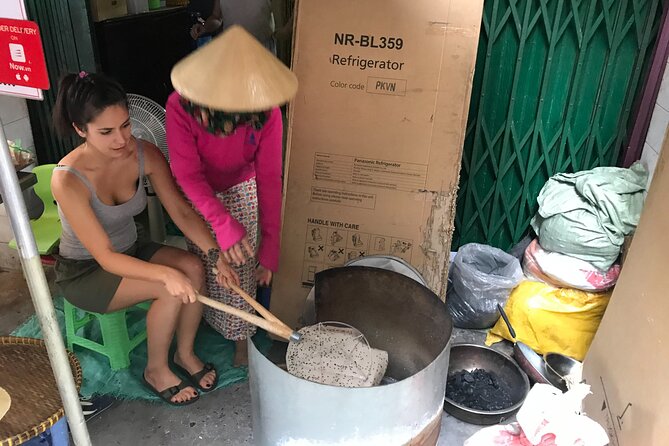
Depending on the day, the walk may include a do-it-yourself bánh xèo stop. This is a crisp pancake made with rice flour, mung beans, and coconut shoot, served with rice paper, fresh herbs, and dipping sauce.
The fun comes from the assembly. You wrap the pancake with herbs and rice paper, then eat it with the sauce. It is hands-on, fresh, and a welcome change from dishes served ready to eat.
This stop lasts about 15 minutes, but it is not guaranteed every day. The food selection can change if a vendor is not selling a particular item, so treat bánh xèo as a possible highlight rather than a promise.
Same streets, a different route:
- Ho Chi Minh City Street Food Tour & Sightseeing By Motorbike
★ 5.0 · 9,413 reviews - Private Street Food Evening Walking Tour in Ho Chi Minh City
★ 5.0 · 3,175 reviews - Super Niche Walking Street Food Tour in Ho Chi Minh City
★ 5.0 · 1,636 reviews - Ho Chi Minh City: Walking Food Tour with 13 Tastings
★ 5.0 · 469 reviews
Vietnamese sweets at the chè stop
The traditional sweet soup tasting introduces you to chè, a broad family of Vietnamese desserts often served with coconut milk. One sample is chè bà ba, with taro, sweet potato, and mung beans. Another is chè đậu trắng, made with sticky rice and kidney beans.
These desserts are not like a Western pudding course. They can be chewy, starchy, creamy, and lightly sweet all at once. Coconut milk ties the textures together, but the beans and root vegetables keep the dish from feeling one-note.
If you usually skip dessert, I would make room here. This is one of the stops that shows how Vietnamese food uses beans and rice in both savory and sweet cooking.
A seasonal fruit lesson at a local market
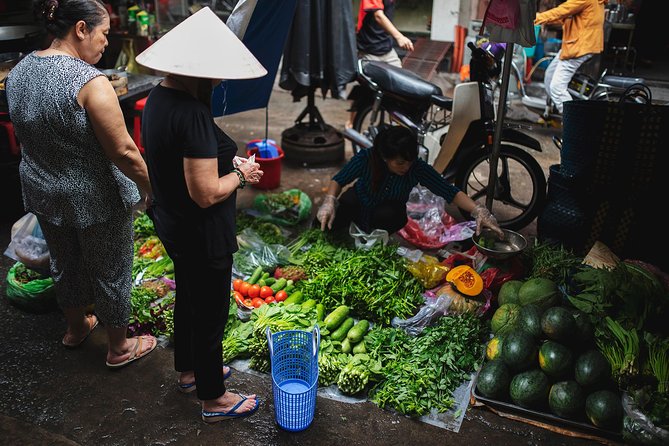
The fruit stop offers eight to ten local fruits, depending on the season. Possible choices include custard apple, longan, vú sữa, rambutan, dragon fruit, mangosteen, and snake skin fruit.
This is a useful part of the walk because the names alone do not tell you much about texture or flavor. Vú sữa, also called milky fruit, is especially interesting because of its soft, creamy interior. Mangosteen, rambutan, and custard apple each offer a different eating experience.
The exact selection is seasonal, so you should not expect every fruit listed. That is a fair trade for tasting fruit at its best time rather than receiving a fixed platter all year.
Bún thịt nướng chay, a full bowl of texture
The vegan version of bún thịt nướng is one of the more substantial savory stops. Grilled vegan meat sits over rice noodles with herbs, pickles, peanuts, and a house-made pineapple vegan fish sauce.
This bowl has plenty going on. The noodles are soft, the herbs are fresh, the pickles add sharpness, and the peanuts bring crunch. The pineapple-based sauce gives you the sweet and salty lift you normally expect from a Vietnamese noodle bowl, without fish sauce.
At roughly 15 minutes, the stop is short, but the dish itself can be filling. Keep that in mind before loading up at the earlier tastings. The tour is designed as a sequence of small portions, yet the total amount of food can still be generous.
Vegan pho with charred onion and ginger
The pho stop brings one of Saigon’s best-known dishes into the vegan menu. The broth has notes of star anise, charred onion, and ginger, with handmade wontons and shiitake mushrooms.
A vegan pho succeeds or fails on its broth. Without meat bones, the cook needs to build depth through aromatics, spices, mushrooms, and careful seasoning. The charred onion and ginger are important here because they give the broth a roasted backbone.
The wontons make this bowl feel more special than a basic noodle soup. If pho is one of the Vietnamese dishes you most want to try, this is likely to be one of the stops you remember.
Bột chiên and Saigon’s fried street-snack tradition
Bột chiên is made from fried taro rice flour cakes, tossed with scallion oil and shredded turnip. It comes with fresh herbs, papaya salad, and chili sauce.
The texture is the main attraction. You get crisp edges, a chewy center, fresh herbs, and the heat of chili. Papaya salad adds a bright, crunchy contrast to the fried cakes.
This is a good reminder that Vietnamese street food is not all noodle soup and rice paper rolls. Fried snacks have their own place in the city’s food culture, and this one gives you a taste of that side of Saigon.
Finishing with old-style Vietnamese sweets
The final dessert stop focuses on delicate Vietnamese sweets once served for royalty. Possible samples include chè hạt sen, a lotus seed and longan soup; bánh cốm, a pandan sticky rice mochi; and bánh đậu xanh, a mung bean cake.
These are softer, calmer flavors than the fried snack before them. Lotus seed and longan bring gentle sweetness, while pandan gives bánh cốm its fragrant green note. Mung bean cake is compact and crumbly, making it a different texture from the coconut-based chè earlier in the walk.
Ending with sweets works well, especially after a route that has already covered spicy, salty, sour, creamy, crisp, and chewy foods.
What the neighborhood stops add
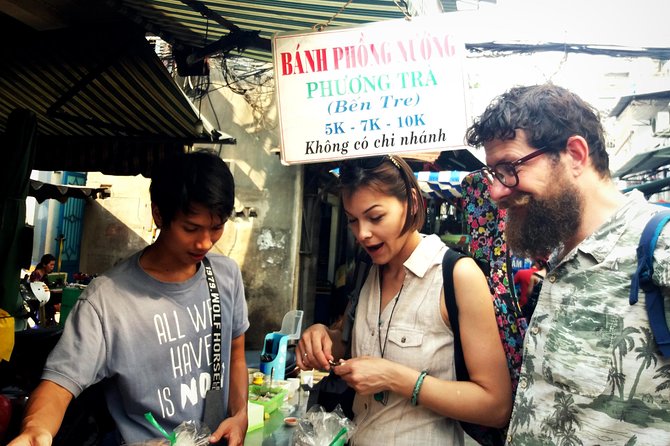
The Communist Apartment Complex and Maze of Alleys give the walk more character than a food-only route. These places are part of the city’s built environment, and they help you see how food businesses fit into older residential areas.
You should not think of this as a formal history tour. The main focus is still food. But the guide adds stories about the city, the dishes, and the people running the small eateries. Spring is described as warm, funny, and easy to talk with, while Hugh also guides the walk on some departures.
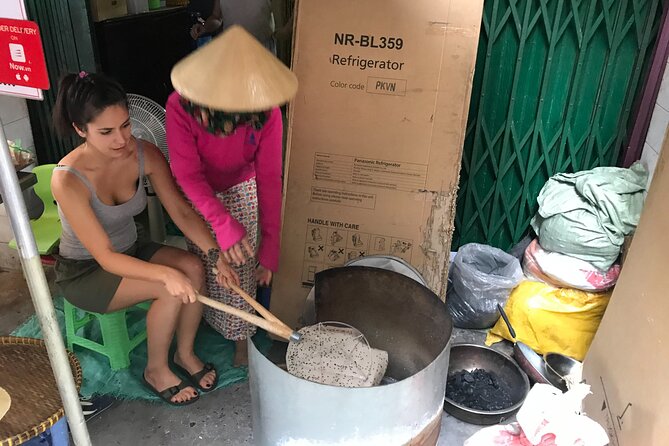
That human side matters in a city where finding the right doorway can be half the challenge. Several stops are small, unmarked, or tucked away from the main streets. A guide can save you the time and uncertainty of trying to locate them alone.
The guides and the small-group feel
Spring is the guide most closely associated with this experience, and Hugh may also lead the tour. The strongest part of their role is not only explaining ingredients. They help you settle into the city, ask about your preferences, and make the food feel less intimidating.
The group limit is six people. That is a useful size for walking through alleys, sharing food, and talking about what you are eating. It also gives you a better chance to ask for advice about Vietnamese dishes during the rest of your stay.
The tour is suitable for most people, and service animals are allowed. It is near public transportation, though the experience itself is a walking route. Wear good walking shoes, and arrive hungry. With nine possible tasting points, you will want room for more than a quick snack.
Is $39 a good value?
At $39 per person, this is not the cheapest way to eat vegan food in Ho Chi Minh City. You can certainly buy individual dishes for less. The value comes from the range of food, the guide, the small group, and the time saved finding places that are difficult to identify by yourself.
You are paying for more than the food on the plate. The price includes a three-hour route through several districts, access to small local businesses, explanations of ingredients and dishes, and a recipe ebook to use at home.
The number of tastings also makes the cost easier to justify. In one outing, you may try bánh mì, curry, a pancake, sweet soup, seasonal fruit, noodles, pho, a fried snack, and traditional sweets. Not every item is guaranteed, but the overall spread is broad.
I would see the tour as good value for a first or second day in the city. It helps you learn what to order later, shows you areas you might not reach alone, and gives you a reliable vegan starting point.
Who should book this walk?
I would recommend it most strongly to vegan visitors who want local dishes rather than a generic plant-based menu. It also suits anyone nervous about ordering food in a new city, since the guide can explain what you are eating and adapt to preferences when possible.
Food-focused visitors will enjoy the range of textures and the chance to try several dishes in one afternoon or evening. The walk also suits people who like small neighborhood discoveries more than polished restaurant dining.
It may be less suitable if you want a long, relaxed meal at one table. Each stop lasts around 10 to 15 minutes, and the food is spread across the route. It may also be less suitable for anyone who dislikes walking, narrow alleys, or changing food selections.
Book at least 24 hours before the start time if your plans may change. Cancellations made at least 24 hours ahead receive a full refund. Changes or cancellations inside that window are not refunded.
Should you book Vegan Walk Not Just Vegan Food?
Yes, if you want a compact introduction to vegan Saigon with real neighborhood context. The combination of bánh mì, curry, chè, tropical fruit, bún thịt nướng, pho, bột chiên, and old-style sweets gives you far more range than a standard single-meal outing.
I would book it early in your Ho Chi Minh City stay. You will get restaurant ideas, food vocabulary, and more confidence for eating on your own afterward. Just allow for a flexible tasting list, bring comfortable shoes, and avoid eating a large meal beforehand.
FAQ
How long does the vegan food walk last?
The experience lasts approximately three hours.
How much does the tour cost?
The price is $39 per person.
Where does the tour begin?
The tour begins at 200 Lê Lai, Phường Phạm Ngũ Lão, Quận 1, Ho Chi Minh City.
Where does the tour end?
It ends at 63 Lý Thái Tổ in District 10, near District 1.
How many people can join the tour?
The maximum group size is six people.
Is the food entirely vegan?
The experience is designed specifically around vegan food, including vegan bánh mì, curry, desserts, noodle dishes, pho, and street snacks.
What dishes might I taste?
Possible tastings include bánh mì chay, BBQ seitan noodles, vegan ice cream, curry, summer rolls, bánh xèo, chè, local fruit, bún thịt nướng chay, vegan pho, bột chiên, and traditional Vietnamese sweets.
Will every listed dish be available?
Not always. The food selection may change if a vendor stops selling a particular dish that day.
Are service animals allowed?
Yes, service animals are allowed.
Can I cancel for a full refund?
Yes. You can cancel at least 24 hours before the start time for a full refund. Cancellations within 24 hours are not refunded.
Is the tour close to public transportation?
Yes, the experience is near public transportation.
Just added around Ho Chi Minh City
- Saigon’s Hidden Flavors – Private Street Food Walk with Local Students★ 5.0 · 301 reviews
- Saigon Street Food & Hidden Alleys by Scooter – 7/9/12 Tastings★ 5.0 · 235 reviews
- Ho Chi Minh City: Highlights & Hidden Gems – Free Walking Tour★ 5.0 · 194 reviews
- Saigon Evening Walking Street Food Tour★ 5.0 · 272 reviews
- Ho Chi Minh City: Street Food Walking Tour with 12 Tastings★ 5.0 · 128 reviews
- Saigon Authentic Walking Street Food Tour 12+ Tastings Included★ 5.0 · 88 reviews
- Ho Chi Minh City private walking tours with young local volunteers★ 5.0 · 326 reviews
- Walking Street Food Evening Safari with 20 tastings★ 5.0 · 88 reviews
Walking Tours, compared.

Magical London: Harry Potter Guided Walking Tour
Read our review →
Reykjavik Food Walk – Local Foodie Adventure in Iceland
Read our review →
History and Hauntings of Salem Guided Walking Tour
Read our review →
New Orleans Premier Ghost, Voodoo and Vampire Walking Tour
Read our review →
Amsterdam Anne Frank: Small-Group Walking Tour & Local Guide
Read our review →

Edinburgh Castle: Guided Walking Tour with Entry Ticket
Read our review →
Anne Frank’s Story – Guided Walking Tour through Amsterdam
Read our review →Browse the lists this tour appears in